Coming of Age and Loss of Innocence in Edenfall

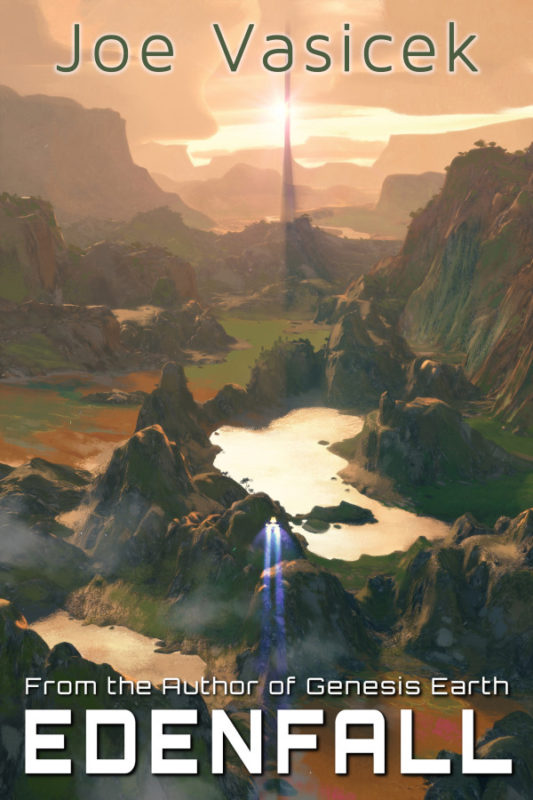
Edenfall by Joe Vasicek is a science fiction coming-of-age story about a girl raised in an isolated paradise who is forced to confront the larger human world for the first time. The novel combines coming of age and loss of innocence with fish out of water, raised outside civilization, first love, entrusted with a dangerous secret, protective older sister, and paradise lost tropes. Set on a distant world millions of years in humanity’s future, the story begins with youthful freedom and wonder before developing into a tense, sometimes dark adventure about responsibility, moral judgment, love, violence, and the painful transition from childhood into adulthood.

Tropes at a Glance: Coming of Age, Loss of Innocence, Fish Out of Water, Raised Outside Civilization, First Love, Entrusted with a Dangerous Secret, Protective Older Sister, Paradise Lost

Why Edenfall Is a Coming of Age and Loss of Innocence Story

At the beginning of Edenfall, Estee has grown up in a world almost completely untouched by human civilization. She runs barefoot across an alien savannah, explores the wilderness with her younger sister, knows the native “little people” and their customs, and lives with her parents and siblings beneath the ruins of an ancient human space elevator. She is adventurous, curious, impulsive, and confident in the natural world around her—but extraordinarily innocent about the civilization her parents left behind.

That innocence becomes impossible to preserve when a human military expedition arrives from across the stars. To Estee, the newcomers are almost as alien as anything in science fiction: she has never encountered soldiers, cities, military hierarchies, or many of the social customs they take for granted. Even ordinary human assumptions about clothing, privacy, relationships, and authority can be bewildering to her.

What begins as curiosity quickly becomes a much harder education. Estee discovers that the wider human world contains cruelty, political ambition, warfare, betrayal, and moral choices far more complicated than anything she has previously faced. At the same time, she begins experiencing new emotions of her own, including attraction, romantic longing, and an increasing sense of responsibility for people besides herself.

Her coming of age is therefore both an awakening and a loss. She gains knowledge, judgment, independence, and the ability to carry adult responsibilities—but she can never return to the effortless innocence with which she began.

How Coming of Age and Loss of Innocence Drives the Story

Estee’s innocence shapes almost every major decision she makes in Edenfall. Early in the novel, she responds to danger primarily with curiosity. A mysterious object descending from the sky is something she wants to investigate. Strange newcomers fascinate her even when they frighten her. The boundaries between good and evil initially seem simple because she has experienced so little of either.

As events become more dangerous, those simple assumptions break down. Estee has to learn that people cannot always be judged by the group they belong to, that authority does not necessarily make someone good, and that even people with weapons and power must choose whether to use them rightly. Her father ultimately places an especially difficult burden on her: she must decide for herself whom she can trust.

That requirement to exercise moral judgment without having a parent make the decision for her is central to her transformation. Estee begins the novel as a child whose parents define the boundaries of her world. Increasingly, she has to navigate beyond those boundaries using the principles they taught her rather than their direct protection.

Her relationships change along with her. Her younger siblings become people she increasingly feels responsible for rather than merely companions in childhood adventures. Her relationship with Khalil introduces trust, admiration, attraction, and first love. And the threats facing her family turn the preservation of something larger than herself into a personal responsibility.

In Edenfall, growing up is not merely becoming tougher or more capable. It means learning enough about human nature to make consequential choices while refusing to become as cruel as the world that forced those choices upon her.

Supporting Tropes and Genre Conventions

Fish Out of Water / Raised Outside Civilization

Estee is a particularly unusual fish out of water protagonist because she does not initially travel into an unfamiliar society. Instead, human civilization arrives in her isolated world.

She has grown up with her family and the indigenous little people, far removed from ordinary human culture. As a result, things that the newly arrived soldiers consider commonplace can be completely foreign to her. She knows how to track through wilderness, avoid dangerous predators, and navigate the landscape, yet she may not understand a handshake, a city, military rank, or why strangers expect her to dress differently.

This reversal allows Edenfall to make ordinary human society seem strange by presenting it through the eyes of someone encountering it for the first time.

First Love / Romantic Awakening

Estee’s relationship with Khalil forms the romantic side of her coming-of-age story. Because she has never known an unrelated young man before, she initially has no framework for understanding the attraction she feels toward him.

Her growing admiration for Khalil becomes trust, emotional intimacy, and eventually romantic longing. These feelings are genuinely new to her, and the novel treats her first experience of attraction as another form of discovery: she is learning not only about the wider human world but also about herself.

The romance therefore develops alongside the loss-of-innocence plot rather than existing separately from it. Estee is discovering both the darkness of adulthood and some of its beauty.

Entrusted with a Dangerous Secret

Early in the crisis, Estee’s parents entrust her with a piece of hidden data connected to their discoveries about the ancient human civilization that once inhabited their world. Protecting it gives Estee a responsibility that the newly arrived soldiers do not initially realize she carries.

More importantly, her task eventually becomes morally complicated. Keeping the secret away from dangerous people is only half of her responsibility. She must also recognize when she has found people worthy of receiving it.

The dangerous secret trope therefore reinforces the coming-of-age story by transforming Estee from a passive child being protected by adults into someone whose judgment can affect the lives of everyone around her.

Protective Older Sister

Estee is established as the oldest sister from the opening pages, where even her playful adventures with Celeste contain small moments of responsibility. As the danger grows, however, that ordinary sibling dynamic takes on much greater weight.

She increasingly becomes the person who keeps her younger sisters moving, watches over her baby brother, makes decisions under pressure, and tries to protect the family members who once shared her carefree childhood. The change is gradual but fundamental.

The protective older sister trope gives Estee’s maturation an especially concrete form: adulthood arrives when she can no longer assume that someone older will always be there to take responsibility.

Paradise Lost

The setting of Edenfall gives its loss-of-innocence story an explicitly Edenic dimension. Estee begins in a beautiful, isolated world where human civilization exists mostly in stories told by her parents. Her childhood is associated with open skies, wilderness, family, exploration, and freedom.

The arrival of outsiders changes not only Estee but the physical world around her. Military vehicles cut across the grasslands. Bases and weapons intrude upon familiar landscapes. Violence enters places that once represented safety.

The destruction of innocence is therefore both personal and environmental. Estee loses her childhood paradise at the same time that the paradise itself is being transformed. Even the novel’s imagery and chapter progression repeatedly draw on ideas of Eden, knowledge, exile, and the fall.

How Edenfall Develops These Tropes

What makes the coming-of-age story in Edenfall unusual is the direction from which adulthood arrives.

Estee has not been raised in a broken or oppressive society from which she longs to escape. She begins with extraordinary freedom. Her parents have deliberately removed themselves from civilization and raised their children in an alien wilderness where many of humanity’s customs and institutions simply do not exist. The wider human world therefore represents both possibility and danger.

That creates an interesting inversion of the traditional science fiction coming-of-age story. Estee is not dreaming about escaping a restrictive home and discovering the universe. The universe comes to her—and what it brings forces her to reconsider the value of the sheltered world she once took for granted.

The novel also avoids equating maturity with cynicism. Estee learns that human beings are capable of terrible things, but she also encounters courage, restraint, loyalty, sacrifice, and people willing to oppose evil even at great personal cost. One of her most important lessons is that the world cannot be neatly divided into categories of “good people” and “bad people.” Character must be judged through choices.

Her first love reinforces the same idea. Attraction opens another door into adulthood, but the relationship is tied to questions of trust, restraint, responsibility, and the difference between wanting something and being ready for it.

The result is a coming-of-age story in which knowledge carries moral weight. Estee’s innocence cannot survive what she experiences, but the knowledge that replaces it does not have to corrupt her. Growing up means learning enough about good and evil to choose between them consciously.

The Story’s Tone and Emotional Payoff

Edenfall begins with a strong sense of wonder. Estee’s alien world is colorful, wild, beautiful, and dangerous in ways she understands. Because readers first experience that world through her familiar and affectionate relationship with it, the later intrusion of human conflict feels increasingly disruptive.

The tone consequently moves from adventurous and pastoral to tense, tragic, romantic, and ultimately bittersweet. Moments of discovery and first love sit alongside military violence, family danger, moral betrayal, and the destruction of childhood certainties. Yet the novel is not nihilistic. Its darker events repeatedly force characters to demonstrate what they believe through courage, loyalty, restraint, sacrifice, and protection of the innocent.

The emotional payoff comes from watching Estee become capable of carrying responsibilities she could scarcely have understood at the beginning. She cannot recover the innocence she loses, but neither is she simply crushed by that loss. She learns to move forward into an uncertain future while protecting what remains worth saving.

For readers looking for science fiction coming-of-age stories about loss of innocence, a girl raised outside civilization, first love, dangerous secrets, sibling responsibility, and the loss of an Edenic home, Edenfall brings those tropes together in a high-stakes alien-world adventure.

Where to Get the Book

Related Posts and Pages

Explore the series index for the Genesis Earth Trilogy.

Return to the book page for Edenfall.

What Makes a “Joe Vasicek” Book?

I recently uploaded all of my books to ChatGPT and asked it to read them all and tell me what makes a “Joe Vasicek” book. The result was a fascinating conversation with the chatbot. It was too long to share in its entirety, so I asked ChatGPT to summarize it as a 1500 word blog post. Here is what it gave me:


Every author has recurring patterns. Sometimes they are obvious: favorite settings, familiar plot structures, beloved tropes. Sometimes they run deeper, beneath genre and surface premise, shaping the emotional and moral logic of the stories themselves. Looking across Joe Vasicek’s published science fiction and fantasy, a clear pattern emerges. His books are not simply space operas, frontier adventures, sword-and-sorcery tales, or clean romantic fantasies. At their core, they are stories about people trying to find, build, defend, or become worthy of home.

A Joe Vasicek book is usually set on the edge of civilization. That edge may be literal outer space: a far-flung colony, an isolated station, a small merchant starship, a dangerous trade route, or a frontier beyond the reach of stable law. It may also be a fantasy frontier: a seacoast, a ruined kingdom, a cursed wilderness, a lonely homestead, or a world recovering from plague, war, and desolation. But whatever form the frontier takes, it is rarely just a backdrop for adventure. It is a moral testing ground.

The central question is not merely whether the hero will survive. It is whether the hero can preserve the things that make survival meaningful: family, faith, freedom, love, loyalty, honest work, and moral courage.

This is why exile appears so often in Vasicek’s fiction. His protagonists are frequently displaced people: wanderers, captives, refugees, orphans, widows, failed apprentices, disgraced sons, forgotten daughters, fugitive lovers, and people who no longer belong in the world that formed them. They may dream of a lost Earth, flee an oppressive warrior culture, survive famine on a failing station, escape slavery, seek a ship, or defend a fragile home from powers that would destroy it. Their longing is not abstract. They want something deeply concrete: a place at the table, a family, a ship, a marriage, a household, a people, a future.

That longing for home is one of the defining features of Vasicek’s voice and vision. In many of his books, home is not something the characters simply return to. It must be built, chosen, earned, or restored. Sometimes it is a starship crew. Sometimes it is a marriage. Sometimes it is a frontier colony. Sometimes it is a homestead in the woods, a kingdom healed from corruption, or a family formed under impossible circumstances. His stories tend to end not merely with enemies defeated, but with the possibility of a stable moral order: a household, a child, a promise, a voyage, a free people, a new beginning.

Closely connected to this is Vasicek’s recurring interest in family formation. Marriage, children, inheritance, kinship, motherhood, fatherhood, and legitimacy are not decorative details in his fiction. They are often central to the worldbuilding. Societies in his books are shaped by who marries whom, who inherits, who belongs, who is cast out, who is enslaved, who is protected, and who is allowed to have a future. This gives even his space opera a domestic and anthropological depth. Starships are not just machines. They are households. Frontier settlements are not just adventure locations. They are embryos of civilization.

This family-centered quality sets Vasicek apart from much of contemporary science fiction and fantasy. In a market often dominated by antiheroes, irony, grimdark despair, eroticized power dynamics, or purely individual self-actualization, Vasicek’s books keep returning to older and more ordinary goods: marriage, children, duty, faith, work, and home. That does not mean the books are soft. His stories include captivity, slavery, war, famine, coercion, betrayal, exile, monsters, corrupt rulers, and civilizational collapse. But the darkness does not usually become the point. It is the pressure under which characters reveal what they truly love.

Another recurring element is freedom versus domination. Vasicek’s villains and oppressive systems often seek control over the intimate foundations of human life. They enslave, coerce, corrupt, conquer, manipulate marriage, break families, reduce people to tools, or turn sacred things into instruments of power. Against them stand people who may be weak, wounded, or compromised, but who still recognize that some things must not be surrendered. A recurring moral pattern in Vasicek’s work is that power becomes evil when it severs itself from love, covenant, humility, and responsibility.

This is especially visible in his fantasy. In the fantasy stories, magic frequently tests the soul. Treasure corrupts. Dark orders twist noble purposes. Forbidden power promises victory while hollowing out the one who wields it. Sacred objects and magical gifts are not merely tools; they expose character. The question is often whether the hero can become worthy of the power placed in his or her hands.

The science fiction handles similar concerns differently. In Vasicek’s SF, the central question is more often civilizational: what kind of society will human beings build on the frontier? Technology, star travel, colonization, lost Earth, trade routes, empires, and small ships all become ways to explore whether freedom and family can survive across distance. The fantasy asks whether the soul is worthy to wield power. The science fiction asks whether civilization is worthy to endure.

Yet the two sides of Vasicek’s work are recognizably connected. A sea mage searching for a crew and a star wanderer seeking a place among the stars are spiritual cousins. A cursed treasure that tests a fantasy hero and a civilization-changing technology that threatens an Outworld culture are variations on the same concern: what happens when power outruns virtue?

Faith is another quiet but persistent current. Vasicek’s books are not always explicitly religious, and many are not “religious fiction” in the usual bookstore sense. But they are shaped by a religious imagination. Providence matters. The universe has moral structure. Choices echo beyond immediate consequences. Suffering is not meaningless. Death is not always the final word. Love, sacrifice, chastity, loyalty, mercy, repentance, and covenant are treated as real forces, not sentimental illusions.

This gives his work what might be called moral gravity. The stories are generally clean, but “clean” is too weak a word for what they are doing. Clean can sound bland, safe, or sanitized. Vasicek’s better books are not harmless. They are morally serious. They often deal with brutal worlds, but without surrendering to brutality. They offer hope, but usually after loss.

That balance—dark trials, hopeful destination—is one of the most marketable aspects of his brand. Readers who are tired of nihilism may find in his books a kind of old-fashioned adventure that does not feel cynical. Readers who enjoy romance but do not want explicit heat may respond to the way his stories treat love as courtship, marriage, loyalty, and family destiny. Readers who enjoy frontier survival may respond to the practical details of ships, homesteads, trade, hunger, labor, and settlement. Readers who want faith-friendly speculative fiction may find his work welcoming without feeling confined to the Christian-fiction aisle.

At the same time, the analysis reveals some challenges. Vasicek’s books cross several genre lanes: hard SF, space opera, sword-and-sorcery, seafaring fantasy, frontier survival, time travel, post-apocalyptic fiction, captivity drama, and short-form idea fiction. That range can make the brand feel scattered. A reader who comes for small-ship space opera may not immediately understand how that connects to a fantasy homestead story or a cursed-treasure adventure. The underlying themes are consistent, but the surface packaging varies widely.

There is also a tonal challenge. Vasicek often writes “clean” fiction, but some of his recurring material is intense: slavery, captivity, concubinage, forced marriage, sexual coercion, famine, genocide, and patriarchal warrior cultures. These are not cozy stories. If marketed carelessly, they can send the wrong signal. The captivity material, in particular, needs to be framed around dignity, survival, identity, and freedom rather than dark-romance titillation or grimdark shock.

The clearest author brand, then, is not simply “clean science fiction and fantasy.” That is accurate but incomplete. The stronger brand is this:

Joe Vasicek writes clean, morally serious frontier science fiction and fantasy about wanderers, captives, exiles, and ordinary heroes building homes and families in dangerous worlds.

Or shorter:

Frontier science fiction and fantasy about faith, family, freedom, and finding home among the stars.

Or more distilled still:

A Joe Vasicek book is about finding home on the frontier without losing your soul.

That is the through-line. Whether the story involves starships, sea mages, cursed treasure, lost Earth, warrior clans, alien worlds, magical swords, or widowed mothers, the deeper movement is the same. The world is dangerous. Civilization is fragile. Power corrupts when severed from virtue. But love, faith, family, and moral courage can still make a home in the wilderness.

That is what makes a Joe Vasicek book.

First Contact in Genesis Earth

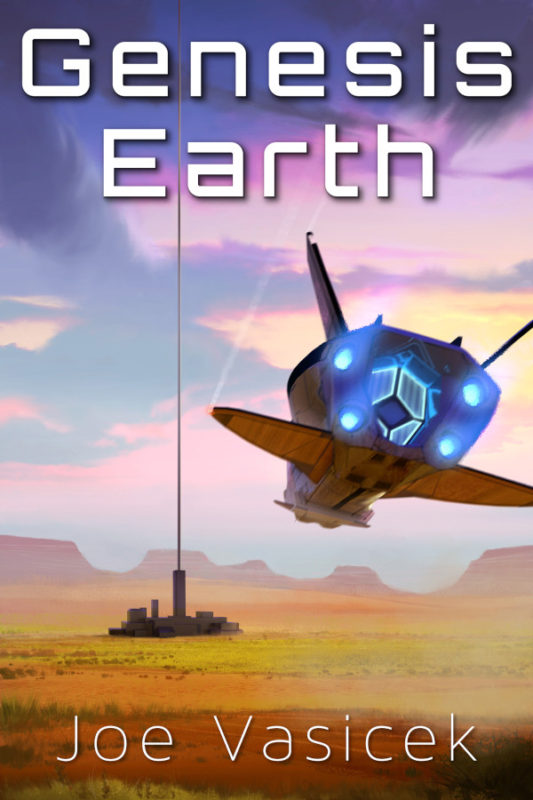
Genesis Earth by Joe Vasicek is a character-driven first-contact science fiction novel about two young scientists sent through an experimental wormhole to investigate an Earthlike planet and a mysterious artificial signal. Combining deep-space exploration, forced proximity, a reluctant explorer, far-future mystery, ancient artificial intelligence, and a slow-burn romantic relationship, the novel delivers an eerie and contemplative journey filled with scientific wonder, psychological tension, and increasingly personal questions about humanity’s place among the stars.

Tropes at a Glance: First Contact, Deep-Space Exploration, Reluctant Explorer, Forced Proximity, Far-Future Earth, Ancient Artificial Intelligence, Lost Human Civilization, Slow-Burn Romance

Why Genesis Earth Is a First Contact Story

Michael Anderson has spent his life studying alien planets, but he has never wanted to visit one. Born aboard Heinlein Station during humanity’s first attempt to create an artificial wormhole, he grows up haunted by Earth—a homeworld he knows only through photographs, stories, and the memories of his parents.

When the wormhole opens onto an unknown region of space, probes discover an Earthlike planet and detect a powerful signal that cannot be explained by any known natural phenomenon. Michael is the only qualified planetologist young enough to survive the decades-long voyage, so he is sent with astronomer Terra Beck to investigate.

Their mission is supposed to be scientific, but the possibility of first contact hangs over it from the beginning. Michael and Terra do not know who produced the signal, whether its creators are peaceful, or whether they are still present. They have no diplomatic team, military escort, or reliable first-contact protocol. They are two inexperienced scientists traveling alone toward a civilization whose technology may be millions of years beyond their own.

The closer they come to the planet they name Icaria, the stranger the evidence becomes. An enormous spacecraft appears without warning. An ancient space elevator hangs above a world that seems almost untouched by civilization. Primitive settlements exist beneath technological structures their inhabitants could never have built. Every discovery suggests intelligence, yet every attempt to understand that intelligence raises more questions.

How First Contact Drives the Story

First contact is not a single encounter in Genesis Earth. It is the organizing problem behind nearly every major decision Michael makes.

His desire to understand the unexplained signal draws him toward dangers that Terra would rather avoid. When their probes are destroyed, he must decide whether to retreat or risk approaching the mysterious ship directly. When alien technology enters their own vessel, curiosity and fear compete for control. Each new discovery forces Michael to choose between protecting the mission, satisfying his need for answers, and preserving the fragile trust between himself and Terra.

The first-contact mystery also exposes Michael’s deepest weaknesses. He has grown up beneath the expectations of brilliant parents who taught him that his mission could determine humanity’s future. He wants to be a careful scientist, but he also desperately wants to prove himself worthy of their sacrifices. Faced with discoveries larger than anything he imagined, he becomes controlling, obsessive, and increasingly willing to endanger himself in pursuit of answers.

Terra responds differently. Where Michael pushes toward the unknown, she often withdraws from it. Their opposing reactions create mistrust and conflict aboard a ship where neither can escape the other. Yet the danger also forces them to communicate, depend on one another, and reconsider the assumptions they brought from home.

Through these encounters, Michael’s understanding of first contact gradually changes. At first, he sees it as a historic scientific achievement—something that will secure his place in history and fulfill his parents’ ambitions. As the mission develops, contact becomes less about recognition and more about responsibility. The true question is no longer merely whether he can discover intelligent life, but how he should respond when the beings and civilizations he encounters do not fit his expectations.

Supporting Tropes and Genre Conventions

The Reluctant Explorer

Michael is a trained planetologist who would rather study alien worlds through a telescope than walk on one himself. He accepts the mission because of duty, family expectations, and the belief that no one else can perform it. His reluctance makes each step into the unknown feel consequential: exploration is not effortless adventure for him, but a repeated confrontation with fear.

Forced Proximity in Deep Space

Michael and Terra spend decades of objective time traveling aboard the Icarus, with no other human beings within light-years. Inside the ship’s narrow corridors, every disagreement becomes harder to avoid and every failure of trust becomes more dangerous. Their isolation turns the novel’s scientific mission into an intimate psychological story about two people learning whether they can survive one another as well as the unknown.

Slow-Burn Romance

Michael and Terra begin as colleagues who barely know each other and have been primed to distrust one another. Their relationship develops through shared work, arguments, rescues, confessions, and moments of vulnerability. The romance grows gradually out of dependence and hard-won trust rather than immediate attraction, giving the emotional arc a direct connection to the survival story.

Far-Future Earth and Lost Humanity

The wormhole does more than cross an enormous distance. Michael and Terra gradually discover that the silent universe around Icaria contains mysteries connected to Earth and the ultimate fate of human civilization. This far-future setting transforms first contact into an act of cosmic archaeology, as the explorers search through abandoned technology and incomplete evidence for signs of what humanity became.

Ancient Artificial Intelligence and Abandoned Megastructures

A ghost ship, an orbital elevator, autonomous machines, and technology that has continued operating long after its creators disappeared give the novel a strong ancient-technology mystery. These objects are not merely impressive scenery. They become forms of indirect communication, preserving fragments of purpose and history that Michael and Terra must interpret without knowing whether the machinery is helpful, hostile, or simply indifferent.

How Genesis Earth Develops These Tropes

Many first-contact stories focus on communication between two active civilizations. Genesis Earth takes a different approach. Michael and Terra encounter silence, automated systems, ancient infrastructure, and beings whose connection to the technology around them is unclear. First contact becomes a process of interpretation rather than a straightforward diplomatic meeting.

The novel also places unusually vulnerable people at the center of that process. Michael and Terra are young scientists rather than soldiers, politicians, or veteran explorers. They possess specialized knowledge, but they are emotionally unprepared for the isolation and responsibility placed upon them. Their scientific competence does not prevent fear, jealousy, pride, or misunderstanding from distorting their judgment.

That character dynamic gives the familiar first-contact trope a psychological dimension. Michael repeatedly assumes that enough information will make the unknown less frightening, while Terra recognizes that some discoveries cannot be controlled. Neither approach is entirely sufficient. They must learn that successful contact requires more than intelligence. It also demands patience, humility, trust, and a willingness to recognize forms of humanity that do not resemble the civilization they left behind.

The book’s moral perspective ultimately distinguishes technological progress from human flourishing. Vast machines can survive for millions of years, but they cannot by themselves preserve meaning, community, or purpose. Scientific discovery matters, yet the novel repeatedly asks what that discovery is for—and whether making history is worth anything if the pursuit destroys the relationships that give life its value.

The Story’s Tone and Emotional Payoff

Genesis Earth begins with scientific anticipation and gradually develops an eerie, claustrophobic atmosphere. The empty star system, silent spacecraft, narrow corridors of the Icarus, and unexplained movements of ancient machines create a persistent sense that Michael and Terra are being watched by something they cannot understand.

That tension is balanced by moments of cosmic wonder. Icaria’s oceans and continents, the view from the space elevator, and the remains of a civilization spread across the stars give the story a scale far larger than the two people at its center. At the same time, the novel remains emotionally intimate, grounding its largest discoveries in Michael’s longing for Earth and his changing relationship with Terra.

The eventual payoff is hopeful without dismissing the story’s losses. Michael and Terra discover that the future may not resemble the destiny their parents imagined, but that does not mean humanity’s story is over. Their journey transforms first contact from an encounter with something wholly alien into a meditation on inheritance, belonging, love, and the possibility of beginning again.

For readers looking for thoughtful first-contact science fiction with deep-space isolation, ancient technology, far-future mystery, and a slow-building relationship between two young scientists, Genesis Earth offers a distinctly personal journey into the unknown.

Where to Get the Book

Related Posts and Pages

Explore the series index for the Genesis Earth Trilogy.

Return to the book page for Genesis Earth.

Breaking the Time Paradox in The Stars of Redemption

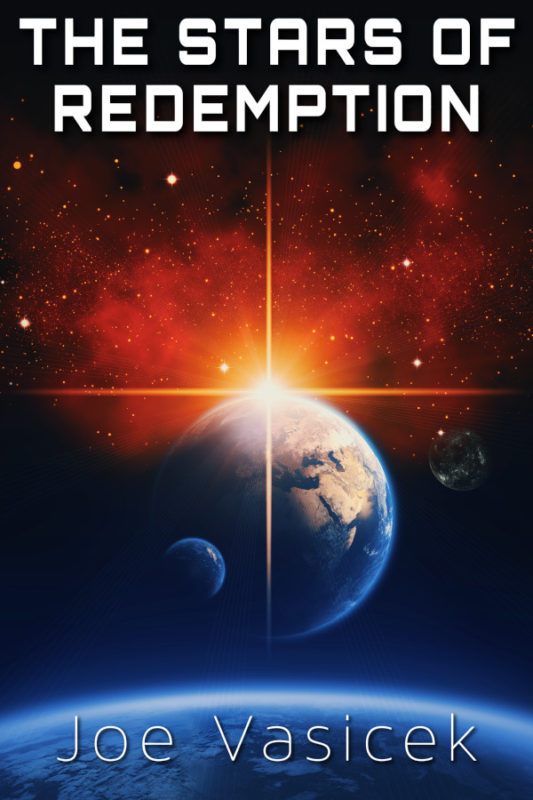
What if the deadliest threat humanity ever faced wasn’t an alien invasion or a rogue AI… but a mistake we keep repeating that always ends with the destruction of Earth? The Stars of Redemption, the last book in my young adult science fiction trilogy, explores this question.

At its core, The Stars of Redemption is about the struggle to break a closed time loop, stop a rogue superintelligence, and rewrite a future that seems unchangeable. This makes The Stars of Redemption a classic time-loop science fiction story, built around temporal paradoxes, fate-versus-free-will dilemmas, and the struggle to break a repeating extinction cycle. It is a story about escaping destructive cycles, choosing hope, and fighting for a future that isn’t predetermined.

Where the Idea Came From

The idea for this theme grew out of my long, tangled journey to finish the trilogy. As I write in the author’s note, the trilogy stalled until I became a husband and father. Holding my newborn daughter for the first time made me realize that the story needed to be about cycles—time loops, family patterns, repeating trauma—and the hope that they can be broken. Only then did I understand how to write about ending the loop and choosing a new future.

How Breaking the Time Paradox Shapes the Story

The entire plot of this sci-fi book revolves around a temporal paradox created by a wormhole, a derelict starship, and a fragmented AI superintelligence. The ghost ship is both the catalyst and the prison of a machine intelligence born from the loop—a being that believes humanity must be wiped out to prevent another cycle of suffering. Every conflict Estee and Khalil face—from warped corridors to shifting timelines—exists because they are trapped inside this repeating extinction loop.

For Estee, breaking the time loop becomes a confrontation with her family’s past and her people’s future. She must decide whether humanity deserves redemption and whether history can be changed. Khalil must confront his own emotional loop: guilt, self-sacrifice, and the belief that his fate is fixed. Together, they face a question at the heart of all time-loop fiction:

Are we doomed to repeat our worst mistakes, or can we rewrite the future?

What the Time Paradox Says About Us

Time loops are powerful metaphors because we all face cycles—personal, cultural, generational—that feel impossible to escape. The paradox in this story mirrors the real world: destructive systems repeat unless someone chooses differently. By facing a machine intelligence convinced that humanity is irredeemable, the characters confront the fear that our past defines us. The book suggests a hopeful alternative: the future changes when we do.

Why This Theme Matters to Me

I didn’t truly understand this story until I became a father. My daughter made the theme real: breaking cycles isn’t abstract—it’s something we do for the next generation. That moment of holding her and realizing this is her story now, not yours helped me finish the book. The Stars of Redemption is my way of saying that even in the darkest timelines—even in repeating loops—hope is possible, and the future can be rewritten.

Where to Get the Book

Related Posts and Pages

Explore the series index for the Genesis Earth Trilogy.

Visit the book page for Genesis Earth for more details.

Find out if The Stars of Redemption is for you.

See all of my books in series order.

Is The Stars of Redemption for You?

The Stars of Redemption brings the Genesis Earth Trilogy to its heartwarming conclusion, weaving together cosmic mystery, high-stakes adventure, and the emotional journey of a family caught between past and future. In this character-driven science fiction novel and grand finale of the Genesis Earth Trilogy, the secrets of the ghost ship, the wormhole, and humanity’s long-lost Earth collide, pushing Terra, Michael, Estee, and Khalil toward a destiny that tests their courage, their bonds, and their hope.

What Kind of Reader Will Love This Book?

If you like…

  • Character-driven science fiction where relationships matter as much as the big ideas
  • High-stakes adventure rooted in loyalty, courage, and found family
  • Deep-time, big-concept SF (time paradoxes, shattered superintelligences, dead Earth, existential threats)
  • Teens thrust into danger who must grow up fast without losing their humanity
  • Stories where the emotional journey hits as hard as the plot twists

…then The Stars of Redemption is exactly the kind of story you’re looking for.

What You’ll Find Inside

The Stars of Redemption follows Estee and Khalil as they ride a mysterious ancient ghost ship run by a fractured AI. The two young adults now know the truth about the time travel paradox that created it, but they aren’t sure how to stop it from going back and annihilating the human race. But solving the paradox will create an alternate timeline—one where many of their loved ones have lived totally different lives. The result is a tense, emotional, wonder-filled journey that blends survival, mystery, love, grief, and cosmic terror into a finale that feels both epic in scope and heartwarmingly personal.

What Makes It Different

Fans of classic time-paradox stories and authors like Arthur C. Clarke, Becky Chambers, or Michael Crichton will recognize the sense of cosmic mystery, but The Stars of Redemption takes those ideas in a uniquely human direction. Where many time-loop or AI-disaster stories focus on spectacle, this one leans into relationships, trauma, and the fragile bonds that hold people together when everything else collapses. And unlike most YA or near-YA science fiction, it refuses to sacrifice scientific wonder or thematic depth—holding the line on both heart and hard SF ideas.

What You Won’t Find

If you’re looking for grimdark nihilism, sexually explicit romance, or nonstop action with minimal character growth, this isn’t that book. But if you prefer science fiction grounded in hope, heart, survival, and meaning, with characters who feel real enough to bleed, you’ll feel right at home here.

Why I Think You Might Love It

I wrote The Stars of Redemption shortly after becoming a young father, and that life-changing experience deeply informed the conclusion of the Genesis Earth Trilogy. Starting a family of my own made Estee and Khalil’s found family more vivid, as well as Estee’s need to fill the hole left by losing her parents. This became the most mature and thoughtful book in the trilogy—the kind of story I always wanted to write but couldn’t until I’d lived a little more myself.

If you loved the high-concept wonder and emotional heart of Genesis Earth and Edenfall, I think you will find The Stars of Redemption to be a thoroughly satisfying, deeply meaningful conclusion to the trilogy!

Where to Get the Book

Related Posts and Pages

Explore the series index for the Genesis Earth Trilogy.

Visit the book page for Genesis Earth for more details.

Read about breaking the time paradox in The Stars of Redemption.

See all of my books in series order.

“When their lives had been aligned in just the right way…

As they ate, Terra couldn’t help but reflect on the similarities between their experience cooking pad Thai and how she and Michael had come together. Just as the noodles had taken an hour to soak, she felt like she’d spent the last few years stagnating and going nowhere. But then, when their lives had been aligned in just the right way, everything had come together in a frantic burst of energy, producing something that couldn’t have ever happened in any other way.

The Stars of Redemption by Joe Vasicek.

The Loss of Innocence in Edenfall

Edenfall is a young adult first contact science fiction story about a paradise that doesn’t fall to invasion, but awakens to adulthood. Set on an isolated colony world, it blends coming-of-age, alien-world survival, and military first contact, telling a story where the shock isn’t meeting the unknown—it’s realizing that humanity is the unknown.

All of us are born innocent, but none of us can grow up and stay that way. What happens when innocence is shattered by forces beyond our control? Can lost innocence ever be reclaimed—or does the very act of reclaiming it make it something else?

These were my thoughts as I wrote Edenfall. From those seeds grew a story about childhood, family, first contact, coming of age, and the tragedy of how confronting evil forces us to grow up.

Where the Idea Came From

After I wrote Genesis Earth, I knew I wanted to turn it into a trilogy someday. I also knew that Michael and Terra’s idyllic paradise would not remain isolated forever. So I began to ask myself: what would happen when their children—raised entirely outside of human civilization—encounter humanity for the first time, with all of its violence, possessiveness, flaws, and messiness?

As the ideas came together, I realized that I was writing a different kind of first contact story—not a story of discovery, but a first contact science fiction story of intrusion and loss, told through the eyes of a girl who never knew humanity included armies, geopolitics, militarization, or hidden agendas. In other words, I was writing a story about the loss of innocence.

How the Loss of Innocence Shapes the Story

In Edenfall, every choice Estee makes is a response to the forces that ultimately shatter her world. The adults think in terms of strategies, secrets, and keeping their family safe, but Estee and her siblings have no concept of these things. Instead, the children ask themselves things like: why do we have to go away? What are my parents trying to hide? Who are these people, and why do Mommy and Daddy fear them?

Estee’s journey is not merely one of survival, but the collapse of everything she thinks she knows. By the time things get violent, her world has already ended, because contact itself changed the rules of innocence. That tension—between wonder and dread, belonging and displacement—drives every emotional beat of the book.

What the Loss of Innocence Says About Us

We live in a world where children inherit consequences they did not choose for themselves. Edenfall reflects the quiet tragedy of that handoff: that sometimes the most precarious moment in life is not the arrival of the monsters, but the arrival of adults who aren’t immediate members of our family.

All of us lose our innocence at some point in our lives—and once it is lost, we can never gain it back. That is the tragedy of growing up. But even though we cannot reclaim our innocence, we can become pure again—and purity is stronger and more resilient than innocence. As Estee struggles with the trauma of betrayal and violence, she ultimately learns this lesson as well.

Why This Theme Matters to Me

For many years, I tried to write this book but found it just wouldn’t come. Then I became a father, and suddenly everything just clicked. I think a large part of that had to do with this theme of the tragedy of innocence lost, and the importance of family to guide and protect us through that. This was something I couldn’t fully understand until I had gained that life experience, and I think it made the book much richer as a result.

n the end, Edenfall became a young adult science fiction story about first contact, not as a moment of discovery, but as a moment of collision. It is a coming-of-age novel where paradise is not lost through rebellion or choice, but through the arrival of the wider human world—with all of its fear, power, and politics. In many ways, Edenfall is a first contact story where the aliens are us, and growing up means realizing that the universe is bigger, darker, and far more complicated than childhood ever prepared us for.

Where to Get the Book

Related Posts and Pages

Explore the series index for the Genesis Earth Trilogy.

Visit the book page for Genesis Earth for more details.

Find out if Edenfall is for you.

See all of my books in series order.

Is Edenfall for You?

Edenfall continues the Genesis Earth Trilogy through the eyes of sixteen-year-old Estee Anderson, a girl raised in isolation on a mysterious alien world. Character-driven and emotionally grounded, it explores innocence, family bonds, and self-discovery under rising danger. Like the first book, it favors quiet depth over spectacle—only this time, the world is larger, the threats are sharper, and childhood ends faster.

What Kind of Reader Will Love Edenfall?

Edenfall is for readers who want hope-filled science fiction where wonder comes with consequences, and survival depends on courage, loyalty, and family. It is especially for readers who:

  • Love character-driven science fiction with emotional stakes and family at its core.
  • Enjoy exploration of alien worlds, survival, and first contact that feels personal rather than technobabble-heavy.
  • Appreciate worldbuilding that leans on atmosphere and mystery rather than dense scientific exposition.
  • Enjoy stories where children are real people—not plot devices: capable, flawed, curious, and heroic.

In other words, Edenfall is for readers who want science fiction that feels personal before it feels cosmic, with characters of quiet courage who rely on their family as they face the world. Like Genesis Earth, it’s a coming of age story of self-discovery, but with stronger family bonds.

What You’ll Find Inside

Edenfall begins when a military expedition arrives to investigate the anomaly that Estee’s parents were sent to explore. When one of the generals decides to take over and make the planet his own personal fiefdom, Estee must learn who she can trust in order to face the rising threat to her family, even as she grapples with trauma and loss of innocence.

In Edenfall, readers will find:

  • A young protagonist in isolation (Estee) who must navigate danger with wits, courage, and instinct.
  • A slow-burn planetary mystery involving ancient alien megastructures, lost history, and hidden data.
  • A human-versus-human first contact with catastrophic misunderstanding.
  • Nuanced moral ambiguity—leaders driven by fear, idealism, or ambition; soldiers who follow orders but question them.
  • Strong family themes: parental sacrifice, sibling bonds, and the pain of leaving childhood behind.
  • A lush, “wild-world” setting filled with dangerous fauna, hidden canyons, ancient ruins, and an ancient megastructure (the space elevator) stretching into the sky.

What Makes Edenfall Different

There is no chosen one, no prophecy, no love triangle, and no convenient mentorship arc. There are no precocious prodigies or destiny-driven heroes—just an unprepared girl trying to survive the collision between her family and the dangers of a world she doesn’t understand. The first contact story is human on human, told from both points of view, with all of the accompanying messiness and misunderstanding. The result is an intimate story that feels mythic, human, and fresh.

What You Won’t Find

This is not a book for readers who want love triangles or steamy romantic elements. There is no explicit sexualization, and the romance is very low-key and slow-build. It also avoids graphic violence and heavy militaristic fetishization. While there is some violence and some of the characters die, the tone ultimately leans toward resilience, curiosity, and hope rather than gritty cynicism. This is hope-forward science fiction, not despair-driven dystopia.

Why I Think You Might Love Edenfall

It took me more than ten years to finish this book. Ultimately, it wasn’t until I had a child of my own that I was finally able to write it. The experience of becoming a father and having my own family made it possible for me to write about family bonds with the sort of emotional depth that Edenfall required.

If you loved the characters, the heart, and the driving sense of wonder in Genesis Earth, I think you will enjoy Edenfall even more!

Where to Get Edenfall

Related Posts and Pages

Explore the series index for the Genesis Earth Trilogy.

Visit the book page for Genesis Earth for more details.

Ponder the loss of innocence in Edenfall.

See all of my books in series order.

The Meaning of Home in Genesis Earth

Genesis Earth is a thought-provoking science fiction novel about humanity, isolation, and the search for home in a vast and empty universe. In this post, I explore the deeper themes behind the story—how the meaning of home shapes the characters, and what that says about us as human beings.

What does it mean to be human when everything familiar—home, society, the Earth itself—is gone? What does it mean to lose one’s home, or to never really have a home in the first place?

In Genesis Earth, a work of existential science fiction, the story of Michael and Terra explores what it means to be human when isolation pushes the boundaries of identity and connection. Michael and Terra grew up away from Earth, isolated and estranged from humanity’s homeworld.

Their need to be rooted in something (or someone) drives the core theme of belonging and identity in the book. The mission is supposed to be about discovery, but what they truly discover is themselves—how fragile, lonely, and deeply human they are.

Where the Idea Came From

The central concept of Genesis Earth is that humanity has created an artificial black hole and opened a wormhole to some unknown part of the universe. In order to create that black hole, though, they would need to travel far from Earth, on the fringes of our Solar System—hence the isolated colony mission where Michael and Terra grew up. And because of the long distances from the wormhole to the star system on the other end, their mission would isolate them even further, not only in space but in time. Everyone would be gone by the time they got back home, if they could even call it “home” by then.

All of this drove me to explore the meaning of home, and how it would play out for these characters who are so isolated and separated from the rest of humanity.

How the Meaning of Home Shapes the Story

In Genesis Earth, Michael begins as a dutiful scientist. He’s loyal to “the Mission,” but that loyalty is hollow—he’s chasing a ghost of Earth rather than living for anything real. His arc is about realizing that meaning doesn’t come from data or duty, but from connection.

The story strands two people—Michael and Terra—alone in deep space. The physical isolation mirrors their emotional one. Their arguments, awkward silences, and gradual trust-building drive the tension far more than the alien mystery.

The “alien ship” and “new Earth” they find are really reflections of humanity’s own legacy: ruins of a civilization that destroyed itself but left behind traces of what it once was. This discovery forces Michael to see that knowledge without empathy leads nowhere. The universe is full of dead monuments to reason untempered by love.

In the end, the story is less about finding Earth again—or finding home—as it is about beginning it anew, through human love and connection.

What the Meaning of Home Says About Us

Michael and Terra inherit a civilization that has mastered the stars but lost its soul. Their journey shows that intellect without empathy leads to extinction. We can map galaxies, but if we forget why we exist or who we’re doing it for, all that brilliance turns sterile and meaningless.

It’s a mirror to our own age: we’ve never known more, but we’ve rarely been lonelier. And ultimately, the message of Genesis Earth is that we are not defined by where we come from, but by whom we choose to love and what we choose to build. Heart and home matter more than hubris and knowledge.

Why the Meaning of Home Matters to Me

After I left home, I spent nearly two decades of my young life as something of a modern nomad, rarely living in one place for more than six months. During this time, my parents moved not once but twice, so I lost all connection to my childhood home.

This personal loss of home and sense of being uprooted was a major influence in the writing of this book, though I didn’t realize it at the time. And the conclusion that Michael and Terra ultimately come to—that “home” isn’t found in a place so much as it is in the depths of the connections with the people in your life—was something I experienced as well, as I ultimately settled down and started a family of my own.

Where to Get the Book

Related Posts and Pages

Explore the series index for the Genesis Earth Trilogy.

Visit the book page for Genesis Earth for more details.

Read more to learn if Genesis Earth is for you.

See all of my books in series order.