What Makes a “Joe Vasicek” Book?

I recently uploaded all of my books to ChatGPT and asked it to read them all and tell me what makes a “Joe Vasicek” book. The result was a fascinating conversation with the chatbot. It was too long to share in its entirety, so I asked ChatGPT to summarize it as a 1500 word blog post. Here is what it gave me:


Every author has recurring patterns. Sometimes they are obvious: favorite settings, familiar plot structures, beloved tropes. Sometimes they run deeper, beneath genre and surface premise, shaping the emotional and moral logic of the stories themselves. Looking across Joe Vasicek’s published science fiction and fantasy, a clear pattern emerges. His books are not simply space operas, frontier adventures, sword-and-sorcery tales, or clean romantic fantasies. At their core, they are stories about people trying to find, build, defend, or become worthy of home.

A Joe Vasicek book is usually set on the edge of civilization. That edge may be literal outer space: a far-flung colony, an isolated station, a small merchant starship, a dangerous trade route, or a frontier beyond the reach of stable law. It may also be a fantasy frontier: a seacoast, a ruined kingdom, a cursed wilderness, a lonely homestead, or a world recovering from plague, war, and desolation. But whatever form the frontier takes, it is rarely just a backdrop for adventure. It is a moral testing ground.

The central question is not merely whether the hero will survive. It is whether the hero can preserve the things that make survival meaningful: family, faith, freedom, love, loyalty, honest work, and moral courage.

This is why exile appears so often in Vasicek’s fiction. His protagonists are frequently displaced people: wanderers, captives, refugees, orphans, widows, failed apprentices, disgraced sons, forgotten daughters, fugitive lovers, and people who no longer belong in the world that formed them. They may dream of a lost Earth, flee an oppressive warrior culture, survive famine on a failing station, escape slavery, seek a ship, or defend a fragile home from powers that would destroy it. Their longing is not abstract. They want something deeply concrete: a place at the table, a family, a ship, a marriage, a household, a people, a future.

That longing for home is one of the defining features of Vasicek’s voice and vision. In many of his books, home is not something the characters simply return to. It must be built, chosen, earned, or restored. Sometimes it is a starship crew. Sometimes it is a marriage. Sometimes it is a frontier colony. Sometimes it is a homestead in the woods, a kingdom healed from corruption, or a family formed under impossible circumstances. His stories tend to end not merely with enemies defeated, but with the possibility of a stable moral order: a household, a child, a promise, a voyage, a free people, a new beginning.

Closely connected to this is Vasicek’s recurring interest in family formation. Marriage, children, inheritance, kinship, motherhood, fatherhood, and legitimacy are not decorative details in his fiction. They are often central to the worldbuilding. Societies in his books are shaped by who marries whom, who inherits, who belongs, who is cast out, who is enslaved, who is protected, and who is allowed to have a future. This gives even his space opera a domestic and anthropological depth. Starships are not just machines. They are households. Frontier settlements are not just adventure locations. They are embryos of civilization.

This family-centered quality sets Vasicek apart from much of contemporary science fiction and fantasy. In a market often dominated by antiheroes, irony, grimdark despair, eroticized power dynamics, or purely individual self-actualization, Vasicek’s books keep returning to older and more ordinary goods: marriage, children, duty, faith, work, and home. That does not mean the books are soft. His stories include captivity, slavery, war, famine, coercion, betrayal, exile, monsters, corrupt rulers, and civilizational collapse. But the darkness does not usually become the point. It is the pressure under which characters reveal what they truly love.

Another recurring element is freedom versus domination. Vasicek’s villains and oppressive systems often seek control over the intimate foundations of human life. They enslave, coerce, corrupt, conquer, manipulate marriage, break families, reduce people to tools, or turn sacred things into instruments of power. Against them stand people who may be weak, wounded, or compromised, but who still recognize that some things must not be surrendered. A recurring moral pattern in Vasicek’s work is that power becomes evil when it severs itself from love, covenant, humility, and responsibility.

This is especially visible in his fantasy. In the fantasy stories, magic frequently tests the soul. Treasure corrupts. Dark orders twist noble purposes. Forbidden power promises victory while hollowing out the one who wields it. Sacred objects and magical gifts are not merely tools; they expose character. The question is often whether the hero can become worthy of the power placed in his or her hands.

The science fiction handles similar concerns differently. In Vasicek’s SF, the central question is more often civilizational: what kind of society will human beings build on the frontier? Technology, star travel, colonization, lost Earth, trade routes, empires, and small ships all become ways to explore whether freedom and family can survive across distance. The fantasy asks whether the soul is worthy to wield power. The science fiction asks whether civilization is worthy to endure.

Yet the two sides of Vasicek’s work are recognizably connected. A sea mage searching for a crew and a star wanderer seeking a place among the stars are spiritual cousins. A cursed treasure that tests a fantasy hero and a civilization-changing technology that threatens an Outworld culture are variations on the same concern: what happens when power outruns virtue?

Faith is another quiet but persistent current. Vasicek’s books are not always explicitly religious, and many are not “religious fiction” in the usual bookstore sense. But they are shaped by a religious imagination. Providence matters. The universe has moral structure. Choices echo beyond immediate consequences. Suffering is not meaningless. Death is not always the final word. Love, sacrifice, chastity, loyalty, mercy, repentance, and covenant are treated as real forces, not sentimental illusions.

This gives his work what might be called moral gravity. The stories are generally clean, but “clean” is too weak a word for what they are doing. Clean can sound bland, safe, or sanitized. Vasicek’s better books are not harmless. They are morally serious. They often deal with brutal worlds, but without surrendering to brutality. They offer hope, but usually after loss.

That balance—dark trials, hopeful destination—is one of the most marketable aspects of his brand. Readers who are tired of nihilism may find in his books a kind of old-fashioned adventure that does not feel cynical. Readers who enjoy romance but do not want explicit heat may respond to the way his stories treat love as courtship, marriage, loyalty, and family destiny. Readers who enjoy frontier survival may respond to the practical details of ships, homesteads, trade, hunger, labor, and settlement. Readers who want faith-friendly speculative fiction may find his work welcoming without feeling confined to the Christian-fiction aisle.

At the same time, the analysis reveals some challenges. Vasicek’s books cross several genre lanes: hard SF, space opera, sword-and-sorcery, seafaring fantasy, frontier survival, time travel, post-apocalyptic fiction, captivity drama, and short-form idea fiction. That range can make the brand feel scattered. A reader who comes for small-ship space opera may not immediately understand how that connects to a fantasy homestead story or a cursed-treasure adventure. The underlying themes are consistent, but the surface packaging varies widely.

There is also a tonal challenge. Vasicek often writes “clean” fiction, but some of his recurring material is intense: slavery, captivity, concubinage, forced marriage, sexual coercion, famine, genocide, and patriarchal warrior cultures. These are not cozy stories. If marketed carelessly, they can send the wrong signal. The captivity material, in particular, needs to be framed around dignity, survival, identity, and freedom rather than dark-romance titillation or grimdark shock.

The clearest author brand, then, is not simply “clean science fiction and fantasy.” That is accurate but incomplete. The stronger brand is this:

Joe Vasicek writes clean, morally serious frontier science fiction and fantasy about wanderers, captives, exiles, and ordinary heroes building homes and families in dangerous worlds.

Or shorter:

Frontier science fiction and fantasy about faith, family, freedom, and finding home among the stars.

Or more distilled still:

A Joe Vasicek book is about finding home on the frontier without losing your soul.

That is the through-line. Whether the story involves starships, sea mages, cursed treasure, lost Earth, warrior clans, alien worlds, magical swords, or widowed mothers, the deeper movement is the same. The world is dangerous. Civilization is fragile. Power corrupts when severed from virtue. But love, faith, family, and moral courage can still make a home in the wilderness.

That is what makes a Joe Vasicek book.
The Difference Between Courage and Pride In A Hill on Which to Die

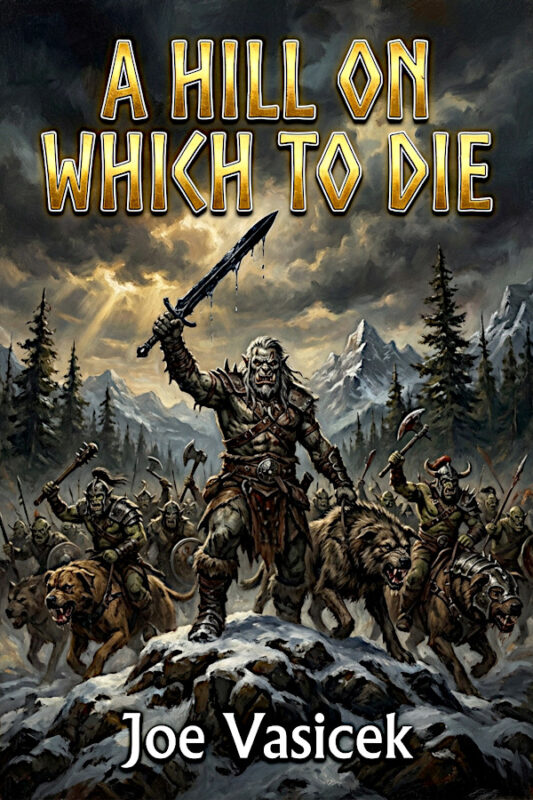
Courage and pride can look almost identical from the outside. Both can drive a warrior to stand his ground, draw his sword, and face death without flinching—but A Hill On Which To Die asks what separates a meaningful sacrifice from a pointless act of self-destruction. Through Garak-Nur, an aging orc war chief struggling to preserve his clan and his authority, this gritty dark fantasy story explores the dangerous line between risking yourself for others and risking others for your own reputation.

Where the Idea Came From

The story began with a phrase I encountered in the comments section of a news article: “Is this the hill on which you want to die?” The question was originally about choosing which arguments are worth fighting online, but it immediately suggested something much more literal—a story about an old orc warrior who must repeatedly decide whether the conflict before him is truly worth his life. Once I imagined Garak-Nur facing a younger challenger in a duel to the death, I knew the question would follow him throughout the story until he finally found the hill on which he was willing to die.

How Courage and Pride Shape the Story

At the beginning of the story, Garak’s courage is tempered by hard-earned wisdom. He is not afraid to fight or die, but he understands that violence should accomplish something. When the Witch-King’s messenger turns the younger warriors of Great Crag against him, Garak does not make a glorious but futile last stand. Instead, he abandons his ancestral home and leads his loyal followers into the wilderness, accepting exile, uncertainty, and the loss of his former power in order to preserve their freedom. Later, he enters an abandoned dwarven stronghold, confronts a dragon alone, and accepts humiliation in exchange for a safe home for the new Black Pine Clan. In these moments, Garak’s willingness to sacrifice himself makes him courageous because his actions serve something greater than his own honor.

The distinction becomes clearer after Nari-Sen defeats him in single combat. Garak swallows the humiliation and orders his warriors to accept her judgment because attacking her followers would cost the clan lives it cannot afford to lose. But once his defeat begins to weaken his authority, he becomes increasingly obsessed with restoring his reputation. He launches a dangerous raid in the middle of winter—not because Black Pine urgently needs territory, food, or captives, but because he wants to prove that he is still worthy to lead. His pride turns his followers’ suffering into a tool for protecting his position. Garak remains physically brave, but the purpose of his bravery has changed: instead of risking himself for the clan, he risks the clan for himself.

What This Theme Says About Us

Pride is dangerous precisely because it can disguise itself as courage. We may tell ourselves that we are defending a principle, protecting our dignity, or refusing to surrender when we are really trying to avoid embarrassment, admit weakness, or accept that our role has changed. True courage is not always the loudest or most defiant choice. Sometimes it means walking away from a fight, enduring humiliation, surrendering power, or allowing someone else to take our place. A Hill On Which To Die asks us to consider not only what we are willing to sacrifice for our convictions, but who else may be forced to pay the price when we mistake our wounded pride for a noble cause.

Why This Theme Matters to Me

David Gemmell has long been one of my favorite fantasy writers, especially because of the raw violence, gritty heroism, and moral clarity that give his stories such power. In writing A Hill On Which To Die, I wanted to capture some of that energy while exploring a hero who is admirable, brutal, wise, and deeply flawed all at once. Garak-Nur is not someone I would ever want to become, but following him forced me to think seriously about leadership, mortality, and the moment when a strength that once made someone heroic begins to become his downfall.

Where to Get the Book

Related Posts and Pages

Explore my other standalone books here.

Return to the book page for A Hill On Which To Die.

Vasicek Free Library: New Titles

A Hill on Which to Die: A Fantasy Novelette

A Hill on Which to Die: A Fantasy Novelette

Is this the hill on which you want to die?

An aging orc war chief must decide which battles to fight and which to walk away from as he leads his clan on a desperate exodus to freedom, knowing that every choice could be his last.

Order Now!
About the Book
Is this the hill on which you want to die? Garak-Nur should be dead by now. At thirty-five years old, the grizzled orc war chief has outlived most of his kind. His tusks are worn, his knee aches from old wounds, and younger warriors eye his position with hungry ambition. When a silver-tongued messenger arrives offering glory in service to the Witch-King of the North, Garak knows the promises are nothing more than gilded chains. Rather than watch his clan march into slavery, Garak makes an impossible choice. In the dead of night, he leads his most loyal warriors away from everything they’ve ever known, venturing into the wilderness to carve out a new home. But the exodus is only the beginning. Finding shelter in abandoned dwarven ruins built above a dragon’s lair, the newly formed Black Pine Clan must fight to survive the coming winter, rival orc bands, and the simmering resentments within their own ranks. As challenges to his leadership mount and his own harems turn against him, Garak faces battle after battle, both with sword and with words. Each conflict forces him to ask the same crucial question: Is this the hill on which I want to die? In a world where strength is everything and weakness means death, one aging warrior must choose which battles are worth fighting and which are better left for another day.
Details
Author: Joe Vasicek
Genres: Action & Adventure, Dragons & Mythical Creatures, Epic, Fantasy, FICTION, General, Short Stories (single author)
Tag: 2025 Release
Publisher: Joe Vasicek
Publication Year: February 2025
eBook Price: $4.99
Audiobook Price: $4.99
Joe Vasicek

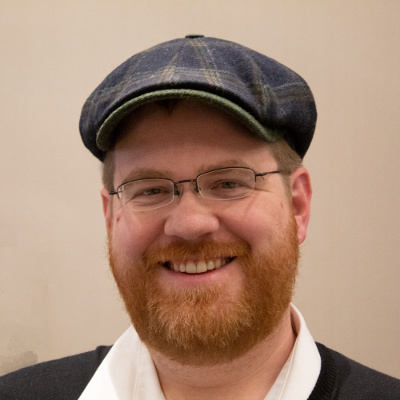
Joe Vasicek fell in love with science fiction and fantasy when he read The Neverending Story as a child. He is the author of more than twenty books, including Genesis Earth, Gunslinger to the Stars, The Sword Keeper, and the Sons of the Starfarers series. As a young man, he studied Arabic at Brigham Young University and traveled across the Middle East and the Caucasus Mountains. He lives in Utah with his wife and two apple trees.

Preview
Some of the links in the page above are "affiliate links." This means if you click on the link and purchase the item, I will receive an affiliate commission. You will not receive any additional charge. As an Amazon Associate I earn from qualifying purchases.

Nothing Found

New covers for A Hill On Which To Die!

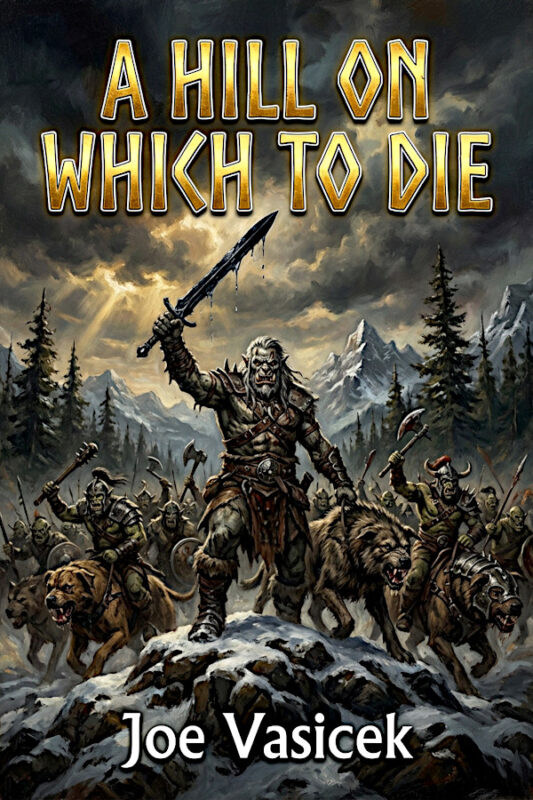
I recently signed up for Thomas Umstattd Jr.’s Patreon, which has given me access to all of the amazing AI tools for authors that he’s been building. One of them is a super slick cover generator. I’ve been planning to rotate “A Hill On Which To Die” into the Vasicek Free Library next month, so I uploaded the book and used the tool to generate a new cover. This is what I got:

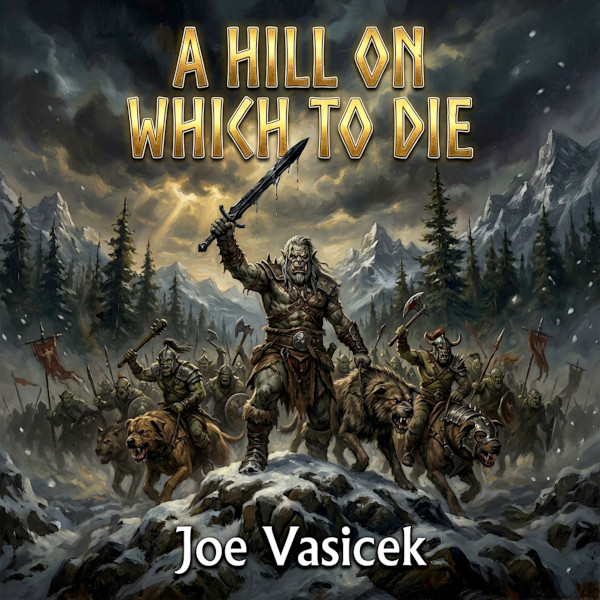
And when I asked it to take that and make it an audiobook cover, it came up with this:

Great stuff!

Fantasy from A to Z: O is for Orcs

Is anyone in this world inherently and irredeemably evil?

That is the moral question at the heart of the fantasy race known most often as “orcs.” They are occasionally called by other names, of course: goblins, tuskers, blackbloods, etc. Sometimes, you will also find different but similar fantasy races filling the same niche: trolls, kobolds, trollocs, ogres, etc. But the thing that ties them all together is that they are both inherently and irredeemably evil.

…or are they? In some iterations, the orcs aren’t necessarily evil, just savage—kind of like Robert E. Howard’s Conan, or his many stories extolling the barbaric hero who stands against the corrupt forces of a decadent civilization. I played around with that myself in my novelette “A Hill On Which To Die.” More recently, such as in Amazon’s Rings of Power series, the orcs are played up as sympathetic creatures, whose only true fault is that they come from a different culture than our own.

Here’s the thing, though. While I enjoy a good redemption arc, or a heel-face turn when it’s done really well, I also believe that there are some people and some cultures in this world that are wholly and irredeemably evil. They may not have started out that way—indeed, my faith teaches me that we are all children of an eternal Heavenly Father who loves us—but my faith also teaches me that evil also exists, and that there are some in this world who cannot be saved, because they have become sons of perdition.

Traditional publishing (and the entertainment industry more broadly) is currently dominated by people who skew to the left in their politics and their cultural values. As such, they are heavily influenced by the philosophies of thinkers like Rousseau, who posited that all people are inherently good, and that evil originates from social structures and institutions. That’s why they are so obsessed with “systemic oppression,” or with stories that obsess over victimization and victimhood—as if being a victim (especially of “colonization”) makes one inherently virtuous.

I don’t think that’s true, though. I think that some cultures are more virtuous or morally good than others. For example, when Columbus discovered the truth about the Amerindians he’d first made contact with—that they were the remnants of a tribe that had been conquered by cannibals, who had slaughtered all their men, put their women on an island, and were now farming them out for meat, visiting them once a year to devour all their infant children, then raping and impregnating them again before leaving—I believe that Columbus was justified in concluding that the culture of this vile cannibal tribe was inherently and irredeemably evil. And I believe that the world was made a better place after this culture was exterminated.

The term “orc” has its origins in Old English, especially in the epic poem Beowulf, where the word “orcneas” refers to monstrous beings who make an appearance in the poem. Tolkien was a scholar of Old English, so when he needed a name for his race of inherently and irredeemably evil creatures, he came up with the name “orc.” Tolkien also saw action in the trenches of WWI as a British soldier, and that undoubtedly influenced him as well.

It is an unfortunate reality of war that in order to fight effectively, you need to dehumanize the enemy. This is true, whether or not the enemy deserves to be dehumanized. World War I was perhaps the most senseless war in history, where the cause that everyone was fighting for was ultimately a suicide pact made by the incompetent and incestuous European royal branches. I honestly don’t know that the Germans were the bad guys in that war (though WWII is a very different story). I honestly don’t know if there were any bad guys—or any good guys, for that matter. The whole war was just a senseless cluster of a catastrophe.

So even though I do believe that some cultures are inherently evil, I can also sympathize with those who take a principled anti-war stance and say that we should all take a step back and focus on the things we have in common before rushing off to war. In our own day and age, there are many corrupt and evil warmongers who are working very hard to dehumanize the various groups that they would have us go to war against, whether those are Jews, Arabs, Russians, Ukrainians, Christians, Muslims, immigrants, or Trump voters. In such a complex world, there is a very real temptation to listen to such voices, and embrace the view that the other side is inherently and irredeemably evil.

And yet, there is such a thing as pure evil. There are some people who cannot—or will not—be redeemed. For that reason alone, I think there is still a place in our fantasy literature for creatures like the orc, who are inherently and irredeemably evil.

All of my books and stories, in series order

A friend of mine recently asked me to give him a list of all my books in series order. That was just the kick in the pants I needed to put this page together. For your convenience, I’m putting it up as a blog post too. The links to all the book pages will appear on the series page as soon as I can get around to it.

Joe Vasicek

Gaia Nova

The Gaia Nova books are all mid-sized novels (75k to 110k words). It is a far-future space opera series that takes place in a galactic empire long after Earth has been lost to legend. They can be read in any order, but they take place in the same universe with recurring characters. They are listed in the order in which they were published. Heart of the Nebula is a direct sequel to Bringing Stella Home.

Bringing Stella Home
Desert Stars
Stars of Blood and Glory
Heart of the Nebula
Mercenary Savior (forthcoming)
Empress of the Last Free Stars (forthcoming)

Star Wanderers

The Star Wanderers books are novellas (15k to 35k). They take place in the same universe as Gaia Nova one thousand years earlier. The first four books are linear, while the last four books are parallaxes of the first four, from the point of view of the side characters.

Outworlder
Fidelity
Sacrifice
Homeworld
Dreamweaver
Benefactor
Reproach
Deliverance

The Jeremiah Chronicles (Omnibus 1-4)
Tales of the Far Outworlds (Omnibus 5-6)

Sons of the Starfarers

The Sons of the Starfarer books are short novels (35k to 45k words) that take place in the same universe as Star Wanderers, with a few recurring minor characters from those books. It is a linear series.

Brother in Exile
Comrades in Hope
Strangers in Flight
Friends in Command
Captives in Obscurity
Patriots in Retreat (forthcoming)
A Queen in Hiding (forthcoming)
An Empire in Disarray (forthcoming)
Victors in Liberty (forthcoming)

Sons of the Starfarers (Omnibus 1-3)

Gunslinger Trilogy

These books are all short to mid-sized novels (50k to 90k words). They take place about 40 years in the future, after Earth makes contact with the galactics.

Gunslinger to the Stars
Gunslinger to the Galaxy (forthcoming)
Gunslinger to Earth (forthcoming)

The Twelfth Sword Trilogy

These epic fantasy books are all mid-sized to long novels (85k words and up).

The Sword Keeper (forthcoming)
The Sword Bearer (forthcoming)
The Sword Mistress (forthcoming)

Genesis Earth Trilogy

These are all mid-sized novels (about 70k words) that take place in the near to mid-future.

Genesis Earth
Edenfall (forthcoming)
The Stars of Redemption (forthcoming)

Short Stories and Novelettes

Below are all of my short stories and novelettes, in the order in which they were published. If they first appeared in a magazine or anthology, I’ve included that in parentheses.

Decision LZ1527 (Leading Edge Magazine, December 2009)
Memoirs of a Snowflake
A Hill on Which to Die
Starchild
L’enfer, c’est la Solitude
(Perehilion SF, March 2016)
The Curse of the Lifewalker
(Sci Phi Journal, June 2016)
The Gettysburg Paradox
Utahraptors at Dawn
Welcome to Condescension
Killing Mister Wilson
My Name is For My Friends
Jane Carter of Earth and the Rescue that Never Was
The Open Source Time Machine

J.M. Wight

Short Stories

Worlds Without Number

Two new stories!

Now that I’m back from Cape Cod, I’ve got two major projects that I’m focused on: finish the first draft of Captives in Obscurity (Sons of the Starfarers: Book V), and get Heart of the Nebula ready for publication in November. Those are some big releases, so you can expect to hear a lot in the coming months about them—especially Heart of the Nebula, which I’ve been working on for the past four years. Lots of exciting stuff!

In the meantime, I had two smaller releases in the past couple of weeks, and I think you guys are really going to enjoy them!

The first is the re-release of “A Hill on Which to Die,” an epic fantasy novelette about a band of free orcs trekking into the wilderness to start a new clan. This is my first real foray into fantasy, but I really enjoyed it and am thinking seriously about writing more books in this universe. If that sounds like something you’d like to see, then give this story a try and let me know what you think by posting a review or shooting me an email.

The second is a short story in the Star Wanderers universe. Longtime readers may recognize it as a story I wrote last year as part of the Short Blitz challenge“Starchild” is a quick read that takes place in a far-off corner of the universe, and shows what life is like on a tiny isolated space colony in the Far Outworlds.

This is only the tip of the iceberg as far as stories go. My goal is to have a new release at least every two months, with short stories in between the major novel releases. I’ve been averaging about one short story every month as far as writing goes, and it looks like quite a few of them are going to come off of the submission pipeline (either by getting picked up or by exhausting the pro/semi-pro markets) in the next year or so. This is all in addition to my novel writing, which hasn’t slowed down in any way from writing short stories.

So you can definitely expect to see more stories from me in the coming months! And as always, if you want to be the first to hear about a new release (as well as special offers and exclusives), then be sure to sign up for my email list.

Thanks for reading!

Nothing Found


Nothing Found