What Makes a “Joe Vasicek” Book?

I recently uploaded all of my books to ChatGPT and asked it to read them all and tell me what makes a “Joe Vasicek” book. The result was a fascinating conversation with the chatbot. It was too long to share in its entirety, so I asked ChatGPT to summarize it as a 1500 word blog post. Here is what it gave me:


Every author has recurring patterns. Sometimes they are obvious: favorite settings, familiar plot structures, beloved tropes. Sometimes they run deeper, beneath genre and surface premise, shaping the emotional and moral logic of the stories themselves. Looking across Joe Vasicek’s published science fiction and fantasy, a clear pattern emerges. His books are not simply space operas, frontier adventures, sword-and-sorcery tales, or clean romantic fantasies. At their core, they are stories about people trying to find, build, defend, or become worthy of home.

A Joe Vasicek book is usually set on the edge of civilization. That edge may be literal outer space: a far-flung colony, an isolated station, a small merchant starship, a dangerous trade route, or a frontier beyond the reach of stable law. It may also be a fantasy frontier: a seacoast, a ruined kingdom, a cursed wilderness, a lonely homestead, or a world recovering from plague, war, and desolation. But whatever form the frontier takes, it is rarely just a backdrop for adventure. It is a moral testing ground.

The central question is not merely whether the hero will survive. It is whether the hero can preserve the things that make survival meaningful: family, faith, freedom, love, loyalty, honest work, and moral courage.

This is why exile appears so often in Vasicek’s fiction. His protagonists are frequently displaced people: wanderers, captives, refugees, orphans, widows, failed apprentices, disgraced sons, forgotten daughters, fugitive lovers, and people who no longer belong in the world that formed them. They may dream of a lost Earth, flee an oppressive warrior culture, survive famine on a failing station, escape slavery, seek a ship, or defend a fragile home from powers that would destroy it. Their longing is not abstract. They want something deeply concrete: a place at the table, a family, a ship, a marriage, a household, a people, a future.

That longing for home is one of the defining features of Vasicek’s voice and vision. In many of his books, home is not something the characters simply return to. It must be built, chosen, earned, or restored. Sometimes it is a starship crew. Sometimes it is a marriage. Sometimes it is a frontier colony. Sometimes it is a homestead in the woods, a kingdom healed from corruption, or a family formed under impossible circumstances. His stories tend to end not merely with enemies defeated, but with the possibility of a stable moral order: a household, a child, a promise, a voyage, a free people, a new beginning.

Closely connected to this is Vasicek’s recurring interest in family formation. Marriage, children, inheritance, kinship, motherhood, fatherhood, and legitimacy are not decorative details in his fiction. They are often central to the worldbuilding. Societies in his books are shaped by who marries whom, who inherits, who belongs, who is cast out, who is enslaved, who is protected, and who is allowed to have a future. This gives even his space opera a domestic and anthropological depth. Starships are not just machines. They are households. Frontier settlements are not just adventure locations. They are embryos of civilization.

This family-centered quality sets Vasicek apart from much of contemporary science fiction and fantasy. In a market often dominated by antiheroes, irony, grimdark despair, eroticized power dynamics, or purely individual self-actualization, Vasicek’s books keep returning to older and more ordinary goods: marriage, children, duty, faith, work, and home. That does not mean the books are soft. His stories include captivity, slavery, war, famine, coercion, betrayal, exile, monsters, corrupt rulers, and civilizational collapse. But the darkness does not usually become the point. It is the pressure under which characters reveal what they truly love.

Another recurring element is freedom versus domination. Vasicek’s villains and oppressive systems often seek control over the intimate foundations of human life. They enslave, coerce, corrupt, conquer, manipulate marriage, break families, reduce people to tools, or turn sacred things into instruments of power. Against them stand people who may be weak, wounded, or compromised, but who still recognize that some things must not be surrendered. A recurring moral pattern in Vasicek’s work is that power becomes evil when it severs itself from love, covenant, humility, and responsibility.

This is especially visible in his fantasy. In the fantasy stories, magic frequently tests the soul. Treasure corrupts. Dark orders twist noble purposes. Forbidden power promises victory while hollowing out the one who wields it. Sacred objects and magical gifts are not merely tools; they expose character. The question is often whether the hero can become worthy of the power placed in his or her hands.

The science fiction handles similar concerns differently. In Vasicek’s SF, the central question is more often civilizational: what kind of society will human beings build on the frontier? Technology, star travel, colonization, lost Earth, trade routes, empires, and small ships all become ways to explore whether freedom and family can survive across distance. The fantasy asks whether the soul is worthy to wield power. The science fiction asks whether civilization is worthy to endure.

Yet the two sides of Vasicek’s work are recognizably connected. A sea mage searching for a crew and a star wanderer seeking a place among the stars are spiritual cousins. A cursed treasure that tests a fantasy hero and a civilization-changing technology that threatens an Outworld culture are variations on the same concern: what happens when power outruns virtue?

Faith is another quiet but persistent current. Vasicek’s books are not always explicitly religious, and many are not “religious fiction” in the usual bookstore sense. But they are shaped by a religious imagination. Providence matters. The universe has moral structure. Choices echo beyond immediate consequences. Suffering is not meaningless. Death is not always the final word. Love, sacrifice, chastity, loyalty, mercy, repentance, and covenant are treated as real forces, not sentimental illusions.

This gives his work what might be called moral gravity. The stories are generally clean, but “clean” is too weak a word for what they are doing. Clean can sound bland, safe, or sanitized. Vasicek’s better books are not harmless. They are morally serious. They often deal with brutal worlds, but without surrendering to brutality. They offer hope, but usually after loss.

That balance—dark trials, hopeful destination—is one of the most marketable aspects of his brand. Readers who are tired of nihilism may find in his books a kind of old-fashioned adventure that does not feel cynical. Readers who enjoy romance but do not want explicit heat may respond to the way his stories treat love as courtship, marriage, loyalty, and family destiny. Readers who enjoy frontier survival may respond to the practical details of ships, homesteads, trade, hunger, labor, and settlement. Readers who want faith-friendly speculative fiction may find his work welcoming without feeling confined to the Christian-fiction aisle.

At the same time, the analysis reveals some challenges. Vasicek’s books cross several genre lanes: hard SF, space opera, sword-and-sorcery, seafaring fantasy, frontier survival, time travel, post-apocalyptic fiction, captivity drama, and short-form idea fiction. That range can make the brand feel scattered. A reader who comes for small-ship space opera may not immediately understand how that connects to a fantasy homestead story or a cursed-treasure adventure. The underlying themes are consistent, but the surface packaging varies widely.

There is also a tonal challenge. Vasicek often writes “clean” fiction, but some of his recurring material is intense: slavery, captivity, concubinage, forced marriage, sexual coercion, famine, genocide, and patriarchal warrior cultures. These are not cozy stories. If marketed carelessly, they can send the wrong signal. The captivity material, in particular, needs to be framed around dignity, survival, identity, and freedom rather than dark-romance titillation or grimdark shock.

The clearest author brand, then, is not simply “clean science fiction and fantasy.” That is accurate but incomplete. The stronger brand is this:

Joe Vasicek writes clean, morally serious frontier science fiction and fantasy about wanderers, captives, exiles, and ordinary heroes building homes and families in dangerous worlds.

Or shorter:

Frontier science fiction and fantasy about faith, family, freedom, and finding home among the stars.

Or more distilled still:

A Joe Vasicek book is about finding home on the frontier without losing your soul.

That is the through-line. Whether the story involves starships, sea mages, cursed treasure, lost Earth, warrior clans, alien worlds, magical swords, or widowed mothers, the deeper movement is the same. The world is dangerous. Civilization is fragile. Power corrupts when severed from virtue. But love, faith, family, and moral courage can still make a home in the wilderness.

That is what makes a Joe Vasicek book.
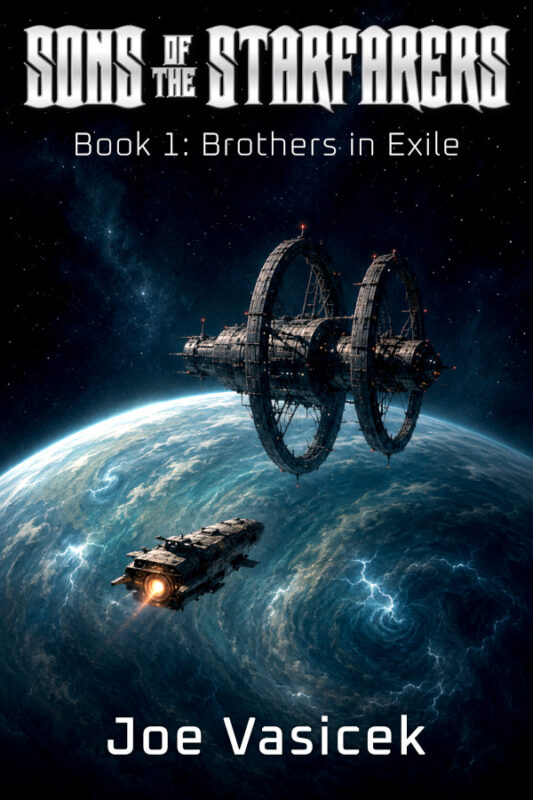
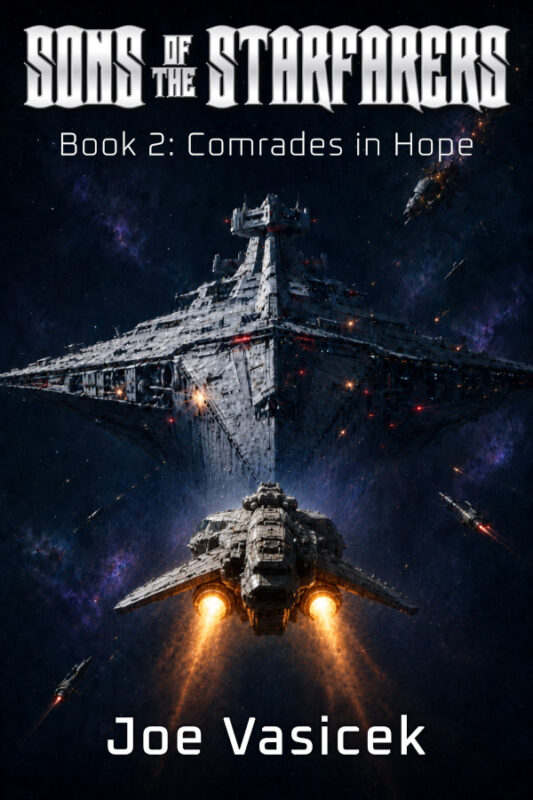
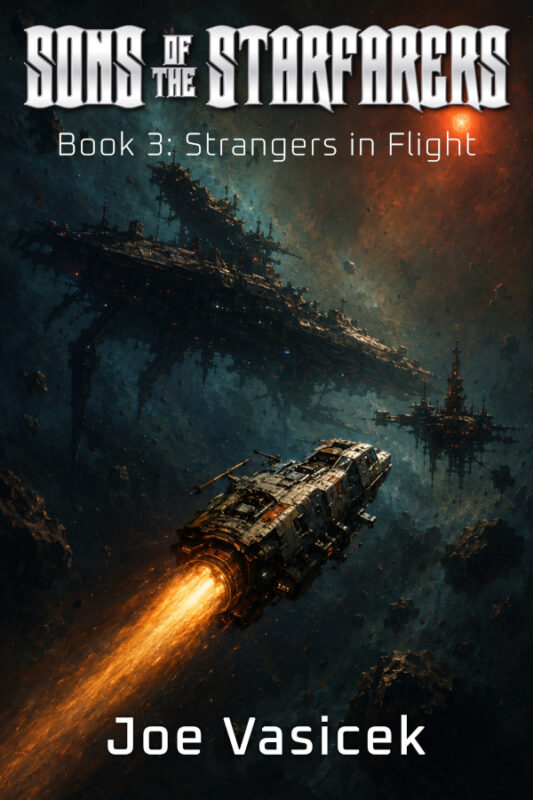
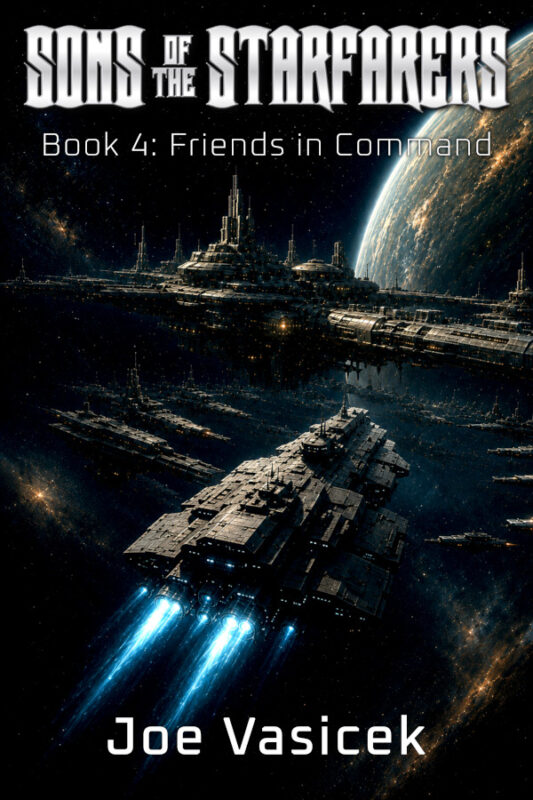
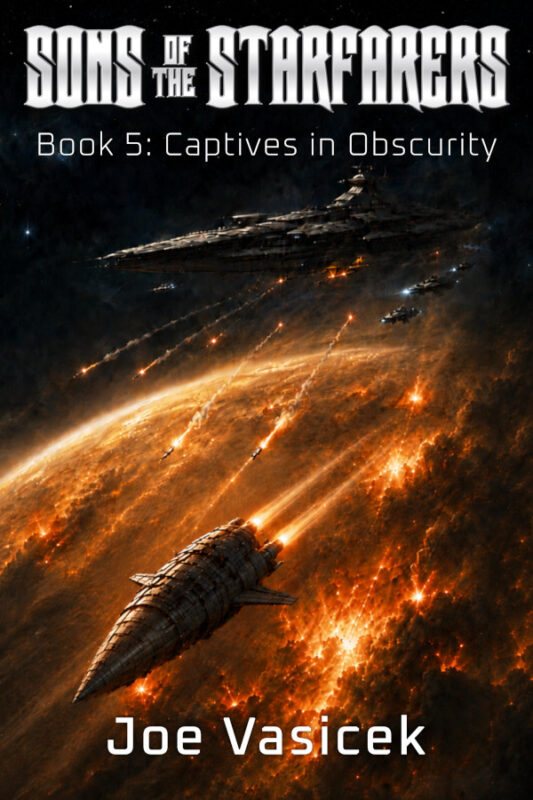
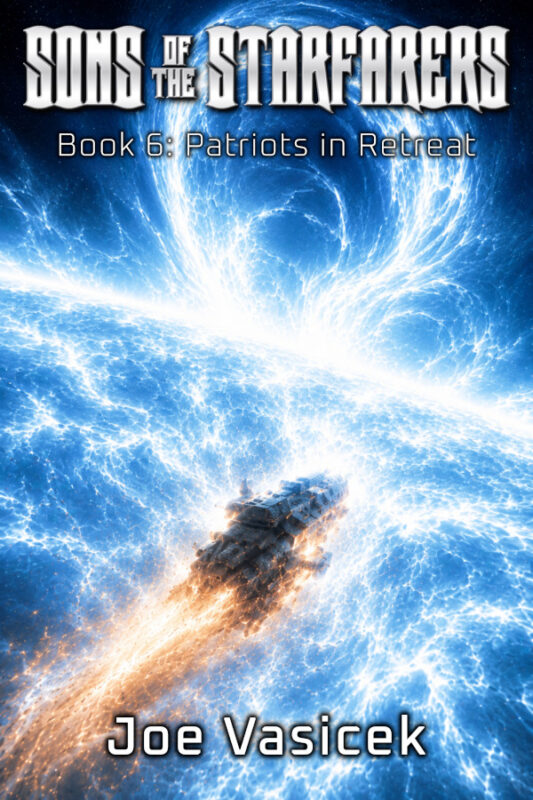
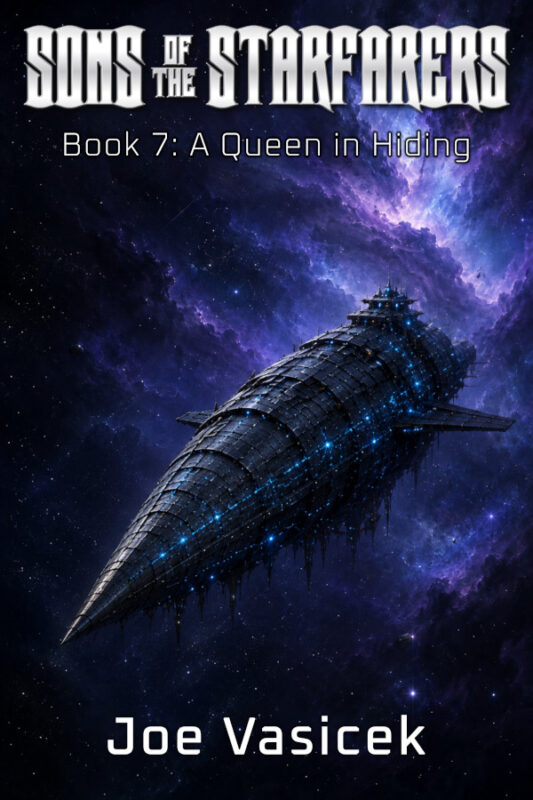
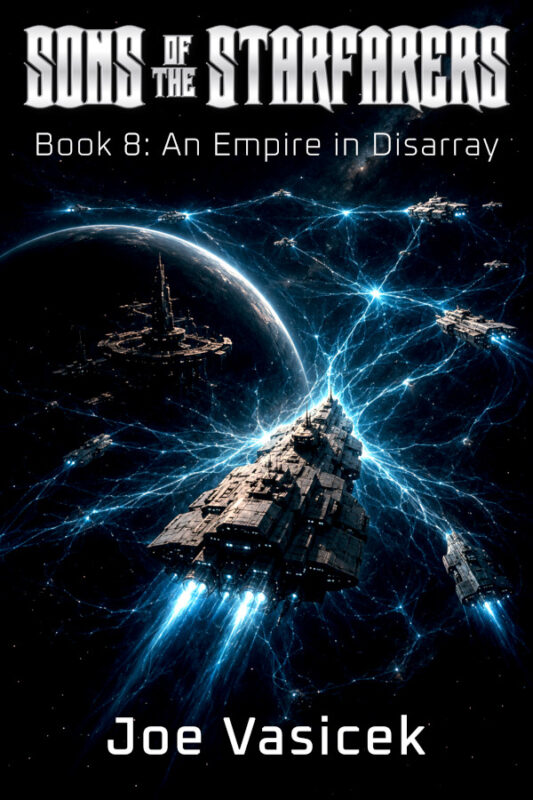
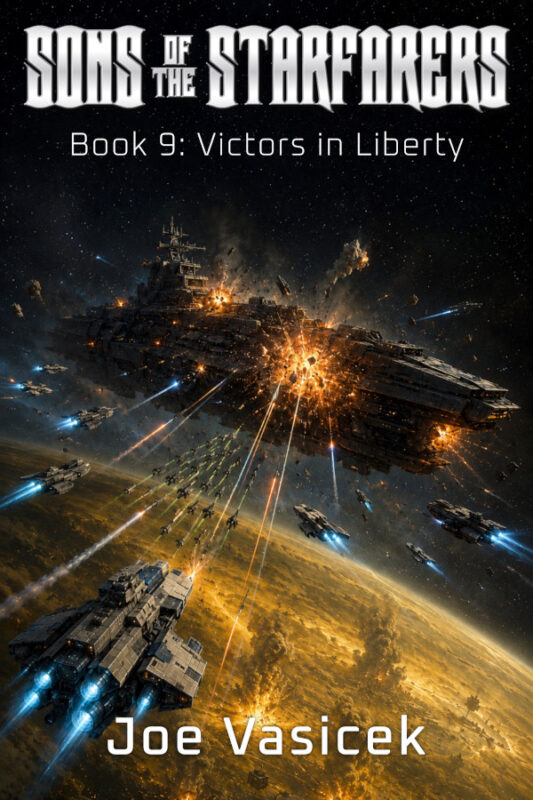
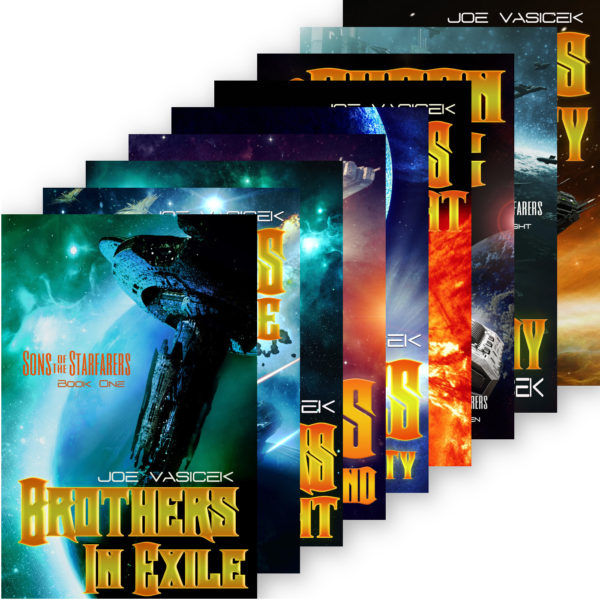
New Sons of the Starfarers Covers!

Ever since I got the pro version of ChatGPT (and/or the AWESOME Patron Toolbox over at Author Media), I’ve been sloooooowly going through my backlist, updating blurbs, covers, and metadata. One of my old series that really needs new covers is Sons of the Starfarers. Check out these new ones!

These will hopefully go up over the next week or so. Next up: the Genesis Earth Trilogy!

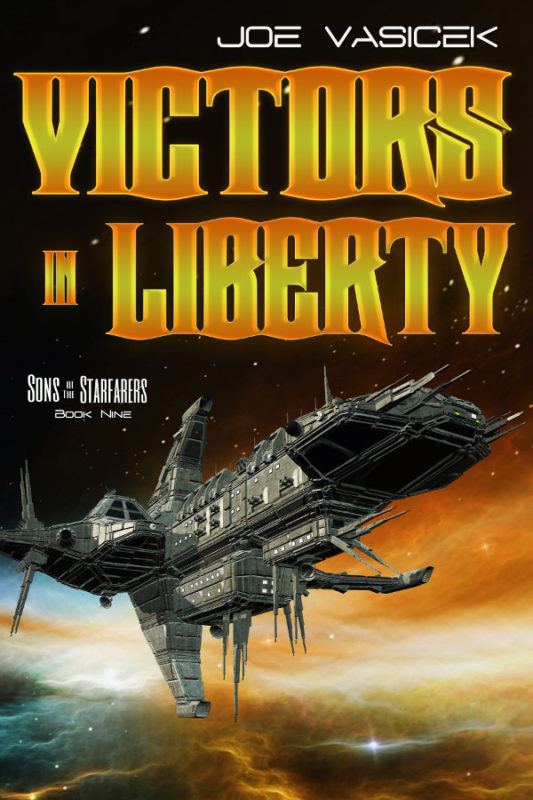
The Cost of Redemption in Victors in Liberty

In Victors in Liberty, the final book of the Sons of the Starfarers space opera series, characters who have survived interstellar conflict must face the consequences of their past decisions. Redemption here is not an easy reset, but a costly path that requires truth, trust, and the courage to confront the damage the past has left behind.

Where the Idea Came From

The idea behind this theme grew from a simple question that echoes throughout the series: What happens after someone has already made terrible choices? Many science fiction stories explore rebellion, war, and survival, but fewer explore what comes after—the long work of rebuilding trust, healing broken loyalties, and choosing who we will become next. The Sons of the Starfarers series began as a space opera about lost colonies, ancient enemies, and humanity’s place among the stars, but as the characters grew, their struggles with guilt, forgiveness, and belonging became just as important as the battles between worlds.

How the Cost of Redemption Shapes the Story

Throughout Victors in Liberty, the characters confront the reality that redemption is never simple. Past betrayals, divided loyalties, and painful memories still shape the present. The question is not whether the past can be erased—it cannot—but whether people can choose a different path going forward. Trust must be rebuilt slowly, and sometimes the greatest act of courage is admitting that you were wrong and asking for the chance to try again.

This struggle touches nearly every major character in the story. Some are trying to forgive others. Some are trying to forgive themselves. Others must decide whether redemption is even possible in a universe where survival often demands hard choices. The result is a character-driven science fiction story where moral decisions matter as much as starships and strategy. The fate of entire worlds may be at stake, but the deeper question is whether broken people can still become something better than what their past suggests.

What The Cost of Redemption Says About Us

At its heart, this theme reflects a truth about human nature. Everyone makes mistakes, and some mistakes feel impossible to undo. Yet history—and everyday life—shows that people are capable of change, growth, and restoration. Redemption does not mean pretending the past never happened. Instead, it means carrying the weight of that past while choosing to build something better. Stories like this resonate because they remind us that hope is not found in perfection, but in the courage to keep moving forward.

Why This Theme Matters to Me

One of the reasons I keep returning to this theme is because I believe redemption is one of the most powerful ideas in storytelling. The characters in this series face enormous external conflicts, but the battles that matter most are the ones inside their own hearts. I’ve always been drawn to stories where people who feel broken or unworthy discover that their story is not finished yet. That possibility—that a person can fall, struggle, and still rise again—is something I find deeply hopeful, both in fiction and in life.

Where to Get the Book

Related Posts and Pages

Explore the series index for the Sons of the Starfarers series.

Return to the book page for Victors in Liberty.

Is Victors in Liberty for You?

Victors in Liberty is for readers who want space opera that stays intensely human even when the stakes stretch across worlds. It delivers a tense, emotionally layered finale full of loyalty, sacrifice, found-family bonds, war, freedom, and the cost of choosing who you will become.

What Kind of Reader Will Love Victors in Liberty?

If you love …

  • character-driven military space opera with deep personal stakes
  • long-form science fiction series where relationships matter as much as battles
  • stories about loyalty, identity, duty, and the search for freedom
  • found family, reluctant alliances, and wounded people trying to become whole
  • epic series finales that feel both hard-won and emotionally intimate

…then Victors in Liberty is probably your kind of story.

What You’ll Find Inside

Victors in Liberty follows Reva, Isaac, Mara, Aaron, Ayesha, and the wider cast of Sons of the Starfarers as they face the final consequences of everything the series has been building toward: war on a planetary scale, divided loyalties, the pressure of leadership, and the question of what kind of future can be saved without losing the soul of the people fighting for it. The emotional journey is tense, bruised, and deeply personal, yet still hopeful. The result is a fast-moving, character-centered space opera finale that blends military action, telepathic mystery, moral struggle, and a persistent belief that endurance, mercy, and human connection still matter.

What Makes Victors in Liberty Different

Like the best military and character-driven space opera, this story offers fleet action, political danger, and high-stakes survival—but what sets Sons of the Starfarers apart is how much it cares about inner conflict, chosen loyalty, and the spiritual and emotional cost of war. This is not just a series about ships, battles, and empires. It is also a series about fractured people trying to build trust, keep promises, and find freedom without becoming monsters themselves. Even at its largest scale, the story remains intimate, with the fate of worlds constantly tied to personal choices and relationships.

What You Won’t Find

You won’t find hard science fiction focused mainly on technology, nor a detached military thriller where tactics matter more than people. You also won’t find a grimdark finale that treats human attachment as weakness. This series goes to painful places, but it keeps returning to loyalty, conscience, healing, and hope.

Why I Think You Might Love Victors in Liberty

I think this story matters because it feels earned. It carries the weight of a long journey—both for the characters and for the series itself—and that gives the ending a sense of promise fulfilled. More than that, it is a story for readers who care about perseverance: not just surviving hardship, but continuing to choose responsibility, love, freedom, and meaning when the easy path would be to give up. That sense of endurance, commitment, and gratitude is part of what gives this finale its heart.

Where to Get the Book

Related Posts and Pages

Explore the series index for the Sons of the Starfarers series.

Return to the book page for Victors in Libery.

$9.99 sale for Sons of the Starfarers series bundle. Merry Christmas!

I’m currently running a sale for my Sons of the Starfarers series bundle, available only on my online author bookstore. From now to the end of December, you can get all nine books in my flagship series for just $9.99.

Merry Christmas!

It’s out! The ninth and final SONS OF THE STARFARERS book!

Victors in Liberty

Victors in Liberty

$9.99eBook: $2.99Audiobook: $8.99

As Gulchina's forces bombard Edenia II from orbit, Mara Soladze and the Deltana brothers rush to the planet's aid. Trapped on the surface, Reva finds an unlikely ally—one who proves to be a game changer for them all.

More info →

It’s out! Four years and two months after the publication of Brothers in Exile, the Sons of the Starfers series is now complete!

This book release marks the end of an era for me. I have to admit, there were times I wondered whether it was worth finishing this series at all. But I made a promise when I published the first book, and just like Sam Kletchka, I always keep my promises, dammit.

Judging from the reader response over the last couple of books, I’m glad I did. And the next time I launch a 9+ book series, I’ll be sure to write all of the books first, before publishing the first one. Four years is far too long to drag out a series like this.

In any case, Victors in Liberty is out now, and if you’ve enjoyed the rest of the series, I think you’re really going to like how it all wraps up. I certainly had fun writing it.

Thanks for reading!

Joe

June Update

Greetings, humans! I am alive. I’m actually doing quite well right now. Lots of stuff going on behind the scenes, and it all seems to be coming together quite nicely.

First, Victors in Liberty is now up for preorder, with a release date of July 22nd. This means that the Sons of the Starfarers series is now officially complete! The books have all been written, the plot threads have all been wrapped up (except for one or two, in case I ever decide to write another story), the edits are in, and the final versions have all been uploaded. Four and a half years went into this, and now it’s DONE!

I wrote a lengthy author’s note where I talked about the ups and downs I went through while writing this series. Basically, Sons of the Starfarers was the series that really disciplined me, turning me from a write-when-you-can, publish-when-you-feel-like-it kind of writer to one who makes and keeps deadlines and holds to a consistent release schedule.

Midway through writing this series, I really didn’t know if it was worth it to continue, but I decided to keep with it because I’d made a promise to my readers and I was going to keep it, even if there were only a few dozen of you. As it turns out, there’s quite a few more, for which I am very grateful. If you’ve been waiting since 2014 to read this series, I’m happy to report that your wait will soon be over.

As for my next WIP, I’m about a third of the way through Gunslinger to the Galaxy with a deadline of June 30th. It’s going to be tough to keep that deadline, because I’m moving before the end of the month and don’t yet know where my next place is going to be. Nothing too serious, it’s just that my contract is coming up so it’s time to move on. I’m toying with the idea of buying a National Parks pass and living out of a tent for the next two months, but in all reality I’ll probably just get a summer contract here in the Provo/Orem area. After that, who knows?

My plans are to write Gunslinger to the Galaxy and Gunslinger to Earth over the summer, and publish them both before the end of the year. A couple of years ago, this would have been a tall order, but I’ve reworked my writing process since then to the point where I don’t need multiple drafts to write clean copy. That’s partly the reason why I haven’t been blogging much recently. I’ll do a post on it sometime, if you guys are interested.

Once the Gunslingers trilogy is complete, I plan to finish Edenfall and The Stars of Redemption next. That’s another promise I need to keep to my readers. I don’t feel quite so bad, since Genesis Earth works well as a standalone, but I do need to finish the trilogy and I plan to do that before the end of next year.

On the publishing front, I’m doing a whole bunch of things behind the scenes, but the most visible thing you’ll probably see next is paperback releases for most of my books. It’s been a long time coming, and it will probably be a few months before it happens, but I plan to get those out before the end of the summer.

That’s pretty much it for now. Thanks for reading, and here’s where you can get Victors of Liberty:

Victors in Liberty

Victors in Liberty

$9.99eBook: $2.99Audiobook: $8.99

As Gulchina's forces bombard Edenia II from orbit, Mara Soladze and the Deltana brothers rush to the planet's aid. Trapped on the surface, Reva finds an unlikely ally—one who proves to be a game changer for them all.

More info →

Mid-May update

Holy cow, it’s been forever since I’ve written a proper update. For a while there, it seemed to be nothing but more of the same. Then I got caught up with all the other things that come along with writing and publishing, and the blog sort of fell by the wayside.

Don’t worry, I’m still writing. In fact, I’m only a couple of scenes away from finishing Victors in Liberty, the last book in the Sons of the Starfarers series. A couple of days ago, I wrote a scene that I’ve been waiting to write for the last four years. Good times.

I was hoping to have this book up for preorder right now, but I think it will be better for the delay. Still aiming for a release date in July. My editor says he’s got an open slot, so I should be sending it out to him before the end of the week.

The more pressing stuff has all been on the marketing end. The GDPR has half the indie writing community in a tailspin, and I had to do a bit of research and make a few changes, like uploading my email list software. The GDPR, in case you haven’t heard, is the EU’s latest attempt to shoot sparrows with howitzers. It’s a series of data regulations aimed at big corporations like Facebook and Google, but it’s really the small businesses who are feeling the crunch. Let’s just say that my first-generation Czech immigrant ancestors made the right choice when they told the rest of Europe “y’all can go to hell—we’re going to Texas!”

Fortunately, everything is more or less in order as far as GDPR goes, or at least clost enough. The truth is, nobody knows. It’s stuff like this that made me want to write about the Outworld frontier in the first place, where there are no laws or government bureaucrats to control you. But I digress.

On a much lighter note, I’ve taken advantage of this opportunity to reorganize my email list. Specifically, I’ve split it into three lists of approximately 2,000 subscribers each, which I hope to eventually grow into five. The idea is to spread out my email campaigns over the course of four or five days, so that instead of getting a huge sales spike (which the Amazon algorithms tend to push back against), sales will be a bit more even, hopefully leading to better alsobots and other favorable treatment from the algorithms.

Being the eclectic nerd that I am, I have given these lists the following names:

  • LEGIO I PIA FIDELIS
  • LEGIO II VICTRIX
  • LEGIO III FELIX
  • LEGIO IV FIRMA
  • LEGIO V FULMINATA

And now I’m going through all my titles, updating the backmatter to add a signup page for my list along with the teaser chapters and other links.

So that’s what I’ve been up to, mostly. I’m also reading a lot more, and will have some book reviews real soon. Also, there’s the secret project, which I anticipate will take the next several months, possibly even years, to come to fruition.

Next WIP: Gunslinger to the Galaxy!

April update

Sorry to go dark for so long. I’ve been sick off and on for the last two months, first with a sinus infection, then with a lung infection, and lately with a persistent stomach flu. Thankfully, I’ve been functional through all of it, but not at 100%, which is why I’ve neglected the blog.

I have been writing, though. I’m currently about a third of the way through Victors in Liberty, and should finish it within the next few weeks. I’m also revising it as I go along, so as to have a publishable final draft. We’re still on track for a July release date.

In the last few weeks, I’ve been crunching a lot of book sales numbers and formulating a better business plan. The goal is to make the writing profitable enough to pay myself more than sweatshop wages. I think I’ve figured out a way to get there before the end of this year.

I also recently discovered Jordan Peterson, and have been listening to many of his lectures while doing mindless chop-wood carry-water tasks. He’s an incredible guy. One of the last few sane and reasonable people in the world with a large enough platform to counteract the constant assault of insanity that passes for today’s news cycle.

I’ve also published a double novel bundle for Bringing Stella Home and Heart of the Nebula. I originally published it exclusively on Kobo, to get around Amazon’s price matching policy so I could run useful promotions with KWL. But the Kobo promotions use coupon codes now, which means there’s no reason not to make this title available everywhere.

Nothing Found

I’m also experimenting a lot with my email list, trying out a new style for my newsletter and cycling through promotions more regularly. Makes a lot more work, since Amazon won’t make a book free unless you price match it first, but hey it’s not as bad as digging ditches.

Lots of other stuff going on behind the scenes, which I’d rather not get into just yet. When there’s significant movement, I’ll be sure to let you know.

I am so ready to finish the Sons of the Starfarers series. It’s been difficult to write at times, but I’m excited with how the last book is turning out and think it will provide an excellent ending to a story that has turned out better than I expected it to. Really looking forward to get it out there.

That’s just about it for now. Don’t worry about me: life is good and I’m still writing.

February Update

So much stuff going on behind the scenes here.

First, Sons of the Starfarers is coming along right on schedule. A Queen in Hiding (Book 7) is now up for preorder, and An Empire in Disarray (Book 8) is with my editor. Should be up for preorder in the next few weeks, with a release date of May 18th.

I’ve made a few changes to my publishing schedule for the year. Sons of the Starfarers is still on track for release dates in March, May, and June. I’ve switched up some of the short stories, though, and decided to focus on finishing the Gunslingers trilogy before I work on anything else. Both of those books (Gunslinger to the Galaxy and Gunslinger to Earth) should be out before the end of the year.

I’d rather have one complete trilogy than three partially completed ones, which is where things stand right now. The first book, Gunslinger to the Stars, has done modestly well for a standalone, and it was so much fun to write that I’m sure the sequels will be as well. I could use a fun project to lighten things up a bit.

The goal is still to release a new book (and/or rerelease an old one) every month this year, and I’m very much still on track to do that.

On a slightly different note, I’m considering whether or not to start a Patreon account. The goal is to set up a small supplementary income stream that enables me to publish more books without taking too much time away from the writing. I still have a lot of research to do, but some of the benefits I’m considering include digital ARCs and entry into a character naming lottery.

What do you think? Should I start a Patreon? Let me know what you think by filling out this short survey.

Other than that, it’s mostly just a bunch of little stuff and adjustments here and there. Data crunching, marketing analysis, and a lot of small and incremental improvements that don’t warrant mention (yet).