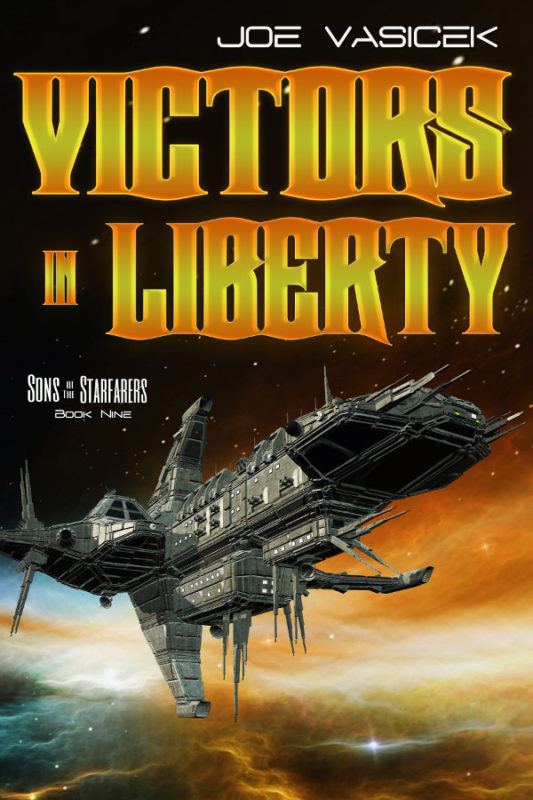
The Cost of Redemption in Victors in Liberty

In Victors in Liberty, the final book of the Sons of the Starfarers space opera series, characters who have survived interstellar conflict must face the consequences of their past decisions. Redemption here is not an easy reset, but a costly path that requires truth, trust, and the courage to confront the damage the past has left behind.

Where the Idea Came From

The idea behind this theme grew from a simple question that echoes throughout the series: What happens after someone has already made terrible choices? Many science fiction stories explore rebellion, war, and survival, but fewer explore what comes after—the long work of rebuilding trust, healing broken loyalties, and choosing who we will become next. The Sons of the Starfarers series began as a space opera about lost colonies, ancient enemies, and humanity’s place among the stars, but as the characters grew, their struggles with guilt, forgiveness, and belonging became just as important as the battles between worlds.

How the Cost of Redemption Shapes the Story

Throughout Victors in Liberty, the characters confront the reality that redemption is never simple. Past betrayals, divided loyalties, and painful memories still shape the present. The question is not whether the past can be erased—it cannot—but whether people can choose a different path going forward. Trust must be rebuilt slowly, and sometimes the greatest act of courage is admitting that you were wrong and asking for the chance to try again.

This struggle touches nearly every major character in the story. Some are trying to forgive others. Some are trying to forgive themselves. Others must decide whether redemption is even possible in a universe where survival often demands hard choices. The result is a character-driven science fiction story where moral decisions matter as much as starships and strategy. The fate of entire worlds may be at stake, but the deeper question is whether broken people can still become something better than what their past suggests.

What The Cost of Redemption Says About Us

At its heart, this theme reflects a truth about human nature. Everyone makes mistakes, and some mistakes feel impossible to undo. Yet history—and everyday life—shows that people are capable of change, growth, and restoration. Redemption does not mean pretending the past never happened. Instead, it means carrying the weight of that past while choosing to build something better. Stories like this resonate because they remind us that hope is not found in perfection, but in the courage to keep moving forward.

Why This Theme Matters to Me

One of the reasons I keep returning to this theme is because I believe redemption is one of the most powerful ideas in storytelling. The characters in this series face enormous external conflicts, but the battles that matter most are the ones inside their own hearts. I’ve always been drawn to stories where people who feel broken or unworthy discover that their story is not finished yet. That possibility—that a person can fall, struggle, and still rise again—is something I find deeply hopeful, both in fiction and in life.

Where to Get the Book

Related Posts and Pages

Explore the series index for Sons of the Starfarers.

Return to the book page for Victors in Liberty.

The Cost of Forced Redemption in A Queen in Hiding

What if you had the power to change someone from the inside out—to erase their worst impulses, soften their rage, rewrite their guilt? Would that be mercy… or violation?

In A Queen in Hiding, the seventh book of the Sons of the Starfarers space opera series, the question isn’t whether people need redemption. It’s whether redemption still counts if it isn’t chosen.

Where the Idea Came From

Across the Sons of the Starfarers series, I’ve explored war, exile, occupation, resistance, loyalty, and moral courage under pressure. But as the story world expanded—and as certain characters gained the ability to influence minds directly—I kept coming back to a troubling “what if”:

If you could fix what is broken in someone, why wouldn’t you?

History is full of movements, regimes, and even well-meaning reformers who believed they were improving humanity. Philosophically, it’s an old debate about free will and the “greater good.” Personally, it grew out of my fascination with the thin line between protection and control—the same tension that runs through this entire military science fiction series. In a universe shaped by authoritarian powers and fragile freedom, the temptation to force goodness is always lurking.

How The Cost of Forced Redemption Shapes the Story

In A Queen in Hiding, redemption becomes more than a character arc—it becomes a weapon, a responsibility, and a moral fault line.

As the collective grows and new abilities emerge, the characters are confronted with a frightening possibility: they could intervene directly in someone’s inner life. They could remove trauma. Suppress destructive impulses. Even erase memories that cause pain or danger. From a distance, that sounds compassionate. Up close, it raises a chilling question: who decides what a person is allowed to remain?

This tension threads through Reva’s choices in particular. Her desire to protect, heal, and rebuild is sincere. But good intentions do not erase consequences. The story keeps pressing on a single point: healing that bypasses consent becomes indistinguishable from domination. And domination—no matter how kindly framed—is the very evil the series has been resisting from the beginning.

Other characters push back, arguing that redemption must be chosen. Growth without agency is not growth at all; it’s replacement. That debate doesn’t just create personal conflict—it drives strategic decisions, shapes alliances, and forces the collective to define what kind of future they’re actually building.

In that way, this theme doesn’t stand alone. It reinforces one of the central through-lines of Sons of the Starfarers: freedom is fragile, and you can lose it even while trying to save others.

What The Cost of Forced Redemption Says About Us

Modern readers live in a world full of systems that promise improvement—political movements, therapeutic models, technological algorithms, ideological crusades. We all feel the pull to correct, reform, and “fix” what’s wrong.

But A Queen in Hiding asks a deeper question:
Is a person still themselves if their moral growth was imposed?

The novel suggests that redemption without consent erases the very dignity it claims to restore. True change must involve choice—even when that choice is slow, painful, and uncertain. Hope, in this view, isn’t about control. It’s about trusting that people can become better without being rewritten.

Why This Theme Matters to Me

I’ve always been drawn to stories about loyalty, sacrifice, and protecting the people you love. But the older I get, the more I’m convinced that protection can turn into control if we’re not careful. In writing A Queen in Hiding, I felt that tension deeply. It’s tempting to imagine a world where brokenness could simply be edited out. Yet I’ve come to believe that freedom—including the freedom to fail—is part of what makes redemption meaningful at all.

If the Sons of the Starfarers series is about anything, it’s about preserving human dignity in the face of overwhelming power. And dignity cannot survive without consent.

Where to Get the Book

Related Posts and Pages

Explore the series index for Sons of the Starfarers.

Return to the book page for A Queen in Hiding.