None of these books/authors are so terrible (or so woke) (except maybe for Kim Stanley Robinson) that I would have ranked them below “no award.” With that said, I just didn’t think any of these books were good enough for me to vote for.
Greg Bear’s Moving Mars is basically a sci-fi retelling of the 60s student protest movement on Mars. That’s the big draw. The more I learn about what was actually happening in the 60s, though, the more insufferable I find the hippies and their ideological descendants to be. Needless to say, I DNFed this one.
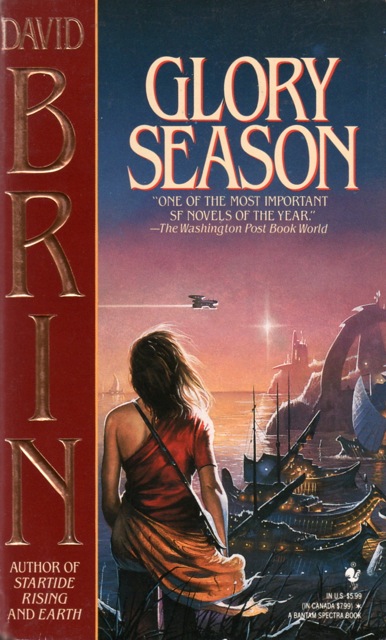
I skipped the book by David Brin, because he’s just such a dogmatic atheist. I tried his Uplift books and DNFed them for much the same reason. If you’re going to be so dogmatic in your religious views that you cannot build a fictional world where the opposite views might plausibly be true, I have no time for you. That’s equally true for theists as for atheists (unless, of course, the book falls into the religious fiction genre).
I tried Virtual Light, but DNFed it only a couple of pages in, due to some explicit violence against children. Now that I’m a father, I have a really low tolerance for that kind of stuff. I’ve also found Gibson to be a bit too dark and gritty for my taste. He seems to occupy the same literary niche as Neal Stephenson, and rub me wrong in much the same way.
It’s been so long since I DNFed Beggars in Spain that I’ve forgotten what my issue with it was. I found the basic premise to be quite interesting, and got about halfway through the book. Ultimately, though, I think I just got bored with it. But I might come back to this one. Of all the books on the Hugo ballot this year, this is the one I’m most willing to try again.
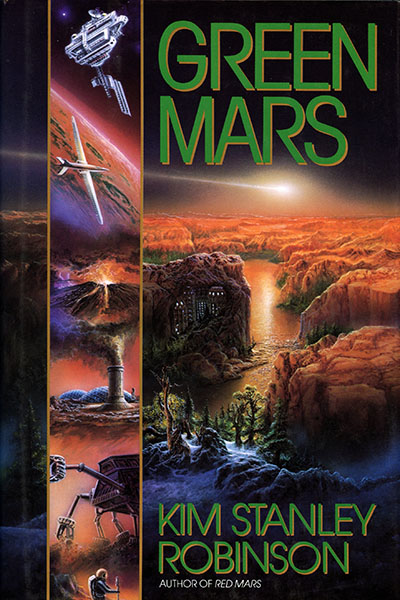
As for Green Mars, I just couldn’t get into it. Part of that is how insufferable I find KSR’s self-righteous liberal politics to be, but another part was the sexual content in the first few pages. I read Red Mars back in college, when my threshold for those kind of content issues was much lower, but I did come very close to DNFing it after the farm orgy scene. Also, Red Mars was a bit of a slog for my younger self, since I never really latched on to any of the characters. Same with Green Mars. Just a lot of people doing a lot of things, when it was clear that all the (crunchy liberal) author really cared about was the capital “I” Idea. Pass.
I didn’t hate any of these books, but I didn’t love any of them either—which is fairly typical for me of 90s era Hugo Awards. Let’s go down the list.
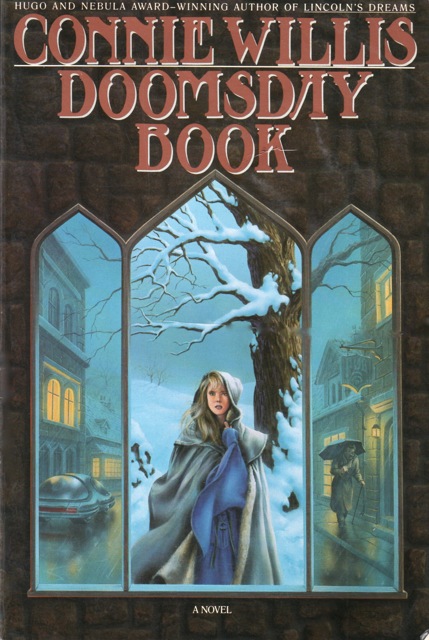
Doomsday Book is often held up as Connie Willis’s best, but I thought it lost the plot a bit when the time travelers had to simultaneously face a pandemic in their own future time while also having to rescue the lost apprentice time traveler from the black death in medieval England. If you’re reeling from a pandemic, what the heck are you doing sending time travelers back as if it’s a normal day on the job? Also, Connie Willis really has no love for the medieval era, and it shows. Blackout and All Clear were much better, partially because of how much Connie Willis clearly loves WWII-era Britain.
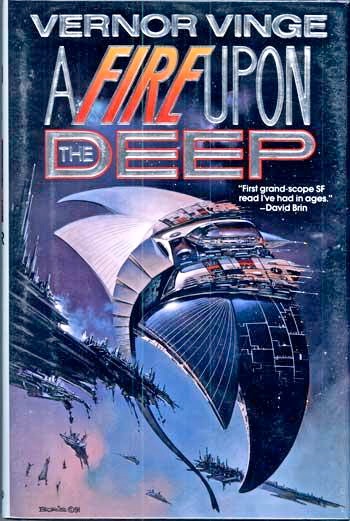
If there’s one book in this list that I should try again, and probably will, it’s A Fire Upon the Deep by Vernor Vinge. It’s the kind of science fiction that’s right up my wheelhouse, and I’ve enjoyed Vernor Vinge before (Rainbows End is the best so far). But this book is so freaking huge, and I never latched on to any of the characters… oh, and the central conceit of the aliens, that the small collective packs form a hive mind that thinks and acts like an individual—that didn’t really work for me either time I attempted to read this book.
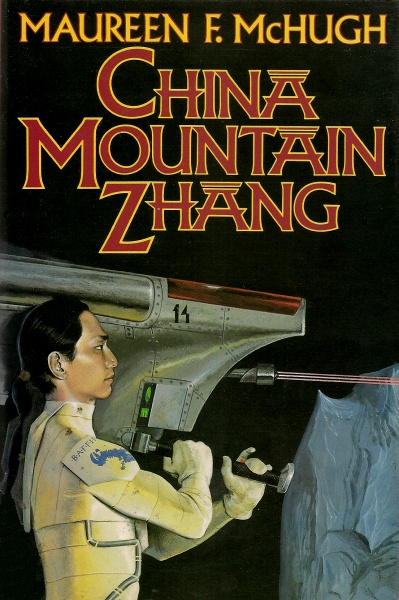
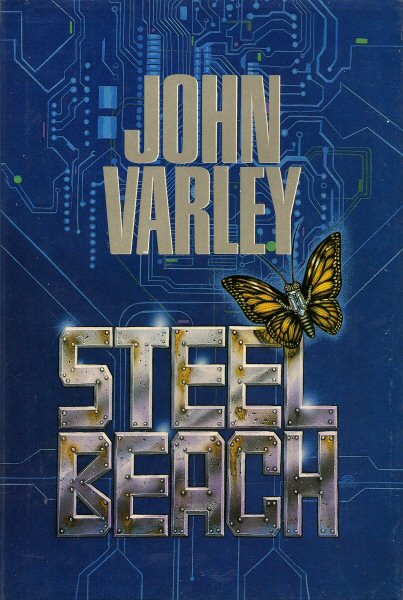
I screened Steel Beach and China Mountain Zhang through ChatGPT for objectionable content and decided to skip both of them. Here is what ChatGPT said about China Mountain Zhang that made me decide to skip it:
The story engages deeply with themes of intersectional identity, including race, sexual orientation, and societal roles. Zhang’s struggles as a gay man in a conformist society are a significant part of the narrative. The book also critiques authoritarianism and explores social dynamics through a progressive lens. While these themes are integral to the story and handled with subtlety, they align with a modern “woke” perspective.
And here’s what it said about Steel Beach that made me decide to skip it:
Language: Strong language is used throughout, reflecting the irreverent tone of the protagonist and the society depicted.
Gender and Identity: Steel Beach explores themes of gender fluidity and personal identity in a society where individuals can easily change their biological sex. This aspect of the world is presented as normalized rather than contentious.
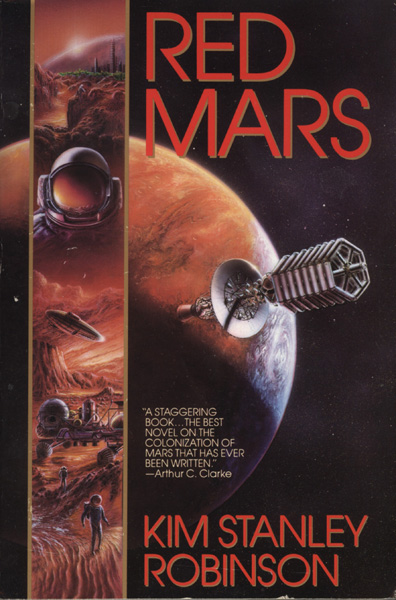
As for Red Mars, I read this one way back (way way back) when I was a freshman in college. At the time, I was still working out what I believed politically, so most of KSR’s leftism went right over my head. However, there were a few sexually explicit scenes that weirded me out, especially the one where the colony team’s depressed psychiatrist discovers—and joins—the bizarre sex cult and their group orgies in the farm module. I still finished the book, but I declined to read the rest of the series.
What is it with crunchy leftist authors and bizarre, explicit sexual content? Why do they always seem to feel a need to fill their books with weird and pointless sex? There are so many books I’ve read for this series that started out strong, but ultimately devolved into sexual degeneracy that added nothing to the story. It’s almost like they felt a compelling need to add the degeneracy for its own sake. Maybe it’s a boomer thing? A “spirit of the age” possession of some sort? I honestly don’t know.
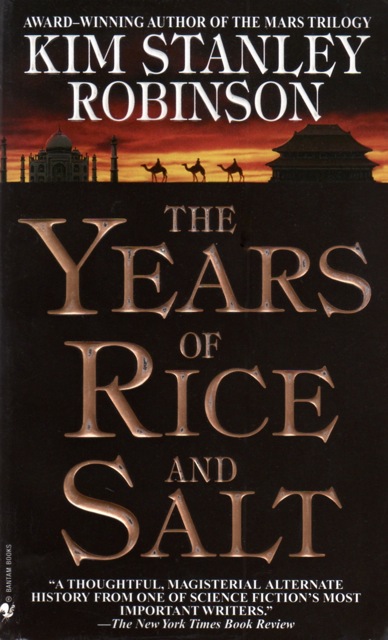
The Years of Rice and Salt by Kim Stanley Robinson
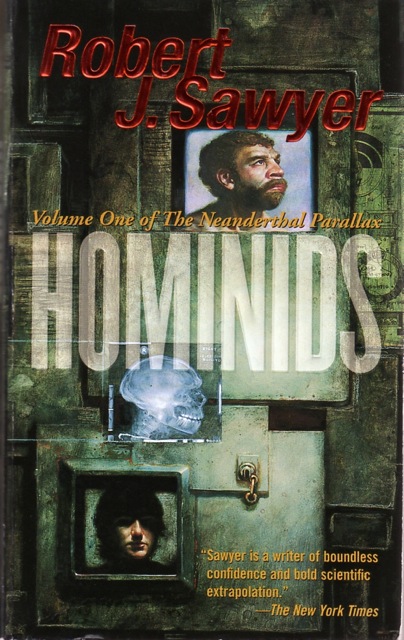
Hominids by Robert J. Sawyer
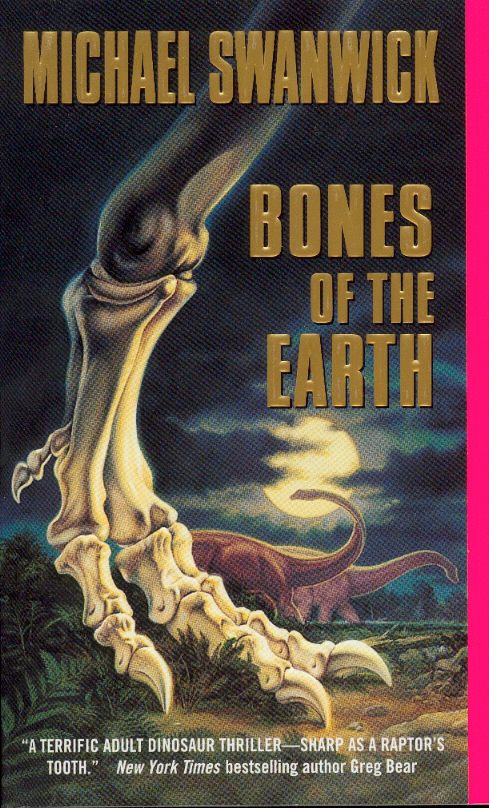
Bones of the Earth by Michael Swanwick
The Actual Results
Hominids by Robert J. Sawyer
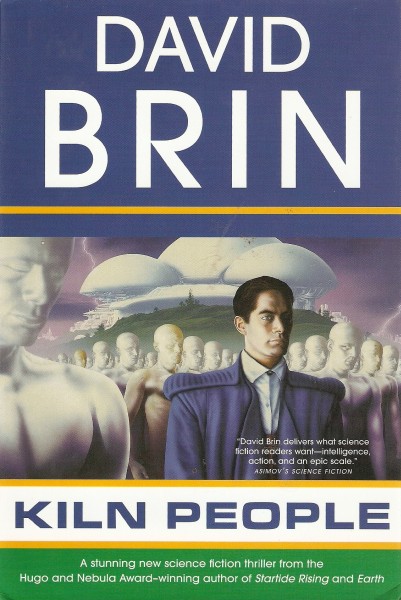
Kiln People by David Brin
Bones of the Earth by Michael Swanwick
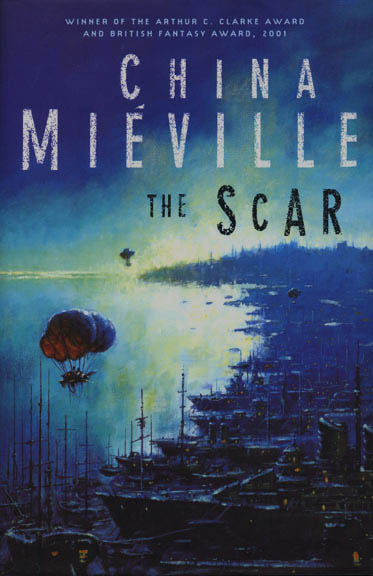
The Scar by China Mieville
The Years of Rice and Salt by Kim Stanley Robinson
How I Would Have Voted
(Abstain)
Explanation
None of these books were so bad/woke that I felt No Award merited a vote for this year. In fact, if my memory serves me, few of these books were woke at all (or else they were just a lot better at hiding it. Whatever.) But at the same time, I didn’t enjoy any of them enough to feel that I could affirmatively vote for any of them. In fact, I ended up DNFing all of them, for various reasons (that’s right, China Mike—I didn’t feel it was necessary to finish any of these books to know how I would have voted).
Kiln People and The Years of Rice and Salt were both books that I didn’t bother to pick up, because I’ve read enough from each author to know that I don’t care to read anything they write. Way back in high school, I read Red Mars by Kim Stanley Robinson, but I never felt compelled to finish the rest of the series, and DNFed the second book when I picked it up years later, as well as every other Hugo-winning book he’s written. With David Brin, I started his first Uplift Trilogy book but DNFed it about a hundred pages in, and decided to DNF him as an author after throwing The Postman across the room.
For both of these authors, my reason for DNFing them has less to do with their politics (though I’m sure we have irreconcilable differences there) as it does with their dogmatic, almost fanatical adherence to materialism: the view that everything in the universe is reducible to physical, material phenomena, and that if something cannot be measured it might as well not exist. You can see this in the dismissive way that they treat religion in all of their books, especially Christianity—as if faith, in any form, is a delusion that ought to be beneath all clear-thinking and enlightened people. From long experience, I’ve learned that authors with this particular worldview almost never write anything that I feel is worth reading. Hence, I didn’t feel it was necessary to read either of their books.
The Scar is book two of China Mieville’s New Crobuzon series, and since I DNFed the first book, I didn’t read the rest of the series. I’ll explain my reasons more when I write up my post for how I would vote now in the 2002 Hugo Awards, but it basically comes down to the sex scene in the first chapter, which was too graphic for my tastes. Call me a prude, but I prefer to avoid graphic sex scenes. I suppose I could be persuaded to try the series again, though, on a strong enough recommendation.
I forget why I DNFed Hominids. I read it back in 2002, when I made—and kept—my resolution to read (or DNF) all of the Hugo and Nebula award-winning novels. I think it came down to getting bored with the story, or not really liking any of the characters. I could probably be persuaded to try it again, though I doubt the results would be different a second time around.
Lastly, Bones of the Earth was my biggest disappointment from the books on the ballot this year. I had previously DNFed Swanwick’s Station of the Tide, which struck me as the sort of thing an author writes when they don’t really care what readers think of it and they just want to wallow in their own self-indulgent fantasies. Also, there was a lot of weird sex stuff that I found off-putting.
But Bones of the Earth started out really well. It’s basically about a bunch of time traveling paleontologists, and the bureaucracy built around the time travel machinery to keep all the timelines from falling into contradiction and paradox. Think Jurassic Park meets The Adjustment Bureau. The first half of the book was really well done, to the point where I started wondering why I’d never heard of this book before, or why it hadn’t gotten more commercial traction.
Then I found out why.
The inciting incident happens when a creationist terrorist sends a bomb out to a group of paleontoligists somewhen in the Cretaceous period, killing one of them, destroying their time beacon, and stranding them in time. I wasn’t actually bothered at all by the creationists being the bad guys, since 1) several of the paleontologists were various stripes of Christian, and 2) I can totally believe that radical fundamentalist creationists would resort to sabotage, or even terrorism, to derail the whole project. But about midway through the book, after the band of marooned time travelers go through some pretty hefty forming and storming, as they just start to enter the norming phase, they all decide, at the same time and on a total whim, to throw off their clothes and have a group orgy together.
I can believe that there are people in this world who would do that sort of thing. I can even believe that a group of randomly selected people might consist entirely of this sort of person. I just don’t want anything to do with them. I’ve been in a fair amount of group situations, and the worst ones I’ve ever had to endure were the ones where everyone either wanted to all get drunk together, or all get sexy together (thankfully, none of them turned into an actual orgy like the one in this book).
But frankly, the impression I got while reading it was that the author was a little too sex-deprived (if not an outright pervert) and indulged in that scene purely as an act of wish fulfilment. Any editor worth her salt would have told Swanwick to remove or totally rework that scene, so the fact that it’s still in the book probably means that he’s too bull-headed for his own good—which is a shame, because the book probably would have sold better if he’d cut that scene out. The orgy scene added very little and certainly alienated more readers than it brought in.
One of the things I’m trying to be more careful about, as a writer, is writing books for other people, not just myself. I was a lot more self-indulgent in my early career, which is probably a major factor in why many of my older books haven’t gained much traction outside of a small readership. While it’s important not to try to write for everybody, authors who write only for themselves are too often inaccessible to anybody.
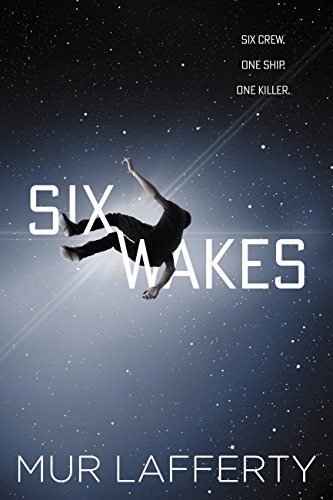
I liked Six Wakes. It was a fun murder mystery on a spaceship, with cloning technology that led to some interesting twists (for example, everyone wakes up to discover their dead bodies floating everywhere, and the murderer doesn’t actually remember know who he/she was, because those memories weren’t uploaded to the database in time). It’s not up there with Dune or Hyperion, but it was a good read, with interesting world building and better-than-average attention to detail. There were a couple of passages that a conservative reader might consider woke, but it wasn’t enough to bother me.
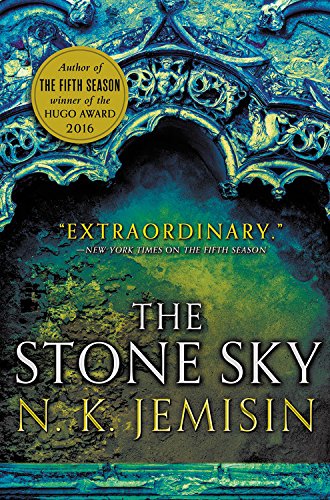
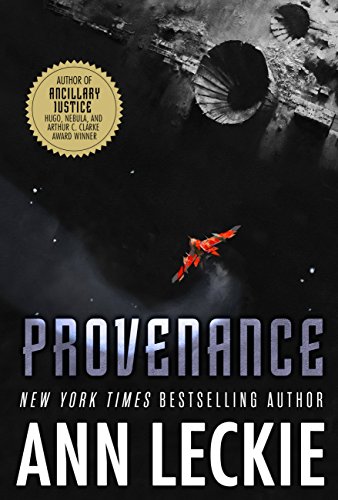
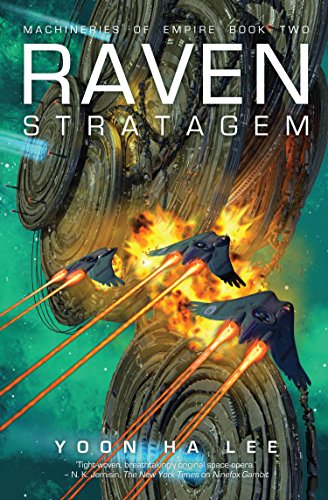
Everything else from this year is pretty much terrible, in my opinion. I skipped The Stone Sky,Provenance, and Raven Strategem because those were all series that I had already DNFed. I could probably be persuaded to try Yoon Ha Lee’s Machineries of Empire series again (the first book was just too confusing and absurdly violent), but I have no desire to go back to Jemisin’s Broken Earth Trilogy or Leckie’s Ancillary Justice universe. Short version: Leckie’s entire career at this point seems to be premised on creating fantasy genders and playing to our culture’s current transgender moment, while Jemisin’s trilogy is the most anti-life (anti-pro-life?) thing I think I have ever read. Also, she’s suuuper anti-racist, which makes me think of this:
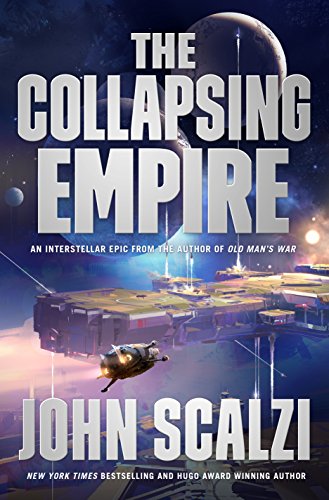
The Collapsing Empire was where I decided to give up on reading any more Scalzi. It’s basically an inferior clone of Star Trek, with random meaningless sex thrown in, which Scalzi somehow manages to make boring. I haven’t read Starter Villain and I don’t intend to, but many of this BookTuber’s criticisms of Scalzi’s writing apply to The Collapsing Empire too:
As for New York 2140, I DNFed after the first couple of pages when Robinson began to wax political, and not in a good way. I know that Kim Stanley Robinson is supposed to be one of the great SF writers of our time, but the only book of his that I’ve managed to get through was Red Mars (and that was over a decade ago). He’s one of those writers who wears his politics on his sleeve, and preaches more than he entertains. Also, he will occasionally throw in stuff that’s uncomfortably weird, like the Mars colonists having secret sex cult orgies in the farm modules. There was a time when the sex and the politics didn’t bother me as much, but it does now, so I’ve put him on my “skip this author” list, along with Ann Leckie, John Scalzi, and N.K. Jemisin.
My 2022 reading resolution: Read or DNF every novel that has won a Hugo or a Nebula award, and acquire all the good ones.
In 2007, when I was a sophomore in college, I went up to Salt Lake City with some friends and was browsing the awesome (and fairly run down, even at the time) used bookstore near the Gallivan Plaza TRAX stop, which has since changed names and moved to another location. It was a really awesome used bookstore, and I determined to buy a SF novel while I was there, since I was really getting back into SF after my mission. I saw a massive 600+ page trade paperback edition of Cyteen by C.J. Cherryh, and since I was reading Downbelow Station at the time, I decided to get that one.
For the next fifteen years, I lugged that book everywhere, through more than a dozen moves (though for the biggest move, where I made the pioneer trek in the wrong direction and repented 8 months later, I boxed it up with my other books and left it in a friend’s basement). In all that time, I never actually read it—or even opened it up, really—but it was always there, somewhere in the middle of my dismally long TBR list.
It wasn’t that I didn’t want to read it: I just didn’t have (or make) the time. Downbelow Station had been an okay read, if not spectacular, but I had really enjoyed some of C.J. Cherryh’s shorter books, like Merchanter’s Luck and Voyager in Night. Also, space opera books about sprawling galactic empires were right up my wheelhouse, so it didn’t seem odd for me to own such a book that I hadn’t yet read. In fact, most of the books that I owned throughout this time were books that I wanted to read but hadn’t gotten around to yet. If I have a superpower, it’s an uncanny ability to acquire books no matter where I am. Unfortunately, I’m not as good at reading them.
Fast forward to 2022. I’ve gotten married, had a daughter, launched my own writing career, and become a homeowner—and I’m still lugging this massive 600+ page trade paperback book that I’ve never read. But I’ve just set a resolution to read (or DNF) every Hugo and Nebula award-winning novel, and Cyteen is on the list. So around the middle of March, I finally open it up and start reading it.
After about a month, I decided to DNF it.
It’s not that it was terrible. Perhaps you enjoyed it, and that’s fine. I just found it to be too drawn out and confusing. I think C.J. Cherryh does better when she’s focusing on just a few characters, rather than trying to give the grand sweep of galactic civilization or whatever. I didn’t finish Foreigner for similar reasons. Maybe someday I’ll return to that one and Cyteen, but for now, I’m counting it as a DNF.
But the thing is, I was hauling around this massive book for most of my adult life. When I bought it in 2007, I figured that since it had won a Hugo, it had to be good. Perhaps, if I’d read it back then, I would have been more patient with it and slogged through to the end. Perhaps I would have decided it was just as good as Downbelow Station. Or perhaps, if I read Downbelow Station today, I would end up DNFing it as well.
The point is, I wish I’d been a lot more discerning about my reading when I was younger, and not just acquired books that I hoped to read “someday”… because books (at least the paper ones) are heavy and take up a lot of space. And a lot of them really aren’t worth reading. Of course, you’ve got to read a few stinkers to figure out what you really like, so it isn’t always a waste… but libraries exist for a reason.
So what this experience really tells me is that Mrs. Vasicek and I are doing the right thing by taking our family to our local library once a week. Also, it tells me that the second part of my resolution—to actually acquire all of the books that I think were worth reading—is just as important as actually reading them. Because, if the ultimate goal is to “seek… out of the best books words of wisdom,” then it’s not enough to just make a list: you actually have to read the damned things, and keep your own personal library in order to revisit those words and share them with others. Because ultimately, you have to discover which books are the “best books” on your own, and your best books list isn’t going to be the same as anyone else’s best books list. Which means that you can’t rely on anyone else’s list. You can use it as a starting point to make your own list, but that’s all you should use it for.
So now I want to go through all of the books I’ve acquired over the years and figure out which ones I ought to get rid of, because Cyteen certainly wasn’t the only one. In fact, most of the books in our family library are books that I haven’t (yet) read. By my count, there are just under 150 of them, totalling about 55k words. Even at a rate of 100 words or two hours of reading each day, that’s still going to take almost two years… and that’s not counting all the library books that we’re sure to check out in the meantime.
Oh well. I suppose this is more of a process than anything else. Journey before destination, and all that. And I’m sure I’ll have fun in the process, since despite the fact that I DNF far more books than I actually read, I do genuinely enjoy reading.
In any case, here are all of the Hugo and Nebula award-winning books that I read (or DNFed) in the month of April:
Books that I read and plan to or have already acquired:
Rainbows End by Vernor Vinge (2007 Hugo)
Blackout by Connie Willis (2011 Hugo and Nebula) (audio)
Books that I read and do not plan to acquire:
Blackout by Connie Willis (2011 Hugo and Nebula) (print)
Books that I did not finish:
A Time of Changes by Robert Silverberg (1972 Nebula)
The Gods Themselves by Isaac Asimov (1973 Hugo and Nebula)
The Fountains of Paradise by Arthur C. Clarke (1980 Hugo and Nebula)
The Claw of the Conciliator by Gene Wolfe (1982 Nebula)
Cyteen by C.J. Cherryh (1989 Hugo)
Tehanu by Ursula K. Le Guin (1991 Nebula)
The Diamond Age by Neal Stephenson (1996 Hugo)
The Moon and the Sun by Vonda N. McIntyre (1998 Nebula)
Parable of the Talents by Octavia E. Butler (2000 Nebula)
2312 by Kim Stanley Robinson (2013 Nebula)
Beyond This Horizon by Robert A. Heinlein (1943 Retro Hugo, awarded in 2018)
The Nemesis from Terra by Leigh Brackett (1945 Retro Hugo, awarded in 2020)
Total books remaining: 26 out of 110 (currently reading 12 and listening to 3).
My 2022 Reading Resolution: Read or DNF every novel that has won a Hugo or a Nebula award, and acquire all the good ones.
I was going to keep track of my reading resolution this year by mentioning each book and what I liked or didn’t like about it, why I DNFed it if I did, etc… and then I thought about it a little more and realized that that’s a terrible idea. Perhaps if I weren’t an author myself, I could risk bringing down the wrath of the internet by broadcasting everything that I really think about these books, but that’s still a really stupid thing to do—not to mention, a great way to burn a bunch of bridges that, as a writer, I really shouldn’t burn.
Instead, I’m going to post a monthly update where I list all of the books that I read and want to acquire, all the books that I read and probably won’t acquire, and all of the books that I DNFed, without any book-specific commentary. I do think that having some public accountability will help me to keep this resolution, and I do intend to keep it. But because I anticipate DNFing a lot of books that have very, um, merciless fans, this seems like a better way to do it.
So here is how things stood on the morning of January 1st, 2022:
Books that I read and want to / have already acquired:
Double Star by Robert A. Heinlein (1956 Hugo)
Starship Troopers by Robert A. Heinlein (1960 Hugo)
A Canticle for Leibowitz by Walter M. Miller Jr. (1961 Hugo)
The Man in the High Castle by Phillip K. Dick (1963 Hugo)
Dune by Frank Herbert (1966 Hugo and Nebula)
The Left Hand of Darkness by Ursula K. Le Guin (1970 Hugo and Nebula)
The Dispossessed by Ursula K. Le Guin (1975 Hugo and Nebula)
Downbelow Station by C.J. Cherryh (1982 Hugo)
Neuromancer by William Gibson (1985 Hugo and Nebula)
Ender’s Game by Orson Scott Card (1986 Hugo and Nebula)
Speaker for the Dead by Orson Scott Card (1987 Hugo and Nebula)
Barrayar by Lois McMaster Bujold (1992 Hugo)
Mirror Dance by Lois McMaster Bujold (1995 Hugo)
The Mule (included in Foundation and Empire) by Isaac Asimov (1946 Retro Hugo, awarded in 1996)
Harry Potter and the Goblet of Fire by J.K. Rowling (2001 Hugo)
Farmer in the Sky by Robert A. Heinlein (1951 Retro Hugo, awarded in 2001)
Fahrenheit 451 by Ray Bradbury (1954 Retro Hugo, awarded in 2004)
Spin by Robert Charles Wilson (2006 Hugo)
The Sword in the Stone by T.H. White (1939 Retro Hugo, awarded in 2014)
Network Effect by Martha Wells (2021 Hugo and Nebula)
Books that I read and don’t plan to acquire:
The Demolished Man by Alfred Bester (1952 Hugo)
The Forever War by Joe Haldeman (1975 Hugo and Nebula)
Gateway by Frederik Pohl (1977 Hugo and Nebula)
Red Mars by Kim Stanley Robinson (1993 Nebula)
American Gods by Neil Gaiman (2001 Hugo)
Books that I did not finish:
The Moon is a Harsh Mistress by Robert A. Heinlein (1966 Hugo)
Flowers for Algernon by Daniel Keyes (1966 Nebula)
Lord of Light by Roger Zelazny (1967 Hugo)
Ringworld by Larry Niven (1970 Hugo and Nebula)
Rendezvous with Rama by Arthur C. Clarke (1973 Hugo and Nebula)
Green Mars by Kim Stanley Robinson (1993 Hugo)
Blue Mars by Kim Stanley Robinson (1996 Hugo)
Forever Peace by Joe Haldeman (1997 Hugo, 1998 Nebula)
The Fifth Season by N.K. Jemisin (2015 Hugo)
The Obelisk Gate by N.K. Jemisin (2016 Hugo)
The Stone Sky by N.K. Jemisin (2017 Hugo and Nebula)
So the problem I have with most “ecological science fiction” is that it draws almost exclusively on the ideas of Malthusian economics—essentially, the argument that Thanos was right. The problem with this is that Malthusian theory has been disproven by every generation of humans to live on this planet for the last 150 years. It’s even more discredited than Marxism, which is another unscientific philosophy that “ecological science fiction” draws heavily from.
I remember an old 70s novel I picked up from the local used bookstore, where by the year 2000, Earth had warmed so much that Antarctica was the only habitable continent, and resources were so scarce that the main character—a buxom blonde—had to go topless. Yeah, very 70s. The premise of the novel was so absurd on its face that I couldn’t finish it.
I also remember an Octavia Butler book that I read. It was the sort of book that makes you chuck it at the wall once you’re finished. The plot went something like this: the main character has been abducted by aliens and drafted into their breeding program, and she spends the whole book trying to escape, only to learn that she’s already pregnant and never will. The end. The writing was pretty good, but the story was so horribly unsatisfying that I haven’t read anything by her since.
From what I can tell, most “ecological science fiction” is like that. Very pretty sentences, but horribly unsatisfying stories, with way too much preaching about how capitalism is evil and humans are destroying the planet. That’s probably why these books tend to win so many Hugo Awards.
Red Mars was okay, but it was less about Earth and more about Mars itself. I was personally more interested in the political intrigue among the colonists than the terraforming project, but both were pretty good. The characters all seemed a little bland to me, though, and I never really latched on to any of them, which is probably why I didn’t read the other books. From what I can tell, they got more preachy toward the end.
Everyone praises Dune for being an “ecological” novel, but to be frankly honest I never really got into that. The political intrigue and the struggle of Paul Atreides with his prescience was a lot more interesting to me, and while the ecological bits certainly played into the plot, I didn’t really care enough to pay much attention to that.
Also, the parts that I did pick up seemed pretty unbelievable to me. From what I remember, there was a second, much smaller type of worm that produced a certain kind of excretion which, if mixed with the spice, would cause a chain reaction that would completely destroy the Arrakis ecosystem. Something like Kurt Vonnegut’s ice 9, which instantaneously freezes any water it comes into contact with, which makes it the most dangerous substance on Earth because a single drop could freeze all the water on the planet. In my (albeit limited) experience, ecosystems always find their own equilibrium, which makes them resiliant against that sort of thing. But of course, that would probably interfere with the preaching that “ecological science fiction” tends to indulge in.
From what I can tell, Dune is one of the few pieces of “ecological science fiction” that hasn’t aged poorly, and that’s not because of the “ecological” bits, but in spite of them. Because the truth is that we live in a fantastically rich and abundant post-scarcity world, where “global warming” had to rebrand as “climate change” because none of the predictions came true, and the science has been so ridiculously politicized that the Green New Deal makes the Communist Manifesto look sane and reasonable.
Thanos was wrong. So too, apparently, is the entire field of “ecological science fiction.”
One of the best things about a good science fiction story is that it can take you to another world–literally! Well, not in the sense of actually physically taking you there, but if you want to experience the thrills of an alien world from the safety of your favorite chair, the best way to do it is to immerse yourself in a good space adventure story.
Planets are to science fiction what islands and continents are to fantasy. It’s possible to tell a story where no one ever sets foot on one, but then you’ve basically got a sea story (since space is an ocean, at least in most space opera). Even then, your characters are probably going to put into port from time to time, if for nothing else than a change of scenery to make things interesting. And if there’s anything science fiction interesting, it’s the wide variety of possible planet types.
For example, what would a planet be like if it were covered completely by water? If the world-ocean was so deep that there was no visible land? Assuming that the planet orbits within its sun’s habitable zone, where the temperature ranges allow water to exist as a liquid, then you would have a pretty interesting place. What would the hurricanes be like? A lot more intense than the ones here on Earth, that’s for sure.
Then again, suppose that the planet was a bit closer to its sun, and most of that water existed in the atmosphere as a gas. You’d have some pretty intense atmospheric pressures on the surface, but the density of the atmosphere would make it much easier to keep airships and flying castles aloft. In fact, that might be the most practical way to settle that kind of a world.
In our own solar system, there is an incredible amount of variety. On Mars, for example, glaciers of dry ice cover the southern pole, while the sun sets blue in a normally dirty brown sky. The tallest mountain actually summits above the atmosphere, and every few years, dust storms cover the whole world. And believe it or not, Mars is a lot more similar to Earth than anything else in our solar system.
On Titan, rivers of liquid methane flow down mountains of water ice, while black carbon dunes drift across a desert shrouded in orange haze. While the sun rises and sets with predictable regularity, the planet Saturn is suspended at the same point on the horizon and dominates a large portion of the sky. Don’t expect to see any rings, though–Titan orbits along Saturn’s ring plane, so the rings are mostly invisible.
Europa, one of the four Galilean moons of Jupiter, is also dominated by its host planet. Water ice covers the surface, but deep, deep below, there’s a massive liquid ocean that has never seen the light of the sun. What sort of monsters lurk in those depths–an ocean buried beneath a world?
Jupiter itself is pretty intense. A gas giant world with swirling bands of planet-sized clouds, it hosts a monstrous hurricane large enough to swallow at least two Earths. This vortex has been churning across the planet for over 150 years, and possibly as much as 350. I still remember the chills I got when I read 2001: A Space Odyssey, and the scientists’ probe dropped through the haze to a cloud deck as massive as one of our continents here on Earth.
Gas giant planets can be really interesting. They aren’t human habitable, since the gravity and pressure are so intense that anything man-made would be crushed before it could hit the surface, but those same forces can lead to some other interesting things. For example, at the lower levels, you may find storms that rain diamonds. Go further still, and you find an intense magnetic core that’s just on the verge of being able to sustain nuclear fusion. Detonate enough nuclear material down there, like they did in a short story from the Halo universe, and you can turn the planet into a star.
And that’s just our solar system. What about the hundreds of exoplanets that astronomers are now discovering? The first one to be confirmed, believe it or not, was orbiting of all things a pulsar! Imagine that–instead of the life-giving rays of a sun, the planet is bathed in highly lethal X-rays and gamma rays.
Of course, there are plenty of planets orbiting stars like our sun, but most of the ones discovered so far are hot Jupiters–gas giant worlds that orbit so close to their sun that the years are measured in hours. Some of these planets are so close that the sun is actually blasting the atmosphere away. We haven’t discovered the rocky core of a gas giant world that’s been destroyed in this manner, but theoretically it could exist.
Or what about the planets with highly elliptical orbits that traverse the habitable zone of their stars? Imagine: a world where the winters are so cold that the oceans freeze solid. After several of our Earth years, the spring brings a massive thaw. For a few short months the weather is actually quite balmy. Then, as spring turns to summer, the heat grows more and more intense, until the oceans begin to boil! When the summer reaches its zenith, the planet is nothing but a scorched desert wasteland. Soon, though, the autumn cool brings back the rains, with storms so intense that they refill the oceans in just a matter of months! Then, the deep freeze of winter begins, and the world returns to its long icy tomb.
One of my favorites, though, is the ribbon world that Asimov predicted in some of his stories. Worlds like this occur most commonly at class M red dwarf stars, which are so cool compared to our sun that planets within the habitable zone are tidally locked. This means that the sun neither rises nor sets, but remains stationary in the sky. The day side is burning hot, with either a barren desert wasteland or a giant hurricane large enough to cover most of the hemisphere. The night side, on the other hand, is so cold that all the water is completely frozen. The only habitable parts of the planet exist in a ribbon-like swath where the sun is just on the other side of the horizon, casting the land in perpetual twilight.
Believe it or not, we’ve actually discovered a planet like this in the Gliese system. Gliese 581g, or “Zarmina’s World” as the lead astronomer dubbed it, was discovered back in 2010. I was so excited by the discovery that I dedicated a blog post to it. Since then, the findings have not yet been confirmed, so it isn’t safe to call it a planet for sure, but if/when it ever is confirmed, it may be one of the first truly Earth-like planets to be discovered (at least, as Earth-like as a ribbon world can be).
In much of science fiction, there’s a tendency to make planets single biome only. Thus, you have your desert planets (Arrakis, Tatooine, Gunsmoke), your ice planets (Hoth, Gethen), your ocean planets (Calamari, Aqua), your jungle/forest planets (Dagobah, Lusitania, Kashyyyk), and even planets that are nothing but giant cities (Trantor, Coruscant). Some of the more recent series like Halo try to avert this, but even today it’s still fairly common.
If there’s anything that modern astronomy is showing us, though, it’s that the variety of planets and worlds out there is beyond anything we could possibly imagine. This is why I get a bit irked when an otherwise excellent series like Firefly makes out every planet to be like Wyoming. What about Gliese 581g? Kepler 22b? GJ 1214b? Kepler 16b?
As more exoplanets are discovered, I can’t help but believe that science fiction is going to experience a paradigm shift. What was once purely the realm of imagination is now being confirmed as reality. Alien worlds exist–alien Earths, even. And just as our conception of Mars changed from the Sword & Planet tales of Edgar Rice Burroughs’ Princess of Mars to the hard sf epics of Kim Stanley Robinson’s Red Mars, Green Mars, Blue Mars, so will our conception of other alien worlds.
I’ve got a lot of different planets in my own books, some borrowing a lot from the recent exoplanet discoveries, others leaning closer to the single biome worlds of classic space opera. In Desert Stars, Gaia Nova is kind of a cross between Arrakis and Trantor, with giant domed arcologies covering half the planet’s surface while the rest is mostly desert and wasteland. In Bringing Stella Home, Kardunash IV is (or rather, was) an Earth-like world, with forests, mountains, and oceans. In Stars of Blood and Glory, New Rigel is a straight up ocean world, while Ebitha from Star Wanderers is an ocean world tidally locked to its dwarf M class sun. I haven’t yet played with the elliptical planet, but I probably will someday.
One of the things I love most about a good science fiction story is that it takes me out of this world. With all the incredible new discoveries that astronomers are making, that aspect of the genre is only bound to get better. They’ve certainly enriched my own work, and will doubtless continue to do so in the future.
Since space is the final frontier, this trope is very common in science fiction. Heinlein was a huge fan of it, but he wasn’t the only one to play with it–not by a long shot. John Scalzi (The Last Colony), Nancy Kress (Crossfire), C.J. Cherryh (40,000 in Gehenna), Anne McCaffrey (Freedom’s Landing), and Kim Stanley Robinson (Red Mars, Green Mars, and Blue Mars) are just a few of the many science fiction writers who have explored this trope in their works. In recent years, several sci fi miniseries (Battlestar Galactica, Terra Nova) have used it as a major premise as well. And of course, you have all the classic 4x games like Masters of Orion and Alpha Centauri.
Space Colonies can come in a variety of different flavors:
Lost Colony — What happens when the original colonists lose all contact with the outside universe and no one thinks to check up on them for a while. Can either turn into a story of survival or a clash of cultures, if/when they ever re-establish contact.
Cult Colony — Religion is one of the few things that will drive massive numbers of people to leave everything behind and start over in a new world. Just look at the Pilgrims for a real-world examples. In space colonies of this type, you can expect to see some extremely radical people, since the isolation of deep space tends to compound their fundamentalist tendencies. Expect these to be both weird and frightening.
Space Amish — Something of a combination of the two, except with much more primitive technology. Expect to see log cabins, horse- (or giant lizard) drawn carriages, and other tropes closer to the Western genre. Sometimes, they may be hiding a superweapon.
Penal Colony — Australia in space (ahem…IN SPAAACE!!!). What happens when the empire needs a place to conveniently exile all the troublemakers and rabble rousers. Not a place for the faint of heart.
Wretched Hive — What happens to a penal colony when the prisoners actually run the place. Like the previous type, except taken up to eleven. Or not, depending on the history and culture. Tatooine is the eponymous example.
Death World — As the name would suggest, this is not the kind of place you’d want to homestead. Anyone who does is bound to be a badass. The Empire and the Federation often recruit most of their soldiers from here.
Company World — I couldn’t find this one listed on tvtropes. Basically, it’s a planet that is owned and governed entirely by a private corporation, which expects to make a tidy profit off of the place. The colonists are basically indentured servants (since robots simply wouldn’t do) and have almost no property or rights. Expect the story to be about sticking it to the man.
These are just a few of the many possibilities that you can play with when settling the frontier. In my opinion, however, the essential elements are as follows:
The story is not just about exploring a new world, but establishing some kind of a permanent presence there.
By coming to the new world, the colonists must leave everything from their old, familiar lives behind.
The colonists must resolve the story conflict through their own self-reliance, not by waiting for an outside force to save them.
I’ve only dabbled with this trope, but it does play a role in many of my stories, most notably in the Star Wanderers series. Genesis Earth also has elements of it as well, though it’s not the main driver for the plot. It is a major factor in Heart of the Nebula, though, the (currently) unpublished sequel to Bringing Stella Home. And in my future books, you can definitely expect to see this trope again.
For eons, sandstorms have swept the barren, desolate landscape of the red planet. For centuries, Mars has beckoned to mankind to come and conquer its hostile climate. Now, in the year 2026, a group of one hundred colonists is about to fulfill that destiny.
I first picked up this book two and a half years ago, when I was still trying to read a novel a week. I’ve got to be honest; this was the book that made me break that new years resolution. It is freaking huge, and some points are more interesting than others.
That said, this is an awesome piece of hard science fiction. Lots of people have written about Mars, but very few have done it believably. Kim Stanley Robinson does an job here–you can tell that he put in a ton of research, both into Martian geography (areology?) and feasible technology.
When I read science fiction, however, that’s not what I generally read for. I’m more interested in characters, conflict, and thematic elements–in other words, the stuff that makes for a good story. As far as that stuff goes, my opinion of Red Mars is somewhat mixed.
For example, the first chapter starts out with a murder, as seen from the point of view of the murderer. Right away, I’ve got a reason not to sympathize with the main viewpoint character. When we get into his mind and I see his motivations for killing the character, I like him even less–and he’s one of the main, driving characters.
Some of the characters are more sympathetic, and I enjoyed the sections in their point of view. Others, however, were just plain boring–I neither loved them nor despised them. Because of this, a lot of the character drama early in the novel didn’t engage me much; stuff was happening, but I didn’t really care.
When it comes to setting, Red Mars is also somewhat mixed. Robinson goes to great depths to describe the Martian landscape, and several of his setting descriptions were quite interesting and wonderful. At the same time, he explains everything in a very clinical, scientific way–his imagery is never as poetic and captivating as Ray Bradbury’s, or Ursula K. Le Guin’s, or George R. R. Martin’s. I came away with a lot more knowledge about Mars, but not quite as much of a sense of wonder.
Things did get interesting once the political tensions started to come into play. Robinson’s portrayal of the colonization of Mars raises a lot of interesting questions about the political relationship between Earth and Mars once those colonies start to become self-sufficient. He follows things through right to the war for independence, and the implications of the conflict are quite interesting. I finished the last hundred pages or so at a sprint.
All in all, I wouldn’t recommend this book unless you’re already a fan of hard science fiction. Like most hard sf, character and conflict plays second string to scientific plausibility. Within its sub-genre, however, Red Mars is awesome. Let’s just put it this way: even though I got bored with it the first time, I knew I would one day pick it up and finish it. I don’t regret that I did.




 I love
  For eons, sandstorms have swept the barren, desolate landscape of the red planet. For centuries, Mars has beckoned to mankind to come and conquer its hostile climate. Now, in the year 2026, a group of one hundred colonists is about to fulfill that destiny.