How I would vote now: 1977 Hugo Award (Best Novel)

The Nominees

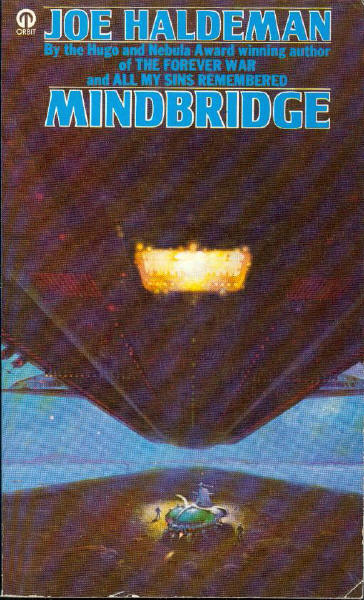
Mindbridge by Joe Haldeman

Children of Dune by Frank Herbert

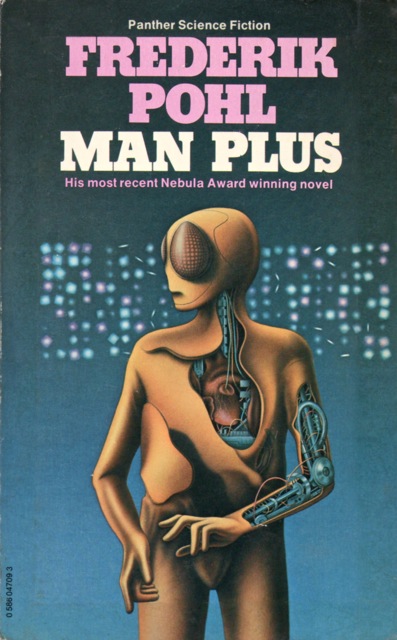
Man Plus by Frederik Pohl

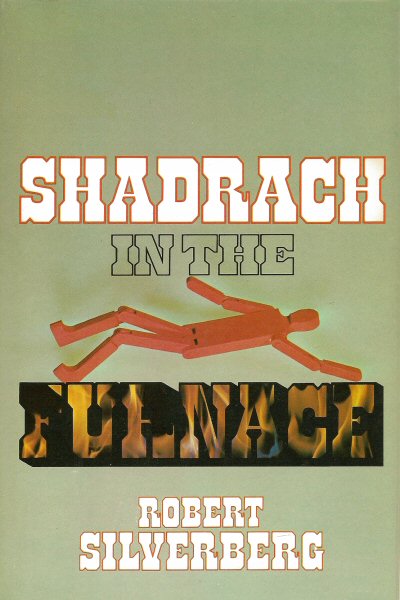
Shadrach in the Furnace by Robert Silverberg

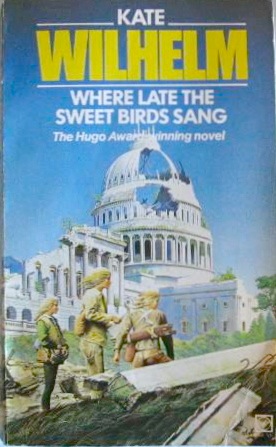
Where Late the Sweet Birds Sing by Kate Wilhelm

The Actual Results

  1. Where Late the Sweet Birds Sing by Kate Wilhelm
  • Children of Dune by Frank Herbert
  • Man Plus by Frederik Pohl
  • Mindbridge by Joe Haldeman
  • Shadrach in the Furnace by Robert Silverberg

How I Would Have Voted

  1. Children of Dune by Frank Herbert
  2. No Award
  3. Man Plus by Frederik Pohl
  4. Shadrach in the Furnace by Robert Silverberg

Explanation

It’s interesting to see which of these books hold up after nearly fifty years, and which of them really don’t. Of the five here, I think Children of Dune is the only one that still has any lasting cultural relevance, and that only because of the first book, Dune.

Children of Dune is also (perhaps not surprisingly) the only book that I would consider worthy of voting for. It’s nowhere near as good as Dune, but of the Dune sequels, it’s the best one I’ve read so far (though the way Leto transformed into a… whatever really seemed to come out of nowhere). Man Plus and Shadrach in the Furnace weren’t terrible, but I didn’t finish them. I can’t speak to Mindbridge, because I didn’t bother reading it: I’ve read enough Haldeman to know that he has a penchant for nihilism that really rubs me the wrong way.

As for Where Late the Sweet Birds Sang, it was really awful. I don’t remember the plot exactly, but the book is full of leftist 70s doom porn regarding climate change and Malthusian resource shortages, combined with a resurgence of The Patriarchy that forces all the female characters into becoming breeders. It’s dark, dystopian, and apocalyptic in all the worst ways, with a very strong political bent to it that holds up about as well as all of the end-of-the-world predictions that the climate cultists have been peddling since the 70s. Basically, Where Late the Sweet Birds Sang is why I’d vote “No Award” after Children of Dune.

Man Plus had some interesting writing, but it didn’t really hold my interest, probably because of all the Malthusian and Freudian undertones. It wasn’t insufferably political, though, which is why I would actually affirmatively vote for it after “No Award.” I would certainly rather that Man Plus had won out over Where Late the Sweet Birds Sang. Same with Shadrach in the Furnace, which isn’t terrible, though it does have some weird communist power fantasies in it. I really love the way Silverberg writes, but the things he chooses to write about just seem totally pointless to me.

The 70s was a very weird time for science fiction… and probably a weird time for the world in general. As you can probably tell, I’m not a huge fan of New Wave science fiction (with a few notable exceptions). Things got a lot better after Reagan’s Morning in America, not just for the country, but for science fiction as well. Then we hit the 90s, which the Zoomers tend to look on as a simple, idyllic time when all was bright and wonderful in the world, which strikes me as hilarious because I remember it as a time of rampant school shootings and MTV-driven cultural decay. But that’s a subject for another post.

Reading Resolution Update: January

My 2022 reading resolution: Read or DNF every novel that has won a Hugo or a Nebula award, and acquire all the good ones.

I had expected to DNF a lot of these books, but I was a little dismayed at how terrible they are. Or rather, how some of them can be so well-written and yet so idelogically possessed.

For a while, I worried that I was pre-judging some of these books too harshly, based on my opinions of the author. After all, shouldn’t art be treated separately from the artist? But then I decided that it would be better to lean into that bias, and trust my intuition. After all, it’s impossible to approach reading without a personal bias—and even if it were possible, it wouldn’t be advisable.

One of the key things I’m hoping to take away from reading these books is a better understanding of my own personal tastes. Toward that end, it’s much better to DNF early and often, since that tells me something valuable about my own tastes. I’ll get much more out of this exercise if I pay attention to that than whether or not I’m being “fair” to a particular book or author.

As for how my bias against an author might prejudice me against a book, I don’t think that’s too much of a problem so long as I’m aware of those biases. Yes, it makes it more likely that I’ll read a book with a critical eye, and not in the way that I typically read for enjoyment, but that goes both ways, since if I do enjoy a book, that’s going to improve my opinion of the author (or at least make me reconsider my opinion). So long as I’m aware of my biases and make sure that they aren’t set in stone, I think it should be fine

Besides, it’s not like I have anything to prove. Sure, China Mike Glyer might pull out an excerpt from this post to use as content (hi China Mike!), but I couldn’t care less what that particular corner of fandom thinks about my public ruminations. I will know if I’m being too “unfair” to a book or an author, and the only criterion that really matters is whether I have a clear reason for DNFing the book, separate from my biases about the author.

And honestly, what I’ve found so far is that my biases are pretty spot on. Authors who behave insufferably in public or on the internet tend to write some pretty insufferable books, especially if they’re woke.

Fortunately, I have found a few new-to-me books and authors who are really fantastic. And my decision to DNF early and often is helping to keep it from becoming too much of a slog, which is good. It also means that I may complete this resolution a lot sooner than I’d expected, at which point I’ll probably move on to the Dragons or the Prometheus awards.

In any case, here are all the Hugo and Nebula awared-winning novels that I read or DNFed in January 2022:

Books that I read and plan to / have already acquired:

  • Way Station by Clifford D. Simak (1964 Hugo)
  • Foundation’s Edge by Isaac Asimov (1983 Hugo)
  • The Vor Game by Lois McMaster Bujold (1991 Hugo)
  • Annihilation by Jeff VanderMeer (2015 Nebula)

Books that I read and don’t plan to acquire:

  • None

Books that I did not finish:

  • The Big Time by Fritz Leiber (1958 Hugo)
  • A Case of Conscience by James Blish (1959 Hugo)
  • The Wanderer by Fritz Leiber (1965 Hugo)
  • The Einstein Intersection by Samuel R. Delany (1968 Nebula)
  • Stand on Zanzibar by John Brunner (1969 Hugo)
  • Rite of Passage by Alexei Panshin (1969 Nebula)
  • Man Plus by Frederik Pohl (1977 Nebula)
  • Dreamsnake by Vonda N. McIntyre (1979 Hugo and Nebula)
  • A Deepness in the Sky by Vernor Vinge (20000 Hugo) (My wife recommended this one, and I will probably try it again, since I took a break midway through and forgot who all of the characters were. But for now, I’m counting it as a soft DNF.)
  • Camouflage by Joe Haldeman (2006 Nebula)
  • The Windup Girl by Paolo Bacigalupi (2010 Hugo and Nebula)
  • Redshirts by John Scalzi (2013 Hugo)
  • Ancillary Justice by Ann Leckie (2014 Hugo and Nebula)
  • All the Birds in the Sky by Charlie Jane Anders (2017 Nebula)
  • The Calculating Stars by Mary Robinette Kowal (2019 Hugo and Nebula)
  • A Memory Called Empire by Arkady Martine (2020 Hugo)
  • A Song for a New Day by Sarah Pinsker (2021 Nebula)

Reading Resolution Update: Before 2022

My 2022 Reading Resolution: Read or DNF every novel that has won a Hugo or a Nebula award, and acquire all the good ones.

I was going to keep track of my reading resolution this year by mentioning each book and what I liked or didn’t like about it, why I DNFed it if I did, etc… and then I thought about it a little more and realized that that’s a terrible idea. Perhaps if I weren’t an author myself, I could risk bringing down the wrath of the internet by broadcasting everything that I really think about these books, but that’s still a really stupid thing to do—not to mention, a great way to burn a bunch of bridges that, as a writer, I really shouldn’t burn.

Instead, I’m going to post a monthly update where I list all of the books that I read and want to acquire, all the books that I read and probably won’t acquire, and all of the books that I DNFed, without any book-specific commentary. I do think that having some public accountability will help me to keep this resolution, and I do intend to keep it. But because I anticipate DNFing a lot of books that have very, um, merciless fans, this seems like a better way to do it.

So here is how things stood on the morning of January 1st, 2022:

Books that I read and want to / have already acquired:

  • Double Star by Robert A. Heinlein (1956 Hugo)
  • Starship Troopers by Robert A. Heinlein (1960 Hugo)
  • A Canticle for Leibowitz by Walter M. Miller Jr. (1961 Hugo)
  • The Man in the High Castle by Phillip K. Dick (1963 Hugo)
  • Dune by Frank Herbert (1966 Hugo and Nebula)
  • The Left Hand of Darkness by Ursula K. Le Guin (1970 Hugo and Nebula)
  • The Dispossessed by Ursula K. Le Guin (1975 Hugo and Nebula)
  • Downbelow Station by C.J. Cherryh (1982 Hugo)
  • Neuromancer by William Gibson (1985 Hugo and Nebula)
  • Ender’s Game by Orson Scott Card (1986 Hugo and Nebula)
  • Speaker for the Dead by Orson Scott Card (1987 Hugo and Nebula)
  • Barrayar by Lois McMaster Bujold (1992 Hugo)
  • Mirror Dance by Lois McMaster Bujold (1995 Hugo)
  • The Mule (included in Foundation and Empire) by Isaac Asimov (1946 Retro Hugo, awarded in 1996)
  • Harry Potter and the Goblet of Fire by J.K. Rowling (2001 Hugo)
  • Farmer in the Sky by Robert A. Heinlein (1951 Retro Hugo, awarded in 2001)
  • Fahrenheit 451 by Ray Bradbury (1954 Retro Hugo, awarded in 2004)
  • Spin by Robert Charles Wilson (2006 Hugo)
  • The Sword in the Stone by T.H. White (1939 Retro Hugo, awarded in 2014)
  • Network Effect by Martha Wells (2021 Hugo and Nebula)

Books that I read and don’t plan to acquire:

  • The Demolished Man by Alfred Bester (1952 Hugo)
  • The Forever War by Joe Haldeman (1975 Hugo and Nebula)
  • Gateway by Frederik Pohl (1977 Hugo and Nebula)
  • Red Mars by Kim Stanley Robinson (1993 Nebula)
  • American Gods by Neil Gaiman (2001 Hugo)

Books that I did not finish:

  • The Moon is a Harsh Mistress by Robert A. Heinlein (1966 Hugo)
  • Flowers for Algernon by Daniel Keyes (1966 Nebula)
  • Lord of Light by Roger Zelazny (1967 Hugo)
  • Ringworld by Larry Niven (1970 Hugo and Nebula)
  • Rendezvous with Rama by Arthur C. Clarke (1973 Hugo and Nebula)
  • Green Mars by Kim Stanley Robinson (1993 Hugo)
  • Blue Mars by Kim Stanley Robinson (1996 Hugo)
  • Forever Peace by Joe Haldeman (1997 Hugo, 1998 Nebula)
  • The Fifth Season by N.K. Jemisin (2015 Hugo)
  • The Obelisk Gate by N.K. Jemisin (2016 Hugo)
  • The Stone Sky by N.K. Jemisin (2017 Hugo and Nebula)

“Lizzie-99XT” published in Serial Magazine!

It’s another week, and I have another short story out, this time in Serial Magazine! Here’s what the editor has to say about it:

We kick off ISSUE TWELVE with “Lizzie-99XT” by Joe Vasicek. This futuristic sci-fi tale follows a half-human, half-AI space pilot as she travels the galaxy to fight in an interplanetary war. She’s doing all she can to protect the lives down on Earth, but what type of life can this pilot truly have if most of it is spent lightyears away from those she loves?

“Lizzie-99XT” is a hard military SF piece about a starfighter pilot whose consciousness merges with the starfighter’s AI in order to fly it. She’s tasked with saving the world from a horde of alien invaders, but when battles are fought at near-light speeds, everything can change in an instant, and the home that she returns to may not be one that she recognizes.

Basically, it’s a cross between Neon Genesis Evangelion and Joe Haldeman’s The Forever War, except more uplifting. Probably. Also, it’s a short story, not a novel (or an anime series… yet). If that sounds intriguing, pick up a copy and read it today!

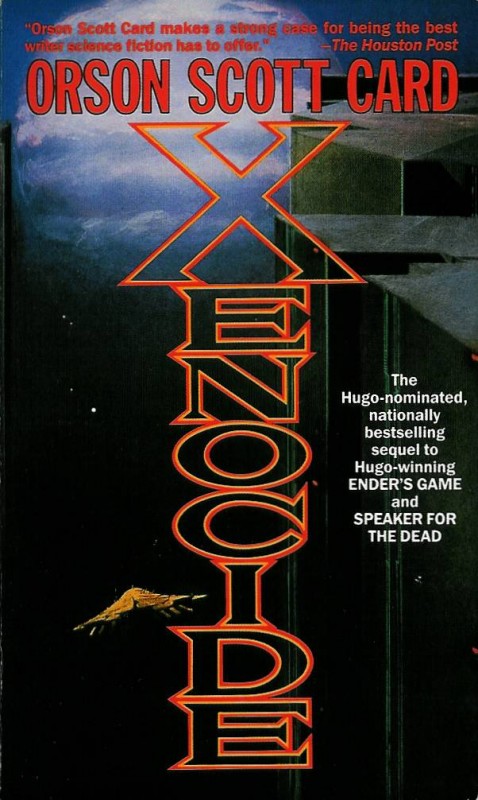
X is for Xenocide

xenocideThis post isn’t just about the third book in the Ender’s Game series–it’s about the genocide of an entire alien race, which is actually a fairly important trope in science fiction.

Of all the evils of our modern era, perhaps the most heinous is the systematic extermination of an entire race or ethnicity.  These acts of genocide not only cross the moral event horizon, they create specters and villains that live on from generation to generation.  Just look at how the Nazis are portrayed in popular culture–even today, they are practically mascots of the ultimate evil.

And for good reason.  There really is something evil about the total annihilation of a foreign culture.  It’s one of the reasons why terms like “genocide” and “ethnic cleansing” are so controversial, especially in conflicts that are still ongoing–and there are so many unresolved conflicts where the systematic and purposeful annihilation of a race or culture is still happening.

Is wholesale genocide a phenomenon unique to our modern age?  Probably not, but modern science has enabled it on a scale that was previously impossible.  This became all too clear to us after World War II.  Only a generation before, great numbers of people believed that we were on a path of progress that would eventually culminate in world peace.  If there was any of that sentiment left, it was shattered with the liberation of Auschwitz and the bombings of Hiroshima and Nagasaki.  Suddenly, we realized that systematic mass destruction and genocide were not only possible, they were a modern reality.

It should come as no surprise, then, that science fiction immediately began to explore this issue.  From Frankenstein to 1984, science fiction has been full of cautionary tales of science gone wrong, issuing a critical voice of warning.  But after 1945, it went much further, exploring the issue in ways that can only be done in a science fictional setting.

Is genocide ever morally justifiable?  In our current world, probably not, but what if an alien race was bent on our destruction?  If their primary objective was the utter annihilation the human race, and negotiation was impossible?  Wouldn’t it be justifiable–perhaps imperative even–to stop such a race by annihilating them first?

This is what is meant by the term “xenocide.” A portmanteau of “xenos,” the Greek word for stranger, and “genocide,” it denotes the complete extermination of an alien race.

Xenocide forms the core conflict of Orson Scott Card’s Ender’s Game series (hence the title of the third book) and features in The Forever War by Joe Haldeman.  Battlestar Galactica presents an interesting twist, where the cylons debate the ethical questions surrounding the complete annihilation of the humans.  And then, of course, there’s all the time travel stories involving Hitler–let’s not even go there.

The interesting thing about xenocide stories is that even though they describe a dilemma that does not currently exist in our modern world, they inevitably come down to issues of Otherness that lie at the very core of the evils of genocide.  In order for xenocide to be morally justifiable, you have to know your enemy well enough to know that there’s no possibility of forging any sort of peace with them.  And to know them that well, they cease to be quite so alien.  It’s one of the major themes in Orson Scott Card’s work–that to defeat an enemy, you have to know them so well that you can’t help but love them.

In our modern world, genocide is only possible when an ethnic group is relegated to the position of Other–when they are made out to be so different and unlike us that we can never possibly relate to or mix with them.  They become “sticks” (Germany), “cockroaches” (Rwanda), “animals” and “barbarians” (Israel).  That is precisely why it makes us uncomfortable in stories about xenocide–because it turns the well-intentioned saviors of humanity into knights templar, or possibly the very monsters they are trying to destroy.

By positing a situation in which genocide might actually be justifiable, science fiction helps us to understand exactly why it is so reprehensible–and that’s only one of the ways in which the genre can uniquely explore these issues.  That’s one of the things I love so much about science fiction: its ability to take things to their extreme logical conclusions, and thus help us to see our own real-world issues in ways that would otherwise be impossible.

Since most of my characters are human, xenocide as such isn’t a major theme in my books, but genocide certainly is.  In the Gaia Nova series, the starfaring Hameji look down on the Planetborn as inferior beings and think nothing of enslaving them and slagging entire worlds.  That’s how Prince Abaqa from Stars of Blood and Glory sees the universe at first, but by the end of the novel he’s not quite so sure.  Stella from Sholpan and Bringing Stella Home also deals with these issues as she comes to realize how it’s possible for the Hameji to hold to such a belief system.

If genocide is one of the ugly skeletons in the closet of this screwed up modern world, then xenocide is science fiction’s way of taking those skeletons out and dignifying them with a proper burial.  By wrestling with these issues in stories set on other worlds, we are better able to humanize the Other and prevent these horrors from happening again on our own.  In this way and so many others, science fiction helps us to build a better world.