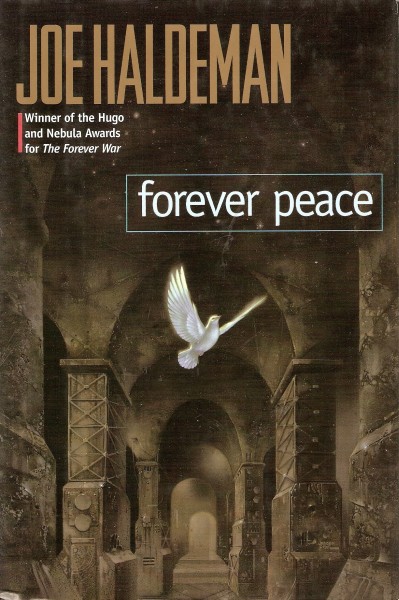
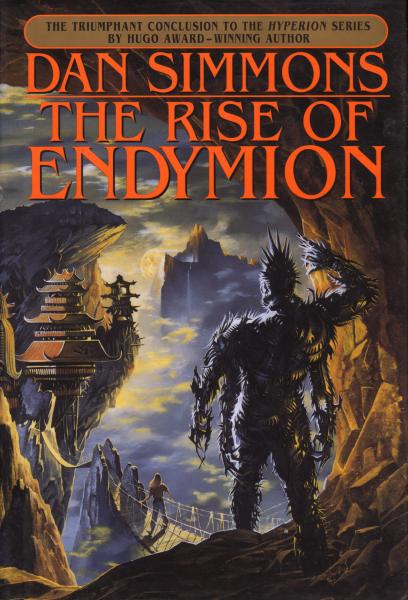
I loved all the books of the Hyperion Cantos, and felt that the last book ended as strong as the first book started. One of the best science fiction series of all time. For that reason, The Rise of Endymion heartily earns my vote. It was a magnificent 700 pages and I thoroughly loved it.
I didn’t enjoy The Forever Peace nearly as much, and DNFed it after the first couple of chapters. It’s been several years, so I don’t remember exactly what pushed it over the line, but I do remember a weird scene where the main character’s consciousness was sexually merged with the other twenty people in his team, as in he was aware of having ten penises and ten vaginas, or something weird like that, and it really turned me off. Also, Haldeman writes with a very nihilistic edge, and that also must have put me off.
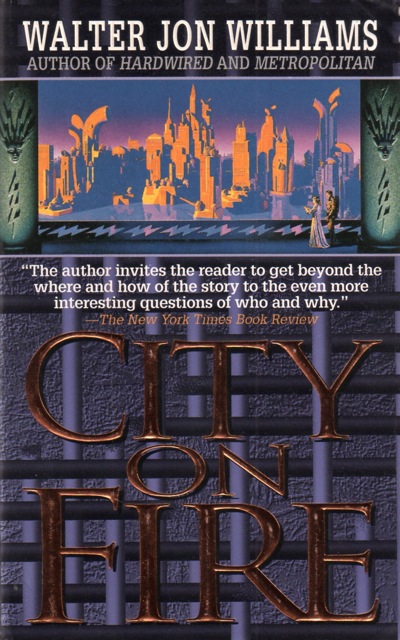
I started Metropolitan, the book for which City on Fire is the sequel, but I also DNFed it after the first couple of chapters. Lots of grim cyberpunk nihilism, and skimming ahead, the main character has an adulterous affair that’s played up as if it’s a reason for the reader to give her sympathy. I don’t really do that. So DNF that series.
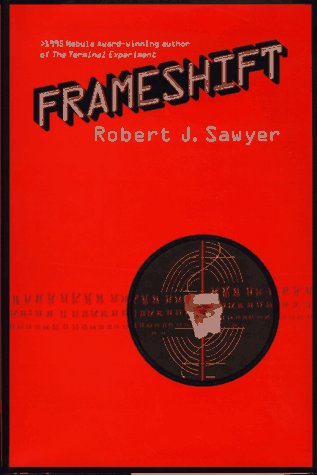
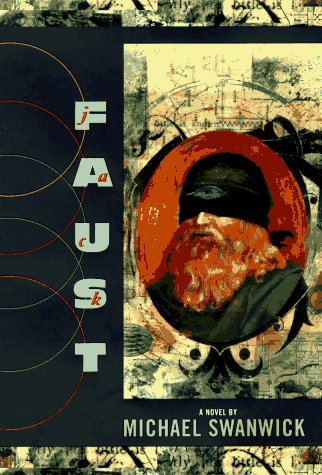
The other two books I screened with ChatGPT and decided to skip. For Frameshift, the problem was explicit violence against young children. Now that I have young children of my own, I have zero tolerance for that sort of thing and will not read it. And with Jack Faust, there are also apparently several explicit sex scenes involving graphic depictions of lust and infedelity. Also, I’ve read enough Michael Swanwick to know that he has a tendency to inject his books with weird and creepy sex stuff. No thanks.
I’ve got another 49 books to read before I can finish this blog series and evaluate every year of the Hugo Award, sufficient to know how I would vote if every year of the awards was held today. Obviously, I’m not reading all of the books: ChatGPT is helping me a lot to screen out the worst of them, and I’m also very quick (perhaps a little too quick) to DNF a book when I don’t think it’s worthwhile. But I have found a few unexpected gems, and I hope to find a few more as I read the last 49 books.
Is there another ward that I should do instead? I kind of want to use Writers of the Future to find some new authors, though it can be tricky since many of the contest writers never write anything else—or else they go for years (sometimes decades) before producing their first novel. But the contest has produced a handful of avid career novelists like Nina Kiriki Hoffman and Dean Wesley Smith, so it’s worth checking those ones out.
This year was mostly a miss for me, though none of the books were so terrible that I’d rank them below no award. Most of them either didn’t hold my interest or were sequels of books that didn’t hold my interest.
Larry Niven is a good writer, and really great at hard science fiction—something we see very little of these days (depending on whether you’d rank Andy Weir and Adrian Tchaikovsky as hard SF authors). I’ve read and enjoyed some of Larry Niven’s books, like Protector,The Mote in God’s Eye (which he cowrote with Jerry Pournelle), and Inferno (which they also co-wrote). But I’ve also DNFed some of his books too, mostly because I got bored or couldn’t follow them as well. The Integral Trees is one example. Ringworld is another.
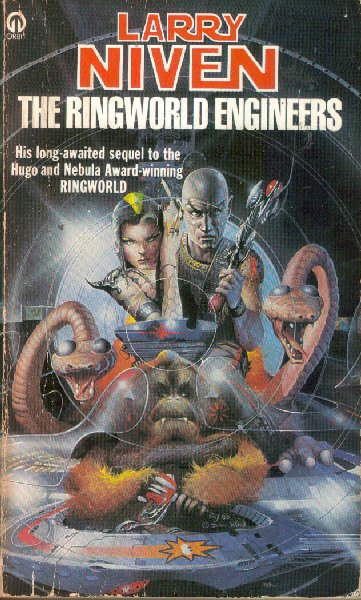
I should probably try rereading Ringworld again, since it’s probably Larry Niven’s most famous book. And it’s not a bad book at all. But midway through it, I lost interest, mostly because I felt that the story was more an excuse to showcase this tremendous mega-structure that Niven dreamed up than an actual story. And because The Ringworld Engineers is a direct sequel to Ringworld (and was written largely to answer some of the fan critiques of Niven’s Ringworld design), I didn’t bother reading it. But I probably should, one of these days. When I get through the rest of my ever-expanding TBR pile.
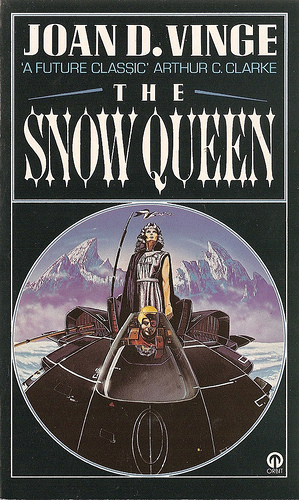
The Snow Queen was another book that didn’t really hook me, and had enough yellow flags in the first couple of chapters that I decided not to keep reading it. I might be persuaded to try it again, with a strong enough recommendation, but I don’t think it’s for me.
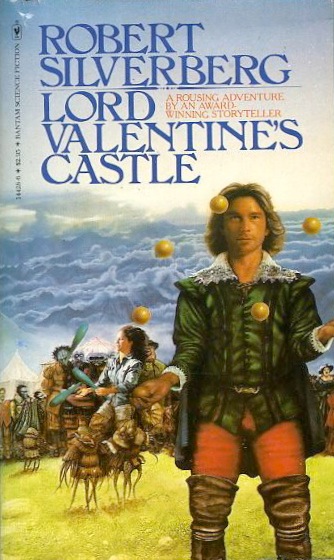
I’ve read (and DNFed) enough Silverberg to know that I probably won’t like anything he’s written. Too much dirty old man vibes (or dirty young man, depending on when the book was written). So I didn’t bother reading Lord Valentine’s Castle. He’s a fantastic writer who really has a way with language. But he spent too much time writing porn, and it really rubs off into everything else.
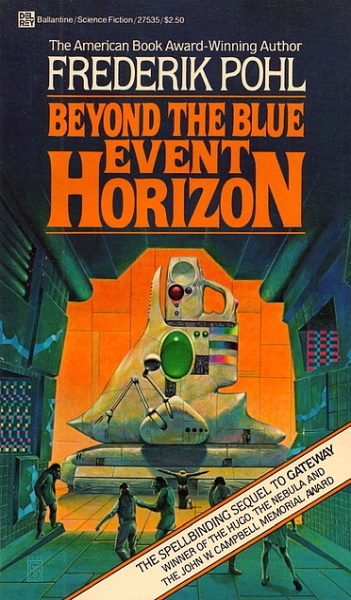
I finished the first Heechee book by Frederik Pohl, and enjoyed it well enough, though it very clearly pushed Freudian and Malthusian thinking. Perhaps, because of that, I really couldn’t get into Beyond the Blue Event Horizon. The first book, Gateway, had enough of a hook to keep me going to the end of that book, but the other ideological baggage kept me from wanting to read any more. But it wasn’t so preachy that I’d call it “woke,” just not my kind of thing.
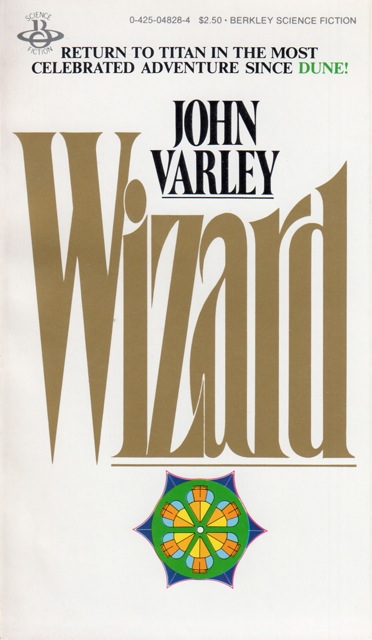
As for Wizard, I screened it with ChatGPT first and decided to skip it. Here is what the chatbot said:
The Gaea Trilogy (Titan, Wizard, Demon) is famous for being imaginative, brilliant… and filled with extremely adult, often bizarre sexual content. Wizard is the most explicit of the three.
The worldview is hedonistic, amoral, and body-centered.
The spiritual/moral framework is essentially nihilistic.
Sexual behavior is portrayed as a tool of power and experimentation.
One subplot involves sexual violence between adults (coercion/manipulation).
Several scenes go well beyond typical adult-SF boundaries into outright erotica.
If I had read and DNFed it, I probably would have ranked it below No Award, which would have forced a big change to the ballot. But I’m not going to rank a book below No Award just because I screened it and decided not to read it. I want to actually try to read it myself before I make that judgment.
With that said, though, I have no desire to read Wizard after what the AI screening told me. So there you go.
Harry Potter and the Goblet of Fire by J.K. Rowling
Calculating God by Robert J. Sawyer
The Actual Results
Harry Potter and the Goblet of Fire by J.K. Rowling
A Storm of Swords by George R.R. Martin
Calculating God by Robert J. Sawyer
The Sky Road by Ken Macleod
Midnight Robber by Nalo Hopkinson
How I Would Have Voted
Harry Potter and the Goblet of Fire by J.K. Rowling
No Award
Calculating God by Robert J. Sawyer
Explanation
I remember when everyone used to rave about George R.R. Martin. Many people said he was the American Tolkien, and not just because of the “R.R.” initials in his name. They said he was revolutionizing epic fantasy—that he was doing tremendous things for the genre, subverting expectations in a way that was pure genius. All of us who were writing fantasy at the time fell somewhere under his shadow.
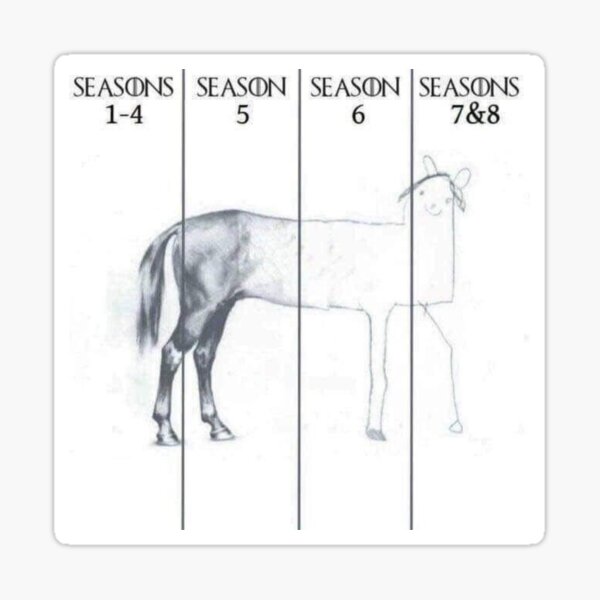
Today, I believe that few people have done more to destroy epic fantasy than George R.R. Martin. His Game of Thrones TV series, which was probably faithful to his outline for the books, ended so badly that no one talks about the show today, except to share this meme:
Larry Correia also makes an excellent point that by failing to finish his series, Martin has placed an impossible burden on up-and-coming epic fantasy authors by burning out readers on the genre. Because of Martin (and also Patrick Rothfuss), readers became unwilling to try out a new author until they had already finished their epic fantasy series. But because epic fantasies are so massive they take a long time to write, making this almost impossible for both indie and tradpub authors if the first book isn’t a commercial success.
The one upside to this vicious cycle is that it gave us my favorite fantasy meme of all time:
(So what does it say that Sanderson now sports a beard? Are we living in the shadow universe??)
But I think that Martin ruined epic fantasy much earlier than all that. In fact, I think that the worst damage he did to the genre was back when books 2 and 3 came out, because of how it normalized pornography, graphic violence, and nihilism. Because of this, I think it’s more accurate to call Martin the anti-Tolkien, because Tolkien’s secret sauce was the deep spiritual undercurrent in all of his works. And it’s because of Tolkien’s reverence for things spiritual that Lord of the Rings will probably still be read two hundred years from now, when no one remembers George R.R. Martin’s name.
Martin set out to subvert reader expectations, including the expectation that his books would exalt the good, the true, and the beautiful. At the time, epic fantasy readers were burned out on all the Tolkien clones, and were hungry for something new. Martin’s dark and gritty tone was a breath of fresh air—or so they thought. And the TV series brought in a host of new fans, most of whom came for the bare boobs and the brutal bloodsport.
But Martin’s books were fundamentally broken, and he knew it. In his eagerness to subvert expectations, he put himself in a position where he could not write a satisfying ending without denying the fundamental premise on which the whole series attempts to stand. Sargon of Akkad says it best in this video:
So in the end, it turned out that the greatest expectation Martin subverted was the expectation that he would finish the damned books. All of which is why I believe that A Storm of Swords rightfully belongs below No Award on this ballot.
A Storm of Swords wasn’t the only dark and gritty book on the ballot for this year. I screened Midnight Robber with AI, and ultimately decided to skip it. Here is what ChatGPT said:
Sexual Violence: A central plot element involves Tan-Tan being subjected to sexual abuse by a family member. This experience shapes much of her growth and her eventual rebellion against the oppressive environment. While these events are not gratuitously described, they are explicit enough to be disturbing and are critical to the narrative.
Hopkinson’s work delves into themes of colonialism, identity, and resilience. By incorporating Caribbean dialect and folklore, the novel celebrates cultural heritage and critiques systemic oppression. Tan-Tan’s transformation into the Robber Queen symbolizes empowerment and resistance against patriarchal and colonial structures.
I also decided to skip The Sky Road, partly for content issues, but mostly to avoid the leftist message fiction. Here is what ChatGPT said:
The Sky Road is probably not a good fit for you because politics is central to the story rather than merely part of the background. It spends substantial time on communist and socialist ideas, revolutionary history, ideological factions, nuclear politics, and debates about how society should be organized… On top of that, the book begins with a casual extramarital sex scene and treats the relationship without much moral concern.
I cannot stand message fiction. Not from the left, and not from the right. I recently tried to read Camp of the Saints, which lots of people on the right are now extolling because of the ongoing refugee crisis in Europe, but I DNFed it ten pages in because it’s just pure message fiction.
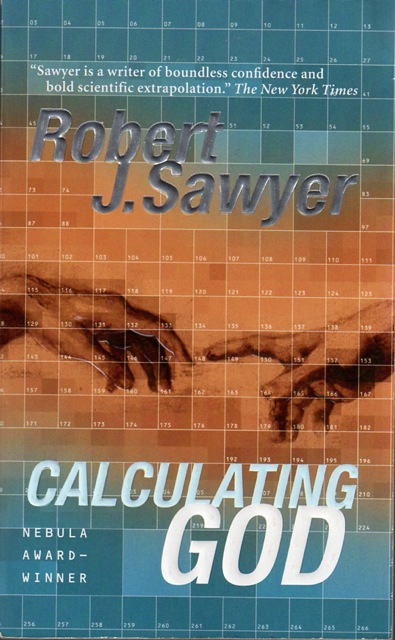
I really wanted to like Calculating God, because 1) Robert J. Sawyer is a genuinely good writer, and 2) the premise (that an alien scientist shows up at Earth and is surprised to find that many of us don’t believe in God, because all of the aliens certainly believe) was genuinely intriguing. But after getting about halfway through the book, it started to devolve into a cartoonish plot pitting the good guys against Creationist saboteurs. Skipping to the end, I realized that the book is devoid of all nuance: Sawyer’s answer to the creationism vs. evolutionism debate isn’t to point out that it’s a false binary, but to posit a transhumanist deism as the actual one true path. Really?
This is my issue with Sawyer: he isn’t at all comfortable with ontological ambiguity. If the Bible says that God created the world in seven days, then it must mean seven literal days, not seven temporal periods, or seven poetic divisions for literary effect, or seven stages in the temple liturgy meant to symbolically represent God’s role in the creation to the pre-literate, pre-scientific society of the ancient Hebrews, or any of the other non-literal readings of Genesis. That frankly makes him more of a creationist than me, a deeply religious and devoted believer in Christ.
This aversion to nuance and ambiguity seriously hobbles his books. I remember reading the last paragraph of The Terminal Experiment and laughing out loud when he described how the soul particle (which was the premise of the book) of the main character flew up and merged once again with God, who is really just the source of all soul particles in the universe. He obviously thought he was being profound, but he made it so literal that I felt he was trying to bash a round peg into a square hole with a sledgehammer. Frankly, the book would have been better if that last paragraph had been cut.
Calculating God wasn’t terrible, though, or an annoying woke (or anti-woke) message book, so I’d still vote for it after No Award. I just think he flubbed it.
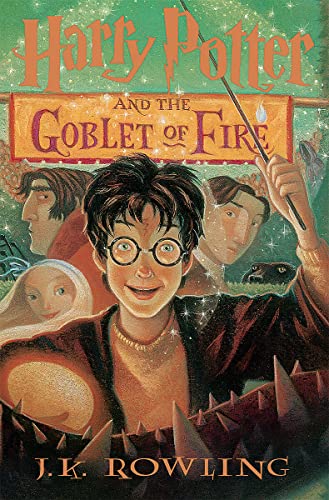
As for Harry Potter and the Goblet of Fire, I think it’s a great fantasy book, and totally deserving of the award, as are all of the Harry Potter books. After 2001, though, I think the Hugo organizers changed the rules to exclude juvenile fiction, because they didn’t want Rowling to run away with the award every year. Which seems totally snobbish and asininene to me, but whatever. I don’t pretend to know how these things work.
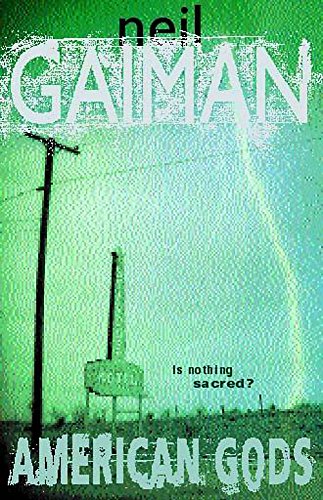
I read American Gods and enjoyed it at the time, but that was before Gaiman’s numerous sex scandals came to light. The man is a creep, and probably a rapist—and knowing that now, so many of the darker, creepier things in American Gods make more sense. Like the scene where a god disguised as a prostitute consumes a John completely through her vagina. Or where an Arab cab driver and his (Arab?) passenger go from driving in the cab in one scene, and then mutually fellating each other in the next. Weird sex stuff that seems to come out of nowhere.
So that’s why I can’t affirmatively vote for this book—and honestly, it’s borderline under No Award as well, just for the extreme content. But I did enjoy it at the time I read it, when I was less sensitive to this sort of thing. So I’ll let it pass above No Award.
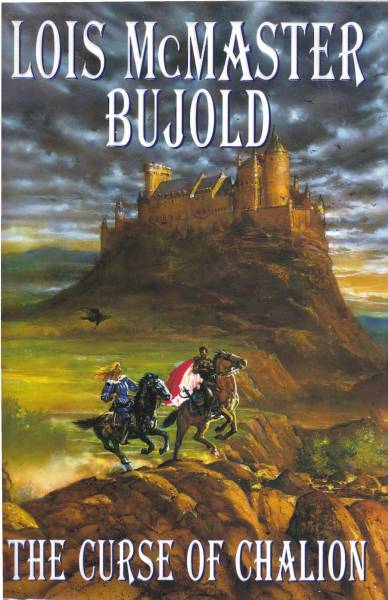
I’ve talked about Bujold’s Chalion series elsewhere. In a lot of ways, it’s a really excellent fantasy series—the sort of thing that would normally be right up my wheelhouse. But midway through the first book, the main character casually drops that when he was coming of age, he was in a man-boy sexual relationship with a pedarast, and that in this world, that sort of thing is normal.
Yes, I know that this is historically accurate to things like ancient Greek and Macedonian culture, but still, it was enough to throw me out and make me DNF the book. After all, even if I have a plate of the world’s most delicious brownies right in front of me, I’m not going to partake if there’s also some dog shit mingled with the pile.
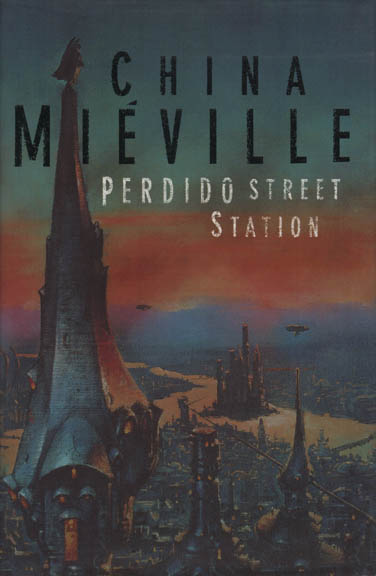
More weird sex stuff in Perdido Street Station was what made me DNF that one. The first scene is basically an explicit sex scene which, though fairly tame and vanilla as far as sex scenes go, was still way too early and way too explicit for me. Also, midway through, we learned that the girl was actually an animal of some kind, if I remember correctly. Or maybe a shapeshifter? It’s been so long that I can’t remember.
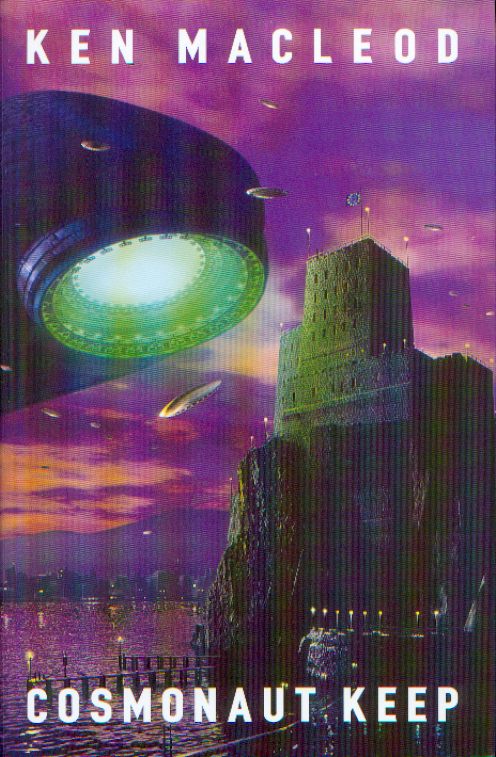
I started Cosmonaut Keep, but DNFed it because the first chapter didn’t really hook me or hold my interest, and I could tell early on that it was going to turn into political message fiction. Skip.
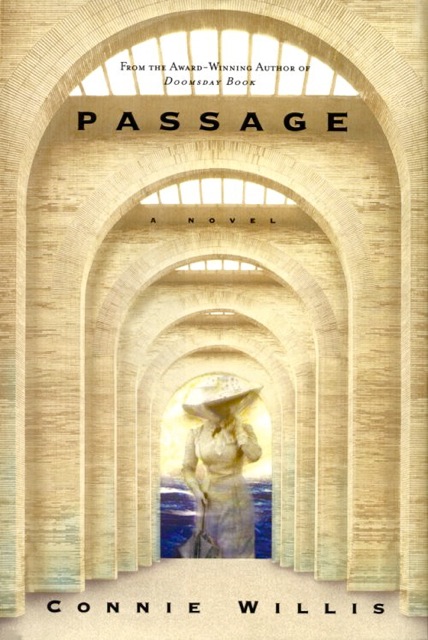
Passage also failed to hold my interest, though it did tip me off to Connie Willis’s formula. First, she chooses an area of history to study, preferably with a little bit (but not too much) of controversy. Then, she studies the heck out of it, until she comes to her own conclusions as to which side (or which historian) is right, and which is wrong. Then, she slaps a plot and some characters together, where the good guys represent the views she agrees with, and the bad guys represent the views she disagrees with. She writes it very beautifully, but also does her best to throw in every. Single. Thing. she researched over the course of the project, which is why her books are so massively huge. After all, it’s hardly ever the story. And the reason she wins so many awards (besides how genuinely charming and affable she is in person) is because her views align almost perfectly with the post-WWII neoliberal consensus. And since the people who vote for the Hugos are all so thoroughly blue-pilled, she’s practically one of their prophets.
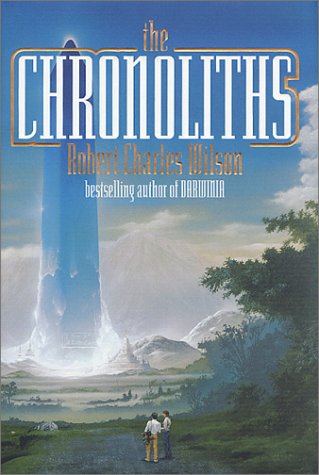
Which brings me to The Chronoliths by Robert Charles Wilson. I am 99% sure that I would disagree with almost all of his politics, but I frankly don’t care, because he knows how to write a damn good story without any of the crappy message fiction we get so often from leftist writers. I am slowly reading through all of Wilson’s books, and so far, I think The Chronoliths is his best. The premise hooked me from the first page, and kept me on the edge of my seat right up to the very end. It also kept me guessing until the end, when it all came together in an enormously satisfying way. An amazing book, and probably in my top 5 of all Hugo nominated books—right up there with Dune, Ender’s Game, and Hyperion.
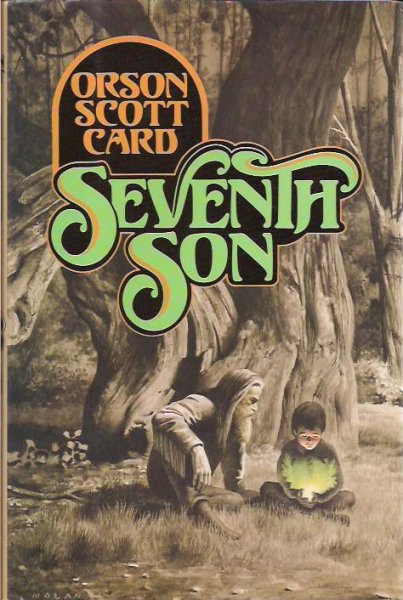
This wasn’t a terrible year for me. With that said, there’s only one book I can positively vote for, and that’s Orson Scott Card’s Seventh Son, the first book in his Alvin Maker Saga—and after all these years, it looks like he’s finally releasing the last book in the series! See, George R.R. Martin? It’s not that hard.
Card likes to play with a lot of Mormon themes in his books, and the whole Alvin Maker series is interesting because it’s basically the story of Joseph Smith in an alternate history America where magic is real and the United States never actually formed. So all of the different European colonies, some of which have achieved quasi-independence, are all vying against each other, while the Indian nations are using their magic to drive the white man out (or build an Indian New Jerusalem, though that doesn’t come into play until the later books). But the guy at the center of it all is this seventh son of a seventh son, which basically makes him the magical chosen one. And he’s basically Joseph Smith.
Card is often hit or miss for me. I didn’t enjoy his Homecoming series as much, because it’s basically the Book of Mormon in space, except he took the plot of the Book of Mormon and not much else, and tried to force it too much, to the point where it was way too on the nose. There were lines of dialogue that were almost line for line identical to the Book of Mormon, except without the deeper spiritual significance, and that turned me off. But hey, it was still way more interesting than most of the sci-fi stuff that wins the Hugos these days.
The Alvin Maker series, on the other hand, is much more subtle and nuanced with the Mormon elements—not on the nose at all. So I enjoyed Seventh Son, and plan to read the rest of the series, including the final book when it comes out. It’s good stuff. Kind of similar to Dave Butler’s Witchy Eye, if you’ve read that too. Except with a fantasy Joseph Smith.
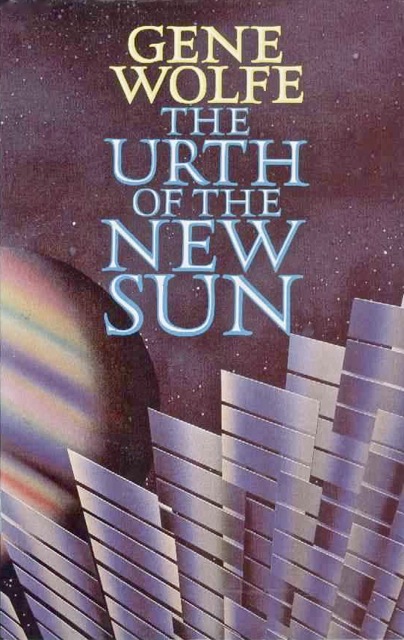
As for the other books: I didn’t read The Urth of the New Sun, because I couldn’t really get into the first book. Everyone says Gene Wolfe’s writing is some of the best, but that book was just too macabre for my sensibilities, so I DNFed the book and the series. But I might be willing to try it again, with a strong enough recommendation. There weren’t any overt content or political issues that made me choose to skip it.
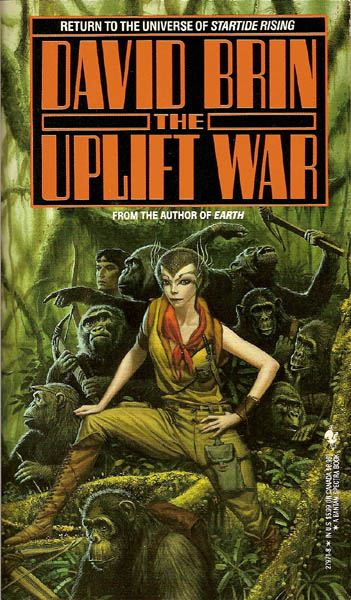
The Uplift War is also a series that I DNFed with the first book. I got about halfway through Sundiver before I gave up on it. The thing that really got to me was David Brin’s dogmatic atheism: basically, after first contact, all religions have been proven false, so everyone who still holds onto some religious faith is an obvious crackpot or wacko, according to the author. Which really just shows that Brin is the kind of atheist who hates religion because he doesn’t understand it.
Would first contact with an intelligent alien species send shockwaves through the religious world? Yes, but it wouldn’t necessarily prove the non-existence (or conversely, the existence) of God. In fact, it would actually confirm the truth of some Latter-day Saint scriptures that explicitly state that God has created “worlds without number” and peopled them with His children.
Brin’s dogmatic atheism isn’t super explicit in these books, but there was just enough of an undercurrent there that it turned me off. After all, why should I feel obligated to read an author who’s incapable of nuance in an area of life that matters so much to me? And if he’s incapable of nuance in one area, how can I have confidence that he’ll be nuanced in other areas?
As for When Gravity Fails, I screened that one with ChatGPT and decided to skip it. Here’s what the AI said:
🔞 Explicit Content Graphic Violence & Gore
Protagonist encounters brutal, explicit violence: victims are mutilated, tortured, including scenes involving child and adult victims.
Strong Language
Abundant profanity—including frequent use of the F‑word—used naturally to reflect the raw, urban setting.
Sexual & Cybernetic Body Mods
Includes prostitution, sexual violence, and explicit sexual interactions. Characters frequently undergo body modifications: gender swaps, personality “moddies,” and cosmetic changes central to character and plot.
✊ Progressive & Social Themes Gender Fluidity & Identity
Cyberpunk tech enables characters to alter their gender, identity, and personality, challenging fixed notions of self.
All of those things are pretty bad, but if the only issue was violence against children, that would still be enough for me to give it a hard pass. Ever since I became a father, I do not do violence against children anymore. Not at all. No.
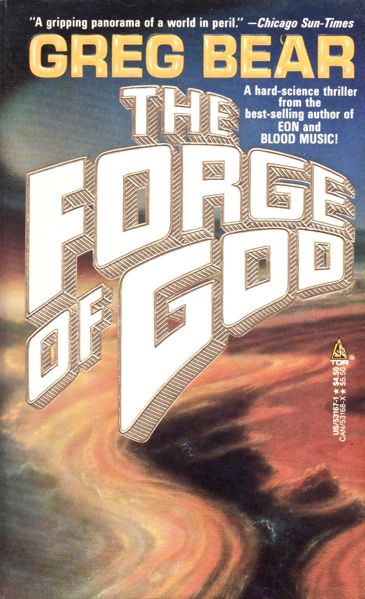
Which leaves The Forge of God. I really wanted to like this book—truly, I did—but after 200 pages, I just had to give up. It’s got a really good premise, though: basically, two different kinds of aliens land simultaneously, in the United States and in Australia, but the ones in Australia claim that they are there to usher in a new age of great prosperity for humanity, while the one in the US says that the other aliens really want to consume and destroy the Earth. And when the humans confront the aliens in Australia with what they’ve learned from the other alien (who dies pretty early on), the Australian aliens all self-destruct. And then things start to get weird.
It’s a really great premise, but unfortunately the whole story is basically an hour by hour, blow by blow of how the government bureaucracy reacts to and handles the first contact event. Which means that almost all of the characters are government bureaucrats (except for a random sci-fi author, who inexplicably becomes an advisor to the president after crash landing his single engine plane in a restricted zone—author insert much?) and most of the “action” of the novel is really just filing paperwork or passing things up the chain. I kid you not.
The premise alone sustained me for 200 pages, but after that I decided I couldn’t stand the bureaucracy. If the book had been cut to half the length, it would have been a better book.
This was a decent year for science fiction (though I have to say, Fitzpatrick’s War came out in 2004, and it never got nominated for a Hugo at all, even though it’s far superior to any of the books that were nominated in 2004 or 2005). With that said, there’s really only one book on this ballot that I can positively vote for, and even that one isn’t Robert Charles Wilson’s best work.
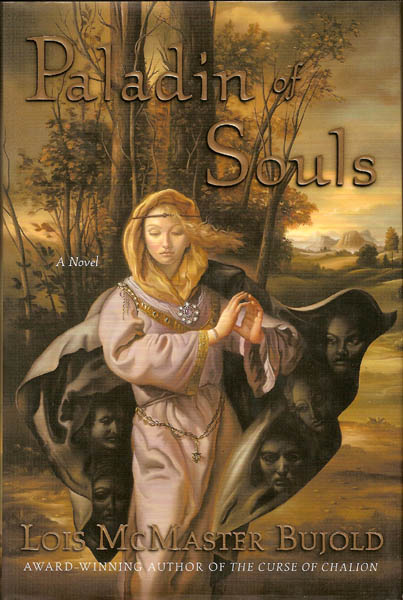
I found it difficult to get into Paladin of Souls as a standalone, so I decided to start with the first book of the series. And I was enjoying it a lot, until midway through when the main character casually talks about how he was sexually initiated by a pederast, as the boy in a man-boy-love relationship. And while yes, I know that the ancient Greeks engaged in that sort of pederasty and though it was totally normal… but I don’t. So even though it was more of a passing worldbuilding detail, I decided to take a page out of that old 80s cockroach Mormonad and DNF the book:
That’s the thing about Louis McMaster Bujold: she’s a really great writer, and knows how to tell a really great story, but she also has a penchant for weird sexual stuff, which she indulges in by worldbuilding a culture that finds it totally normal. In her World of the Five Gods, it’s the pederasty, and in her Vorkosigan Saga, it’s the Betans with their free love attitude toward all things sexual. When I was younger, that didn’t bother me so much, but it bothers me now, and it’s enough to make me think twice before picking up one of her books—even one of her older books.
I didn’t read Humans because I DNFed the first book, not because it was bad, but because it never really hooked me. After finding myself about 50 pages in, without really caring about any of the characters, I just didn’t bother reading any further. But the premise seems interesting, so I suppose I could be convinced to give it another go. After all, I’ve read other books by Robert J. Sawyer that I enjoyed (in fact, I’m reading one right now).
I really wanted to like Ilium, because Dan Simmons’s Hyperion Cantos was so amazingly good. However, I found myself vacillating between being totally confused about the basic premise of the book (it’s like Homer’s Iliad… on another planet? But with real Greeks and Trojans? In a simulation, I guess?) and disgusted with the main character, who introduces himself in chapter 1 by talking about how he did the jailbait wait for this underage girl he really had the hots for, and describing her pubic hair in vivid detail the first time he saw her naked.
As for Singularity Sky, I didn’t bother reading it, because I’ve read enough Charles Stross to know that can’t stand his particular brand of edgy cyberpunk nihilism.
Which brings me to Blind Lake. It was a good book, and I enjoyed it quite a lot, though it fell a little too far on the “huh?” side of weird. I really like Robert Charles Wilson’s writing, and I’m slowly working through his entire body of work. His Spin trilogy is some of the best science fiction I’ve ever read, though I think The Chronoliths is my favorite book of his so far. Blind Lake is good, but I think I liked Mysterium better, though that also was a bit of a “huh?” novel at parts. Mostly, I think the Big Lie in Blind Lake was a little too big to swallow, and not quite as flashy or as interesting as some of his other ones, like Spin and The Chronoliths. But the story that followed from it was on par with his other books.
Two thousand four was one of the last years where I can honestly say that I wouldn’t vote No Award over any of the books on the ballot. The only other year since then that I can say that of is 2013—every other year has been a contest between the stuff that’s actually good, and the stuff that’s downright terrible. At this point, it seems like the increasingly small and irrelevant clique that votes in the Hugo Awards has gone completely off the deep end, which is why I’ve already posted my “How I Would Vote Now” post for 2026, even though the awards haven’t happened yet.
I’m not a huge fan of New Wave science fiction, and by 1968, that was the hot new trend that was sweeping the genre. Of the five books nominated, I DNFed three and screened out the other two using AI. Here’s the breakdown:
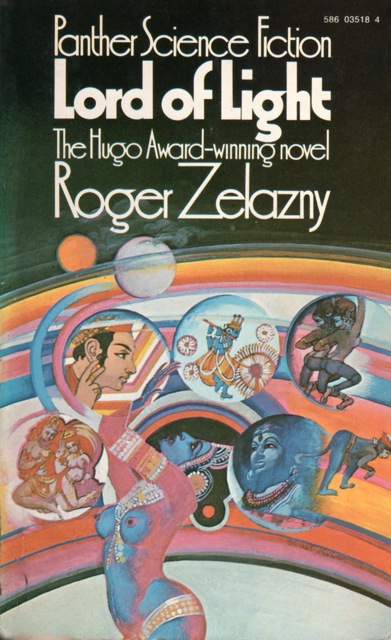
I tried to read Lord of Light by Roger Zelazny, but just didn’t get into it. It was too Eastern and pseudo-mystical for me. With that said, it’s not a bad book, so I could probably be persuaded to go back and try it again. It’s just not for me.
Strangely, I’ve found that to be true of most of Zelazny’s books and stories… except for his Chronicles of Amber, which I love. Granted, the last couple books in the series are turning into a bit of a slog (I’m currently in the middle of book 9), but the first five books following Corwin are absolutely fantastic. I was hooked from the first page of the first book, unlike every other Zelazny title, which usually loses me after 30 or 40 pages.
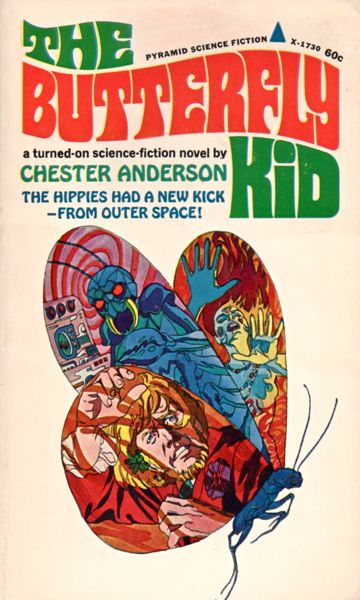
The Butterfly Kid was really hard to find, because the Orem Public Library AND the BYU Library don’t carry it—and the BYU Library has one of the best science fiction collections west of the Mississippi. So I read the free sample on Amazon, and that was enough to DNF it. Way too psychadelic and trippy for me. The whole book is basically a 200 page drug trip, with an alien invasion thrown in for good measure. No wonder BYU doesn’t carry it.
The Einstein Connection was probably the book that made me decide to blacklist Samuel R. Delany and never read anything else he’s written (that, and the fact that he endorsed NAMBLA). There’s a lot of weird and twisted sexual content, including (if I remember correctly) some sexual content involving children. There’s a reason why Neil Gaiman wrote such a glowing introduction to the book, extolling all the reasons why he loves all things Delany. Bunch of sick perverts if you ask me.
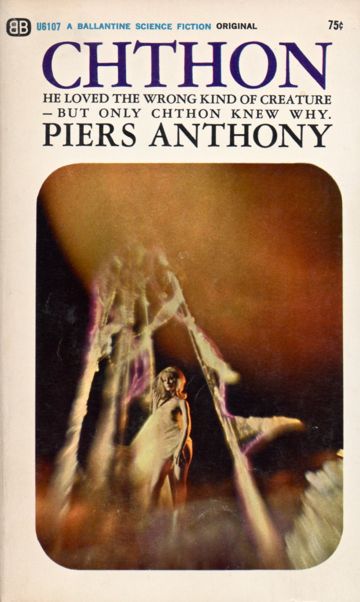
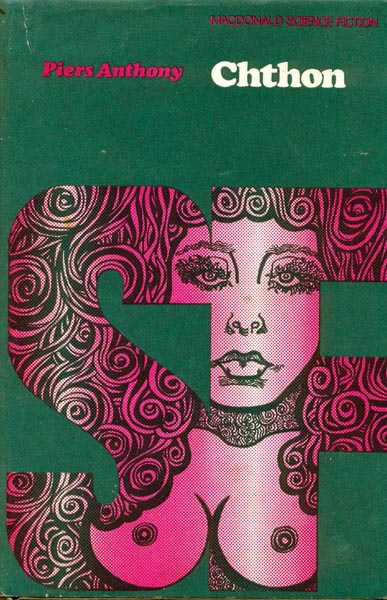
I’ve tried to read some Piers Anthony before, but found it very difficult because of all the sick old man vibes he gives off. Which is a shame, because he’s a pretty decent writer. But everything I’ve tried to read of his has a weird obsession with rape, or of the necessity of women to submit to male sexual needs (including the needs of strangers). So when ChatGPT told me this about Chthon, I decided I didn’t need to read it:
This appears to include rape, incest/Oedipal sexual themes, coercive/abusive sexuality, and a race of women whose narrative function is tied to abuse, desire, and destructive obsession. Several reader reviews specifically warn about rape, incest, misogyny, and violence against women, with one review describing “cold scenes of both rape and incest” and objecting that the story seems to frame the perpetrating character too sympathetically.
The setup itself is grim: Aton Five is condemned to the subterranean prison planet Chthon after falling in love with a dangerous “Minionette,” and the novel is described by SFWA’s Nebula page as dark, grim, and heavily prison-sequence driven. The tone seems psychologically oppressive rather than hopeful or adventurous.
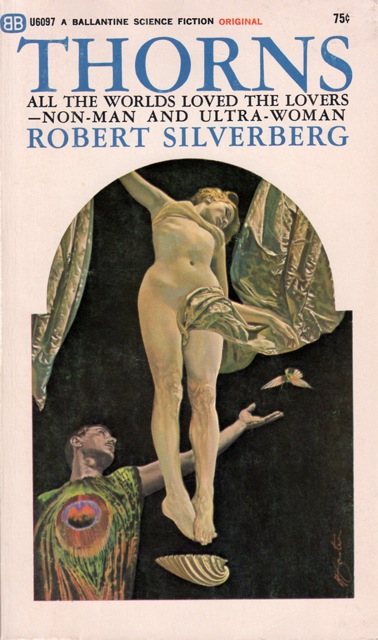
Robert Silverberg has a very similar problem, though he’s not nearly as overt in his sick old man vibes as Piers Anthony. But I don’t think I’ve ever read a Silverberg novel that I didn’t end up DNFing for weird and disturbing sexual content. Here’s what ChatGPT said about Thorns:
High concern. There is definitely sexual content, and it sounds deeply uncomfortable rather than erotic in an ordinary adult-romance sense. Multiple reader descriptions flag a bizarre or disturbing sex scene, and the central relationship involves a seventeen-year-old girl paired with a much older, physically altered man under manipulative circumstances.
I did not find evidence of a conventional rape scene in the sources I checked, but the book’s whole setup involves sexual/reproductive exploitation: Lona is used by scientists for her eggs, becomes the biological mother of one hundred children, and is then denied access to them. That is not “sexual violence” in the ordinary on-page assault sense, but it is very much reproductive exploitation and psychological violation.
This sounds like one of Silverberg’s darker psychological SF novels. The central figure, Duncan Chalk, literally feeds on other people’s suffering and engineers misery as entertainment. The book seems interested in pain, isolation, bodily alienation, emotional manipulation, and the public consumption of private suffering.
In fact, I’m pretty sure that ChatGPT flagged its own description of the novel as potentially violating its content guidelines, which is never a good sign.
So there you have it. Another bad year for science fiction—which tends to support my thesis that SFWA ruined the genre by starting it down the long march through the institutions. SFWA was founded in 1965, and Silverberg was the president from ’67 to ’68.
(As an interesting side note, everyoneofthesenovels had at least one edition featuring cover art with topless female nudity and visible nipples.)
The Hugo nominees for 2026 just came out, and I have to say, deciding how I would vote on this ballot has been the easiest post I’ve done in this series. All of these books fail—all of them. I don’t even have to read them to know how I would vote. Thank you, ChatGPT, for helping me screen these books.
(Fun fact: I have more active subscribers on my email list (meaning their last activity was less than 90 days ago) than people who cast ballots for the Hugo nominees. Almost twice as many active subscribers, in fact. It’s not even close.)
Why do I use ChatGPT to screen my books? Because of a terrible experience I had reading The Man Who Folded Himself by David Gerrold. It started as a fun time travel adventure about a kid who gets a fantastic time travel belt, and uses it to do awesome things. But then, a future version of himself shows up and starts grooming him sexually, and before you know it, the whole book is literally about him fucking himself. I was so repulsed and disgusted from that reading experience that I vowed I would not read any more Hugo nominated books until I had screened them with AI first.
I’ve trained ChatGPT to look for five kinds of content that I personally find objectionable. Those are:
Explicit sexual content, especially sexual violence,
Explicit language and profanity,
Violence against children,
“Woke” themes or ideologically leftis messaging, and
Nihilisim
If a book is only borderline on one or two of the categories, I may still read it if the book description interests me. But if it’s hardcore over the line on at least one of those things, I won’t read it. And for the 2026 Hugo Awards, ever single book fails miserably in at least one of those categories.
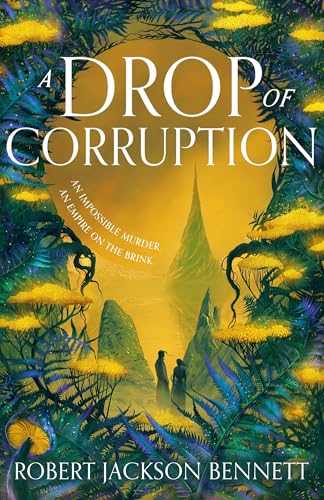
A Drop of Corruption is a direct sequel to The Tainted Cup, the book that won Best Novel in last year’s Hugo Awards, which also failed my screening criteria (for sexual content, woke messaging, and profanity), so that was enough of a basis not to read the sequel. But ChatGPT also says there’s sex trafficking and pedophilia in this one, which is enough to fail this book on its own.
I don’t think I’ve ever read a book by Alix Harrow that I didn’t DNF, and I certainly won’t start with The Everlasting. According to ChatGPT:
One content-warning review rates the spice as “severe,” with open-door intimacy in chapters 17 and 22; StoryGraph also flags graphic sexual content.
Child death is flagged by some readers, along with war and repeated death.
One review counts 27 uses of f-word and 3 uses of c-word; profanity rated severe.
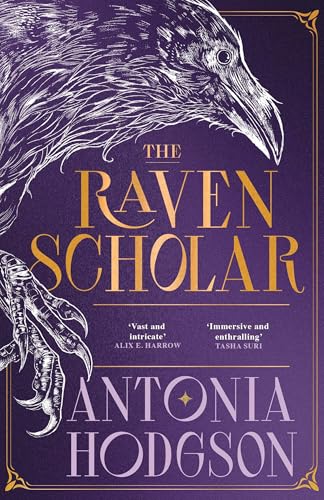
Not a hard choice there at all. Here’s what it said about The Raven Scholar by Antonia Hodgson:
StoryGraph user warnings include graphic child death among other violent content.
Ever since having children of my own, I do not do any sort of violence against children. I just can’t stand it. I loved Hyperion, but the subplot about the girl who gets the Merlin disease and grows backwards just completely wrecked me. Thank goodness it has a happy ending, because otherwise I probably would have burned my copy of The Fall of Hyperion. So I’m really not kidding when I say I don’t do violence against children.
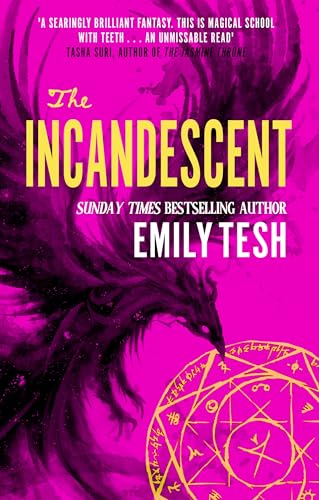
Surprisingly (or perhaps not), most of the books this year failed on that particular point. Consider what ChatGPT said about The Incandescent by Emily Tesh:
StoryGraph flags child abuse and child death, and the premise involves a magical school where demons prey on children.
Bisexual female protagonist, neurodiversity representation, critique of elite education, class privilege, and capitalism.
I suppose this is a side effect of the ideological purity of the awards, since one of the defining issues of the modern left is abortion. When your political faction literally celebrates the murder of children, should it come as a surprise that it produces so much anti-family and anti-natalist fiction?
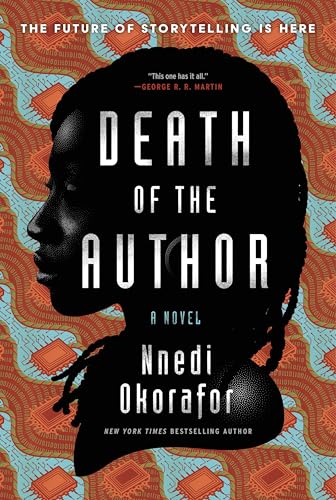
Anyways, the last two books failed primarily on the “woke” messaging. They’re the ones I’m most likely to reconsider my decision to skip, though I’d have to hear a recommendation from someone I really trust. I’m particularly reluctant to read Death of the Author, just because I usually can’t stand when writers write about what it’s like to be a writer. Here’s what ChatGPT said:
Feminism, disability autonomy/representation, racism, sexism, transphobia, Nigerian-American cultural conflict, and publishing/representation discourse are prominent.
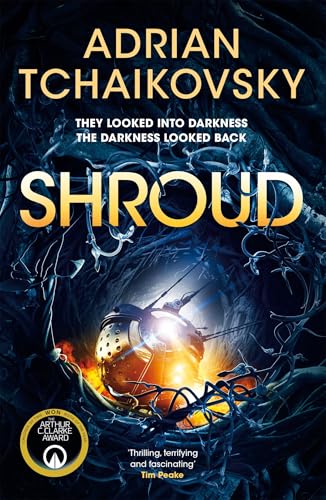
As for Shroud by Adrian Tchaikovsky, that’s probably the one of these books that I’m still the most on the fence, but from what I can tell with ChatGPT’s screening, it seems like he’s gone all-in on the woke messaging in order to appeal to the Hugo voters, and that’s enough for me to give it a pass. Here’s what ChatGPT said:
Strong anti-corporate, anti-colonial, environmental/extraction critique; one review frames it around humanity, colonization, corporate strip-mining, and moral corruption.
So there you have it. Not a hard choice. If I were voting in the Hugos this year, I’d give it a “no award” for the Best Novel category. As it stands, though, there is absolutely no way I’m giving these MFers any of my money, so I won’t be voting. It will be mildly interesting to see which species of perversion and woke leftist pathology will win this increasingly irrelevant award.
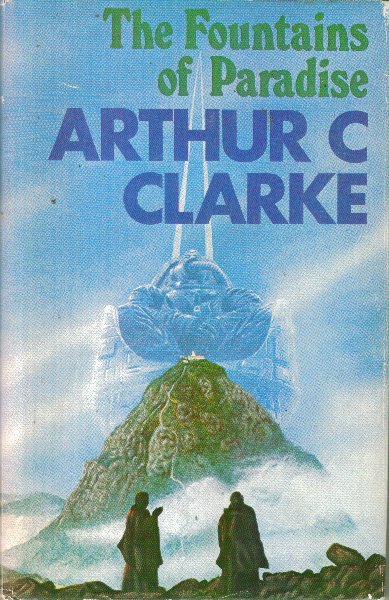
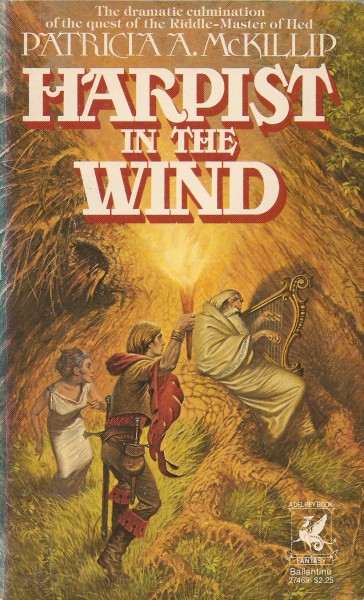
I didn’t like any of the books this year, though none of them were particularly objectionable or bad (at least, not of the ones I read). The Fountains of Paradise just didn’t hold my interest, and I got bored and put it down. As for Harpist in the Wind, I never got to it because I ended up DNFing the first book in the trilogy, The Quest of the Riddle-Master. I wanted to like it, but I was just totally lost, especially when some of the characters were dead… maybe? Or maybe it was a dream? McKillip is clearly a beautiful writer, but writing a clear and engaging plot is clearly not her strength.
As for the other three, I screened them for objectionable content with AI, and based on that, I chose not to read them. I’ve found that I have to do this with all the Hugo Award nominees because some of the books are just way beyond the pale. On Wings of Song is apparently about a 14 year old child’s supernatural sexual awakening. Titan is apparently about a bunch of libertine, pansexual astronauts on a starship making first contact (in more ways than one) and spreading free love across the galaxy. Jem is apparently about the evils of colonialism and capitalism in a world where Malthus was right and Thomas Sowell is wrong (and you thought Ayn Rand’s preaching was bad).
1980 was the tail end of the New Wave, when science fiction went totally woke before “woke” was even a thing. But by this point, the movement was already starting to feel tired. It wasn’t until the mid-80s that a lot of these toxic ideologies were in full retreat, making room for some truly great books like Ender’s Game and Hyperion. At the same time, because the movement was already starting to burn itself out, none of these New Wave books is particularly terrible. Just more of the same tired thing.
Captain Vorpatril’s Alliance by Lois McMaster Bujold
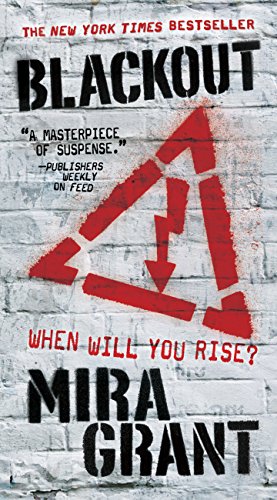
Blackout by Mira Grant
2312 by Kim Stanley Robinson
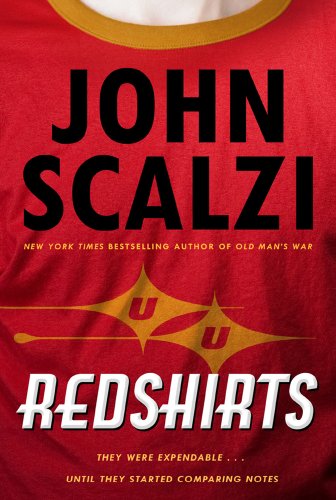
Redshirts by John Scalzi
The Actual Results
Redshirts by John Scalzi
Captain Vorpatril’s Alliance by Lois McMaster Bujold
2312 by Kim Stanley Robinson
Throne of the Crescent Moon by Saladin Ahmed
Blackout by Mira Grant
How I Would Have Voted
Throne of the Crescent Moon by Saladin Ahmed
Explanation
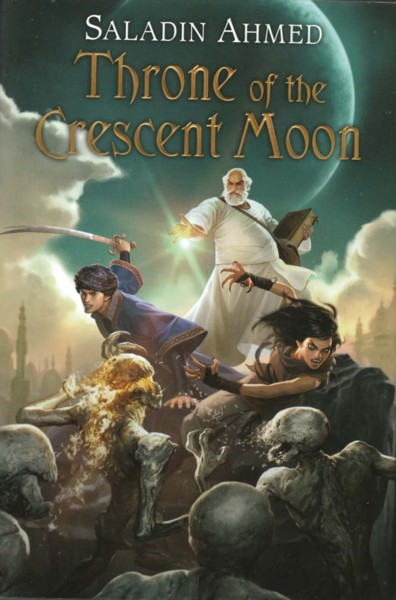
None of the books this year were super woke or objectionable to me, so I wouldn’t put any of them below No Award. But the only one that I actually finished was Throne of the Crescent Moon, which I found to be an enjoyable debut fantasy novel. It’s got some flaws, but it makes up for that with heart, just like many good debut novels. It’s also got a real Islamic / Middle Eastern flair to it, which made it fun and unique. And while these days, there’s an association between Islamism and the Left (the “red-green alliance”), Throne of the Crescent Moon isn’t woke at all—which I suspect was one of the reasons it didn’t win.
I hope Saladin Ahmed writes a sequel to this book. The world is interesting, the characters are good people, and the first book is clearly setting things up for other books. But I’ve heard rumors that the reason Saladin hasn’t written the next book yet is because the whole Hugo Awards process was such an emotional rollercoaster that it burned him out and killed his desire to go through all that again. Plus, when you experience a surprising degree of success too early in your career, there’s a danger that the pressure to perform will kill your subsequent efforts. Which is too bad, because I definitely want to read the next book!
As for the other books this year, none of them were all that great. I DNFed Mira Grant’s Newsflesh series with the first book, so I didn’t bother reading Blackout.Redshirts is basically a space opera retelling of Rosencrantz and Guildenstern are Dead, which I thoroughly hated (not to mention, I haven’t liked anything Scalzi has written since Old Man’s War, for reasons I’ve explained previously). And 2312 was more of a hard SF slice-of-life novel about all the wonderful things Kim Stanley Robinson would like us to build as we expand humanity’s presence across the Solar System—all with the correct neoliberal politics, of course. A little too heavy on the vision, and a little too weak on the plot.
I wanted to like Captain Vorpatril’s Alliance, and I’ve enjoyed most (if not all) of the other Vorkosigan novels by Bujold… but after the first few chapters, I just started to feel as if the series has run too long for me. One of the biggest obstacles to reading the Vorkosigan Saga has been figuring out a proper reading order, since the chronologically first few books have virtually none of the important recurring characters, and every other book seems to refer to the events of half a dozen other previous books, sometimes including books that haven’t been written yet. And trying to read them in publication order doesn’t help either, since Bujold tends to jump all over the place in her own timeline. But in general, I think all the best books are the ones she wrote earlier, because the later-written books are mostly just about the feelings and relationships of the side characters in the series.
When I was a younger writer, I thought it would be wonderful to have a career like Bujolds, with a popular long-running, open-ended series that I could add new books to as the muse tended to strike me. But now, I tend to think that every good series has a definitive arc, with a beginning and an end. I might end up eating these words, of course, especially if one of my series becomes popular enough that that’s all my readers want to read more of. But I would rather have multiple popular series, each with a distinct arc, than one never-ending series where the later books just don’t quite measure up to the first ones.