How I Would Vote Now: 1993 Hugo Awards (Best Novel)

The Nominees

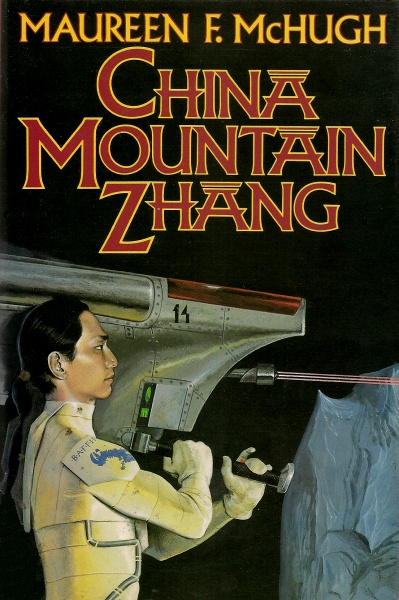
China Mountain Zhang by Maureen F. McHugh
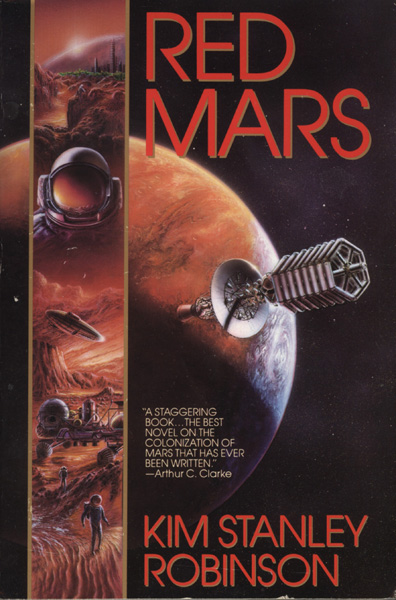
Red Mars by Kim Stanley Robinson
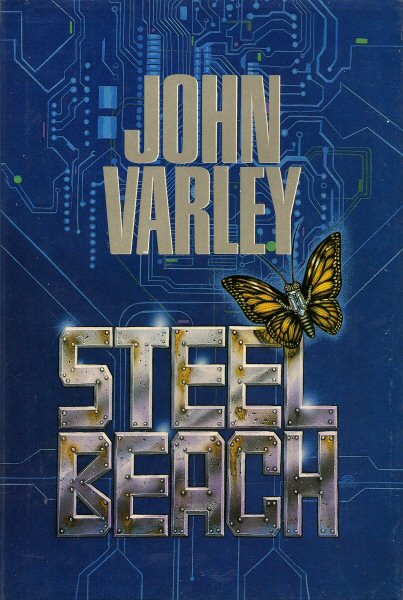
Steel Beach by John Varley
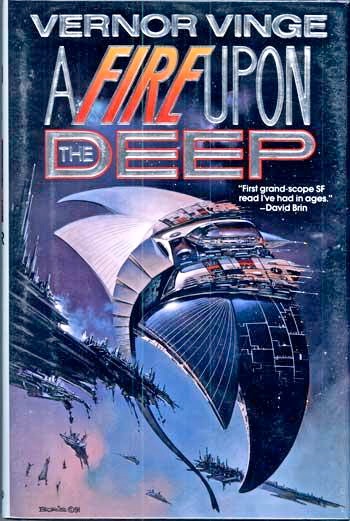
A Fire Upon the Deep by Vernor Vinge
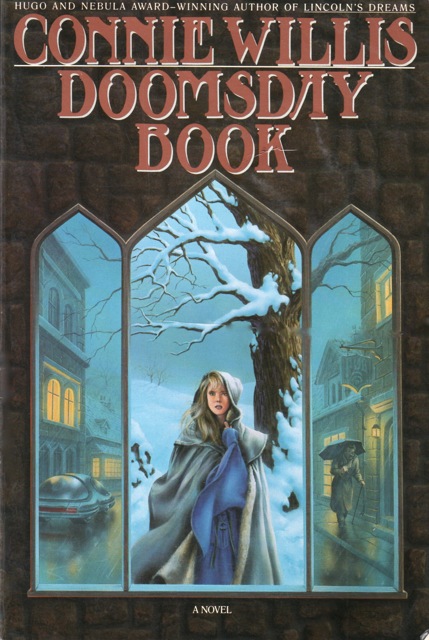
Doomsday Book by Connie Willis

The Actual Results

  1. A Fire Upon the Deep by Vernor Vinge
  2. Doomsday Book by Connie Willis
  3. Red Mars by Kim Stanley Robinson
  4. China Mountain Zhang by Maureen F. McHugh
  5. Steel Beach by John Varley

How I Would Vote Now

(abstain)

Explanation

I didn’t hate any of these books, but I didn’t love any of them either—which is fairly typical for me of 90s era Hugo Awards. Let’s go down the list.

Doomsday Book is often held up as Connie Willis’s best, but I thought it lost the plot a bit when the time travelers had to simultaneously face a pandemic in their own future time while also having to rescue the lost apprentice time traveler from the black death in medieval England. If you’re reeling from a pandemic, what the heck are you doing sending time travelers back as if it’s a normal day on the job? Also, Connie Willis really has no love for the medieval era, and it shows. Blackout and All Clear were much better, partially because of how much Connie Willis clearly loves WWII-era Britain.

If there’s one book in this list that I should try again, and probably will, it’s A Fire Upon the Deep by Vernor Vinge. It’s the kind of science fiction that’s right up my wheelhouse, and I’ve enjoyed Vernor Vinge before (Rainbows End is the best so far). But this book is so freaking huge, and I never latched on to any of the characters… oh, and the central conceit of the aliens, that the small collective packs form a hive mind that thinks and acts like an individual—that didn’t really work for me either time I attempted to read this book.

I screened Steel Beach and China Mountain Zhang through ChatGPT for objectionable content and decided to skip both of them. Here is what ChatGPT said about China Mountain Zhang that made me decide to skip it:

The story engages deeply with themes of intersectional identity, including race, sexual orientation, and societal roles. Zhang’s struggles as a gay man in a conformist society are a significant part of the narrative. The book also critiques authoritarianism and explores social dynamics through a progressive lens. While these themes are integral to the story and handled with subtlety, they align with a modern “woke” perspective.

And here’s what it said about Steel Beach that made me decide to skip it:

Language: Strong language is used throughout, reflecting the irreverent tone of the protagonist and the society depicted.

Gender and Identity: Steel Beach explores themes of gender fluidity and personal identity in a society where individuals can easily change their biological sex. This aspect of the world is presented as normalized rather than contentious.

As for Red Mars, I read this one way back (way way back) when I was a freshman in college. At the time, I was still working out what I believed politically, so most of KSR’s leftism went right over my head. However, there were a few sexually explicit scenes that weirded me out, especially the one where the colony team’s depressed psychiatrist discovers—and joins—the bizarre sex cult and their group orgies in the farm module. I still finished the book, but I declined to read the rest of the series.

What is it with crunchy leftist authors and bizarre, explicit sexual content? Why do they always seem to feel a need to fill their books with weird and pointless sex? There are so many books I’ve read for this series that started out strong, but ultimately devolved into sexual degeneracy that added nothing to the story. It’s almost like they felt a compelling need to add the degeneracy for its own sake. Maybe it’s a boomer thing? A “spirit of the age” possession of some sort? I honestly don’t know.

Just finished my last short story

So I just finished writing what may be the last short story I ever write, at least for the forseeable future. Years from now, I may scribble out a quick short for a charity anthology or something, but unless someone actually commissions me to write one, I’m done for now. Instead, I’m going to focus all of my attention on writing novels, since that’s where all the money (and readers) are.

This last one was fun: a post-apocalyptic tale in a wintry wilderness, where the scout of a tribe of survivors comes across the “Ark Facility” built by a bunch of wealthy elites to freeze themselves in stasis while their workers maintain the facility, and wake them once civilization has been restored. But of course, the plan goes to hell, and the only person left is the daughter of the last caretaker, all the other workers having abandoned the aging facility rather than trying to maintain it. So the scout convinces the girl to come with him, and to leave the facility in the care of the elites after waking them up. That’s when the drama begins.

I wrote the rough draft of this story with AI, back when I was just starting to climb the learning curve for AI-assisted short stories. Because of that, it was rather frustrating in parts, and I ended up throwing out almost everything that I generated. It still turned into a +8k word novelette, though I may be able to cut it down to 7.5k or lower with a couple of revision passes.

But frankly, I don’t much care whether it ends up as a novelette or a short story, because I’m not going to bother submitting it anywhere. I’ve come to the conclusion that none of the short story markets for science fiction or fantasy are worth submitting to, because they are all commercially non-viable and exist primarily as (typically short-lived) passion projects, stepping stones for people trying to carve out a career in the book world, or as vehicles for clout-seeking authors and editors to get their names on the ballots for the Hugos and the Nebulas.

Also, I’m a straight white male conservative, which automatically makes me anathema to every (and I do mean every) pro-paying science fiction short story market. The 1,000+ rejections that I’ve accumulated over the course of my career give me authority to say that—specifically, 1,062 rejections out of 1,255 submissions, according to my lifetime stats on The Submission Grinder (and most of those 193 non-rejections were submissions that never received a response). Thank God for self-publishing.

Since I’m not yet at the point where I can consistently write and publish a novel each month, I will continue to republish some of my old short story singles on the off-months when I don’t have a novel. I was doing the novel-a-month thing for the first few months of 2024, but needed to take a break after the third Sea Mage Cycle book to recuperate, re-evaluate, and rework my writing process. Starting in 2025, I will probably start publishing a novel every other month, and ramp up the process until I’m doing a novel every month. At that point, I’ll retire the free short story singles for good.

It’s been a good run. I’ve written and published about 60 short stories, some of them with semiprozines and anthologies, but most of them indie. I do think it’s a good way to get started when you don’t have much of a following, and I attribute a sizeable chunk of my own following to my consistency in putting out new content for my readers each month. But the money is all in writing novels, since that’s what readers are actually willing to pay for—and given the current state of short fiction, I can’t say I blame them.

Thoughts on the 2023 Hugo Awards

This video gives a pretty good recap of the endless fountain of scandals surrounding the 2023 Chengdu Worldcon and Hugo Awards. Larry Correia also gives an interesting take on it on his blog, and in his writing podcast.

My initial thoughts:

  • Schadenfreude is one hell of a drug.
  • Accusation = confession = projection, no exceptions.
  • This scandal vindicates the Sad Puppies 110%. Remember how they called us the racists? How they said we were the ones manipulating the system? …yeah.
  • Wow, schadenfreude is one hell of a drug.

Laying aside all of the knee-jerk internet outrage (and schadenfreude), though, I do find it tragic that there doesn’t seem to be a way to recognize excellence in the SF&F genres that isn’t totally given over to in-group politics and petty fannish controversies. At the end of the day, I think that’s really what the Sad/Rabid Puppies was all about: a small and exclusive group of insiders (aka “true fans”) refusing to give any space to outsiders who also wanted to be part of the awards process. The fact that most of these outsiders happened to be politically conservative was incidental; we might as well have been Chinese, for how the in-group treated us.

With all of that said, though, I don’t necessarily think that the best solution is to burn the Hugos to the ground. For all the scandals, and how terribly woke the Hugos have swung in the last few years, the system itself is still pretty good. I mean, can you imagine how much different things would be if our national elections were decided by ranked-choice voting, with “none of the above” as an available option? As much as I have a problem with the people who organize and run the Hugo Awards—the people who are rightly being slammed for arbitrarily discounting hundreds of Chinese ballots and arbitrarily disqualifying several titles from the final ballot—the system itself is actually a pretty good one.

A couple of years ago, I read every Hugo and Nebula award-winning book. It was an enlightening exercise, to say the least. Since then, I’ve dabbled with doing something similar with other wards, like Goodreads Choice, but I’ve never really made the plunge, since most of these other awards are either too young to really give a comprehensive overview of the genre, or too narrow or cliquish. Many of them are thinly-veiled popularity contests, where the author with the most rabid fanbase wins.

Is it possible to have an award that recognizes true excellence that doesn’t devolve into a thinly-veiled popularity contest on the one hand, or else isn’t taken over by a small and snobbish group of elites on the other? I can see how these sorts of concerns might have driven many of the concerns about “slate voting” during the Sad Puppies controversy in 2015. Unfortunately, they clearly took it to the opposite exteme, turning the Hugos into their own exclusive club, un-personing conservative and Chinese fans alike.

In the end, it probably comes down to who we are as a people more than what systems have been put in place. If fandom really was the kind of place where people could come together over their shared love of science fiction and fantasy, regardless of politics, religion, nationality, or anything else, then perhaps the Hugos actually would be a marker of excellence, and not just identification with a very small (and snobbish) in-group. And I do think there have been times in the past where that has been the case.

So, in a funny way, this whole controversy around the 2023 Hugo Awards actually makes me want to go back and read a bunch of the older Hugo-nominated books from previous years, to see how I would have voted (and how my own vote differs from the votes that were actually cast). I think it could be a useful exercise, not so much in determining how useful or authoritative the Hugos ought to be (I figured that out a couple of years ago), but in determining my own reading tastes, and how they may or may not have fit in with previous generations of Hugo-award voting fans.

One of the most difficult things I’ve recently had to wrestle with is the realization that my own tastes and values run almost completely contrary to the culture in which I live. I don’t think the Hugo Awards have ever represented mainstream culture, but it is still an interesting bellweather of a subculture that I love, plagued as it might be by in-group politics and petty infighting. And I do think there were periods where my own tastes and values aligned pretty well. I’m curious to see which periods those are.

All of this is to say that I’ve been going through all of the old Hugo nominations for Best Novel, reading through them to see how I would have voted for each year. I’m mostly just doing it for myself, but I may post it here if you guys are interested, since it probably would make for some good blogging content.