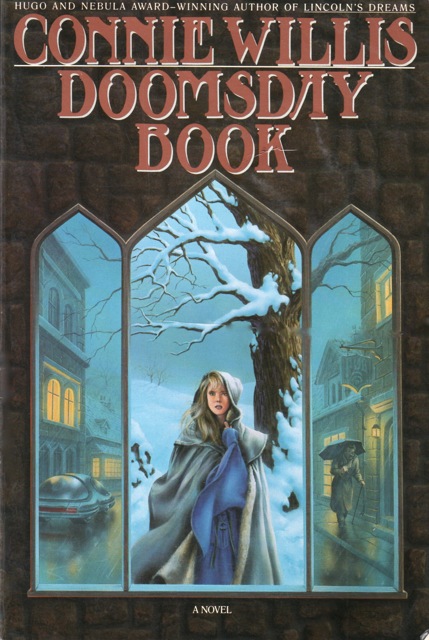
The Nominees
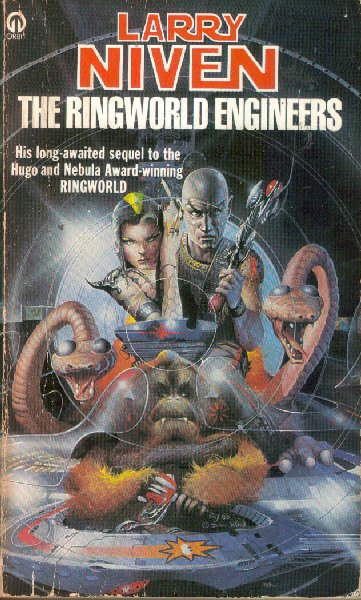
The Ringworld Engineers by Larry Niven
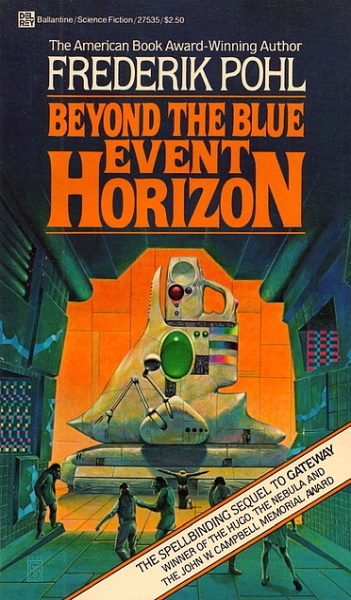
Beyond the Blue Event Horizon by Frederik Pohl
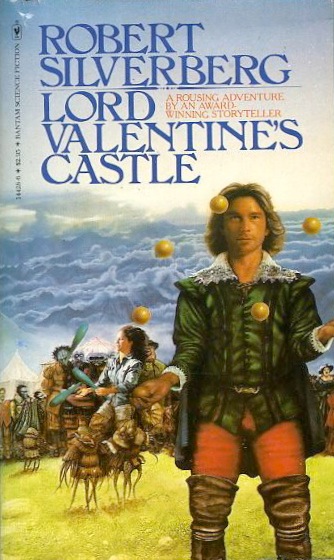
Lord Valentine’s Castle by Robert Silverberg
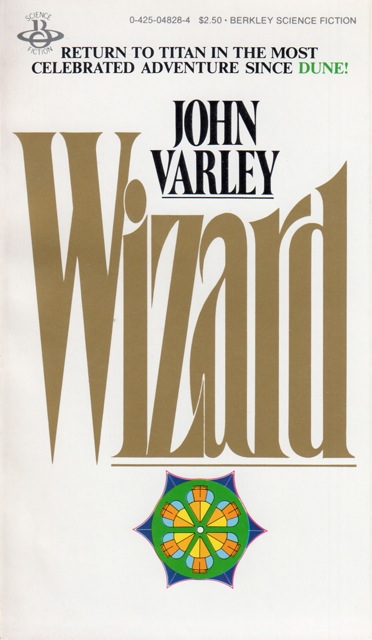
Wizard by John Varley
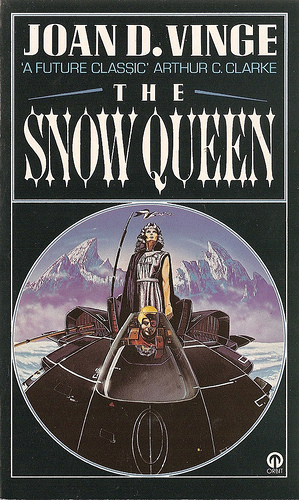
The Snow Queen by Joan D. Vinge
The Actual Results
- The Snow Queen by Joan D. Vinge
- Lord Valentine’s Castle by Robert Silverberg
- The Ringworld Engineers by Larry Niven
- Beyond the Blue Event Horizon by Frederik Pohl
- Wizard by John Varley
How I Would Have Voted
(Abstain)
Explanation
This year was mostly a miss for me, though none of the books were so terrible that I’d rank them below no award. Most of them either didn’t hold my interest or were sequels of books that didn’t hold my interest.
Larry Niven is a good writer, and really great at hard science fiction—something we see very little of these days (depending on whether you’d rank Andy Weir and Adrian Tchaikovsky as hard SF authors). I’ve read and enjoyed some of Larry Niven’s books, like Protector, The Mote in God’s Eye (which he cowrote with Jerry Pournelle), and Inferno (which they also co-wrote). But I’ve also DNFed some of his books too, mostly because I got bored or couldn’t follow them as well. The Integral Trees is one example. Ringworld is another.
I should probably try rereading Ringworld again, since it’s probably Larry Niven’s most famous book. And it’s not a bad book at all. But midway through it, I lost interest, mostly because I felt that the story was more an excuse to showcase this tremendous mega-structure that Niven dreamed up than an actual story. And because The Ringworld Engineers is a direct sequel to Ringworld (and was written largely to answer some of the fan critiques of Niven’s Ringworld design), I didn’t bother reading it. But I probably should, one of these days. When I get through the rest of my ever-expanding TBR pile.
The Snow Queen was another book that didn’t really hook me, and had enough yellow flags in the first couple of chapters that I decided not to keep reading it. I might be persuaded to try it again, with a strong enough recommendation, but I don’t think it’s for me.
I’ve read (and DNFed) enough Silverberg to know that I probably won’t like anything he’s written. Too much dirty old man vibes (or dirty young man, depending on when the book was written). So I didn’t bother reading Lord Valentine’s Castle. He’s a fantastic writer who really has a way with language. But he spent too much time writing porn, and it really rubs off into everything else.
I finished the first Heechee book by Frederik Pohl, and enjoyed it well enough, though it very clearly pushed Freudian and Malthusian thinking. Perhaps, because of that, I really couldn’t get into Beyond the Blue Event Horizon. The first book, Gateway, had enough of a hook to keep me going to the end of that book, but the other ideological baggage kept me from wanting to read any more. But it wasn’t so preachy that I’d call it “woke,” just not my kind of thing.
As for Wizard, I screened it with ChatGPT first and decided to skip it. Here is what the chatbot said:
The Gaea Trilogy (Titan, Wizard, Demon) is famous for being imaginative, brilliant… and filled with extremely adult, often bizarre sexual content. Wizard is the most explicit of the three.
The worldview is hedonistic, amoral, and body-centered.
The spiritual/moral framework is essentially nihilistic.
Sexual behavior is portrayed as a tool of power and experimentation.
One subplot involves sexual violence between adults (coercion/manipulation).
Several scenes go well beyond typical adult-SF boundaries into outright erotica.
If I had read and DNFed it, I probably would have ranked it below No Award, which would have forced a big change to the ballot. But I’m not going to rank a book below No Award just because I screened it and decided not to read it. I want to actually try to read it myself before I make that judgment.
With that said, though, I have no desire to read Wizard after what the AI screening told me. So there you go.