How I Would Vote Now: 1966 Hugo Awards (Best Novel)

The Nominees

The Squares of the City by John Brunner

The Moon Is a Harsh Mistress by Robert A. Heinlein

Dune by Frank Herbert
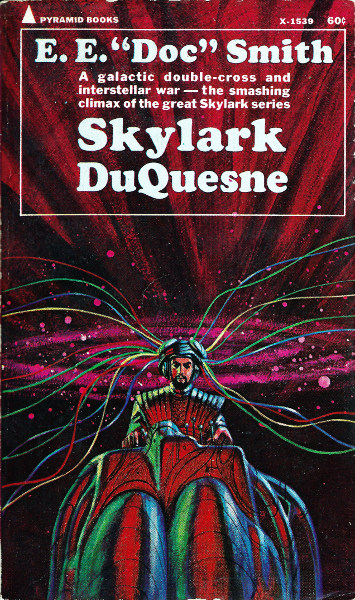
Skylark DuQuesne by Edward E. Smith

This Immortal by Roger Zelazny

The Actual Results

  1. Dune by Frank Herbert and This Immortal by Roger Zelazny (tie)
  • Skylark DuQuesne by Edward E. Smith
  • The Moon Is a Harsh Mistress by Robert A. Heinlein
  • The Squares of the City by John Brunner

How I Would Have Voted

  1. Dune by Frank Herbert

Explanation

Dune is the most perfect science fiction novel I have ever read. I wouldn’t call it the best—in fact, I would say that Hyperion and Ender’s Game are marginally better—but it is the most perfect, in terms of genre conventions, tropes and archetypes, story structure, etc. It is a magnificent book, but it’s also the kind of book you need to read three or four (or five or six) times to fully appreciate.

My first reading of Dune was when I was still in high school. I almost didn’t get through it, just because the writing was so dense. But I was intrigued by Paul’s prescience and his struggle to avoid the timeline where the jihad happens, so I read it all the way through to the end. But most of the book went over my head.

My second reading was sometime in college. I don’t remember when, exactly—it might have been around the time I read 2001: A Space Odyssey, or when I first discovered Asimov’s Foundation novels. It may have been a year or two after that, when I’d decided to pursue writing as a career and felt like I needed to steep myself more in the science fiction genre. Either way, I enjoyed it much more that time, though still, most of the subtle nuances of the story still went over my head.

I read Dune the third time shortly after I got married, when my wife and I used to read in bed together (this was before we had a crib in our bedroom, which has been the natural state of affairs for most of our marriage now). This time, I finally got all of the stuff that I’d missed, like the politics of the great houses and the galactic empire, the impact of the Butlerian Jihad, the economics of the spice and the importance of the Spacing Guild, and the ecology of Arrakis and how it played into the story. It was amazing. World building on the level of Tolkien, or perhaps even higher. Truly incredible stuff.

Since then, I’ve tried to read most of the other Frank Herbert Dune books, but I gave up midway through Heretics of Dune. Dune Messiah was a really great wrap-up to the story of Dune, though it didn’t feel nearly as epic as the first book. Children of Dune was a fun read, and almost as good as the first one. God Emperor of Dune was a more of a slog, though the ending was fantastic. By this point of the series, I was starting to feel again like everything was going over my head, so that’s probably why it was so difficult.

I do plan to read all of these books eventually, though. And I may even give the Brian Herbert / Kevin J. Anderson books a try, though I’ve heard they’re not nearly as good as the original Frank Herbert books. The next time I attempt the series, I will probably look for some YouTube content to help explain it without giving away too many spoilers. Or maybe I’ll use AI as a reading companion (which would be a super ironic way to use AI, hehe).

So if the 1966 Hugos were held again today, I would definitely vote Dune as the top book. But to be frankly honest, I don’t think I could vote for any of the others, even though some of them are classics in their own right.

Heinlein’s The Moon Is a Harsh Mistress is the other big classic from this year, but I’ve just never been able to get through it. I’ve tried twice, but each time I’ve set it down in disgust, mostly because of all the weird sexual conventions in the future that Heinlein has constructed. There are some things that I really love Heinlein for, and other things about his writing that I simply cannot stand, and I have learned from experience to avoid any of his books where his views on sex are a major part of the story. But maybe I’ll try the audiobook sometime.

I should probably try to reread This Immortal, too. For some reason, the only Zelazny books I have ever managed to read are the Chronicles of Amber books, and I am currently taking a break midway between books 8 and 9 (or is it 7 and 8?) The first half of that series, following Corwin, were fantastic. Really great stuff. The second half, following Merlin, has been… not as great. I’m still enjoying it, but I constantly feel like I’m lost. But back to This Immortal… to be honest, I don’t remember why I DNFed it, but I think it came down to a combination of feeling lost and not really caring about the characters. But I should definitely pick it up and try it again (though it’s becoming a hard book to find).

I tried to read the Skylark series from the beginning, but it was super, super campy and I got bored with it. I can appreciate that it was a formative work during the pulp era of science fiction, and that many of the fans in the generation that started Worldcon and the Hugo Awards were first exposed to science fiction when they read those books as children. The equivalent for me would be the original Star Wars trilogy, and all the classic old Star Wars books by Kevin J. Anderson, Dave Wolverton, and Timothy Zahn. But unless you’re writing a dissertation on the history of science fiction, the Skylark books probably aren’t essential reading.

The Squares of the City is a surprisingly difficult book to find. It’s not at my local library, the library network’s audiobook app, or the BYU Library—which is unusual, because the BYU Library has one of the best science fiction collections in the country (they have all 300 or so of the Hugo nominated books in their collection, except maybe half a dozen). I think the paperback is currently selling for something like $200 on Amazon. But the ebook is available, and relatively cheap, though to be honest I only downloaded the sample. And after reading the first two chapters, that was enough for me to decide to DNF.

There’s nothing terrible about the book, but it just isn’t all that good. It’s about a European (or maybe American?) tourist visiting a fictional South American dictatorship, which is on the verge of a communist revolution. The thing that’s supposed to make the book unique is that Brunner played a game of chess while writing the book, and all of the major plot points are tied to specific chess moves from that game. In that way, it’s a little like Philip K. Dick’s The Man in the High Castle, where he used some kind of Chinese divination system to come up with the actual plot.

But we don’t remember The Man in the High Castle for the plot, and apprently, we don’t remember The Squares of the City for anything. My guess is that Brunner got nominated because of his politics, which made him a favorite among the Futurians and all the others in the fandom that were trying to turn science fiction into a vehicle for world communism. So basically, the spiritual predecessors of today’s blue-haired crazies who have completely taken over the Hugo and Nebula awards.

Should I split my epic fantasy series into two trilogies?

So I’m working on the first book in a new epic fantasy series, called the Soulbound King. It’s basically a fantasy retelling of the life of King David, loosely adapted from the biblical stories about his life. I’ve already outlined the first book and generated a rough AI draft, which came in at 153k words. The final draft will likely be longer than that, but I think it’s very likely that I will be ready to publish it before the end of the year.

The question I’m currently grappling with is whether to keep it as a seven book series, or to release it as two trilogies with a bridge novel in the middle. Frank Herbert did a similar thing with his Dune books: the first three books (Dune, Dune Messiah, and Children of Dune) were a trilogy, and the next book, God Emperor of Dune, was supposed to be a bridge novel setting up the second trilogy—except he died before finishing the last book, so his son Brian Herbert got together with Kevin J. Anderson to write it, and then they blew it up into a franchise… point being, stuff like this has been done before.

Now, I’m reasonably confident that I’m not going to die before finishing the last book. In fact, I’ve already made a 7-point outline for all seven books, so I know exactly where they start and end, with the inciting incident, midpoint, climax, etc. I’m also writing these books with AI assistance, which is making it possible for me to write these books much faster than I otherwise would have been able to write them. For the first book, The Soulbond and the Sling, I anticipate that it will only take between six to nine months of total work to go from story idea to finished draft.

But the trouble with writing a seven book epic fantasy series is that a lot of readers aren’t going to bother picking it up until all seven books are out. This is because so many readers have been burned by authors like George R.R. Martin and Patrick Rothfuss, who have not and likely will never finish their bestselling series. I can’t really blame the readers for that (though I can and do blame the authors), but it creates a market reality that I need to anticipate and plan for.

So here’s what I’m thinking: instead of making it a seven book series, I’ll make it two trilogies with a bridge novel in-between. The first three books will complete one arc, and the last three books will complete another arc. I’ll wait to release the first book until after I’ve completed the AI draft of the third book, so that way I can release all of the books in the first trilogy within 1-3 months of each other. And after the first trilogy is complete, I’ll market it as a trilogy while working on the last four books, probably releasing each of those a year apart, as I finish them.

The reason I’m thinking about this now is because a strategy like this is going to influence how I write all of these books. If I’m going to split the series into two trilogies, the last thing I want to do is end the first trilogy on a cliffhangar. It has to hold together as a complete story, with only one or two loose threads. But since I’m still in the early writing stages of the first book, I still have enough room creatively to make that kind of adjustment. I just have to decide if that’s truly the plan.

By the way, the first trilogy ends with the fantasy equivalent of the Battle of Mount Gilboa, where the Saul and Jonathan characters die in an epic battle and the David character becomes king (I know that in the Bible, there was a gap of several years between those two events, but I’m combining them for purposes of this book). So it is a rather natural stopping place, even if it does end on a massive downer, followed by a false victory (the second trilogy begins with David and Bathsheba).

Anyways, what do you think of this plan? Does it sound like a good idea, or is there a compelling reason I haven’t thought of yet for why I shouldn’t do it?

How I would vote now: 2015 Hugo Award (Best Novel)

The Nominees

The Goblin Emperor by Katherine Addison

The Dark Between the Stars by Kevin J. Anderson

Skin Game by Jim Butcher

Ancillary Sword by Ann Leckie

The Three-Body Problem by Cixin Liu and Ken Liu, trans.

The Actual Results

  1. The Three-Body Problem by Cixin Liu and Ken Liu, trans.
  2. The Goblin Emperor by Katherine Addison
  3. Ancillary Sword by Ann Leckie
  4. No Award
  5. Skin Game by Jim Butcher
  6. The Dark Between the Stars by Kevin J. Anderson

How I Would Have Voted

  1. Skin Game by Jim Butcher
  2. The Three-Body Problem by Cixin Liu and Ken Liu, trans.
  3. No Award
  4. The Dark Between the Stars by Kevin J. Anderson
  5. The Goblin Emperor by Katherine Addison

Explanation

All right, I’ve read enough books now that I’m back to doing these “how I would have voted” posts for the Hugo Awards. And to kick things off, I thought I would start with one of the most infamous years in the history of the Hugos, the year of the Sad Puppies. Of course, I was around back then—in fact, it’s when China Mike Glyer of File 770 discovered me, and has been cross-linking to my blog ever since (I guess whenever the sci-fi news week is slow, or whenever he thinks that my posts would make good chum for his own readers—all twelve of them, not counting the Chinese bots).

The main reason it took me so long to get to 2015 was because I had never read any of the Dresden File books, up to this point. And I still haven’t read books 1-6 yet; in an interview on the Writers of the Future podcast, Jim Butcher said that book 7 is actually the best place to start the series. So I did that a few months ago, and I have to say that it’s been an amazing whirlwind read so far. Really great reading experience. Every one of these books has been either a 4-star or a 5-star, especially Changes, which is probably the best urban fantasy book I’ve ever read.

I haven’t finished Skin Game quite yet, but I’ve already read enough of it to know that I definitely would have put it at the top of my ballot if I had been stupid enough to give the snobby asshats and petty wannabe tyrants who run Worldcon any of my money. Sadly, I wasn’t so smart in 2011, but I have since repented, and I can tell you right now that these blowhards will ever see another cent from me. But more on that later.

The Three-Body Problem was the book that actually won the award, and I have to say that I sincerely enjoyed it. There’s a lot of really amazing science fiction coming out of China these days, which makes it an absolute shame that so many Chinese writers and fans were arbitrarily blocked and denied in 2023 for the high crime and misdemeanor of “slate voting,” whatever the hell that’s supposed to mean. Seriously, the Hugos need to die. But I digress.

The Three-Body Problem was a fascinating book. It was a little heavy on info dumps, but that’s probably because Chinese fiction has slightly different conventions than English fiction. In any case, it was fascinating enough to keep me reading, and the story itself was terrific. Also, as an American reader, I found it particularly refreshing to read a book that was written outside of our woke cultural moment. There were a lot of references to Chinese communism, especially the Cultural Revolution, but none of the insane wokeness that permeates our American culture.

Those were the only two books that I managed to read to the end. All of the other ones I DNFed, though for different reasons.

I wanted to like The Dark Between Stars, not the least because Kevin J. Anderson is a great guy, and a deserving writer—his Star Wars books were some of the first science fiction I ever read, and definitely influenced my decision to become a writer. But after the first chapter, which had an interesting set up with some characters I felt genuinely interested in, I felt like the book started throwing new characters at me, and lots and lots of boring information about the universe, as if the story itself had stopped cold and I was suddenly reading a history book. Way too many info dumps. Maybe I’ll try reading it again at some point, but I just couldn’t get into it.

The Goblin Emperor had a similar problem, though it wasn’t necessarily the info dumps that got to me, so much as sheer boredom, and the fact that the only fantasy element in the book was that the characters were all goblins—though the author could have said they were humans, or elves, or aliens, and it wouldn’t have changed the story hardly at all. Also, the political intrigue was not very intriguing. I’ve played games of Crusader Kings 2 where the political machinations were more interesting. And since the story itself was entirely focused on the political intrigue and machinations, I didn’t finish it.

As for Ancillary Sword, I DNFed that series with the first book, which follows the adventures of a sentient space ship who is obsessed about what its pronouns are. Seriously, that’s about 80% of the book right there, and the reason why Anne Leckie is a favorite of the Hugo crowd. Pronouns. Give me a break. For the 2024 Hugos, another one of her books in the same universe is on the ballot, and it took me all of one paragraph to give it a hard DNF. Pronouns, pronouns, pronouns. What are your pronouns? Did you know that you can make up a word and call it a pronoun? Let’s make up some pronouns together, kids! Just remember to vote as many times as you can in the upcoming election, otherwise Literally Hitler will blow up the world—never mind that our current leader is a nasty old dimentia patient whose face is a public service announcement for the side effects of botox, and his heir apparent is a cocksucking DEI hire who likes to cackle about school buses and Venn diagrams. It’s amazing how far you can get in today’s world with a pretty face and some high-quality knee pads.

It is impossible to mock these people too much. If they had the power to do so, everyone who opposes them would be rounded up in a cattle car and buried in an unmarked grave. The Sad Puppies were basically a prelude to the Trump revolt, just like Gamergate the year before. And what did we learn from it? That the people who control the institutions—in this case, Worldcon and the Hugo Awards—hate us. They knew that all the accusations of “racism” and “white supremacy” were all false. They knew that all those dirty smear tactics were just a means to an end. It’s not about good and evil, it’s about power, just like that line from the Acolyte, which is a perfect example of how they deliberately vandalize everything, especially a beloved franchise like Star Wars. Everything that’s happening in the broader culture right now, with multi-billion dollar entertainment companies like Disney that are going woke and broke, happened in science fiction first. The Puppies tried to push back against the rising tide of woke insanity, but the rot was too deep, and the cancer had already metastasized. All they managed to do was prove was that the Hugos are beyond saving.

2015 was a watershed year for science fiction, not because two of its most prolific and beloved authors lost to No Award, but because Worldcon lost the plot and the Hugos were revealed to be a farce. Jim Butcher is bigger than the Hugos, and so is Kevin J. Anderson. So are most of the Chinese authors who were excluded in 2023 (but guys, it’s the Puppies who are the racists). The reason I’m doing these “how I would have voted” blog posts has less to do with any respect I might have for the Hugo Awards, and more to do with the fascination of watching a massive pileup on a frozen interstate. I want to go back and rewatch it from the moment it all began—which, so far as I can tell, was sometime in the late 60s. But I’ll save that rant for another time.

2020-02-15 Newsletter Author’s Note

This author’s note originally appeared in the February 15th edition of my newsletter. To sign up for my author newsletter, click here.

I’m writing this author’s note on Friday evening, after a long and wonderful day at Life, the Universe, and Everything (LTUE). Of all the science fiction conventions that I attend, I think LTUE is my favorite. It’s local to Utah Valley, so a lot of the regulars have become longtime friends of both mine and Mrs. Vasicek’s.

But the biggest reason I love LTUE is because it has such a strong writing track. Where FanX Salt Lake (the big local media con) is all about fandom and geek culture, LTUE is all about helping creatives to develop their craft, learn the business, and connect with the people who love the things that they create. It started as an academic symposium for aspiring science fiction writers, but in recent years it has branched out to other creative fields like art, film, gaming, etc, all with an emphasis on science fiction and fantasy.

There have been a lot of really great panels in the last couple of days. One of my favorites was on the future of Fantasy, where Peter Orullian, James A. Owen, Rafael Hohmann, and Charlie Pulsipher (who does a fantastic Velociraptor impression) discussed the rise and fall of Grimdark, the dawning of Noblebright, the push from the industry for the #ownvoices movement, and the indie explosion of LitRPG. Lots of really fascinating trends to keep an eye on!

I forget which panel it was on, but M. Todd Gallowglass gave some really prescient advice for aspiring writers: “You don’t make a writing career by being read; you make a career by being reread.” He was also on a great panel about whether or not it’s worth it to pursue a master’s degree, and he shared some very interesting points that run counter to what I’ve heard from everybody else: namely, that for a career writer it generally isn’t worth it. M. Todd Gallowglass is one of my newest favorite people at LTUE, and he’s always a blast to talk and hang out with.

The good folks from World Fantasy Convention are here at LTUE as well, and they gave a panel talking about all the wonderful things we can expect from attending World Fantasy 2020 in Salt Lake this year. It’s so close by, why wouldn’t we want to attend? I’m really torn on this: it’s a convention that caters more to the traditional side of the business, which isn’t the path that I’m pursuing, but I attended World Fantasy in 2009 and 2010, and it is a really great convention… also, it’s so close this year, practically in our own backyard… I don’t know. But even if I decide not to go, I will almost certainly attend the barcon.

The LTUE benefit anthology launch party was also a lot of fun! Lots of great stories from old-timers and regulars. I look forward to reading it! I also look forward to collecting as many signatures from everyone as I can. For last year’s anthology, Trace the Stars, I’ve gotten all but four of the author signatures. Also, I’m happy to report that next year’s LTUE benefit anthology will include a story of my own!

Brandon Sanderson wasn’t here on Thursday or Friday, but I expect we’ll be seeing him tomorrow. Kevin J. Anderson is here, as well as David Farland, Eric James Stone, and Tony Daniels, senior editor at Baen. Tony Daniels was also on a panel today with Mrs. Vasicek, where they discussed near future SF. Lots of fascinating things to think about, both from a technological angle and a social angle. I really liked Mrs. Vasicek’s “left field” near-future prediction: that AIs will eventually replace professors and every college student will have a personally tailored AI!

Speaking of Mrs. Vasicek, she gave a really fantastic presentation today called “Rage Against the Algorithm,” where she offered some insight into the Amazon hive mind, gleaned from their recent research papers. It appears that book covers are about to matter a whole lot more in the Amazon algorithm, and that they are putting a lot more emphasis on search and on the review system (which they are working to fix). Also, book categorization may start to become dependent at least partially on reviews. If you’re one of my author-fans and all of this sounds intriguing, let me know and I’ll email you a copy of her powerpoint.

On Friday morning, I moderated a panel on unconventional outlining techniques with Mackenzie Kincaid, Michael F. Haspil, and Els Curtis. That was a lot of fun. Mackenzie had some really great advice for productivity apps and hacking your own personal habits, and Michael and Els had lots of great insight into their own personal outling methods as well. Some really great questions from the audience really got the panel rolling, and I think it turned out quite well.

Friday night was the big mass booksigning, and it was a lot of fun! Definitely my most successful signing even so far. Caught up with a bunch of my old fans, and met a lot of new people as well, several of whom went on to buy a book or two. Also got into some really great conversations with other fellow creatives, including Emily Martha Sorenson, whom Mrs. Vasicek and I chatted with until almost everyone else was gone. It was really fantastic to talk with so many great people who share the same passion for geek culture and speculative fiction! Mrs. Vasicek and I both had a blast.

By the time this newsletter reaches your inbox, we will probably be on our way to the last day of LTUE. Mrs. Vasicek has a panel on computer hacking that looks really interesting, and I’m on a writing/publishing panel about how to avoid rookie mistakes—basically, how to learn from all of the many, many mistakes I’ve made over the years! Should be a lot of fun. If you’re there, be sure to come up and say hi! If not, maybe next year.

That’s my LTUE report for this year. It’s definitely shaping up to be one of the more memorable ones. Each year, it seems to get even better—may that continue for many more years to come!

Trace the Stars edited by Joe Monson and Jaleta Clegg

I picked up my paperback copy of this anthology at LTUE this year, and immediately set about collecting all of the signatures from the authors that I could find. I’ve currently got everyone except for Nancy Fulda, Wulf Moon, Beth Buck, and Julia H. West. Once I have acquired these last four signatures, it will transform at last into a mighty book of power!

So I only gave this anthology three-stars on Goodreads, but that’s not because it’s a bad book. Rather, it’s because my Goodreads rating philosophy is different from my Amazon rating philosophy. A three-star on Goodreads is more like a four-star on Amazon: not terrible, but not super great either. I reserve my five-stars on Goodreads for the best of the best, the truly life-changing books that will forever leave their imprint upon me.

Anyways. Overall, I’d say that the anthology was pretty even-keel. There weren’t any amazing stories in it, but there weren’t any stinkers either. My favorite was “The Road Not Taken” by Sandra Tayler, about a starliner passenger who was subject to a freak anomaly that created a duplicate of the ship. One of them got the husband and the family, while the other got the career, and they meet up once a year to see how the other is doing. No matter what they say, you really can’t have it all.

I also really liked “Angles of Incidence” by Nancy Fulda. The aliens were really fascinating. Deep sea lava vent dwellers with knobby shells, but the really interesting part was the development of their language and how that factored into the story. Also, a slumbering god-queen who devours anyone who dares to wake her. Fun times.

Brad Torgerson’s and Kevin J. Anderson’s stories appealed to my inner twelve year-old, as did David Farland’s (though it had a rather slow start). “Cycle 335” by Beth Buck had a twist that I really enjoyed. The ending of “Neo Nihon” by Paul Genesse was also very satisfying, though wow—what a dark story!

Those were the ones that really stuck with me. The others weren’t bad—like I said, there weren’t any real stinkers. For a benefit anthology, it was pretty good. I’m looking forward to picking up the next one at LTUE 2020, as well as collecting the last four signatures and turning this into a book of power! Bwahahahaha!