How I would vote now: 2023 Hugo Award (Best Novel)

Alright, let’s tackle the most controversial Hugo awards since Sad Puppies 3—and possibly the most controversial Hugos ever!

The Nominees

Legends & Lattes by Travis Baldree

Nettle & Bone by T. Kingfisher

The Spare Man by Mary Robinette Kowal

The Daughter of Doctor Moreau by Silvia Moreno-Garcia
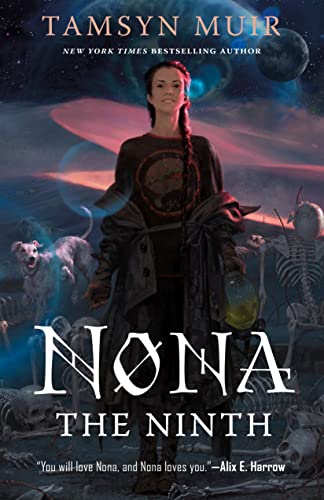
Nona the Ninth by Tamsyn Muir

The Kaiju Preservation Society by John Scalzi

The Actual Results

  1. Nettle & Bone by T. Kingfisher
  2. Legends & Lattes by Travis Baldree
  3. The Kaiju Preservation Society by John Scalzi
  4. The Daughter of Doctor Moreau by Silvia Moreno-Garcia
  5. The Spare Man by Mary Robinette Kowal
  6. Nona the Ninth by Tamsyn Muir

How I Would Have Voted

  1. No Award
  2. The Daughter of Doctor Moreau by Silvia Moreno-Garcia
  3. Legends & Lattes by Travis Baldree

Explanation

The 2023 Hugo Awards were an epic clusterfuck, from which the Hugos might never recover (and honestly, I kind of hope they don’t). Not only did the organizers exclude a bunch of titles like Babel by R.F. Kuang that probably would have placed very high, if not outright won first place—excluded them for no other discernible reason other than that they might have offended the Chinese Communist Party, since China was hosting the awards—but they also disqualified thousands of Chinese ballots for the same reason that they disqualified thousands of Sad Puppy ballots in subsequent years since the big kerfluffle in 2015: namely, that they were Wrongfans having Wrongfun.

Apparently, to get on the Hugo ballot, you have to either 1) pander to or be a member of the SFWA mean girls club (for crying out loud, two of the authors on this year’s ballot were former SFWA presidents), or 2) write a lesbian love story. I suppose you can also get on the ballot if you write a love story that’s gay, transgender, polyamorous, or some other flavor of queer, but lesbians are easier because the male readers are less likely to be grossed out or confused by it.

Anyways, I didn’t enjoy any of these books, though I have to admit that I didn’t even try to read The Kaiju Preservation Society (because I cannot stand Scalzi, either as an author or a human. The Collapsing Empire with its random throwaway sex scene in the second or third chapter was the last straw for me) and The Spare Man (my wife picked it up and was so confused and turned off by the non-gendered pronoun dickery that I knew it was too woke for me). I DNFed Tamsyn Muir’s Locked Tomb series with Gideon the Ninth, for reasons that I detailed in my recap of the 2021 Hugo Awards.

As for Nettle & Bone, I was pleasantly surprised at first, because the love interest was heterosexual—which, for the Hugos, is very unusual these days. But there were other things about the book that turned me off, such as the anachronism of a religious medieval world that’s been gutted of anything religious that might offend a non-religious reader in 2023, and a very anti-natalist bias with some lines that could have come straight from Margaret Sanger. So that’s why I put Nettle & Bone below No Award, and didn’t even bother ranking it anywhere on my ballot.

Legends & Lattes wasn’t terrible, but I got bored after the first couple of chapters, and because of the lesbian love story I’m not too keen to try it again (though I suppose I could be persuaded otherwise). As for The Daughter of Doctor Moreau, I didn’t find anything objectionable with that one, and actually got about halfway through, but… I just didn’t care about any of the characters. Not a terrible book, but it just wasn’t for me.

Of the two, I think I liked The Daughter of Doctor Moreau better, or disliked it less, which is why I put it on the ballot above Legend & Lattes and below No Award. Why include anything on a ballot below No Award? Because the way that ranked choice voting works, you can still influence the outcome that way even if No Award is eliminated during the counting. It’s basically like saying: “I don’t think any of these books deserve an award, but if I had to award one of them, I’d give it to (1) and (2), in that order.”

So that’s my take on the infamous 2023 Hugo Awards. Frankly, I think it would have been much better if the Chinese wrongfans had completely taken it over, and made it so that Worldcon was held in China every other year, with Chinese authors dominating the Hugos from now on. There are certainly enough Chinese sci-fi readers to justify such a move. But alas, it seems that the Trufans are going to keep clutching the Hugos with a deathgrip until 1) they’re all dead (since most of them are boomers anyway), or 2) the Trufans and the Hugos both become culturally irrelevant, if indeed they aren’t already.

(Speaking of China, hi Mike Glyer! Still buying views from Chinese clickfarms to boost your online rankings? It must be a real slow news week if you pick up this blog for your File 770 pixel scroll.)

1001 Parsecs Books: The Storm Testament IV by Lee Nelson

If you haven’t read my book blog yet, you should go check it out! I’m posting over there twice a week, with reviews and ruminations on the books I read. This particular one is on Lee Nelson’s The Storm Testament IV, which I think is the best in the series so far.

Trace the Stars edited by Joe Monson and Jaleta Clegg

I picked up my paperback copy of this anthology at LTUE this year, and immediately set about collecting all of the signatures from the authors that I could find. I’ve currently got everyone except for Nancy Fulda, Wulf Moon, Beth Buck, and Julia H. West. Once I have acquired these last four signatures, it will transform at last into a mighty book of power!

So I only gave this anthology three-stars on Goodreads, but that’s not because it’s a bad book. Rather, it’s because my Goodreads rating philosophy is different from my Amazon rating philosophy. A three-star on Goodreads is more like a four-star on Amazon: not terrible, but not super great either. I reserve my five-stars on Goodreads for the best of the best, the truly life-changing books that will forever leave their imprint upon me.

Anyways. Overall, I’d say that the anthology was pretty even-keel. There weren’t any amazing stories in it, but there weren’t any stinkers either. My favorite was “The Road Not Taken” by Sandra Tayler, about a starliner passenger who was subject to a freak anomaly that created a duplicate of the ship. One of them got the husband and the family, while the other got the career, and they meet up once a year to see how the other is doing. No matter what they say, you really can’t have it all.

I also really liked “Angles of Incidence” by Nancy Fulda. The aliens were really fascinating. Deep sea lava vent dwellers with knobby shells, but the really interesting part was the development of their language and how that factored into the story. Also, a slumbering god-queen who devours anyone who dares to wake her. Fun times.

Brad Torgerson’s and Kevin J. Anderson’s stories appealed to my inner twelve year-old, as did David Farland’s (though it had a rather slow start). “Cycle 335” by Beth Buck had a twist that I really enjoyed. The ending of “Neo Nihon” by Paul Genesse was also very satisfying, though wow—what a dark story!

Those were the ones that really stuck with me. The others weren’t bad—like I said, there weren’t any real stinkers. For a benefit anthology, it was pretty good. I’m looking forward to picking up the next one at LTUE 2020, as well as collecting the last four signatures and turning this into a book of power! Bwahahahaha!

Stormrider by David Gemmell

I thoroughly enjoyed the Rigante series. It has everything that I’ve come to love about David Gemmell’s books: scarred but good-hearted people struggling to do the right thing in the face of great hardship and evil, some of which lies within. Every chapter is compelling and filled with conflict, and while you know that most of the characters are going to die, none of them is beyond redemption.

There were a lot of things in particular that I liked about this book. One of them was the early-modern feel and aesthetic to the world-building. A lot of fantasy worlds are locked in a perpetual state of medieval technology, with very little growth or development. In Stormrider, however, Gemmell advances the world of the Rigante a couple of steps up the tech tree, to a tech-level more on par with the 30 years war.

It’s not just window dressing, either, because the introduction of things like gunpowder has a direct effect on things like battle tactics and duels for honor, which directly affect the story. And yet, there’s still the same undercurrent of magic that made the other books in the series so great. The Sidh may have left the world, but their influence remains, and their magic has not yet faded completely.

My one big issue with the book had to do with the climactic battle leading up to the ending. It wasn’t exactly a deus ex machina, but in some ways it felt very much like it came out of left field and wrapped things up in a way that was just a bit too neat and tidy. That said, it wasn’t nearly as unsatisfying on a character-based level—on the contrary, it brought several of the character arcs full circle in a way that I thoroughly enjoyed. It just wasn’t as good as some of Gemmell’s other endings.

For that reason, I’m only giving this book four stars. However, a 4-star Gemmell book is like a 5-star book from anyone else. Stormrider may fall just short of the standard that Gemmell sets with his other books, but it still clears the bar for truly a truly great fantasy novel.

Sackett’s Land by Louis L’Amour

I first heard about Louis L’Amour’s Sackett series from a hiking buddy, and I’ve wanted to read them ever since. This is the first one, and it takes place in the late 1600s with the ancestor of the Sackett clan, Barnabas Sackett, as he discovers the untamed wilds of America while on the run from people back in England who want him dead.

Like most of Louis L’Amour’s books, this is a quick, fun read. Lots of action, and never a dull moment. I also really liked the 17th century slang and mannerisms of speech—it felt like L’Amour really hit it on the head.

But the book’s strengths are also the flipside of its weaknesses. There’s a lot of plot and conflict, a decent amount of setting, and a little bit of character… and that’s about it. The story moved a little too fast to create a sense of immersion, and I also found it lacking in emotional resonance. It was a fun read, but I probably won’t remember much of it.

That said, it was a really fun read, and definitely lays the foundation for a very interesting series. The parts that did resonate with me were the ones that reflected my own family history. Several of my ancestors came to Virginia and the Carolinas during the colonial era, and I can imagine that they felt very much like Barnabas Sackett when he saw the blue mountains for the first time and yearned to go beyond them.

Fun stuff, especially you’re into historical fiction and early Americana. I give it 3.5 stars.

Defying Hitler by Sebastian Haffner

I picked this one up from Glenn Beck’s recommended reading list, and found it to be pretty good. The most disappointing part is that it was never finished, so what starts as a history of the Third Reich up to 1939 actually ends in 1933. It would be really fascinating to get Haffner’s account of events like the Night of the Long Knives or Kristallnacht, but unfortunately we never will.

That said, what we do have is a truly remarkable account of the fall of the German Empire, the chaos and collapse of the post-war order, and the transformation of German society as the Nazis rose to power. Most histories try to be objective, or at least try to limit their subjectivity. Not so with this book. As Haffner puts it:

Clearly, historical events have varying degrees of intensity. Some may almost fail to impinge on true reality, that is, on the central, most personal part of a person’s life. Others can wreak such havoc that there is nothing left standing… I believe history is misunderstood if this aspect is forgotten.

This book is not quite a history, and not quite a memoir. Rather, it falls somewhere between the two, combining the best of both forms to paint an extraordinarily vivid picture of one of the most terrifying times and places in modern history.

By far, the best part of this book is the depth and precision with which Haffner describes historical events and their effects on the German people. The only other author I know who is more precise with his language is Jordan Peterson. Because of this, it is very easy to imagine yourself in Haffner’s position, and to see the struggles of our time reflected in his story.

The parallels in Haffner’s account between Germany of the 1920s and 30s, and the United States today, are truly striking. It’s not a one-for-one comparison, of course, and the people today shouting “Nazi!” the loudest are obviously dead wrong. But the trends are headed in the same direction, and some of the more disturbing nuances are starting to rhyme.

My biggest takeaway from the book was this: when we reach a point where our neighbors are getting disappeared, it’s time to either take up arms or bug the hell out. In Germany, that happened well before the Nazis rose to power, which surprised me. But that wasn’t the only takeaway, by far. The book is full of them.

For anyone with an interest in the rise of Fascism and 20th century history, or anyone with an interest in politics and current events, I highly recommend this book.

Addicted to Outrage by Glenn Beck

I wasn’t always a fan of Glenn Beck. When I was in college back in the 00s, I thought he was a pompous blowhard—and I was probably right. We’ve both changed a lot since then. I started listening to his radio show podcast in 2017 at the urging of a friend, and to my utter shock I found him to be both reasonable and insightful. I’ve been listening ever since.

If you’re a regular listener to Glenn’s show, most of what you’ll find in this book is stuff you’ve already heard. That said, on the show you pick it up in bits and pieces, whereas here it’s all laid out in one place, without any filler or extraneous back and forth. Having done both, I would rather read this book and listen to his show only occasionally than listen to his show religiously and skip this book.

The thing I like most about Glenn is that he’s one of the few political pundits who have checked their pride in recent years. In Addicted to Outrage, he gives his story: how he went from being one of the most prominent and virulent right-wing commentators to acknowledging that he’s been wrong about some things and completely changing his approach. He lost a few of his old-time fans who preferred the screaming, ranting Beck, but gained an ability to understand and speak the language of those on the other side of the political divide.

The main thesis of this book is that outrage, especially social media outrage, has become an addiction very much like alcoholism, and that the steps for recovering for alcoholism apply equally as well for healing our modern outrage culture. Glenn brings up a lot of interesting points about how the outrage in our culture is increasing, how social media is designed specifically to foster a chemical addiction through repeated dopamine hits, and how it feeds into all of our worst impulses and does serious damage to our health, our relationships, and our ability to live together.

The most interesting part for me was where he talked about how our outrage culture and the news cycle is distracting us from the truly important stuff that’s going on right now, such as the development of AI, the rise of big tech monopolies, technological disruption and the looming unemployment crisis, and geopolitical challenges that threaten to drive our world into war. Again, this is all stuff that Glenn covers regularly in his radio show, but it’s useful to have it all in one place.

My biggest criticism of Glenn is that his obsession with all of the ways that things can go catastrophically wrong turns him into something of a doom pornographer at times. He generally keeps it classy, but classy doom porn is still doom porn. I don’t think we’re anywhere near a hostile artificial general intelligence sweeping the world with nanobots and turning us all into grey goo, for example. That said, his prediction track record is surprisingly good, so even with the doom and gloom it’s still worth listening to him. At least he doesn’t (usually) cross the line into fear mongering.

Glenn’s love of the Constitution definitely shines through this book. He spends a great deal of it going through the Declaration of Independence and the Bill of Rights, which I found to be insightful. In one of the more interesting chapters he talks about how we should neither whitewash our history nor condemn it, but acknowledge both the bad and the good and strive to live up to the aspirational deals set forth in our founding documents.

All in all, it was a good and insightful read. If you’ve never listened to Glenn, this book is actually a really good place to start.

Zero G by Dan Wells

I saw this a couple of months ago when it was free, and I recognized Dan Wells as the guy who wrote the I Am Not a Serial Killer books, so I decided to pick it up. Since Dan Wells tends to write mostly horror, I wasn’t sure how good his science fiction would be, but I was pleasantly surprised!

This was a really fun book. It’s definitely middle grade, so a lot of concepts familiar to veteran sci-fi readers get lengthy explanations, especially toward the beginning, which is great for younger readers but a little tedious for us old-timers. Once all the science is sufficiently explained, however, the story really gets going. The characters are delightful, especially Zero, who comes up with a bunch of clever ways to fight back against the pirates. Think Home Alone meets Gravity.

It’s a short book for an audiobook, but the production is really top rate, with a soundtrack and a cast of voice actors who really do a fantastic job. The production quality gets five stars easily. I picked it up as a free Audible Original, but I wouldn’t have regretted spending a credit on this.

Overall, a very fun book. This is the kind of story I’d want to share with my kids to introduce them to science fiction. Very clean and not too scary, but with just enough of a sense of danger to really draw you in. Well done!

The Short, Victorious War by David Weber

This is it—the big showdown! The war between the Kingdom of Manticore and the People’s Republic of Haven has come!

I’ve really been enjoying this series. Like I said in my review of On Basilisk Station, the Honorverse is what Star Trek wants to be when it grows up. Where Star Trek is campy, the Honorverse is polished. Where Star Trek is preachy, the Honorverse is nuanced. Where Star Trek relies on hand waving and technobabble, the Honorverse shines with complex, believable world-building and incredible attention to detail. And perhaps most importantly, where Star Trek characters do things that are head-shakingly stupid, the characters in the Honorverse all, for the most part, smart, capable people with very good reasons for everything they do.

In any case, while the third book wasn’t quite as good as the previous two, it did not disappoint. In terms of character development, this may have been the best book in the series so far. Honor Harrington confronts a bunch of her private demons in this book, including her near-rape at the hands of Pavel Yong, and Weber did a really good job of that. There was also no shortage of action, seeing as Honor commands one of the biggest and most ferocious RMN warships in the fleet, and goes head to head with the greatest existential threat to the kingdom itself.

That said, in some ways the ending felt… a little too perfect. There was very little of the underdog stuff that really drove the first book, and while the stakes were definitely high, and lots of people died, the way they pulled it off felt a little too flawless. Without getting into spoilers, this was especially true of the intrigue going on within the People’s Republic of Haven itself. There was definitely intrigue and subterfuge, but it didn’t feel complex enough, or messy enough, to really satisfy me. Everything lined up just a little too perfect.

That’s really my only complaint, though. There was no shortage of crowning moments, and some great come-uppances for the bad guys, especially Pavel Young. Quite a few tear-jerking moments as well, especially in the side stories and peripheral conflicts that didn’t involve Honor directly. More than just big guns and explosions, Weber really knows how to personalize a conflict and get you to feel deeply intimate with the characters. In that aspect, this was probably the best book in the series so far.

Great book, and immensely enjoyable, just like the previous two. I heartily recommend it.


I think I’m going to take a break from the Honorverse for a while. I do intend to come back to it eventually, but there’s a bunch of other similar stuff that I want to get to first, like House of Assassins, the Vorkosigan Saga, and David Gemmell’s Troy series. Baen stories are like a rich chocolate cake, and I can only take so many at a time—and yes, I know Gemmell was never a Baen author, but his books scratch the same itch for me. In fact, they may be the richest chocolate cake of them all.