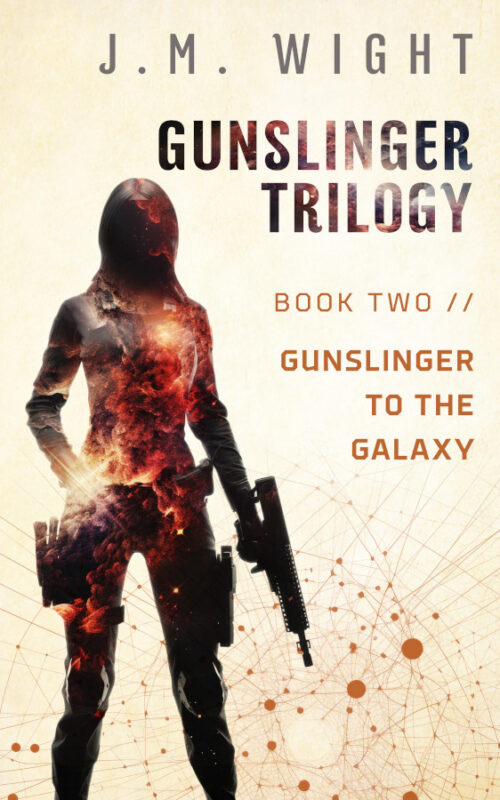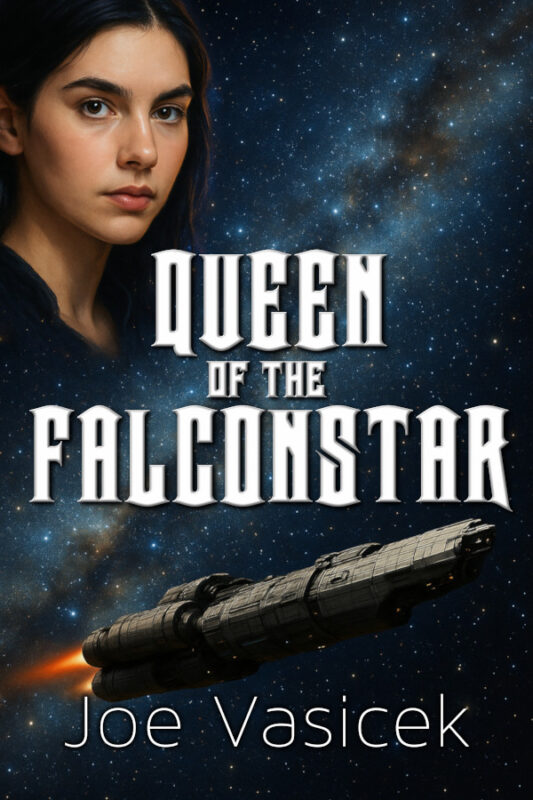
Is Gunslinger to the Galaxy for You?

Gunslinger to the Galaxy is a character-driven space opera about two gunslingers and the interstellar war that forces them to risk everything for Earth. It’s a fast-paced space-opera adventure told through the sharp, heartfelt, often hilarious voice of Jane Kletchka—a xenolinguist newly married to a mercenary gunslinger whose moral stubbornness keeps getting them both into trouble. This is a story about love, loyalty, danger, and the terrifying size of the galaxy when everything collapses at once. Expect a cinematic blend of military sci-fi, first-contact intrigue, and found-family courage.

What Kind of Reader Will Love This Book?

If you like…

  • Jack Campbell’s Lost Fleet
  • Lois McMaster Bujold’s Vorkosigan Saga
  • Character-driven space opera where the heart of the story is a loyal crew that refuses to quit
  • Western-flavored sci-fi heroes who charge headlong into impossible odds (with big guns and bigger convictions)
  • Xenolinguistics, alien politics, and intergalactic mystery woven into a sweeping adventure
  • Married-couple banter, warm emotional stakes, and a hero/heroine partnership forged in fire
  • High-stakes battles, warp-drive exploration, and cosmic consequences

…then Gunslinger to the Galaxy is absolutely your kind of story.

What You’ll Find Inside

You’ll follow Jane Kletchka, a brilliant xenolinguist, as she returns to Earth with her gunslinger husband Sam—only to be swept into a galactic crisis involving shattered jumpgate networks, Immortal civil wars, refugee swarms, and a catastrophic threat to Sol itself.

The tone blends romantic adventure, military sci-fi tension, and classic space-opera wonder, all grounded by Jane’s warm, honest, often funny narrative voice. Expect tight pacing, big emotional beats, and a story that moves from intimate family moments to galaxy-spanning stakes without missing a beat.

What Makes It Different

Fans of The Expanse, Honor Harrington, or Firefly will recognize the blend of frontier grit, military realism, and cross-species politics—but Gunslinger to the Galaxy takes those ideas in a fresh direction by placing a married couple at the emotional center of the story. Where many space-opera series focus on lone-wolf heroes, this book leans into the dynamics of partnership, trust, and being “equally yoked” in the middle of interstellar chaos. It combines xenolinguistic problem-solving, Immortal cosmic lore, and Western-style gunslinger ethos in a way no other space-opera series does.

What You Won’t Find

This isn’t grimdark, dystopian, or nihilistic sci-fi—there’s hardship and tragedy, but the story is ultimately hopeful, heroic, and rooted in family and faith. There is no gratuitous violence, no graphic romance, and no cynical “everyone is corrupt” worldview. If you’re looking for bleak anti-heroes or hard-SF technobabble at the expense of character, this won’t be the right fit.

Why I Think You Might Love It

At its core, this book is about ordinary people thrown into extraordinary crises who choose—over and over—to do what’s right, even when it costs them everything. Jane and Sam aren’t superheroes; they are a married couple trying to build a life together while the galaxy falls apart around them. Their courage, humor, and stubborn devotion give the story its heartbeat. If you’ve ever wanted a space-opera that delivers big adventure without losing its humanity, Gunslinger to the Galaxy was written for you.

In short, if you’re looking for a hopeful, high-adventure space opera filled with alien civilizations, military sci-fi battles, found-family warmth, and a fiercely devoted married couple, Gunslinger to the Galaxy delivers exactly that.

Where to Get the Book

Related Posts and Pages

Explore the series index for the Gunslinger Trilogy.

Return to the book page for Gunslinger to the Galaxy.

Being Equally Yoked in Gunslinger to the Galaxy

See all of my books in series order.

How to (not) write women (and men)

This guy has an interesting YouTube channel. He does mostly writing videos, and his advice is better than most of the stuff out there. I think he’s a literary agent and a non-fiction author.

Anyways, watching this one was a real throwback to my days as a newbie writer, when I made some of these mistakes and had to work on how I wrote female characters. I agree with most of his advice, especially that you should avoid writing a “strong female character” (my words, not his) that is really just a man with boobs. There is way too much of that these days.

The comments are also really interesting, though apparently the discussion got super heated. Which is typical of course. I miss the internet of 15 years ago. It was a much friendlier place.

By the way, he also did a video for women trying to write men, and the mistakes they often make. It’s hilarious.

The Short, Victorious War by David Weber

This is it—the big showdown! The war between the Kingdom of Manticore and the People’s Republic of Haven has come!

I’ve really been enjoying this series. Like I said in my review of On Basilisk Station, the Honorverse is what Star Trek wants to be when it grows up. Where Star Trek is campy, the Honorverse is polished. Where Star Trek is preachy, the Honorverse is nuanced. Where Star Trek relies on hand waving and technobabble, the Honorverse shines with complex, believable world-building and incredible attention to detail. And perhaps most importantly, where Star Trek characters do things that are head-shakingly stupid, the characters in the Honorverse all, for the most part, smart, capable people with very good reasons for everything they do.

In any case, while the third book wasn’t quite as good as the previous two, it did not disappoint. In terms of character development, this may have been the best book in the series so far. Honor Harrington confronts a bunch of her private demons in this book, including her near-rape at the hands of Pavel Yong, and Weber did a really good job of that. There was also no shortage of action, seeing as Honor commands one of the biggest and most ferocious RMN warships in the fleet, and goes head to head with the greatest existential threat to the kingdom itself.

That said, in some ways the ending felt… a little too perfect. There was very little of the underdog stuff that really drove the first book, and while the stakes were definitely high, and lots of people died, the way they pulled it off felt a little too flawless. Without getting into spoilers, this was especially true of the intrigue going on within the People’s Republic of Haven itself. There was definitely intrigue and subterfuge, but it didn’t feel complex enough, or messy enough, to really satisfy me. Everything lined up just a little too perfect.

That’s really my only complaint, though. There was no shortage of crowning moments, and some great come-uppances for the bad guys, especially Pavel Young. Quite a few tear-jerking moments as well, especially in the side stories and peripheral conflicts that didn’t involve Honor directly. More than just big guns and explosions, Weber really knows how to personalize a conflict and get you to feel deeply intimate with the characters. In that aspect, this was probably the best book in the series so far.

Great book, and immensely enjoyable, just like the previous two. I heartily recommend it.


I think I’m going to take a break from the Honorverse for a while. I do intend to come back to it eventually, but there’s a bunch of other similar stuff that I want to get to first, like House of Assassins, the Vorkosigan Saga, and David Gemmell’s Troy series. Baen stories are like a rich chocolate cake, and I can only take so many at a time—and yes, I know Gemmell was never a Baen author, but his books scratch the same itch for me. In fact, they may be the richest chocolate cake of them all.

Trope Tuesday: Only the Chosen May Wield

So I’m bringing back the Trope Tuesday posts, but with a little twist: instead of talking about the trope itself and what I like / don’t like about it, I’m going to talk about how I used that trope in one of my books. And since The Sword Keeper is currently up for preorder, I’m going to spend the next few weeks using examples from it.

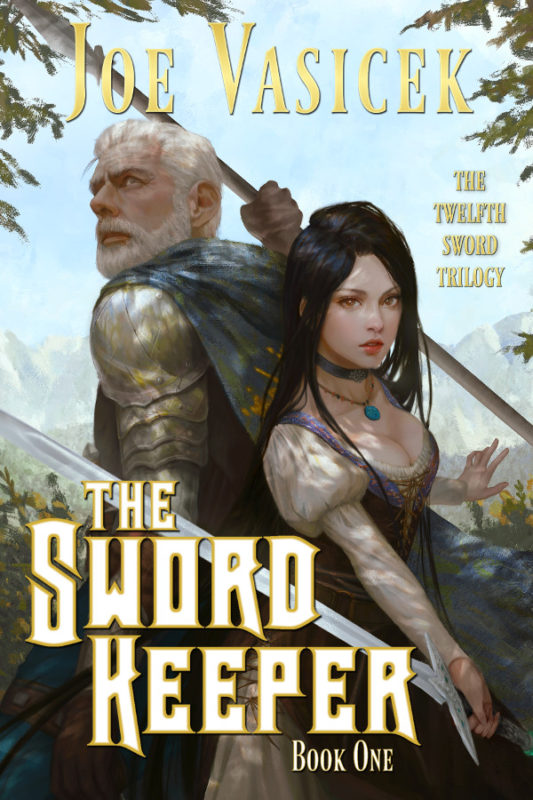
Perhaps the most central trope in the book is Only the Chosen May Wield. In the first chapter, Tamuna Leladze discovers that she is the Chosen One when a mysterious stranger arrives at her aunt’s tavern, carrying a cool sword. Unbeknownst to her, the sword is enchanted and carries the skills and memories of all the people who have wielded it. She soon learns that she is the last sword bearer of prophecy—which comes as a huge shock, since as a common tavern girl, she’s really not cut out to be a warrior.

While the book mostly plays this trope straight, there are a couple of other complications that give it some depth. First, the sword itself is an actual character. It speaks to Tamuna through the psychic link that she establishes with it, and when she sleeps, it carries her to a mountain sanctuary where she’s able to talk with it like another person. The sword becomes something of a mentor to her, sharing skills and memories as quickly as she is able to receive them (which is never quickly enough).

Second, while Tamuna never wanted to be the Chosen One, one of the members of her party did, and struggles with feelings of jealousy because of it. This becomes especially complicated because this character’s chief motivation is honor, and he’s put in a position where he has to act as a trainer/bodyguard for Tamuna until she comes into her own. It doesn’t help that he’s only a few years older than her.

I suppose there is a third complication: the fact that Tamuna can’t (or shouldn’t) wield the sword until she has been physically trained for it. Several times, Imeris tells her that he can’t share all of his knowledge of swordplay with her, because she isn’t yet strong enough. Otherwise, she’s liable to injure herself, because her body isn’t capable of executing all of the strikes and parries and ripostes that she knows how to execute in her mind. So, while no one else can wield the sword Imeris, the one person who can isn’t yet capable of doing so.

It makes for an interesting dynamic. Stories tend to get boring when things are too easy for the Hero, and in The Sword Keeper, very little comes easy for Tamuna. In fact, one of the recurring questions she asks is how in the heck she became the Chosen One in the first place. I won’t spoil it for you by revealing whether or what she discovers by the end.


The Sword Keeper comes out in twenty-five days! Preorder it now!

The Sword Keeper

The Sword Keeper

$12.99eBook: $4.99
Author: Joe Vasicek
Series: The Twelfth Sword Trilogy, Book 1
Genres: Epic, Fantasy
Tag: 2017 Release

Tamuna Leladze always dreamed of adventure, but never expected to answer its call. That changes when a wandering knight arrives at her aunt's tavern. He is the keeper of a magic sword that vanished from the pages of history more than a thousand years ago. The sword has a mind and a memory, and it has chosen Tamuna for purpose far greater than she knows.

More info →

Stray by Andrea K. Höst

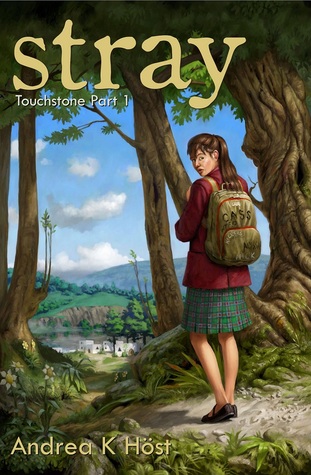
Stray (Adrea K Host)So I picked up this book on the Kindle Store shortly before boarding the California Zephyr for a cross-country train trip. For those of you not familiar with Amtrak, the California Zephyr runs from Emeryville to Chicago and is one of the most picturesque train routes in the United States, with some of the best views of the Colorado Rockies that you will ever see.

Well, I wasn’t paying much attention to the scenery this time, since I was way too engrossed in this book! I was more than halfway through by the time we got to Chicago, and finished it somewhere in the northeast corridor. It was an awesome, amazing read, one that I could hardly tear myself away from!

It starts out kind of like Hatchet, with a teenage Australian schoolgirl named Cassandra who suddenly and inexplicably finds herself in an uninhabited wilderness. It’s written in first person as a personal diary, so the first few chapters are all about the things she does to survive, such as finding food, water, and shelter, dealing with the wildlife, and trying to figure out just where she is exactly and how she can get herself rescued.

Eventually, she figures out that she’s on an alien planet. After a long trek in search of civilization, she finds a bunch of white stone ruins inhabited by cats. Then some weird things happen, which she doesn’t really understand (or oddly enough, doesn’t seem to be too bothered about), and shortly after that, she gets rescued–though not by people from our world.

It turns out that there are people living on another planet who have access to these naturally occurring inter-dimensional portals or gates, and use them to travel between real-space and near-space. This enables them to jump between worlds. Their civilization is about a hundred years more advanced than ours, with computers integrated directly into the human brain and other cool stuff like nanotech suits. They also have psychic abilities, like levitation, telekinesis, elemental manipulation of fire, water, lightning, etc, and supernatural sight.

Here’s the thing, though: they’re fighting a war against an infestation of trans-dimensional creatures called Ionoth, which originate in near-space and are creeping more and more into real-space. Some of them are relatively harmless, others are dangerous but unintelligent, and still others–the Cruzatch–are intelligent, highly dangerous, and very, very hostile. A special forces group called the Setari has been organized to fight them off, but the infestation is getting worse, and new gates are opening faster than anyone can close them. If nothing changes, humanity will be overrun in just a few short years.

It doesn’t take long for Cassandra to learn that she has psychic abilities of her own. The strange thing is that her abilities aren’t like any of the others. The people who rescued her soon enlist her into the Setari, where she may prove to be the key to turning the tide of the Ionoth war. But if the people of this dimension need her, how will she ever get back to Earth? Or will she even want to?

What starts off as a simple survival story soon turns into a complicated tale full of lost civilizations, trans-dimensional beings, psychic magic, high-tech, and political intrigue. At the center of it, though, is a very well-developed character who feels both real and authentic. Cassandra isn’t your typical YA heroine or “strong female character”–she doesn’t kick ass, she isn’t particularly attractive or popular, and she doesn’t get involved in any sort of sappy love triangle. But she is intelligent and resourceful, holds together under pressure, and is open and emotionally honest with her friends. She’s a great example of a female character who doesn’t have to be masculine or violent to be strong.

The world of this book is awesome. I was already sold on the ancient ruins and the alien planet wilderness, but the trans-dimensional stuff just takes it to a whole other level. The Taren civilization with their mind computers and neural network is pretty cool, and Andrea Höst very deftly works out the social and cultural implications of that technology. I’m not sure I’d want the government to have access to everything I can see, but this is definitely a world I’d like to explore. Fortunately, Stray is the first book in a trilogy, so it looks like I’ll be able to do just that!

The book ends almost exactly like you’d expect an old stock-bound composition notebook to end–on the last page, with a short entry that reads “sorry, ran out of room, will continue in the next volume.” The first book doesn’t have a clear ending that ties everything together, which is okay, because it fits very well with the overall tone and voice–it’s supposed to be a personal journal, after all. I wasn’t really bothered by it.

In fact, I can’t say that there was anything about this book that really bugged me. It’s a solid, awesome story. It does get a bit complicated by the end, but it’s not hard to follow, and the complications make it all the more engrossing. Reading this review, you probably think I’ve given away the plot of the whole book. Well, let me tell you, this quick synopsis barely scratches the surface! But I’m not a fan of spoilers, so I’ll end it here.

If you’re a fan of speculative fiction in any form–fantasy, science fiction, whatever–you’re probably going to love this book. You’ll especially love it if you’re sick and tired of the stereotypes that usually revolve around YA heroines and “strong female characters.” And if you just want to get lost in an alien world, this is one you won’t find your way out of easily!

Trope Tuesday: Smart People Play Chess

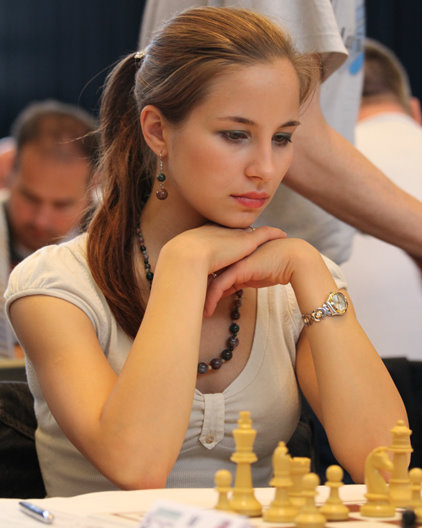
Why?  Because Anastasia Gavrilova playing chess is HOT.
And if you’re Anastasia Gavrilova, chess gives you +10 charisma as well.

Want a fast and easy way to show that your characters are smart?  Not bookish, necessarily, or nerdy, or even the designated smart guy in the five-man band, but intellectually adept no matter what else their role in the story?  Well, you could indicate that through inordinate loquaciousness, but too much of that tends to make your dialog unreadable (not to mention, it’s way overdone).  You could have them rock a chalkboard, but not every story takes place in high school, and finding a chalkboard outside of academia is a bit of a challenge.  So what else can you do to indicate a high level of intelligence?

Show them playing chess.

It’s true.  Stereotypes aside, one of the most effective ways to indicate that your characters are intelligent is to show them playing chess.  From Star Trek to Discworld, Independence day to Doctor Who, Big Bang Theory to Harry Potter to Command & Conquer, chess is a fast, dirty, and effective way to show intelligence.  And while popular conceptions of chess nerds give the game a bit of baggage, it’s not as bad as you might think.  Sure, Sheldon might fit the stereotype, but Cain and Spock certainly don’t.  Even David Levinson from Independence Day turns out to be something of a badass in the end.

So why is chess such an effective way to show that a character is smart?  Probably because of all the other tropes associated with chess.  As one of the oldest and deepest strategy games of all time, chess is thoroughly embedded into our cultural consciousness.  Chess motifs are common in all sorts of stories, and the chess master is a significant character archetype.  There’s a reason we call the most complicated gambit pileup Xanatos Speed Chess.

Besides all the archetypal reasons for this trope, there are quite a few real-world reasons as well.  Playing chess can potentially do all sorts of interesting things to your brain, like stave off Alzheimer’s and improve your concentration and problem-solving skills.  All over the world, people associate chess skills with intellectual prowess, and after you’ve played a few games, it’s not hard to see why.  According to Carl Sagan, the game requires “strategy, foresight, analytical powers, and the ability to cross-correlate large numbers of variables and learn from experience.” If you’ve got all of those, chances are you’re at least above average.

Of course, this trope can be inverted in some clever and interesting ways.  In Bill and Ted’s Bogus Journey, for example, the ditzy main characters challenge Death to games of Battleship, Clue, Twister … basically, a whole host of non-cerebral games, in lieu of the expected trope.  In Foxtrot, the only character who loves chess is the Dad, who is rather dumb compared to his kids (maybe they all got bored of it?).  The classic example, though, has got to be Star Wars, where Chewbacca’s emotional impulsiveness is lampshaded over a game of <X> chess:

I haven’t used this trope a whole lot in my own work yet, but I just started work again on The Sword Keeper, an epic fantasy novel where chess tropes are going to be a major part of the story.  The mentor figure is something of a chess master, though because he’s a sentient sword he can’t experience or interact with the world except through his telepathic connection with the main character, a simple tavern girl.  She knows the basic rules of chess, however, (“chadrak” in this universe) and so one of the ways the sword trains her is through putting her through chess scenarios.  Later, it becomes apparent that the story itself is kind of like a game of chess, with the major characters loosely correlating with the different pieces, and the main character as the queen.  I’m excited–it’s going to be really cool. 😀

So yeah, this is definitely a trope you’re going to see from me in the future, and not just as a one-scene throwaway either.  Stay tuned for more!

Trope Tuesday: Rebellious Princess

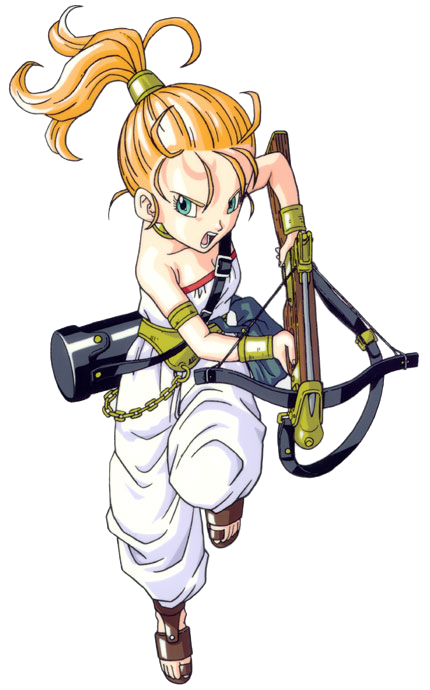
Marle2You know that innocent and beautiful fairy tale princess, with the tricked out dress and the power to summon woodland creatures?  The one with a tendency to get kidnapped, but who always ends up happily ever after with her prince charming?

Yeah, that’s not this princess.

A rebellious princess would just as soon puke if she were any of those things.  She hates being royalty–she’d rather be one of the common folk, or at least be out doing something (which is why she’s often involved in politics).  She hates all those frilly dresses and tends to wear her hair in a tomboyish ponytail.  Rather than wait for her white knight to save her, she’s much more likely to be an action girl in disguise, or at least something of a badass.  When she grows up, she may become a lady of war.  Invariably, she hates whatever marriage has been arranged for her and often scandalizes those of her class to marry for love (if she even marries at all).

As you might have already guessed, this trope is extremely common, not the least because the princess classic has largely been discredited (at least, outside of Disney).  There’s a lot of variation on it too, with some stories featuring the rebellious princess as the love interest, and others showcasing her as the hero.

George R.R. Martin (Song of Ice and Fire) deconstructs the trope with Arya, who eventually becomes something of a sociopath, and Brandon Sanderson (Elantris) subverts it with Sarene, who very much has the personality but uses her royal position to her advantage.  Frank Herbert (Dune) zigzags with Lady Jessica, who is undylingly loyal to the Atreides family but rebels against the Bene Gesserit.  As you might expect, J.R.R. Tolkien plays it straight, not once but twice: Éowyn in Lord of the Rings, and Lúthien in The Silmarillion.

It transcends cultures, too.  In Crouching Tiger, Hidden Dragon, Jen might not technically be royalty, but she is the governor’s daughter and she does reject an arranged marriage to run away and become a wandering warrior.  And in classic RPGs, especially the old Japanese ones from Square, this trope is everywhere.  The princess in the picture above is Marle from Chrono Trigger, who fits this trope to a T.

So why is this trope so prevalent nowadays?  Probably because the modern feminist movement led us to discard most of our old-fashioned feminine ideals, as well as the characters who were held up as shining examples of them.  That, and rule of drama.  Everything ultimately comes down to rule of drama.

In my own work, Hikaru from Stars of Blood and Glory is an example of this trope, though she’s more of a president’s daughter than a hero or a love interest.  She does have her own story arc, though, and I’ve got a sequel in the works with her as the main character.  Scientists aren’t exactly royalty, but they do consider themselves elites in Genesis Earth, which means that Terra has echoes of this trope.  And in Heart of the Nebula (as-yet unpublished), I’ve got a character who isn’t exactly rebellious, but she does qualify as a badass princess (though the society in question is a perfect techno-democracy and not a monarchy).

Trope Tuesday: The Three Faces of Eve

Why do so many character combinations come in groups of three?  Unlike love triangles, where the combo is primarily a way to build conflict, the characters in power trios all build on each other in some way.  They might be foils for each other, but as complementary archetypes, they do far more to drive the story together than they ever would apart.

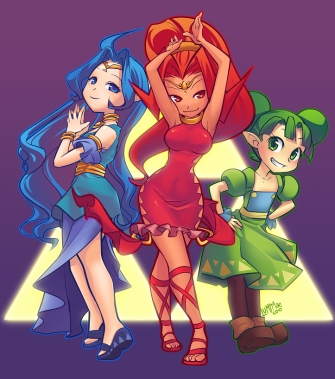
One of the most interesting all-female power trios is the Three Faces of Eve, which combines the archetypes of child, seductress, and wife:

The “child” (who does not have to be a child literally) will be seen as innocent, perhaps to the point of naïveté. The wife, the wiser, calmer aspect, someone around whom one could build a home life. The third, the seductress, is sexually experienced and independent.

Roughly speaking, the characters in the trio correspond to:

  • The Ingenue: A naive, innocent, childlike girl who is just setting out into the world.  In a Freudian Trio, this would be the Ego.
  • The Femme Fatale: A seductive, alluring, mysterious woman who is experienced in the ways of the world.  Unlike the Vamp, she may or may not use her feminine wiles for evil.  In a Freudian Trio, this would be the Id.
  • The Yamato Nadeshiko: A calm, steady, faithful wife, who provides the kind of marital stability and maternal strength that is ideal for settling down and raising a family.  In a Freudian Trio, this would be the Superego.

You’d be surprised to see how often this trope shows up, even in works of science fiction.  In Star Wars, Leia was the child in A New Hope, the wife/mother in Empire Strikes Back, and (what else?) the seductress in Return of the Jedi.  Just about every Star Trek series featured some alignment of these archetypes.

Squaresoft played with this trope a lot in their Final Fantasy series, which may be illustrative to examine in greater depth.  I’ve only played through FF IV, VI, VII, and Chrono Trigger, but each  of these titles features some interesting variations (warning: spoilers!).

Final Fantasy IV: Porom (child), Rydia (seductress), Rosa (wife).

Porom is pretty solidly the child, though Rydia starts out as this and later grows up into the seductress role.  She doesn’t get the guy in the end, though: that would be Rosa, who pretty much starts out with him as well.

In terms of story, the characters don’t really seem to build much on each other, though in terms of gameplay you definitely want to have Rydia and Rosa/Porom in your party (though not Rosa and Porom together–you only need one white mage, after all).

Final Fantasy VI: Relm (child) , Celes (seductress), Terra (wife).

This is my personal favorite in the series.  Unlike IV and VII, which both center around male protagonists, Final Fantasy VI revolves around Terra (world of balance) and Celes (world of ruin) as the central protagonists.  Because they also play a role in the power trio, their characters are quite complex, especially in the second half of the game.  Relm is arguably more of a Mary Sue, but her relation to the other characters, especially Shadow, also makes her role more complex and interesting.

In the end, the romantic subplot is fulfilled by Celes, not Terra, which was something of a surprise to me in my first playthrough.  It works really well, though, because of Celes’s heel face turn and subsequent reformation (in which Locke is arguably a Manic Pixie Dream Girl Spear Counterpart).  Does that also translate into a shift from seductress to wife as well?  I’m not sure, but I’d probably say no–after all, it’s Terra who takes on the mother role in the world of ruin.

Final Fantasy VII: Yuffie (child), Aeris (seductress), Tifa (wife).

The main twist with this one is that visually, you’d think Tifa is the seductress and Aeris is the wife.  In terms of story archetypes, however, it’s just the opposite: Tifa is the one whom Cloud depends on, the one who helps him work through his problems, while Aeris is the shifty, mysterious one.

Unlike IV, where Rosa and Cecil are set up from the very beginning, for a while it actually looks like Aeris and Cloud are going to end up together.  But then, in perhaps the most tragically gut-wrenching moment in all of video game history, Aeris dies (and doesn’t come back).  Since Yuffie is kind of, well, crazy, Tifa and Cloud are pretty much garanteed to get together after that point (and as for Sephiroth…I don’t even want to go there).

Chrono Trigger: Marle (child), Ayla (seductress), Lucca (wife).

Chrono Trigger is interesting because the girl who ends up with the guy in the end (Chrono) is actually the one who fulfills the child archetype, Marle.  It works, though, because of the childlike feel of the story.  Unlike FF VI and IV, Chrono Trigger is not a dark or an edgy tale–it’s heartwarming innocence at its best.  I always did feel that Lucca got the short end of the stick, though–but she did get a cameo in Xenogears, so perhaps the last laugh was hers after all.

Ah, Xenogears. <sigh>

Anyhow, long story short, the Three Faces of Eve power trio is a fascinating way to play with feminine archetypes.  Recently, I’ve become quite interested in it because it showed up quite inadvertently in my current project, Heart of the Nebula.  It’s funny how tropes can sneak up on you like that, especially some of the more archetypal ones.

Anyhow, in its current form the novel is a piece of trash, but now that I’ve recognized the potential to set up this particular power trio, I think I can really make it shine.  If you have any insights, please share–I’m very interested in this trope right now!

Trope Tuesday: The Bechdel Test

The Bechdel Test is a way to measure how prominently women figure in a story.  It mostly comes up in discussions of TV and film, but can also be applied to works of literature.  To pass the test, the story must have

  1. at least two named female characters
  2. who talk to each other
  3. about something other than men.

The surprising thing, as you can see in this discussion of the trope, is that so few stories actually pass this test. Even in literature, works like The Odyssey, Romeo & Juliet, and even War & Peace fail to pass or only barely pass this test.

Closely related to the Bechdel Test is the Smurfette Principle, where only one of the major characters is female–the token chick.  Stories that fail to pass the first part of the test fall into this category.

So why does this happen?  It may be because most writers are male, but that isn’t necessarily true of books and literature.  Novel writing, after all, was originally considered a womanly pursuit, and the English major was created in the so that women could have something to study while they were in college.  Not surprisingly, 19th century works by female writers like the Bronte sisters tend to pass…

…or do they?  It’s been a while since I read Jane Eyre or Pride and Prejudice, but the impression I got was that the women in those books spend only really talk with each other about men.  And when you look to contemporary writers like Dickens and Tolstoy, the trend holds.  After all, how many female characters are there in A Christmas Carol?  Do any of them ever even talk to each other?

This isn’t necessarily a measure of how good or bad a story is, or even of how feminist it is (Aliens, after all, technically passes), but it is a measure of how independent and well rounded the female characters really are.  If the story doesn’t pass, it’s a sign that the women only play a role in relation to the men, or that the male characters are the ones who advance the plot.

I don’t usually like to bring up my own stories in relation to these tropes, but I thought it would be useful to apply this test to my own books and see how they shape up.  As a writer, I think it’s a good idea to do this periodically, to make sure my work isn’t slipping into a rut.  So here we go:

Genesis Earth

Point 1: Yes, there are two named female characters: Terra and Stella.

Points 2 & 3: No, they never talk.  However, when you apply the reverse Bechdel test (two men who talk to each other about something other than women), Genesis Earth only barely passes.  Michael talks with Tom in the first chapter, mostly about Terra, and for the rest of the book he and Terra are alone.

Bringing Stella Home

Point 1: Yes, it passes.  Named female characters include: Stella McCoy, Danica Nova, Anya Sikorsky, Tamu, Lady Borta, Lady Zeline, Sergeant Maria.

Point 2: Yes; in most of Stella’s scenes, she’s talking with Tamu or Borta or one of the other Hameji women.  Also, since Danica is the captain of the Tajji Flame and Anya is the chief pilot, they interact quite a bit.

Point 3: Yes, but just barely.  In most of their scenes together, Stella and Tamu are talking about Qasar or the harem or sex.  There are a couple where they talk about each other and their past, but it all relates back to their captivity under the Hameji.  At one point later in the book, Anya goes AWOL and Danica has to talk her down, which is probably the scene that makes the book pass, but a hardcore feminist might argue that that conversation is indirectly about a man.  Still, I’m counting it.

Desert Stars

Point 1: Yes, there are plenty of women.  In fact, as you can see from this list of non-minor characters, there are almost as many women as there are men:

Female Male
Mira Jalil
Shira Sathi
Zayne Hamza
Tiera Rumiya
Lena Gregor
Surayya Kariym
Amina Ashraf
Rina Ibrahim
Sarah Lars
Michelle Nash
Mark
Will

Point 2: Yes, plenty of these women talk to each other.  Surayya and Amina are practically joined at the hip, Tiera, Shira, and Lena all have private conversations with Mira, and the only time Rina even talks is when she and Mira are alone.

Point 3: While most of the conversations between the female characters revolve around men and marriage, Tiera talks with Mira about honor, and Rina talks with Mira about leaving home.  Without spoiling too much, there are other conversations that have nothing to do with men, though they happen off-stage and only get reported second-hand.  Either way, I’d say this book passes.

None of this is to say that a good story must pass the Bechdel test.  Lawrence of Arabia, for example, doesn’t have a single female actress–not one single actress!–and it’s an amazing film.  As a counterpoint, I’m sure there are plenty of good stories out there (most of them probably anime or manga) that do not pass the reverse Bechdel test.

However, it is a good measure of female presence and how much the story is driven by men.  And as a lens through which to view the wider culture, it offers a surprising and somewhat disturbing perspective on male-domination in fiction.

The interior designer’s approach to story

I recently read a fascinating post on John Brown’s blog with an interesting exercise for analyzing the kinds of stories you most like to read.  By finding out what really turns you on in a story, you can have a much better idea what to write, and how to make your own stories better.

He prefaced the exercise with a story about the interior designer who helped them to decorate their house.  The designer spread out a number of home magazines in front of them, and told them to go through and tear out the pictures that most turned them on.  After doing this, they analyzed the pictures to see what they had in common, and thus discovered how to best decorate their house.

The exercise works much the same way.  First, pick out five books you really like that immediately come to mind.  Mine are:

As many of you know, these are some of my favorite books of all time.  I’ve reread three of them, and I intend to reread the other two at some point.

Next, pick out the elements that these books have in common.  Here’s what I came up with:

1) Set in a different time and place.

Not all these books are science fiction, but the all take place in a world far removed from our own.  Only Spin takes place largely on Earth, but the events of the story transform the world as we know it so much that by the end of the novel, it’s completely different. SPOILER (highlight to see) Besides, at the very end, the two main characters leave Earth by going through the giant portal to another planet, so the novel is arguably about escaping the world as we know it.

2) Stakes that are much more personal than global.

This was interesting, and highlights something I realized when I compared Merchanter’s Luck with Downbelow Station.  In all of these stories, the central driving conflicts are extremely intimate and personal.

To be sure, many of these stories also have an epic backdrop; Mistborn certainly does.  However, I was much more interested in Vin’s growth and development than I was in how the Ska would overthrow the Lord Ruler–in fact, Mistborn is my favorite book in the trilogy for that very reason.

3) Encourages deep introspection.

This shouldn’t come as too much of a surprise if you’ve followed this blog for a while, but I love love LOVE stories that make me see the world in a new way.  Thrillers and adventures are all fun and good, but if it doesn’t make me think, I’m usually like “meh” at the end.

4) Female characters who aren’t weak or passive.

This one might be a bit more controversial, but in all of these stories, I’ve noticed that the female characters are pretty strong, even if they aren’t all kick-butt Katniss wannabes (ugh…I hate Katniss).  Even in Legend, which is largely dominated by men, you still have the earl’s daughter, who is one heck of a spirited woman.

5) Life and death conflicts.

This is interesting: in all of these books, the threat of death is immanently real.  Some of them, such as Legend and On My Way to Paradise, are among the most violent books I’ve ever read.  I’m not sure what it is, but there’s something about life and death struggles that really draws me.

6) Romantic in a broad sense.

I’m using Tracy Hickman’s definition here, in which romance is all about teaching us to feel and bringing us in touch with our deepest feelings.  That’s the central theme of On My Way to Paradise: learning how to be a man of passion after witnessing some of the worst atrocities of war.

All of these books not only make me feel, they are about the feelings that they inspire.  In other words, the emotional elements of the story are both a part of and deeply embedded in the story’s central theme.

The exercises isn’t complete after this, though.  For the last part, take another five books and analyze them to see how they compare.  My second list includes:

So how does the list stack up?  Let’s see…

  1. Definitely true.  NONE of these stories take place in the world as we know it–and that’s awesome.
  2. A Canticle for Leibowitz might seem like an exception, since it follows the broad rise and fall of human civilization after the nuclear apocalypse.  But the things that really drew me to the story were the more personal elements: the novice who makes the illuminated manuscript of the electrical diagram, for example, or the abbot at the very end who SPOILER tries desperately to convince the single mother not to take her baby to the mercy killing station after the bomb fatally irradiates them.  In any case, it’s telling that A Canticle for Leibowitz made this list, whereas none of Arthur. C. Clarke’s books even came to my mind.
  3. Definitely true.  Even Citizen of the Galaxy, which is more adventure fiction than high concept sf, features a fascinating society of interstellar traders that really made me sit back and think about the way we structure our society.  Heinlein has a really awesome way of doing that with everything he writes.
  4. The only possible exception here might again be Heinlein, who had some very extremist views of women (putting it lightly).  However, if I recall, Citizen of the Galaxy has a female character at the end who helps pull out the main character from his indigent circumstances and helps him to come into his own.  Again, they might not all be kick-butt tramp-stamp vampire slayers, but they certainly aren’t weak.
  5. Less true of The Neverending Story and The Dispossessed, but while the central conflicts might not be about life and death, the threat of death (or a total loss of identity) certainly comes into play.
  6. Definitely true.  Few books have taught me to feel more deeply than The Neverending Story.  An absolutely magnificent piece of literature.

So there you have it.  According to this exercise, I should write books set in another time and place, where strong female characters face life and death decisions that personally impact the people in their lives and make the readers think and feel.  Interestingly enough, that is a PERFECT description of Bringing Stella Home, as well as Desert Stars and Into the Nebulous Deep.

Cool stuff.  Makes me want to write.  So on that note, I think I will.