November reading recap

Books I finished

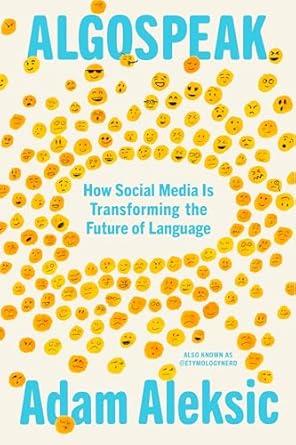
Algospeak by Adam Aleksic

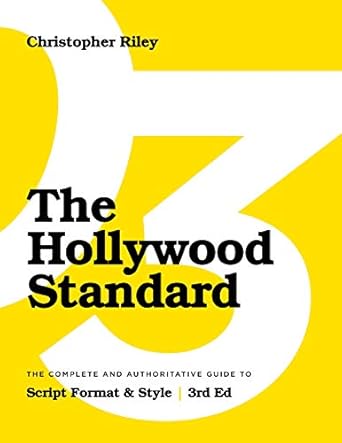
The Hollywood Standard by Christopher Riley

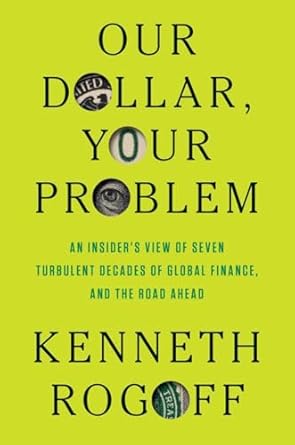
Our Dollar, Your Problem by Kenneth Rosoff

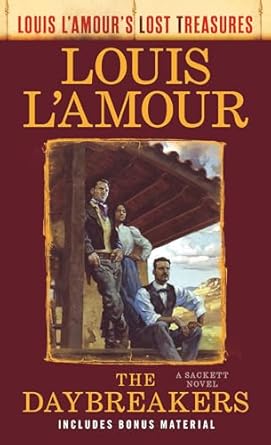
The Daybreakers by Louis L’Amour

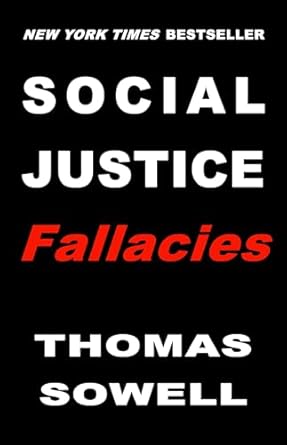
Social Justice Fallacies by Thomas Sowell

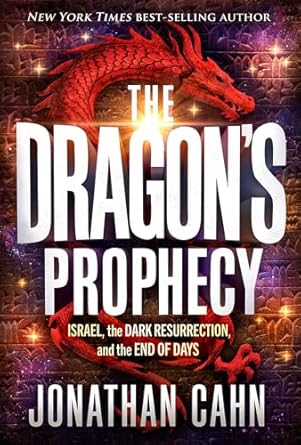
The Dragon’s Prophecy by Jonathan Cahn

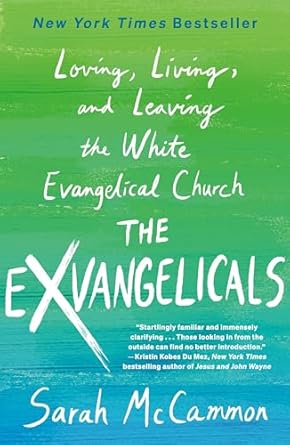
The Exvangelicals by Sarah McCammon

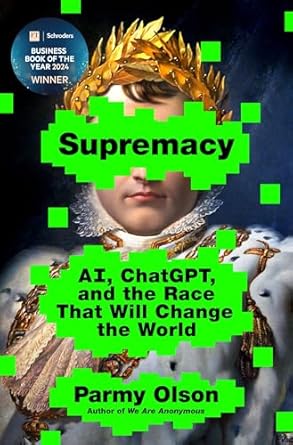
Supremacy by Parmy Olson

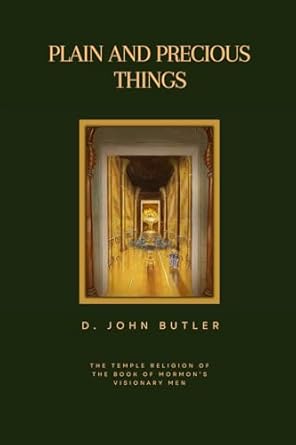
Plain and Precious Things by D. John Butler

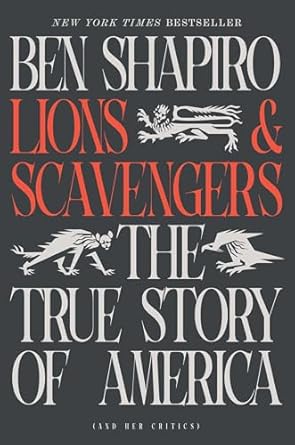
Lions and Scavengers by Ben Shapiro

Books I DNFed

  • Shane by Jack Schaefer
  • The Wave in the Mind by Ursula K. Le Guin
  • How to WRite like a Writer by Thomas C. Foster
  • Ilium by Dan Simmons
  • Consumed by Saabira Chaudhuri
  • Psywar by Robert W. and Jill G. Malone

Is Genesis Earth for You?

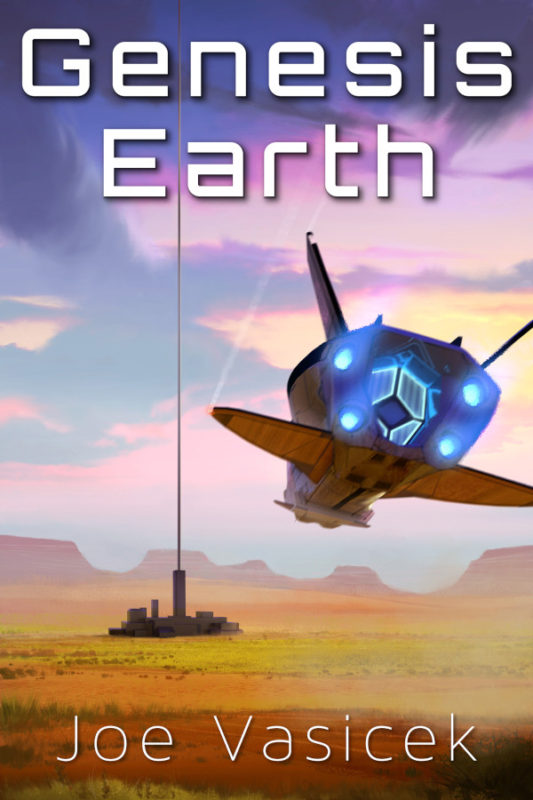
Genesis Earth is an introspective, awe-driven, charactor-anchored YA science fiction novel. It’s not a laser-blasting space opera; rather, it’s a quiet, psychological odyssey through the cosmos, through the eyes of a lonely young explorer haunted by the memory of Earth. Through this book, readers will experience the loneliness of deep space, the mystery of first contact, and the fragile human connection between two young scientists flung far from home.

What Kind of Reader Will Love Genesis Earth?

This book is perfect for readers who:

  • Love hard SF stories of space exploration rooted in both plausible science and human emotion,
  • Enjoy classic SF from authors like Clarke and Asimov—thoughtful, concept-driven, but with relatable, human characters,
  • Appreciate slow-burn tension and stories that make them think, long after they set the book down,
  • Are fascinated by themes of first contact, isolation, coming-of-age, and the psychological cost of human exploration, and
  • Crave science fiction that feels possible, where the sense of wonder comes from realism, not fantasy.

If any of that describes you, then you should definitely give Genesis Earth a try!

What You’ll Find Inside

Genesis Earth follows a young scientist, Michael Anderson, and his mission partner Terra as they explore a dangerous anomaly on the far side of a wormhole, that could either threaten or hold the key to humanity’s future. The result is an immersive and contemplative book that starts as a psychological drama and turns into a story of discovery, both cosmic and personal: what it means to be human when Earth is a ghost and “home” is light-years away.

What Makes Genesis Earth Different

Fans of classic science fiction will recognize the trope of the lonely astronaut or scientist setting out to explore the unknown, but where most protagonists in classic hard SF are seasoned professionals, the explorers in Genesis Earth are barely adults, raised in isolation on board a space colony, and psychologically unprepared for what awaits them. The story explores beyond the question “can humanity survive?” and asks “what happens to the human soul when it’s untethered from home?”

Distinctive features include:

  • Psychological depth: The fraught relationship between Michael and Terra gives the story an undercurrent of tension and unease that’s rare in classic hard SF.
  • Tone: Quiet, human, and melancholic—more existential wonder than space adventure.
  • Perspective: Told through a deeply personal first-person lens, with an almost diary-like immediacy.
  • Balance: Seamlessly blends scientific authenticity (cryonics, wormholes, planetary science) with literary emotion.

What You Won’t Find

This book is not for readers seeking:

  • Fast-paced, action-heavy sci-fi with constant battles, explosions, or villains.
  • Romantasy or sexually explicit romance plots — while there is emotional tension, it’s subtle and cerebral, not sensual or melodramatic.
  • Soft or mythic sci-fi full of alien empires or space wizards — the story stays grounded in realism.
  • Hard nihilism or grimdark — while introspective and serious, the book is ultimately hopeful, not bleak or cynical.
  • Readers who dislike slow builds or introspective narration.

If you’re looking for Star Wars, this isn’t it. If you’re looking for Arthur C. Clarke’s emotional heir, you’ve found it.

Why I Think You Might Love Genesis Earth

I wrote Genesis Earth when I was a lonely, single young college student trying to find my place in the world. That personal struggle in my own life definitely affected the conflict and themes of the book. I read a lot of classic SF in this time, including books by Arthur C. Clarke, Isaac Asimov, Ursula K. Le Guin, Robert Charles Wilson, and Orson Scott Card, and I wanted to create something that was just as awe-inspiring and thought-provoking as the great books by those classic authors.

If you’re looking for a book that sticks with you long after you’ve read it, and helps you to find your own place in the world, you should definitely give Genesis Earth a try!

Where to Get Genesis Earth

Related Posts and Pages

Explore the series index for the Genesis Earth Trilogy.

Visit the book page for Genesis Earth for more details.

Discover the meaning of home in Genesis Earth.

See all of my books in series order.

Fantasy from A to Z: W is for Worldbuilding

What is the biggest thing that sets fantasy apart from all other genres? Without a doubt, it has to be worldbuilding. In every other genre (even science fiction, to some extent), the writer can get away with a loose or surface-level understanding of the world. But in order to do fantasy right, you have to build the world from the ground up, and include such an immersive and visceral level of detail that the reader feels like it’s a real world that they can lose themselves in. That is the feeling that readers want when they pick up a fantasy book.

At the same time, I think that most writers put too much emphasis on worldbuilding. It’s become trendy in writerly circles to talk about worldbuilding, almost as if it’s something you do for its own sake. In the best books, though—even in the best fantasy books—the worldbuilding is always in service to the story, and not the other way around.

For many of us writers, the act of dreaming up a world is the thing that immerses us the most in it. Daydreaming about our fantasy worlds and working out all of the details about it—that’s often the fun part, and the thing that got us into writing fantasy in the first place. But it doesn’t translate very well to the page. The things that seemed so cool to us when we were dreaming them up often come across as dry and boring when we write them out in a huge info dump.

In order for a reader to feel immersed in the world, they need to have a character that they can follow through it. The character’s experience of the world becomes the reader’s experience. But the character needs to be in motion—they need to have some sort of goal or objective that they’re working toward, even if they don’t consciously realize it yet. And it needs to be a struggle for them, at least on some level. Even in cozy fantasy, where the stakes are typically pretty low, the characters still have to put some effort into getting the things they want.

That’s because characters show us who they really are through the trials and struggles that they face. Just like in real life, hard times make us see what people are made of. Without that, readers have a difficult time connecting with the characters through whose eyes we want to show them our fantasy worlds. It’s through a character’s struggle that we find that we can relate to them.

Another thing I’ve noticed, particularly in some recent big-name traditionally published fantasy, is that the viewpoint characters are often just terrible people. If I met them in real life, I often think that I would find them petty, narcissistic, and repulsive. At best, they are amoral, and at worst, they are little better than the villains who oppose them—and yet, from the way they’re written, it’s clear that we’re supposed to latch onto them simply because they are the main character.

As a reader, that doesn’t work for me. If I’m going to connect with a character deeply enough to get that immersive fantasy experience, I want them to either be the kind of person I can admire, or the kind of person I feel like I can hang out with. Preferably both. And if the character is going to do something morally repulsive early on in the book, I need to see them wrestle with the ethics of it first, and perhaps feel some remorse afterward. Otherwise, it’s going to throw me out of the book.

Anything that throws the reader out of the book is also going to kill that immersive experience, rendering all that worldbuilding utterly ineffectual. In some ways, the reader first has to feel immersed in the characters before they can feel immersed in the world.

This is why the characters in the best fantasy books often have more depth and nuance to them than the characters in any other genre. When the book is set in our own familiar world, the characters themselves are often larger than life. The heroes are billionaires or ex-Navy SEALs, the love interests are supermodels or billionaires, and the villains are criminal masterminds or rival billionaires. But in fantasy, the larger-than-life element is the world itself, so the characters (or at least the viewpoint characters) often feel much more like real people, so as to ground us in the story.

I’ve often heard people say that worldbuilding is a bit like an iceberg, in that only 10% or so should be visible. But I think it’s more precise to say that worldbuilding should be grounded in the character (or characters) through whose eyes we get to see it. Of course, those characters are grounded in the conflict or plot of the story, since that’s what shows us who they really are. And the plot itself is grounded in time and space, which brings us back full circle to setting and worldbuilding. So ultimately, it’s all a virtuous cycle.

I don’t think I’ve ever found an author who does character better than Ursula K. Le Guin. I haven’t read much of her fantasy, but I did read Powers, and I felt so totally immersed in that world because I felt like I knew the main character even better than I know myself. It was an incredible reading experience, just like the best of her science fiction, which I adore.

Brandon Sanderson also tends to buck the current trend of morally ambiguous main characters who never really earn our sympathy or admiration. In almost all of his books, his protagonists strike me as good people—the kind that I can admire and hang out with. That fact, combined with how his books tend to be much cleaner than most contemporary fantasy, go a long way toward explaining his tremendous success (though of course, Sanderson’s greatest strength is his ability to write killer endings).

Bottom line, the best worldbuilding in fantasy is only as good as the characters through whom we experience it. Worldbuilding should always serve the story, and not the other way around.

How I Would Vote Now: 1970 Hugo Awards (Best Novel)

The Nominees

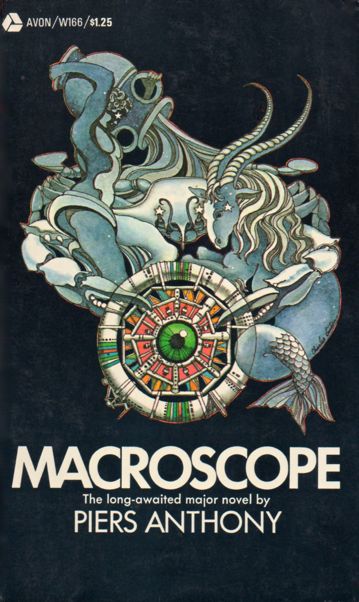
Macroscope by Piers Anthony

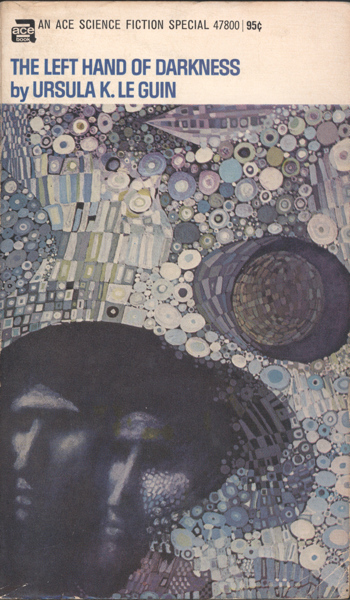
The Left Hand of Darkness by Ursula K. Le Guin

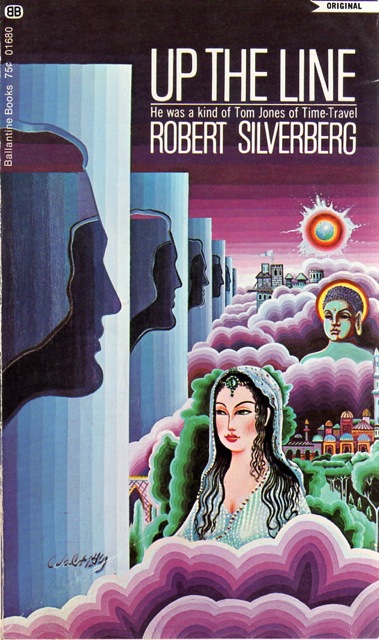
Up the Line by Robert Silverberg

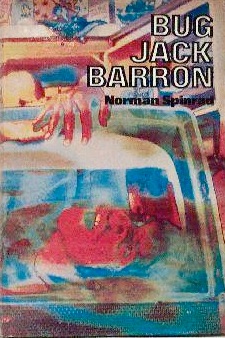
Bug Jack Barron by Norman Spinrad

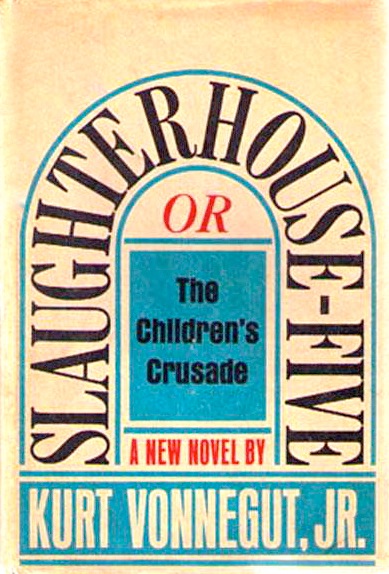
Slaughterhouse Five by Kurt Vonnegut, Jr.

The Actual Results

  1. The Left Hand of Darkness by Ursula K. Le Guin
  2. Up the Line by Robert Silverberg
  3. Macroscope by Piers Anthony
  4. Slaughterhouse Five by Kurt Vonnegut, Jr.
  5. Bug Jack Barron by Norman Spinrad

How I Would Vote Now

  1. The Left Hand of Darkness by Ursula K. Le Guin
  2. No Award
  3. Slaughterhouse Five by Kurt Vonnegut, Jr.

Explanation

Wow—I’d forgotten just how terrible book covers were in the 70s. I particularly had trouble finding an early edition cover for Bug Jack Barron that didn’t have psychadelic topless women plastered all over the front of it. The 70s was a weird time.

First, the good: Ursula K. Le Guin is one of the best science fiction writers of all time, and her novel The Left Hand of Darkness may be the greatest book she’s ever written. Personally, I was more impressed by The Dispossessed, but they’re both quite excellent. The thing I like most about Le Guin is that she genuinely follows her characters wherever they lead her, even (or especially) if their own beliefs and values contradict her own. This means that all of her books present a fully developed and well-rounded argument, which makes them ring true in a very deep and compelling sense.

On the surface, there are a lot of reasons for a conservative reader like myself to hate this book. It’s written by a left-wing atheist, it was published in the 70s, and it won the Nebual Award, the Hugo Award, and the Tiptree Award. Digging a little deeper, the core concept of the story is an exploration of gender issues, where biological sex is fluid and the characters may be male one month and female the next. And yet, Ursula K. Le Guin’s unwavering commitment to telling a truthful story keeps it from feeling “woke,” at least to me. Le Guin is one of the most clear-eyed and honest writers I have ever read, which is why none of the surface level stuff bothers me. It’s also what makes her books so timeless.

Now, for the bad—although “bad,” in this case, is more just a matter of personal taste, since I don’t much care for the literary genre (and yes, “literary” is a genre—just because your books aren’t commercial doesn’t make them superior to everything else). Slaughterhouse Five is written with such a heavy-handed style that I just couldn’t get into it. But since that’s more of a personal taste issue, I’d still put it on the ballot under No Award, and if it weren’t for the other three books, I wouldn’t have put No Award for this year.

But now, we come to the ugly, starting with Macroscope. I have to admit, I skipped this one on account of the author. I never grew up reading Piers Anthony, so when I finally got around to picking up his books, it was immediately clear to me that he’s a dirty old man. Which is a shame, because it’s clear that he knows how to write an entertaining story—it’s just that these stories all seem to be peppered with weird sex stuff, often bordering on rape fantasies. I have no idea if that’s true for Macroscope, but I’ve DNFed enough by this author that I don’t really care to find out.

I’ve also DNFed a lot of stuff by Robert Silverberg that was just too explicit for me, so I asked ChatGPT to screen Up the Line for me, and this is what it said:

The narrative features frank depictions of sexual relationships, including a controversial incestuous encounter resulting from a time-travel paradox. Silverberg uses this scenario to examine the moral implications of unrestricted access to history and personal indulgence.

Yeah… Silverberg’s exploration of incest sounds like exactly the kind of book I never want to read. Hard pass.

I also asked ChatGPT to screen Bug Jack Barron for me—though from the fact that so many editions of this book feature outright pornographic cover art, I suppose I didn’t have to go that far to know this would get a hard DNF. This is what ChatGPT said:

Sexual Content: The novel includes graphic depictions of sexual relationships, often tied to the characters’ moral complexities. The narrative explores Jack’s personal relationships with raw detail, including manipulative and transactional dynamics, as well as moments of stark intimacy.

Social Justice Themes: Issues of race, class, and exploitation are central to the narrative. Spinrad tackles these topics with a provocative, satirical approach, which might align with modern “woke” sensibilities despite the book’s 1960s origin.

Yeah, I’m gonna give this one a hard pass too. And given what I already know about 70s science fiction, I suspect that ChatGPT will be invaluable in screening the books from this decade.

How I would vote now: 1972 Hugo Award (Best Novel)

The Nominees

To Your Scattered Bodies Go by Philip Jose Farmer

The Lathe of Heaven by Ursula K. Le Guin

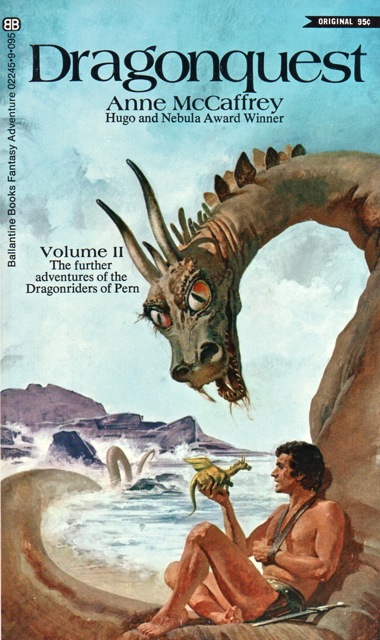
Dragonquest by Anne McCaffrey

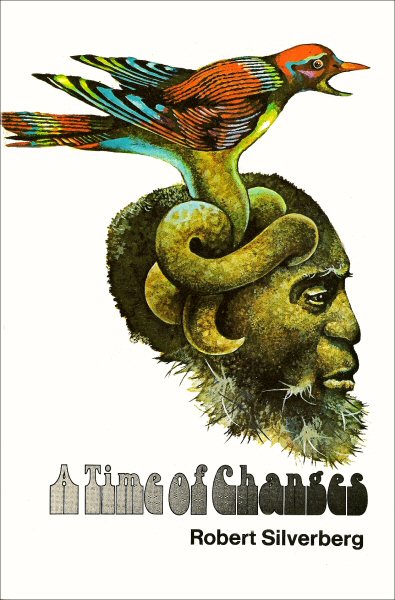
A Time of Changes by Robert Silverberg

Jack of Shadows by Roger Zelazny

The Actual Results

  1. To Your Scattered Bodies Go by Philip Jose Farmer
  2. The Lathe of Heaven by Ursula K. Le Guin
  3. Dragonquest by Anne McCaffrey
  4. Jack of Shadows by Roger Zelazny
  5. A Time of Changes by Robert Silverberg

How I Would Have Voted

  1. The Lathe of Heaven by Ursula K. Le Guin

Explanation

Cover art was so terrible in the 70s. Those are all the original edition covers for each book. They’ve all been reworked in later years, and most of them got a significant upgrade.

The Lathe of Heaven isn’t Ursula K. Le Guin’s greatest work, but I did find it to be decently good. The ending was a little too pat, but the set up was good, and the story itself was quite intriguing. In some ways, I feel that it would have worked better as a movie, maybe an animated feature by Studio Ghibli. It definitely had that kind of a dreamlike feel.

The rest of these books are not that great, to be honest. To Your Scattered Bodies Go and A Time of Changes were too pervy for me, with Farmer indulging in some really weird and disturbing treatment of children, and Silverberg indulging in pages and pages of navel gazing, all written very beautifully and signifying almost nothing, which is typical of Silverberg.

Jack of Shadows was confusing: I got about two thirds of the way in before I realized that I had no idea what was happening, and I didn’t really like any of the characters. I wonder if the real reason this book got nominated was because so many people enjoyed Nine Princes in Amber, the first Chronicles of Amber book, which came out in 1970 and was actually quite excellent. But he was writing and publishing the Chronicles of Amber all through this time period, and none of them ever got nominated for a Hugo, which seems really strange to me. With Zelazny, the only books I’ve found that I enjoyed are his Chronicles of Amber, and everything else is a huge miss for me. It’s weird.

As for Dragonquest, I know that the Dragonriders of Pern books have lots of fans, and I don’t find anything too objectionable with them (aside from the naively libertine Boomer attitudes toward sex, which is par for the course for this era and for Anne McCaffrey in general), but I just couldn’t get into this book. I read the first Dragonriders of Pern book in college, when I wasn’t nearly so cynical, and I thought it was okay, but it wasn’t compelling enough to go out and read the rest of the series immediately, and over the years I literally forgot everything that happened in that first book. So I read a synopsis before picking up book 2, and I just have to say that the dragons are way, way, way too OP. Seriously, they can teleport instantly through space AND time? That’s just too much. So I went into Dragonflight without feeling any real sense of peril, and right away, the novel turned into a giant soap opera about the various dragons and dragonriders: who had feelings for who, who was sleeping with who, etc etc. So after a couple of chapters, I just got bored and checked out.

So the only one of these books that I can positively vote for is The Lathe of Heaven, even though I think it pales next to Le Guin’s other work. But I wouldn’t actually put any of these books beneath No Award, since most of it is probably just a matter of my own personal taste. The perviness of To Your Scattered Bodies Go almost makes me want to put it below No Award: there’s a lot of graphic nudity, a lot of innuendo, and some innuendo / torture porn directed toward children, which was why I DNFed it. But it doesn’t cross over into outright pornography, and it’s not ideologically possessed in the way that most of the stuff coming out today tends to be. Also, the premise is pretty interesting: it’s in the execution where it all falls apart.

The 70s was a really weird time for science fiction. I wonder how many of the Worldcon attendees in 1972 were high on drugs—or whether some of these artists weren’t off their gourds when they wrote some of this stuff. I’ve heard stories about some of the orgies that Asimov used to hold in his con suite. It was a very different time.

Chat GPT Writes Fantasy in Various Authors’ Styles

Generic (no author style specified):

Once upon a time, in a land far, far away, there was a brave knight named Sir William. He was renowned throughout the kingdom for his valor, loyalty, and unwavering sense of justice. One day, a dreadful dragon named Gorthor, known to terrorize the kingdom, descended upon the land, spreading fear and destruction wherever it went.

Princess Elara, the fair and kind-hearted daughter of King Roland, was taken captive by the fearsome dragon and locked away in a tower atop a treacherous mountain. The king was devastated, and his subjects lived in fear of the dragon’s wrath. But Sir William, hearing of the plight of the princess and the suffering of the kingdom, knew that he had to act.

With his sword in hand and armor gleaming in the sunlight, Sir William set off on his quest to slay the dragon and rescue Princess Elara. He journeyed through thick forests, crossed raging rivers, and traversed treacherous mountains, facing numerous challenges along the way. But he was undeterred, for his determination and bravery were unmatched.

As Sir William approached the dragon’s lair, he could feel the scorching heat of its breath and hear its monstrous roars echoing in the distance. Undeterred, he marched forward, steeling himself for the battle ahead. The dragon emerged from its lair, its scales gleaming with malice, and attacked with its fiery breath and razor-sharp claws.

Sir William fought with all his might, dodging the dragon’s flames and striking with his sword. The battle was fierce and intense, with the ground trembling from the dragon’s fury. But Sir William refused to back down, fueled by his desire to save the princess and free the kingdom from the dragon’s tyranny.

With a mighty swing of his sword, Sir William struck a fatal blow to the dragon, piercing its heart. The dragon let out a deafening roar before collapsing, defeated. The kingdom rejoiced as the news spread that the dragon had been slain.

Sir William ascended the mountain and unlocked the tower where Princess Elara was held captive. She greeted him with tears of joy, thanking him for his heroism. Sir William was captivated by her beauty and grace, and he knew that she was worth every battle he had fought. They descended the mountain together, hand in hand, as the kingdom welcomed them with open arms.

King Roland was overjoyed to be reunited with his daughter, and he honored Sir William for his selfless bravery. The princess and the knight fell in love, and they were wed in a grand ceremony attended by the entire kingdom. Sir William became a legend, with songs and tales of his courage and valor echoing throughout the land.

And so, Sir William and Princess Elara ruled the kingdom with wisdom, fairness, and compassion. They lived happily ever after, and the dragon Gorthor became a distant memory, a tale of a brave knight who slayed the beast and rescued the princess, eternally cherished in the hearts of the people.

In the style of Brandon Sanderson:

Sir William, a knight hailing from the planet Scadrial in the cosmere, embarked on a perilous quest to defeat the dreaded dragon Gorthor and rescue Princess Elara, daughter of King Roland of Alderia. Armed with an Allomantic steel spike, Sir William utilized his enhanced physical abilities to navigate through the treacherous terrain and fend off beasts of the wilds.

As he journeyed through the dense forests of Alderia, Sir William encountered a mysterious old woman who revealed herself to be a Feruchemist. She gifted him with a metalmind that stored strength, fortifying his resolve for the challenges ahead. With newfound determination, he traversed raging rivers and scaled towering peaks, all while tapping into the stored strength in his metalmind to push beyond his physical limits.

Upon reaching the dragon’s lair, Sir William faced Gorthor in an epic battle of steel and flame. His Allomantic steel enhanced his agility, allowing him to dodge the dragon’s fiery breath, while his Feruchemical strength empowered him to wield his sword with unmatched prowess. The battle was fierce, and Sir William drew upon every ounce of his Allomantic and Feruchemical powers to gain the upper hand.

As the fight reached its climax, Sir William tapped into his metalmind to deliver a devastating blow, piercing Gorthor’s heart and vanquishing the dragon. But the victory came at a cost, as Sir William’s metalmind was depleted, leaving him weakened and vulnerable.

Princess Elara, who had witnessed the battle from her prison in the tower, rushed to Sir William’s side, tending to his wounds with her Healing powers as a Lightweaver from Roshar. Her radiant abilities mended his injuries, and their connection grew stronger as they bonded over their shared experiences.

With Gorthor defeated and Princess Elara freed, Sir William’s deeds spread across the cosmere, earning him the admiration of other Knights Radiant from different planets. He and Princess Elara returned to Scadrial, where they were wed in a grand ceremony attended by representatives from various worlds in the cosmere.

Together, they ruled Alderia with wisdom, fairness, and compassion, drawing upon their combined knowledge and abilities. Under their leadership, the kingdom flourished, and the people hailed them as legends in their own right. Sir William’s tale of courage and sacrifice spread far and wide, becoming a part of the cosmere’s history and inspiring future generations of Knights Radiant to rise up and protect the realms from the forces of darkness.

Little did Sir William know that his encounter with Gorthor was not a mere coincidence, but a ripple in the greater tapestry of the cosmere’s interconnected realms. The dragon’s appearance was but a symptom of a greater threat looming in the shadows, a threat that would require Sir William and Princess Elara, along with their newfound allies from across the cosmere, to join forces and face the challenges that lay ahead in order to safeguard all of creation.

In the style of George R.R. Martin:

In the grim realm of knights and dragons, where honor and loyalty were scarce commodities, Sir William’s tale took a darker turn. As he battled the dragon Gorthor, the creature’s claws tore through his armor, leaving him with grievous wounds that festered with infection. Princess Elara’s efforts to nurse him back to health were valiant, but the scars that marred Sir William’s body were a constant reminder of the brutal reality of their world.

As they returned to King Roland’s castle, they found themselves embroiled in a web of political intrigue. King Roland, swayed by the whispers of cunning advisers, questioned Sir William’s motives and cast doubt on his intentions. Rumors spread like wildfire, painting Sir William as a threat to the kingdom rather than a hero. Princess Elara, torn between her love for Sir William and her loyalty to her father, found herself caught in the crossfire.

In the shadows, enemies lurked, seeking to undermine Sir William and seize power for themselves. Betrayal came from unexpected quarters, as allies turned against him, driven by their own ambitions and greed. Sir William’s once staunch allies dwindled, leaving him isolated and vulnerable. He realized that the dragon’s defeat was only the beginning of his struggles.

Princess Elara, torn between her duty to her father and her love for Sir William, faced her own battles. Her father’s health deteriorated, and his advisers vied for influence, manipulating her at every turn. She learned that the dragon’s capture had been part of a larger conspiracy, and she had to navigate a treacherous path to uncover the truth and protect her kingdom.

As tensions mounted, Sir William and Princess Elara found themselves at odds, torn apart by conflicting loyalties and the machinations of those who sought to undermine them. The kingdom descended into chaos, and war loomed on the horizon. Sir William, once a celebrated hero, became a hunted man, forced to go into hiding as he sought to clear his name and unravel the web of deceit that threatened to tear the kingdom apart.

With each step, Sir William faced new dangers and encountered foes both familiar and unexpected. His once noble cause had become a desperate fight for survival, as he struggled to stay one step ahead of those who sought his downfall. Princess Elara, torn between her love for Sir William and her duty to her kingdom, had to make impossible choices that would forever change the course of their lives.

In the end, Sir William’s fate was tragic. Betrayed by those he trusted, he fell in a final, desperate battle, his legacy tarnished and his name forgotten. Princess Elara, heartbroken, was forced to pick up the pieces and carry on, forever haunted by the choices she had made and the cost of power and politics.

And so, in the realm of knights and dragons, where honor and treachery walked hand in hand, Sir William’s story became a cautionary tale of the perils of ambition, the fleeting nature of glory, and the harsh realities of a world where even the bravest of knights could fall victim to the darkness that lurked in the hearts of men. The dragon’s defeat had been but a fleeting moment of triumph, swallowed by the relentless tide of intrigue and betrayal that plagued the kingdom.

In the style of Robert E. Howard:

The sun sank low, casting shadows that seemed to crawl across the rugged terrain as Sir William ascended the perilous mountain path. His armor weighed heavy, but his resolve burned hotter than the dragon’s breath that he knew awaited him at the peak. Legends of the fearsome beast, Gorthor, had spread like wildfire, and the princess, Elara, held captive in its lair, was in dire need of rescue.

Sir William’s sword gleamed with deadly intent, the only companion he needed as he pressed on, his mind focused on the task at hand. His steps were measured, his senses keen, as he navigated the treacherous trail that wound higher into the mountains. The dragon’s roars grew louder, a savage symphony of primal rage that set Sir William’s blood boiling.

Finally, he reached the dragon’s lair, and the beast emerged in all its terrifying glory. Its scales glinted with malice, its breath a searing inferno that scorched the air. Sir William met the creature head-on, his sword slicing through the air with the precision of a seasoned warrior.

The battle was brutal, a clash of steel and flame that shook the very foundation of the mountain. Sir William’s sword danced with deadly grace, finding its mark again and again, but the dragon was a formidable foe. Its claws slashed through the air, and its fiery breath threatened to consume Sir William. Yet he fought on, his eyes blazing with determination.

With a mighty swing of his sword, Sir William struck a fatal blow, piercing the dragon’s heart. The beast let out a monstrous roar, its lifeblood staining the ground. Sir William stood victorious, his chest heaving with exertion, his armor spattered with dragon’s blood.

He made his way to the tower where Princess Elara was held captive, the door creaking open to reveal her tear-streaked face. She rushed into his arms, and Sir William held her close, their relief palpable. The princess’s gratitude shone in her eyes, and Sir William’s heart swelled with a sense of accomplishment.

As they descended the mountain together, they were met with cheers from the kingdom. King Roland embraced his daughter, and Sir William was hailed as a hero. He and Princess Elara ruled the kingdom with wisdom and courage, their bond deepening with each passing day. Sir William’s name became a legend, spoken in awe by those who heard the tale of the knight who had slain the dragon and rescued the princess from its clutches.

The dragon Gorthor was vanquished, but Sir William knew that danger lurked in every shadow, and that new adventures awaited. He would forever be remembered as the hero who had stared death in the face and emerged victorious, his legend destined to live on in the annals of history as a testament to the indomitable spirit of a true warrior.

In the style of Ursula K. Le Guin:

Once upon a time, in a world shrouded in mystery and magic, Sir William, a knight of noble birth, heeded the call of duty and embarked on a quest to confront a fearsome dragon named Gorthor. Clad in his armor of polished steel, he rode forth with his sword gleaming in the pale moonlight, driven by a sense of purpose that burned like a fire within him.

As he journeyed through the wilderness, Sir William beheld the beauty of the land he swore to protect. The ancient trees whispered ancient wisdom, and the rivers sang melodies that echoed through his soul. He encountered creatures both fantastical and fearsome, yet he remained steadfast, for his heart was set on saving Princess Elara, the beloved jewel of the realm.

At last, Sir William reached the foot of the mountain where the dragon’s lair was said to be hidden. The air crackled with an otherworldly energy, and the mountain loomed ominously, as if guarding a secret known only to the stars. With measured steps, Sir William ascended the treacherous path, his senses heightened, his sword at the ready.

The dragon Gorthor, with scales that shimmered like midnight stars, emerged from the shadows, its fiery breath casting an eerie glow in the darkness. The battle that ensued was a dance of danger, a symphony of steel and flame. Sir William moved with grace and skill, dodging the dragon’s onslaught while striking with precision, his heart pounding with every swing of his sword.

But the dragon was cunning, its movements as swift as the wind, and it tested Sir William’s resolve. The knight faltered, feeling the weight of the challenge before him. Yet, in that moment of doubt, he found strength in the memory of the princess he sought to rescue, and he pressed on, determined to prevail.

With a final, mighty swing, Sir William’s sword found its mark, piercing the dragon’s heart. Gorthor let out a mournful cry and crumbled to the ground, its once fearsome form reduced to mere ashes. Sir William stood victorious, but his heart was heavy with the weight of the battle.

He ascended the mountain to the tower where Princess Elara was held captive. As he opened the door, he beheld her, a vision of grace and courage. Her eyes shone with gratitude as she embraced him, and Sir William felt a warmth spread through his chest, a feeling he had never experienced before.

Together, they descended the mountain, hand in hand, their hearts intertwined. The kingdom rejoiced at their return, and King Roland greeted them with tears of joy. Sir William and Princess Elara wed in a ceremony that united the realm, their love a beacon of hope in a world often fraught with darkness.

They ruled with wisdom and compassion, their reign marked by fairness and justice. The memory of the dragon Gorthor faded into legend, a cautionary tale of the consequences of greed and tyranny. Sir William and Princess Elara’s legacy lived on, a tale of valor and love that inspired generations to come.

And so, in the annals of history, the tale of Sir William and Princess Elara, a knight and his beloved, passed into legend. Their names were spoken in hushed whispers, their deeds woven into the tapestry of folklore. For in a world where darkness lurks, the light of courage and love will always shine, a testament to the enduring power of the human spirit.

In the style of J.R.R. Tolkien:

In the time of yore, when shadows loomed and darkness encroached upon the realm, there arose a valiant knight known as Sir William of the House of Evergreen. Clad in armor that bore the markings of ancient lore, and wielding a sword forged in the fires of the dwarves, he set forth on a perilous quest to vanquish the dragon that had plunged the land into fear.

Through ancient forests and across mist-shrouded moors, Sir William journeyed, guided by a vision of a fair princess, Elara, whose heart was pure and whose soul shone like a star in the night sky. He faced daunting challenges along the way, from foul creatures that lurked in the shadows to enchanted barriers that sought to impede his progress. But his resolve remained unshaken, for he bore in his heart a sense of duty and a steadfast determination to set things right.

At last, Sir William reached the dragon’s lair, a desolate peak shrouded in darkness and wreathed in smoke. The dragon, known as Gorthor the Dread, emerged from the shadows, its scales glinting with malevolence, and unleashed a torrent of fire. Sir William stood firm, his shield raised, and his sword gleaming with the light of the stars.

A battle of epic proportions ensued, as Sir William faced the dragon with unwavering courage. He danced and dodged, his sword slashing through the air with the precision of an elven blade. The dragon’s fiery breath and mighty talons tested his mettle, but he fought on, his eyes fixed on the dragon’s heart, the only vulnerable spot.

With a resolute swing, Sir William struck a decisive blow, piercing the dragon’s heart and bringing it down with a roar that echoed across the land. The dragon’s flames faded, and Gorthor the Dread fell, defeated. The realm rejoiced as news of the dragon’s demise spread far and wide.

Sir William ascended the towering peak where Princess Elara was held captive, her beauty shining like a beacon in the darkness. Her eyes were filled with tears of gratitude as she embraced him, and Sir William’s heart swelled with joy. Together, they descended the mountain, hand in hand, amidst cheers and celebrations from the grateful people.

King Roland, overjoyed at the safe return of his daughter, bestowed upon Sir William the highest honors, and the knight was hailed as a hero throughout the realm. He and Princess Elara were wed in a grand ceremony that united the kingdom in jubilation.

Sir William and Princess Elara ruled with wisdom and compassion, bringing a new era of peace and prosperity to the land. Their story was woven into the tapestry of legends, a tale of valor, love, and sacrifice that echoed through the ages. And so, the name of Sir William of the House of Evergreen, the dragon slayer, and his beloved Princess Elara, the fair and kind-hearted, were revered in the annals of history, a beacon of hope for all who heard their tale.

…and as a poem in the style of J.R.R. Tolkien:

In the days of yore, when shadows fell,
And dragons roamed o’er hill and dell,
A knight of noble heart and might,
Set forth to face a fearsome plight.

Sir William, with his sword so bright,
And armor gleaming in the light,
Embarked upon a perilous quest,
To slay the dragon, cursed and blessed.

Through darkened woods and mountains high,
He traveled with a steadfast eye,
His heart filled with a solemn vow,
To save the princess, here and now.

With each step, danger lurked near,
As whispers echoed in his ear,
And shadows danced with eerie grace,
Testing his courage in that dark place.

But onward he pressed, undeterred,
His sword at hand, his soul unblurred,
For he was driven by a dream,
Of a princess fair, and her heart’s gleam.

At last, he reached the dragon’s lair,
A cavern filled with smoke and glare,
And there he stood, so brave and bold,
Facing the dragon, fierce and cold.

Gorthor, the beast with scales of fire,
Roared and breathed a seething pyre,
But Sir William stood firm and strong,
And sang a song, a valiant song.

With blade and shield, he fought the fight,
As sparks and flames lit up the night,
His sword struck true, his aim was keen,
As he battled the dragon, fearsome and mean.

And then, with one final strike,
He pierced the dragon’s heart alike,
Gorthor fell, defeated and still,
His fiery breath no longer ill.

With victory won, Sir William climbed,
The tower where the princess chimed,
Elara, fair as morning light,
Embraced him, tears of joy so bright.

Together, they descended down,
To a kingdom that had lost its frown,
King Roland and his people cheered,
As the dragon’s threat had disappeared.

In wedded bliss, Sir William and Elara,
Ruled with wisdom, fair and clear,
Their love a beacon, a guiding star,
For all who sought hope, far and near.

And so, their tale was passed along,
In songs and stories, old and strong,
Of a knight who slayed a dragon dire,
And a princess whose heart was pure fire.

In the style of Terry Pratchett:

Once upon a time, in a land that had an unusually high number of hills, but a suspiciously low number of dragons, there lived a knight named Sir William. He was known far and wide for his impressive mustache, which was as bushy as a hedgehog and just as prickly, and his uncanny ability to always find the silver lining in the darkest clouds.

One day, the peaceful kingdom was thrown into turmoil when a fearsome dragon named Gorthor decided to drop by for an extended vacation. The dragon’s arrival was met with panic and chaos, as it had a penchant for hoarding treasure and breathing fire on anyone who dared to challenge it. Princess Elara, who had a knack for getting into trouble, found herself captured by the dragon and locked away in a tower that had seen better days.

Sir William, armed with his trusty sword, which he had affectionately named “Whisker,” knew that he couldn’t let the kingdom fall into chaos. With a determined gleam in his eye and a flask of tea at his side, he set off to rescue Princess Elara and rid the kingdom of the dragon’s fiery antics.

As he made his way to the dragon’s lair, Sir William encountered all sorts of peculiar creatures, from talking trees who dispensed cryptic advice to mischievous fairies who played pranks on him. He even had a humorous exchange with a grumpy troll who demanded a toll for crossing a bridge that was barely held together with twigs and string.

When he finally reached the dragon’s lair, Sir William was met with a blast of scorching flames and an impressive display of tail-whipping. But he didn’t let that dampen his spirits. With a quick thinking and a little help from a magically enchanted umbrella that he had acquired from a whimsical wizard, Sir William managed to outwit the dragon and land a well-aimed strike with his trusty sword.

The dragon, startled by the unexpected turn of events, let out a surprised yelp and flew off into the sunset, leaving a trail of glittering treasure in its wake. Sir William wasted no time in rescuing Princess Elara, who was delighted to see him and grateful for his heroic efforts.

As they made their way back to the kingdom, Sir William and Princess Elara were met with jubilant cheers from the kingdom’s inhabitants. King Roland, relieved to have his daughter back safe and sound, bestowed upon Sir William the title of “Chief Dragon Trouncer” and declared a day of feasting and celebration in his honor.

Sir William and Princess Elara, who had developed a mutual admiration for each other’s wit and bravery, fell in love over cups of tea and their shared love for a good pun. They got married in a ceremony that was as joyous as it was hilarious, with the kingdom’s inhabitants regaling each other with tales of Sir William’s daring exploits and clever comebacks.

From that day on, dragons thought twice before venturing into that kingdom, for they knew that they would be met with a knight whose sword was sharp, and whose wit was even sharper. Sir William and Princess Elara ruled the kingdom with kindness, humor, and an unwavering sense of justice, and they lived happily ever after, with plenty of tea and puns to keep them entertained for the rest of their days. And the dragon Gorthor? Well, it decided to take up a career in stand-up comedy, regaling audiences with tales of the knight who had managed to outwit it with an umbrella.

Reading Resolution Update: After Action Report

My 2022 reading resolution: Read or DNF every novel that has won a Hugo or a Nebula award, and acquire all the good ones.

Earlier this month, I finished my last Hugo/Nebula book and ordered the last two ones that I hadn’t yet acquired. The first of those (Powers by Ursula K. Le Guin) arrived just this morning, and the other one (Way Station by Clifford D. Simak) is supposed to arrive next week, so I think that now is a good time to do a retrospective and share some of my thoughts.

There were 104 books in total, including the most recent award winners (I decided not to count the retro-Hugos midway through the year). Of those, I’ve read 35 through from start to finish, and decided that 24 were worth keeping. The rest of them (69, or almost exactly two thirds) I DNFed.

Finishing one in three books is actually about on par for me. I’ve found that if I don’t allow myself to DNF books early and often, I just don’t read. Also, it doesn’t really surprise me that nearly one third of the books I read all the way through didn’t really impress me. What can I say—I’ve a very opinionated man.

Of the 28 books that have won both a Hugo and a Nebula, I finished 12 (or about two-fifths) and found that eight (or a little over a quarter) were worth keeping. So not much different than the overall totals.

Of the 45 books that won only a Hugo, I finished 18 (exactly two-fifths) and found that 14 (about a third) were worth keeping. So my personal taste seems to be tilted more toward the Hugo than the Nebula. The difference becomes even more stark when you take out the 20 books that were nominated for (but did not win) a Nebula, a whopping 16 of which I DNFed. Excluding those, we’re left with 25 books, 14 (or more than half) of which I finished, and 11 (or just under half) I thought were worth keeping.
The contrast becomes even sharper when we look at the Nebula-only winners. Out of the 31 books that didn’t win a Hugo but did win the Nebula, I finished only five (less than one-sixth) and found that only two were worth keeping. Both of those were books that weren’t even nominated for the Hugo. When we look at the 16 Nebula-winners that were nominated for a Hugo but didn’t win, I finished only two of them (one-eight) and didn’t think that any of them were worth keeping.

So the best predictor that I wouldn’t like a book is if it won a Nebula and was nominated for a Hugo, but didn’t win. In other words, if the SFWA crowd (which is mostly authors) said “this is the best novel published this year!” and the denizens of Worldcon said “yeah… no,” that almost guaranteed I would hate it. In fact, just getting nominated for a Nebula is enough to make a book suspect.

This is why, earlier in the year, I posited the theory that SFWA has done more to ruin science fiction than any other organization. I saw this trend coming all the way back in the spring, when I was only halfway through the reading list. In the early years, SFWA was all about politicizing science fiction, and in the last few years, it’s basically turned into a nasty bunch of mean girls all trying to get a Nebula for themselves.

I tracked a few other awards just to see if there were any correlations. For the 18 books that placed in any category in the Goodreads Awards, there were only four books that I finished and two that I thought were worth keeping. Network Effect by Martha Wells received 22,971 votes in the Science Fiction category in 2020, which came to 9.69%. Blackout by Connie Willis gained only 337 votes in 2010, but that was 9.19% back then. Both of those books were keepers. The only other book that got a higher percentage for its year was Redshirts by John Scalzi, with 4,618 votes at 10.82%, but I DNFed that one. Most Hugo/Nebula winning books didn’t even clear the 5% threshold in the Goodreads Choice Awards, and in my experience anything under 10% that doesn’t immediately jump out to me probably isn’t worth reading.

Of the six Hugo/Nebula books that were nominated for a Dragon Award, the only one I even really finished was Network Effect by Martha Wells. But that makes sense, since it’s no great secret that the Hugo/Nebula crowd is trying to sabotage the Dragons by pulling exactly the same shenanigans that they accused the Sad Puppies of doing. Accusation is projection is confession, after all. As of 2022, there has never been a Hugo/Nebula winning book that has also won a Dragon, and while part of me hopes that it stays that way, another part of me is very curious to read the first book that does.

Almost all of the 104 Hugo/Nebula winning books placed somewhere in the various Locus recommended reading lists, which isn’t surprising since those lists are generally regarded as feeders for the Hugos and Nebulas (and used to get more people voting in them, too). Of the seven books that weren’t on a Locus list, the only one I finished was They’d Rather Be Right by Mark Clifton and Frank Riley, which also has the distinction of being the most difficult book to find.

(A lot of people think They’d Rather Be Right was the worst book to ever win a Hugo, but I actually enjoyed it. Unlike most Hugo/Nebula books, it was remarkably anti-Malthusian, which is probably why it’s so hated. As for the worst book to ever win a Hugo, I personally grant that distinction to Dreamsnake by Vonda N. McIntyre.)

There were only ten Hugo/Nebula books that won or were nominated for a World Fantasy Award, and I only finished two of them (and didn’t think either were worth keeping). Perhaps that means that makes it the actual best predictor that I’ll hate a book, but ten is a pretty small sample size, so I’m holding off judgment for now.

The best two decades for me were the 50s (7 books, 4 keepers) and the 00s (16 books, 6 keepers), though the 80s came in close with five keepers out of sixteen books—and let’s be honest, Blackout and All Clear by Connie Willis are basically two halves of the same book. In contrast, the worst two decades were the 70s (only one keeper out of 13 total books) and the most recent decade, the 10s (15 books, 2 keepers).

So far, the 20s aren’t shaping up to be much better. In fact, I think it’s entirely fair to say that given the state of fandom since the election of President Trump (and the general state of insanity in this post-Trump era), a Hugo or a Nebula should count as a mark against a book, rather than for it. That is, the primary value of these awards is to tell you which books to avoid. Perhaps this will change at some point in the future, like it did after the madness of the 70s or the malaise of the 90s (not a good decade for science fiction, apart from books published by Baen), but I’m not holding my breath.

So that was my reading resolution for 2022. If I hadn’t allowed myself to DNF, I can guarantee that I never would have accomplished it. As it stands, though, I’m pretty satisfied with how it turned out.

What sort of reading resolution should I set for 2023?

Reading Resolution Update: June

My 2022 reading resolution: Read or DNF every novel that has won a Hugo or a Nebula award, and acquire all the good ones.

This is the last one of these resolution updates that I’m going to post here on this blog. I’ve only got three books left now: Falling Free by Lois McMaster Bujold (1989 Nebula), A Fire Upon the Deep by Vernor Vinge (1993 Hugo), and Doomsday Book by Connie Willis (1993 Hugo and Nebula). Since I already own all of those, I’ll probably finish reading them by the end of July, and the only other books I need to acquire to finish the resolution are Way Station by Clifford D. Simak (1964 Hugo), Rainbows End by Vernor Vinge (2007 Hugo), and Powers by Ursula K. Le Guin (2009 Nebula).

I will, however, do an in-depth study of the final results and post them here. There should be some interesting trends, and hopefully my own reading preferences will provide some useful insights, though really those preferences say more about me than they do about these books. Reading tastes are very subjective, so I’m sure there are a lot of good and brilliant people who love some of these books that I’ve passed on, and vice versa. But maybe sharing my own reading preferences will help others to develop their own, and if that helps to encourage more reading, that would be great.
One of the major insights that I’ve already discovered is that the best predictor that I will not like a book is if it won a Nebula without winning a Hugo. In a post last month, I speculated as to why that may be. I’ve already expanded my Hugo/Nebula award spreadsheet to include all of the nominated books as well, but I’ve blacked out the Nebula nominated books and will probably skip most of them. After all, if there’s something about the Nebula books that rubs me the wrong way, maybe I can get more use from that award by using it as a “do not read” list rather than a recommended reading list.

I’m also branching out to the Dragons and Goodreads Choice award-winning books, starting with the most recent ones and working my way back. The really neat thing about Goodreads Choice is that they post how many votes each top-20 book got in each category, and how many votes were cast in each category overall, so it’s very easy to quantify and rank each book. For example, in the science fiction category, Project Hail Mary by Andy Weir won first place in 2021 with 92,831 votes out of 281,584, or a 32.97% plurality. That is the largest plurality that any book has ever won in that category, so either Project Hail Mary is a damned good book, or all the other books really sucked—and I tend to think it’s the former, which is why I’m reading it now.

The Dragons are very different, but I haven’t read enough of them to notice any trends or form any opinions. However, there are some indications that the Dragons are the anti-Hugos/Nebulas, and to some lesser extent the anti-Goodreads Choice Awards, which seem to swing more toward the Hugo/Nebula crowd, even if most of the Hugo and Nebula nominated books only typically get between 5% and <1% of the vote. To gather more data, I’ve decided not to skip any of the Hugo/Nebula books that placed in the Goodreads Choice Award, especially since 2015 when the Sad Puppies schism really shook things up in the science fiction book world. So it will be interesting to see which of these books I think are worth reading and owning, and which ones I think aren’t.

So in short, now that I’ve (just about) read all of the Hugo and Nebula winning books, I’m going to move on to the Hugo (but not Nebula) nominated books, the Dragons, and the Goodreads Choice winners and nominees. But I’m not going to set a deadline, or hold myself to reading all of them. Rather, I’m just going to take it as a starting point, and instead set a goal of 100 pages per day, reading whatever strikes my fancy.

Books that I read and plan to or have already acquired

  • Hyperion by Dan Simmons (1990 Hugo)

Books that I did not finish

  • Startide Rising by David Brin (1984 Hugo and Nebula)
  • The Uplift War by David Brin (1988 Hugo)
  • To Say Nothing of the Dog by Connie Willis (1999 Hugo)
  • A Deepness in the Sky by Vernor Vinge (2000 Hugo)
  • Darwin’s Radio by Greg Bear (2001 Nebula)
  • Jonathan Strange & Mr. Norell by Susanna Clarke (2005 Hugo)
  • A Master of Djinn by P. Djeli Clark (2022 Nebula)

Reading Resolution Update: May

My 2022 reading resolution: Read or DNF every novel that has won a Hugo or a Nebula award, and acquire all the good ones.

When I first got the idea for this new year’s resolution six months ago, I was reading maybe 30-60 pages every other day, with no real goal or direction. My wife and I had already decided to change our routine so we could read in bed for an hour before going to sleep, but we weren’t very good at keeping to that routine.

I set this goal because I knew that I needed to read more books—specifically, books in my genre. So I decided: why not set my sights high and aim for the best of the best? Not that I still believe that the Hugos and Nebulas represent the best of SF&F, but at one point I did genuinely believe that, or acted as if I did, which amounts to the same thing. So why not aim to read them all?

I thought it would take a lot longer to get this far, but here it is, June already, and I’ve almost read them all. When I started, I’d read only 36 out of 110 books. I did find a few new-to-me books that were really fantastic, but most of them were books I didn’t like. However, in a weird sort of way that actually helped me to read more, because it helped me to better understand my own tastes. So when I hit a small reading slump in March-April, I was able to branch out and read some books that I did enjoy, which helped to keep the momentum strong.

Several things have helped me to read a lot more over the course of this challenge:

First, having a reading list really helped. It provided me with a long-term, measurable goal that I could use to keep track of my progress. For me, that was highly motivational.

Second, DNFing early and often, and skipping to the last chapter before marking it as DNF. Often, I would find confirmation in the last chapter that I had indeed made the right choice not to read the rest of it. This taught me to trust my own judgment and to better understand my own tastes, which reaped dividends later.

Third, learning how to read in a way that worked with my own ADHD, not against it. This helped me to turn a great weakness, which had foiled my previous resolutions to read more books, into an advantage. But it required developing a better accountability system, which brings us to…

Fourth, using a reading log to track my progress. I got this idea from my wife, who is very good with spreadsheets. I know it doesn’t work for everyone to track everything down to how many pages per day you need to read of each book you’re currently reading, but for me, it really worked. Finally…

Fifth, starting a reading journal to track my own progress and record my own thoughts and impressions about what I’m reading. This is a topic that deserves its own blog post, but I’ve been doing it for a couple of months now, and I find that it really helps me to get a lot more out of what I read, as well as motivating me to read more. Among other things, I keep track of which books I read and DNF each month, my impressions of each book after reading or DNFing it, and any quotes from what I’m reading that stand out as being particularly memorable.

At the rate that I’m going, I will probably achieve this resolution (or at least the reading part of it) before the end of June. It might take a little more time to finish the Uplift Trilogy if I don’t DNF it, but I’ll certainly have finished before the end of the year. Consequently, I’m already drawing up other reading lists for awards like the Dragons and Goodread’s Choice, but I’m still trying to figure out exactly how I want to proceed. Most likely, I will expand those lists to include nominees, but also pick and choose which ones to read.

In any case, here are all of the Hugo and Nebula award-winning books I read or DNFed in May:

Books that I read and plan to or have already aquired

  • The Speed of Dark by Elizabeth Moon (2004 Nebula)
  • Powers by Ursula K. Le Guin (2009 Nebula)
  • All Clear by Connie Willis (2011 Hugo and Nebula)
  • Blackout by Connie Willis (2011 Hugo and Nebula) (Technically I read this one in April and listed it under “Books that I read and don’t plan to acquire,” but after giving the sequel a chance I’ve decided to move it up here. Really, they should all be one book.)

Books that I read and don’t plan to acquire

  • The Terminal Experiment by Robert J. Sawyer (1996 Nebula)

Books that I did not finish

  • Timescape by Gregory Benford (1981 Nebula)
  • No Enemy but Time by Michael Bishop (1983 Nebula)
  • The Falling Woman by Pat Murphy (1988 Nebula)
  • Slow River by Nicola Griffith (1997 Nebula)
  • The Quantum Rose by Catherine Asaro (2002 Nebula)
  • Hominids by Robert J. Sawyer (2003 Hugo)
  • Paladin of Souls by Lois McMaster Bujold (2004 Hugo and 2005 Nebula)
  • Seeker by Jack McDevitt (2007 Nebula)
  • The Graveyard Book by Neil Gaiman (2009 Hugo)
  • Among Others by Jo Walton (2012 Hugo and Nebula)
  • Uprooted by Naomi Novik (2016 Nebula)

Total books remaining: 11 out of 111 (currently reading 5 and listening to 1).