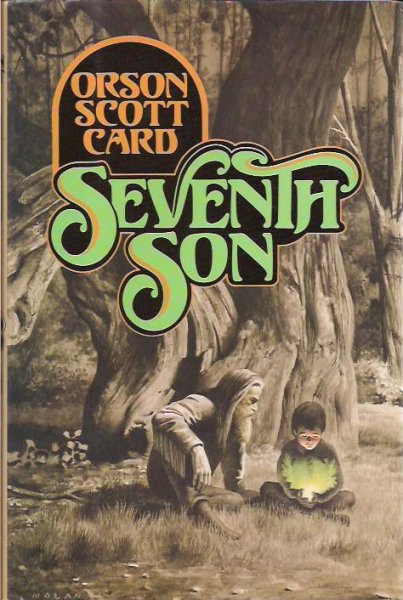
This wasn’t a terrible year for me. With that said, there’s only one book I can positively vote for, and that’s Orson Scott Card’s Seventh Son, the first book in his Alvin Maker Saga—and after all these years, it looks like he’s finally releasing the last book in the series! See, George R.R. Martin? It’s not that hard.
Card likes to play with a lot of Mormon themes in his books, and the whole Alvin Maker series is interesting because it’s basically the story of Joseph Smith in an alternate history America where magic is real and the United States never actually formed. So all of the different European colonies, some of which have achieved quasi-independence, are all vying against each other, while the Indian nations are using their magic to drive the white man out (or build an Indian New Jerusalem, though that doesn’t come into play until the later books). But the guy at the center of it all is this seventh son of a seventh son, which basically makes him the magical chosen one. And he’s basically Joseph Smith.
Card is often hit or miss for me. I didn’t enjoy his Homecoming series as much, because it’s basically the Book of Mormon in space, except he took the plot of the Book of Mormon and not much else, and tried to force it too much, to the point where it was way too on the nose. There were lines of dialogue that were almost line for line identical to the Book of Mormon, except without the deeper spiritual significance, and that turned me off. But hey, it was still way more interesting than most of the sci-fi stuff that wins the Hugos these days.
The Alvin Maker series, on the other hand, is much more subtle and nuanced with the Mormon elements—not on the nose at all. So I enjoyed Seventh Son, and plan to read the rest of the series, including the final book when it comes out. It’s good stuff. Kind of similar to Dave Butler’s Witchy Eye, if you’ve read that too. Except with a fantasy Joseph Smith.
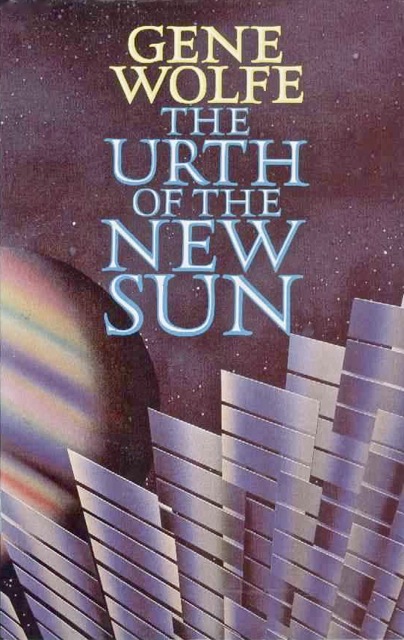
As for the other books: I didn’t read The Urth of the New Sun, because I couldn’t really get into the first book. Everyone says Gene Wolfe’s writing is some of the best, but that book was just too macabre for my sensibilities, so I DNFed the book and the series. But I might be willing to try it again, with a strong enough recommendation. There weren’t any overt content or political issues that made me choose to skip it.
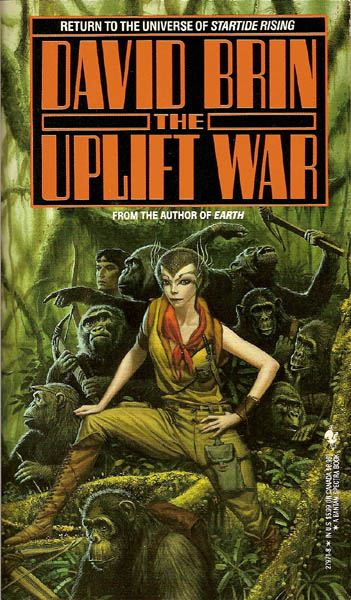
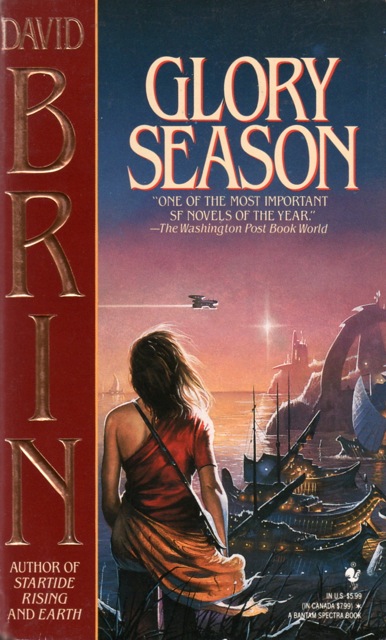
The Uplift War is also a series that I DNFed with the first book. I got about halfway through Sundiver before I gave up on it. The thing that really got to me was David Brin’s dogmatic atheism: basically, after first contact, all religions have been proven false, so everyone who still holds onto some religious faith is an obvious crackpot or wacko, according to the author. Which really just shows that Brin is the kind of atheist who hates religion because he doesn’t understand it.
Would first contact with an intelligent alien species send shockwaves through the religious world? Yes, but it wouldn’t necessarily prove the non-existence (or conversely, the existence) of God. In fact, it would actually confirm the truth of some Latter-day Saint scriptures that explicitly state that God has created “worlds without number” and peopled them with His children.
Brin’s dogmatic atheism isn’t super explicit in these books, but there was just enough of an undercurrent there that it turned me off. After all, why should I feel obligated to read an author who’s incapable of nuance in an area of life that matters so much to me? And if he’s incapable of nuance in one area, how can I have confidence that he’ll be nuanced in other areas?
As for When Gravity Fails, I screened that one with ChatGPT and decided to skip it. Here’s what the AI said:
🔞 Explicit Content Graphic Violence & Gore
Protagonist encounters brutal, explicit violence: victims are mutilated, tortured, including scenes involving child and adult victims.
Strong Language
Abundant profanity—including frequent use of the F‑word—used naturally to reflect the raw, urban setting.
Sexual & Cybernetic Body Mods
Includes prostitution, sexual violence, and explicit sexual interactions. Characters frequently undergo body modifications: gender swaps, personality “moddies,” and cosmetic changes central to character and plot.
✊ Progressive & Social Themes Gender Fluidity & Identity
Cyberpunk tech enables characters to alter their gender, identity, and personality, challenging fixed notions of self.
All of those things are pretty bad, but if the only issue was violence against children, that would still be enough for me to give it a hard pass. Ever since I became a father, I do not do violence against children anymore. Not at all. No.
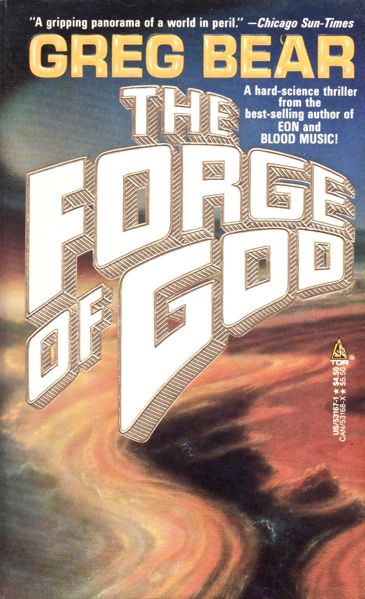
Which leaves The Forge of God. I really wanted to like this book—truly, I did—but after 200 pages, I just had to give up. It’s got a really good premise, though: basically, two different kinds of aliens land simultaneously, in the United States and in Australia, but the ones in Australia claim that they are there to usher in a new age of great prosperity for humanity, while the one in the US says that the other aliens really want to consume and destroy the Earth. And when the humans confront the aliens in Australia with what they’ve learned from the other alien (who dies pretty early on), the Australian aliens all self-destruct. And then things start to get weird.
It’s a really great premise, but unfortunately the whole story is basically an hour by hour, blow by blow of how the government bureaucracy reacts to and handles the first contact event. Which means that almost all of the characters are government bureaucrats (except for a random sci-fi author, who inexplicably becomes an advisor to the president after crash landing his single engine plane in a restricted zone—author insert much?) and most of the “action” of the novel is really just filing paperwork or passing things up the chain. I kid you not.
The premise alone sustained me for 200 pages, but after that I decided I couldn’t stand the bureaucracy. If the book had been cut to half the length, it would have been a better book.
None of these books/authors are so terrible (or so woke) (except maybe for Kim Stanley Robinson) that I would have ranked them below “no award.” With that said, I just didn’t think any of these books were good enough for me to vote for.
Greg Bear’s Moving Mars is basically a sci-fi retelling of the 60s student protest movement on Mars. That’s the big draw. The more I learn about what was actually happening in the 60s, though, the more insufferable I find the hippies and their ideological descendants to be. Needless to say, I DNFed this one.
I skipped the book by David Brin, because he’s just such a dogmatic atheist. I tried his Uplift books and DNFed them for much the same reason. If you’re going to be so dogmatic in your religious views that you cannot build a fictional world where the opposite views might plausibly be true, I have no time for you. That’s equally true for theists as for atheists (unless, of course, the book falls into the religious fiction genre).
I tried Virtual Light, but DNFed it only a couple of pages in, due to some explicit violence against children. Now that I’m a father, I have a really low tolerance for that kind of stuff. I’ve also found Gibson to be a bit too dark and gritty for my taste. He seems to occupy the same literary niche as Neal Stephenson, and rub me wrong in much the same way.
It’s been so long since I DNFed Beggars in Spain that I’ve forgotten what my issue with it was. I found the basic premise to be quite interesting, and got about halfway through the book. Ultimately, though, I think I just got bored with it. But I might come back to this one. Of all the books on the Hugo ballot this year, this is the one I’m most willing to try again.
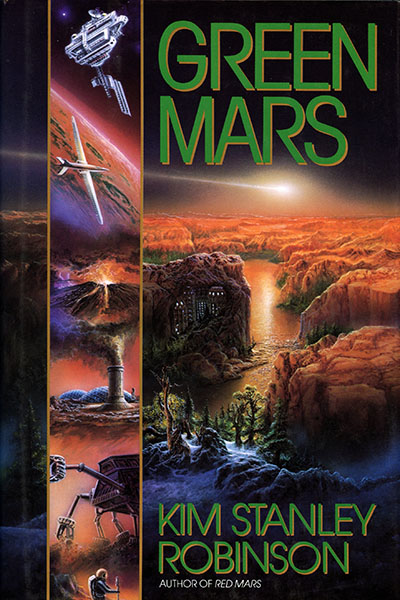
As for Green Mars, I just couldn’t get into it. Part of that is how insufferable I find KSR’s self-righteous liberal politics to be, but another part was the sexual content in the first few pages. I read Red Mars back in college, when my threshold for those kind of content issues was much lower, but I did come very close to DNFing it after the farm orgy scene. Also, Red Mars was a bit of a slog for my younger self, since I never really latched on to any of the characters. Same with Green Mars. Just a lot of people doing a lot of things, when it was clear that all the (crunchy liberal) author really cared about was the capital “I” Idea. Pass.
Harry Potter and the Prisoner of Azkaban by J. K. Rowling
Cryptonomicon by Neal Stephenson
A Deepness in the Sky by Vernor Vinge
The Actual Results
A Deepness in the Sky by Vernor Vinge
A Civil Campaign by Lois McMaster Bujold
Cryptonomicon by Neal Stephenson
Darwin’s Radio by Greg Bear
Harry Potter and the Prisoner of Azkaban by J. K. Rowling
How I Would Vote Now
Harry Potter and the Prisoner of Azkaban by J. K. Rowling
Explanation
It’s been a long time since I read any of the Harry Potter books, but I thoroughly enjoyed Harry Potter and the Prisoner of Azkaban and would have no issue voting for it in one of these awards. But I DNFed all of the other books on the ballot for this year, so I couldn’t bring myself to vote for any of them.
I really wanted to enjoy A Deepness in the Sky, and will probably read it again at some point, especially since my wife really enjoyed this one and gives me a hard time for DNFing it. Also, it’s the kind of science fiction that’s right up my wheelhouse, so I kind of feel bad about not finishing it.
So what’s the deal? The first time I tried to read it, I got caught up in this enormous subplot where the good guys, after having been mentally enslaved by the bad guys, try to figure out a way to break them all free. It goes on for over 100 pages, with an elaborate plan that involves secretly drilling into an asteroid and taking enormous risks. I got really into it, rooting for them to succeed… only for the whole thing to fail miserably, to the point where all of the characters involved in the actual escape attempt to die horribly, and everyone else who was enslaved (including a 14 year old girl, a major character in the book, who is sexually exploited by the villain of the novel) to go on about their happy little mentally enslaved lives without even realizing what had happened.
After that enormous letdown, I just couldn’t get back into the book. The stuff with the aliens was really cool, and I enjoyed that very much, but all of the stuff with the humans just made me want to stop reading the book. It was a little bit like my experience with Children of Time by Adrian Tchaikovsky, except with that book, there was never the false hope that the humans were on the verge of heroically saving themselves; things just kept getting progressively worse and worse until the alien and human storylines converged, in an awesome and thoroughly satisfying way. And maybe that happens in A Deepness in the Sky too, but I don’t know if I’ll ever find out. Maybe someday.
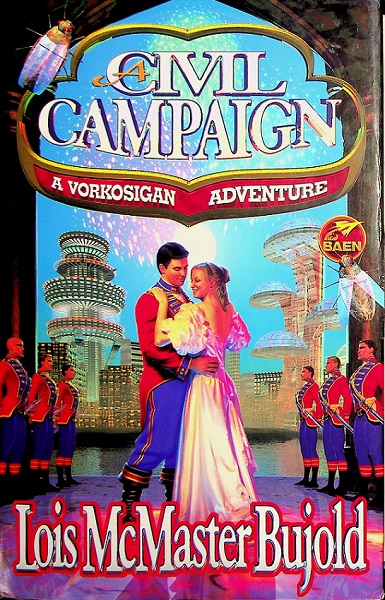
I enjoyed the first few Vorkosigan Saga books, especially The Warrior’s Apprentice. I even enjoyed some of the spinoff novels that aren’t about Miles Vorkosigan, like Ethan of Athos. But the later books in the series just feel too much like a soap opera rehash of the characters from the earlier books. That was why I couldn’t really get into A Civil Campaign.
It also doesn’t help that I read a bunch of the books out of order, partially because they were written out of order and partially because the order of the books isn’t clearly labeled (and how can they be, with how Bujold is always skipping around writing in different parts of the timeline?) Whenever I start a new series, I always try to read it in chronological order, not publication order, but in every Vorkosigan novel I read, it seems that Bujold refers to at least half a dozen things that happened in some previous book that I haven’t read. Some of these, apparently, are books she hasn’t written yet (or books that she hadn’t yet written at the time when I was reading).
So my whole experience of the Vorkosigan Saga has just been very confusing all around. And looking back, I can say that neither the publication order nor the chronological order is the right way to read the series. Shards of Honor and Falling Free really aren’t the best books to start out with, even though they happen first chronologically, but a part of me wishes I’d read Barrayar before The Warrior’s Apprentice, since that would have made a lot of the political intrigue much more satisfying.
Honestly, though, it seems to me that the Vorkosigan Saga has just gone on way too long in general. Which is probably why I couldn’t get into A Civil Campaign.
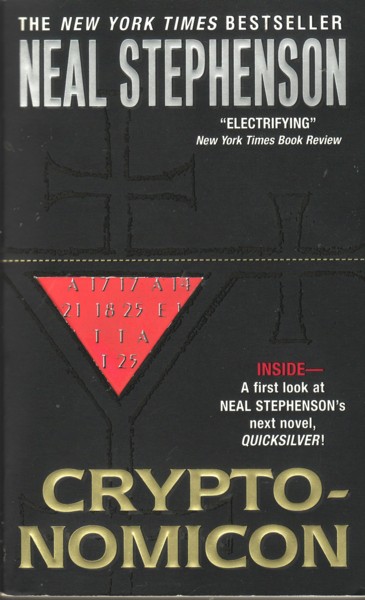
As for Cryptonomicon, it was way too dense and raunchy. The first chapter has more homoerotic innuendo than explicit gay sex, but it was still just too much for me, and the writing was so dense that I never really got into the novel itself. Neal Stephenson’s writing has always been like that for me, and I’ve read enough of his other books to know that he definitely crosses the line in terms of explicit sexual content. I’ve never been able to finish anything he’s written. I was tempted to put Cryptonomicon beneath No Award, but I decided it didn’t quite cross that line for me. It’s close, though.
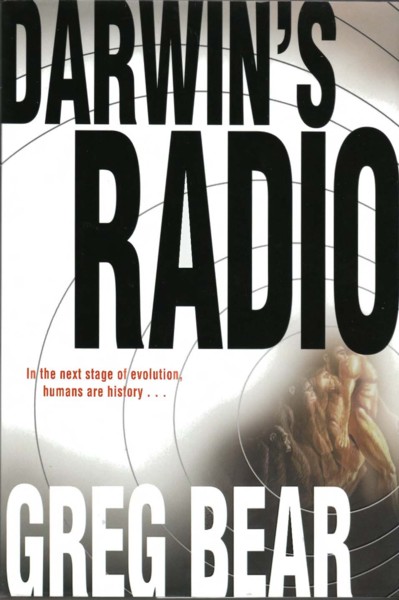
I forget why I DNFed Darwin’s Radio, but I think it mostly had to do with how I really didn’t care about any of the characters. I think the main character was having an affair or something, too, which made me really not like him. That’s the thing about high-concept science fiction: the plot or characters are often not nearly as well thought out, and since that’s what I often read for, I sometimes find it really difficult to get into those kinds of books. But it wasn’t terrible, just not my kind of story.
My 2022 reading resolution: Read or DNF every novel that has won a Hugo or a Nebula award, and acquire all the good ones.
This is the last one of these resolution updates that I’m going to post here on this blog. I’ve only got three books left now: Falling Free by Lois McMaster Bujold (1989 Nebula), A Fire Upon the Deep by Vernor Vinge (1993 Hugo), and Doomsday Book by Connie Willis (1993 Hugo and Nebula). Since I already own all of those, I’ll probably finish reading them by the end of July, and the only other books I need to acquire to finish the resolution are Way Station by Clifford D. Simak (1964 Hugo), Rainbows End by Vernor Vinge (2007 Hugo), and Powers by Ursula K. Le Guin (2009 Nebula).
I will, however, do an in-depth study of the final results and post them here. There should be some interesting trends, and hopefully my own reading preferences will provide some useful insights, though really those preferences say more about me than they do about these books. Reading tastes are very subjective, so I’m sure there are a lot of good and brilliant people who love some of these books that I’ve passed on, and vice versa. But maybe sharing my own reading preferences will help others to develop their own, and if that helps to encourage more reading, that would be great.
One of the major insights that I’ve already discovered is that the best predictor that I will not like a book is if it won a Nebula without winning a Hugo. In a post last month, I speculated as to why that may be. I’ve already expanded my Hugo/Nebula award spreadsheet to include all of the nominated books as well, but I’ve blacked out the Nebula nominated books and will probably skip most of them. After all, if there’s something about the Nebula books that rubs me the wrong way, maybe I can get more use from that award by using it as a “do not read” list rather than a recommended reading list.
I’m also branching out to the Dragons and Goodreads Choice award-winning books, starting with the most recent ones and working my way back. The really neat thing about Goodreads Choice is that they post how many votes each top-20 book got in each category, and how many votes were cast in each category overall, so it’s very easy to quantify and rank each book. For example, in the science fiction category, Project Hail Mary by Andy Weir won first place in 2021 with 92,831 votes out of 281,584, or a 32.97% plurality. That is the largest plurality that any book has ever won in that category, so either Project Hail Mary is a damned good book, or all the other books really sucked—and I tend to think it’s the former, which is why I’m reading it now.
The Dragons are very different, but I haven’t read enough of them to notice any trends or form any opinions. However, there are some indications that the Dragons are the anti-Hugos/Nebulas, and to some lesser extent the anti-Goodreads Choice Awards, which seem to swing more toward the Hugo/Nebula crowd, even if most of the Hugo and Nebula nominated books only typically get between 5% and <1% of the vote. To gather more data, I’ve decided not to skip any of the Hugo/Nebula books that placed in the Goodreads Choice Award, especially since 2015 when the Sad Puppies schism really shook things up in the science fiction book world. So it will be interesting to see which of these books I think are worth reading and owning, and which ones I think aren’t.
So in short, now that I’ve (just about) read all of the Hugo and Nebula winning books, I’m going to move on to the Hugo (but not Nebula) nominated books, the Dragons, and the Goodreads Choice winners and nominees. But I’m not going to set a deadline, or hold myself to reading all of them. Rather, I’m just going to take it as a starting point, and instead set a goal of 100 pages per day, reading whatever strikes my fancy.
Books that I read and plan to or have already acquired
Hyperion by Dan Simmons (1990 Hugo)
Books that I did not finish
Startide Rising by David Brin (1984 Hugo and Nebula)
The Uplift War by David Brin (1988 Hugo)
To Say Nothing of the Dog by Connie Willis (1999 Hugo)
A Deepness in the Sky by Vernor Vinge (2000 Hugo)
Darwin’s Radio by Greg Bear (2001 Nebula)
Jonathan Strange & Mr. Norell by Susanna Clarke (2005 Hugo)