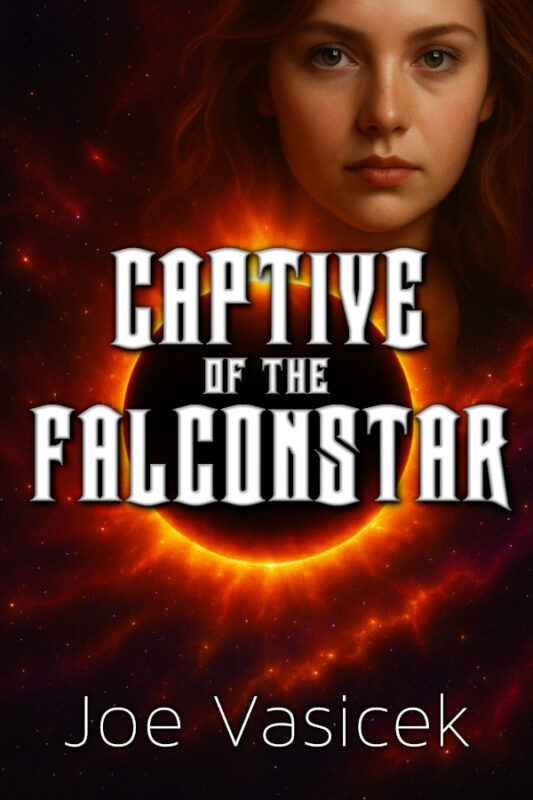
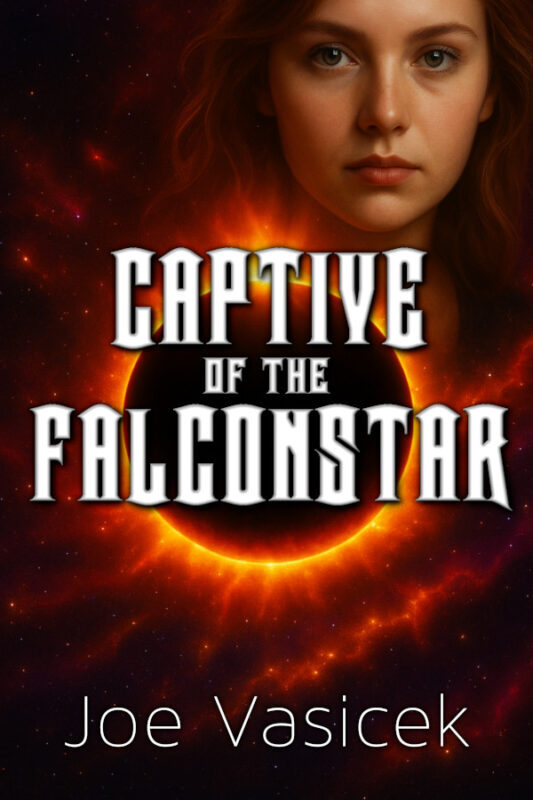
The rough draft of Captive of the Falconstar is complete!

Good news! The rough human draft of Captive of the Falconstar is now complete! I finished it just this morning. It clocks in at:

  • 12 chapters
  • 63 scenes
  • 84,786 words

The AI draft was a little bit longer, at 85,055 words. I finished that last week (I’ve been working on the AI draft and the human draft concurrently). But the AI draft was never going to be good enough to put out into the world on its own. There were definitely parts that I needed to rewrite in my own words, in order to work out the finer details of the story. That’s one of the reasons why I always do a complete human rewrite of everything I generate with AI.

The next step is to make a revision pass through the book, to check for any plot holes or loose threads, and to make sure that all of the scene and chapter transitions work the way they’re supposed to. Then I’ll make a final polishing pass, where I cut the word count by at least 10%. At that point, all it needs is a copy edit and/or a proofreading pass, and it’s ready to go out into the world!

If you want to preorder this book, you can already do so at most of the major online retailers. It’s set to release on July 11th, which is plenty of time to finish all the revisions and edits.

Captive of the Falconstar

Captive of the Falconstar

Freedom is a fantasy—but revenge is forever.

Sonya tells herself she wants freedom—that she dreams of returning to her homeworld. But the truth burns hotter: she wants revenge. The problem is Zlata—once a captive like Sonya, now queen of the Hameji star clan. As rival wives circle for power, pressuring Zlata to produce an heir, she turns to a dangerous solution that will force her to use Sonya in ways neither woman expected.

Order Now!
About the Book
Freedom is a fantasy—but revenge is forever. Sonya tells herself she wants freedom—that she only dreams of returning to her homeworld. But the truth burns hotter and darker. She wants revenge. The problem? Zlata stands in her way. Once a captive like Sonya, Zlata clawed her way to become queen of the Hameji star clan—and now she keeps Sonya as her slave. But as the Valdamar Clan rises to threaten everything Zlata has built, the queen faces a brutal dilemma: rival wives circling for power, a warlord husband who needs an heir, and a dangerous solution that will force her to use Sonya in ways neither woman expected. In the ruthless game of Hameji clan politics, captivity takes many forms—and freedom may cost more than either woman can pay.
Details
Author: Joe Vasicek
Series: Falconstar Trilogy, Book 2
Genres: Action & Adventure, FICTION, General, Military, Science Fiction, Space Exploration, Space Opera
Tag: 2026 Release
Publisher: Joe Vasicek
Publication Year: July 2026
Length: Novel
eBook Price: $4.99
Order Now
Buy from Amazon Kindle
Buy from Apple Books
Buy from Barnes and Noble Nook
Buy from Smashwords
Joe Vasicek

Joe Vasicek fell in love with science fiction and fantasy when he read The Neverending Story as a child. He is the author of more than twenty books, including Genesis Earth, Gunslinger to the Stars, The Sword Keeper, and the Sons of the Starfarers series. As a young man, he studied Arabic at Brigham Young University and traveled across the Middle East and the Caucasus Mountains. He lives in Utah with his wife and two apple trees.

Other Books in the "Falconstar Trilogy"
Some of the links in the page above are "affiliate links." This means if you click on the link and purchase the item, I will receive an affiliate commission. You will not receive any additional charge. As an Amazon Associate I earn from qualifying purchases.

March Reading Recap

Books I Finished

Selfish Reasons to Have More Kids by Bryan Caplan

If Anyone Builds It, Everyone Dies by Eliezer Yudkowsky & Nate Soares

The Death of Caesar by Barry Strauss

Ride the Dark Trail by Louis L’Amour

The Undoing Project by Michael Lewis

The Kingdom, the Power, and the Glory by Tim Alberta

The Tall Stranger by Louis L’Amour

Dataclysm by Christian Rudder

Throne of the Crescent Moon by Saladin Ahmed

Creating Character Arcs by K.M. Weiland

The Mother of the Lord by Margaret Barker

The Nazi Mind by Laurence Rees

The Jupiter Knife by D.J. Butler & Aaron Michael Ritchey

The Lost World of Genesis One by John H. Walton

Dark Canyon by Louis L’Amour

The NVIDIA Way by Tae Kim

Write Naked by Jennifer Probst

Lonely on the Mountain by Louis L’Amour

Nightmare Obscura by Michelle Carr

Books I DNFed

  • This Is For Everyone by Tim Berners-Lee
  • The Bible According to Christian Nationalists by Brian Kaylor
  • The Plot Thickens by Noah Lukeman
  • The Leah Shadow by Harold K. Moon
  • Kesrith by C.J. Cherryh
  • Deryni Rising by Katherine Kurtz
  • Moneyball by Michael Lewis
  • The Making & Breaking of the American Constitution by Mark Peterson
  • Passage by Connie Willis

Going Dark

I thought I was at least a month from finishing my current WIP, Captive of the Falconstar. But I made some really good progress over the weekend, and now I think that I may be able to finish it before the start of April—but only if I push really hard to finish it.

So I’ve decided to put off everything else that doesn’t absolutely have to get done, in order to focus on that WIP. Part of that means putting off this blog. Whether or not I finish Captive of the Falconstar, I’ll be back in April, but this is going to be the last post for a while.

By the way, if you want to preorder Captive of the Falconstar, you can now do so on Amazon and most other stores! The book description isn’t that good, so I’ll definitely update it before the book goes live, but other than that it’s basically good to go. And if you want to pick up book 1, it’s currently available for free.

Captive of the Falconstar

Captive of the Falconstar

Freedom is a fantasy—but revenge is forever.

Sonya tells herself she wants freedom—that she dreams of returning to her homeworld. But the truth burns hotter: she wants revenge. The problem is Zlata—once a captive like Sonya, now queen of the Hameji star clan. As rival wives circle for power, pressuring Zlata to produce an heir, she turns to a dangerous solution that will force her to use Sonya in ways neither woman expected.

Order Now!
About the Book

Freedom is a fantasy—but revenge is forever.

Sonya tells herself she wants freedom—that she only dreams of returning to her homeworld. But the truth burns hotter and darker. She wants revenge.

The problem? Zlata stands in her way. Once a captive like Sonya, Zlata clawed her way to become queen of the Hameji star clan—and now she keeps Sonya as her slave.

But as the Valdamar Clan rises to threaten everything Zlata has built, the queen faces a brutal dilemma: rival wives circling for power, a warlord husband who needs an heir, and a dangerous solution that will force her to use Sonya in ways neither woman expected.

In the ruthless game of Hameji clan politics, captivity takes many forms—and freedom may cost more than either woman can pay.

Details
Author: Joe Vasicek
Series: Falconstar Trilogy, Book 2
Genres: Action & Adventure, FICTION, General, Military, Science Fiction, Space Exploration, Space Opera
Tag: 2026 Release
Publisher: Joe Vasicek
Publication Year: July 2026
Length: Novel
eBook Price: $4.99
Order Now
Buy from Amazon Kindle
Buy from Apple Books
Buy from Barnes and Noble Nook
Buy from Smashwords
Joe Vasicek

Joe Vasicek fell in love with science fiction and fantasy when he read The Neverending Story as a child. He is the author of more than twenty books, including Genesis Earth, Gunslinger to the Stars, The Sword Keeper, and the Sons of the Starfarers series. As a young man, he studied Arabic at Brigham Young University and traveled across the Middle East and the Caucasus Mountains. He lives in Utah with his wife and two apple trees.

Other Books in the "Falconstar Trilogy"
Some of the links in the page above are "affiliate links." This means if you click on the link and purchase the item, I will receive an affiliate commission. You will not receive any additional charge. As an Amazon Associate I earn from qualifying purchases.

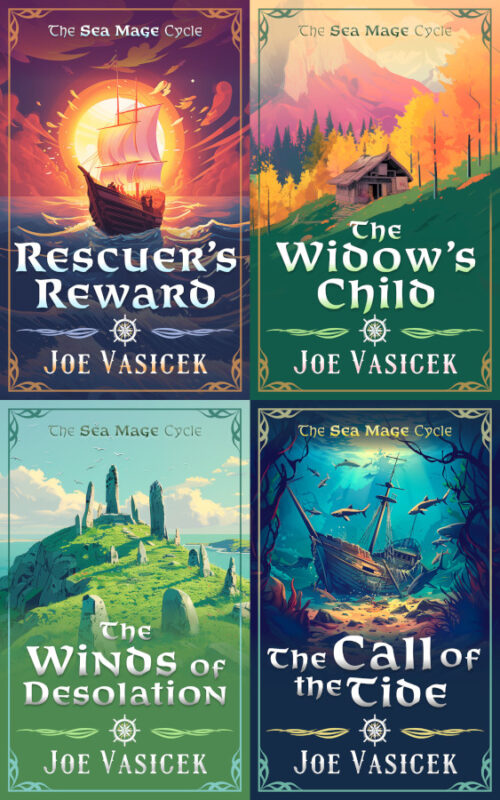
Healing a Cursed Land in The Winds of Desolation

Fantasy often asks what heroes will risk to save their people, but it also asks a deeper question: what does it take to heal a world that has already been broken? In The Winds of Desolation, the land itself bears the scars of ancient wrongdoing. The story follows characters who must confront the past, not merely to survive its consequences, but to restore what was lost.

Where the Idea Came From

The idea behind this story grew from a fascination with how places carry history. Some landscapes seem peaceful and alive, while others feel haunted by the memory of what happened there long ago. That contrast led to a simple “what if”: what if a land could be wounded by the choices of those who once ruled it, and what if healing it required courage from a new generation willing to face that past instead of fleeing from it?

How Healing a Cursed Land Shapes the Story

In The Winds of Desolation, the curse hanging over the land is not just a magical obstacle. It is the result of ancient decisions that reshaped the world and left lasting consequences behind. The storms, the strange magic, and the dangers the characters face are all symptoms of something deeper—a broken balance between power, responsibility, and the land itself.

This idea drives the choices the characters must make. Some want to escape the cursed region and leave its mysteries behind. Others believe the only path forward is to confront the past and repair what was damaged. As alliances form and secrets emerge, the question becomes clear: is the desolation inevitable, or can courage and sacrifice restore life to a place that seems beyond saving?

What Healing a Cursed Land Says About Us

Stories about cursed lands resonate because they echo a truth about human life: our choices shape the world we leave behind. Just as the characters in the story inherit the consequences of earlier generations, people in the real world often find themselves living with the results of decisions they did not personally make. The hope at the heart of this theme is that broken things—whether landscapes, communities, or relationships—are not beyond healing if someone is willing to take responsibility and begin the work of restoration.

Why This Theme Matters to Me

One of the ideas that kept returning to me while writing this story is that the world is never truly static. Every generation inherits something—sometimes something beautiful, sometimes something damaged. I wanted to explore what it means to step into that inheritance with humility and courage, and to believe that even a wounded land can be made whole again if people refuse to abandon it.

Where to Get the Book

Related Posts and Pages

Explore the series index for The Sea Mage Cycle.

Return to the book page for The Winds of Desolation.

Is The Winds of Desolation for You?

The Winds of Desolation is a survival fantasy adventure about a small band of travelers stranded in a cursed land where the wilderness itself seems determined to destroy them. Shipwrecked far from civilization and hunted by enemies who control the fate of the land, they must rely on courage, magic, and loyalty to survive. The result is a tense journey across a dangerous landscape where every decision matters.

What Kind of Reader Will Love This Book?

f you love…

  • fantasy survival stories about characters stranded in hostile lands
  • classic quest adventures with magic, ancient prophecies, and cursed places
  • small groups of companions relying on loyalty, courage, and cleverness to survive
  • wilderness journeys across strange and dangerous landscapes
  • character-driven fantasy with teamwork, sacrifice, and high stakes

…then The Winds of Desolation is probably your kind of story.

What You’ll Find Inside

The Winds of Desolation follows Alex, a young sea mage who survives a deadly storm only to find himself stranded with his companions in the infamous Lands of Desolation—a cursed wilderness where few who enter ever return. With their captain dead, their supplies nearly gone, and their most powerful ally mysteriously incapacitated, the group must cross hostile territory while evading enemies who seek to control the land’s ancient magic. The story blends tense survival, exploration, and magical intrigue, creating a fast-moving adventure that feels both gritty and hopeful.

What Makes It Different

Fans of classic quest fantasy will recognize familiar elements—dangerous landscapes, powerful magic, and a group of companions working together to overcome impossible odds. But The Winds of Desolation leans heavily into the survival aspect of the journey. Instead of a large army or powerful kingdom, the story focuses on a handful of characters struggling to survive in a cursed wilderness while unraveling the mysteries behind it. The result is a fantasy adventure where the landscape itself becomes one of the story’s most dangerous characters.

What You Won’t Find

This is not grimdark fantasy built around cynicism or relentless brutality. While the story contains danger and loss, it ultimately focuses on courage, friendship, and perseverance. Readers looking for heavy political intrigue or court drama may also find that the story keeps its attention firmly on adventure, exploration, and survival.

Why I Think You Might Love It

I’ve always been fascinated by stories where ordinary people are forced into extraordinary situations and must rely on each other to survive. The heart of this book is that kind of journey: a small group of companions facing fear, uncertainty, and impossible odds while trying to do the right thing. Stories like this remind me that courage doesn’t come from power or destiny—it comes from choosing, again and again, to stand by the people who need you.

Where to Get the Book

Related Posts and Pages

Explore the series index for The Sea Mage Cycle.

Return to the book page for The Winds of Desolation.

More Great Classical Writing Music

This is a shorter piece, but I really love it. The music really paints a lovely picture of a river as it grows from a small, winding stream into a mighty waterway. I can imagine it passing things like a royal hunt, a village wedding, a stretch of deep forest, some rapids, and finally a bustling city before flowing out to the sea. The composer is also Czech, which is probably why it resonates with me so much. Ahoy!

How I Would Vote Now: 1966 Hugo Awards (Best Novel)

The Nominees

The Squares of the City by John Brunner

The Moon Is a Harsh Mistress by Robert A. Heinlein

Dune by Frank Herbert

Skylark DuQuesne by Edward E. Smith

This Immortal by Roger Zelazny

The Actual Results

  1. Dune by Frank Herbert and This Immortal by Roger Zelazny (tie)

  • Skylark DuQuesne by Edward E. Smith
  • The Moon Is a Harsh Mistress by Robert A. Heinlein
  • The Squares of the City by John Brunner

How I Would Have Voted

  1. Dune by Frank Herbert

Explanation

Dune is the most perfect science fiction novel I have ever read. I wouldn’t call it the best—in fact, I would say that Hyperion and Ender’s Game are marginally better—but it is the most perfect, in terms of genre conventions, tropes and archetypes, story structure, etc. It is a magnificent book, but it’s also the kind of book you need to read three or four (or five or six) times to fully appreciate.

My first reading of Dune was when I was still in high school. I almost didn’t get through it, just because the writing was so dense. But I was intrigued by Paul’s prescience and his struggle to avoid the timeline where the jihad happens, so I read it all the way through to the end. But most of the book went over my head.

My second reading was sometime in college. I don’t remember when, exactly—it might have been around the time I read 2001: A Space Odyssey, or when I first discovered Asimov’s Foundation novels. It may have been a year or two after that, when I’d decided to pursue writing as a career and felt like I needed to steep myself more in the science fiction genre. Either way, I enjoyed it much more that time, though still, most of the subtle nuances of the story still went over my head.

I read Dune the third time shortly after I got married, when my wife and I used to read in bed together (this was before we had a crib in our bedroom, which has been the natural state of affairs for most of our marriage now). This time, I finally got all of the stuff that I’d missed, like the politics of the great houses and the galactic empire, the impact of the Butlerian Jihad, the economics of the spice and the importance of the Spacing Guild, and the ecology of Arrakis and how it played into the story. It was amazing. World building on the level of Tolkien, or perhaps even higher. Truly incredible stuff.

Since then, I’ve tried to read most of the other Frank Herbert Dune books, but I gave up midway through Heretics of Dune. Dune Messiah was a really great wrap-up to the story of Dune, though it didn’t feel nearly as epic as the first book. Children of Dune was a fun read, and almost as good as the first one. God Emperor of Dune was a more of a slog, though the ending was fantastic. By this point of the series, I was starting to feel again like everything was going over my head, so that’s probably why it was so difficult.

I do plan to read all of these books eventually, though. And I may even give the Brian Herbert / Kevin J. Anderson books a try, though I’ve heard they’re not nearly as good as the original Frank Herbert books. The next time I attempt the series, I will probably look for some YouTube content to help explain it without giving away too many spoilers. Or maybe I’ll use AI as a reading companion (which would be a super ironic way to use AI, hehe).

So if the 1966 Hugos were held again today, I would definitely vote Dune as the top book. But to be frankly honest, I don’t think I could vote for any of the others, even though some of them are classics in their own right.

Heinlein’s The Moon Is a Harsh Mistress is the other big classic from this year, but I’ve just never been able to get through it. I’ve tried twice, but each time I’ve set it down in disgust, mostly because of all the weird sexual conventions in the future that Heinlein has constructed. There are some things that I really love Heinlein for, and other things about his writing that I simply cannot stand, and I have learned from experience to avoid any of his books where his views on sex are a major part of the story. But maybe I’ll try the audiobook sometime.

I should probably try to reread This Immortal, too. For some reason, the only Zelazny books I have ever managed to read are the Chronicles of Amber books, and I am currently taking a break midway between books 8 and 9 (or is it 7 and 8?) The first half of that series, following Corwin, were fantastic. Really great stuff. The second half, following Merlin, has been… not as great. I’m still enjoying it, but I constantly feel like I’m lost. But back to This Immortal… to be honest, I don’t remember why I DNFed it, but I think it came down to a combination of feeling lost and not really caring about the characters. But I should definitely pick it up and try it again (though it’s becoming a hard book to find).

I tried to read the Skylark series from the beginning, but it was super, super campy and I got bored with it. I can appreciate that it was a formative work during the pulp era of science fiction, and that many of the fans in the generation that started Worldcon and the Hugo Awards were first exposed to science fiction when they read those books as children. The equivalent for me would be the original Star Wars trilogy, and all the classic old Star Wars books by Kevin J. Anderson, Dave Wolverton, and Timothy Zahn. But unless you’re writing a dissertation on the history of science fiction, the Skylark books probably aren’t essential reading.

The Squares of the City is a surprisingly difficult book to find. It’s not at my local library, the library network’s audiobook app, or the BYU Library—which is unusual, because the BYU Library has one of the best science fiction collections in the country (they have all 300 or so of the Hugo nominated books in their collection, except maybe half a dozen). I think the paperback is currently selling for something like $200 on Amazon. But the ebook is available, and relatively cheap, though to be honest I only downloaded the sample. And after reading the first two chapters, that was enough for me to decide to DNF.

There’s nothing terrible about the book, but it just isn’t all that good. It’s about a European (or maybe American?) tourist visiting a fictional South American dictatorship, which is on the verge of a communist revolution. The thing that’s supposed to make the book unique is that Brunner played a game of chess while writing the book, and all of the major plot points are tied to specific chess moves from that game. In that way, it’s a little like Philip K. Dick’s The Man in the High Castle, where he used some kind of Chinese divination system to come up with the actual plot.

But we don’t remember The Man in the High Castle for the plot, and apprently, we don’t remember The Squares of the City for anything. My guess is that Brunner got nominated because of his politics, which made him a favorite among the Futurians and all the others in the fandom that were trying to turn science fiction into a vehicle for world communism. So basically, the spiritual predecessors of today’s blue-haired crazies who have completely taken over the Hugo and Nebula awards.

The Cost of Redemption in Victors in Liberty

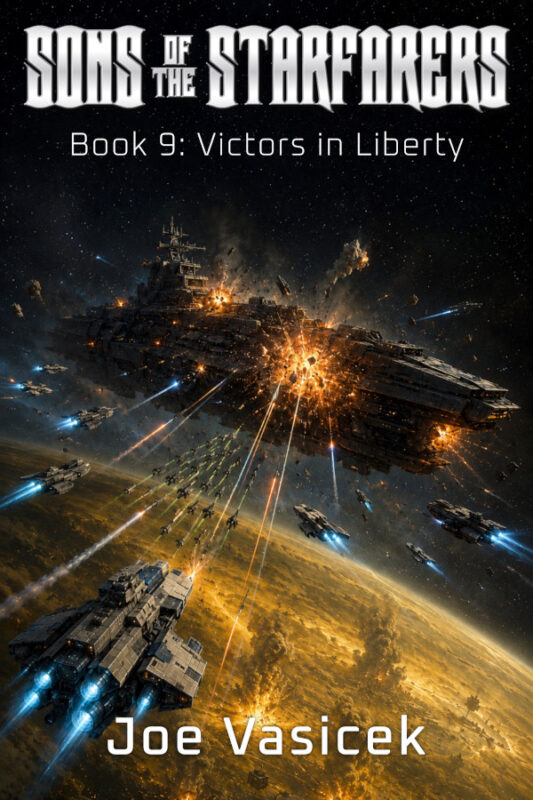
In Victors in Liberty, the final book of the Sons of the Starfarers space opera series, characters who have survived interstellar conflict must face the consequences of their past decisions. Redemption here is not an easy reset, but a costly path that requires truth, trust, and the courage to confront the damage the past has left behind.

Where the Idea Came From

The idea behind this theme grew from a simple question that echoes throughout the series: What happens after someone has already made terrible choices? Many science fiction stories explore rebellion, war, and survival, but fewer explore what comes after—the long work of rebuilding trust, healing broken loyalties, and choosing who we will become next. The Sons of the Starfarers series began as a space opera about lost colonies, ancient enemies, and humanity’s place among the stars, but as the characters grew, their struggles with guilt, forgiveness, and belonging became just as important as the battles between worlds.

How the Cost of Redemption Shapes the Story

Throughout Victors in Liberty, the characters confront the reality that redemption is never simple. Past betrayals, divided loyalties, and painful memories still shape the present. The question is not whether the past can be erased—it cannot—but whether people can choose a different path going forward. Trust must be rebuilt slowly, and sometimes the greatest act of courage is admitting that you were wrong and asking for the chance to try again.

This struggle touches nearly every major character in the story. Some are trying to forgive others. Some are trying to forgive themselves. Others must decide whether redemption is even possible in a universe where survival often demands hard choices. The result is a character-driven science fiction story where moral decisions matter as much as starships and strategy. The fate of entire worlds may be at stake, but the deeper question is whether broken people can still become something better than what their past suggests.

What The Cost of Redemption Says About Us

At its heart, this theme reflects a truth about human nature. Everyone makes mistakes, and some mistakes feel impossible to undo. Yet history—and everyday life—shows that people are capable of change, growth, and restoration. Redemption does not mean pretending the past never happened. Instead, it means carrying the weight of that past while choosing to build something better. Stories like this resonate because they remind us that hope is not found in perfection, but in the courage to keep moving forward.

Why This Theme Matters to Me

One of the reasons I keep returning to this theme is because I believe redemption is one of the most powerful ideas in storytelling. The characters in this series face enormous external conflicts, but the battles that matter most are the ones inside their own hearts. I’ve always been drawn to stories where people who feel broken or unworthy discover that their story is not finished yet. That possibility—that a person can fall, struggle, and still rise again—is something I find deeply hopeful, both in fiction and in life.

Where to Get the Book

Related Posts and Pages

Explore the series index for the Sons of the Starfarers series.

Return to the book page for Victors in Liberty.

Is Victors in Liberty for You?

Victors in Liberty is for readers who want space opera that stays intensely human even when the stakes stretch across worlds. It delivers a tense, emotionally layered finale full of loyalty, sacrifice, found-family bonds, war, freedom, and the cost of choosing who you will become.

What Kind of Reader Will Love Victors in Liberty?

If you love …

  • character-driven military space opera with deep personal stakes
  • long-form science fiction series where relationships matter as much as battles
  • stories about loyalty, identity, duty, and the search for freedom
  • found family, reluctant alliances, and wounded people trying to become whole
  • epic series finales that feel both hard-won and emotionally intimate

…then Victors in Liberty is probably your kind of story.

What You’ll Find Inside

Victors in Liberty follows Reva, Isaac, Mara, Aaron, Ayesha, and the wider cast of Sons of the Starfarers as they face the final consequences of everything the series has been building toward: war on a planetary scale, divided loyalties, the pressure of leadership, and the question of what kind of future can be saved without losing the soul of the people fighting for it. The emotional journey is tense, bruised, and deeply personal, yet still hopeful. The result is a fast-moving, character-centered space opera finale that blends military action, telepathic mystery, moral struggle, and a persistent belief that endurance, mercy, and human connection still matter.

What Makes Victors in Liberty Different

Like the best military and character-driven space opera, this story offers fleet action, political danger, and high-stakes survival—but what sets Sons of the Starfarers apart is how much it cares about inner conflict, chosen loyalty, and the spiritual and emotional cost of war. This is not just a series about ships, battles, and empires. It is also a series about fractured people trying to build trust, keep promises, and find freedom without becoming monsters themselves. Even at its largest scale, the story remains intimate, with the fate of worlds constantly tied to personal choices and relationships.

What You Won’t Find

You won’t find hard science fiction focused mainly on technology, nor a detached military thriller where tactics matter more than people. You also won’t find a grimdark finale that treats human attachment as weakness. This series goes to painful places, but it keeps returning to loyalty, conscience, healing, and hope.

Why I Think You Might Love Victors in Liberty

I think this story matters because it feels earned. It carries the weight of a long journey—both for the characters and for the series itself—and that gives the ending a sense of promise fulfilled. More than that, it is a story for readers who care about perseverance: not just surviving hardship, but continuing to choose responsibility, love, freedom, and meaning when the easy path would be to give up. That sense of endurance, commitment, and gratitude is part of what gives this finale its heart.

Where to Get the Book

Related Posts and Pages

Explore the series index for the Sons of the Starfarers series.

Return to the book page for Victors in Libery.