Is In the Wake of Zedekiah Wight for you?

Is In the Wake of Zedekiah Wight for you?

In the Wake of Zedekiah Wight is a dark, morally charged space opera about smugglers, pirates, crime families, slavery, scripture, and the terrible cost of justice in a corrupt galaxy. It delivers a tense, fast-moving science fiction adventure with the hard edges of military SF, the moral intensity of religious fiction, and the larger-than-life presence of a vigilante privateer who may be a madman—or exactly the kind of man the galaxy needs.

What Kind of Reader Will Love This Book?

If you love…

  • Space opera with smugglers, pirate hunters, frontier systems, crime syndicates, and corrupt interstellar powers
  • Military science fiction where battle tactics, starships, boarding actions, and hard choices drive the plot
  • Morally serious science fiction about justice, conscience, slavery, tyranny, and redemption
  • Religious science fiction that draws from scripture, especially Isaiah, without turning into a sermon
  • Antiheroic vigilante figures in the tradition of Solomon Kane, but reimagined for a far-future galactic setting

…then In the Wake of Zedekiah Wight is probably your kind of story.

What You’ll Find Inside

In the Wake of Zedekiah Wight follows Captain Victor Andrecek, an ex-rebel commodore turned smuggler, as a suspicious distress signal pulls his small freighter crew into the path of Zedekiah Wight, a feared privateer whose brutal crusade has made him enemies among pirates, crime lords, slavers, and empires alike. Along the way, the story explores moral compromise, righteous judgment, human trafficking, rebellion, loyalty, and the difference between revenge and justice. The result is a tense, violent, scripture-haunted space opera that feels both pulpy and prophetic: a fast-paced adventure about what happens when ordinary sinners are forced to choose sides in a galaxy where evil has become respectable.

What Makes It Different

Fans of Robert E. Howard’s Solomon Kane will recognize the appeal of a grim, uncompromising wanderer who brings judgment to evildoers, but In the Wake of Zedekiah Wight takes that archetype into a far-future space opera setting of jump-hubs, smugglers, superintelligences, battle armor, crime families, and galactic power politics. Where many vigilante stories focus on lone-wolf revenge, this story leans into conscience, command, loyalty, and the terrifying question of whether justice can remain just when the world itself has gone mad.

It also stands apart from mainstream space opera by treating religious imagery and scripture as central to the story’s moral atmosphere rather than as exotic window dressing. The Isaiah references, the biblical cadence, and the question of who Zedekiah Wight really is give the story a distinctive identity: part military SF thriller, part anti-slavery crusade, part religious science fiction, and part dark frontier adventure.

What You Won’t Find

If you’re looking for lighthearted space adventure, cozy science fiction, secular-only space opera, or a clean-cut hero who never gets blood on his hands, this probably isn’t that kind of book. The story includes brutal violence, disturbing criminal evil, and morally uncomfortable questions about justice, vengeance, and complicity.

But if you want a dark yet purposeful science fiction story where evil is treated as evil, where conscience still matters, and where redemption is possible even for characters who have compromised themselves, you’ll feel right at home.

Why I Think You Might Love It

I wrote Zedekiah Wight because there comes a point when the lies, hypocrisy, corruption, and gaslighting become too much to bear, and you either take a stand or go quietly insane. This story grew out of my love for science fiction, my fascination with scripture—especially Isaiah—and my desire to create a character who feels less like a conventional protagonist and more like a force of nature. Zedekiah’s methods are brutal, and readers may argue over whether he is righteous, mad, or both, but that tension is exactly what makes the story matter to me: in a galaxy where powerful people profit from evil while calling it good, what kind of man would it take to refuse the lie completely?

Where to Get the Book

Related Posts and Pages

Explore my other standalone books here.

Return to the book page for In the Wake of Zedekiah Wight.
The Moral Cost of Revenge in Captive of the Falconstar

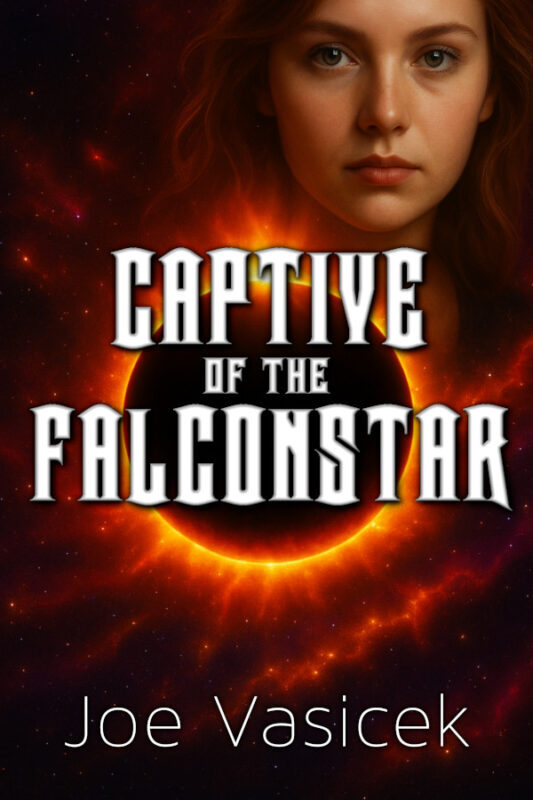
Revenge can feel like freedom when every other kind of freedom has been taken away. In Captive of the Falconstar, a captive woman begins with one simple desire: to go home, reclaim her true name, and return to the life that was stolen from her. But as captivity, betrayal, and humiliation harden inside her, revenge begins to look like the only path left—not just a way to punish her captors, but a way to feel powerful again.

That is what makes the theme so morally dangerous. The desire for revenge is understandable, even righteous in its beginnings, because it grows from real injustice. But revenge does not simply restore what was lost. It reshapes the wounded, narrows their choices, and asks whether striking back is worth the cost to the soul.

Where the Idea Came From

The emotional center of this theme comes from Sonya’s captivity and the way her longing for home is slowly twisted into a hunger for revenge. At the beginning of the book, Sonya dreams of Petyr and Graznav Station, waking to the bitter reality that she is aboard the Falconstar, forced to serve Zlata—now Lady Zenoba—who has embraced the identity and power of the Hameji. Sonya’s first act of resistance is not violence, but memory: insisting that her name is Sonya, not Gulchen, and clinging to the hope that “somedayshift” she will be free.

But the more Sonya is denied escape, the more revenge begins to replace home as the thing that keeps her alive. Genzerig recognizes this weakness and exploits it. He does not merely offer her freedom; he asks whether she wants the Valdamar Clan to suffer for what they have done. When Sonya accepts, revenge gives her “some measure of control over her life”—but it also places that life in the hands of another manipulator. That tension is the seed of the theme: revenge begins as Sonya’s attempt to reclaim agency, but the farther she follows it, the more she discovers that revenge has its own chains.

How the Moral Cost of Revenge Shapes the Story

The moral cost of revenge shapes Captive of the Falconstar by turning captivity into something more dangerous than physical imprisonment. At first, anger helps the wounded survive. It preserves memory, identity, and dignity in a world determined to rename, reshape, and possess them. But as the story unfolds, that anger becomes vulnerable to manipulation. Revenge begins to offer purpose, but that purpose comes through secrecy, deception, and the temptation to treat every relationship as a battlefield.

This is especially powerful because the book refuses to make revenge feel simple. The people who have caused harm are not flattened into faceless monsters, and the people seeking revenge are not magically purified by their suffering. As emotional ties shift and loyalties become complicated, revenge becomes harder to separate from betrayal. The deeper the characters go, the more they must ask whether they are pursuing justice, survival, power, or merely the illusion of control.

That is where the revenge arc becomes most painful. Revenge promises agency, but it can also trap a person inside choices made from fear, grief, and humiliation. By the time the path begins to look darker than expected, turning back may no longer be easy. In a story filled with space opera politics, captivity, dynastic ambition, rival loyalties, and morally gray choices, revenge becomes one of the book’s central emotional engines: a wounded person reaching for freedom, only to discover that vengeance can become another kind of captivity.

What the Moral Cost of Revenge Says About Us

The moral cost of revenge reveals how easily pain can disguise itself as justice. When someone has been wronged, betrayed, or stripped of dignity, the desire to see the guilty punished is deeply human. But Captive of the Falconstar asks what happens when revenge becomes the story a wounded person tells herself in order to keep going. Sonya’s hunger for revenge is not irrational; it grows from real suffering. Yet revenge cannot give her back the life she lost, and it cannot restore the innocence that captivity destroyed. Instead, it risks making her more like the people who used her: calculating, secretive, and willing to turn intimacy into leverage. The hope in this theme lies in the possibility that even after walking far down the path of vengeance, a person may still recognize the cost—and still long for something better than destruction.

Why This Theme Matters to Me

After everything that happened to Sonya in the previous book, I wanted to give her a more active role and make her more of an agent in her own story. That was why I chose to give her a revenge arc: because revenge is one of the most emotionally understandable temptations in fiction. When a character has been genuinely wronged, part of us wants to see them strike back. But I’m more interested in what revenge does after that first rush of satisfaction fades—how it narrows the soul, how it keeps old wounds open, and how it can trap someone in the very pain they are trying to escape. In Captive of the Falconstar, I wanted to explore a revenge arc that is not simple or clean, but tragic, human, and morally complicated.

Where to Get the Book

Buy from Amazon Kindle
Buy from Apple Books
Buy from Barnes and Noble Nook
Buy from Smashwords

Related Posts and Pages

Explore the series index for The Falconstar Trilogy.

Return to the book page for Captive of the Falconstar.

Is Captive of the Falconstar For You?

Is Captive of the Falconstar for you?

Captive of the Falconstar is a dark, character-driven space opera about captivity, ambition, survival, and the brutal politics of power among the Hameji star clans. It follows Zenoba as she tries to secure her place as Queen of the Falconstar, while Sonya—still trapped as a captive servant—clings to the hope of freedom, home, and revenge. This is a tense, intimate, politically charged story for readers who like their space opera full of court intrigue, moral danger, starship raids, and emotional betrayal.

What Kind of Reader Will Love Captive of the Falconstar?

If you love dark space opera with dynastic politics, warrior star clans, arranged marriages, captivity, espionage, and power struggles inside a ruling household, then Captive of the Falconstar is probably your kind of story. This book is especially for readers who enjoy morally complicated female characters, ruthless survival choices, political marriages, pregnancy and succession stakes, revenge arcs, and stories where personal relationships become battlegrounds for control, loyalty, and identity.

What You’ll Find Inside

Inside Captive of the Falconstar, you’ll find a former captive who has remade herself into a queen, a still-captive servant who refuses to forget who she was, and a weakened star clan fighting to restore its lost power. The story moves between intimate household tension, religious prophecy, starship combat, espionage, and political maneuvering, with a mood that is dark, intense, sensual, and increasingly dangerous. The pacing balances character drama with bursts of military space opera action, making the book feel both personal and epic.

What Makes Captive of the Falconstar Different

Where many space operas focus mainly on fleets, empires, and battles, Captive of the Falconstar puts dynastic survival and household politics at the center of the conflict. It has the clan warfare and starship action of military science fiction, but the emotional engine is closer to a dark court-intrigue fantasy, where marriages, heirs, names, servants, concubines, and rival queens matter as much as weapons and ships. Readers who enjoy the political intensity of royal fantasy, but want it transplanted into a star-spanning frontier setting, will find a lot to sink their teeth into here. What sets it apart is the way it refuses to make power simple: survival, loyalty, ambition, love, and coercion are all tangled together aboard the Falconstar.

What You Won’t Find

This is not a light, cozy, or comfort-read space adventure. It deals directly with captivity, slavery, sexual power dynamics, coercion, polygyny, pregnancy, revenge, and morally compromised choices, so readers looking for clean-cut heroes or a straightforward romance may not be the right fit. You also won’t find a simple “escape from the villains” story—the book is much more interested in what captivity does to identity, and what people become when power is the only protection they can find.

Why I Think You Might Love It

I think this story matters because it pushes the questions from Queen of the Falconstar even further: what happens when a woman survives by becoming ruthlessly competent, only to discover that the system she has mastered can still turn against her? Zenoba fascinates me because she is brilliant, dangerous, and deeply human, while Sonya gives the story its wounded conscience and its hunger for justice. If you like stories about power, identity, survival, and the terrible cost of becoming what the world demands, I think Captive of the Falconstar will stay with you.

Where to Get the Book

Buy from Amazon Kindle
Buy from Apple Books
Buy from Barnes and Noble Nook
Buy from Smashwords

Related Posts and Pages

Explore the series index for the Falconstar Trilogy.

Return to the book page for Captive of the Falconstar.

Ruthless Female Competence in Queen of the Falconstar

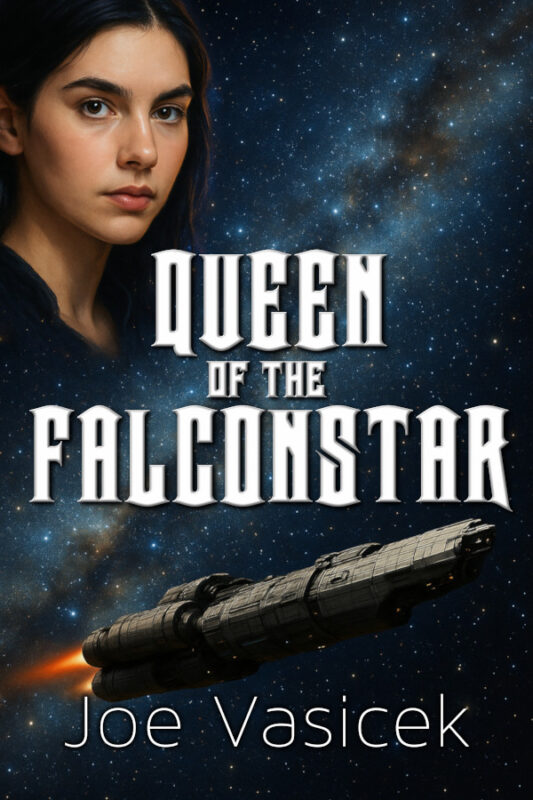
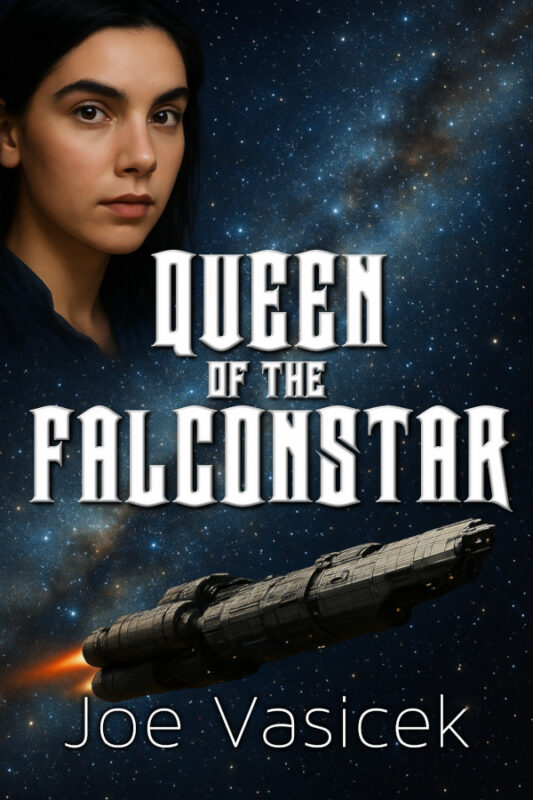
What does it take for a woman to survive when every safe, familiar, and comfortable part of her life is stripped away? In Queen of the Falconstar, Zlata is not the strongest person in the room, the most powerful, or the most protected—but she is often the quickest to see the truth of a situation and adapt to it. Her story is about ruthless female competence: the kind of intelligence, self-control, ambition, and strategic courage that can turn captivity into opportunity.

Where the Idea Came From

The part of this story that excited me most from the beginning was Zlata herself. I wanted to write a heroine who was crafty, pragmatic, resourceful, slightly pessimistic, and above all realistic—someone who accepts the world as it is, even when that world is ugly, and prepares herself to deal with it accordingly. She is ruthless when she needs to be, but not because she enjoys cruelty. Her ruthlessness comes from clarity: she sees what is happening, measures the danger, and does what she believes must be done. That made her a fascinating character to follow into a story full of slavery, sex, power, polygamy, captivity, and survival—dark material that I struggled for years to handle tastefully, but couldn’t quite let go.

How Ruthless Female Competence Shapes the Story

At the beginning of Queen of the Falconstar, Zlata is trapped in a small, stagnant world where competence is useful but unrewarded. On Graznav Station, she works under people who are lazy, complacent, or protected by patronage. She understands how fragile the station really is. She knows how to solve problems that other people ignore. But she has no real authority, no path upward, and no way to become the woman she knows she could be. Her frustration is not simply that she wants adventure; it is that she wants a life where competence matters.

That changes when the Valdamar star clan raids her home and carries her away captive. On the Falconstar, Zlata enters a brutal hierarchy where weakness can destroy you, but usefulness can raise you. She studies the ship, the clan, the customs, the politics, and the people around her. She learns when to submit, when to resist, when to speak, when to remain silent, and when to strike. Her rise from Zlata to Zenoba is not a simple empowerment fantasy. It is a dangerous transformation. She survives by making herself indispensable, but every step upward requires her to become harder, sharper, and more willing to play by the rules of a ruthless world.

That is why her relationship with Sonya is so important. Sonya reminds us what captivity costs emotionally, while Zlata shows what it takes to survive strategically. Zlata protects Sonya, but she also frightens her. She becomes powerful enough to save her friend, but also powerful enough to command her. By the end, Zlata has not merely escaped victimhood—she has become Lady Zenoba, Queen of the Falconstar. The victory is real, but it is not innocent. Her competence saves her life, earns her a place, and gives her power, but it also changes the way she sees herself and everyone around her.

What This Theme Says About Us

Ruthless female competence speaks to a deep human question: what do we do when the world does not reward goodness, innocence, or fairness? Some people break. Some people retreat into fantasy. Some people become cruel. But others learn to see clearly, act decisively, and carve out a place for themselves without waiting for permission. Zlata’s story does not pretend that power is clean or survival is simple. It asks whether a woman can become strong enough to rule without losing the part of herself that first made her worth following.

Why This Theme Matters to Me

Zlata mattered to me because she would not leave me alone. Even when I had doubts about the story, even when I trunked the project, even when the darker material made me question whether I could handle it the right way, I kept coming back to her. I loved the challenge of writing a woman who is not soft, sentimental, or conventionally heroic, but who is still deeply compelling because she sees reality and refuses to be crushed by it. In many ways, Queen of the Falconstar exists because I wanted to know what would happen if a woman like Zlata were thrown into one of the harshest societies I could imagine—and whether she would survive it, escape it, or learn how to rule it.

Where to Get the Book

Related Posts and Pages

Explore the series index for the Falconstar Trilogy.

Return to the book page for Queen of the Falconstar.

Is Queen of the Falconstar for You?

Queen of the Falconstar is a character-driven space opera about captivity, survival, ambition, and the dangerous opportunities that can open when your old life is stripped away. If you like science fiction that combines starships and interstellar raiders with sharp psychological conflict, high-stakes power struggles, and a heroine who refuses to stay powerless, this book may be for you.

What Kind of Reader Will Love This Book?

If you love…

  • space opera with frontier-colony danger, raiders, and starfaring clan politics
  • character-driven science fiction about survival, adaptation, and rising through a hostile system
  • intelligent, pragmatic heroines who think their way through impossible situations
  • morally complicated stories where safety, loyalty, love, and ambition collide
  • tense emotional dynamics involving captivity, power imbalance, and hard choices

…then Queen of the Falconstar is probably your kind of story.

What You’ll Find Inside

At the center of the story is Zlata, a restless young woman trapped in a dead-end life on an isolated mining station, who is suddenly carried away captive when raiders attack her home. What follows is a tense emotional journey through fear, culture shock, survival, and ruthless self-reinvention, as she realizes that if she wants any future at all, she will have to make herself indispensable. The tone is intense, intimate, and often morally thorny, with a style that is fast-moving, psychologically focused, and grounded more in strategy, character tension, and social maneuvering than in large-scale battlefield spectacle.

What Makes It Different

Fans of space opera will recognize the appeal of starships, frontier colonies, and interstellar conflict, but Queen of the Falconstar takes those elements in a more intimate and socially dangerous direction. Where many science fiction adventure stories focus on external missions or military campaigns, this one leans into captivity, hierarchy, cultural assimilation, and the question of how much of yourself you can surrender without losing your soul. It also stands apart through Zlata herself: she is not a conventional idealist or rebel, but a pragmatic realist whose strength comes from clear-eyed adaptation. The result is a space opera that feels personal, volatile, and psychologically charged.

What You Won’t Find

You won’t find a lighthearted or clean-edged adventure here. This book deals with slavery, sexual threat, coercive power structures, and polygamy-adjacent marriage politics, though it aims to handle those elements seriously rather than gratuitously. You also won’t find a simple good-versus-evil story, since much of the tension comes from navigating a brutal world where survival often depends on morally compromised choices.

Why I Think You Might Love It

This story mattered to me because I could never quite let it go. Zlata especially stayed with me: she’s crafty, pragmatic, resourceful, slightly pessimistic, and ruthless when she needs to be, but she’s also trying to face reality as it is and survive it on purpose. I think this book will connect most strongly with readers who are drawn to stories about what a person becomes under pressure, and about the strange, dangerous line between being conquered and choosing to rise.

Where to Get the Book

Related Posts and Pages

Explore the series index for the Falconstar Trilogy.

Return to the book page for Queen of the Falconstar.