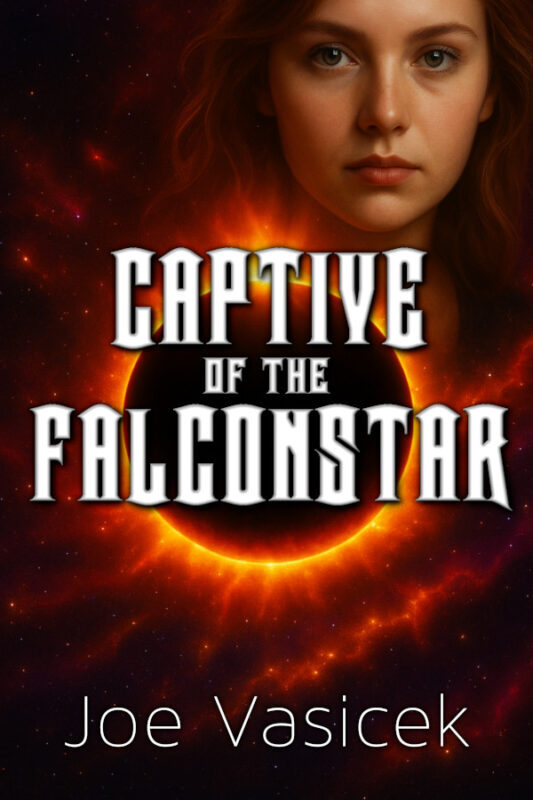
Revenge can feel like freedom when every other kind of freedom has been taken away. In Captive of the Falconstar, a captive woman begins with one simple desire: to go home, reclaim her true name, and return to the life that was stolen from her. But as captivity, betrayal, and humiliation harden inside her, revenge begins to look like the only path left—not just a way to punish her captors, but a way to feel powerful again.
That is what makes the theme so morally dangerous. The desire for revenge is understandable, even righteous in its beginnings, because it grows from real injustice. But revenge does not simply restore what was lost. It reshapes the wounded, narrows their choices, and asks whether striking back is worth the cost to the soul.
Where the Idea Came From
The emotional center of this theme comes from Sonya’s captivity and the way her longing for home is slowly twisted into a hunger for revenge. At the beginning of the book, Sonya dreams of Petyr and Graznav Station, waking to the bitter reality that she is aboard the Falconstar, forced to serve Zlata—now Lady Zenoba—who has embraced the identity and power of the Hameji. Sonya’s first act of resistance is not violence, but memory: insisting that her name is Sonya, not Gulchen, and clinging to the hope that “somedayshift” she will be free.
But the more Sonya is denied escape, the more revenge begins to replace home as the thing that keeps her alive. Genzerig recognizes this weakness and exploits it. He does not merely offer her freedom; he asks whether she wants the Valdamar Clan to suffer for what they have done. When Sonya accepts, revenge gives her “some measure of control over her life”—but it also places that life in the hands of another manipulator. That tension is the seed of the theme: revenge begins as Sonya’s attempt to reclaim agency, but the farther she follows it, the more she discovers that revenge has its own chains.
How the Moral Cost of Revenge Shapes the Story
The moral cost of revenge shapes Captive of the Falconstar by turning captivity into something more dangerous than physical imprisonment. At first, anger helps the wounded survive. It preserves memory, identity, and dignity in a world determined to rename, reshape, and possess them. But as the story unfolds, that anger becomes vulnerable to manipulation. Revenge begins to offer purpose, but that purpose comes through secrecy, deception, and the temptation to treat every relationship as a battlefield.
This is especially powerful because the book refuses to make revenge feel simple. The people who have caused harm are not flattened into faceless monsters, and the people seeking revenge are not magically purified by their suffering. As emotional ties shift and loyalties become complicated, revenge becomes harder to separate from betrayal. The deeper the characters go, the more they must ask whether they are pursuing justice, survival, power, or merely the illusion of control.
That is where the revenge arc becomes most painful. Revenge promises agency, but it can also trap a person inside choices made from fear, grief, and humiliation. By the time the path begins to look darker than expected, turning back may no longer be easy. In a story filled with space opera politics, captivity, dynastic ambition, rival loyalties, and morally gray choices, revenge becomes one of the book’s central emotional engines: a wounded person reaching for freedom, only to discover that vengeance can become another kind of captivity.
What the Moral Cost of Revenge Says About Us
The moral cost of revenge reveals how easily pain can disguise itself as justice. When someone has been wronged, betrayed, or stripped of dignity, the desire to see the guilty punished is deeply human. But Captive of the Falconstar asks what happens when revenge becomes the story a wounded person tells herself in order to keep going. Sonya’s hunger for revenge is not irrational; it grows from real suffering. Yet revenge cannot give her back the life she lost, and it cannot restore the innocence that captivity destroyed. Instead, it risks making her more like the people who used her: calculating, secretive, and willing to turn intimacy into leverage. The hope in this theme lies in the possibility that even after walking far down the path of vengeance, a person may still recognize the cost—and still long for something better than destruction.
Why This Theme Matters to Me
After everything that happened to Sonya in the previous book, I wanted to give her a more active role and make her more of an agent in her own story. That was why I chose to give her a revenge arc: because revenge is one of the most emotionally understandable temptations in fiction. When a character has been genuinely wronged, part of us wants to see them strike back. But I’m more interested in what revenge does after that first rush of satisfaction fades—how it narrows the soul, how it keeps old wounds open, and how it can trap someone in the very pain they are trying to escape. In Captive of the Falconstar, I wanted to explore a revenge arc that is not simple or clean, but tragic, human, and morally complicated.
Where to Get the Book








