The Search for Belonging in Strangers in Flight

What does it mean to belong when everything familiar has been stripped away? Strangers in Flight is a character-driven science fiction and space opera novel about people who survive catastrophe, only to discover that survival alone isn’t enough. Set amid war, displacement, and life on the interstellar frontier, and against the backdrop of an ongoing interstellar conflict in the Sons of the Starfarers series, the novel asks a simple but painful question: how do you build a sense of home when you wake up alone in a universe that no longer knows who you are?

Where the Idea Came From

The idea for this theme grew out of thinking about what it would be like to lose not just your home, but your entire cultural and social world overnight. In the author’s note, I talk about wanting to explore loneliness at an extreme scale: being the sole survivor of a people, waking into a future where everyone who shaped your identity is gone. Science fiction gave me the space to externalize that loneliness—to turn it into a literal universe of strangers. I was especially interested in what happens after the escape—when the danger passes, but the isolation remains—and how belonging has to be rebuilt from nothing.

How The Search for Belonging Shapes the Story

Belonging is the emotional engine that drives Strangers in Flight. Reva’s struggle is not just physical survival or escape from enemies, but the deeper shock of cultural and personal dislocation. She wakes into a galaxy that doesn’t share her language, her customs, or her assumptions about the body, privacy, and trust. Her choices throughout the story are shaped by the question of whether belonging is even possible—or whether survival requires emotional withdrawal. That tension—between isolation and connection—echoes throughout the wider conflict of the series, where entire peoples are being displaced by war.

Isaac’s journey mirrors this from the opposite direction. Though he has a ship, a profession, and a place in the wider conflict of the Sons of the Starfarers series, he is also profoundly isolated—adrift on the frontier, defined more by what he avoids than what he commits to. When these two characters come together, the story treats belonging not as instant comfort, but as something forged through mutual risk, responsibility, and choice. These decisions ripple outward, shaping the story’s conflicts and setting the tone for the relationships that continue across the series.

What The Search for Belonging Says About Us

At a time when many people feel disconnected even while surrounded by others, Strangers in Flight frames belonging as a fundamental human need rather than a luxury. The novel suggests that loneliness is not just emotional pain, but a condition that makes us vulnerable—to despair, exploitation, and moral compromise. If you’ve ever felt out of place, unseen, or unmoored after loss or change, this story treats that experience with seriousness and empathy. At the same time, it offers a quiet hope: belonging doesn’t require shared origins or perfect understanding. It begins when people choose to care for one another, even when doing so is inconvenient, risky, or costly.

Why This Theme Matters to Me

This theme matters to me because I’ve always been drawn to stories about people on the margins—exiles, refugees, wanderers, and survivors—who have to decide whether connection is still worth the risk after loss. I wanted to write a story that takes loneliness seriously without becoming cynical, and that treats belonging not as something we passively receive, but something we actively build. That question—how people find one another in the aftermath of upheaval—runs throughout the Sons of the Starfarers series. For me, Strangers in Flight is ultimately about the hope that even in a vast and lonely universe, belonging can still be found—sometimes in the most unexpected places.

Where to Get the Book

Related Posts and Pages

Explore the series index for Sons of the Starfarers.

Return to the book page for Strangers in Flight.

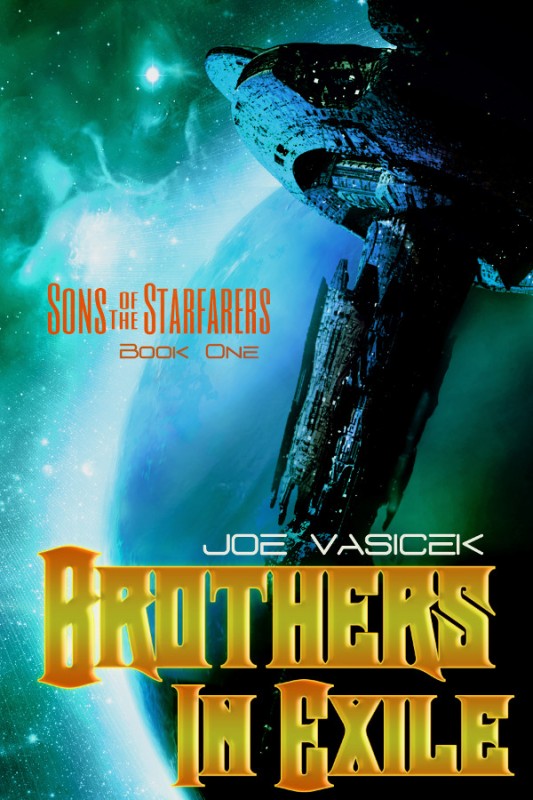
The Cost of Compassion in Brothers in Exile

At its heart, Brothers in Exile is a character-driven space opera and science fiction adventure built around a single, defining moral choice. The story asks a deceptively simple question: what happens when compassion turns freedom into responsibility? From that choice grows a story about brotherhood, moral obligation, and the moment when an independent life gives way to lasting commitment.

Where the Idea Came From

Brothers in Exile grew out of my thoughts on frontier stories about rugged individualism and personal freedom. On the edge of civilization, mobility means safety: you can leave, disengage, and avoid entanglements. I wanted to explore what happens when characters reject that logic—not because they’re naïve, but because compassion demands commitment. What if, in a frontier science fiction setting, compassion isn’t a momentary kindness, but a decision that permanently ties you to others—and to a future you can no longer walk away from?

How the Cost of Compassion Shapes the Story

In Brothers in Exile, Isaac and Aaron begin as independent starfarers with no fixed home, no political allegiance, and no long-term obligations beyond each other. Compassion changes that. When they choose to help a young woman frozen in cryosleep—someone they were never meant to be responsible for—they are no longer merely passing through the Outworlds. They become involved—personally, morally, and historically.

The cost of compassion in this story is not framed as regret or doubt; the brothers never question whether they did the right thing. Instead, the cost appears as entanglement: new enemies, new loyalties, new dangers, and the slow erosion of the freedom they once prized. Isaac feels this as the weight of responsibility—each compassionate choice narrowing his room to maneuver. Aaron experiences it as clarity: once you recognize another person’s humanity, walking away is no longer an option.

This tension—between freedom and obligation, independence and belonging—drives the conflict of the book and sets the trajectory for everything that follows.

What the Cost of Compassion Says About Us

We often want to think about compassion as something offered freely, but real compassion creates bonds—and bonds create responsibility. Brothers in Exile reflects the idea that freedom is comfortable precisely because it avoids commitment. True compassion ends that comfort. It ties us to people, to places, and to futures we did not plan. The story suggests that while this cost is real and often painful, it is also the price of meaning. For readers who enjoy thoughtful, hopeful science fiction where moral choices matter more than spectacle, this tension sits at the heart of the story.

Why This Theme Matters to Me

This theme matters to me because I don’t believe that moral choices exist in isolation. Compassion changes who we are and what we’re responsible for next. In Brothers in Exile, Isaac and Aaron don’t lose their freedom because they make a mistake—they lose it because they choose to care. That choice doesn’t make their lives easier, but it gives them direction, purpose, and a place in a larger story. That, to me, is what makes the cost of compassion worthwhile—and why this story belongs at the beginning of the Sons of the Starfarers series.

Where to Get the Book

Related Posts and Pages

Explore the series index for the Sons of the Starfarers series.

Return to the book page for Brothers in Exile.