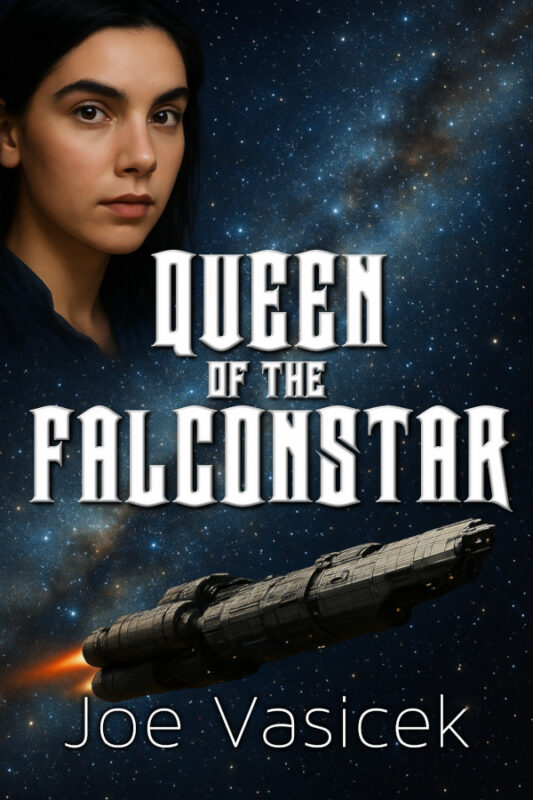
Is Queen of the Falconstar for You?

Queen of the Falconstar is a character-driven space opera about captivity, survival, ambition, and the dangerous opportunities that can open when your old life is stripped away. If you like science fiction that combines starships and interstellar raiders with sharp psychological conflict, high-stakes power struggles, and a heroine who refuses to stay powerless, this book may be for you.

What Kind of Reader Will Love This Book?

If you love…

  • space opera with frontier-colony danger, raiders, and starfaring clan politics
  • character-driven science fiction about survival, adaptation, and rising through a hostile system
  • intelligent, pragmatic heroines who think their way through impossible situations
  • morally complicated stories where safety, loyalty, love, and ambition collide
  • tense emotional dynamics involving captivity, power imbalance, and hard choices

…then Queen of the Falconstar is probably your kind of story.

What You’ll Find Inside

At the center of the story is Zlata, a restless young woman trapped in a dead-end life on an isolated mining station, who is suddenly carried away captive when raiders attack her home. What follows is a tense emotional journey through fear, culture shock, survival, and ruthless self-reinvention, as she realizes that if she wants any future at all, she will have to make herself indispensable. The tone is intense, intimate, and often morally thorny, with a style that is fast-moving, psychologically focused, and grounded more in strategy, character tension, and social maneuvering than in large-scale battlefield spectacle.

What Makes It Different

Fans of space opera will recognize the appeal of starships, frontier colonies, and interstellar conflict, but Queen of the Falconstar takes those elements in a more intimate and socially dangerous direction. Where many science fiction adventure stories focus on external missions or military campaigns, this one leans into captivity, hierarchy, cultural assimilation, and the question of how much of yourself you can surrender without losing your soul. It also stands apart through Zlata herself: she is not a conventional idealist or rebel, but a pragmatic realist whose strength comes from clear-eyed adaptation. The result is a space opera that feels personal, volatile, and psychologically charged.

What You Won’t Find

You won’t find a lighthearted or clean-edged adventure here. This book deals with slavery, sexual threat, coercive power structures, and polygamy-adjacent marriage politics, though it aims to handle those elements seriously rather than gratuitously. You also won’t find a simple good-versus-evil story, since much of the tension comes from navigating a brutal world where survival often depends on morally compromised choices.

Why I Think You Might Love It

This story mattered to me because I could never quite let it go. Zlata especially stayed with me: she’s crafty, pragmatic, resourceful, slightly pessimistic, and ruthless when she needs to be, but she’s also trying to face reality as it is and survive it on purpose. I think this book will connect most strongly with readers who are drawn to stories about what a person becomes under pressure, and about the strange, dangerous line between being conquered and choosing to rise.

Where to Get the Book

Related Posts and Pages

Explore the series index for the Falconstar Trilogy.

Return to the book page for Queen of the Falconstar.

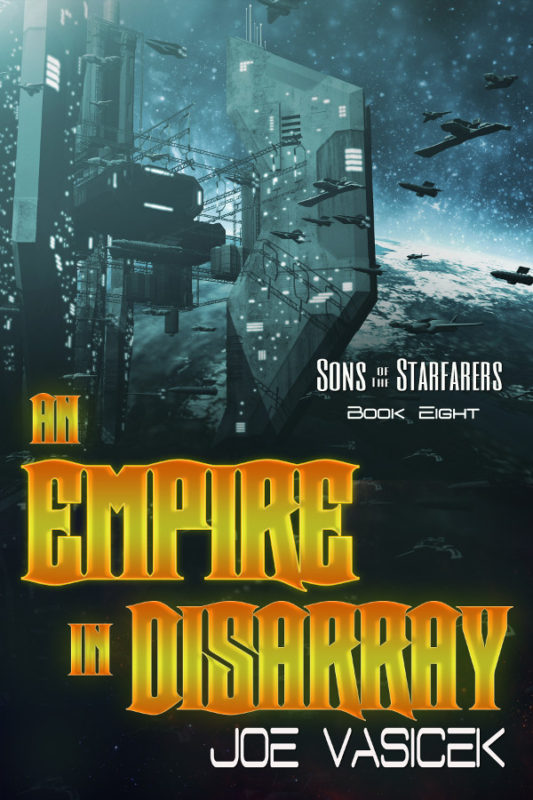
Is An Empire in Disarray for You?

An Empire in Disarray is late-series space opera at full intensity: shifting alliances, desperate diplomacy, covert raids, and the personal cost of holding a fragile coalition together when everything starts to crack. This is book eight in the nine-book Sons of the Starfarers series, which means the story is driving hard toward endgame—without losing sight of the characters who’ve carried you across the war.

If you want a sci-fi series where battles and politics matter because they press people to their moral limits, this is the kind of reading experience you’re in for.

What Kind of Reader Will Love An Empire in Disarray?

If you love …

  • character-driven military science fiction and space opera with long-running arcs and real consequences
  • rebellion-vs-empire stories that evolve into messy “what now?” politics after the turning point
  • tense alliances, betrayals, secret negotiations, and behind-enemy-lines missions
  • found family (and actual family) dynamics under extreme pressure—duty vs. loyalty vs. love
  • big stakes told through a close, emotional lens (you feel the cost, not just the spectacle)

…then An Empire in Disarray is probably your kind of story.

What You’ll Find Inside

An Empire in Disarray follows Mara Soladze and the people bound to her as the Outworld war effort enters its most unstable phase: victories don’t settle anything, power reshuffles, and old enemies become uneasy necessities. The book mixes fleet-and-station scale strategy with intimate, character-level tension, especially as trust becomes both the most valuable currency—and the easiest thing to weaponize. The result is a fast-moving, high-stakes installment that feels like the calm-before-the-storm is finally over.

What Makes An Empire in Disarray Different

Fans of authors like Lois McMaster Bujold (character-first military sci-fi), Elizabeth Moon (duty, leadership, and hard choices), or James S. A. Corey (factional politics in space) will recognize the blend of strategy, relationships, and shifting loyalties—but this series leans especially hard into consequences that accumulate across many books.

Where many space operas keep escalating external threats, Sons of the Starfarers also asks what happens when the “good side” starts fracturing under its own compromises. And in this installment, the story’s distinctive edge is how it forces characters to navigate collective survival while still fighting to remain fully themselves.

What You Won’t Find

You won’t find a cozy, standalone entry point here—this is the eighth book in a nine-book arc, and it’s written to pay off (and complicate) what came before. You also won’t find grimdark nihilism for its own sake: things get intense, but the series is ultimately driven by the question of whether people can become better under pressure, not merely harder.

Why I Think You Might Love An Empire in Disarray

In the author’s note, I half-joke that nobody should write a nine-book series—and then I admit why I did it anyway: because I’ve cared about these characters from the beginning, and I wanted to see where war would take them when it stopped being abstract and became personal. When I was drafting this book, I’d just moved back to Utah after a long stretch in Iowa, driving that lonely road through Wyoming and down past Evanston into the mountains—thinking about pioneers, endurance, and the strange mixture of hardship and beauty that comes with trying to build something that lasts.

That’s the heart of this installment, too. The ending I’d imagined for this series was never going to be neat or permanent—politics rarely is, especially after revolution—and my background in political science (and the places I’ve lived and traveled) shaped that. But the real reason I think you might love this book is simpler: An Empire in Disarray is where you get to see how far Mara has come, and what kind of person she chooses to become when all the easy choices are gone.

Where to Get the Book

Related Posts and Pages

Explore the series index for the Sons of the Starfarers series.

Return to the book page for An Empire in Disarray.

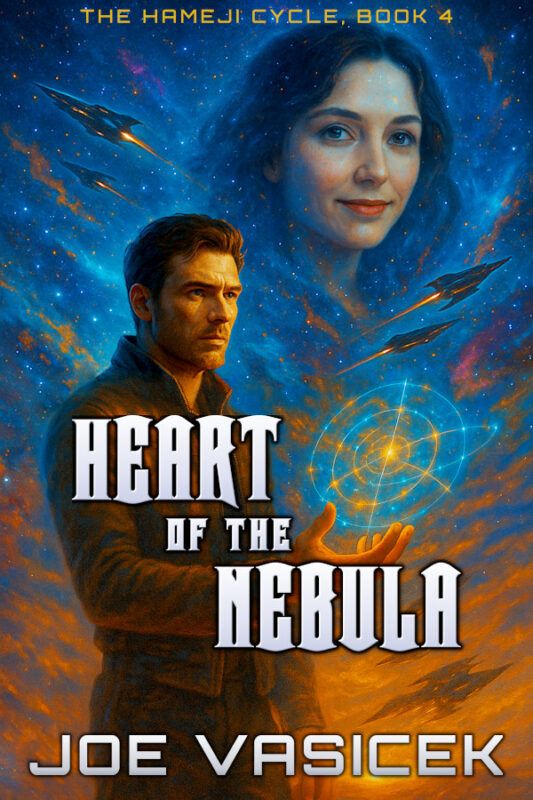
Is Heart of the Nebula for You?

Heart of the Nebula is a character-driven space opera and political military science fiction novel about leadership, sacrifice, and the cost of protecting a people who are barely holding together. Set after a brutal alien occupation and a desperate refugee exodus into deep space, the story follows survivors of the Hameji War as they struggle to remain unified while haunted by past choices. This is a story about moral courage under pressure—when there are no clean victories, only necessary and costly decisions.

Heart of the Nebula is part of The Hameji Cycle, a character-driven science fiction series about occupation, resistance, exile, and the long aftermath of interstellar war. It continues The Hameji Cycle’s exploration of occupation, exile, resistance, and the moral cost of survival after interstellar war. It is the fourth book of the series, but can be read as a standalone book.

What Kind of Reader Will Love Heart of the Nebula?

If you love…

  • character-driven science fiction that treats leadership and responsibility as moral burdens, where decisions affect entire communities
  • space opera focused on refugees, displaced peoples, and survival after catastrophe
  • stories about sacrifice, loyalty, and the tension between individual conscience and communal good
  • thoughtful science fiction that explores politics, ethics, and power without cynicism

…then Heart of the Nebula is probably your kind of story.

What You’ll Find Inside

At the center of Heart of the Nebula is James McCoy, a reluctant leader trying to guide a fractured colony of refugees through the aftermath of war, betrayal, and long-term displacement. The story balances tense action—mutiny, political fracture, and survival in deep space—with quiet emotional reckoning, including moments where every available option carries moral cost, tracing the psychological cost of command and the lingering weight of past choices. The tone is serious and reflective, with moments of intensity and tenderness, and a steady pace that prioritizes character, consequence, and ethical decision-making over spectacle alone.

What Makes Heart of the Nebula Different

Unlike many space operas that celebrate charismatic heroes and clear-cut triumphs, Heart of the Nebula interrogates what happens after a hero becomes a legend—and that legend begins to divide the people it was meant to save. It blends military science fiction with political and ethical science fiction, focusing on how legends distort truth and fracture communities. The story also centers an exodus narrative—less about conquest or discovery, and more about survival, memory, and the fragile act of rebuilding a society in exile.

What You Won’t Find

This is not a lighthearted or quippy adventure, and it doesn’t offer easy moral answers or fast resolutions. You won’t find simplistic good-versus-evil framing, power fantasies, or violence treated as consequence-free. Romance exists, but it remains grounded and secondary, serving the emotional journey rather than driving the plot.

Why I Think You Might Love Heart of the Nebula

I wrote Heart of the Nebula because I couldn’t let go of a question that kept resurfacing: when people willingly sacrifice themselves for the greater good, is it right—or even moral—to intervene and undo that sacrifice as a leader responsible for others? This book is my attempt to wrestle honestly with leadership, responsibility, regret, and the cost of choosing “no one left behind” in a universe that punishes mercy. If you enjoy science fiction that treats ethical dilemmas seriously and allows characters—and societies—to live with the consequences, I think this story will stay with you.

Where to Get the Book

Related Posts and Pages

Explore the series index for The Hameji Cycle.

Return to the book page for Heart of the Nebula.

Is Bringing Stella Home for You?

Some science fiction dazzles with ideas. Some unsettles with spectacle. Bringing Stella Home is the kind that stays with you because it feels personal. It’s a character-driven science fiction novel about family loyalty, moral courage, and the consequences of refusing to abandon the people you love. It blends character-driven space opera with political science fiction and ethical war fiction, set during a brutal interstellar war fought by clashing human civilizations.

This is an emotionally grounded story where the biggest question isn’t how the war is won—but who the characters choose to be while it’s being fought.

What Kind of Reader Will Love Bringing Stella Home?

If you love…

  • Science fiction that treats war as a human and moral problem, not just a tactical one
  • Character-driven space opera focused on families, civilians, and reluctant heroes
  • Stories about siblings and loved ones who refuse to “move on” when someone is taken
  • Thoughtful, serious SF that explores captivity, occupation, and ethical resistance

…then Bringing Stella Home is probably your kind of story.

What You’ll Find Inside

Bringing Stella Home follows James McCoy after his sister Stella is captured during a catastrophic invasion that leaves entire worlds devastated. While governments negotiate and societies rebuild, others learn to live with loss. James refuses to accept that Stella is simply gone. His search forces him into political gray zones, moral compromises, and dangerous alliances—while Stella, trapped inside captivity, fights a quieter but no less difficult battle to preserve her dignity, identity, and sense of right and wrong.

The story is tense, intimate, and emotionally weighty, balancing suspense and danger with a steady focus on conscience, restraint, and the long-term cost of love.

What Makes Bringing Stella Home Different

Where many science fiction war stories focus on soldiers and commanders, Bringing Stella Home centers on civilians—families caught between invasion and indifference, and on the uncomfortable truth that compassion doesn’t end when the crisis fades from the headlines. Readers familiar with classic space opera will recognize the larger-scale setting, but this story consistently pulls inward, asking what responsibility looks like when walking away would be easier, safer, and socially acceptable.

What You Won’t Find

If you’re looking for grimdark cynicism, casual brutality, or a story where morality is treated as naïve, this isn’t that book. While the story does not shy away from darkness or injustice, it treats suffering seriously and never as entertainment. If you’re drawn to science fiction that wrestles honestly with evil while still affirming human dignity, you’ll feel at home here.

Why I Think You Might Love Bringing Stella Home

I wrote Bringing Stella Home early in my career, when finishing a novel still felt like climbing a cliff with your fingernails. The idea first took shape in a BYU history class, where studying the Mongol conquests made me wonder what a ruthless, sky-mandated expansionist culture would look like in space—and how it would collide with a radically democratic society built on shared civic responsibility. But the real heart of the story came from something more personal: my instincts as an older brother. The scariest thing I can imagine is not being able to save the people I love—and the even darker possibility of being able to save them, only to have them refuse rescue—and choosing to stay where they are.

I also wrote this book with a deliberate ethical aim: to take suffering seriously without exploiting it—to write about captivity, power, fear, and vulnerability in a way that insists the characters remain fully human and morally real. Some scenes were emotionally exhausting to write, but I didn’t want to soften them just to make the story easier. At its core, this novel reflects a belief that integrity matters most when it costs something.

If you’re drawn to science fiction that goes to dark places without becoming cynical—stories that still reach for the good, the true, and the beautiful—I think this one will stay with you.

Where to Get the Book

Related Posts and Pages

Explore the series index for The Hameji Cycle.

Return to the book page for Bringing Stella Home.