“In a universe gone mad…”
In a universe gone mad, where evil was good and good evil—where truth was treason, democracy was empire, and slavery was the price of freedom—who else could be right but one whom everyone called a madman?
From In the Wake of Zedekiah Wight by Joe Vasicek
How I Would Vote Now: 2004 Hugo Award (Best Novel)
The Nominees
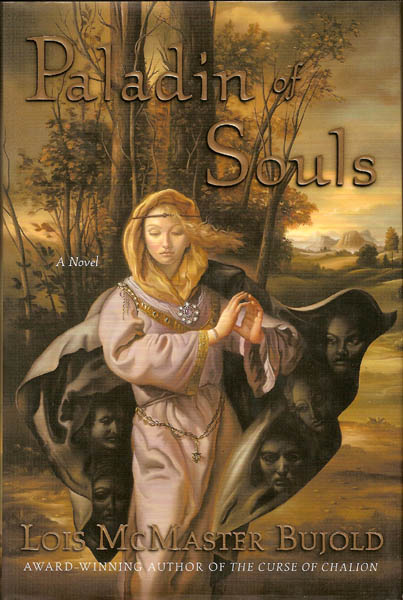
Paladin of Souls by Lois McMaster Bujold
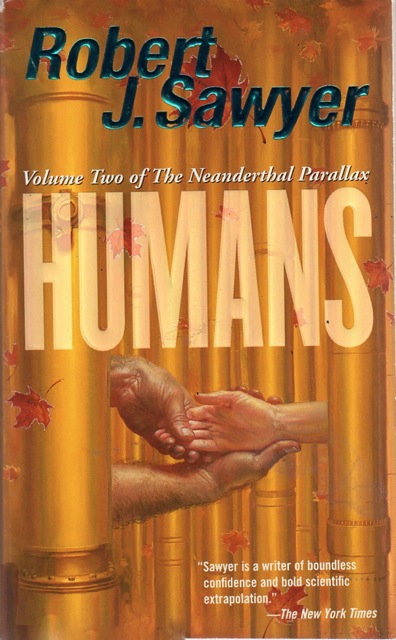
Humans by Robert J. Sawyer

Ilium by Dan Simmons
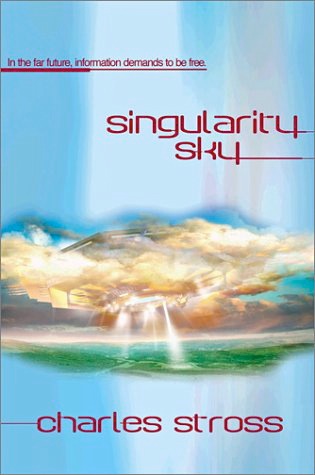
Singularity Sky by Charles Stross
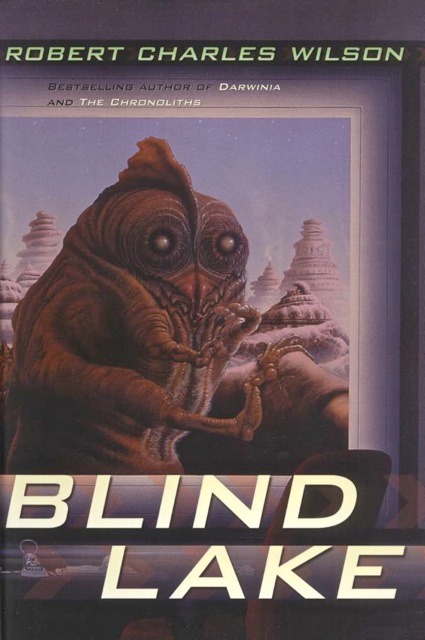
Blind Lake by Robert Charles Wilson
The Actual Results
- Paladin of Souls by Lois McMaster Bujold
- Ilium by Dan Simmons
- Singularity Sky by Charles Stross
- Blind Lake by Robert Charles Wilson
- Humans by Robert J. Sawyer
How I Would Have Voted
- Blind Lake by Robert Charles Wilson
Explanation
This was a decent year for science fiction (though I have to say, Fitzpatrick’s War came out in 2004, and it never got nominated for a Hugo at all, even though it’s far superior to any of the books that were nominated in 2004 or 2005). With that said, there’s really only one book on this ballot that I can positively vote for, and even that one isn’t Robert Charles Wilson’s best work.
I found it difficult to get into Paladin of Souls as a standalone, so I decided to start with the first book of the series. And I was enjoying it a lot, until midway through when the main character casually talks about how he was sexually initiated by a pederast, as the boy in a man-boy-love relationship. And while yes, I know that the ancient Greeks engaged in that sort of pederasty and though it was totally normal… but I don’t. So even though it was more of a passing worldbuilding detail, I decided to take a page out of that old 80s cockroach Mormonad and DNF the book:

That’s the thing about Louis McMaster Bujold: she’s a really great writer, and knows how to tell a really great story, but she also has a penchant for weird sexual stuff, which she indulges in by worldbuilding a culture that finds it totally normal. In her World of the Five Gods, it’s the pederasty, and in her Vorkosigan Saga, it’s the Betans with their free love attitude toward all things sexual. When I was younger, that didn’t bother me so much, but it bothers me now, and it’s enough to make me think twice before picking up one of her books—even one of her older books.
I didn’t read Humans because I DNFed the first book, not because it was bad, but because it never really hooked me. After finding myself about 50 pages in, without really caring about any of the characters, I just didn’t bother reading any further. But the premise seems interesting, so I suppose I could be convinced to give it another go. After all, I’ve read other books by Robert J. Sawyer that I enjoyed (in fact, I’m reading one right now).
I really wanted to like Ilium, because Dan Simmons’s Hyperion Cantos was so amazingly good. However, I found myself vacillating between being totally confused about the basic premise of the book (it’s like Homer’s Iliad… on another planet? But with real Greeks and Trojans? In a simulation, I guess?) and disgusted with the main character, who introduces himself in chapter 1 by talking about how he did the jailbait wait for this underage girl he really had the hots for, and describing her pubic hair in vivid detail the first time he saw her naked.
As for Singularity Sky, I didn’t bother reading it, because I’ve read enough Charles Stross to know that can’t stand his particular brand of edgy cyberpunk nihilism.
Which brings me to Blind Lake. It was a good book, and I enjoyed it quite a lot, though it fell a little too far on the “huh?” side of weird. I really like Robert Charles Wilson’s writing, and I’m slowly working through his entire body of work. His Spin trilogy is some of the best science fiction I’ve ever read, though I think The Chronoliths is my favorite book of his so far. Blind Lake is good, but I think I liked Mysterium better, though that also was a bit of a “huh?” novel at parts. Mostly, I think the Big Lie in Blind Lake was a little too big to swallow, and not quite as flashy or as interesting as some of his other ones, like Spin and The Chronoliths. But the story that followed from it was on par with his other books.
Two thousand four was one of the last years where I can honestly say that I wouldn’t vote No Award over any of the books on the ballot. The only other year since then that I can say that of is 2013—every other year has been a contest between the stuff that’s actually good, and the stuff that’s downright terrible. At this point, it seems like the increasingly small and irrelevant clique that votes in the Hugo Awards has gone completely off the deep end, which is why I’ve already posted my “How I Would Vote Now” post for 2026, even though the awards haven’t happened yet.
Why everyone is getting AI writing wrong
Apparently, there’s a lot of noise being made online right now by writers (and some readers) who are furious that anyone might us an AI tool in their writing process. I wouldn’t know, because I’m not on social media anymore, and I just haven’t had the time to follow that sort of ragebait nonsense. But this guy has a very well-reasoned take on the whole AI controversy, at least how it applies to books and writers. Worth hearing him out, especially if you’re a writer.
It’s done!
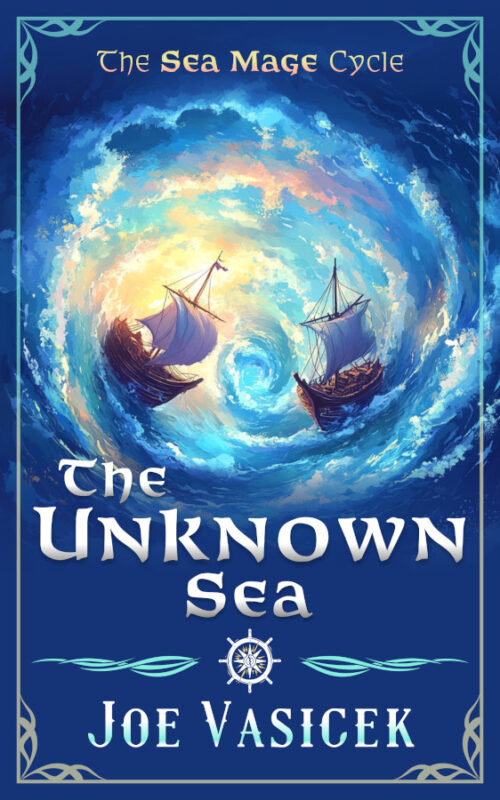
Last week, I finished writing The Unknown Sea, the sixth book that I’ve written so far in the Sea Mage Cycle. Here are the stats:
- Total Chapters: 16
- Total Scenes: 53
- Total Words: 50,069
- Total Process Words: 457,791
- Total Writing Hours: 91.1
- Total Writing Days: 71
This one went a lot faster than I thought it would, though it took nearly a year before I finally buckled down and did it. I had the initial idea for it way back in December 2024, and finished the outline in January 2025. But I put it aside until July, then worked on it off and on for the next three or four months, not really making much measurable progress. So it wasn’t until I buckled down in May and really sat down to finish it that I finally pounded it all out.
This is the sixth book I’ve written in the Sea Mage Cycle, but it’s the second book chronologically, taking place about ten years after the events of The Widow’s Child. As with all the Sea Mage Cycle books, this is a standalone. I will probably write at least another two books in the series, just so that I can round out another four book omnibus edition. It’s going to be a little while, though, as I really want to pivot towards the Soulbound King, releasing the first three books within a year of each other. Also, I need to finish my two open sci-fi trilogies: The Outworld Trilogy and the Falconstar Trilogy.
So my next big WIP is going to be Lord of the Falconstar, which I plan to release in May 2026. The outline and rough AI draft are already finished, so ten months should be sufficient to get that done, even with my wife going back to full-time work in a couple of weeks. We’ll have to start going to bed early, so that she can get more sleep, and I can wake up at 4AM to write. In the meantime, I plan to send The Unknown Sea off to my editor, and format and publish that as soon as he gets back to me with the edits.
By the way, The Unknown Sea is already up for preorder! You can get it here:




June Reading Recap
Books that I finished

The Flag & The Cross by Philip S. Gorski and Samuel L. Perry

The First Fast Draw by Louis L’Amour

Ethnic America by Thomas Sowell

Wired for Intimacy by William M. Struthers

The Key-Lock Man by Louis L’Amour


Mystic Warrior by Tracy & Laura Hickman


Procrastination Proof by Jon Acuff


The Violent Take It By Force by Matthew D. Taylor

The Invisible Gorilla by Christopher Chabris and Daniel Simon

Exvangelical and Beyond by Blake Chastain

Blind Lake by Robert Charles Wilson
Books I DNFed
- Living Off Grid by Ryan Mitchell
- Not Just Another Cold War by Bard Nikolas Vik Steen
- The Last Unicorn by Peter S. Beagle
- The Integral Trees by Larry Niven
- The Invaders Plan by L. Ron Hubbard
- The Big Sleep by Raymond Chandler
- The Essential Guide to Raising Complex Kids by Elain Taylor-Klaus
- The Holographic Universe by Michael Talbot
- Rocannon’s World by Ursula K. Le Guin
- Bendigo Shafter by Louis L’Amour
Finishing
I am doing everything I can to finish this book today. It is so close to being finished that if I buckle down and do it, I think I can have it done. But that means I need to get back to writing. This blog will probably be sparse for a little while.
WIP Excerpt: The Unknown Sea, Chapter 5
I had a lot of fun with this chapter! It introduces the rival love interest for Celeste, the female main viewpoint character, right after the chapter that introduces her male counterpart’s rival love interest.
The midday sun shone honey-thick, making sweat run down the back of Enoch’s neck. He shaded his eyes with his hand, scanning the horizon for the land he’d sensed the night before. It should be within sight soon—after all, they’d been sailing since dawn. Between him and Celeste, the Waverunner had cut a swift and steady pace through the placid waters. And yet, all he could see on the horizon was the haze.
“Land ho!” Felix called from rigging, making his heart leap. “Dead ahead, Captain! Just like our sea mage said it would be!”
The crew quickly gathered on the deck. The haze cleared a little, and sure enough, just over the bow, they could see it—a thin, almost invisible line where the sea met the sky. For the first time since they’d tumbled through the Maelstrom, Enoch saw glimmers of hope in the faces of his crewmates.
“Well done, lad,” Captain Black said quietly. “Your magic proved true. Now, all we need is to find out where in the blazes we are.”
They spent the next hour skirting the coastline, keeping just far enough to avoid the breakers and reefs. The land itself rose from the placid sea in a series of rocky outcroppings and green-cloaked cliffs. It was a wild land, full of thick, untamed jungles and rugged heights. A warm breeze carried the scent of unfamiliar flowers and rich, fertile earth.
“Can you detect any sign of settlement?” Thaddeus asked.
Enoch closed his eyes and drew on his magical sight. In his mind’s eye, the shoreline sharpened, details emerging from the hazy distance.
“Not yet,” he said, though he sensed that the lands weren’t totally uninhabited. “Just cliffs and forest and—”
He stopped abruptly as his magical senses revealed a rock formation jutting into the sea. A sun-bronzed figure struggled there, small and alone against the forces of nature.
“What is it?” Thaddeus asked.
Enoch focused his magic, sharpening his sight. “There’s someone trapped on those rocks up ahead.”
Maren quickly strode over to the railing. “Are you certain?”
“Yes, Captain. I can’t make out much, but…”
“But what, lad?”
Enoch’s heart began to pound. The figure on the rocks was a beautiful young woman, with long, black hair and smooth, brown skin. She was chained in irons that bound her to the face of the jagged rock. Aside from those chains, she was completely unclothed
“She’s in danger,” he said quickly. “The tide’s coming in—she’ll drown if we don’t help her.”
“Whoa, there,” Thaddeus warned. “Pirates use all sorts of lures. It could be a trap.”
“For who?” Enoch argued. “We’ve been following this coastline for nearly an hour, and in all that time we haven’t seen a single ship, much less a settlement.”
Thaddeus frowned, but the captain silenced him with a gesture. “The lad has a point, though I agree that caution is warranted. Can you detect anything strange or dangerous?”
“Yes,” said Celeste as she joined them on the Waverunner’s upper deck. “I was just about to tell you, Captain. There’s something in the water—something large and hungry. I think it’s coming for that girl.”
“We have to save her,” Enoch urged. “Let me go, Captain. I can do it.”
Captain Black studied him for a long moment, then nodded. “Alright, lad. But I’m sending Marcus with you. Thaddeus, bring us up just shy of those shoals.”
“Captain, you can’t be serious,” Thaddeus protested. “If there really is some sort of beast lurking in—”
“Master Ashenford can handle himself,” Maren replied firmly. “And our cook certainly knows how to wield a blade.” She turned to Enoch, her expression stern. “But promise me this, lad—if saving her proves too difficult, you come straight back to the Waverunner. We cannot spare either of you.”
“Yes, yes, of course,” Enoch said quickly, already moving to where Felix and Gideon were lowering the boat. He checked that the silver-edged dagger was secure at his hip. Its weight felt comforting.
Celeste put a hand on his arm. “Be careful,” she said quietly. “Whatever’s down there, it’s powerful.”
“Right,” said Enoch. The concern in her eyes surprised him.
The small boat hit the water with a splash. Enoch swiftly climbed down the rope ladder and took up position at the bow, while Marcus took the oars.
“Ready, lad?”
“Ready.”
The sea grew treacherous almost as soon as they pulled away. The choppy waves pushed relentlessly against their small boat, as if trying to turn them back. Salt spray stung Enoch’s eyes as the roar of the surf grew ever louder in his ears. Marcus steadily worked the oars, though, and Enoch did his best to smooth the seas in front of them with his magic. Gradually, they drew up to the cliff.
“There,” said Enoch, pointing to a small ledge a short distance from the rock where the girl was chained. The breakers were not so treacherous there.
As they drew closer, Enoch got his first clear look at her. The wind whipped her long black hair around her face, while the salty spray gave her skin an alluring sheen. She had an athletic form that exuded a primal, feminine strength. But though she was bare, she seemed utterly heedless of her own nakedness. Indeed, she met his gaze and held it without flinching.
“Hello!” he called out to her. “We’re here to help you!”
Her dark eyes watched him warily. She gave no answer, but seemed almost resigned to her fate. Marcus grunted as he strained against the breakers.
“The tide’s rising, lad. Best be quick about—”
A deep, rumbling sound from behind them cut him off. The boat rocked violently, and not just from the waves.
“What was that?” Enoch asked. Marcus’s face went pale.
“I think we just found what Celeste was worried about.”
Enoch followed his gaze and felt his blood run cold. A massive dark shape lurked just beneath the water, not a stone’s throw away. He remembered his promise, but how could they turn around now? After all, they were so close.
“Keep going,” Enoch shouted. “Get us over to that ledge!”
With a powerful stroke of his arms, Marcus drove them through the next swell and over the breakers. The boat lurched and dropped, and the salt spray soaked them both. Enoch quickly cast a spell of calming to prevent them from being dashed on the rocks, and leaped out the moment they reached the ledge. He stumbled, nearly falling, before regaining his balance and running straight up to the girl.
“We’re here to save you,” he yelled. “Do you understand me?”
She answered in her own tongue, a musical stream of syllables that were beyond his comprehension. Whatever her native tongue, it wasn’t any language he knew.
Enoch turned his attention to her bonds. The manacles around her wrists and ankles were fashioned out of thick iron, the chains anchored so solidly into the rock that Enoch had no hope of breaking them out—not even with his magic. He examined the manacles more closely, and saw something that made him frown. A narrow gold thread ran through each one.
“Are you a mage?” he asked.
The girl spoke again, gesturing with her eyes to the sea. The urgency in her tone made clear what words did not. Still, Enoch couldn’t help but notice that the chains had been anchored to these rocks for a very long time. This girl was not the first victim to be bound here.
“Marcus,” he called, “I think this girl is supposed to be some sort of sacrifice.”
“Can you break her loose?”
Enoch examined the locking mechanism of the bonds. To his surprise, the keyholes were rusted solid, and the mechanisms had all been gutted. Instead, the manacles were tied crudely shut with some sort of fibrous rope.
Why did they do that? he couldn’t help but wonder. It was almost as if the people who had chained the girl hadn’t been the ones who built them. That would explain why the iron was so cankered with rust. On the positive side, that meant—
A low rumble from the sea behind him interrupted his thoughts. The water all around them began to churn and boil as an inky black shadow sped to the surface.
“Look out!” Marcus shouted.
Half a dozen massive red tentacles burst from the churning sea, moving toward the girl at the rocks. Without thinking, Enoch drew his dagger and lunged. The blade bit into the rubbery flesh, sending a spray of black ichor across the rocks.
“What is that thing?” Enoch gasped.
“A Kraken, lad!” Marcus shouted. A massive head broke the surface, with bulging lidless eyes and an enormous gnashing beak. More tentacles swung up all around them, turning the sea into a writhing mass.
The girl did not shriek in terror. Instead, she kept her eyes on Enoch, gesturing frantically for him to break her free. As Marcus moved to cover them, wielding a massive butcher’s knife to keep the beast at bay, Enoch turned and began to work at the girl’s bonds.
The rope was surprisingly difficult to cut through. He worked on her wrists first. The girl held still, as if knowing that any struggle would only make it take longer.
At last, he cut through the first one, and the manacles fell away. She quickly grabbed a rock and smashed it against one of the grasping tentacles before it wrapped around Enoch’s neck. Channeling his magic, he pressed the silver blade against the remaining bond, heating it enough to make it burn. The rope was soaked with seawater, but he soon managed to burn through it, releasing the second set of manacles.
“Enoch!”
Enoch turned, brandishing his dagger, and thrust out just as a tentacle began to wrap around his waist. Black ichor washed over his clothes and skin, and he barely managed to slip out of the kraken’s grasp. He glanced over his shoulder at the girl, fearing the worst.
To his surprise, she was bent over, grasping the manacles around both her ankles. Her eyes rolled back, and her hands glowed as she channeled her own magic to burn through the bonds. The chains fell away, and she leaped sideways just in time to avoid the beast.
“Come on!” Enoch shouted “To the boat!”
The three of them scrambled across the slippery ledge and leaped into the boat. Marcus seized the oars and propelled them through the crashing waves with desperate strength. At the bow, Enoch used his magic to part the breakers long enough to let them through.
But the kraken was still behind them. A shout from the girl made him turn his head, just in time to see it slip back into the water to pursue them.
“Winds and waves, heed my call,” Enoch murmured. He thrust out with his magic, trying desperately to raise some protective wards.
The monster breached the surface, screeching as it reached for the boat with its enormous tentacles. Enoch felt his magic begin to falter, his strength nearly spent. But then, the woman raised her own hands. With her bindings removed, her power flowed freely. She joined her magic with his, and together they raised enough of a magical barrier to keep the monster at bay.
Marcus had fallen into a rhythm by now. With each stroke, he put more distance between them and the fearsome beast. Well behind them now, it thrashed in frustrated hunger, its wounds leaving a slick of inky blood on the churning waves as it finally sank back into the depths.
Safe now, Enoch slumped to the bottom of the boat in exhaustion. The girl remained on her feet, her back straight, her bearing proud.
“Who are you?” Enoch asked, blushing as he became acutely aware of her nakedness.
She cocked her head inquisitively at him, but though there was clearly intelligence in her dark, almond eyes, she didn’t understand a word.
“We’ll find out soon enough, lad,” Marcus grunted. “Only let the captain ask the questions. She’ll know what to do.”
“Yeah,” said Enoch, discreetly turning away. He considered offering her his shirt, but it was soaked and bloodied and torn. Instead, he fixed his gaze on the Waverunner, trying not to let his gaze wander to her lithe and supple form.
At long last, they drew close enough for Felix to throw down the lines. Working quickly, they secured them to the little boat, the native girl watching them in curious fascination. A rope ladder came down next.
“Come on,” said Enoch, motioning for her to follow. She hesitated only a moment before bounding up the ladder, as if it were no more difficult than walking along the beach. Enoch came up behind her, his cheeks reddening as he did his best to avoid the view. Soon, eager hands reached down from the deck, helping him aboard.
Captain Black strode over and offered the girl her cloak. “Here, lass,” she said, draping it over her bare shoulders.
The girl studied the captain’s face with suspicious eyes. She accepted the cloak, though she seemed at best indifferent about preserving her own modesty.
“Can you tell us who you are?” Captain Black asked, speaking slowly and distinctly. “Why were you chained to that rock?”
The girl tilted her head, showing no sign that she understood. When she spoke, it was in the same musical language that Enoch had heard earlier.
“That’s no tongue I’ve ever heard,” Thaddeus muttered.
“Nor I,” said Gideon, stroking his pointed beard. “And I’ve seen more ports than most.”
The woman spoke more forcefully, her frustration evident in her eyes. She pointed to herself, then to Enoch, speaking rapidly in her own tongue.
“This is going nowhere,” said Thaddeus. “Are you sure it’s a good idea to keep her? After all, this could be a trap.”
“A trap?” said Enoch, frowning. “She was chained to a rock and nearly eaten by a sea monster.”
“I’m not talking about her, boy. I’m talking about the people who chained her there.”
“I doubt this is some sort of trap,” Maren mused. “But Thaddeus is right—there’s no sense keeping her if we can’t find some way to talk. Which is a shame, since we really could use a guide around these parts.”
Enoch’s eyes widened as a thought suddenly struck him. “Captain—I have something that might work.”
“Oh? And what would that be?”
“My mother’s amulet. It’s supposed to be able to translate languages. If we gave it to her, it might just work.”
“It’s worth a try, at least. Go get it, lad.”
Enoch hurried to his small berth, pulling out his sea chest and working the lock to get it open. Inside, he dug through his spare clothes and other personal items until finally, his fingers closed around the smooth bronze spiral of the Whispering Shell.
Clutching it tightly, he hurried back to the main deck, where the crew were still gathered around the native girl. Her dark eyes darted warily from face to face.
“Here,” said Enoch, handing her the amulet. “This will help.”
She shrank instinctively, hissing a little as she regarded the amulet with distrust.
“It’s alright,” he told her. “I promise it won’t hurt you.”
When she didn’t respond, he mimed putting it around his own neck, then gestured to her. After a long moment, she inclined her head slightly. He took a deep breath and slowly lifted the chain over her head, taking care not to startle her.
The amulet settled around her neck, gleaming a little against her olive skin. For a moment, nothing happened. Then the runes along the amulet began to glow with a soft blue light. With his magic, Enoch felt the enchantment come to life.
“Can you understand me?” he asked.
Her eyes widened. “Your words… they make sense to me now.” She cautiously touched the amulet, holding it out to get a better look. “This shell speaks for you?”
“In a way,” Enoch explained. “It translates whatever we say—us to you, and you to us.”
“Remarkable,” Captain Black murmured. “Truly remarkable.” She turned to the native girl and smiled. “Welcome to our ship, lass. I am Captain Maren Black of the Waverunner, a merchant vessel from Caravelia. This is Enoch, our sea mage. And who might you be?”
“I am Kailani,” she answered simply. Her sharp gaze swept across the crew, as if seeing them all for the first time. Captain Black coughed.
“Very well, Kailani. Can you tell us why you were chained to that rock?”
“The western tribe captured me in a raid. Because they deemed me witch-born, they bound me as an offering to the Devourer.”
“The Devourer?” Enoch asked curiously. Her tone was so casual, it was difficult to believe she was talking about life and death.
Kailani’s eyes flicked back to him again. “Yes, the Devourer. Did you not know him? He nearly took us both. He feeds especially on the witch-born.”
“So the ‘Devourer’ is that sea beast?” Black asked.
Kailani nodded.
“And the tribe that took you—they deliberately fed you to it?”
“Of course,” Kailani answered. “It is the way of all our people. The sea gives life; the sea demands payment. Of course, we do not sacrifice our own. Those of our enemies who fall into our hands, those are the ones we offer.”
Enoch frowned. “But—”
“I was slated to die. By iron and by gold, I was bound to the very edge of the sea. But you changed my fate. You broke my bonds and drew silver against the Devourer. By your hands, I now live.”
The fervor with which she spoke made Enoch profoundly uncomfortable. He glanced uneasily at the rest of the crew, all of whom were watching the exchange with interest.
“It’s, er… it’s not that big of a deal,” he stammered. “Anyone would have done the same.”
“No,” she said firmly. “Many passed those rocks as the tide rose. No one stopped to save me. And why should they invite the vengeance of the beast?” She stepped uncomfortably close to him, enough that he could see the flecks of gold in her dark eyes. “Only you risked the hungry waters. And now, by the laws of my people, I belong to you.”
The Waverunner went very quiet. Enoch felt his face flush.
“I… what?”
“I am yours,” Kailani repeated. “You are my master now, and I am your woman. Do with me as you will.”
She bowed her head and prostrated herself, Maren’s cloak pooling around her. Enoch’s heart suddenly began to race.
“That’s not—I mean, I didn’t mean to—”
“It is our way,” she insisted, her firm tone a sharp contrast to her subservience. “Whosoever saves a life claims it as his own. You broke my chains. You claimed me from the Devourer. This makes me yours.”
From the corner of his eye, Enoch saw the other members of the crew reacting with various degrees of amusement. Gideon smirked openly, while Celeste had gone very still, her expression unreadable.
“Get up,” he said quietly. “Just—please, Kailani, get up.”
She rose to her feet immediately, in obedience to his command. But when her gaze locked onto his, it was so intense that he immediately turned away.
“We don’t… we don’t believe in owning people,” he tried to explain to her. “That just—that’s not how things work for us.”
“But then who will protect me? Who will decide my fate?”
“We decide our own fates.”
Kailani laughed. “Even your women?”
“Especially our women,” Captain Black interjected dryly.
Kailani turned to regard her curiously before settling on Enoch again. “My body is young and strong, and I am skilled with net and spear. I will bear you many strong children. What more could a man want in a woman?”
Enoch blush deepened to a burning crimson. He opened his mouth, but words failed him. All he could do was glance awkwardly from the captain to each of his crewmates.
What was he supposed to do?
The Corrupting Power of Wealth in The Riches of Xulthar
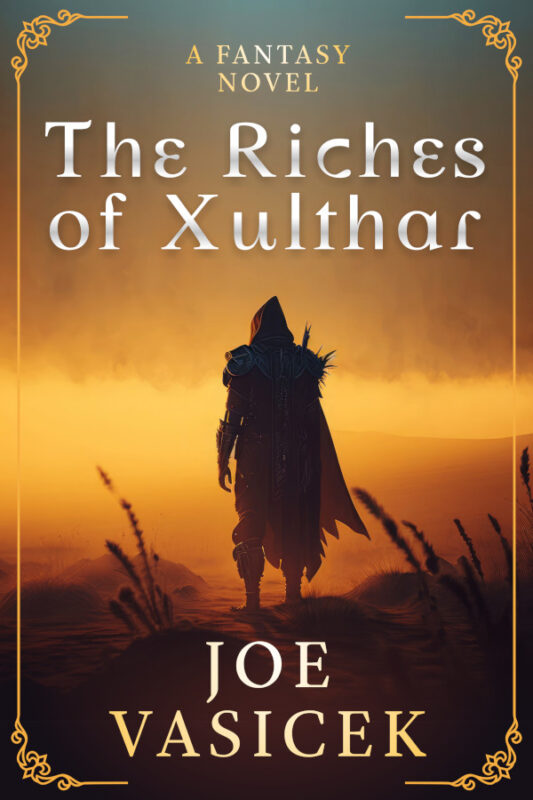
What happens when treasure is not just dangerous, but spiritually corrupting? In The Riches of Xulthar, the lost city’s legendary wealth promises restoration, justice, power, and freedom—but every coin carries a curse. This standalone sword-and-sorcery fantasy adventure asks whether cursed treasure can ever be used for righteous ends, or whether some forms of wealth must be rejected before they turn heroes into monsters.
Where the Idea Came From
The Riches of Xulthar began as an experiment in AI-assisted storytelling: a fantasy adventure story in the style of Robert E. Howard. But to make it different from a generic AI story, I added this theme and used it to shape the story. From that, the story grew into a full novel about a fallen nobleman, a freed slave, a ruined desert city, and a treasure that corrupts everyone who seeks to possess it. As I developed the story through outlining, drafting, humanizing, and revision, the cursed wealth of Xulthar became more than just a sword-and-sorcery adventure hook—it became the moral heart of the book.
How the Corrupting Power of Wealth Shapes the Story
The world of The Riches of Xulthar has already been broken by plague, famine, war, and collapse. Into that shattered world comes the coin of Xulthar, which appears at first to restore trade and stability. But the coin is cursed: it slips away from honest farmers, tradesmen, and laborers, while multiplying in the hands of corrupt princes, dishonest merchants, slavers, and men who grow rich through exploitation. In other words, the wealth of Xulthar does not merely reveal greed—it rewards it.
That curse is personal for Roderick of House Valtan. His father lost everything for speaking the truth about the coin, and Roderick seeks the lost city because he believes its treasure can restore his family’s honor. That makes his temptation more dangerous than simple greed. He does not want riches merely for pleasure or indulgence. He wants them for justice, restoration, and noble purpose. He imagines all the good he could do with Xulthar’s wealth: rebuild his house, right old wrongs, and even free the enslaved. But the deeper horror of Xulthar is that cursed wealth can twist even righteous desires into chains.
The Dark King embodies that corruption. He thinks he rules Xulthar’s treasure, but in the end, he is also enslaved by it. The final test of the book is not whether Roderick can defeat the Dark King in battle, but whether he can refuse the treasure afterward. In many fantasy adventure stories, the hero wins the hoard as his reward. In The Riches of Xulthar, the hoard is the final enemy. Roderick’s true victory comes when he rejects the riches entirely, breaking the illusion that cursed power can ever restore true honor.
What the Corrupting Power of Wealth Says About Us
The danger of wealth is not only that it makes people greedy. The deeper danger is that it gives greed a language of virtue. Wealth can promise safety, influence, justice, independence, even charity. It can whisper that the world would be better if only the right person held enough power. But The Riches of Xulthar suggests that no treasure built on corruption can produce freedom, no matter how noble the intention. True riches are found not in gold, rank, or conquest, but in love freely given, honest labor, family, peace, and the courage to walk away from power that would destroy the soul.
Why This Theme Matters to Me
When I wrote The Riches of Xulthar, I was also thinking a lot about creativity, technology, ownership, and what makes a story truly human. In a way, that connects directly to the theme of cursed wealth. Tools, power, money, and technology are not evil by themselves, but they become dangerous when we let them own us. For me, the heart of this book is Roderick’s final choice: to refuse the treasure, keep his soul, and build something honest with the woman he loves.
Where to Get the Book




Related Posts and Pages
Explore my other standalone books here.
Return to the book page for The Riches of Xulthar.