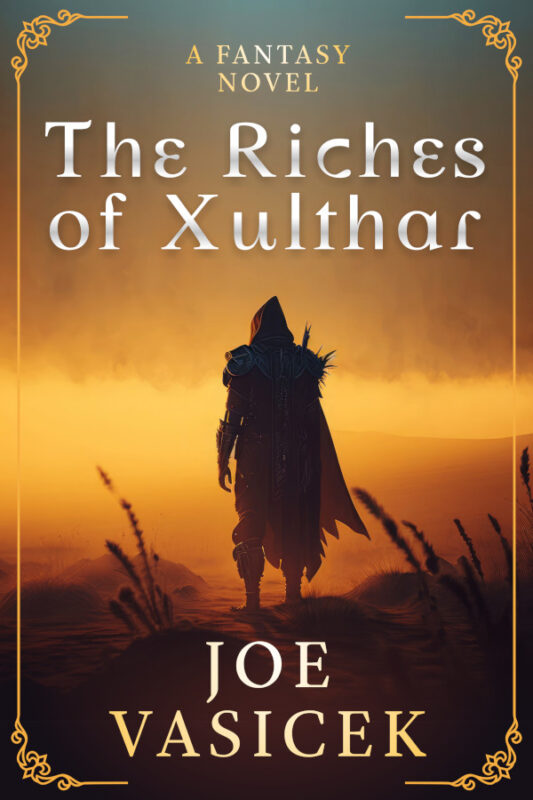
The Riches of Xulthar is a sword-and-sorcery desert adventure about a fallen nobleman, a freed slave woman, and a legendary lost city whose treasure may be more curse than blessing. It delivers a fast-moving heroic fantasy quest with cursed coin, dark sorcery, ruined temples, undead servants, moral temptation, and a slow-burning bond between two wounded people learning what freedom really means.
What Kind of Reader Will Love The Riches of Xulthar?
If you love classic sword-and-sorcery adventures with lost cities, cursed treasure, desert ruins, dark kings, monster-haunted catacombs, and heroes who have to fight both outward evil and inward temptation, then The Riches of Xulthar is probably your kind of story.
If you enjoy fantasy about honor, freedom, slavery, moral courage, and the corrupting power of wealth, this story gives those themes a mythic adventure shape: a dangerous quest across the wastes, a cursed city at the end of the road, and two protagonists who must decide what they are truly willing to serve.
If you like romantic fantasy where the emotional bond grows out of danger, trust, sacrifice, and shared moral struggle, Roderick and Laria’s journey gives the story a strong character-driven heart beneath the sword fights and sorcery.
If you enjoy fantasy that feels old-school in its adventure structure but more intimate in its emotional focus, The Riches of Xulthar blends pulp adventure, moral fantasy, and redemptive romance into a compact, high-stakes quest.
What You’ll Find Inside
Roderick is a disgraced nobleman seeking the lost city of Xulthar in the hope of breaking the curse that destroyed his family’s honor. Along the way, he rescues Laria, a slave woman who has never truly owned anything—not even herself—and their journey through the desert becomes as much about freedom, agency, and love as it is about cursed treasure and dark magic. The tone is adventurous, mythic, sensual, and morally serious, with fast-paced action, eerie ruins, dangerous supernatural encounters, and a hopeful emotional arc beneath the darkness.
What Makes The Riches of Xulthar Different
Readers who enjoy Robert E. Howard-style lost-city adventure, classic sword-and-sorcery quests, and treasure-hunting fantasy will recognize the familiar pleasures: desert wastes, ancient ruins, sorcerous kings, monster-haunted temples, and a warrior with a sword in his hand. But The Riches of Xulthar turns the treasure quest inward by asking whether wealth can ever restore honor, whether freedom is worth its burden, and whether a man can reject the very prize he set out to claim. Unlike many old-school sword-and-sorcery stories, the female lead is not merely a prize, temptation, or rescued captive; Laria’s moral insight and growing agency become essential to the heart of the story. The result is a heroic fantasy adventure that uses the lost-city quest to explore slavery, self-mastery, family, corruption, and the kind of love that makes freedom meaningful.
What You Won’t Find
You won’t find a sprawling epic fantasy cast, court intrigue, or a heavily political worldbuilding saga; this is a focused sword-and-sorcery quest built around two central characters and one cursed destination. You also won’t find nihilistic grimdark: the story contains violence, slavery, sensual temptation, dark magic, and peril, but its moral center remains hopeful. This is not a sanitized cozy fantasy, but neither is it cynical or despairing.
Why I Think You Might Love It
What I love about The Riches of Xulthar is that it takes the classic fantasy question—“What if the treasure is cursed?”—and makes it personal. Like Queen of the Falconstar, this is a story about power, agency, and a woman learning to stand in a world that wants to use her, but here that struggle is filtered through mythic sword-and-sorcery rather than space opera. Roderick’s quest begins as a search for wealth and restored honor, but the real treasure is the freedom he and Laria learn to choose together: freedom from slavery, freedom from despair, freedom from the lies of cursed power, and freedom to build a new life out of the ruins of the old one.
Where to Get the Book








Related Posts and Pages
Explore my other standalone books here.
Return to the book page for The Riches of Xulthar.