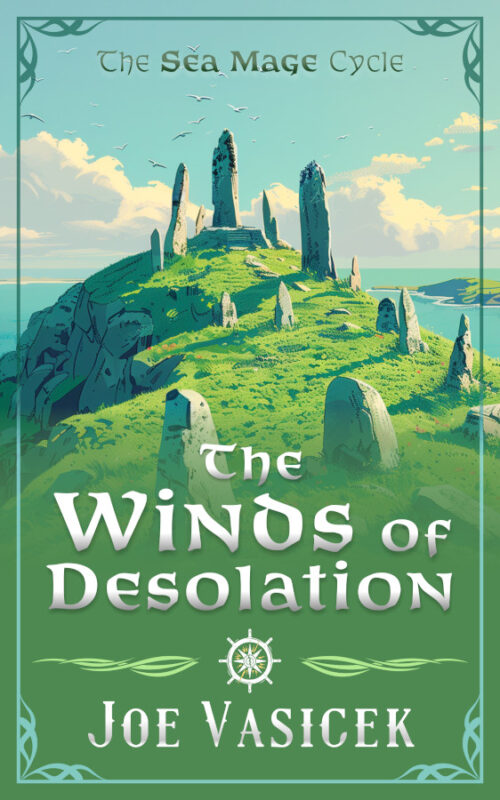
Healing a Cursed Land in The Winds of Desolation

Fantasy often asks what heroes will risk to save their people, but it also asks a deeper question: what does it take to heal a world that has already been broken? In The Winds of Desolation, the land itself bears the scars of ancient wrongdoing. The story follows characters who must confront the past, not merely to survive its consequences, but to restore what was lost.

Where the Idea Came From

The idea behind this story grew from a fascination with how places carry history. Some landscapes seem peaceful and alive, while others feel haunted by the memory of what happened there long ago. That contrast led to a simple “what if”: what if a land could be wounded by the choices of those who once ruled it, and what if healing it required courage from a new generation willing to face that past instead of fleeing from it?

How Healing a Cursed Land Shapes the Story

In The Winds of Desolation, the curse hanging over the land is not just a magical obstacle. It is the result of ancient decisions that reshaped the world and left lasting consequences behind. The storms, the strange magic, and the dangers the characters face are all symptoms of something deeper—a broken balance between power, responsibility, and the land itself.

This idea drives the choices the characters must make. Some want to escape the cursed region and leave its mysteries behind. Others believe the only path forward is to confront the past and repair what was damaged. As alliances form and secrets emerge, the question becomes clear: is the desolation inevitable, or can courage and sacrifice restore life to a place that seems beyond saving?

What Healing a Cursed Land Says About Us

Stories about cursed lands resonate because they echo a truth about human life: our choices shape the world we leave behind. Just as the characters in the story inherit the consequences of earlier generations, people in the real world often find themselves living with the results of decisions they did not personally make. The hope at the heart of this theme is that broken things—whether landscapes, communities, or relationships—are not beyond healing if someone is willing to take responsibility and begin the work of restoration.

Why This Theme Matters to Me

One of the ideas that kept returning to me while writing this story is that the world is never truly static. Every generation inherits something—sometimes something beautiful, sometimes something damaged. I wanted to explore what it means to step into that inheritance with humility and courage, and to believe that even a wounded land can be made whole again if people refuse to abandon it.

Where to Get the Book

Related Posts and Pages

Explore the series index for The Sea Mage Cycle.

Return to the book page for The Winds of Desolation.

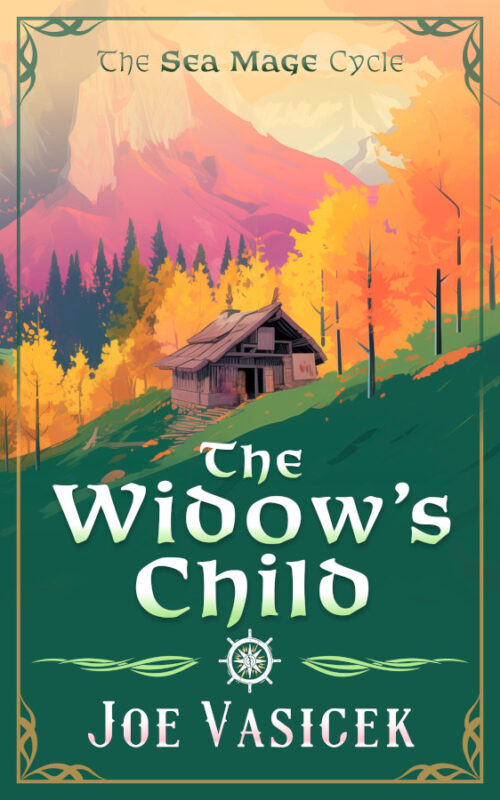
A Mother’s Love in The Widow’s Child

Fantasy stories often explore the idea of protecting hope in a dark world. In The Widow’s Child, that struggle becomes intensely personal. The story follows Elara, a widowed mother raising her daughter Seraph in secrecy, knowing the child’s unusual gifts could draw the attention of dangerous powers. When the wider world begins to close in, Elara must decide how far she is willing to go to keep her daughter safe—even if it means sacrificing the fragile life they have built together.

Where the Idea Came From

Many fantasy stories revolve around prophecy, destiny, and the rise of powerful heroes. But I was interested in the quieter question behind those stories: What does it feel like to be the parent of a child caught in something larger than herself? The idea for The Widow’s Child grew out of that tension—between epic destiny and the ordinary, human instinct to protect a child. I wanted to explore what happens when a mother’s love collides with prophecy, power, and the dangerous ambitions of those who would use a gifted child for their own ends.

How A Mother’s Love Shapes the Story

From the beginning of the novel, Elara’s choices are driven by one priority: keeping her daughter Seraph safe. She lives in isolation, hides their past, and carefully controls the small world Seraph grows up in. What might look like caution or secrecy to an outsider is, in truth, a form of devotion. Elara knows that the world beyond their quiet refuge is dangerous—and that Seraph’s unusual gifts make her especially vulnerable.

That love becomes the engine of the story’s major decisions. When strangers appear, when the past threatens to catch up with them, and when darker forces begin to move against Seraph, Elara repeatedly faces impossible choices. Again and again she chooses the same path: protect her daughter, whatever the cost. Her love is not passive or sentimental. It is fierce, protective, and sometimes painfully sacrificial.

This also shapes the emotional core of the book. While prophecy and magic swirl around Seraph’s future, Elara never sees her first as “the chosen one.” She sees a child who deserves safety, warmth, and a chance to grow up. That tension—between destiny and motherhood—runs through every major conflict in the story.

What A Mother’s Love Says About Us

Stories about heroes often focus on strength, power, or destiny. But the deeper truth behind many heroic journeys is love—the love that makes sacrifice meaningful and courage possible. A parent’s love is one of the clearest examples of this. It asks people to endure hardship, take risks, and face fear for the sake of someone else’s future.

In that sense, The Widow’s Child reflects something universal. Across cultures and histories, the willingness of parents to protect their children has shaped countless acts of courage. The novel asks what happens when that same instinct enters a world of prophecy, magic, and danger—and whether love might ultimately be stronger than the darkness gathering around it.

Why This Theme Matters to Me

Before I became a parent, I could imagine heroic sacrifices in the abstract. Afterward, those sacrifices became personal. Suddenly the idea of protecting a child—even at terrible cost—felt real in a way it never had before. The Widow’s Child grew out of that realization. Beneath the magic and adventure, it’s a story about the fierce, stubborn love that parents feel for their children—and the hope that such love might still matter in a dangerous world.

Where to Get the Book

Related Posts and Pages

Explore the series index for The Sea Mage Cycle.

Return to the book page for The Widow’s Child

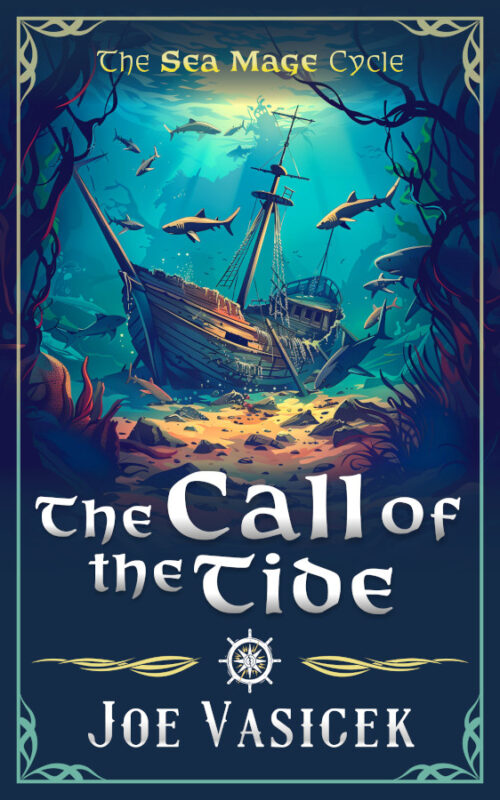
The Temptation of Power in The Call of the Tide

What would you do if the sea itself answered your command? If you could still storms, command ships, and crush your enemies with a single word—would you trust yourself to stop? The Call of the Tide is built around that question: not whether power exists, but whether the human heart can survive holding it.

At its core, this maritime epic fantasy asks a timeless question familiar to readers of artifact-driven fantasy like The Lord of the Rings: Is power something you wield—or something that slowly begins to wield you?

Where the Idea Came From

I’ve always been fascinated by stories where the very thing that makes a hero extraordinary is also what threatens to unmake him. Sea legends, pirate lore, and epic fantasy artifacts all circle the same idea: control over nature feels like freedom, but it can become domination in disguise. I wanted to write a story about a young sea mage offered the ultimate prize—command of wind and wave—and ask a simple “what if”: What if the greatest act of heroism isn’t using power well, but refusing it entirely?

How the Temptation of Power Shapes the Story

From the beginning of The Call of the Tide, power arrives not as brute force but as validation. Samuel has spent his life misunderstood and underestimated. When the Tidecaller’s Amulet offers him mastery over the ocean, it doesn’t just promise strength—it promises identity. It tells him he was meant for more. That subtle appeal is what makes the temptation dangerous.

As the story unfolds across privateer decks, naval commissions, and shadowed cult conspiracies, every major conflict circles back to the same pressure point: Will Samuel use the power available to him to secure victory quickly—or will he accept the slower, harder path of trust, loyalty, and restraint? The amulet can solve problems. It can silence enemies. It can ensure survival. But each time Samuel leans toward it, he risks becoming less himself and more a vessel for something colder and more absolute.

The true battle of the book isn’t fought only on the sea. It’s fought in moments of humiliation, captivity, and fear—when power feels like the only way to regain control. In the climax, Samuel must confront the ultimate realization that victory at any cost is not victory at all. The story becomes not just a tale of sea magic and naval adventure, but a moral test: is it better to rule through force, or to remain human?

What the Temptation of Power Says About Us

Power rarely tempts us with cruelty. It tempts us with relief. It whispers that if we just had more influence, more control, more authority, we could fix what hurts and silence what threatens us. The Call of the Tide explores that universal pull—the desire to stop feeling small, exposed, or powerless—and suggests that the line between protection and domination is thinner than we think. True strength may not lie in mastering the storm, but in mastering ourselves.

For readers who enjoy epic fantasy about moral choices, sea magic, artifact corruption arcs, and character-driven coming-of-age stories, this theme is at the heart of the journey.

Why This Theme Matters to Me

When I wrote The Call of the Tide, I was thinking a lot about what it means to grow into responsibility without losing your soul. Power, whether it’s talent, authority, or influence, always comes with a quiet test attached. I care about stories where ordinary people are offered something extraordinary—and have to decide what kind of person they will become when no one can force their hand. That question still feels real to me, and I hope it feels real to readers too.

Where to Get the Book

Related Posts and Pages

Explore the series index for The Sea Mage Cycle.

Return to the book page for The Call of the Tide.