Humility and Leadership in The Sword Keeper

What makes someone worthy to lead: strength, status, skill, or something deeper? The Sword Keeper is a chosen-one fantasy about a tavern girl who is handed a legendary sword, a dangerous prophecy, and a responsibility she never asked to carry. At the heart of the story is the idea that true leadership begins not with power, but with humility.

Where the Idea Came From

The first spark for The Sword Keeper came when I was taking Brandon Sanderson’s writing class at BYU, around the time he had just published Warbreaker. I loved the idea of a sentient sword as one of the characters, but the story truly came alive later, after I moved to the Republic of Georgia to teach English. The mountains, villages, dances, family names, food, roads, and little backcountry details of the book all grew out of my time there, especially in Kutaisi and the mountain village of Rokhi.

How Humility and Leadership Shape the Story

Tamuna is not the obvious person to bear Imeris. She is not a warrior, a noble, a trained monk, or a commander. She is a tavern girl from a mountain village, more familiar with chores, travelers, and local gossip than with swords, strategy, or war. That is exactly what makes the theme work. The sword does not choose the strongest person in the room. It chooses someone who can learn, listen, care, and carry power without treating it as a prize.

Alex is the clearest contrast. He has the training, discipline, courage, and martial skill that Tamuna lacks. He once hoped the sword would choose him, and part of him still believes he would have been the better bearer. But his struggle shows why humility matters. He has to learn that service is not failure, and that leadership is not always given to the person who looks most qualified. By the end, he recognizes Tamuna as the true sword bearer because she treats command as a sacred burden rather than a personal honor.

This theme also shapes Tamuna’s growth. She does not become a leader by pretending she is fearless or invincible. She becomes a leader by accepting responsibility, listening to counsel, protecting her friends, and slowly learning how to make decisions that affect more lives than her own. When she realizes that leadership means deciding life and death for those who follow her, Alex tells her that the fact she treats that responsibility seriously is probably why Imeris chose her.

What Humility and Leadership Say About Us

Most of us are tempted to think leadership belongs to the confident, the talented, the powerful, or the people who seem born for greatness. But real leadership often begins with the person who understands the weight of responsibility. Humility does not mean weakness. It means knowing that other people’s lives matter, that power can corrupt, and that courage is only noble when it serves something beyond itself. That is why Tamuna’s journey matters: she is not chosen because she wants glory, but because she can learn to serve.

Why This Theme Matters to Me

I care about this theme because I know what it feels like to be unprepared for the road ahead. When I first began working on this story, I was trying to launch a writing career during a difficult season, with discouraging book sales and few good prospects outside dead-end jobs. Moving to Georgia became one of those unexpected life turns that gave me more than I knew I needed. In a way, Tamuna’s story grew out of that same feeling: being called into something larger than yourself, not because you feel ready, but because the road has opened and you have to decide whether to take the next step.

Where to Get the Book

Related Posts and Pages

Explore the series index for The Twelfth Sword Trilogy.
Return to the book page for The Sword Keeper.

Is The Sword Keeper for You?

The Sword Keeper is a coming-of-age epic fantasy about a village tavern girl chosen by an ancient sentient sword to stand against a rising empire of corrupted blades, dark mages, and enslaving powers. It delivers a classic quest-fantasy experience with mountain passes, warrior monks, sword training, prophecy, friendship, danger, and a young heroine slowly learning that wisdom matters as much as strength.

What Kind of Reader Will Love The Sword Keeper?

If you love…

  • classic epic fantasy quests with ancient prophecies, enchanted swords, lost orders, and rising dark empires
  • young heroines who start ordinary, frightened, and untrained, then grow into courage and command
  • sentient magical weapons with personality, memory, moral purpose, and ancient secrets
  • friendship-driven fantasy where loyalty, sacrifice, and trust matter as much as battle skill
  • mountain settings, old fortresses, warrior cultures, road journeys, and a sense of mythic history

…then The Sword Keeper is probably your kind of story.

What You’ll Find Inside

Tamuna Leladze is a curious tavern girl from the mountain kingdom of Kutaisa whose life changes when she touches Imeris, the twelfth and final enchanted sword of an ancient order. Suddenly bonded to a blade that can speak into her mind, share the memories of past bearers, and train her for a war she never asked for, Tamuna is forced to flee her home with Nika, her loyal childhood friend, and Alex, a proud warrior monk who resents that the sword chose her instead of him. The story is adventurous, earnest, and emotionally sincere, with fast-moving escapes, training sequences, strategic lessons, battlefield danger, and a hopeful but serious tone.

What Makes The Sword Keeper Different

Readers who enjoy the chosen-one structure of classic fantasy will find familiar pleasures here: a humble protagonist, a sacred weapon, a broken order, and a shadowy enemy moving across the map. But The Sword Keeper stands apart by making the sword itself one of the central characters, not just a magical object or symbol of power. Imeris is teacher, mentor, conscience, strategist, and ancient witness, while Tamuna’s growth depends less on becoming physically unstoppable and more on learning judgment, courage, leadership, and self-command. The setting also draws heavily from the Caucasus and the Republic of Georgia, giving the mountain villages, dances, names, roads, food, and landscapes a flavor that feels distinct from more familiar medieval-Western fantasy worlds.

What You Won’t Find

This is not grimdark fantasy, and it is not a cynical deconstruction of the chosen-one story. Readers looking for morally gray nihilism, graphic sensuality, or a story where everyone is corrupt may not find what they are looking for here. The violence and danger are real, but the heart of the book is earnest, heroic, and fundamentally hopeful.

Why I Think You Might Love It

I wrote The Sword Keeper out of my love for stories where ordinary people are called to become more than they ever imagined. Much of the world building grew out of my time teaching English in the Republic of Georgia: the city of Kutaisa, the mountain pass, the dancing, the family names, the backcountry details, and even small moments like Nika caring for the weakest chick in a brood all came from things I saw or experienced firsthand. I think that gives the story a lived-in texture beneath the fantasy adventure—a sense that Tamuna’s world is not just a backdrop, but a place worth saving.

Where to Get the Book

Related Posts and Pages

Explore the series index for The Twelfth Sword Trilogy.

Return to the book page for The Sword Keeper.

The Temptation of Power in The Call of the Tide

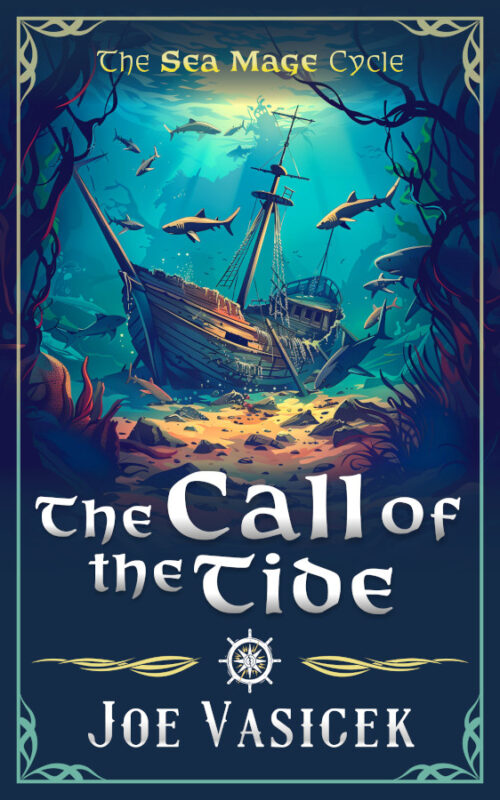
What would you do if the sea itself answered your command? If you could still storms, command ships, and crush your enemies with a single word—would you trust yourself to stop? The Call of the Tide is built around that question: not whether power exists, but whether the human heart can survive holding it.

At its core, this maritime epic fantasy asks a timeless question familiar to readers of artifact-driven fantasy like The Lord of the Rings: Is power something you wield—or something that slowly begins to wield you?

Where the Idea Came From

I’ve always been fascinated by stories where the very thing that makes a hero extraordinary is also what threatens to unmake him. Sea legends, pirate lore, and epic fantasy artifacts all circle the same idea: control over nature feels like freedom, but it can become domination in disguise. I wanted to write a story about a young sea mage offered the ultimate prize—command of wind and wave—and ask a simple “what if”: What if the greatest act of heroism isn’t using power well, but refusing it entirely?

How the Temptation of Power Shapes the Story

From the beginning of The Call of the Tide, power arrives not as brute force but as validation. Samuel has spent his life misunderstood and underestimated. When the Tidecaller’s Amulet offers him mastery over the ocean, it doesn’t just promise strength—it promises identity. It tells him he was meant for more. That subtle appeal is what makes the temptation dangerous.

As the story unfolds across privateer decks, naval commissions, and shadowed cult conspiracies, every major conflict circles back to the same pressure point: Will Samuel use the power available to him to secure victory quickly—or will he accept the slower, harder path of trust, loyalty, and restraint? The amulet can solve problems. It can silence enemies. It can ensure survival. But each time Samuel leans toward it, he risks becoming less himself and more a vessel for something colder and more absolute.

The true battle of the book isn’t fought only on the sea. It’s fought in moments of humiliation, captivity, and fear—when power feels like the only way to regain control. In the climax, Samuel must confront the ultimate realization that victory at any cost is not victory at all. The story becomes not just a tale of sea magic and naval adventure, but a moral test: is it better to rule through force, or to remain human?

What the Temptation of Power Says About Us

Power rarely tempts us with cruelty. It tempts us with relief. It whispers that if we just had more influence, more control, more authority, we could fix what hurts and silence what threatens us. The Call of the Tide explores that universal pull—the desire to stop feeling small, exposed, or powerless—and suggests that the line between protection and domination is thinner than we think. True strength may not lie in mastering the storm, but in mastering ourselves.

For readers who enjoy epic fantasy about moral choices, sea magic, artifact corruption arcs, and character-driven coming-of-age stories, this theme is at the heart of the journey.

Why This Theme Matters to Me

When I wrote The Call of the Tide, I was thinking a lot about what it means to grow into responsibility without losing your soul. Power, whether it’s talent, authority, or influence, always comes with a quiet test attached. I care about stories where ordinary people are offered something extraordinary—and have to decide what kind of person they will become when no one can force their hand. That question still feels real to me, and I hope it feels real to readers too.

Where to Get the Book

Related Posts and Pages

Explore the series index for The Sea Mage Cycle.

Return to the book page for The Call of the Tide.








