According to Merriam-Webster, “virtue signaling” is:
the act or practice of conspicuously displaying one’s awareness of and attentiveness to political issues, matters of social and racial justice, etc., especially instead of taking effective action.
Because it is much easier to signal your virtue than it is to actually be virtuous, the people who virtue signal the loudest also tend to be the ones who have something they’re trying to cover up. This hypocrisy is a big part of what makes virtue signaling so obnoxious.
Time for me to spill a little tea. A couple of years ago, after I wrote “Christopher Columbus: Wildcatter,” I got an acceptance from the editor of Interzone. It wasn’t formalized yet, but he expressed over email that he was interested in purchasing the publishing rights for that story, the sequel, and possibly others after. It got far enough along that we were going back and forth on editorial details, our vision for the stories, etc.
Then the time came for him to send me a contract. Aaand… he ghosted me. Flat out ghosted me. A month went by without any correspondence at all. I didn’t want to seem too forward, but I also was starting to get a little concerned. So I sent out a brief follow-up email, asking about the contract… and I got a response that read like something copy-pasted from a form rejection.
Now, as far as literary transgressions go, that’s kind of tame. It’s not like the editor owed me money and refused to pay. And as far as I know, Interzone is prompt with all of their payments and pays all of their authors in full. After all, everyone deserves the benefit of the doubt.
But that sort of unprofessionalism really wasn’t cool, either. In fact, it was enough that I stopped sending Interzone any submissions. After all, if the editor saw nothing wrong with yanking my chain around before he published me, that’s kind of a yellow flag. Not to mention that it left a very sour taste in my mouth.
So when I saw this story from Jon Del Arroz, with the editor of Interzone accusing Asimov’s of using AI art, and using that as a pretext to blacklist all of their authors, I immediately recognized that sort of behavior for what it is: virtue signaling. Which made me wonder: how much of the anti-AI vitriol that’s ubiquitous in online writing communities these days really just a new form of virtue signaling?
Think about it. It explains so much about the insane anti-AI faux controversies that have been blowing up around 2025 WorldCon. For more than a decade now, the people chasing the Hugo Award have been among the worst offenders of gratuitous virtue signaling (especially Scalzi). It also explains why so much of the anti-AI content on YouTube is less about presenting well-reasoned arguments, and more about sighing dramatically or making snide, sarcastic remarks. Virtue signaling always appeals to pathos before it appeals to reason.
I expect this phenomenon is going to get a lot worse in the next few years, at least until AI-assisted art and writing become normalized (which is going to happen eventually, it’s just a matter of time and degree). So the next time you see someone publicly posting about how horrible it is for creatives to use AI, take a good, hard look at the person leveling the accusations. Chances are, they’re just virtue signaling.
Two thousand eight was the year that I took Brandon Sanderson’s writing class and decided to become a professional fiction author. It was also the year that I discovered David Gemmell and Robert Charles Wilson, two of my favorite authors. It was also the year that the world economy collapsed and Obama won the US election, so it was a very eventful year.
Unfortunately, it was not a very good year for science fiction & fantasy—or at least, not for the Hugo Awards. I didn’t read any of these books until just recently, but I have to admit, I didn’t like any of them.
Perhaps, if I were a liberal atheist Jew, I would have enjoyed The Yiddish Policeman’s Union (not a conservative orthodox Jew, mind you—if anything, I probably would have hated it more). It’s not that I have anything personal against Jews or Jewish culture. I quite enjoyed Fiddler on the Roof. But unlike Fiddler on the Roof, The Yiddish Policeman’s Union doesn’t have many points of commonality with the wider culture to make it accessible.
For example, even though the traditions of Anatevka are likely different from the traditions of whatever culture we call our own, most of us understand the concept of tradition as a governing force in our lives, and can therefore sing along with the song “Tradition” and understand how it affects the story. But the plot and worldbuilding points of The Yiddish Policeman’s Union were so quirky and uniquely Yiddish that I just found it difficult to connect with or even follow them all.
Honestly, it would be a bit like if I were to write an alternate history where the Mormons were driven from the continental US after the Utah Wars, and settled in Hawaii and the Polynesian islands, except the main character drinks Coca Cola and has a complicated relationship with his polygamous step-mother (because plural marriage was never renounced in this alternate universe) while his sister, a three-cow woman, dances in the Polynesian cultural center… if you’re a Latter-day Saint, you’re probably chuckling, but you’ve got to be scratching your head if you’re not. And to be fair, it’s not like I’d never write a book like that—after all, I’m still keeping Starship Lachoneus in my back pocket—but I wouldn’t try to market it to a general audience, or expect it to win any mainstream awards.
[SPOILER (highlight to read)]
The real kicker, though, was when I skipped to the end and learned that one of the book’s plot twists was that a side character got a secret abortion. That just pissed me off.
I’ve writte at length why I can’t stand John Scalzi and have DNFed him as an author. His first book, Old Man’s War, was good (though I would probably DNF it if I read it again now). Everything else I’ve ever read of his is just terrible. YMMV.
I’ve also DNFed Charles Stross as an author, mostly for nihilisim. If someone gives me a good reason to try Halting State, I’ll pick it up, otherwise I’m just going to skip it.
As for Brasyl, when I ran it by Orion (the ChatGPT persona I created to screen these books for woke and objectionable content), here is what I got:
Set in three intertwining timelines within Brazil—the past, present, and near future—Brasyl explores themes of identity, quantum mechanics, and cultural complexity. From an ambitious reality TV producer in modern Rio, to a rogue Jesuit priest in the 18th century, to a futuristic tech-savvy entrepreneur, the characters navigate moral dilemmas and existential challenges as their stories intersect in surprising ways. The novel combines speculative science with the vibrant, chaotic energy of Brazil.
Content Warnings:
Explicit Content: The novel contains scenes of violence, some of which are intense, and mature themes including sexual content. The explicitness aligns with the gritty, unflinching tone of the story’s portrayal of both human and cultural dynamics. “Woke” Elements: McDonald incorporates themes of globalization, colonialism, and social inequality, reflecting a nuanced perspective on Brazil’s history and culture. The narrative celebrates diversity and critiques systemic injustices, which some readers may view as overtly progressive. However, these themes are intricately tied to the world-building and character arcs. Overall Assessment: Brasyl is a vivid, ambitious novel that combines speculative science with cultural and historical depth. While its explicit content and progressive themes may not suit all readers, those who enjoy richly layered storytelling with a strong sense of place will find it a rewarding and thought-provoking read.
It’s kind of on the border, but there’s enough in there to convince me that this isn’t the kind of book for me. The world is full of lots of great books out there; why should I spend any time on this one?
Which brings us to Rollback. I wanted to like this book, and indeed got about a hundred pages into it before I decided to DNF it. Partly, it was because I lost interest. Partly, it was because the writing was just too literal and logical—especially the sexy parts, which didn’t offend me (the characters are married) so much as they were just plain awkward. It’s not like I hated the book—indeed, I’d probably finish it if I tried it again as an audiobook—but I couldn’t give it my vote. If it weren’t for the other books on the ballot this year, I would have just abstained, but the others were bad enough for me to rank them under No Award.
It seems like most of the internet is talking about the hilariously bad breakdancing performance given by Australia at the Paris Olympics. Apparently, the “athlete” in question is actually a university professor named Rachael Gunn who specializes in breakdancing studies, or some such nonsense, and the main reasons she got the nod to compete are 1) the Australian breakdancing scene is woefully small, 2) she’s (allegedly) an LGBTQ+ woman, with all the right political opinions, and 3) her husband was on the committe that made the decision to qualify her. Taking advantage of those three factors, she’s apparently made a name for herself in Australia, even winning some local competitions—because who would dare criticize such a stunning and brave LGBTQ+ woman? So of course, she went on to compete on the international scene… and made such a mockery of herself and her sport that the judges awarded her straight zeroes, and the Olympics committee pulled breakdancing from the 2028 Los Angelos Olympics. Wah wah.
While this story is rightly hilarious, and proves the eternal truth that wokeness ruins everything, I can’t help but notice the parallels between the state of Australian breakdancing, that someone so inept and untalented could leverage a “studies” degree to dominate it, and the current state of science fiction. Specifically, this is the comment that made me think about this, which is worth reading in full:
So I looked into this. I thought maybe I should feel sorry for the woman, athletes can choke, and maybe it was cruel for people to be making fun of her. Alternatively, I thought it may be possible she was led up the garden path, told she was good break dancer when she wasn’t, and… https://t.co/YQHA0K05wr
Rachael represents so much of what is totally lecherous about cultural studies academics. Pick a subject area that will be under-studied in your context, so you can rise through the ranks quickly (how many break dancing academics will there be in Australia?), and wreak absolute havoc in lives of the people you want to study. There is no limit to the sheer disrespect they will dole out, purely for self-advancement.
Now, I don’t think science fiction was ruined in quite the same way, ie by being dominated and colonized by academia through “studies” degrees. Science fiction was probably too large to be overtaken that way. However, the pattern is still similar, and from what I can tell, it goes something like this:
Step 1: Take over the institutions in the field that are primarily responsible for determining and evaluating excellence.
In Australia, the breakdancing field was small enough that academia was able to dominate and (for lack of a better word) colonize it, becoming the arbiters of excellence within that art. It certainly helped that the professor who had carved out this academic niche for herself was married to one of the judges in the committee that was tasked with determining excellence. This created an incestuous (and ultimately nepotistic) relationship between academia and the judging panels.
In science fiction, something similar happened with SFWA and the Hugo and Nebula awards. I’ve written before about how SFWA ruined science fiction, so I won’t repeat all that here. But the basic gist of it is this: as science fiction became more established, the organizations and publications that talked about science fiction became more authoritative on the subject of the genre than the actual writers themselves. Because of this, achieving recognition for excellence became less about creating works of actual merit, and more about gaining the approval of the people who had built their careers talking about science fiction, rather than actually creating it. And the best way to gain their approval was to join those institutions yourself, rising up in the pecking order until everyone else was beneath you.
This basically describes the career trajectories of John Scalzi and Mary Robinette Kowal, two insanely woke authors who leveraged their tenure as SFWA president for award nominations. Both of them seem to have spent at least as much time and effort talking about science fiction as they have in actually creating it: Scalzi through his blog, which he leveraged to get his first book deal, and MRK through both her blog and the Writing Excuses podcast.
Step 2: Purge those institutions until they are ideologically pure.
This step is critical. So long as the instutitions are focused on merit, the only way to climb the ranks is by creating something of merit. But once the institution has become ideologically possessed, with all of those who reject the dominant ideology being purged from positions of power, then merit no longer matters, and the way to the top becomes clear. Those who are the most ideologically pure, as demonstrated by their virtue signalling, will rise to the top. This has the added benefit of quelling all merit-based criticism, since those beneath you fear having their own ideological purity called into question.
From what I can tell, this is how Rachael Gunn rose to prominence in the Australian breakdancing scene. After all, once academia had colonized the field, who would dare question the merits of such a stunning and brave LGBTQ+ woman? In a similar manner, Scalzi and MRK rose to the top of SFWA by virtue signaling their own ideological purity and intersectional victimhood status, squelching any criticism by labeling their critics racist, sexist, bigots, homophobic, etc.
Step 3: Redefine excellence in your own image.
In the Australian breakdancing scene, this was accomplished through the combination of Rachael Gunn’s academic work and her husband’s position in the committee that qualified the Olympic competitors. And while it probably isn’t quite so blatantly nepotistic in the science fiction world, the pattern still holds true when you look at what the Hugos and Nebulas have become. This was what the Sad Puppies controversy was actually about, and because the Puppies lost, the Hugo and Nebula awards have been insufferably woke ever since:
Step 4: Use the captured institutions to purge the field of potential rivals.
The final step in this projection is to squash all of those people who represent a threat to your domination, because they have merit and you do not. Ignoring her perhaps overly generous assessment of Australian breakdancing, this is what Hannah Berrelli is talking about when she mentions all the “hundreds of Australian athletes who will have dedicated their entire lives to athletic excellence” whose blood, sweat, and tears were overshadowed and rendered irrelevant by Rachael Gunn’s Olympic stunt.
In science fiction, we see this in the fact that David Weber has never been nominated for a Hugo or a Nebula, or that Jim Butcher’s sole Hugo nomination lost to No Award. Both of these men are far better writers than the majority of award-winning authors, especially in our current era. You could make a solid argument that Dan Simmons or Orson Scott Card were superior, but Scalzi? Jemisin? Kingfisher?
And what about all of the new and relatively unknown authors? At least Weber and Butcher already have large followings, which they have rightfully earned through their merit. But when merit is no longer the determining factor in recognizing excellence within the field, what chance do talented up-and-coming authors have if they aren’t willing to play the ideological purity games? Answer: not a hell of a lot.
So while you laugh at how ridiculous Australia’s breakdancing performance was at the Olympics, understand that the same dynamic has been playing out in modern science fiction for years. And honestly, the results are no less ridiculous.
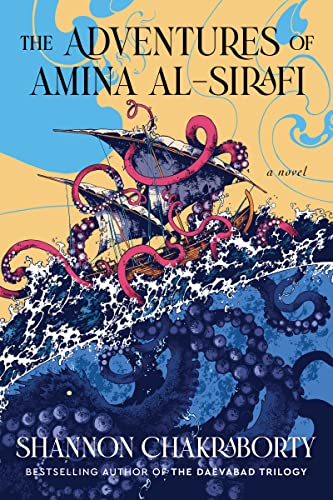
The Adventures of Amina al-Sirafi by Shannon Chakraborty
The Saint of Bright Doors by Vajra Chandrasekera
Translation State by Ann Leckie
Starter Villain by John Scalzi
Some Desperate Glory by Emily Tesh
Witch King by Martha Wells
The Actual Results
(To be determined…)
How I Would Vote
No Award
Explanation
For reasons that should be obvious after last week’s rant, I will not be voting in the actual Hugo Awards this year, principally because there’s no way in hell that I’m going to let these snobby wokescold blowhards have any of my money. But if I were going to vote in the 2024 Hugos, this is what my ballot would look like.
I did not even attempt to read Starter Villain by John Scalzi, because I knew that I would hate it, since 1) it was written by John Scalzi, the most insufferable former SFWA president (an impressive achievement), and 2) Daniel Greene did such a brutal takedown of the novel that I felt no need to read it afterward. But all of the other books I picked up and started, even though I ended up DNFing them all for various reasons.
The one that I feel most conflicted about is Some Desperate Glory by Emily Tesh, a debut novel. It didn’t hook me hard enough to push on past the red flags, but it did have an interesting start that made me want to read more. However, there were a lot of signs that this was the sort of book that I would throw across the room in disgust (“strong” female characters, fascist caricatures, anti-natalist Malthusian vibes (though I may be wrong about that), etc). Even after I read a spoiler-filled online synopsis, though, I still couldn’t tell if that would be the case. The thing that ultimately convinced me to DNF it, though, was the blurb that called it a “queer coming of age story.” A synonymous phrase for that would be “sexual grooming of a minor,” which I have absolutely no desire to read.
The one that I feel least conflicted about is Translation State by Ann Leckie. To demonstrate why, here is everything I read right up to the moment when I decided to DNF it:
Enae
Athtur House, Saeniss Polity
The last stragglers in the funeral procession were barely out the ghost door before the mason bots unfolded their long legs and reached for the pile of stones they’d removed from the wall so painstakingly the day before. Enae hadn’t looked back to see the door being sealed up, but sie could hear it
Yet another novel from Ann Leckie where the fake transgender pronouns are the most interesting and compelling thing about her characters, and also the basis for the entire book. Hard DNF.
The Adventures of Amina al-Sirafi had an interesting start, but like Some Desperate Glory, there were enough red flags to make me reluctant to keep reading, so I read a spoiler-filled synopsis and discovered that one of the characters who is central to the plot decides that she’s a boy instead of a girl, and socially transitions her gender as a major plot point. Which means that Chakraborty, a liberal white woman who converted to Islam, is writing less for a Muslim readership (which could have actually been interesting) and more for a woke white liberal woman readership, which is probably how this book got nominated for the Hugo in the first place. These days, if there are no lesbians, it’s gotta be trannies. Hard pass.
The Saint of Bright Doors is a textbook case of two tropes that I cannot abide in contemporary science fiction: “a profane and vulgar childhood” and “all true love is LGBTQ love.” In real life, childhood innocence is something that should be sacred and pure, but in fiction that purity is often sullied deliberately for purposes of plot and character development. Which is fine if it happens occasionally, or with a nod to the tragedy of it—if all of our characters had perfect lives, there would be no conflict worth writing about. But these days, it seems like every child in every book has a screwed up childhood, to the point where the authors seem to treat it with casual indifference. As for “all true love is LGBTQ love,” homosexual relationships are so overrepresented in fiction these days that the moment it’s casually dropped that the main character has a gay lover, my guard immediately goes up. Call me a homophobe if you want to. I don’t really care.
Witch King frankly just bored me. There was nothing about the main character that I found interesting or compelling, which is a shame, because Murderbot from Martha Wells’s series of the same name is one of the most interesting and compelling characters I’ve read in recent years. Also, there was just too much worldbuilding information dropped in the first couple of chapters, before I was really hooked to the story, that I found it difficult to follow. I had the same problem with Wells’s early fantasy novels, where it felt too much like work just to read them. If I’m going to do the work to get invested in a complex fantasy world, I want to know that there’s going to be a payoff at the end, and if the initial hook is weak, I have very little faith that the author can pull it off. Granted, Wells did pull off a satisfying ending with her murderbot novel, Network Effect, but the last two installments in the Murderbot series have disappointed me.
So who is actually going to win the Hugo Award this year?
Probably not Scalzi, because he’s a straight white male.
Vajra Chandrasekera has a much stronger position, given that 1) he’s brown, 2) he edited Strange Horizons for several years when it was a contender for the Hugos, and 3) The Saint of Bright Doors won the Nebula Award last year. However, his LGBTQ characters are of the vanilla variety, which works against him, and he’s not openly LGBTQ on any of his bios.
Martha Wells can probably pull a lot of votes from her Murderbot fans, but she’s also straight and white, which works against her.
Ann Leckie is also white, but she’s really inovative with those fake transgender pronouns, which gives her an edge… I suppose it depends on whether our current transgender moment is waxing or waning. And even if it is waning in the culture generally, science fiction has been so thoroughly captured by the wokescolds that it may still be enough to push her over the top.
S.A. Chakraborty is a straight white woman, which works against her, but she’s also a convert to Islam, which may give her an edge if she can play to the anti-semitic pro-Palestinian hysteria that’s the Current Thing right now. Even that might be a bit of a stretch, though, and I don’t see anything else that gives her an edge.
As for Emily Tesh, she’s more or less the dark horse in this race: an author so new that she doesn’t have a Wikipedia page yet, and she’s already won the Astounding Award and a World Fantasy Award. If her bio declared that she’s a lesbian, I would bet that she’s the favorite, since Arkady Martine pulled the same dark horse trick in 2019. But if she’s just another straight white woman, that dampens her odds considerably.
My prediction is that the Hugo will go to Vajra Chandrasekera for The Saint of Bright Doors, just because it’s already won the Nebula, and the same people who vote for the Nebulas also vote for the Hugos—even more so as the Hugos become increasingly irrelevant. Also, he’s the only non-white author on the ballot, and there’s probably going to be a lot of virtue signalling angst after the obvious racism that happened with the Hugos last year.
But the book with the best cover art is definitely Some Desperate Glory, followed closely by The Adventures of Amina al-Sirafi. The other covers are either mediocre or garbage (especially Translation State, which looks like 70s diarrhea).
I liked Six Wakes. It was a fun murder mystery on a spaceship, with cloning technology that led to some interesting twists (for example, everyone wakes up to discover their dead bodies floating everywhere, and the murderer doesn’t actually remember know who he/she was, because those memories weren’t uploaded to the database in time). It’s not up there with Dune or Hyperion, but it was a good read, with interesting world building and better-than-average attention to detail. There were a couple of passages that a conservative reader might consider woke, but it wasn’t enough to bother me.
Everything else from this year is pretty much terrible, in my opinion. I skipped The Stone Sky,Provenance, and Raven Strategem because those were all series that I had already DNFed. I could probably be persuaded to try Yoon Ha Lee’s Machineries of Empire series again (the first book was just too confusing and absurdly violent), but I have no desire to go back to Jemisin’s Broken Earth Trilogy or Leckie’s Ancillary Justice universe. Short version: Leckie’s entire career at this point seems to be premised on creating fantasy genders and playing to our culture’s current transgender moment, while Jemisin’s trilogy is the most anti-life (anti-pro-life?) thing I think I have ever read. Also, she’s suuuper anti-racist, which makes me think of this:
The Collapsing Empire was where I decided to give up on reading any more Scalzi. It’s basically an inferior clone of Star Trek, with random meaningless sex thrown in, which Scalzi somehow manages to make boring. I haven’t read Starter Villain and I don’t intend to, but many of this BookTuber’s criticisms of Scalzi’s writing apply to The Collapsing Empire too:
As for New York 2140, I DNFed after the first couple of pages when Robinson began to wax political, and not in a good way. I know that Kim Stanley Robinson is supposed to be one of the great SF writers of our time, but the only book of his that I’ve managed to get through was Red Mars (and that was over a decade ago). He’s one of those writers who wears his politics on his sleeve, and preaches more than he entertains. Also, he will occasionally throw in stuff that’s uncomfortably weird, like the Mars colonists having secret sex cult orgies in the farm modules. There was a time when the sex and the politics didn’t bother me as much, but it does now, so I’ve put him on my “skip this author” list, along with Ann Leckie, John Scalzi, and N.K. Jemisin.
I’ve found that Hugo Award winning / nominated books tend to fluctuate in decade-long waves, in terms of how much I enjoy them. Some decades are pretty good, others are just downright terrible. Generally speaking, the books from the 50s and early 60s were good if not great (though Dune is certainly a masterpiece), the late 70s had a couple of years with some hits and misses, and most of the books from the late 80s and early 90s were actually pretty good. But from the mid 60s through most of the 70s (and into the early 80s), the Hugos were generally garbage, mostly because of how they were saturated with radical feminism, Malthusian economics, and global coolingglobal warming climate change hysteria. Also, there were lots of communist “fellow travelers” writing during that era. After the mid 90s, it seems like the Hugos tried to become “dark and gritty,” just like comic books and epic fantasy. A lot of those old political trends from the 60s and 70s came back with a vengeance, and from the late 90s through the early 2010s, the books are really hit and miss for me.
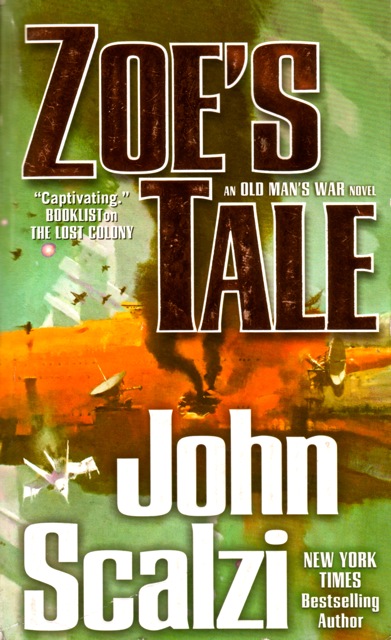
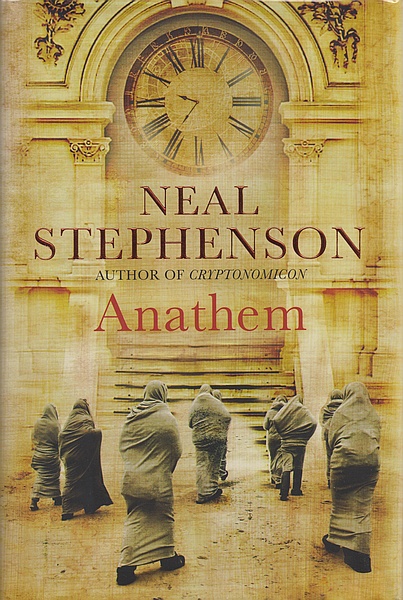
The year 2009 was a complete and total miss, in my opinion. I didn’t like any of the books or authors that were nominated that year, though I will admit that I skipped all but two of them. I’ve written before about how much I cannot stand Scalzi as either an author or a human being, and after trying to read his Interdependency novels, I’ve just completely sworn him off. Zoe’s War is technically a sequel to Old Man’s War, which I enjoyed at the time, but after all of Scalzi’s shenanigans I have no desire to finish that series. As for Neal Stephenson and Charles Stross, everything I’ve read from them is so loaded with gratiutous sex, graphic violence, and sheer unadulterated nihilism that I’ve sworn them off as well. Dark and gritty is almost always overrated.
Moving on to Little Brother… how can I put this? The book is about a teenage hacker and his high school buddies who fight back against an insidious surveillance state, which seeks to control every aspect of its citizens’ lives. Great concept… except that if you went back in a time machine and brought Cory Doctorow from 2009 into a debate with Cory Doctorow today, one of two things would happen: 1) the debate would turn into a vicious cage match, from which only one of them would leave alive, or 2) the older Doctorow would say “but a police surveillance state isn’t bad if the Democrats are in charge,” to which the younger Doctorow would say “you make a very good point, sir,” and the two would leave as best of friends. Which is to say that Cory Doctorow is a massive hypocrite when it comes to the lucrative merger of Big Tech and the state, and I can’t tell if his hypocrisy goes back all the way to the Bush years, or whether the election of 2016 broke him. Either way, I just could not get into Little Brother because of how thoroughly he’s flip-flopped on his views.
(As a side note, I really would like to see someone train two large language models on Doctorow’s writings, one from everything pre-Trump, and the other from everything post-Trump. It would be fascinating to pit those two models against each other in a simulated debate, because of how thoroughly he’s flip-flopped. Also, it would be entertaining to watch the real Cory Doctorow’s reaction to this simulated debate, because he’s written extensively about how much he hates ChatGPT and generative AI.)
With all of that said, however, I didn’t think Little Brother was terrible, even though I couldn’t finish it. As with Scalzi, it had less to do with the book itself and more to do with my opinion of the author, which is why I’ve decided to rank it above the other books below No Award. But I put it below The Graveyard Book, because there wasn’t really anything political or offensive in that one; it just wasn’t for me. I can’t affirmatively vote for The Graveyard Book, because I didn’t enjoy it enough to finish it, but if it had been a different year, I simply would have abstained instead of putting it below No Award.
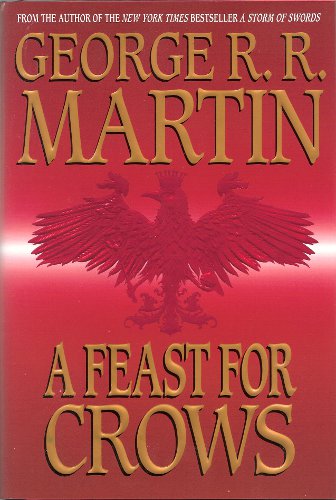
This is going to be controversial, but I don’t think any of George R.R. Martin’s A Song of Ice and Fire books should have been nominated for the Hugo Award. In the first place, those books are pure fantasy, and while the line between fantasy and science fiction can become blurry at times, with everyone drawing it in a slightly different place (Dragonriders of Pern, for example), I do think it’s important to draw that line somewhere, because each of us as readers draws that line somewhere. Some readers read only fantasy, some read only science fiction, and even among readers who read both, they scratch very different itches.
(As a side note, A Dance With Dragons came out right when I was indie publishing my first few books, and I remember being super annoyed that it was monopolizing all of the top spots on the Amazon bestseller charts for subgenres like science fiction > action & adventure, even though it was very clearly not a science fiction book. That annoyed me as both a writer and a reader.)
More than that, though… how do I say this? I know that a lot of people are (or were) huge fans of Game of Thrones, that it had a huge and lasting cultural impact, and that the writing quality of both the books and the miniseries was quite excellent, at least for the first few books/seasons… but to what end? The HBO series itself is blatantly pornographic, and the books are even worse, glorifying the immorality and horrific violence that characterizes the series. Worse, there is no good or evil in this world: only power. This means that there are no heroes, only victims and victimizers.
I’m not sure how much Game of Thrones is responsible for shaping our current cultural decay, and how much it was simply a reflection of the culture in which it was created, but this obsession with power and the victim-victimizer complex lies at the heart of all of the social pathologies currently driving the West to cultural and spiritual suicide. It’s the force driving our own modern Game of Thrones, between the MAGA disciples of orange Jesus and the machinations of our Big Tech and Deep State overlords, with their hordes of hypnotized NPC zombies protesting in behalf of [current thing], all while remaining carefully masked. It turns out that when you embrace Martin’s paradigm, rejecting good and evil for the pure pursuit of power, and define everyone by their victimhood status, it leads to the death of everything in your culture that is good, true, and beautiful.
And even laying all of that aside, the fact that Martin hasn’t finished the damned series yet has done more to destroy the epic fantasy genre than all the other things that his career has otherwise accomplished. If you’re a new fantasy writer and you have a great idea for an epic fantasy series, you’d better have a good day job or a sugar daddy/momma, because most readers won’t give your series a chance until after you’ve finished the last book. But can we honestly blame the readers for this, when Martin ran off with their money and left them all burned?
Back when Game of Thrones / A Song of Ice and Fire was still ascendant, fans and readers were all mesmerized by how skillfully George R.R. Martin could subvert their expectations and pull off twists that no one had foreseen. It turns out that the biggest expectation that Martin ever subverted was the expectation that he would finish the damned series.
Anyways, that’s enough ranting about George R.R. Martin and the pathological effect that I believe he’s had on the culture. I read A Game of Thrones back in 2010 and decided to skip the rest of the series. The writing was fantastic, but I hated all of the characters and could tell that things were going to get way too dark and way too graphic in the later books. And now, I wish I lived in a world where George R.R. Martin was still a mostly unknown midlist author, with a small cult following but not a lot of influence on the culture overall. It would be a much better world.
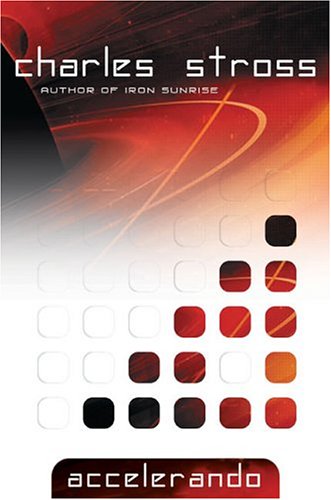
I skipped Accelerando, because I’ve read enough Charles Stross to know that his particular brand of grungy cyberpunk nihilism rubs me the wrong way. Learning the World wasn’t terrible, but I DNFed it because I got bored, though I could be persuaded to try it again. It was just too much of an idea book, without enough story to really hook me.
Old Man’s War… my thoughts on that one are complicated. I cannot stand Scalzi as either an author or a human being. He’s basically an obnoxious internet influencer who made it big back in the days of the blogosphere, before “influencer” was a job title. Of course, to be an influencer, you have to either 1) be an extremely attractive woman, or 2) be off your rocker somehow, and that definitely describes Scalzi. He is an obnoxious blowhard who likes to argue with people on the internet for fun and profit, except he’s apparently not as good at social media as he was at blogging, so he’s pivoted to writing science fiction and playing the SFWA mean girls game instead.
But most of that happened after Old Man’s War, so it’s not exactly fair to judge the book on all of that. And I have to admit, I enjoyed it back in 2008 when I read it. It’s basically a retelling of Starship Troopers and The Forever War, but without all of the nihilism and politics—and since the nihilism and the politics are the things that got me hung up on both books (though I actually enjoyed the politics of Starship Troopers; the part that slightly annoyed me was getting a lengthy treatise on human sociology instead of an adventure novel), Old Man’s War was basically a retelling with all of the good parts and less of the bad parts. So I’ll grudgingly give Scalzi his due and admit that his first book is good enough to deserve an affirmative vote.
But Robert Charle’s Wilson’s Spin is easily the best book on the ballot from this year, and possibly the best Hugo-nominated book that I’ve read from this whole decade. It’s fantastic. One of the best science fiction novels I’ve ever read. The rest of the trilogy is just as good, too. In fact, Spin and its sequel Axis were a huge influence on my own Genesis Earth, though it may not be obvious at first glance. I read Spin when I was studying overseas in Amman, Jordan, while I was still working on the first draft of Genesis Earth. The next year, I read a whole bunch of Robert Charles Wilson’s other books, and I have to say that I have yet to read a book he wrote that I didn’t enjoy. His books have had as much influence on me as Ursula K. Le Guin, and largely scratch the same itch.
So that’s how the 2006 Hugos shape up for me: three books that I didn’t like, and two that I did—and one of those books is one of my all-time favorites.
Alright, let’s tackle the most controversial Hugo awards since Sad Puppies 3—and possibly the most controversial Hugos ever!
The Nominees
Legends & Lattes by Travis Baldree
Nettle & Bone by T. Kingfisher
The Spare Man by Mary Robinette Kowal
The Daughter of Doctor Moreau by Silvia Moreno-Garcia
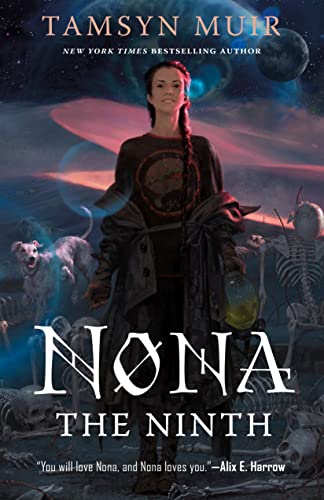
Nona the Ninth by Tamsyn Muir
The Kaiju Preservation Society by John Scalzi
The Actual Results
Nettle & Bone by T. Kingfisher
Legends & Lattes by Travis Baldree
The Kaiju Preservation Society by John Scalzi
The Daughter of Doctor Moreau by Silvia Moreno-Garcia
The Spare Man by Mary Robinette Kowal
Nona the Ninth by Tamsyn Muir
How I Would Have Voted
No Award
The Daughter of Doctor Moreau by Silvia Moreno-Garcia
Legends & Lattes by Travis Baldree
Explanation
The 2023 Hugo Awards were an epic clusterfuck, from which the Hugos might never recover (and honestly, I kind of hope they don’t). Not only did the organizers exclude a bunch of titles like Babel by R.F. Kuang that probably would have placed very high, if not outright won first place—excluded them for no other discernible reason other than that they might have offended the Chinese Communist Party, since China was hosting the awards—but they also disqualified thousands of Chinese ballots for the same reason that they disqualified thousands of Sad Puppy ballots in subsequent years since the big kerfluffle in 2015: namely, that they were Wrongfans having Wrongfun.
Apparently, to get on the Hugo ballot, you have to either 1) pander to or be a member of the SFWA mean girls club (for crying out loud, two of the authors on this year’s ballot were former SFWA presidents), or 2) write a lesbian love story. I suppose you can also get on the ballot if you write a love story that’s gay, transgender, polyamorous, or some other flavor of queer, but lesbians are easier because the male readers are less likely to be grossed out or confused by it.
Anyways, I didn’t enjoy any of these books, though I have to admit that I didn’t even try to read The Kaiju Preservation Society (because I cannot stand Scalzi, either as an author or a human. The Collapsing Empire with its random throwaway sex scene in the second or third chapter was the last straw for me) and The Spare Man (my wife picked it up and was so confused and turned off by the non-gendered pronoun dickery that I knew it was too woke for me). I DNFed Tamsyn Muir’s Locked Tomb series with Gideon the Ninth, for reasons that I detailed in my recap of the 2021 Hugo Awards.
As for Nettle & Bone, I was pleasantly surprised at first, because the love interest was heterosexual—which, for the Hugos, is very unusual these days. But there were other things about the book that turned me off, such as the anachronism of a religious medieval world that’s been gutted of anything religious that might offend a non-religious reader in 2023, and a very anti-natalist bias with some lines that could have come straight from Margaret Sanger. So that’s why I put Nettle & Bone below No Award, and didn’t even bother ranking it anywhere on my ballot.
Legends & Lattes wasn’t terrible, but I got bored after the first couple of chapters, and because of the lesbian love story I’m not too keen to try it again (though I suppose I could be persuaded otherwise). As for The Daughter of Doctor Moreau, I didn’t find anything objectionable with that one, and actually got about halfway through, but… I just didn’t care about any of the characters. Not a terrible book, but it just wasn’t for me.
Of the two, I think I liked The Daughter of Doctor Moreau better, or disliked it less, which is why I put it on the ballot above Legend & Lattes and below No Award. Why include anything on a ballot below No Award? Because the way that ranked choice voting works, you can still influence the outcome that way even if No Award is eliminated during the counting. It’s basically like saying: “I don’t think any of these books deserve an award, but if I had to award one of them, I’d give it to (1) and (2), in that order.”
So that’s my take on the infamous 2023 Hugo Awards. Frankly, I think it would have been much better if the Chinese wrongfans had completely taken it over, and made it so that Worldcon was held in China every other year, with Chinese authors dominating the Hugos from now on. There are certainly enough Chinese sci-fi readers to justify such a move. But alas, it seems that the Trufans are going to keep clutching the Hugos with a deathgrip until 1) they’re all dead (since most of them are boomers anyway), or 2) the Trufans and the Hugos both become culturally irrelevant, if indeed they aren’t already.
(Speaking of China, hi Mike Glyer! Still buying views from Chinese clickfarms to boost your online rankings? It must be a real slow news week if you pick up this blog for your File 770 pixel scroll.)
My 2022 reading resolution: Read or DNF every novel that has won a Hugo or a Nebula award, and acquire all the good ones.
Earlier this month, I finished my last Hugo/Nebula book and ordered the last two ones that I hadn’t yet acquired. The first of those (Powers by Ursula K. Le Guin) arrived just this morning, and the other one (Way Station by Clifford D. Simak) is supposed to arrive next week, so I think that now is a good time to do a retrospective and share some of my thoughts.
There were 104 books in total, including the most recent award winners (I decided not to count the retro-Hugos midway through the year). Of those, I’ve read 35 through from start to finish, and decided that 24 were worth keeping. The rest of them (69, or almost exactly two thirds) I DNFed.
Finishing one in three books is actually about on par for me. I’ve found that if I don’t allow myself to DNF books early and often, I just don’t read. Also, it doesn’t really surprise me that nearly one third of the books I read all the way through didn’t really impress me. What can I say—I’ve a very opinionated man.
Of the 28 books that have won both a Hugo and a Nebula, I finished 12 (or about two-fifths) and found that eight (or a little over a quarter) were worth keeping. So not much different than the overall totals.
Of the 45 books that won only a Hugo, I finished 18 (exactly two-fifths) and found that 14 (about a third) were worth keeping. So my personal taste seems to be tilted more toward the Hugo than the Nebula. The difference becomes even more stark when you take out the 20 books that were nominated for (but did not win) a Nebula, a whopping 16 of which I DNFed. Excluding those, we’re left with 25 books, 14 (or more than half) of which I finished, and 11 (or just under half) I thought were worth keeping.
The contrast becomes even sharper when we look at the Nebula-only winners. Out of the 31 books that didn’t win a Hugo but did win the Nebula, I finished only five (less than one-sixth) and found that only two were worth keeping. Both of those were books that weren’t even nominated for the Hugo. When we look at the 16 Nebula-winners that were nominated for a Hugo but didn’t win, I finished only two of them (one-eight) and didn’t think that any of them were worth keeping.
So the best predictor that I wouldn’t like a book is if it won a Nebula and was nominated for a Hugo, but didn’t win. In other words, if the SFWA crowd (which is mostly authors) said “this is the best novel published this year!” and the denizens of Worldcon said “yeah… no,” that almost guaranteed I would hate it. In fact, just getting nominated for a Nebula is enough to make a book suspect.
This is why, earlier in the year, I posited the theory that SFWA has done more to ruin science fiction than any other organization. I saw this trend coming all the way back in the spring, when I was only halfway through the reading list. In the early years, SFWA was all about politicizing science fiction, and in the last few years, it’s basically turned into a nasty bunch of mean girls all trying to get a Nebula for themselves.
I tracked a few other awards just to see if there were any correlations. For the 18 books that placed in any category in the Goodreads Awards, there were only four books that I finished and two that I thought were worth keeping. Network Effect by Martha Wells received 22,971 votes in the Science Fiction category in 2020, which came to 9.69%. Blackout by Connie Willis gained only 337 votes in 2010, but that was 9.19% back then. Both of those books were keepers. The only other book that got a higher percentage for its year was Redshirts by John Scalzi, with 4,618 votes at 10.82%, but I DNFed that one. Most Hugo/Nebula winning books didn’t even clear the 5% threshold in the Goodreads Choice Awards, and in my experience anything under 10% that doesn’t immediately jump out to me probably isn’t worth reading.
Of the six Hugo/Nebula books that were nominated for a Dragon Award, the only one I even really finished was Network Effect by Martha Wells. But that makes sense, since it’s no great secret that the Hugo/Nebula crowd is trying to sabotage the Dragons by pulling exactly the same shenanigans that they accused the Sad Puppies of doing. Accusation is projection is confession, after all. As of 2022, there has never been a Hugo/Nebula winning book that has also won a Dragon, and while part of me hopes that it stays that way, another part of me is very curious to read the first book that does.
Almost all of the 104 Hugo/Nebula winning books placed somewhere in the various Locus recommended reading lists, which isn’t surprising since those lists are generally regarded as feeders for the Hugos and Nebulas (and used to get more people voting in them, too). Of the seven books that weren’t on a Locus list, the only one I finished was They’d Rather Be Right by Mark Clifton and Frank Riley, which also has the distinction of being the most difficult book to find.
(A lot of people think They’d Rather Be Right was the worst book to ever win a Hugo, but I actually enjoyed it. Unlike most Hugo/Nebula books, it was remarkably anti-Malthusian, which is probably why it’s so hated. As for the worst book to ever win a Hugo, I personally grant that distinction to Dreamsnake by Vonda N. McIntyre.)
There were only ten Hugo/Nebula books that won or were nominated for a World Fantasy Award, and I only finished two of them (and didn’t think either were worth keeping). Perhaps that means that makes it the actual best predictor that I’ll hate a book, but ten is a pretty small sample size, so I’m holding off judgment for now.
The best two decades for me were the 50s (7 books, 4 keepers) and the 00s (16 books, 6 keepers), though the 80s came in close with five keepers out of sixteen books—and let’s be honest, Blackout and All Clear by Connie Willis are basically two halves of the same book. In contrast, the worst two decades were the 70s (only one keeper out of 13 total books) and the most recent decade, the 10s (15 books, 2 keepers).
So far, the 20s aren’t shaping up to be much better. In fact, I think it’s entirely fair to say that given the state of fandom since the election of President Trump (and the general state of insanity in this post-Trump era), a Hugo or a Nebula should count as a mark against a book, rather than for it. That is, the primary value of these awards is to tell you which books to avoid. Perhaps this will change at some point in the future, like it did after the madness of the 70s or the malaise of the 90s (not a good decade for science fiction, apart from books published by Baen), but I’m not holding my breath.
So that was my reading resolution for 2022. If I hadn’t allowed myself to DNF, I can guarantee that I never would have accomplished it. As it stands, though, I’m pretty satisfied with how it turned out.
What sort of reading resolution should I set for 2023?
My 2022 reading resolution: Read or DNF every novel that has won a Hugo or a Nebula award, and acquire all the good ones.
I had expected to DNF a lot of these books, but I was a little dismayed at how terrible they are. Or rather, how some of them can be so well-written and yet so idelogically possessed.
For a while, I worried that I was pre-judging some of these books too harshly, based on my opinions of the author. After all, shouldn’t art be treated separately from the artist? But then I decided that it would be better to lean into that bias, and trust my intuition. After all, it’s impossible to approach reading without a personal bias—and even if it were possible, it wouldn’t be advisable.
One of the key things I’m hoping to take away from reading these books is a better understanding of my own personal tastes. Toward that end, it’s much better to DNF early and often, since that tells me something valuable about my own tastes. I’ll get much more out of this exercise if I pay attention to that than whether or not I’m being “fair” to a particular book or author.
As for how my bias against an author might prejudice me against a book, I don’t think that’s too much of a problem so long as I’m aware of those biases. Yes, it makes it more likely that I’ll read a book with a critical eye, and not in the way that I typically read for enjoyment, but that goes both ways, since if I do enjoy a book, that’s going to improve my opinion of the author (or at least make me reconsider my opinion). So long as I’m aware of my biases and make sure that they aren’t set in stone, I think it should be fine
Besides, it’s not like I have anything to prove. Sure, China Mike Glyer might pull out an excerpt from this post to use as content (hi China Mike!), but I couldn’t care less what that particular corner of fandom thinks about my public ruminations. I will know if I’m being too “unfair” to a book or an author, and the only criterion that really matters is whether I have a clear reason for DNFing the book, separate from my biases about the author.
And honestly, what I’ve found so far is that my biases are pretty spot on. Authors who behave insufferably in public or on the internet tend to write some pretty insufferable books, especially if they’re woke.
Fortunately, I have found a few new-to-me books and authors who are really fantastic. And my decision to DNF early and often is helping to keep it from becoming too much of a slog, which is good. It also means that I may complete this resolution a lot sooner than I’d expected, at which point I’ll probably move on to the Dragons or the Prometheus awards.
In any case, here are all the Hugo and Nebula awared-winning novels that I read or DNFed in January 2022:
Books that I read and plan to / have already acquired:
Way Station by Clifford D. Simak (1964 Hugo)
Foundation’s Edge by Isaac Asimov (1983 Hugo)
The Vor Game by Lois McMaster Bujold (1991 Hugo)
Annihilation by Jeff VanderMeer (2015 Nebula)
Books that I read and don’t plan to acquire:
None
Books that I did not finish:
The Big Time by Fritz Leiber (1958 Hugo)
A Case of Conscience by James Blish (1959 Hugo)
The Wanderer by Fritz Leiber (1965 Hugo)
The Einstein Intersection by Samuel R. Delany (1968 Nebula)
Stand on Zanzibar by John Brunner (1969 Hugo)
Rite of Passage by Alexei Panshin (1969 Nebula)
Man Plus by Frederik Pohl (1977 Nebula)
Dreamsnake by Vonda N. McIntyre (1979 Hugo and Nebula)
A Deepness in the Sky by Vernor Vinge (20000 Hugo) (My wife recommended this one, and I will probably try it again, since I took a break midway through and forgot who all of the characters were. But for now, I’m counting it as a soft DNF.)
Camouflage by Joe Haldeman (2006 Nebula)
The Windup Girl by Paolo Bacigalupi (2010 Hugo and Nebula)
Redshirts by John Scalzi (2013 Hugo)
Ancillary Justice by Ann Leckie (2014 Hugo and Nebula)
All the Birds in the Sky by Charlie Jane Anders (2017 Nebula)
The Calculating Stars by Mary Robinette Kowal (2019 Hugo and Nebula)
A Memory Called Empire by Arkady Martine (2020 Hugo)
A Song for a New Day by Sarah Pinsker (2021 Nebula)