How I Would Vote: 2026 Hugo Awards (Best Novel)

The Nominees

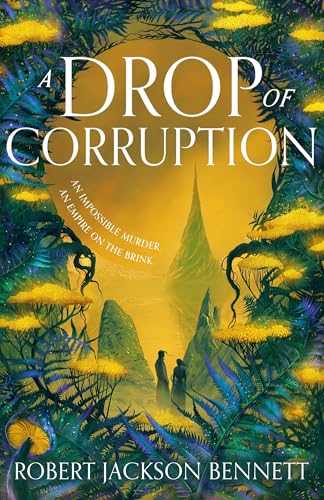
A Drop of Corruption by Robert Jackson Bennett

The Everlasting by Alix E. Harrow
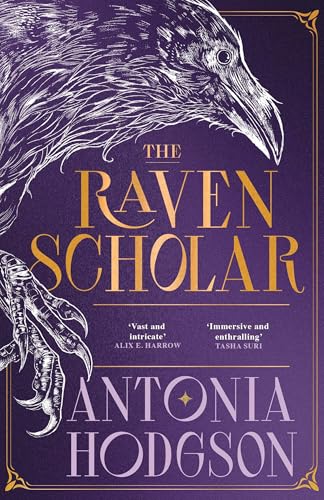
The Raven Scholar by Antonia Hodgson
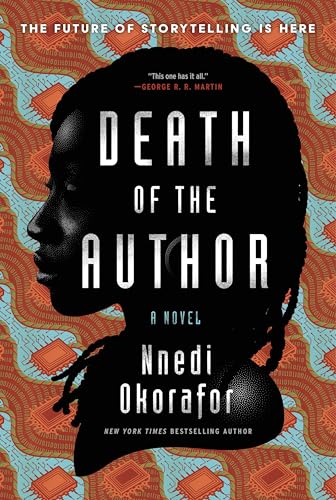
Death of the Author by Nnedi Okorafor
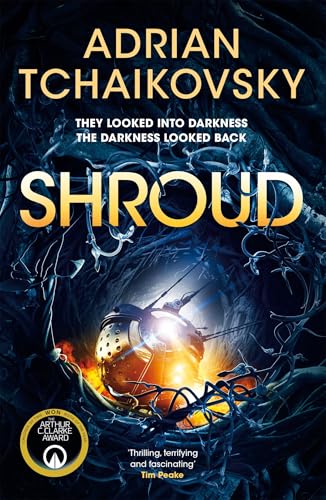
Shroud by Adrian Tchaikovsky
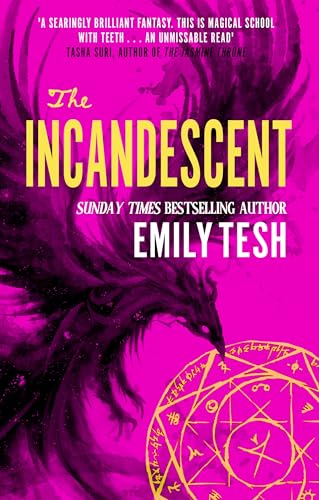
The incandescent by Emily Tesh

The Actual Results

TO BE DETERMINED

How I Would Vote

  1. No Award

Explanation

The Hugo nominees for 2026 just came out, and I have to say, deciding how I would vote on this ballot has been the easiest post I’ve done in this series. All of these books fail—all of them. I don’t even have to read them to know how I would vote. Thank you, ChatGPT, for helping me screen these books.

(Fun fact: I have more active subscribers on my email list (meaning their last activity was less than 90 days ago) than people who cast ballots for the Hugo nominees. Almost twice as many active subscribers, in fact. It’s not even close.)

Why do I use ChatGPT to screen my books? Because of a terrible experience I had reading The Man Who Folded Himself by David Gerrold. It started as a fun time travel adventure about a kid who gets a fantastic time travel belt, and uses it to do awesome things. But then, a future version of himself shows up and starts grooming him sexually, and before you know it, the whole book is literally about him fucking himself. I was so repulsed and disgusted from that reading experience that I vowed I would not read any more Hugo nominated books until I had screened them with AI first.

I’ve trained ChatGPT to look for five kinds of content that I personally find objectionable. Those are:

  1. Explicit sexual content, especially sexual violence,
  2. Explicit language and profanity,
  3. Violence against children,
  4. “Woke” themes or ideologically leftis messaging, and
  5. Nihilisim

If a book is only borderline on one or two of the categories, I may still read it if the book description interests me. But if it’s hardcore over the line on at least one of those things, I won’t read it. And for the 2026 Hugo Awards, ever single book fails miserably in at least one of those categories.

A Drop of Corruption is a direct sequel to The Tainted Cup, the book that won Best Novel in last year’s Hugo Awards, which also failed my screening criteria (for sexual content, woke messaging, and profanity), so that was enough of a basis not to read the sequel. But ChatGPT also says there’s sex trafficking and pedophilia in this one, which is enough to fail this book on its own.

I don’t think I’ve ever read a book by Alix Harrow that I didn’t DNF, and I certainly won’t start with The Everlasting. According to ChatGPT:

One content-warning review rates the spice as “severe,” with open-door intimacy in chapters 17 and 22; StoryGraph also flags graphic sexual content.

Child death is flagged by some readers, along with war and repeated death.

One review counts 27 uses of f-word and 3 uses of c-word; profanity rated severe.

[It also features] Queer-inclusive / bisexual themes, gender-norm challenges, feminism, anti-fascist themes.

Not a hard choice there at all. Here’s what it said about The Raven Scholar by Antonia Hodgson:

StoryGraph user warnings include graphic child death among other violent content.

Ever since having children of my own, I do not do any sort of violence against children. I just can’t stand it. I loved Hyperion, but the subplot about the girl who gets the Merlin disease and grows backwards just completely wrecked me. Thank goodness it has a happy ending, because otherwise I probably would have burned my copy of The Fall of Hyperion. So I’m really not kidding when I say I don’t do violence against children.

Surprisingly (or perhaps not), most of the books this year failed on that particular point. Consider what ChatGPT said about The Incandescent by Emily Tesh:

StoryGraph flags child abuse and child death, and the premise involves a magical school where demons prey on children.

Bisexual female protagonist, neurodiversity representation, critique of elite education, class privilege, and capitalism.

I suppose this is a side effect of the ideological purity of the awards, since one of the defining issues of the modern left is abortion. When your political faction literally celebrates the murder of children, should it come as a surprise that it produces so much anti-family and anti-natalist fiction?

Anyways, the last two books failed primarily on the “woke” messaging. They’re the ones I’m most likely to reconsider my decision to skip, though I’d have to hear a recommendation from someone I really trust. I’m particularly reluctant to read Death of the Author, just because I usually can’t stand when writers write about what it’s like to be a writer. Here’s what ChatGPT said:

Feminism, disability autonomy/representation, racism, sexism, transphobia, Nigerian-American cultural conflict, and publishing/representation discourse are prominent.

As for Shroud by Adrian Tchaikovsky, that’s probably the one of these books that I’m still the most on the fence, but from what I can tell with ChatGPT’s screening, it seems like he’s gone all-in on the woke messaging in order to appeal to the Hugo voters, and that’s enough for me to give it a pass. Here’s what ChatGPT said:

Strong anti-corporate, anti-colonial, environmental/extraction critique; one review frames it around humanity, colonization, corporate strip-mining, and moral corruption.

So there you have it. Not a hard choice. If I were voting in the Hugos this year, I’d give it a “no award” for the Best Novel category. As it stands, though, there is absolutely no way I’m giving these MFers any of my money, so I won’t be voting. It will be mildly interesting to see which species of perversion and woke leftist pathology will win this increasingly irrelevant award.
How I would vote now: 2024 Hugo Award (Best Novel)

The Nominees

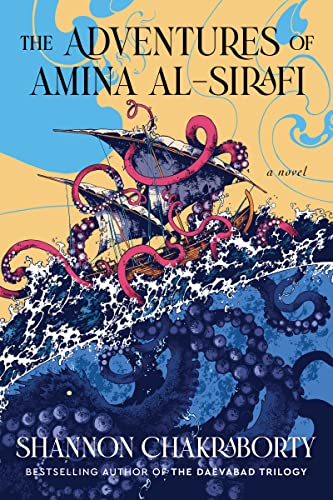
The Adventures of Amina al-Sirafi by Shannon Chakraborty

The Saint of Bright Doors by Vajra Chandrasekera

Translation State by Ann Leckie

Starter Villain by John Scalzi

Some Desperate Glory by Emily Tesh

Witch King by Martha Wells

The Actual Results

(To be determined…)

How I Would Vote

  1. No Award

Explanation

For reasons that should be obvious after last week’s rant, I will not be voting in the actual Hugo Awards this year, principally because there’s no way in hell that I’m going to let these snobby wokescold blowhards have any of my money. But if I were going to vote in the 2024 Hugos, this is what my ballot would look like.

I did not even attempt to read Starter Villain by John Scalzi, because I knew that I would hate it, since 1) it was written by John Scalzi, the most insufferable former SFWA president (an impressive achievement), and 2) Daniel Greene did such a brutal takedown of the novel that I felt no need to read it afterward. But all of the other books I picked up and started, even though I ended up DNFing them all for various reasons.

The one that I feel most conflicted about is Some Desperate Glory by Emily Tesh, a debut novel. It didn’t hook me hard enough to push on past the red flags, but it did have an interesting start that made me want to read more. However, there were a lot of signs that this was the sort of book that I would throw across the room in disgust (“strong” female characters, fascist caricatures, anti-natalist Malthusian vibes (though I may be wrong about that), etc). Even after I read a spoiler-filled online synopsis, though, I still couldn’t tell if that would be the case. The thing that ultimately convinced me to DNF it, though, was the blurb that called it a “queer coming of age story.” A synonymous phrase for that would be “sexual grooming of a minor,” which I have absolutely no desire to read.

The one that I feel least conflicted about is Translation State by Ann Leckie. To demonstrate why, here is everything I read right up to the moment when I decided to DNF it:

Enae

Athtur House, Saeniss Polity

The last stragglers in the funeral procession were barely out the ghost door before the mason bots unfolded their long legs and reached for the pile of stones they’d removed from the wall so painstakingly the day before. Enae hadn’t looked back to see the door being sealed up, but sie could hear it

Yet another novel from Ann Leckie where the fake transgender pronouns are the most interesting and compelling thing about her characters, and also the basis for the entire book. Hard DNF.

The Adventures of Amina al-Sirafi had an interesting start, but like Some Desperate Glory, there were enough red flags to make me reluctant to keep reading, so I read a spoiler-filled synopsis and discovered that one of the characters who is central to the plot decides that she’s a boy instead of a girl, and socially transitions her gender as a major plot point. Which means that Chakraborty, a liberal white woman who converted to Islam, is writing less for a Muslim readership (which could have actually been interesting) and more for a woke white liberal woman readership, which is probably how this book got nominated for the Hugo in the first place. These days, if there are no lesbians, it’s gotta be trannies. Hard pass.

The Saint of Bright Doors is a textbook case of two tropes that I cannot abide in contemporary science fiction: “a profane and vulgar childhood” and “all true love is LGBTQ love.” In real life, childhood innocence is something that should be sacred and pure, but in fiction that purity is often sullied deliberately for purposes of plot and character development. Which is fine if it happens occasionally, or with a nod to the tragedy of it—if all of our characters had perfect lives, there would be no conflict worth writing about. But these days, it seems like every child in every book has a screwed up childhood, to the point where the authors seem to treat it with casual indifference. As for “all true love is LGBTQ love,” homosexual relationships are so overrepresented in fiction these days that the moment it’s casually dropped that the main character has a gay lover, my guard immediately goes up. Call me a homophobe if you want to. I don’t really care.

Witch King frankly just bored me. There was nothing about the main character that I found interesting or compelling, which is a shame, because Murderbot from Martha Wells’s series of the same name is one of the most interesting and compelling characters I’ve read in recent years. Also, there was just too much worldbuilding information dropped in the first couple of chapters, before I was really hooked to the story, that I found it difficult to follow. I had the same problem with Wells’s early fantasy novels, where it felt too much like work just to read them. If I’m going to do the work to get invested in a complex fantasy world, I want to know that there’s going to be a payoff at the end, and if the initial hook is weak, I have very little faith that the author can pull it off. Granted, Wells did pull off a satisfying ending with her murderbot novel, Network Effect, but the last two installments in the Murderbot series have disappointed me.

So who is actually going to win the Hugo Award this year?

Probably not Scalzi, because he’s a straight white male.

Vajra Chandrasekera has a much stronger position, given that 1) he’s brown, 2) he edited Strange Horizons for several years when it was a contender for the Hugos, and 3) The Saint of Bright Doors won the Nebula Award last year. However, his LGBTQ characters are of the vanilla variety, which works against him, and he’s not openly LGBTQ on any of his bios.

Martha Wells can probably pull a lot of votes from her Murderbot fans, but she’s also straight and white, which works against her.

Ann Leckie is also white, but she’s really inovative with those fake transgender pronouns, which gives her an edge… I suppose it depends on whether our current transgender moment is waxing or waning. And even if it is waning in the culture generally, science fiction has been so thoroughly captured by the wokescolds that it may still be enough to push her over the top.

S.A. Chakraborty is a straight white woman, which works against her, but she’s also a convert to Islam, which may give her an edge if she can play to the anti-semitic pro-Palestinian hysteria that’s the Current Thing right now. Even that might be a bit of a stretch, though, and I don’t see anything else that gives her an edge.

As for Emily Tesh, she’s more or less the dark horse in this race: an author so new that she doesn’t have a Wikipedia page yet, and she’s already won the Astounding Award and a World Fantasy Award. If her bio declared that she’s a lesbian, I would bet that she’s the favorite, since Arkady Martine pulled the same dark horse trick in 2019. But if she’s just another straight white woman, that dampens her odds considerably.

My prediction is that the Hugo will go to Vajra Chandrasekera for The Saint of Bright Doors, just because it’s already won the Nebula, and the same people who vote for the Nebulas also vote for the Hugos—even more so as the Hugos become increasingly irrelevant. Also, he’s the only non-white author on the ballot, and there’s probably going to be a lot of virtue signalling angst after the obvious racism that happened with the Hugos last year.

But the book with the best cover art is definitely Some Desperate Glory, followed closely by The Adventures of Amina al-Sirafi. The other covers are either mediocre or garbage (especially Translation State, which looks like 70s diarrhea).