The Nominees
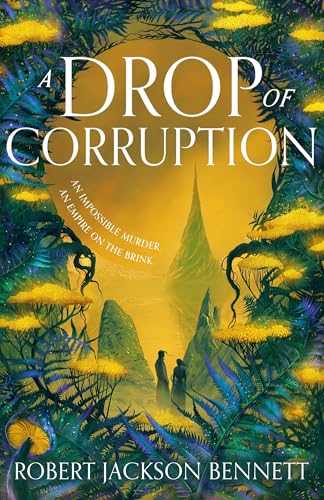
A Drop of Corruption by Robert Jackson Bennett

The Everlasting by Alix E. Harrow
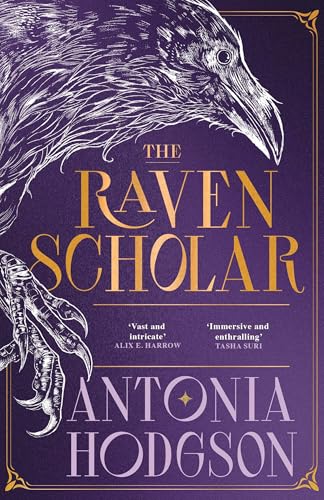
The Raven Scholar by Antonia Hodgson
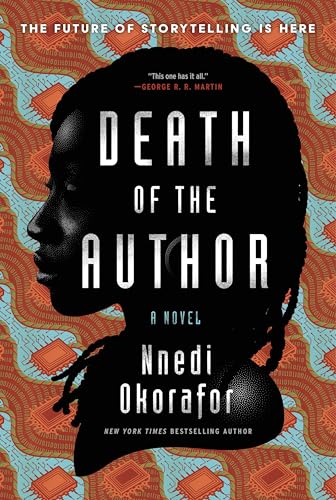
Death of the Author by Nnedi Okorafor
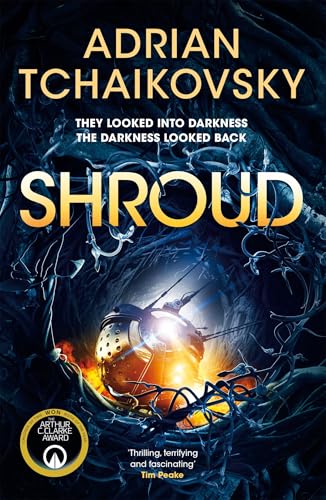
Shroud by Adrian Tchaikovsky
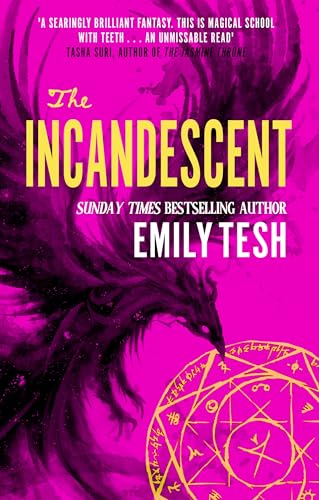
The incandescent by Emily Tesh
The Actual Results
TO BE DETERMINED
How I Would Vote
- No Award
Explanation
The Hugo nominees for 2026 just came out, and I have to say, deciding how I would vote on this ballot has been the easiest post I’ve done in this series. All of these books fail—all of them. I don’t even have to read them to know how I would vote. Thank you, ChatGPT, for helping me screen these books.
(Fun fact: I have more active subscribers on my email list (meaning their last activity was less than 90 days ago) than people who cast ballots for the Hugo nominees. Almost twice as many active subscribers, in fact. It’s not even close.)
Why do I use ChatGPT to screen my books? Because of a terrible experience I had reading The Man Who Folded Himself by David Gerrold. It started as a fun time travel adventure about a kid who gets a fantastic time travel belt, and uses it to do awesome things. But then, a future version of himself shows up and starts grooming him sexually, and before you know it, the whole book is literally about him fucking himself. I was so repulsed and disgusted from that reading experience that I vowed I would not read any more Hugo nominated books until I had screened them with AI first.
I’ve trained ChatGPT to look for five kinds of content that I personally find objectionable. Those are:
- Explicit sexual content, especially sexual violence,
- Explicit language and profanity,
- Violence against children,
- “Woke” themes or ideologically leftis messaging, and
- Nihilisim
If a book is only borderline on one or two of the categories, I may still read it if the book description interests me. But if it’s hardcore over the line on at least one of those things, I won’t read it. And for the 2026 Hugo Awards, ever single book fails miserably in at least one of those categories.
A Drop of Corruption is a direct sequel to The Tainted Cup, the book that won Best Novel in last year’s Hugo Awards, which also failed my screening criteria (for sexual content, woke messaging, and profanity), so that was enough of a basis not to read the sequel. But ChatGPT also says there’s sex trafficking and pedophilia in this one, which is enough to fail this book on its own.
I don’t think I’ve ever read a book by Alix Harrow that I didn’t DNF, and I certainly won’t start with The Everlasting. According to ChatGPT:
One content-warning review rates the spice as “severe,” with open-door intimacy in chapters 17 and 22; StoryGraph also flags graphic sexual content.
Child death is flagged by some readers, along with war and repeated death.
One review counts 27 uses of f-word and 3 uses of c-word; profanity rated severe.
[It also features] Queer-inclusive / bisexual themes, gender-norm challenges, feminism, anti-fascist themes.
Not a hard choice there at all. Here’s what it said about The Raven Scholar by Antonia Hodgson:
StoryGraph user warnings include graphic child death among other violent content.
Ever since having children of my own, I do not do any sort of violence against children. I just can’t stand it. I loved Hyperion, but the subplot about the girl who gets the Merlin disease and grows backwards just completely wrecked me. Thank goodness it has a happy ending, because otherwise I probably would have burned my copy of The Fall of Hyperion. So I’m really not kidding when I say I don’t do violence against children.
Surprisingly (or perhaps not), most of the books this year failed on that particular point. Consider what ChatGPT said about The Incandescent by Emily Tesh:
StoryGraph flags child abuse and child death, and the premise involves a magical school where demons prey on children.
Bisexual female protagonist, neurodiversity representation, critique of elite education, class privilege, and capitalism.
I suppose this is a side effect of the ideological purity of the awards, since one of the defining issues of the modern left is abortion. When your political faction literally celebrates the murder of children, should it come as a surprise that it produces so much anti-family and anti-natalist fiction?
Anyways, the last two books failed primarily on the “woke” messaging. They’re the ones I’m most likely to reconsider my decision to skip, though I’d have to hear a recommendation from someone I really trust. I’m particularly reluctant to read Death of the Author, just because I usually can’t stand when writers write about what it’s like to be a writer. Here’s what ChatGPT said:
Feminism, disability autonomy/representation, racism, sexism, transphobia, Nigerian-American cultural conflict, and publishing/representation discourse are prominent.
As for Shroud by Adrian Tchaikovsky, that’s probably the one of these books that I’m still the most on the fence, but from what I can tell with ChatGPT’s screening, it seems like he’s gone all-in on the woke messaging in order to appeal to the Hugo voters, and that’s enough for me to give it a pass. Here’s what ChatGPT said:
Strong anti-corporate, anti-colonial, environmental/extraction critique; one review frames it around humanity, colonization, corporate strip-mining, and moral corruption.
So there you have it. Not a hard choice. If I were voting in the Hugos this year, I’d give it a “no award” for the Best Novel category. As it stands, though, there is absolutely no way I’m giving these MFers any of my money, so I won’t be voting. It will be mildly interesting to see which species of perversion and woke leftist pathology will win this increasingly irrelevant award.