How I Would Vote Now: 2008 Hugo Awards (Best Novel)

The Nominees

The Yiddish Policemen’s Union by Michael Chabon

Brasyl by Ian McDonald

Rollback by Robert J. Sawyer

The Last Colony by John Scalzi

Halting State by Charles Stross

The Actual Results

  1. The Yiddish Policemen’s Union by Michael Chabon
  2. The Last Colony by John Scalzi
  3. Halting State by Charles Stross
  4. Rollback by Robert J. Sawyer
  5. Brasyl by Ian McDonald

How I Would Vote Now

  1. No Award
  2. Rollback by Robert J. Sawyer

Explanation

Two thousand eight was the year that I took Brandon Sanderson’s writing class and decided to become a professional fiction author. It was also the year that I discovered David Gemmell and Robert Charles Wilson, two of my favorite authors. It was also the year that the world economy collapsed and Obama won the US election, so it was a very eventful year.

Unfortunately, it was not a very good year for science fiction & fantasy—or at least, not for the Hugo Awards. I didn’t read any of these books until just recently, but I have to admit, I didn’t like any of them.

Perhaps, if I were a liberal atheist Jew, I would have enjoyed The Yiddish Policeman’s Union (not a conservative orthodox Jew, mind you—if anything, I probably would have hated it more). It’s not that I have anything personal against Jews or Jewish culture. I quite enjoyed Fiddler on the Roof. But unlike Fiddler on the Roof, The Yiddish Policeman’s Union doesn’t have many points of commonality with the wider culture to make it accessible.

For example, even though the traditions of Anatevka are likely different from the traditions of whatever culture we call our own, most of us understand the concept of tradition as a governing force in our lives, and can therefore sing along with the song “Tradition” and understand how it affects the story. But the plot and worldbuilding points of The Yiddish Policeman’s Union were so quirky and uniquely Yiddish that I just found it difficult to connect with or even follow them all.

Honestly, it would be a bit like if I were to write an alternate history where the Mormons were driven from the continental US after the Utah Wars, and settled in Hawaii and the Polynesian islands, except the main character drinks Coca Cola and has a complicated relationship with his polygamous step-mother (because plural marriage was never renounced in this alternate universe) while his sister, a three-cow woman, dances in the Polynesian cultural center… if you’re a Latter-day Saint, you’re probably chuckling, but you’ve got to be scratching your head if you’re not. And to be fair, it’s not like I’d never write a book like that—after all, I’m still keeping Starship Lachoneus in my back pocket—but I wouldn’t try to market it to a general audience, or expect it to win any mainstream awards.

[SPOILER (highlight to read)]

I’ve writte at length why I can’t stand John Scalzi and have DNFed him as an author. His first book, Old Man’s War, was good (though I would probably DNF it if I read it again now). Everything else I’ve ever read of his is just terrible. YMMV.

I’ve also DNFed Charles Stross as an author, mostly for nihilisim. If someone gives me a good reason to try Halting State, I’ll pick it up, otherwise I’m just going to skip it.

As for Brasyl, when I ran it by Orion (the ChatGPT persona I created to screen these books for woke and objectionable content), here is what I got:

Set in three intertwining timelines within Brazil—the past, present, and near future—Brasyl explores themes of identity, quantum mechanics, and cultural complexity. From an ambitious reality TV producer in modern Rio, to a rogue Jesuit priest in the 18th century, to a futuristic tech-savvy entrepreneur, the characters navigate moral dilemmas and existential challenges as their stories intersect in surprising ways. The novel combines speculative science with the vibrant, chaotic energy of Brazil.

Content Warnings:

Explicit Content: The novel contains scenes of violence, some of which are intense, and mature themes including sexual content. The explicitness aligns with the gritty, unflinching tone of the story’s portrayal of both human and cultural dynamics.
“Woke” Elements: McDonald incorporates themes of globalization, colonialism, and social inequality, reflecting a nuanced perspective on Brazil’s history and culture. The narrative celebrates diversity and critiques systemic injustices, which some readers may view as overtly progressive. However, these themes are intricately tied to the world-building and character arcs.
Overall Assessment:
Brasyl is a vivid, ambitious novel that combines speculative science with cultural and historical depth. While its explicit content and progressive themes may not suit all readers, those who enjoy richly layered storytelling with a strong sense of place will find it a rewarding and thought-provoking read.

It’s kind of on the border, but there’s enough in there to convince me that this isn’t the kind of book for me. The world is full of lots of great books out there; why should I spend any time on this one?

Which brings us to Rollback. I wanted to like this book, and indeed got about a hundred pages into it before I decided to DNF it. Partly, it was because I lost interest. Partly, it was because the writing was just too literal and logical—especially the sexy parts, which didn’t offend me (the characters are married) so much as they were just plain awkward. It’s not like I hated the book—indeed, I’d probably finish it if I tried it again as an audiobook—but I couldn’t give it my vote. If it weren’t for the other books on the ballot this year, I would have just abstained, but the others were bad enough for me to rank them under No Award.
How I Would Vote Now: 2005 Hugo Awards (Best Novel)

For some reason, I have a handful of these posts that I thought I’d scheduled months ago, but that never went out.

The Nominees

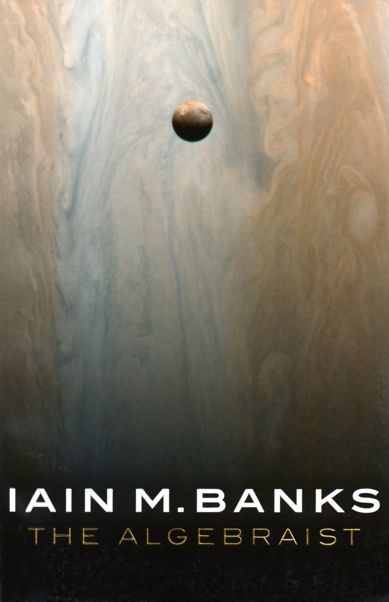
The Algebraist by Ian M. Banks

Jonathan Strange & Mr. Norell by Susanna Clarke

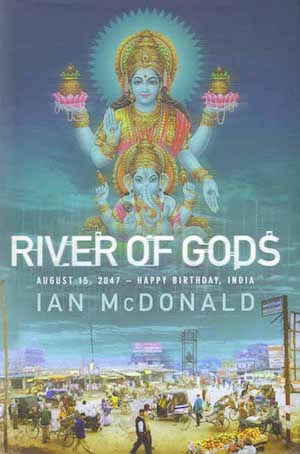
River of Gods by Ian McDonald

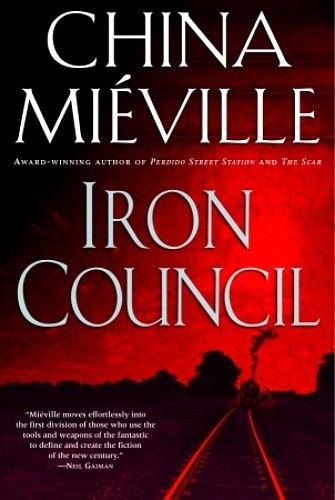
Iron Council by China Mieville

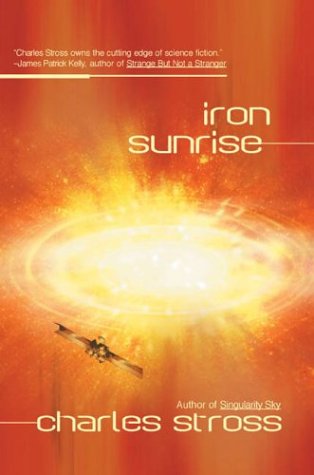
Iron Sunrise by Charles Stross

The Actual Results

  1. Jonathan Strange & Mr. Norell by Susanna Clarke
  2. River of Gods by Ian McDonald
  3. The Algebraist by Ian M. Banks
  4. Iron Sunrise by Charles Stross
  5. Iron Council by China Mieville

How I Would Vote Now

  1. No Award
  2. Jonathan Strange & Mr. Norell by Susanna Clarke

Explanation

To be frankly honest, the only book from this year that I actually picked up was Jonathan Strange & Mr. Norrell. It wasn’t a bad story, but it didn’t hook me enough to want to commit to almost 900 pages of reading. I think I got through about the first 100 pages before I gave up on it. Filling 900 pages is not a difficult thing to do; what’s difficult is filling 900 pages and making all of it compelling reason. Tolstoy, Dumas, and Tolkien all achieved that feat. Susanna Clarke’s debut novel did not achieve it, at least for me.

The reason I didn’t pick up Iron Council by China Mieville is because I DNFed his New Crobuzon series with the first book. I’ve written about this before, but the first book, Perdido Street Station, had a sex scene in one of the first chapters that was explicit enough to make me check out. That might not be an issue for most of you, but it was for me.

I didn’t pick up Iron Sunrise because I’ve read enough of Charles Stross’s other work to know that he doesn’t write the kind of books that I care to read. A lot of that comes down to explicit content as well, though I also detected a heavy strain of nihilism that I just have no interest in bringing into my life. So unless I get a strong recommendation from someone I know and trust, I’m just going to skip all of his books.

I’ve also decided to skip everything Ian Banks has written, after getting about halfway through Consider Phlebus before ultimately deciding to chuck it. In that book, there’s about a hundred page interlude where the story just comes to a stop so that the author can slip in a thinly-veiled lecture about how atheism is the only religious worldview that isn’t a scam. After getting through those hundred pages, I decided I’d read enough: Ayn Rand is just as preachy, and much more compelling.

(Interestingly enough, I don’t think I have ever read a Christian author who is as preachy or dogmatic in their Christianity as the hardcore atheists like Banks and Rand are dogmatic in their atheism. I’m sure they exist, but I have yet to discover them.)

That leaves River of Gods by Ian McDonald, but before picking up that novel, I decided to run that title by Orion, my AI assistant whom I now use to screen all of these novels for woke and explicit content before I try to read them. I trained Orion to screen these books after I had such a horrible experience reading The Man Who F***ed Himself by David Gerrold (you can read more about that here). When I ran River of Gods by Orion, this is what he said:

Synopsis (Spoiler-Free): Set in mid-21st-century India, River of Gods presents a richly woven tapestry of interconnected stories that explore a future shaped by climate change, political tensions, and technological advancements. From an AI researcher grappling with the ethical implications of her work to a comedian turned politician and a genderless individual navigating societal challenges, the novel offers a kaleidoscopic view of a diverse and fragmented world.

Explicit Content: The book includes some explicit sexual content and mature themes. Violence is present but not gratuitously described, serving to underscore the stakes of the characters’ struggles. Strong language and depictions of societal corruption also feature in the narrative.

“Woke” Elements: McDonald addresses issues like climate change, gender identity, social inequality, and the impacts of globalization, reflecting a progressive outlook. The exploration of gender fluidity and societal norms is particularly prominent, as is the novel’s focus on the intersection of tradition and modernity in India.

Overall Assessment: River of Gods is a bold, sprawling work of speculative fiction that blends science fiction concepts with cultural depth and complexity. Its explicit content and overtly progressive themes may not appeal to all readers, but its ambitious scope and richly detailed world-building make it a standout in the genre. Those who appreciate deeply layered narratives with a strong social and cultural lens will find much to admire.

The “exploration of gender fluidity” and “genderless individual navigating societal challenges” is a dead giveaway to me that this is not the kind of book I want to read. Honestly, the plot sounds a bit like Love Actually set in a near future version of India, where the love is replaced by wokeness. I suppose I could be wrong, but I don’t feel like reading 500+ pages to learn that Orion’s assessment was right. So far, he’s been surprisingly good at the other titles I’ve given him.

So much for 2005. It feels like every year since this one has been a tug-of-war between the kind of science fiction that I like, and the kind of science fiction that I absolutely cannot stand. That’s why I keep having to put No Award on the ballot for these How I Would Vote Now retrospectives. When I’m done, it will be interesting to go back and see which years got No Award and which ones didn’t. The 70s was another era where the award-winning science fiction really turned sour, but the good stuff came back in the 80s and 90s, if only briefly. I wonder if it will ever come back from what it is now.

How I would vote now: 2011 Hugo Award (Best Novel)

The Nominees

Cryoburn by Lois McMaster Bujold

Feed by Mira Grant

The Hundred Thousand Kingdoms by N.K. Jemisin

The Dervish House by Ian McDonald

Blackout and All Clear by Connie Willis

The Actual Results

  1. Blackout and All Clear by Connie Willis
  2. Feed by Mira Grant
  3. Cryoburn by Lois McMaster Bujold
  4. The Hundred Thousand Kingdoms by N.K. Jemisin
  5. The Dervish House by Ian McDonald

How I Would Have Voted

  1. Blackout and All Clear by Connie Willis
  2. No Award
  3. Cryoburn by Lois McMaster Bujold
  4. The Dervish House by Ian McDonald

Explanation

2011 was the only year in which I actually attended Worldcon and voted in the Hugos. This was, of course, before the Sad Puppies and before I became totally disillusioned with the awards. I have to confess that I didn’t actually read any of the novels, though I did get the free ebooks in the voter packet and tried to read a couple of them. Mostly, I voted based on whether I recognized the author’s name, and whether or not the book descriptions appealed to me. I remember that I voted for Blackout and All Clear in the top slot, but I don’t remember how the rest of the ballot shook out.

If I had to do it again, I would still put Blackout and All Clear at the top of the ballot (which are two separate books, though they form a duology and were published in the same year, which is why they appear together). However, I ended up DNFing all of the other books, and because Feed and The Hundred Thousand Kingdoms struck me as being horrible enough to warrant a No Award vote, I couldn’t merely abstain from voting positively for any of the others.

But first, Blackout and All Clear is a delightful time travel story from Connie Willis’s Oxford University Time Travelers series. Unlike The Doomsday Book, the story is quite a lot of fun with an upbeat and hopeful ending, and unlike To Say Nothing of the Dog, the time travelers find themselves in some very real peril when their time machine breaks down. The first book was okay, but the second book was fantastic, and wrapped things up very nicely. A fun and uplifting read.

I DNFed Feed for a number of reasons, but the main reason was that I couldn’t stand the sexual innuendo between the brother and sister. Yes, I know that technically they’re supposed to be step-brother and step-sister, and yes, I know that meaningless and gratuitous sex is supposed to be a trope of zombie fiction, but still. Yuck. I could be wrong about this, but the vibe I got was that the author is addicted to pornography, and that’s just not a mind I want to spend any time with. Also, the world makes no sense: the zombie apocalypse has brought our country to a state of collapse, but 1) basic infrastructure like electricity and internet still operates without any problems, and 2) bloggers need to get a permit from the federal government in order to blog? Sorry, but I just can’t buy any of it.

I don’t remember much from The Hundred Thousand Kingdoms, since it’s been several years since I first tried to read it, but I think the main reason I DNFed this one was because all of the characters struck me as being terrible people, and I frankly didn’t care what happened to any of them. For the same reason, I didn’t read A Song of Ice and Fire past book one (though there were other reasons I DNFed that series, most of them content related). And I think there were some content-related issues in this one too, which is also why I would place it under No Award, as opposed to merely abstaining.

I really wanted to like Cryoburn, since I enjoyed many of the other Vorkosigan Saga books, especially Young Miles and Barrayar. But this one takes place when Miles is middle-aged, and powerful enough that he’s not really threatened at all. Instead, we follow the story of a misfit street urchin who’s trying to earn his freedom, or something like that, and I frankly didn’t find his story or his character all that interesting or compelling. About four or five hours into the audiobook, I just got bored of it, which I wasn’t expecting at all.

The Vorkosigan Saga is different from most other series, in that all of the books are basically standalones linked only by the recurring characters, and the fact that Bujold has written it completely out of order, basically dropping books randomly into the chronology however it suits her fancy. The latest book, Gentleman Jole and the Red Queen, was such a disappointment to my wife that the way she described it to me made me feel totally disillusioned. I haven’t gotten around to reading it yet, so I can’t say for sure that it’s terrible, but it definitely took the series in a direction I wish it had never gone. I suppose that the lesson from all this is that it’s possible to draw out a series way too far, especially a non-linear one. The early Vorkosigan books are great… the later ones, not so much (and by “earlier,” I mean the ones that Bujold wrote earlier, not necessarily the earlier ones in the chronology).

As for The Dervish House, it was fine. Very pretty and well written, I guess. It just wasn’t for me. I got bored about a hundred pages in and dropped it. I suppose I could be convinced to give it another shot, but from what I can tell, it’s not really my kind of book.