How I Would Vote Now: 1983 Hugo Awards (Best Novel)

The Nominees

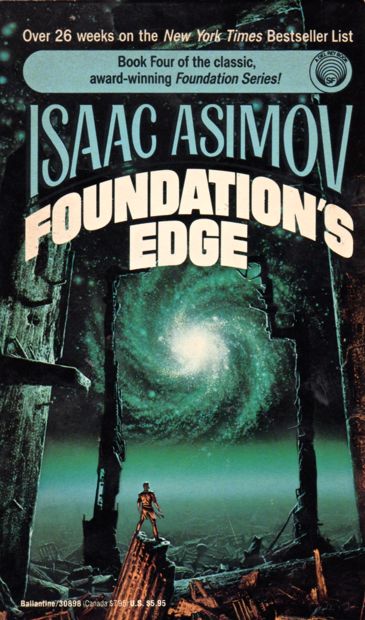
Foundation’s Edge by Isaac Asimov
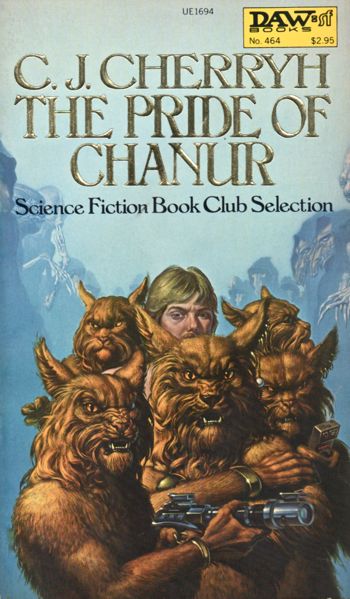
The Pride of Chanur by C.J. Cherryh
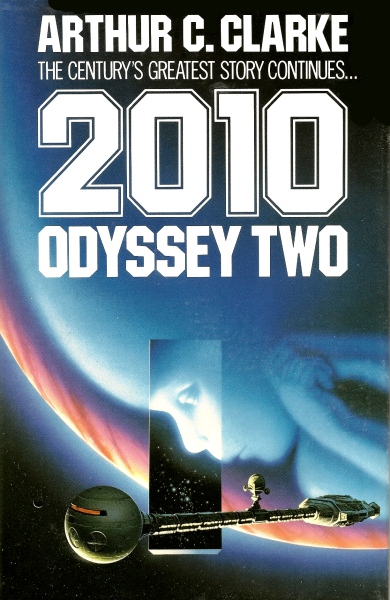
2010: Odyssey Two by Arthur C. Clarke
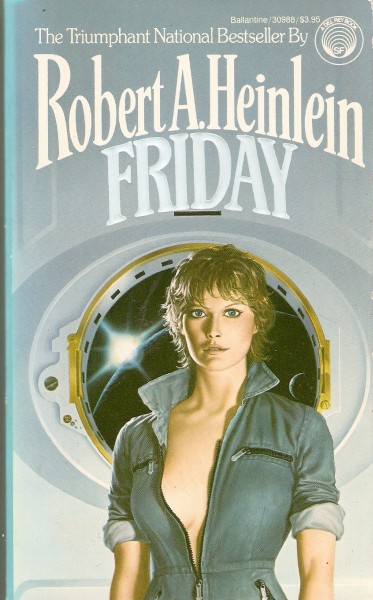
Friday by Robert A. Heinlein
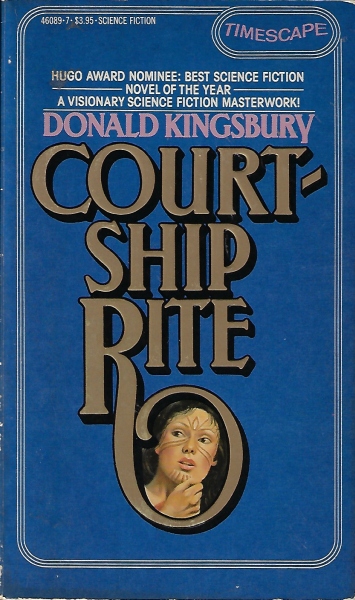
Courtship Rite by Donald Kingsbury

The Sword of the Lictor by Gene Wolfe

The Actual Results

  1. Foundation’s Edge by Isaac Asimov
  2. The Pride of Chanur by C.J. Cherryh
  3. 2010: Odyssey Two by Arthur C. Clarke
  4. Friday by Robert A. Heinlein
  5. Courtship Rite by Donald Kingsbury
  6. The Sword of the Lictor by Gene Wolfe

How I Would Have Voted

  1. Foundation’s Edge by Isaac Asimov

Explanation

I haven’t read all of Asimov’s Foundation novels yet, but I’ve loved all of the ones that I’ve read, including Foundation’s Edge. Really fun. Lots of interesting ideas. Classic sci-fi. A must-read for sure.

I’ve written before about my love-hate relationship with Heinlein. The long and short of it is that I’ve learned to avoid any of his books where he explores his free love ideas about sex and women. I’ve really enjoyed his juveniles, and books like Farnham’s Freehold and Starship Troopers. But if it’s got a partially (or fully) unclothed woman on the cover, it’s probably not for me.

Courtship Rite was an easy skip, based on ChatGPT’s preview of the book. Here is what it said:

Courtship Rite by Donald Kingsbury is one of the most morally challenging and controversial works in classic science fiction. The most immediate concern is the sexual content: Kingsbury depicts a harsh, survival-driven society on the planet Geta where sexual practices are ritualized, non-monogamous, and culturally compulsory. Several scenes contain explicit adult sexual behavior—never pornographic in tone, but described in enough detail to be unmistakably explicit. These sexual rites are integral to the worldbuilding and cannot be skipped without losing the thread of the story.

Violence is also central to the novel, particularly the culture’s reliance on cannibalism as both a sacrament and a pragmatic necessity in a resource-scarce ecosystem. Cannibalism is discussed repeatedly and explicitly, sometimes in unsettling biological detail, and ritual combat, ordeal, poisoning, and execution also appear. Although the novel does not dwell on scenes of graphic torture or sadistic harm, the society it portrays practices ritual child sacrifice and cannibalism, and this is presented as a normalized element of Getan culture.

From the book description: Jo Walton remarked that Courtship Rite “is about a distant generation of colonists on a planet with no usable animals. This is the book with everything, where everything includes cannibalism, polyamory, evolution and getting tattoos so your skin will make more interesting leather when you’re dead.”

There are too many good books in the world for me to waste any of my life reading that.

I know a lot of people love Gene Wolfe’s Book of the New Sun series, but I tried the first book and just couldn’t get into it. The fantasy world was just too macabre for me, and the story never hooked me. I’ve also heard that his writing is an acquired taste, so maybe I should give it another chance. But if I were to cast my ballot now, I wouldn’t vote for it.

As for 2010: Odyssey Two and The Pride of Chanur, I DNFed both of those for basically the same reason: I got bored. The story and characters didn’t really hook me, the world building was interesting but not enough to keep me reading, and over time I just lost interest and gave up. They weren’t terrible books, just not particularly interesting or compelling. I might enjoy them in audio, though, so maybe I’ll give that a try.

If that seems a little harsh, I’d like to point out that No Award doesn’t appear anywhere on this ballot. For the Hugo Awards, that’s saying something. In general, the 80s was a pretty good decade for the Hugo Awards, so even though this particular year wasn’t a bullseye for me, I’d still rather read any of these books (even Courtship Rite) over most of the woke crap that gets nominated these days.

Is The Stars of Redemption for You?

The Stars of Redemption brings the Genesis Earth Trilogy to its heartwarming conclusion, weaving together cosmic mystery, high-stakes adventure, and the emotional journey of a family caught between past and future. In this character-driven science fiction novel and grand finale of the Genesis Earth Trilogy, the secrets of the ghost ship, the wormhole, and humanity’s long-lost Earth collide, pushing Terra, Michael, Estee, and Khalil toward a destiny that tests their courage, their bonds, and their hope.

What Kind of Reader Will Love This Book?

If you like…

  • Character-driven science fiction where relationships matter as much as the big ideas
  • High-stakes adventure rooted in loyalty, courage, and found family
  • Deep-time, big-concept SF (time paradoxes, shattered superintelligences, dead Earth, existential threats)
  • Teens thrust into danger who must grow up fast without losing their humanity
  • Stories where the emotional journey hits as hard as the plot twists

…then The Stars of Redemption is exactly the kind of story you’re looking for.

What You’ll Find Inside

The Stars of Redemption follows Estee and Khalil as they ride a mysterious ancient ghost ship run by a fractured AI. The two young adults now know the truth about the time travel paradox that created it, but they aren’t sure how to stop it from going back and annihilating the human race. But solving the paradox will create an alternate timeline—one where many of their loved ones have lived totally different lives. The result is a tense, emotional, wonder-filled journey that blends survival, mystery, love, grief, and cosmic terror into a finale that feels both epic in scope and heartwarmingly personal.

What Makes It Different

Fans of classic time-paradox stories and authors like Arthur C. Clarke, Becky Chambers, or Michael Crichton will recognize the sense of cosmic mystery, but The Stars of Redemption takes those ideas in a uniquely human direction. Where many time-loop or AI-disaster stories focus on spectacle, this one leans into relationships, trauma, and the fragile bonds that hold people together when everything else collapses. And unlike most YA or near-YA science fiction, it refuses to sacrifice scientific wonder or thematic depth—holding the line on both heart and hard SF ideas.

What You Won’t Find

If you’re looking for grimdark nihilism, sexually explicit romance, or nonstop action with minimal character growth, this isn’t that book. But if you prefer science fiction grounded in hope, heart, survival, and meaning, with characters who feel real enough to bleed, you’ll feel right at home here.

Why I Think You Might Love It

I wrote The Stars of Redemption shortly after becoming a young father, and that life-changing experience deeply informed the conclusion of the Genesis Earth Trilogy. Starting a family of my own made Estee and Khalil’s found family more vivid, as well as Estee’s need to fill the hole left by losing her parents. This became the most mature and thoughtful book in the trilogy—the kind of story I always wanted to write but couldn’t until I’d lived a little more myself.

If you loved the high-concept wonder and emotional heart of Genesis Earth and Edenfall, I think you will find The Stars of Redemption to be a thoroughly satisfying, deeply meaningful conclusion to the trilogy!

Where to Get the Book

Related Posts and Pages

Explore the series index for the Genesis Earth Trilogy.

Visit the book page for Genesis Earth for more details.

Read about breaking the time paradox in The Stars of Redemption.

See all of my books in series order.

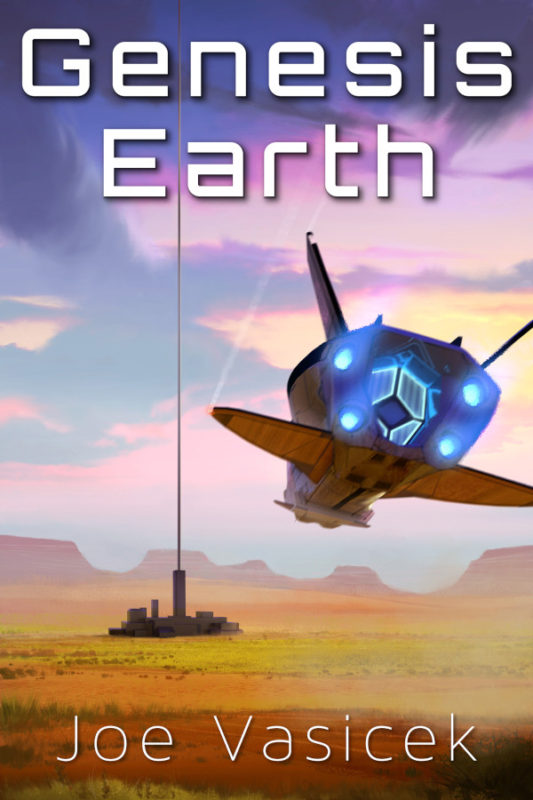
Is Genesis Earth for You?

Genesis Earth is an introspective, awe-driven, charactor-anchored YA science fiction novel. It’s not a laser-blasting space opera; rather, it’s a quiet, psychological odyssey through the cosmos, through the eyes of a lonely young explorer haunted by the memory of Earth. Through this book, readers will experience the loneliness of deep space, the mystery of first contact, and the fragile human connection between two young scientists flung far from home.

What Kind of Reader Will Love Genesis Earth?

This book is perfect for readers who:

  • Love hard SF stories of space exploration rooted in both plausible science and human emotion,
  • Enjoy classic SF from authors like Clarke and Asimov—thoughtful, concept-driven, but with relatable, human characters,
  • Appreciate slow-burn tension and stories that make them think, long after they set the book down,
  • Are fascinated by themes of first contact, isolation, coming-of-age, and the psychological cost of human exploration, and
  • Crave science fiction that feels possible, where the sense of wonder comes from realism, not fantasy.

If any of that describes you, then you should definitely give Genesis Earth a try!

What You’ll Find Inside

Genesis Earth follows a young scientist, Michael Anderson, and his mission partner Terra as they explore a dangerous anomaly on the far side of a wormhole, that could either threaten or hold the key to humanity’s future. The result is an immersive and contemplative book that starts as a psychological drama and turns into a story of discovery, both cosmic and personal: what it means to be human when Earth is a ghost and “home” is light-years away.

What Makes Genesis Earth Different

Fans of classic science fiction will recognize the trope of the lonely astronaut or scientist setting out to explore the unknown, but where most protagonists in classic hard SF are seasoned professionals, the explorers in Genesis Earth are barely adults, raised in isolation on board a space colony, and psychologically unprepared for what awaits them. The story explores beyond the question “can humanity survive?” and asks “what happens to the human soul when it’s untethered from home?”

Distinctive features include:

  • Psychological depth: The fraught relationship between Michael and Terra gives the story an undercurrent of tension and unease that’s rare in classic hard SF.
  • Tone: Quiet, human, and melancholic—more existential wonder than space adventure.
  • Perspective: Told through a deeply personal first-person lens, with an almost diary-like immediacy.
  • Balance: Seamlessly blends scientific authenticity (cryonics, wormholes, planetary science) with literary emotion.

What You Won’t Find

This book is not for readers seeking:

  • Fast-paced, action-heavy sci-fi with constant battles, explosions, or villains.
  • Romantasy or sexually explicit romance plots — while there is emotional tension, it’s subtle and cerebral, not sensual or melodramatic.
  • Soft or mythic sci-fi full of alien empires or space wizards — the story stays grounded in realism.
  • Hard nihilism or grimdark — while introspective and serious, the book is ultimately hopeful, not bleak or cynical.
  • Readers who dislike slow builds or introspective narration.

If you’re looking for Star Wars, this isn’t it. If you’re looking for Arthur C. Clarke’s emotional heir, you’ve found it.

Why I Think You Might Love Genesis Earth

I wrote Genesis Earth when I was a lonely, single young college student trying to find my place in the world. That personal struggle in my own life definitely affected the conflict and themes of the book. I read a lot of classic SF in this time, including books by Arthur C. Clarke, Isaac Asimov, Ursula K. Le Guin, Robert Charles Wilson, and Orson Scott Card, and I wanted to create something that was just as awe-inspiring and thought-provoking as the great books by those classic authors.

If you’re looking for a book that sticks with you long after you’ve read it, and helps you to find your own place in the world, you should definitely give Genesis Earth a try!

Where to Get Genesis Earth

Related Posts and Pages

Explore the series index for the Genesis Earth Trilogy.

Visit the book page for Genesis Earth for more details.

Discover the meaning of home in Genesis Earth.

See all of my books in series order.

How I Would Vote Now: 1974 Hugo Awards (Best Novel)

The Nominees

The People of the Wind by Poul Anderson

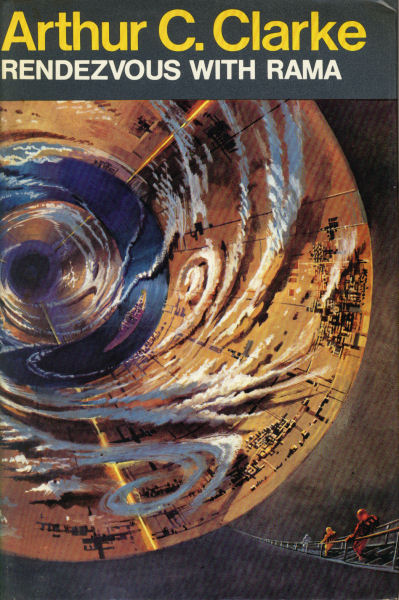
Rendezvous with Rama by Arthur C. Clarke

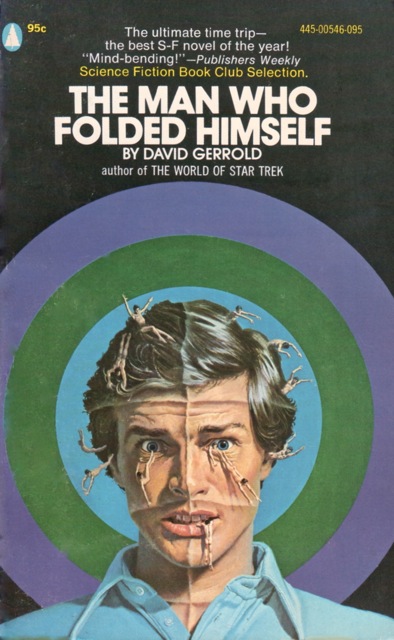
The Man Who Folded Himself by David Gerrold

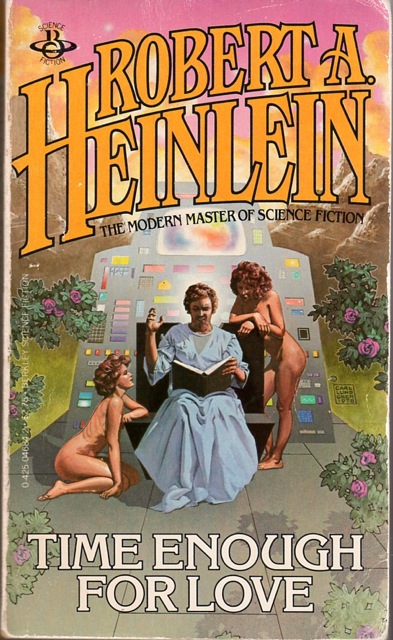
Time Enough for Love by Robert A. Heinlein

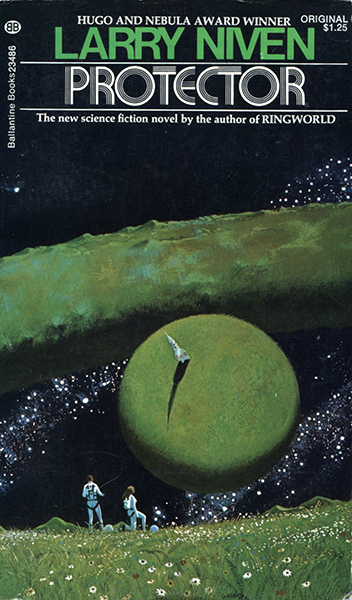
Protector by Larry Niven

The Actual Results

  1. Rendezvous with Rama by Arthur C. Clarke
  2. Time Enough for Love by Robert A. Heinlein
  3. Protector by Larry Niven
  • The Man Who Folded Himself by David Gerrold
  • The People of the Wind by Poul Anderson

How I Would Have Voted

  1. Protector by Larry Niven
  2. No Award
  3. Rendezvous with Rama by Arthur C. Clarke
  4. The People of the Wind by Poul Anderson

Explanation

I really enjoyed Protector. It was a great sci-fi space opera novel, with interesting characters, fun worldbuilding, an intriguing premise, a deep sense of wonder, lots of suspense, and some really unexpected twists and turns. It was also a very good hard SF novel, where the rigorous scientific accuracy actually drove the story and made it even stronger. That can be a very difficult thing to pull off, since in the hands of an unskilled author, the harder the science fiction elements become, the more dry and cerebral the story tends to become as well, but Larry Niven is a very skilled author and he pulled it off quite well in this one. In particular, the long-distance space battle that covered the last hundred pages or so had me thrilled right through to the end.

In contrast, Rendezvous with Rama was the kind of hard SF that tends to bore me. There was nothing wrong or objectionable about the story, but it was kind of slow, and didn’t build up very much suspense, aside from the central premise, which was basically “ooh, an abandoned alien starship—and we get to go inside!” I should probably try to read it again, though, because Arthur C. Clarke is definitely not an unskilled author, and Rama is one of the classics.

Poul Anderson, though… I don’t know what it is, but reading his books is like trying to walk through a brick wall. The parts that I have the most questions about, he doesn’t explain at all, and the aspects of his stories that I care about the last (particularly the worldbuilding elements) he explains in soporific detail. His characters all feel like wooden marionettes, and whenever they move, they seem off or contorted in some way, doing and saying things in ways that I would least expect.

Maybe it’s just me, but I’m beginning to think that Poul Anderson just isn’t a very good writer, and his success was mostly due to the good fortune he had to be writing in a time when any book with a rocketship on the cover was guaranteed to be snapped up by hungry science fiction fans. I’ll try a couple more times to read him, but at this point I’m just about ready to give up on this author.

I did not even try to read Time Enough for Love. I’ve been burned enough by Heinlein to know that anything of his that 1) is longer than his juveniles, or 2) has a half-naked (or in this case, fully naked) woman on the cover is guaranteed to turn me off. Time Enough for Love fails both of those counts, so it got a hard skip.

I know that a lot of people love Heinlein, especially the kind of science fiction reader who otherwise aligns with my own reading tastes. But my own experience with Heinlein is all over the map: some of his books, like Farnham’s Freehold and Citizen of the Galaxy, I absolutely loved, and even count as major influences on my own writing. Others, however, like Stranger in a Strange Land and The Moon is a Harsh Mistress, I just couldn’t stand at all. With some, like Double Star, I was glued to the page all the way through, while others, like Have Space Suit, Will Travel, never really hooked me at all (if I weren’t listening to that one on audio, I don’t think I ever would have finished it). So at this point, I’ve more or less decided to limit my reading of Heinlein to his juveniles, unless it comes with a strong recommendation.

Which brings me to The Man Who Folded Himself, which is one of the most disgusting Hugo-nominated books I have ever DNFed, and the main reason why I put No Award on the ballot for this year. A better title would be The Man Who Fucked Himself, since that is both more memorable and more accurate to the story. It starts out as a delightful little time travel novel, but soon turns into a homo- / mono-erotic sexual fantasy. I quit just before the money shot, but I am 100% convinced that Gerrold is a pederast, if not an outright pedophile. Disgusting!

In fact, I had such a horrible experience with The Man Who F***ed Himself that I have started a ChatGPT thread specifically for the purpose of screening these Hugo-nominated books for woke and explicit content. If ChatGPT gives me a synopsis that doesn’t pass my smell test, I’m going to pre-emptively skip it, since I don’t want to expose myself to anything like The Man Who F***ed Himself again. Any book that I skip in this way will get ranked below No Award, and I’ll include ChatGPT’s synopsis in the review.

On the plus side, that probably means I’ll get through this How I Would Vote Now blog series a lot faster.

Reading Resolution Update: April

My 2022 reading resolution: Read or DNF every novel that has won a Hugo or a Nebula award, and acquire all the good ones.

In 2007, when I was a sophomore in college, I went up to Salt Lake City with some friends and was browsing the awesome (and fairly run down, even at the time) used bookstore near the Gallivan Plaza TRAX stop, which has since changed names and moved to another location. It was a really awesome used bookstore, and I determined to buy a SF novel while I was there, since I was really getting back into SF after my mission. I saw a massive 600+ page trade paperback edition of Cyteen by C.J. Cherryh, and since I was reading Downbelow Station at the time, I decided to get that one.

For the next fifteen years, I lugged that book everywhere, through more than a dozen moves (though for the biggest move, where I made the pioneer trek in the wrong direction and repented 8 months later, I boxed it up with my other books and left it in a friend’s basement). In all that time, I never actually read it—or even opened it up, really—but it was always there, somewhere in the middle of my dismally long TBR list.

It wasn’t that I didn’t want to read it: I just didn’t have (or make) the time. Downbelow Station had been an okay read, if not spectacular, but I had really enjoyed some of C.J. Cherryh’s shorter books, like Merchanter’s Luck and Voyager in Night. Also, space opera books about sprawling galactic empires were right up my wheelhouse, so it didn’t seem odd for me to own such a book that I hadn’t yet read. In fact, most of the books that I owned throughout this time were books that I wanted to read but hadn’t gotten around to yet. If I have a superpower, it’s an uncanny ability to acquire books no matter where I am. Unfortunately, I’m not as good at reading them.

Fast forward to 2022. I’ve gotten married, had a daughter, launched my own writing career, and become a homeowner—and I’m still lugging this massive 600+ page trade paperback book that I’ve never read. But I’ve just set a resolution to read (or DNF) every Hugo and Nebula award-winning novel, and Cyteen is on the list. So around the middle of March, I finally open it up and start reading it.

After about a month, I decided to DNF it.

It’s not that it was terrible. Perhaps you enjoyed it, and that’s fine. I just found it to be too drawn out and confusing. I think C.J. Cherryh does better when she’s focusing on just a few characters, rather than trying to give the grand sweep of galactic civilization or whatever. I didn’t finish Foreigner for similar reasons. Maybe someday I’ll return to that one and Cyteen, but for now, I’m counting it as a DNF.

But the thing is, I was hauling around this massive book for most of my adult life. When I bought it in 2007, I figured that since it had won a Hugo, it had to be good. Perhaps, if I’d read it back then, I would have been more patient with it and slogged through to the end. Perhaps I would have decided it was just as good as Downbelow Station. Or perhaps, if I read Downbelow Station today, I would end up DNFing it as well.

The point is, I wish I’d been a lot more discerning about my reading when I was younger, and not just acquired books that I hoped to read “someday”… because books (at least the paper ones) are heavy and take up a lot of space. And a lot of them really aren’t worth reading. Of course, you’ve got to read a few stinkers to figure out what you really like, so it isn’t always a waste… but libraries exist for a reason.

So what this experience really tells me is that Mrs. Vasicek and I are doing the right thing by taking our family to our local library once a week. Also, it tells me that the second part of my resolution—to actually acquire all of the books that I think were worth reading—is just as important as actually reading them. Because, if the ultimate goal is to “seek… out of the best books words of wisdom,” then it’s not enough to just make a list: you actually have to read the damned things, and keep your own personal library in order to revisit those words and share them with others. Because ultimately, you have to discover which books are the “best books” on your own, and your best books list isn’t going to be the same as anyone else’s best books list. Which means that you can’t rely on anyone else’s list. You can use it as a starting point to make your own list, but that’s all you should use it for.

So now I want to go through all of the books I’ve acquired over the years and figure out which ones I ought to get rid of, because Cyteen certainly wasn’t the only one. In fact, most of the books in our family library are books that I haven’t (yet) read. By my count, there are just under 150 of them, totalling about 55k words. Even at a rate of 100 words or two hours of reading each day, that’s still going to take almost two years… and that’s not counting all the library books that we’re sure to check out in the meantime.

Oh well. I suppose this is more of a process than anything else. Journey before destination, and all that. And I’m sure I’ll have fun in the process, since despite the fact that I DNF far more books than I actually read, I do genuinely enjoy reading.

In any case, here are all of the Hugo and Nebula award-winning books that I read (or DNFed) in the month of April:

Books that I read and plan to or have already acquired:

  • Rainbows End by Vernor Vinge (2007 Hugo)
  • Blackout by Connie Willis (2011 Hugo and Nebula) (audio)

Books that I read and do not plan to acquire:

  • Blackout by Connie Willis (2011 Hugo and Nebula) (print)

Books that I did not finish:

  • A Time of Changes by Robert Silverberg (1972 Nebula)
  • The Gods Themselves by Isaac Asimov (1973 Hugo and Nebula)
  • The Fountains of Paradise by Arthur C. Clarke (1980 Hugo and Nebula)
  • The Claw of the Conciliator by Gene Wolfe (1982 Nebula)
  • Cyteen by C.J. Cherryh (1989 Hugo)
  • Tehanu by Ursula K. Le Guin (1991 Nebula)
  • The Diamond Age by Neal Stephenson (1996 Hugo)
  • The Moon and the Sun by Vonda N. McIntyre (1998 Nebula)
  • Parable of the Talents by Octavia E. Butler (2000 Nebula)
  • 2312 by Kim Stanley Robinson (2013 Nebula)
  • Beyond This Horizon by Robert A. Heinlein (1943 Retro Hugo, awarded in 2018)
  • The Nemesis from Terra by Leigh Brackett (1945 Retro Hugo, awarded in 2020)

Total books remaining: 26 out of 110 (currently reading 12 and listening to 3).

Reading Resolution Update: Before 2022

My 2022 Reading Resolution: Read or DNF every novel that has won a Hugo or a Nebula award, and acquire all the good ones.

I was going to keep track of my reading resolution this year by mentioning each book and what I liked or didn’t like about it, why I DNFed it if I did, etc… and then I thought about it a little more and realized that that’s a terrible idea. Perhaps if I weren’t an author myself, I could risk bringing down the wrath of the internet by broadcasting everything that I really think about these books, but that’s still a really stupid thing to do—not to mention, a great way to burn a bunch of bridges that, as a writer, I really shouldn’t burn.

Instead, I’m going to post a monthly update where I list all of the books that I read and want to acquire, all the books that I read and probably won’t acquire, and all of the books that I DNFed, without any book-specific commentary. I do think that having some public accountability will help me to keep this resolution, and I do intend to keep it. But because I anticipate DNFing a lot of books that have very, um, merciless fans, this seems like a better way to do it.

So here is how things stood on the morning of January 1st, 2022:

Books that I read and want to / have already acquired:

  • Double Star by Robert A. Heinlein (1956 Hugo)
  • Starship Troopers by Robert A. Heinlein (1960 Hugo)
  • A Canticle for Leibowitz by Walter M. Miller Jr. (1961 Hugo)
  • The Man in the High Castle by Phillip K. Dick (1963 Hugo)
  • Dune by Frank Herbert (1966 Hugo and Nebula)
  • The Left Hand of Darkness by Ursula K. Le Guin (1970 Hugo and Nebula)
  • The Dispossessed by Ursula K. Le Guin (1975 Hugo and Nebula)
  • Downbelow Station by C.J. Cherryh (1982 Hugo)
  • Neuromancer by William Gibson (1985 Hugo and Nebula)
  • Ender’s Game by Orson Scott Card (1986 Hugo and Nebula)
  • Speaker for the Dead by Orson Scott Card (1987 Hugo and Nebula)
  • Barrayar by Lois McMaster Bujold (1992 Hugo)
  • Mirror Dance by Lois McMaster Bujold (1995 Hugo)
  • The Mule (included in Foundation and Empire) by Isaac Asimov (1946 Retro Hugo, awarded in 1996)
  • Harry Potter and the Goblet of Fire by J.K. Rowling (2001 Hugo)
  • Farmer in the Sky by Robert A. Heinlein (1951 Retro Hugo, awarded in 2001)
  • Fahrenheit 451 by Ray Bradbury (1954 Retro Hugo, awarded in 2004)
  • Spin by Robert Charles Wilson (2006 Hugo)
  • The Sword in the Stone by T.H. White (1939 Retro Hugo, awarded in 2014)
  • Network Effect by Martha Wells (2021 Hugo and Nebula)

Books that I read and don’t plan to acquire:

  • The Demolished Man by Alfred Bester (1952 Hugo)
  • The Forever War by Joe Haldeman (1975 Hugo and Nebula)
  • Gateway by Frederik Pohl (1977 Hugo and Nebula)
  • Red Mars by Kim Stanley Robinson (1993 Nebula)
  • American Gods by Neil Gaiman (2001 Hugo)

Books that I did not finish:

  • The Moon is a Harsh Mistress by Robert A. Heinlein (1966 Hugo)
  • Flowers for Algernon by Daniel Keyes (1966 Nebula)
  • Lord of Light by Roger Zelazny (1967 Hugo)
  • Ringworld by Larry Niven (1970 Hugo and Nebula)
  • Rendezvous with Rama by Arthur C. Clarke (1973 Hugo and Nebula)
  • Green Mars by Kim Stanley Robinson (1993 Hugo)
  • Blue Mars by Kim Stanley Robinson (1996 Hugo)
  • Forever Peace by Joe Haldeman (1997 Hugo, 1998 Nebula)
  • The Fifth Season by N.K. Jemisin (2015 Hugo)
  • The Obelisk Gate by N.K. Jemisin (2016 Hugo)
  • The Stone Sky by N.K. Jemisin (2017 Hugo and Nebula)

2020-02-20 Newsletter Author’s Note: Thoughts on the History and Future of Science Fiction (Part 1)

This author’s note originally appeared in the February 20th edition of my newsletter. To sign up for my author newsletter, click here.

One of the projects I hope to get to someday is to make a podcast on the history of science fiction. I’m a huge fan of podcasts, and subscribe to almost 100 of them, and some of my favorites are history podcasts like Hardcore History, History of Rome, Revolutions, The Cold War: What We Saw, etc. At this point in my life, I don’t think it’s the right time to get into podcasting, but at some point in the next few years I’d really like to try my hand at it.

I have thought a lot about what this History of Science Fiction podcast would look like, though, and it’s led to some interesting thoughts about the future direction of the genre. Let me explain.

Modern science fiction began with Mary Shelley’s Frankenstein, which laid the groundwork for just about everything else. Authors like Jules Verne and H.G. Wells picked up the torch, launching “scientific romance” as its own literary genre. Many of the conventions and tropes of science fiction were set during this era, which lasted from the 1820s through the early 1900s.

The next major era of science fiction was the era of the pulps, which experienced its heyday in the 1920s and 30s. The publishing innovations that had made the penny dreadfuls possible only a generation earlier now led to a proliferation of novels and short story magazines, opening up all sorts of opportunities for new writers.

This was the era of bug-eyed aliens and scantily-clothed damsels in distress, as frequently displayed in the cover art. Science fiction, mystery, western, adventure, and true crime stories were all mashed up together. Major names from this era include Edgar Rice Burroughs and Hugo Gernsback, who coined the term “scientifiction” to distinguish the stories that would later be called under the name “science fiction.”

The pulps laid the groundwork for the golden age, which lasted through the 40s and 50s. It was greatly influenced by John Campbell’s tenure as editor of Astounding Science Fiction, and the authors that he mentored. This was when science fiction really came into its own. Major authors from this era include Isaac Asimov, Robert A. Heinlein, Arthur C. Clarke, George Orwell, and Ray Bradbury.

The next major era was the New Wave, when authors like Ursula K. Le Guin, Michael Moorcock, Frank Herbert, and Phillip K. Dick broke out of the conventions established by Campbell and other golden age figures, experimenting with new styles and creating new tropes. This was when we began to distinguish between “hard” science fiction that revolved around the hard sciences like physics and math, and “soft” science fiction that revolved instead around things like political science and social studies. The political radicalism of the 60s and 70s also influenced the science fiction of this era.

At this point, most histories of science fiction point to an era called “cyberpunk” or “the digital age,” which emerged in the 80s and defines the period that we’re currently living through. However, I don’t think this is correct. Instead, I think that literary science fiction went through a dark age from the mid-80s to the late 00s, and only recently began to emerge from it. Let me explain.

In film, TV, and video games, the 80s and 90s were a golden age. For books, however, it was exactly the opposite. The rise of the big box stores like Borders and Barnes & Noble drove independent booksellers out of business, which caused many local distribution companies to collapse. This, in turn, led to a period of mergers and consolidation within the publishing industry, giving rise to the “big six”: Hachette, HarperCollins, Macmillan, Penguin, Random House, and Simon & Schuster.

At the same time, the rise of the internet led to a massive and precipitous decline across newspapers and periodicals, including traditional short story magazines such as Analog and Asimov’s. Most of the science fiction magazines folded, unable to adapt their business models to the changing world. This would later change as podcasting and crowdfunding, but before those innovations would later revolutionize the industry, many considered short stories to be dead.

The effect of all of this was that literary science fiction entered a period of managed (and sometimes catastrophic) decline. As the publishing houses merged and consolidated, their offices all moved to New York City in order to pool talent and resources into one geographic center. However, this also led to problems like groupthink as publishing fell in an echo chamber.

Science fiction began to balkanize. The proliferation of cyberpunk, steampunk, deiselpunk, biopunk, and all the other _____punk subgenres is emblematic of this. Furthermore, as all of the major editors became caught up in the echo chambers of progressive, blue-state politics, they increasingly overlooked red state authors from “flyover country.” Baen, whose offices are in North Carolina, has never suffered from this, but Tor and the other New York publishers really have.

I think Orson Scott Card really bookends this period. In the 80s, he was the first author to win the Hugo and the Nebula in the same year. In the 00s, he was all but excommunicated from the canon for his allegedly homophobic views. Science fiction had transformed from the big tent genre of the 50s, 60s, and 70s to something so balkanized, elitist, and radical that “wrongthink” had unironically become a crime in the very genre that had invented the term.

And then indie publishing happened.

This author’s note is getting long, and there are other things (including writing) that I have to do today, so I’ll have to end on that note. I’ll follow up in my next newsletter with my thoughts on current trends in the science fiction genre, and where we’re heading from here. I think the 20s will see some massive creative destruction, but ultimately I’m hopeful that the best is yet to come. The dark age is over, and there’s never been a better time to be a reader—or a writer!

Y is for Yesteryear

Star_wars_oldThey say that the golden age of science fiction is about twelve years old.  That’s definitely true for me.

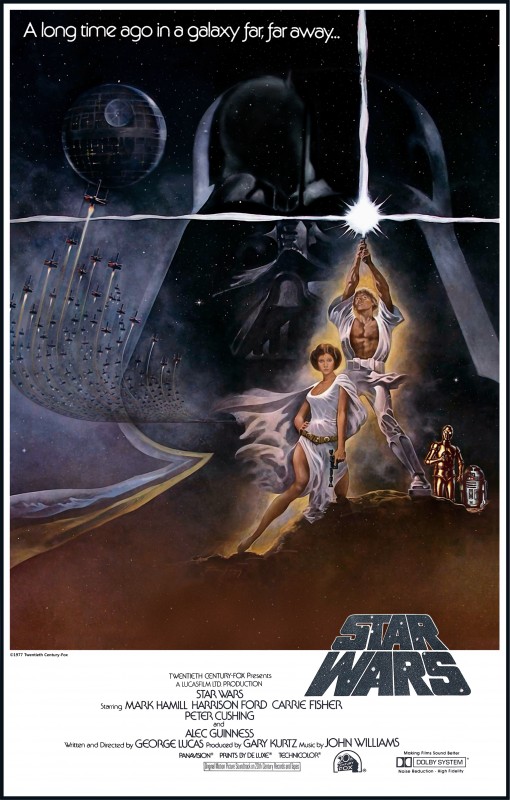
My first exposure to the genre was Star Wars: A New Hope.  I saw it when I was seven, right around the height of my dinosaur phase.  Everything about the movie completely blew me away, from the Jawas and Sand People of Tatooine to the stormtrooper gunfights and lightsaber duels.  After watching Luke blow up the Death Star, I spent the next few hours running around the yard pretending to fly my own starfighter.

In a lot of ways, I’ve never really stopped.

My parents made me wait until I was nine to watch The Empire Strikes back, because it was rated PG.  Without any exaggeration, I can say that those were the longest two years of my life.  I was literally counting down days by the end, and to pass the time without going crazy, I read up on all the books about space that I could possibly find.

My father bought the original X-wing flight simulator game somewhere around then, and I soon became totally engrossed in it.  Since the 386 was our only entertainment system (no Super Nintendo–I had to visit a friend’s house for that), X-wing became the defining game of my childhood.  I spent hours and hours on that game, to the point where I knew exactly which simulated missions the characters from the books were flying and how to complete them faster and easier.

I thought The Empire Strikes Back was a little slow the first time I saw it, but it’s since grown on me, to the point where now it’s my favorite film in the whole series.  Thankfully, my parents let me watch Return of the Jedi the next day, and for the next few months my life felt utterly complete.

Around this time I discovered the Star Wars novels and soon immersed myself in them.  The Courtship of Princess Leia by Dave Wolverton soon became one of my favorites, as well as the Heir to the Empire trilogy by Timothy Zahn and the X-wing series by Michael A. Stackpole.

But it was Roger Allen McBride who first introduced me to a different flavor of science fiction with his Corellia trilogy.  As I mentioned in V is for Vast, those books had just enough of a touch of hard science to intrigue me about the other possibilities of the genre.  That was the last Star Wars series that I read before branching out into other works of science fiction.

The Tripod trilogy by John Christopher was my first introduction to the dystopian / post-apocalyptic genre, depicting an enslaved humanity after an alien invasion.  Those books really captured my imagination for a while.  The Giver was also quite interesting and thought provoking, though since it didn’t involve spaceships or aliens it wasn’t nearly as compelling.

I read a lot of fantasy in my early high school years, including Tracy Hickman, Lloyd Alexander, and (of course) J.R.R. Tolkien.  While I enjoyed those books and immersed myself in them for a while, my true love was still science fiction.  For almost a year, I watched Star Trek: Voyager religiously with my dad.  And every now and again, I’d pick out a science fiction book from the local town library and give it a try.  That’s how I discovered Frank Herbert’s Dune.

In eleventh grade, my English teacher had us choose an author and focus our term papers solely on their books for the entire year.  She suggested I choose Orson Scott Card, but I chose Cormac McCarthy instead.  I’m not sure if that was the worst decision of my high school career, or the best decision, since assigned high school reading tends to make any book feel like it sucks.  I discovered Ender’s Game the following summer, and finished it in a delirious rush at 3am the morning after checking it out from the local library.

More than any other book, Ender’s Game cemented my love for the genre, and showed me just how powerful and moving the genre could be.  It opened so many insights into the world and human nature, reading that book made me feel like I’d opened a pair of eyes that I didn’t even know I’d had.  Looking back, that was probably the moment when I knew I would be a science fiction writer.  I’d known I was going to be a writer ever since I read A Wrinkle in Time at age eight, but to be a science fiction writer specifically, that goal was probably cemented by reading Orson Scott Card.

After high school, I served a two year mission for my church, during which I didn’t read any novels or watch any TV or movies.  When I came back, though, Orson Scott Card and Madeline L’Engle helped me to ease through the awkwardness of adjusting back to normal civilian life.  When I left for college, I expanded my horizons even further, starting with Isaac Asimov’s Foundation series and Edgar Rice Burrough’s Princess of Mars.

When I discovered Pioneer Books in downtown Provo, I knew I’d found my favorite bookstore in Utah Valley.  I have so many fond memories sitting cross-legged on the floor in the science fiction section, browsing through the musty used books for hours at a time.  That’s where I discovered C.J. Cherryh, Arthur C. Clarke, Robert A. Heinlein, Ursula K. Le Guin, and numerous other authors who are among my favorites today.

When I discovered Spin, Robert Charles Wilson soon became one of my favorites.  I picked up that novel as a free PDF from Tor, and read it over the summer while studying abroad in Jordan.  Once again, that same hard sf sensibility I’d gotten from Roger Allen McBride touched me in an unforgettable way.  But it was the human element of that book that really moved me–in fact, it’s always been about the human element.  The world building in Downbelow Station was great and all, but the romance of Merchanter’s Luck had a much more lasting impact.  Starship Troopers had some good ideas, but it was Mandella’s personal journey in The Forever War that moved me almost to tears.  The intrigue of the Ender’s Shadow series was quite entertaining, but it was Ender’s Game and Speaker for the Dead that really taught me what it means to be human.

I finished my first novel, Genesis Earth, shortly after returning from that study abroad, and tried to capture the same sensibility from Spin as well as the intimately human element.  Since then, I’ve written several more sci-fi novels, some of them tragic, some triumphant, but in all of them I’ve tried to get as close as I can to the personal lives of the characters.  I don’t know if I’ll ever write a character portrait so intimate as Shevek’s in Ursula K. Le Guin’s The Dispossessed, but I certainly hope to someday.

For me, science fiction started out as a wonderfully exciting entertainment and turned into something much more meaningful.  If there’s anything the genre has taught me, though, it’s that the two aren’t mutually exclusive–that you can have your adventure and learn what it means to be human as well.  Indeed, the more imaginative the adventure, the greater the truths I’ve taken from it.

Because of that, even though I’m almost in my thirties now, I can’t possibly foresee a time when science fiction isn’t a major part of my life.  It’s a love affair that’s grown just as much as I have, and continues to grow with each new author I discover and each new book I write.  When I’m old and grizzled and pushing eighty, I’m sure there will still be a part of that twelve year old boy in me, still running around the yard flying his starship.

L is for Lost Colony

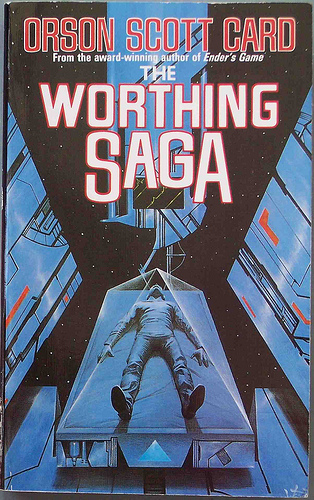
worthingsagaAs we discussed in I is for Interstellar, space colonization is a major theme of science fiction, especially space opera.  Of course, things don’t always go smoothly.  Space is a really, really, really big place, and sometimes, due to war or famine or simple bureaucratic mismanagement, colonies get cut off from the rest of galactic civilization.  They become lost colonies.

Some of my favorite stories are about lost colonies: either how they became cut off, or how they reintegrate after so many thousands of years.  In many of these stories, the technology of these colonies has regressed, sometimes to the point where the descendents may not even know that their ancestors came from the stars.  When contact is finally made, the envoys from the galactic federation may seem like gods or wizards.

Because of this technological disconnect, stories about lost colonies often straddle the line between science fiction and fantasy.  After all, Clarke’s third law states:

Any sufficiently advanced technology is indistinguishable from magic.

Of course, the line between science fiction and fantasy has always been a fuzzy one.  Hundreds of attempts have been made to define it, but they all fall short.  In the end, it often breaks down to certain recurring tropes, like dragons and wizards versus ray guns and rockets, but even that doesn’t always work.

For example, Anne McCaffrey’s Dragonriders of Pern is technically about a lost colony far into the future, but it’s got dragons and castles and other tropes that belong squarely in fantasy.  Then again, the dragonriders have to fight alien worms who invade every few dozen years from a planet with a highly elliptical orbit, so there’s still a strong science fiction basis undergirding the whole thing.

And that’s just Dragonriders of Pern.  What about Marion Zimmer Bradley’s Darkover series, or C.S. Lewis’s Space Trilogy?  Trigun is more western than fantasy, but it’s also full of sci-fi tropes like giant sand-crawling monster ships and a weird post-apocalyptic backstory.  And then there’s all the Japanese RPGs that combine magic with mechas, with Xenogears as one of the best examples.  For a distinct Middle Eastern flavor, look no further than Stargate.

It’s no coincidence that all of these stories feature a lost colony of one kind or another.  When the characters don’t know that they’re living in a science fictional universe, it’s very easy to throw in tropes from other genres.  By no means is it required–Battlestar Galactica and Dune are evidence enough of that–but they certainly present the opportunity to do so.  After all, lost colony stories basically present a hiccup in humanity’s march of progress, breaking the essential science fiction narrative for all sorts of interesting side stories and tangents.

One perennial favorite of science fiction writers is to suggest that Earth itself is a lost colony from some other galactic civilization.  That forms the entire premise behind Battlestar Galactica: the original twelve colonies have been destroyed in the human-cylon wars, and the last few survivors are searching for the legendary thirteenth colony of Earth, hoping to find some sort of refuge.  Apparently, Ursula K. Le Guin’s Hainish cycle also plays with this trope, though she’s never very explicit with her world building.  It can be a bit tricky to twist the lost colony trope in this manner, but if pulled off right it can really make you sit back and go “whoa.”

My personal favorite is probably Orson Scott Card’s The Worthing Saga, about a colony of telepaths that breaks off from a collapsing galactic empire and actually becomes more advanced than the rest of humanity.  When Jason Worthing and Justice re-establish contact, the descendents of the galactics are basically pre-industrial subsistence farmers who view them as gods–which, in a certain sense, they almost are.

It’s a great story that really entranced me, not just for the science fictional elements but also for the distinct fantasy flavor.  Orson Scott Card’s handling of viewpoint in that book is truly masterful, so that I felt as if I were viewing everything through the eyes of his characters.  Since the farmers don’t know anything about their spacefaring ancestors, all the parts from their point of view feel like a completely different story.  It was really great.

My first novel was actually a lost colony story, combined with a first contact.  I trunked it a long time ago, but many of the earliest posts on this blog are all about my experience writing it.  As for my other books, Desert Stars contains elements of this, though the lost colony in question is actually a nomadic desert society that lives on the capital planet of the galactic empire, just outside of the domes where all the more civilized folk live.  Heart of the Nebula is basically about a society that puts itself in exile in order to escape the privations of the Hameji.  And in… no, I’d better not spoil it. 😉

The lost colony isn’t one of the flashier or more prominent tropes of science fiction, but it’s definitely one of my favorites.  It’s a great way to add depth and intrigue, as well as bend genres.  For that reason, I think this trope does a lot to keep science fiction fresh.

Sid Meier’s Alpha Centauri, aka the best 4x strategy game of ALL TIME

Sid Meier’s Alpha Centauri is, without a doubt, the best strategy game I have ever played.  I have many fond memories playing it into the early morning hours while I was in college.

I just bought it for $2.99.  What have I done??

The last time I played this game, it quite literally consumed my life.  I eventually had to delete it from my computer just to keep up with my schoolwork.

But wow, it’s so good.  And the best part, in my opinion, is the story.  Unlike other 4x strategy games, where everything is basically up in the air, Alpha Centauri has a very distinct storyline full of interesting twists and turns.

It starts out with a colony mission to (where else?) Alpha Centauri that fractures into seven factions, based not on ethnicity or nationality, but on ideology.  These are: the scientists, the religious fundamentalists, the communists, the free-market capitalists, the diplomatists, the militarists, and the environmentalists.

The last faction is my favorite, because the planet itself is a character in this story.  As you settle and explore new territory, you come across giant patches of fungus and swarms of hostile mind-worms.  The more the game progresses, however, the more you realize that the fungus is part of a giant neural network, and that it’s trying to communicate with you.  When you finally learn to communicate back–THAT’S when things get interesting.

Oh man, I love this game.  It’s a science fiction classic, reminiscent of Orson Scott Card and Arthur C. Clarke.  I just hope I can exercise some self-restraint this time–but hey, if I can moderate how much time I spend on Minecraft, surely I can do the same with Alpha Centauri.

Famous last words…