Your enemies want you to doubt yourself. It is the only way they can win.
From Captive of the Falconstar by Joe Vasicek.
Your enemies want you to doubt yourself. It is the only way they can win.
From Captive of the Falconstar by Joe Vasicek.
It’s almost like these overweight women never grew out of the lies and social programming embedded in everything Disney has produced in the last 50 years.

What makes someone worthy to lead: strength, status, skill, or something deeper? The Sword Keeper is a chosen-one fantasy about a tavern girl who is handed a legendary sword, a dangerous prophecy, and a responsibility she never asked to carry. At the heart of the story is the idea that true leadership begins not with power, but with humility.
The first spark for The Sword Keeper came when I was taking Brandon Sanderson’s writing class at BYU, around the time he had just published Warbreaker. I loved the idea of a sentient sword as one of the characters, but the story truly came alive later, after I moved to the Republic of Georgia to teach English. The mountains, villages, dances, family names, food, roads, and little backcountry details of the book all grew out of my time there, especially in Kutaisi and the mountain village of Rokhi.
Tamuna is not the obvious person to bear Imeris. She is not a warrior, a noble, a trained monk, or a commander. She is a tavern girl from a mountain village, more familiar with chores, travelers, and local gossip than with swords, strategy, or war. That is exactly what makes the theme work. The sword does not choose the strongest person in the room. It chooses someone who can learn, listen, care, and carry power without treating it as a prize.
Alex is the clearest contrast. He has the training, discipline, courage, and martial skill that Tamuna lacks. He once hoped the sword would choose him, and part of him still believes he would have been the better bearer. But his struggle shows why humility matters. He has to learn that service is not failure, and that leadership is not always given to the person who looks most qualified. By the end, he recognizes Tamuna as the true sword bearer because she treats command as a sacred burden rather than a personal honor.
This theme also shapes Tamuna’s growth. She does not become a leader by pretending she is fearless or invincible. She becomes a leader by accepting responsibility, listening to counsel, protecting her friends, and slowly learning how to make decisions that affect more lives than her own. When she realizes that leadership means deciding life and death for those who follow her, Alex tells her that the fact she treats that responsibility seriously is probably why Imeris chose her.
Most of us are tempted to think leadership belongs to the confident, the talented, the powerful, or the people who seem born for greatness. But real leadership often begins with the person who understands the weight of responsibility. Humility does not mean weakness. It means knowing that other people’s lives matter, that power can corrupt, and that courage is only noble when it serves something beyond itself. That is why Tamuna’s journey matters: she is not chosen because she wants glory, but because she can learn to serve.
I care about this theme because I know what it feels like to be unprepared for the road ahead. When I first began working on this story, I was trying to launch a writing career during a difficult season, with discouraging book sales and few good prospects outside dead-end jobs. Moving to Georgia became one of those unexpected life turns that gave me more than I knew I needed. In a way, Tamuna’s story grew out of that same feeling: being called into something larger than yourself, not because you feel ready, but because the road has opened and you have to decide whether to take the next step.










Explore the series index for The Twelfth Sword Trilogy.
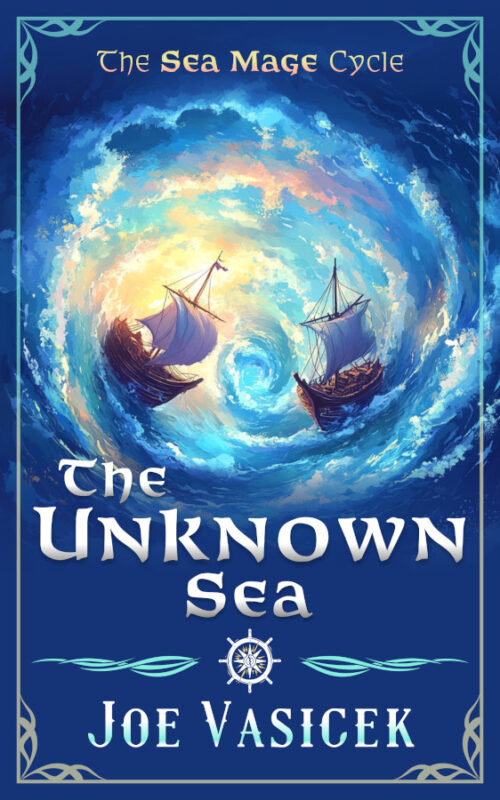
Now that I’ve finished Captive of the Falconstar, I’m back to writing fantasy again, this time The Unknown Sea from the Sea Mage Cycle. I was going to focus on The Soulbond and the Sling, but this book is much shorter, and I think I can have it up for preorder by the time Captive goes live. It’s also about a quarter of the way finished already, so finishing it will only take a little push.
What I really don’t want to do is spend six months working on a WIP that I won’t be able to release this year, or maybe even next year, only to have my sales fall off a cliff because I haven’t been publishing anything. Which means that there may never be a good time to work on The Soulbond and the Sling (or The People of the Last Harvest, for that matter), but if I can set up a few long-term preorders, that may give me the space I need. I’m also going to try making it a side project and working on it on the side, for those rare times when I get an extra hour or two.
There are two more science fiction books that I plan to write: Lord of the Falconstar and Return of the Starborn Son. Both of those will complete a trilogy (The Falconstar Trilogy and the Outworld Trilogy, respectively). But I plan to intersperse those projects with fantasy WIPs, so that I’ll alternate between fantasy and science fiction until those unfinished trilogies are all complete. And then, I’ll focus exclusively on writing fantasy.
The Unknown Sea shouldn’t take long to finish, though the AI draft is rougher than I remember it being. I suppose that means I’m getting better at this, since my older work now seems so much worse. All that really means is that the human draft will take longer, since I’ll fix it all up and make it good for the final draft. But I don’t think I will be finished with this WIP until at least the end of June, and probably the end of July.
My wife plans to fill out her 10 month contract on schedule, giving her two months off in the summer. That should give me July and most of August to write full-time. Perhaps that will be a good chance to work on The Soulbond and the Sling, or finish up Lord of the Falconstar quickly enough that I can put it on a long-term preorder and spend the next six months working on the Soulbound King books. We’ll see how it goes.
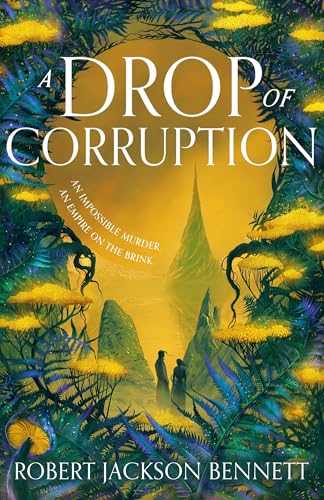
A Drop of Corruption by Robert Jackson Bennett

The Everlasting by Alix E. Harrow
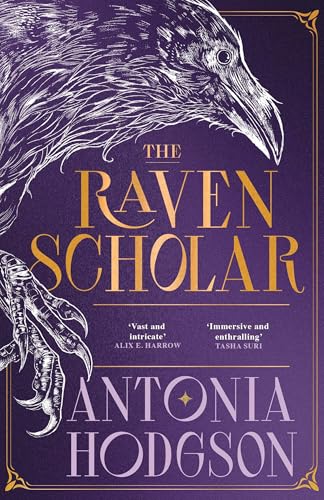
The Raven Scholar by Antonia Hodgson
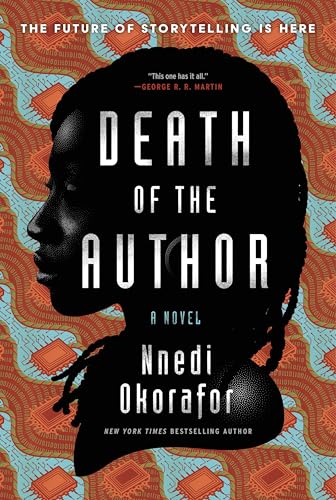
Death of the Author by Nnedi Okorafor
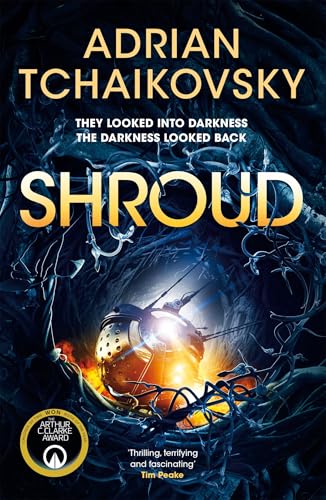
Shroud by Adrian Tchaikovsky
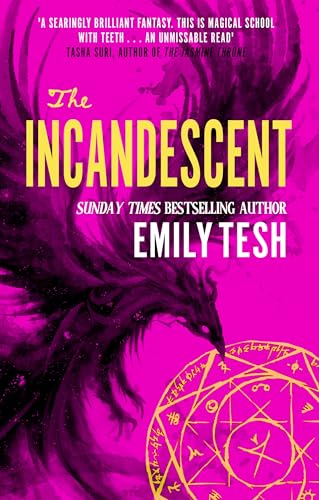
The incandescent by Emily Tesh
TO BE DETERMINED
The Hugo nominees for 2026 just came out, and I have to say, deciding how I would vote on this ballot has been the easiest post I’ve done in this series. All of these books fail—all of them. I don’t even have to read them to know how I would vote. Thank you, ChatGPT, for helping me screen these books.
(Fun fact: I have more active subscribers on my email list (meaning their last activity was less than 90 days ago) than people who cast ballots for the Hugo nominees. Almost twice as many active subscribers, in fact. It’s not even close.)
Why do I use ChatGPT to screen my books? Because of a terrible experience I had reading The Man Who Folded Himself by David Gerrold. It started as a fun time travel adventure about a kid who gets a fantastic time travel belt, and uses it to do awesome things. But then, a future version of himself shows up and starts grooming him sexually, and before you know it, the whole book is literally about him fucking himself. I was so repulsed and disgusted from that reading experience that I vowed I would not read any more Hugo nominated books until I had screened them with AI first.
I’ve trained ChatGPT to look for five kinds of content that I personally find objectionable. Those are:
If a book is only borderline on one or two of the categories, I may still read it if the book description interests me. But if it’s hardcore over the line on at least one of those things, I won’t read it. And for the 2026 Hugo Awards, ever single book fails miserably in at least one of those categories.
A Drop of Corruption is a direct sequel to The Tainted Cup, the book that won Best Novel in last year’s Hugo Awards, which also failed my screening criteria (for sexual content, woke messaging, and profanity), so that was enough of a basis not to read the sequel. But ChatGPT also says there’s sex trafficking and pedophilia in this one, which is enough to fail this book on its own.
I don’t think I’ve ever read a book by Alix Harrow that I didn’t DNF, and I certainly won’t start with The Everlasting. According to ChatGPT:
One content-warning review rates the spice as “severe,” with open-door intimacy in chapters 17 and 22; StoryGraph also flags graphic sexual content.
Child death is flagged by some readers, along with war and repeated death.
One review counts 27 uses of f-word and 3 uses of c-word; profanity rated severe.
[It also features] Queer-inclusive / bisexual themes, gender-norm challenges, feminism, anti-fascist themes.
Not a hard choice there at all. Here’s what it said about The Raven Scholar by Antonia Hodgson:
StoryGraph user warnings include graphic child death among other violent content.
Ever since having children of my own, I do not do any sort of violence against children. I just can’t stand it. I loved Hyperion, but the subplot about the girl who gets the Merlin disease and grows backwards just completely wrecked me. Thank goodness it has a happy ending, because otherwise I probably would have burned my copy of The Fall of Hyperion. So I’m really not kidding when I say I don’t do violence against children.
Surprisingly (or perhaps not), most of the books this year failed on that particular point. Consider what ChatGPT said about The Incandescent by Emily Tesh:
StoryGraph flags child abuse and child death, and the premise involves a magical school where demons prey on children.
Bisexual female protagonist, neurodiversity representation, critique of elite education, class privilege, and capitalism.
I suppose this is a side effect of the ideological purity of the awards, since one of the defining issues of the modern left is abortion. When your political faction literally celebrates the murder of children, should it come as a surprise that it produces so much anti-family and anti-natalist fiction?
Anyways, the last two books failed primarily on the “woke” messaging. They’re the ones I’m most likely to reconsider my decision to skip, though I’d have to hear a recommendation from someone I really trust. I’m particularly reluctant to read Death of the Author, just because I usually can’t stand when writers write about what it’s like to be a writer. Here’s what ChatGPT said:
Feminism, disability autonomy/representation, racism, sexism, transphobia, Nigerian-American cultural conflict, and publishing/representation discourse are prominent.
As for Shroud by Adrian Tchaikovsky, that’s probably the one of these books that I’m still the most on the fence, but from what I can tell with ChatGPT’s screening, it seems like he’s gone all-in on the woke messaging in order to appeal to the Hugo voters, and that’s enough for me to give it a pass. Here’s what ChatGPT said:
Strong anti-corporate, anti-colonial, environmental/extraction critique; one review frames it around humanity, colonization, corporate strip-mining, and moral corruption.
So there you have it. Not a hard choice. If I were voting in the Hugos this year, I’d give it a “no award” for the Best Novel category. As it stands, though, there is absolutely no way I’m giving these MFers any of my money, so I won’t be voting. It will be mildly interesting to see which species of perversion and woke leftist pathology will win this increasingly irrelevant award.
The Sword Keeper is a coming-of-age epic fantasy about a village tavern girl chosen by an ancient sentient sword to stand against a rising empire of corrupted blades, dark mages, and enslaving powers. It delivers a classic quest-fantasy experience with mountain passes, warrior monks, sword training, prophecy, friendship, danger, and a young heroine slowly learning that wisdom matters as much as strength.
If you love…
…then The Sword Keeper is probably your kind of story.
Tamuna Leladze is a curious tavern girl from the mountain kingdom of Kutaisa whose life changes when she touches Imeris, the twelfth and final enchanted sword of an ancient order. Suddenly bonded to a blade that can speak into her mind, share the memories of past bearers, and train her for a war she never asked for, Tamuna is forced to flee her home with Nika, her loyal childhood friend, and Alex, a proud warrior monk who resents that the sword chose her instead of him. The story is adventurous, earnest, and emotionally sincere, with fast-moving escapes, training sequences, strategic lessons, battlefield danger, and a hopeful but serious tone.
Readers who enjoy the chosen-one structure of classic fantasy will find familiar pleasures here: a humble protagonist, a sacred weapon, a broken order, and a shadowy enemy moving across the map. But The Sword Keeper stands apart by making the sword itself one of the central characters, not just a magical object or symbol of power. Imeris is teacher, mentor, conscience, strategist, and ancient witness, while Tamuna’s growth depends less on becoming physically unstoppable and more on learning judgment, courage, leadership, and self-command. The setting also draws heavily from the Caucasus and the Republic of Georgia, giving the mountain villages, dances, names, roads, food, and landscapes a flavor that feels distinct from more familiar medieval-Western fantasy worlds.
This is not grimdark fantasy, and it is not a cynical deconstruction of the chosen-one story. Readers looking for morally gray nihilism, graphic sensuality, or a story where everyone is corrupt may not find what they are looking for here. The violence and danger are real, but the heart of the book is earnest, heroic, and fundamentally hopeful.
I wrote The Sword Keeper out of my love for stories where ordinary people are called to become more than they ever imagined. Much of the world building grew out of my time teaching English in the Republic of Georgia: the city of Kutaisa, the mountain pass, the dancing, the family names, the backcountry details, and even small moments like Nika caring for the weakest chick in a brood all came from things I saw or experienced firsthand. I think that gives the story a lived-in texture beneath the fantasy adventure—a sense that Tamuna’s world is not just a backdrop, but a place worth saving.
Explore the series index for The Twelfth Sword Trilogy.
They call them Velociraptors, but they’re really Utahraptors. The actual Velociraptor was only the size of a Labrador or a German Shepherd.
My kids are really into dinosaurs right now, so we’ve been going to all the local museums and checking out lots of dinosaur books from the library. As scary as the dinosaurs were in the original Jurassic Park, I think they’re even scarier with feathers.
Curiosity is one of the defining traits of all great people. It is the driving force behind every dreamer, and the imperative behind all those who seek to improve the lives of their fellow men.
The Sword Keeper by Joe Vasicek
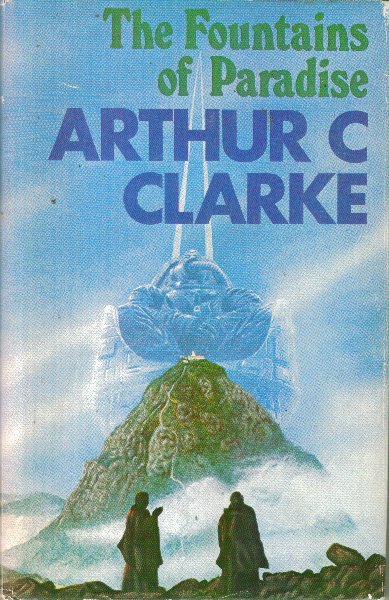
The Fountains of Paradise by Arthur C. Clarke

On Wings of Song by Thomas M. Disch
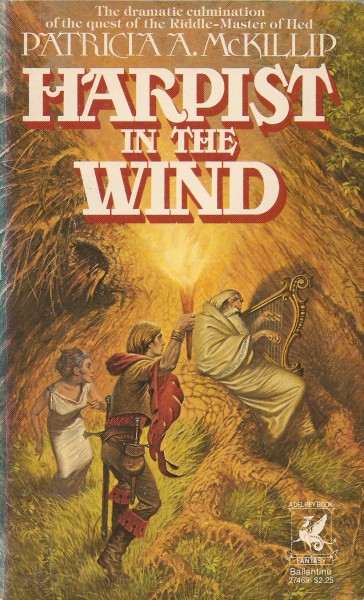
Harpist in the Wind by Patricia A. McKillip
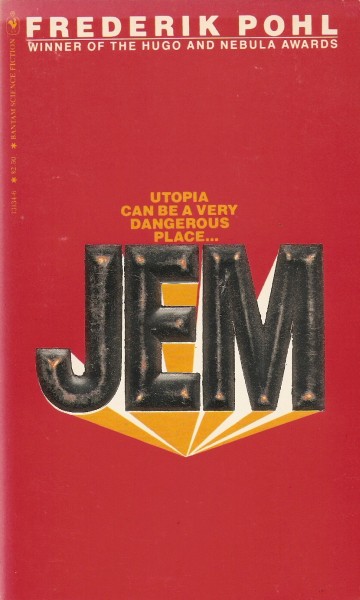
Jem by Frederik Pohl
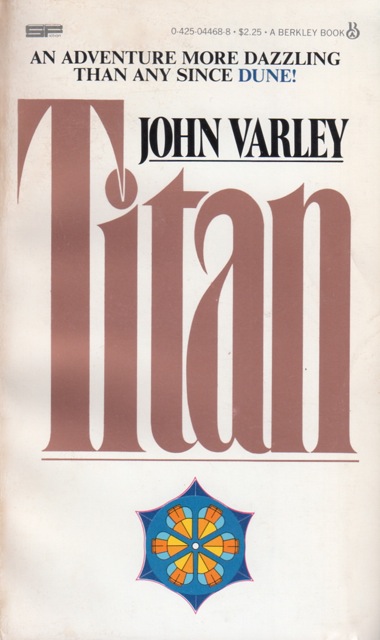
Titan by John Varley
(Abstain)
I didn’t like any of the books this year, though none of them were particularly objectionable or bad (at least, not of the ones I read). The Fountains of Paradise just didn’t hold my interest, and I got bored and put it down. As for Harpist in the Wind, I never got to it because I ended up DNFing the first book in the trilogy, The Quest of the Riddle-Master. I wanted to like it, but I was just totally lost, especially when some of the characters were dead… maybe? Or maybe it was a dream? McKillip is clearly a beautiful writer, but writing a clear and engaging plot is clearly not her strength.
As for the other three, I screened them for objectionable content with AI, and based on that, I chose not to read them. I’ve found that I have to do this with all the Hugo Award nominees because some of the books are just way beyond the pale. On Wings of Song is apparently about a 14 year old child’s supernatural sexual awakening. Titan is apparently about a bunch of libertine, pansexual astronauts on a starship making first contact (in more ways than one) and spreading free love across the galaxy. Jem is apparently about the evils of colonialism and capitalism in a world where Malthus was right and Thomas Sowell is wrong (and you thought Ayn Rand’s preaching was bad).
1980 was the tail end of the New Wave, when science fiction went totally woke before “woke” was even a thing. But by this point, the movement was already starting to feel tired. It wasn’t until the mid-80s that a lot of these toxic ideologies were in full retreat, making room for some truly great books like Ender’s Game and Hyperion. At the same time, because the movement was already starting to burn itself out, none of these New Wave books is particularly terrible. Just more of the same tired thing.

Trouble Shooter by Louis L’Amour

The Irrational Decision by Benjamin Recht

On Writing & Failure by Stephen Marche

The Coming Wave by Mustafa Suleyman

The Fellowship of the Rings by J.R.R. Tolkien

The Seven Mountains Mandate by Matthew Boedy

Moroni’s America by Jonathan Neville

The AI-Driven Leader by Geoff Woods

The Lost Gems of Genesis by Jonah R. Barnes


The Man From the Broken Hills by Louis L’Amour