Arguably the best of the good-aligned characters, the Neutral Good can always be counted on to do the right thing, whether that means working within the system or rebelling against it.  Whether young or old, soft or shrewd, nice or not so nice, these are the guys (and girls) most likely to save the world and defeat the enemy with love.

From the easydamus character alignment page:

A neutral good character does the best that a good person can do. He is devoted to helping others. He works with kings and magistrates but does not feel beholden to them.

The Neutral Good is not devoid of weaknesses, of course.  Although they are devoted to good, their lack of commitment to law means that they are not always willing to enforce it.  Also, for those who just want to get things done, this alignment can be somewhat limiting, in the way that a commitment to any higher ideal usually is.

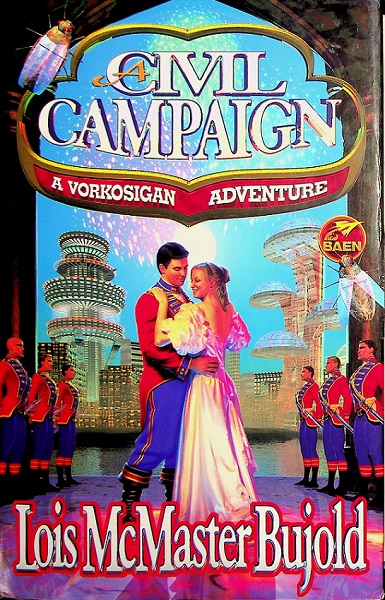
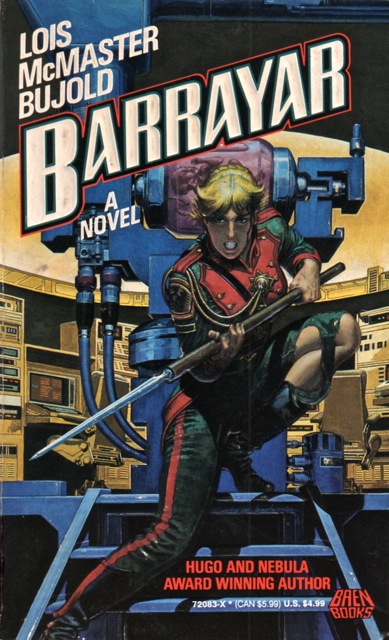
Interestingly, this is a very common alignment for heroes in space opera stories.  Case in point, Luke Skywalker: even though he’s young and reckless, he’s not above learning the ways of the force and joining the Jedi order.  Miles Vorkosigan from Lois McMaster Bujold’s Vorkosigan series also falls squarely into the Neutral Good camp.  Moving on to manga and webcomics, Alphonse and Winry from Fullmetal Alchemist both fall under this alignment, giving balance to Edward’s more chaotic outbursts.  Agatha from Girl Genius is also a Neutral Good…at least, when there aren’t any wrenches nearby.

There are quite a few characters with this alignment in my own work.  Even though she’s a mercenary captain, Danica from Bringing Stella Home falls squarely into this alignment; she’s got a tough outer shell, but she’ll do anything for her men, even…well, I don’t want to ruin Stars of Blood and Glory. ;) Also from Bringing Stella Home / Sholpan, Stella is solidly Neutral Good, which is part of why the ending is so deliciously twisted.  In Star Wanderers, Jeremiah falls into this alignment mostly through default, which is good for Noemi because the circumstances of the novel put her totally at his mercy.  And in Desert Stars, this is probably Mira’s alignment, though she’s easily manipulated by her Neutral Evil mother.

What can I say?  I’ve got a soft spot for Neutral Goods.  Considering how well this kind of a hero fits in to a classic space adventure, it shouldn’t come as any surprise.

One of the essential elements for a successful in epublishing is a killer book description, and I think I’ve got a pretty decent one for Bringing Stella Home.  However, I could use some feedback, so if you could read it and tell me what you think, that would be great. Here it is:

It is a dark time for the galactic empire. Rebellions at Tajjur and the New Pleiades sap the empire’s strength from within, while hordes of spacefaring Hamiji warriors from the outer reaches sweep ever closer to the Imperial capitol, slagging entire worlds in their wake.

When the Hameji forces conquer his homeworld, young James McCoy runs away to rescue his older brother and sister, Ben and Stella, from their grasp. Though he faces an enemy undefeated in battle and feared throughout all of inhabited space, James will stop at nothing–not even death–to get his brother and sister back.

Things start to look up when he meets Danica Nova, a Tajji mercenary captain who takes him in and becomes his mentor. James reminds Danica of her own brother, whom she failed to protect when the empire slaughtered her family years ago. Now, she hopes to find some redemption from her demons by saving James from his own.

Unfortunately, neither of them realizes that Stella has become a concubine to the main Hameji overlord–and that Ben has been brainwashed and made into an elite shock trooper in the empath squadron sent to hunt them down.

So what do you think?  Too long, too confusing, too cliche, or too boring?  The genre (if you can’t tell) is space opera / space adventure, so I’m hoping it will appeal to fans of Orson Scott Card, C. J. Cherryh, Lois McMaster Bujold, Star Wars & Star Trek, etc.  It’s also got a slight military science fiction bent to it, though I wouldn’t presume to be qualified to write true military sf.

In unrelated news, I recently did an interview with Charlie of Playground51, which appears to be down for some reason (the link is on my Blog Tour page above).  Topics discussed include how I got the idea for Genesis Earth, which parts were inspired by real life, and thoughts on book promotion.  Hopefully the site will be up again soon!

Also, I’m thinking it’s time to do a major overhaul of my blog template.  As much as I love the current one with the purple stars and nebulae, I need something with two sidebars so that my books don’t push everything else to the bottom.  If you have some ideas for a good WordPress template that still keeps the sci-fi feel of this one, please let me know!  I’m very much open to suggestions.

Finally, since the Borders liquidation is all over the news, I thought I’d share my $.02.  It’s sad, certainly, but I don’t think that the fallout will be nearly as gloomy as Joshua Bilmes claims.

Corporate-run big box stores are certainly on the way out, but there will always be a market for good stories, and in many ways the new ebook technology is causing that market to expand at a wonderful rate.  So while the predictions of the print death spiral appear to be coming true (David Gaughran did a great post recently on that), new models will emerge–indeed, are already emerging–which will fill the vacuum.

The thing that gives me great reason to hope is that these new business models give so much power back to writers.  Instead of relying on the mercies of large media corporations to build a viable career, we can now make a living by publishing independently or going with any number of small independent presses.  Readers have more choices and writers have more options.  It’s glorious.

If anything, the Borders bankruptcy has confirmed to me that I’ve made the right choice to go indie, rather than wait for New York to anoint me before launching my career.  Will I ever go with a traditional publisher?  I’d like to someday, but I no longer feel dependent on the old system to accomplish my dreams.  Instead, it’s my readers who will decide my fate, and that’s exactly as it should be.

So thanks for reading!

Cordelia Naismith never thought she would find the love of her life on a scientific survey to an unexplored border world, let alone that he would be a Barrayan, one of the enemy.  But Aral Vorkosigan is not just any other officer in the Barrayan Military.  He is courteous, fair-minded, thoughtful–and above all else, driven by an innate sense of honor.  To her surprise, Cordelia soon finds that she has more in common with the man than she thought possible.

But the rumors of war between Escobar, Beta Colony, and Barrayar soon conspire to drive them apart.  Though Cordelia sees Vorkosigan for the good man he is, the rest of the galaxy only knows him as the “Butcher of Komarr”–an unfortunate title which Vorkosigan does not entirely deserve.

As Barrayar goes to war and Cordelia finds herself rising through the ranks of the Betan Military, she is forced to choose between loyalty to her country and loyalty to the man she loves.  When the two are mutually exclusive, how does one preserve one’s honor while securing a degree of happiness?

I loved this book.  Unlike some romances, where the male protagonist is a complete douchbag, Aral Vorkosigan is the kind of guy I’d like to be like.  Bujold strikes an excellent balance between strong and sensitive that enhances, rather than taints, his manliness.  Besides that, Vorkosigan is extremely fascinating, with a complicated backstory and motivations that are both believable and interesting.

Though it’s technically a romance, the book reads very much like military science fiction, with deliciously tongue-in-cheek phrases like “the cadet was too young to believe in death after life” and rigorous attention to the details of military life, such as rank and chain of command.  The book definitely has enough explosions, space battles, and political intrigue to appeal to boys as well as the romance audience, but Bujold melds the space adventure elements seamlessly with the romantic elements, so that readers of either genre don’t feel left out or patronized.

There was only one thing that bothered me, and since it contains spoilers I’ll put it in black so that you don’t inadvertently see it.  To read it, highlight the text:

After Cordelia ran away from home and married Vorkosigan, why did she never think about her homeland again? You would think that as a career military officer who had dedicated her life to her country, she would at least have some lingering doubts that she’d done the right thing by running away–especially when her husband became the new Lord Regent of Barrayar! To me, this seems in-congruent with her character.

All things considered, though, this was an excellent, well-written science fiction adventure/romance. I thoroughly enjoyed it and will definitely be reading more of Lois McMaster Bujold’s work again.