Trope Tuesday: Future Primitive

From tvtropes:

Evolution isn’t goal-directed. Sometimes …a species (often but not limited to humanity) will sometimes evolve into a more feral, less civilized, sometimes even non-sapient variety, regaining “primitive” characteristics. These “primitive” characteristics can include behaviors and/or physical traits…

Most basic is the scenario common to Post-Apocalyptic settings After the End, where humanity (or another species) is still physiologically more or less the same, but society has collapsed and technological and cultural regression have set in… In more extreme scenarios, the population may have evolved into a new subspecies or another species altogether… Most Scavenger World-type future settings are not far enough removed from the Present Day for natural selection to favor such drastic changes.

May overlap with Was Once a Man. Sometimes, it’s the motivation of an Evilutionary Biologist to try and take control of evolution in order to avert this fate.

Common to After the End settings. Likely to exist in Humanity’s Wake. Contrast Evolutionary Levels, Ultimate Lifeform and The Singularity (all of which tend to assume evolution’s a linear, goal driven process). Has nothing to do with the effects of a Devolution Device.

This trope has been on my mind as I write Edenfall, the sequel to Genesis Earth. In that book, this trope featured prominently, and drove the main character to question his faith in the progression of the natural world from chaos to order, entropy to complexity, and ignorance and barbarity to knowledge and civilization.

Perhaps the most prominent example of this trope is the Morlocks and Eloi from H.G. Wells’s The Time Machine. In the far future, the children of the rich elites of society have evolved into dainty, helpless, childlike creatures, while the descendants of the lower classes have evolved into dark and predatory monsters. As different as they are, though, they have both lost the drive and ingenuity that makes us human: the Eloi because it was pamperd out of them, and the Morlocks because they were repressed for so long. Both of them have lost their humanity and devolved into little more than animals.

In the Victorian era, people generally had faith in the slow and steady march of progress: that ignorance and superstition inevitably gave way to the light of science and reason, each successive age tended to be more advanced and scientific that the previous ages, and that humanity represented the pinnacle of evolution, the crowning achievement of the natural world. They rejected the notion that catastrophic and violent upheavals had any significant effect on the development of cilivization or humanity, and believed that the world was in a state of constant, unstoppable improvement.

Well, the two worlds wars pretty much shattered that notion forever. And since that time, we’ve discovered all sorts of evidence that in history and evolution, catastrophic change and violent upheaval are the rule, rather than the exception. From the bronze age collapse and the black death to supernovae and the extinction of the dinosaurs, the Victorian concept of the slow, steady, and inevitable march of progress looks very quaint indeed.

That was what I wanted to deconstruct in Genesis Earth. But now that I’m writing the sequels, I plan to subvert this trope. I can’t say how without giving spoilers, but it’s going to be a major plot point, especially in the third book.

What happens when humans meddle in evolution? When we hack into our genetic code and rewrite our place in the natural order? Can time heal the scars of our broken world, or will it take something else to fix us? Something more than human, or something so fundamental to our humanity that it lies in every heart?

Anyways, those are the things on my mind as I finish up Edenfall and get ready to write The Stars of Redemption. With luck, they will both be out by the end of this year!

Trope Tuesday: Manic Pixie Dream Girl

Oh dear. I’m probably going to take some heat for this one, especially if it gets picked up by File 770.

What is a “manic pixie dream girl”? Tvtropes puts it this way:

An upbeat young woman whose love gives the brooding male hero a new lease on life.

Wikipedia puts it this way:

…the MPDG “exists solely in the fevered imaginations of sensitive writerdirectors to teach broodingly soulful young men to embrace life and its infinite mysteries and adventures.” MPDGs are said to help their men without pursuing their own happiness, and such characters never grow up; thus, their men never grow up.

You know how the term “space opera” was originally a derogatory term for crappy science fiction? I’m going to go out on a lark, invoke tropes are tools, and argue that Wikipedia is wrong and there’s nothing inherently bad about this trope.

Anita Sarkeesian is not a huge fan of the manic pixie dream girl. In fact, it was the first trope she deconstructed way back 2011, before her scammy kickstarter. I’m not a huge fan of Anita Sarkeesian, but it’s worth rewatching her take on it:

In particular:

The manic pixie perpetuates the myth of women as caregivers at our very core—that we can go fix these lonely, sad men, so that they can go fix the world.

Here’s the thing, though: when you study the men who have fixed the world, you almost always find a strong, caregiving woman behind them. This is portrayed very well in The Darkest Hour, with Winston Churchill’s wife, Clementine:

Granted, Clementine Churchill is no manic pixie, but she did provide critical support to her husband, and was one of the key influences that shaped him into the great man of history that he ultimately proved to be.

Here’s the thing: men need women, just as women need men. All the feminist eye-rolling in the world doesn’t make that untrue. And for men who are lonely, depressed, or overly introspective, a perky outgoing woman can really have a positive impact.

The key to doing this trope well is to make the MPDG a complete character in her own right. Critics rightly point out that something is wrong when she exists solely for the benefit of the male protagonist. That’s not a feature of this trope, though: that’s just bad writing in general.

The best example of a MPDG in my own work is probably Deirdre from Heart of the Nebula. The rest of this post is going to be full of spoilers, so if it’s on your TBR list, you should probably skip to the end now.

Deirdre is very much a character in her own right. She’s the ship’s historian of the Chiran Spirit, a generation ship that James liberates from pirates before going into cryosleep. In spite of her perky, cheerful demeanor, she has experienced deep pain in her life. She immediately latches onto James, but over time this transforms from an interest in a living historical figure to genuine attraction and love.

James and Deirdre round off each others’ rough edges. She helps him to recover his optimism and self-respect, while he helps her to understand herself better and decide what she truly wants. They both help each other to reconcile with difficult baggage from each of their pasts, and though they both go through a period of disillusionment, they ultimately come out stronger for it on the other side.

Here’s the thing, though: if Deirdre was anything but a manic pixie dream girl, she wouldn’t have been able to help James through his darkest hour. It’s her bouncy enthusiasm, clumsy excitement, and unfailing optimism that draws him out of his callused shell. Without those characteristics, the story—and her character—wouldn’t have worked.

In short, I believe that the manic pixie dream girl trope very much has a place, and isn’t inherently sexist or mysoginistic at all. It can be, if done poorly, but when done well it points to the reality that men need women just as women need men, and that’s actually a good thing, no matter what the feminists say.

Trope Tuesday: Death Seeker

The Death Seeker is a character who wants to die, but for whatever reason isn’t willing to commit outright suicide. The TVtropes page has a good summary:

At some point in the past, some characters have had a traumatic experience, found themselves dishonored, committed a crime they could not repay, or lost everything worth living for. For whatever reason, rather than turning to suicide, they went off seeking battles to fight, hoping to find an enemy who would kill them, and achieve an honorable, heroic, awesome, or otherwise acceptable death, sometimes going as far as outright surrendering and offering their life to their enemies.

I’ve written a surprising number of these characters, but more often than not they end up living instead of dying. Quite often, they have a mentor who used to be a death seeker themselves, who makes them promise to find a reason to keep on living.

Escapist fiction is fun, but I like to read stories that are meaningful as well. The two are not mutually exclusive. When the protagonist is a death seeker, the question “what is worth living for?” tends to be a major driver for the story.

One character who’s very much on my mind right now is Mara Soladze from Sons of the Starfarers. A refugee turned marine, she has a traumatic experience in Comrades in Hope that very nearly pushes her over the despair event horizon. She can’t just give up and die, though, because there are people depending on her. As she climbs up the ranks from first mate, to captain, and finally to commodore, that tension never goes away.

Probably the biggest difference between a death seeker and someone who’s simply suicidal is that the death seeker is looking for something to die for. They’re much more likely to make a heroic sacrifice or go out in a Bolivian army ending.

But if something is worth dying for, isn’t it also worth living for? That is ultimately the question.

Trope Tuesday: The Alliance

In fiction, the fight against the Empire usually follows a clear progression.

First, you have the Resistance, a scrappy band of misfit freedom fighters who take up arms, barricade the streets, and fight back against all odds. Think Rogue One, or Les Miserables.

If they aren’t immediately crushed, the Resistance eventually turns into the Alliance. Only slightly more organized than the Resistance, it’s still not unheard of for members of the alliance to turn on each other if the right opportunity arises. That said, when they’re united, the Alliance can muster a lot more firepower than the Resistance could ever hope to bring.

The Alliance is what happens when the local powers commit to the fight. It’s what happens when a low-level insurgency turns into a full-blown civil war. Whether or not everyone in the alliance trusts each other, together they have all crossed the Rubicon in the fight against the Empire.

If the Alliance is successful and defeats the Empire, it will either turn into the Republic or the Federation. The Republic is much more centralized and behaves like a single nation, whereas the Federation is a collection of semi-autonomous states united under one banner.

To pull a page from history, the United States started as the Resistance, with the patriots dumping the tea at the Boston tea party. With the Declaration of Independence, the Resistance turned into the Alliance as the minutemen became the Continental Army. With the Constitution of the United States, the Alliance became the Federation, which (depending on your reading of history) has either endured to the present day, or transformed into the Republic and/or Empire.

Star Wars used to have a very clear progression from Republic to Empire (episodes I-III) and Resistance to Alliance to Republic (Rogue One, episodes IV-VI, and the expanded Star Wars universe), but the new movies have apparently thrown all that out and moved us from Resistance to Alliance to… Resistance again? And the Empire went from Remnant to Empire, even after losing Starkiller Base in episode VII? Yet another reason why The Last Jedi really did not impress me.

In my own books, this progression figures prominently in Sons of the Starfarers. It starts with the Resistance in Comrades in Hope, but soon transforms into the Alliance and stays that way for most of the rest of the series. It’s on my mind right now, as I finish An Empire in Disarray and get ready to write the last book, Victors in Liberty.


Trope Tuesday: The Chessmaster

The Chessmaster is a fun trope, especially when done well. A good villain is always at least one step ahead of the good guys, so when it turns out that he’s three or four or ten steps ahead of them, it can make for some interesting plot twists.

Of course, the chessmaster isn’t always the bad guy. Sometimes, it turns out that the mysterious figure behind the scenes pulling all the strings is actually working for good, even though he may sacrifice a few pawns along the way. Or is he? There’s always that tension, simply because of the chessmaster’s manipulative nature.

I’ve played it both ways. The last time I wrote a chessmaster was Gunslinger to the Stars, but the Patrician in Heart of the Nebula definitely also qualifies. In both cases, the character was introduced as a mysterious employer. I won’t tell you which one was the bad guy, and which one was the good guy.

I’ve never written a story from the perspective of the chessmaster. I imagine it would be quite difficult, since all of the plot twists would have to be telegraphed and/or th reader would have to be kept in the dark about the main character’s plans. Dune is an excellent example of the former, but I can’t think of any good examples of the latter. The Davinci Code comes to mind, but the way it kept the viewer in the dark (seen the movie, haven’t read the book) didn’t work for me.

Even as a non-viewpoint character, the chessmaster can be difficult to write. Careful plotting is key, of course, but so is the iceberg principle. For everything the reader can see, there has to be a bunch of stuff beneath the surface that they can’t see. It doesn’t require the same level of detail as the surface level stuff, of course, but you have to at least have an idea of what the chessmaster would do if the story went in a very different direction. Even if the chessmaster never reveals those plans, you can bet that he still has them figured out.

In part, this is what made Heart of the Nebula so difficult to write. The final draft bears little resemblance to the first draft, with characters and subplots cut out or combined with others. Still, I’m satisfied with how it turned out, and it seems that the readers are as well.

In Sons of the Starfarers, Gulchina isn’t a chessmaster so much as a magnificent bastard with delusions of grandeur. She has plans and does tend to be three or four steps ahead of everyone else, but she’s less interested in manipulating events than she is in manipulating people. Her ultimate goal, as revealed in Captives in Obscurity, is to establish a proud warrior race that will one day wipe out and take over both the Empire and the Outworlds. She doesn’t know how that’s going to happen, but she knows what needs to be done to lay the foundation for that work.

The chessmaster is a challenging trope to write well, but I’m sure I’ll use it many more times in the future. The storytelling potential is just too great to leave it out.

Trope Tuesday: Chekhov’s Armory

The famous Russian writer Anton Chekhov had a rule:

Remove everything that has no relevance to the story. If you say in the first chapter that there is a rifle hanging on the wall, in the second or third chapter it absolutely must go off. If it’s not going to be fired, it shouldn’t be hanging there.

This is, of course, where we get the trope called Chekhov’s Gun. If a gun shows up at the beginning of a story, you can almost always be sure that it will be fired at some point before the end.

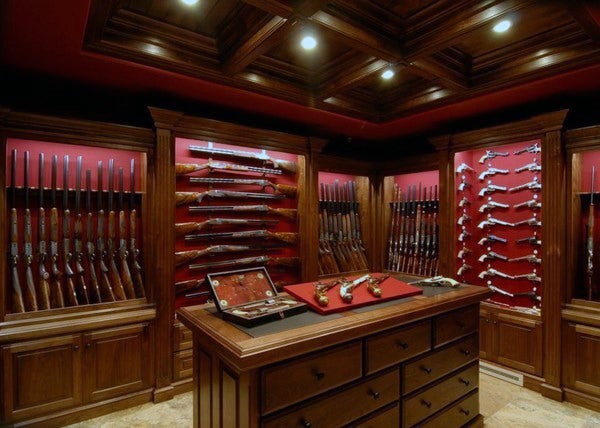
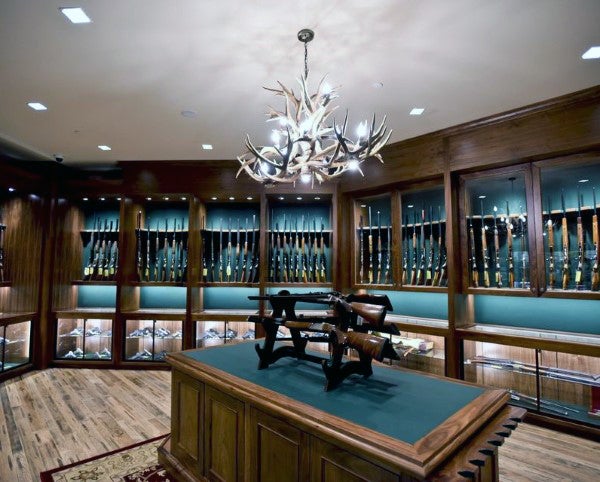
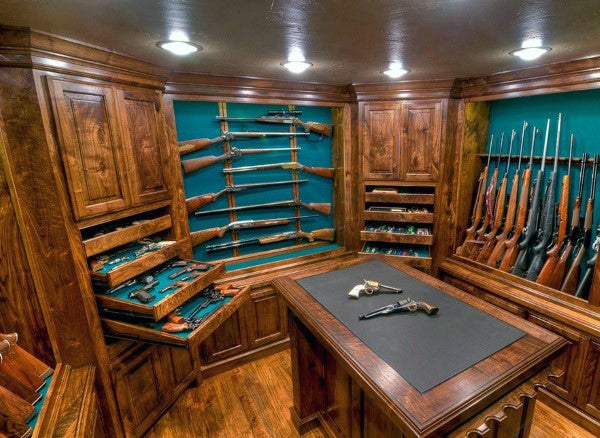
Chekhov’s armory is where the story starts out in a place like this:

Or this:

Or this:

What the hell, I might as well just give you the link to the blog where I got all these photos. There’s plenty more gun porn where that came from.

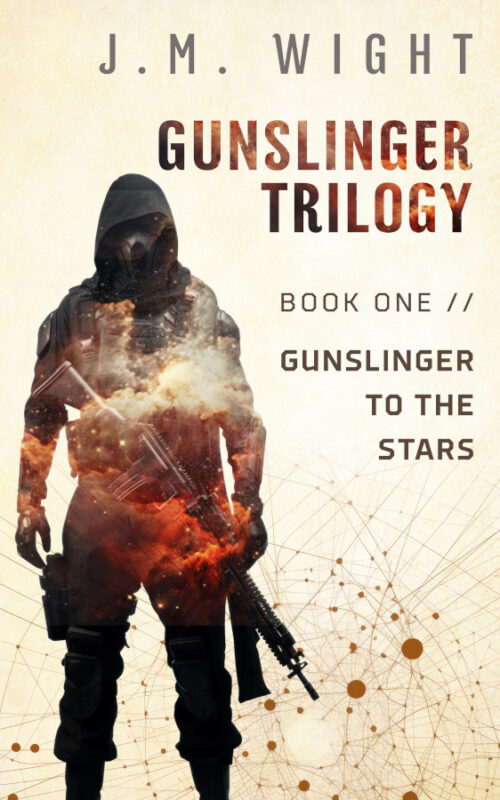
My first time playing with this trope was Gunslinger to the Stars, and I have to say, it made for a really fun story. My outline literally consisted of listing a different gun for every chapter, and figuring out how to work it in. Chapter two was where all most of the guns were listed, but after that, it was pretty much “open fire” and “reload” right up to the grand finale at the end (with a little bit of kissing thrown in for good measure).

Seriously, though, it’s not a bad way to write a book: list all the things that need to go boom and figure out which order to put them in.

The biggest criticism I’ve received for Gunslinger to the Stars is that I should have described the guns in a more personalized detail. To be honest, my life experience is sadly lacking in this regard. I own a couple of guns, most notably an old Mosin 91/30, but most of my shooting experience comes from the Boy Scouts (though to be fair, I did impress the shotgun shooting instructor with a 40+ shot streak). This is a shortcoming that I am eagerly working to rectify.

So yeah, Chekhov’s Armory. It’s a really fun trope to write. When I’m finished with Sons of the Starfarers, I look forward to doing it all again with the next two books in the trilogy: Gunslinger to the Galaxy and Gunslinger to Earth. Expect book two before the end of 2018!

Gunslinger to the Stars

Gunslinger to the Stars

$15.99eBook: free sale!Audiobook: $2.99 sale!

Sam Kletchka here, freelance gunslinger and interstellar privateer. This, my friends, is how I went from being stranded in the armpit of the galaxy to becoming the luckiest human being in the universe.

More info →

Trope Tuesday: Childhood Friends

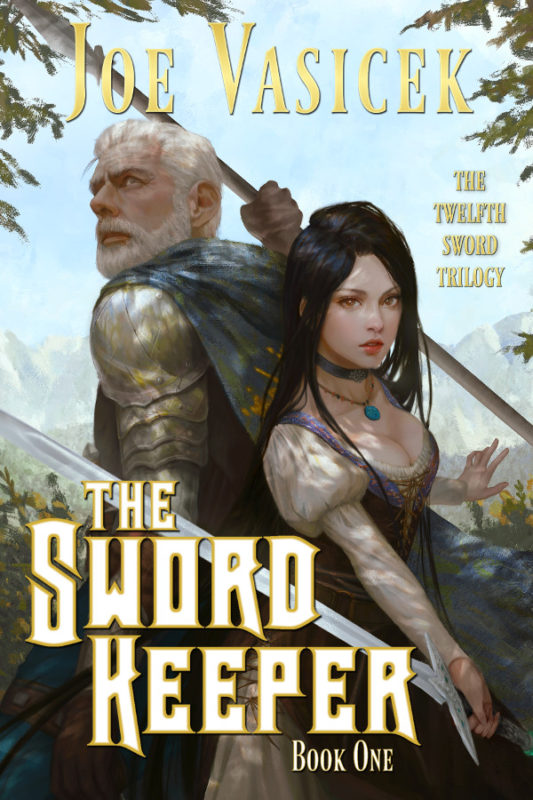
Friendship comes in a lot of flavors. In The Sword Keeper, Tamuna’s most loyal friend (and arguably a deuteragonist of the book) is Nika, the stable boy at her aunt’s tavern. Where Tamuna initially refuses the call to adventure, Nika jumps at the call, quickly catching up to her (which is good, because the call knows where they live).

Where Alex’s loyalty is based in honor, Nika’s loyalty is based in pure friendship, at times even flirting with (but never quite achieving) childhood friend romance. (Of course, this is only the first book in a trilogy…) These two different kinds of loyalty lead to some interesting differences between the characters, which I can’t really discuss since I don’t want to spoil the book.

I guess I can say this much: at the beginning of the book, Nika believes that he is Tamuna’s only friend. But when it becomes clear that Tamuna is no shrinking violet, the roles become reversed as Tamuna comes into her own. Since Nika has never known a world outside of their village, he does not take this well.

According to Dramatica, each story can be broken into four throughlines: the overworld story, the main character’s story, the impact character’s story, and the story of how each of them… well, impact each other. In The Sword Keeper, the overworld story is all about the return of the twelfth sword to a dark and troubled world. The main character, Tamuna’s story, is about her rise from the most unlikely beginnings to become the prophesied sword bearer. Her childhood friend Nika is the character who impacts her the most, and while I won’t spoil his story or the main vs. impact character story for you, it’s definitely a key part of the book.


The Sword Keeper comes out in less than two weeks! Preorder your copy today!

The Sword Keeper

The Sword Keeper

$12.99eBook: $4.99
Author: Joe Vasicek
Series: The Twelfth Sword Trilogy, Book 1
Genres: Epic, Fantasy
Tag: 2017 Release

Tamuna Leladze always dreamed of adventure, but never expected to answer its call. That changes when a wandering knight arrives at her aunt's tavern. He is the keeper of a magic sword that vanished from the pages of history more than a thousand years ago. The sword has a mind and a memory, and it has chosen Tamuna for purpose far greater than she knows.

More info →

Trope Tuesday: Knight in Sour Armor

What happens when the knight in shining armor realizes that war is hell and he lives in a crapsack world? When everything he believes about morality and honor is shattered?

Does he suffer a heroic BSOD and become a shell shocked veteran?

Does he cross the moral event horizon and become the one who hunts monsters?

Does he turn lawful evil and become the knight templar?

Or does he put on his jade-colored glasses, pick up his sword, and soldier on?

It’s one thing to follow a code of honor when you believe that people are basically good. It’s another thing entirely when you realize that people are filthy scumbags. Yet we often mistake starry-eyed idealism for the real thing. Underneath his hardened and deeply cynical demeanor, the knight in sour armor is driven by honor and ideals far more than he lets on.

In The Sword Keeper, one of the viewpoint characters, Alex Andretzek, is a young warrior prince who has lost his kingdom. He’s pledged his life to the service of the sword Imeris, with the understanding that one day he will be the new sword keeper. Then Tamuna comes into the picture, and all of that suddenly changes.

The most aggravating thing for Alex is that he has no idea why the sword choose Tamuna over him. Was he not worthy, or has the sword chosen poorly? It’s hard for him to tell which one is worse.

Of course, there is a third option: that there’s some hidden quality in Tamuna that he doesn’t yet see. But the same sour armor that allows him to cope with the injustice of the world also fills him with doubts. It’s a difficult balance to strike.

Underneath it all, though, Alex is a good and honorable man. Without his sour armor, he would have given all that up years ago.

To me, Alex is the embodiment of the saying that you should assume that everyone you meet is struggling through the most difficult challenge of their lives. If you do, you’ll be right about half of the time. On the outside, Alex is cold, aloof, and even somewhat rude. But beneath his sour armor, the struggle is real.


The Sword Keeper comes out in 18 days! Preorder the ebook now!

The Sword Keeper

The Sword Keeper

$12.99eBook: $4.99
Author: Joe Vasicek
Series: The Twelfth Sword Trilogy, Book 1
Genres: Epic, Fantasy
Tag: 2017 Release

Tamuna Leladze always dreamed of adventure, but never expected to answer its call. That changes when a wandering knight arrives at her aunt's tavern. He is the keeper of a magic sword that vanished from the pages of history more than a thousand years ago. The sword has a mind and a memory, and it has chosen Tamuna for purpose far greater than she knows.

More info →

Trope Tuesday: Only the Chosen May Wield

So I’m bringing back the Trope Tuesday posts, but with a little twist: instead of talking about the trope itself and what I like / don’t like about it, I’m going to talk about how I used that trope in one of my books. And since The Sword Keeper is currently up for preorder, I’m going to spend the next few weeks using examples from it.

Perhaps the most central trope in the book is Only the Chosen May Wield. In the first chapter, Tamuna Leladze discovers that she is the Chosen One when a mysterious stranger arrives at her aunt’s tavern, carrying a cool sword. Unbeknownst to her, the sword is enchanted and carries the skills and memories of all the people who have wielded it. She soon learns that she is the last sword bearer of prophecy—which comes as a huge shock, since as a common tavern girl, she’s really not cut out to be a warrior.

While the book mostly plays this trope straight, there are a couple of other complications that give it some depth. First, the sword itself is an actual character. It speaks to Tamuna through the psychic link that she establishes with it, and when she sleeps, it carries her to a mountain sanctuary where she’s able to talk with it like another person. The sword becomes something of a mentor to her, sharing skills and memories as quickly as she is able to receive them (which is never quickly enough).

Second, while Tamuna never wanted to be the Chosen One, one of the members of her party did, and struggles with feelings of jealousy because of it. This becomes especially complicated because this character’s chief motivation is honor, and he’s put in a position where he has to act as a trainer/bodyguard for Tamuna until she comes into her own. It doesn’t help that he’s only a few years older than her.

I suppose there is a third complication: the fact that Tamuna can’t (or shouldn’t) wield the sword until she has been physically trained for it. Several times, Imeris tells her that he can’t share all of his knowledge of swordplay with her, because she isn’t yet strong enough. Otherwise, she’s liable to injure herself, because her body isn’t capable of executing all of the strikes and parries and ripostes that she knows how to execute in her mind. So, while no one else can wield the sword Imeris, the one person who can isn’t yet capable of doing so.

It makes for an interesting dynamic. Stories tend to get boring when things are too easy for the Hero, and in The Sword Keeper, very little comes easy for Tamuna. In fact, one of the recurring questions she asks is how in the heck she became the Chosen One in the first place. I won’t spoil it for you by revealing whether or what she discovers by the end.


The Sword Keeper comes out in twenty-five days! Preorder it now!

The Sword Keeper

The Sword Keeper

$12.99eBook: $4.99
Author: Joe Vasicek
Series: The Twelfth Sword Trilogy, Book 1
Genres: Epic, Fantasy
Tag: 2017 Release

Tamuna Leladze always dreamed of adventure, but never expected to answer its call. That changes when a wandering knight arrives at her aunt's tavern. He is the keeper of a magic sword that vanished from the pages of history more than a thousand years ago. The sword has a mind and a memory, and it has chosen Tamuna for purpose far greater than she knows.

More info →

Trope Tuesday: Colony Ship

It’s been a while since I did the weekly Trope Tuesday posts, but those were a lot of fun and they still get a lot of traffic, so I’m going to bring them back with a couple of changes. Instead of focusing on the trope itself, essentially rewriting the description on the tvtropes page, I’m going to pick apart what I like about it and focus instead on the trope’s appeal. I’m also going to pick tropes that are in my own books, so that I can talk about how I’m using them.To kick things off, this week’s trope is the Colony Ship. A staple of space opera, this trope is exactly what it says on the tin: a giant starship, often a worldship or a starship luxurious, taking a band of colonists to settle the final frontier. Essentially, this trope takes the wagon train to the stars concept to its logical conclusion, since what is a wagon train but a band of hopeful colonists? And since this is space, there’s no limit to where you can take it!

I love this trope because it’s so hopeful. Even in dark post-apocalyptic stories like A Canticle for Leibowitz, the possibility of taking humanity to the stars shines like a beacon of hope, an interstellar ark that can fling a light into the future. No matter how badly we screw up Earth, we can still atone for our sins by starting over with a clean slate out among the stars.

One of the other things that makes this trope appealing is that it’s not that far removed from reality. On that other wiki, there’s an article on Generation Ships with a link to this very interesting academic paper on the feasibility of building giant worldships. Just as Science Fiction conceptualized satellites, robots, and cloning before they were actually built, this may very well be the case with interstellar colony ships as well. I doubt that NASA or SpaceX are currently working on any prototypes, but we’re definitely on a path that will lead us there, if we have the courage and tenacity to follow it through.

If faster-than-light travel is in play, then the people who set off on the colony ship are usually the same people who build the colony. If FTL is not in play, though, things get really interesting. Sanderson’s second law of magic states that the limitations of a magic system are inherently more interesting than the powers, and since sufficiently advanced space travel is itself a kind of magic (see Clarke’s third law), then it makes sense that sublight colony ships are more interesting than FTL ones.

Sublight colony ships come in two basic types: generation ships and sleeper starships. In a generation ship, the colony ship itself becomes something of a miniature world, often like a city in a bottle (with all of the juicy story implications that come with it). In a sleeper starship, the colonists freeze themselves in stasis, opening the possibility for stuff like lightspeed leapfrog.

In my current WIP, Heart of the Nebula, I’ve combined both of these subtropes to create a hybrid generation sleeper ship. The ships are designed for sublight travel through a region of space where FTL is impossible, but there are too many colonists to fit in all the cryotanks. Subsequently, those who don’t go to sleep have to turn their tiny little ship into a self-enclosed home. When the sleepers wake up, they find that they’ve become living relics to the great-great grandchildren of their friends and relatives.

The main character in Heart of the Nebula is James McCoy, who you might remember from Bringing Stella Home. Just before he goes into cryo, he rescues his people from a terrible enemy, so that when he wakes up he’s a living legend. People have been watching movies about his exploits and doing grade school reports on him for generations. But the thing that made him a legend also put a lot of lives at risk, so that he’s also an extremely divisive figure. To make things worse, most of his friends didn’t go into cryo, so they’re all gone by now. But their great-great grandkids are still around …

As you can see, Colony Ships can be a lot of fun to play with. I’m definitely having fun with it now, and I plan to return to this trope often in the future!