The famous Russian writer Anton Chekhov had a rule:
Remove everything that has no relevance to the story. If you say in the first chapter that there is a rifle hanging on the wall, in the second or third chapter it absolutely must go off. If it’s not going to be fired, it shouldn’t be hanging there.
This is, of course, where we get the trope called Chekhov’s Gun. If a gun shows up at the beginning of a story, you can almost always be sure that it will be fired at some point before the end.
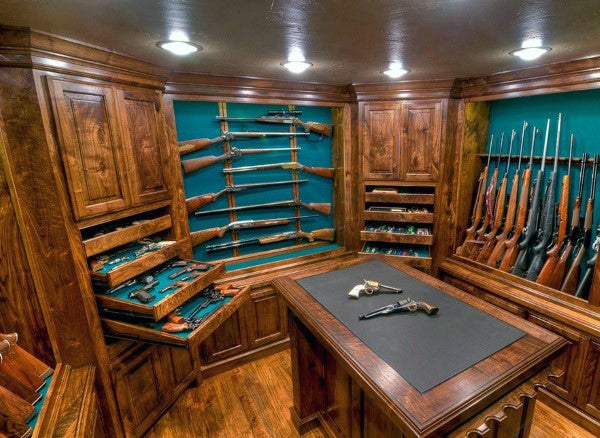
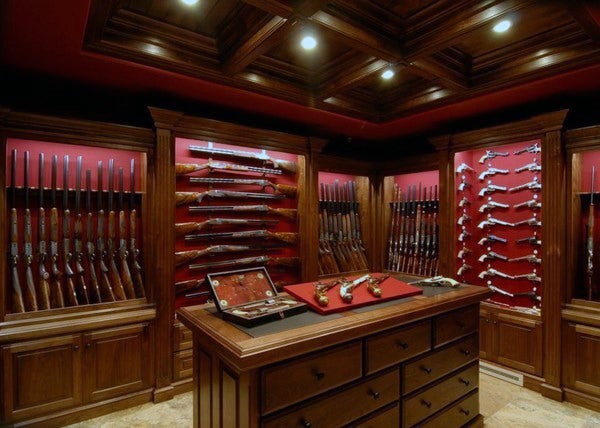
Chekhov’s armory is where the story starts out in a place like this:
Or this:
Or this:
What the hell, I might as well just give you the link to the blog where I got all these photos. There’s plenty more gun porn where that came from.
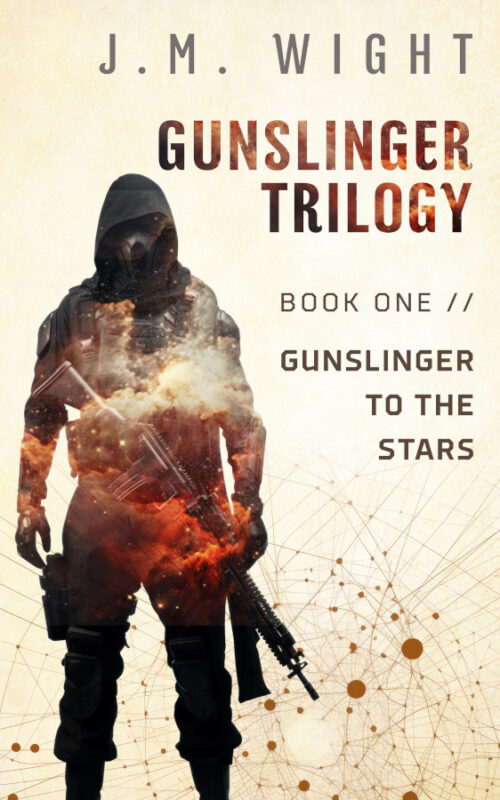
My first time playing with this trope was Gunslinger to the Stars, and I have to say, it made for a really fun story. My outline literally consisted of listing a different gun for every chapter, and figuring out how to work it in. Chapter two was where all most of the guns were listed, but after that, it was pretty much “open fire” and “reload” right up to the grand finale at the end (with a little bit of kissing thrown in for good measure).
Seriously, though, it’s not a bad way to write a book: list all the things that need to go boom and figure out which order to put them in.
The biggest criticism I’ve received for Gunslinger to the Stars is that I should have described the guns in a more personalized detail. To be honest, my life experience is sadly lacking in this regard. I own a couple of guns, most notably an old Mosin 91/30, but most of my shooting experience comes from the Boy Scouts (though to be fair, I did impress the shotgun shooting instructor with a 40+ shot streak). This is a shortcoming that I am eagerly working to rectify.
So yeah, Chekhov’s Armory. It’s a really fun trope to write. When I’m finished with Sons of the Starfarers, I look forward to doing it all again with the next two books in the trilogy: Gunslinger to the Galaxy and Gunslinger to Earth. Expect book two before the end of 2018!
Sam Kletchka here, freelance gunslinger and interstellar privateer. This, my friends, is how I went from being stranded in the armpit of the galaxy to becoming the luckiest human being in the universe.
I recently read an amazing blog post by Shannon Hale titled “Why boys don’t read girls (sometimes).” In it, she makes a number of excellent points about how our society stigmatizes boys who read “girlie books,” and why that’s harmful.
Perhaps the most moving part of the post was at the end, where she described an experience at one of her book signings where she saw a boy hanging back and asked him if he would like her to sign one of his books. The boy’s mother jumped in and said “yeah, Isaac, would you like her to put your name in a girl book?” The boy’s sisters all laughed at him, shaming him for reading anything that ran against their strictly defined gender roles.
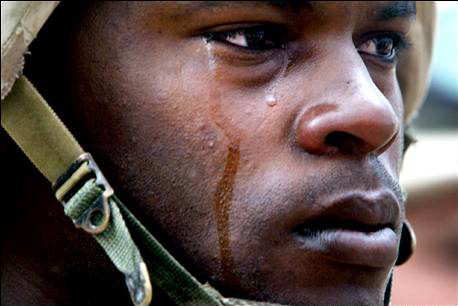
Whatever problem [the character has]—whether terminal disease or sociopathic neighbor or anything else—the problem must be faced with courage. This means that your character can’t cry about it, no matter what the source of pain…Any time that a character breaks down, we as an audience may cast judgment upon that character.
Now, I have nothing but respect for Dave Farland. I’ve been following his “daily kick” emails for years, attended dozens of his convention panels, and even interviewed him once for an online magazine. He’s been a very influential writer to me personally, and his advice has had a huge impact on my writing.
But on this issue, I think he’s dead wrong.
Even if you don’t have any problem with the idea that men should never cry–a disturbing belief that harms men by forcing them to hide their true feelings, and harms women by teaching men that compassion and empathy are signs of weakness–even if you’re comfortable living in a culture that accepts this belief, there are still instances where having a man cry in your story can be both moving and poignant.
Cross his woman, and he’ll blow your brains out–quoting scripture while he does it.
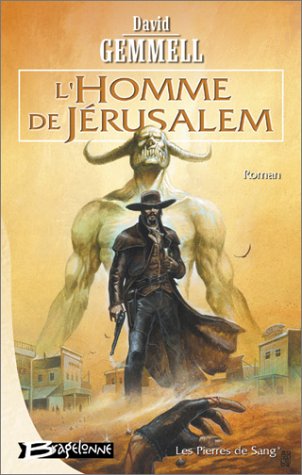
The best example of this that I can think of comes from David Gemmell’s The Jerusalem Man. No one–and I mean no one–writes manlier heroes than David Gemmell. And among his characters, Jon Shannow ranks as one of the manliest.
In The Jerusalem Man, Jon Shannow is a lone gunman roving the post-apocalyptic wastelands of Earth on a spiritual quest for the city of Jerusalem. Near the beginning of the book, he comes across a frontier woman under attack from bandits. He stops to defend her homestead, and she shows her gratitude by inviting him into her bed.
Jon Shannow is a middle aged man, but because of the post-apocalyptic setting, this is his first sexual experience, and it moves him to tears. For me, that was one of the most poignant moments of the book. It didn’t take away anything from his masculinity throughout the rest of the story–indeed, it added significantly to it when the woman got kidnapped and he determined to rescue her.
I’m sure there are other examples that you can think of. Certainly in real life, this notion that men should never show their feelings is both harmful and outdated. To say that in fiction, no characters should ever cry–female characters as well as male characters–that’s just so wrong it’s infuriating. If crying is so taboo that it’s even forbidden in the pages of a book, then something is wrong with the culture, not the story.
In 2008, I attended a fascinating panel at LTUE in which Tracy Hickman and a number of romance and fantasy writers discussed how to write romance in science fiction and fantasy. Tracy explained that in all the novels he writes with Margaret Weis, she does the fight scenes and he does the romantic ones.
He then went on to talk about how there’s a whole side of life that our culture has shut men off from–a feminine side which is present in all of us, men as well as women. The way he explained it, romance is not just the “kissy bits,” but a vital and enriching way to see the world–a paradigm that infuses everything with feeling and passion.
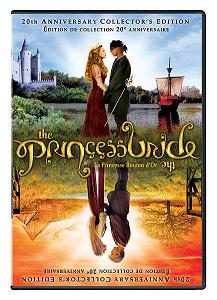
It makes me think of The Princess Bride, where even the action scenes with Inigo Montoya have a certain romantic flair to them. In the old days, the term “romance” described not only love stories, but action & adventure stories as well. In modern times, we seem to have forgotten all the old qualities like honor, love, sacrifice, loyalty, heroism, and compassion–even though they still make for the best stories.
Of course, our characters need to have courage. But courage is not the absence of fear–it’s pressing on in spite of it. And crying is not always a sign of weakness–it can actually be a sign of great emotional strength. And if it’s true that the best literature helps us to see our world in a new light, giving us a greater understanding and appreciation for the human condition, how is it “courage” for anyone to hide their true feelings?
So do the characters in my stories cry? Hell, yeah! I don’t have them hide their feelings just because some readers might look askance. Some of them cry more than others, and many of them don’t hardly cry at all, but those who do cry do so because the story demands it.
Even though I write science fiction, I do my best to infuse my stories with romance–not just the “kissy bits,” but that depth of feeling and passion for life that made me fall in love with books and reading in the first place. Star Wanderers is a great example of that, and so is Desert Stars.
And yes, in case you’re wondering, I’ve read a lot of “girlie books.” They’re some of my all-time favorites.
 Or this:
 Or this:
 What the hell, I might as well just give you the link to the blog where I got all these photos. There’s plenty more gun porn where that came from.