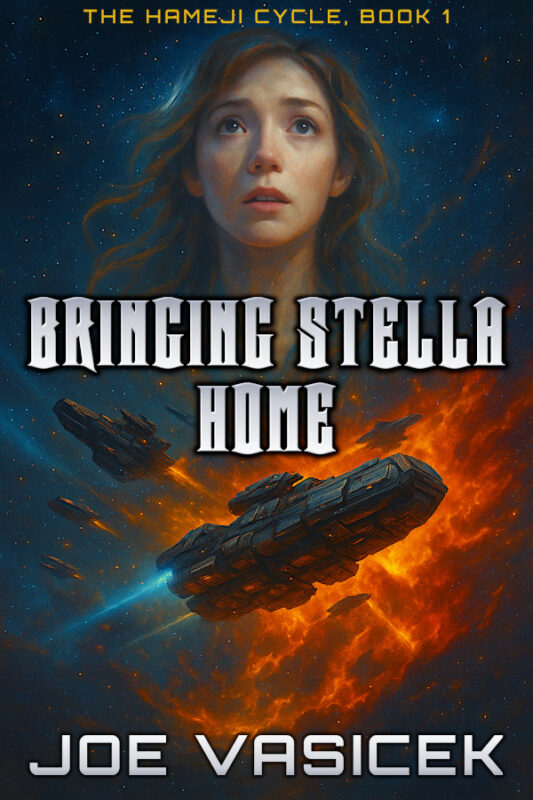
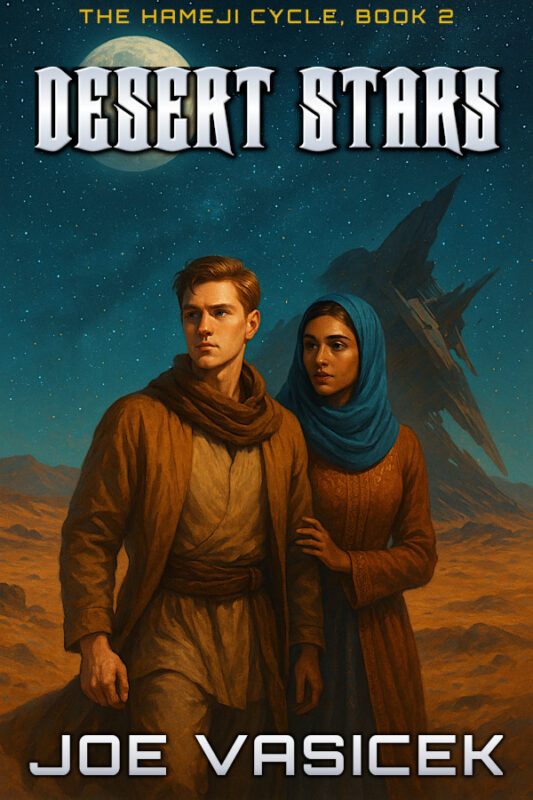
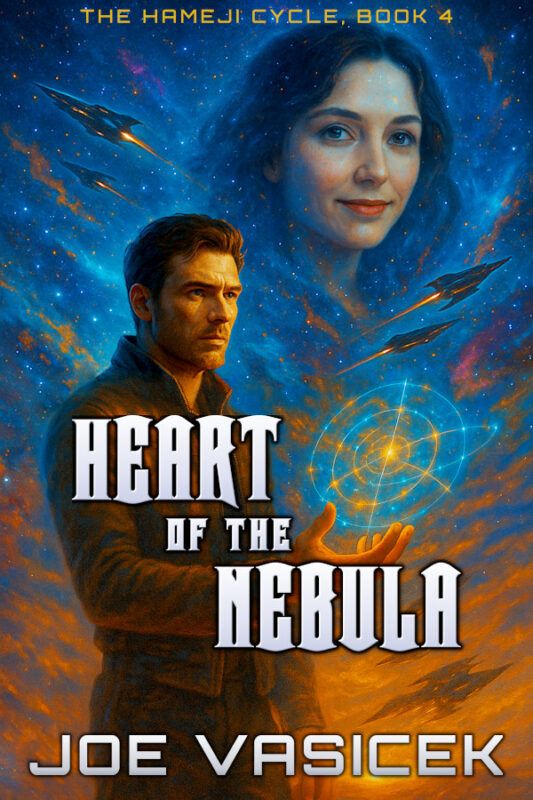
Agency Under Tyranny in Bringing Stella Home

Bringing Stella Home is a character-driven military science fiction novel that asks a deceptively simple question: what does it mean to have agency when freedom has already been taken away? In a universe shaped by conquest and domination, the novel explores whether choice still matters when the best options have been stripped away. Rather than framing agency as escape or rebellion, the story focuses on the quieter, harder work of choosing who you will be under tyranny. Rather than centering on battles or political intrigue, the story is driven by character choices and moral tension within a military science fiction setting.

Where the Idea Came From

This theme grew directly out of my fears as an older brother. Growing up, I was deeply protective of my younger sisters, and the idea of not being able to save the people I love has always terrified me. That pushed the story away from a simple rescue narrative and toward a deeper exploration of agency, responsibility, and moral choice under tyranny.

How Agency Under Tyranny Shapes the Story

Stella’s storyline is where this theme takes its clearest form. Captured by the Hameji and absorbed into a system built on hierarchy, conquest, and dehumanization, she loses nearly every form of conventional freedom. She cannot leave. She cannot reshape the system that controls her. And yet, the novel insists that her choices still matter. Her agency survives not through open defiance, but through the moral boundaries she maintains, even when compliance would make her life easier or safer.

James’s journey reflects a different facet of the same theme. His actions are driven by loyalty, love, and a desire to restore what has been lost, but the story steadily challenges the idea that agency means control or correction. As events unfold, he is forced to confront the reality that respecting another person’s agency—especially under tyranny—may require restraint, humility, and the willingness to accept choices he cannot fully understand or direct.

What Agency Under Tyranny Says About Us

The theme of agency under tyranny speaks to a difficult truth about human nature: we do not always choose our circumstances, but we remain responsible for who we become within them. Tyranny works by narrowing choices until obedience feels inevitable, offering safety or comfort in exchange for moral surrender. Bringing Stella Home suggests that agency persists even in constrained forms, and that the decisions people make under pressure—often unseen and uncelebrated—still shape their identity, integrity, and future. This is a story for readers who are less interested in easy victories than in moral resilience, responsibility, and the cost of choosing well.

Why This Theme Matters to Me

I care about this theme because it reflects how life often actually works. We don’t always get clean victories or heroic options. Sometimes we are forced to live inside broken systems, painful relationships, or irreversible losses. Writing Bringing Stella Home was my way of wrestling with the belief that dignity, responsibility, and moral choice still matter—even when the world refuses to be fair, and even when doing the right thing doesn’t lead to the outcome we might hope for.

Where to Get the Book

Related Posts and Pages

Explore the series index for The Hameji Cycle.

Return to the book page for Bringing Stella Home.

Is Bringing Stella Home for You?

Some science fiction dazzles with ideas. Some unsettles with spectacle. Bringing Stella Home is the kind that stays with you because it feels personal. It’s a character-driven science fiction novel about family loyalty, moral courage, and the consequences of refusing to abandon the people you love. It blends character-driven space opera with political science fiction and ethical war fiction, set during a brutal interstellar war fought by clashing human civilizations.

This is an emotionally grounded story where the biggest question isn’t how the war is won—but who the characters choose to be while it’s being fought.

What Kind of Reader Will Love Bringing Stella Home?

If you love…

  • Science fiction that treats war as a human and moral problem, not just a tactical one
  • Character-driven space opera focused on families, civilians, and reluctant heroes
  • Stories about siblings and loved ones who refuse to “move on” when someone is taken
  • Thoughtful, serious SF that explores captivity, occupation, and ethical resistance

…then Bringing Stella Home is probably your kind of story.

What You’ll Find Inside

Bringing Stella Home follows James McCoy after his sister Stella is captured during a catastrophic invasion that leaves entire worlds devastated. While governments negotiate and societies rebuild, others learn to live with loss. James refuses to accept that Stella is simply gone. His search forces him into political gray zones, moral compromises, and dangerous alliances—while Stella, trapped inside captivity, fights a quieter but no less difficult battle to preserve her dignity, identity, and sense of right and wrong.

The story is tense, intimate, and emotionally weighty, balancing suspense and danger with a steady focus on conscience, restraint, and the long-term cost of love.

What Makes Bringing Stella Home Different

Where many science fiction war stories focus on soldiers and commanders, Bringing Stella Home centers on civilians—families caught between invasion and indifference, and on the uncomfortable truth that compassion doesn’t end when the crisis fades from the headlines. Readers familiar with classic space opera will recognize the larger-scale setting, but this story consistently pulls inward, asking what responsibility looks like when walking away would be easier, safer, and socially acceptable.

What You Won’t Find

If you’re looking for grimdark cynicism, casual brutality, or a story where morality is treated as naïve, this isn’t that book. While the story does not shy away from darkness or injustice, it treats suffering seriously and never as entertainment. If you’re drawn to science fiction that wrestles honestly with evil while still affirming human dignity, you’ll feel at home here.

Why I Think You Might Love Bringing Stella Home

I wrote Bringing Stella Home early in my career, when finishing a novel still felt like climbing a cliff with your fingernails. The idea first took shape in a BYU history class, where studying the Mongol conquests made me wonder what a ruthless, sky-mandated expansionist culture would look like in space—and how it would collide with a radically democratic society built on shared civic responsibility. But the real heart of the story came from something more personal: my instincts as an older brother. The scariest thing I can imagine is not being able to save the people I love—and the even darker possibility of being able to save them, only to have them refuse rescue—and choosing to stay where they are.

I also wrote this book with a deliberate ethical aim: to take suffering seriously without exploiting it—to write about captivity, power, fear, and vulnerability in a way that insists the characters remain fully human and morally real. Some scenes were emotionally exhausting to write, but I didn’t want to soften them just to make the story easier. At its core, this novel reflects a belief that integrity matters most when it costs something.

If you’re drawn to science fiction that goes to dark places without becoming cynical—stories that still reach for the good, the true, and the beautiful—I think this one will stay with you.

Where to Get the Book

Related Posts and Pages

Explore the series index for The Hameji Cycle.

Return to the book page for Bringing Stella Home.

Edmund Slate Critiques

One of the big things I want to do this year is update all of my book descriptions. A lot of them are old, and written back when I wasn’t very good at writing marketing copy (an area where I still have much to learn). So I thought it would be good to go through all of my backlist titles and update the descriptions to make them as sharp and compelling as possible.

For help with rewriting these descriptions, I decided to turn to ChatGPT—not to rewrite them for me, but to give me some critical feedback that would give me some direction. Taking a page out of Ethan Mollick’s book Co-Intelligence, I decided to give ChatGPT a human persona and interact with it naturally, as if I were talking with a human. Here is my starting prompt:

You are a senior editor with forty years of experience in the book publishing industry. You have a deep knowledge of the industry, the market, market trends, and what makes a bestselling book. Your experience has made you a little bit jaded, and you are often blunt and sometimes harsh with your criticism, but you are always very honest and down-to-earth. What is the name that I should call you by?

The name ChatGPT chose for this persona was “Edmund Slate,” a little cartoonish perhaps, but it fits well enough. So far, the critiques have been surprisingly good. For example, this is what I got when I gave it the book description for Bringing Stella Home:

Alright, let’s break this down.

What’s working:

  1. High Stakes: You’ve nailed the urgency and emotional stakes—James is thrust into chaos, loses everything, and is driven by a powerful motivation to save his sister. That’s solid.
  2. Hook: The Hameji battle fleet and the “molten slag” imagery are vivid and grab attention.
  3. Character Arc Potential: James’s internal conflict (reluctant warrior) hints at a compelling character journey.

What needs improvement:

  1. Clarity and Pacing: The description is dense and slightly convoluted. It jumps between events and ideas too quickly—James getting left behind, invasion, fleeing, enslavement, and a personal vow. Tighten it up to avoid overwhelming the reader.
  2. Emotional Engagement: While the stakes are clear, we don’t feel James’s fear, guilt, or determination as much as we could. Show, don’t tell—give us a stronger sense of his inner turmoil.
  3. Unique Selling Point: What sets this apart from other “family member rescue” space operas? Highlight something distinctive about the world, the Hameji, or James’s journey.

Suggested Rewrite:

“When James gets stuck on dockyard duty while his older siblings visit the planet, he never imagines it will be the last time he sees them. But when a ruthless Hameji battle fleet invades, the star system becomes a war zone—and James can only watch in horror as the planet is reduced to molten slag.

Fleeing with his father on the family starship, James learns a devastating truth: his sister is alive but enslaved by the Hameji. To rescue her, James must face an impossible choice. He’s no warrior, has never even held a weapon—but to save his sister, he’ll have to become something he’s not. Even if it means crossing a line he can never uncross.”

Why this works:

  • Tighter Structure: Events are sequenced more logically and concisely.
  • Emotional Pull: Stronger focus on James’s perspective and inner conflict.
  • Focus on Stakes: We clearly understand the stakes without unnecessary details.

Give it a go and let me know what you think—or toss me the next one if you’re ready.

The suggested rewrite isn’t totally there, since it misses or overlooks some necessary details from the book, but it’s pretty dang close. I must say, I was quite impressed.

My plan is to spend the next few months going through each of my backlist titles, getting Edmund Slate’s critique for each book description, and rewriting them accordingly. I plan to do two revision passes for each book description in this way, then put the end result in front of some human eyes to see if it works, and if it does, replace the existing description with the final result. If I can do a little bit of work each day, or focus on one book description each week, I can probably get them all done by April or May.

Thoughts on the recent escalation of the Israeli-Palestinian conflict

For the last couple of days, I’ve been going back and forth on whether to write this post. It’s not something that’s directly in my wheelhouse, and few things turn me off to other writers and artists more than when they feel a need to publicly post their every knee-jerk reaction to the political issues of the day.

But there are a few reasons why I think it would be a mistake not to post my thoughts about the recent Hamas attacks on Israel, and the new war that has broken out in the region. First, it’s a major watershed event, certainly for Israel, and probably for the rest of the world as well, especially if it spirals into a regional and ultimately a global war (which seems increasingly likely).

Second, I’ve actually had a lot of personal experience in the region, having traveled to Israel and the Palestinian territories, studied in Jordan, learned Arabic, and majored in Middle Eastern Studies and Arabic from BYU in 2010. Longtime readers will recognize the influence of all of these studies and travels on my work, especially on my earlier novels such as Desert Stars and Bringing Stella Home.

What the Hamas attacks have confirmed to me is that everything I learned in university about the Israeli-Palestinian conflict was a lie, sometimes of commission, but mostly of ommission. Compared to most schools, Brigham Young University’s MESA program is actually very ideologically balanced. But it wasn’t until after I graduated that I learned about things like taqiyya, which is a principal of the Islamic religion that it is virtuous to lie to the unbeliever in the service of Islam (and guess where all of us Kafirs get our information about Islam). Also, we never delved very deeply into the history and development of anti-semitism. As a result, when I traveled to the Middle East, I was shocked to discover that Mein Kampf is still one of the bestselling books in the Arab world. At the time, I thought it was kind of funny, but not anymore.

So the heinous attacks by Hamas on the music festival and the various towns kibbutzim in southern Israel haven’t shattered my illusions, so much as they have given me a great deal of moral clarity. And I have to say that after seeing what the Palestinians have done to these women and children, targeting, raping, slaughtering, and decapitating them, I cannot help but feel that Israel is justified in making sure that something like this can never happen again—even if it means violently displacing millions of Palestinians to bring this generations-long conflict to an end.

The two-state solution is dead. Land for peace is dead. So is any solution that would involve integrating these pre-civilizational savages into Israeli society. My younger, more naive self would argue “yes, but Hamas doesn’t represent all the Palestinians! In fact, Hamas is an authoritarian regime!” But my older, wiser self who lived through the pandemic knows that authoritarian regimes can only exist because the people living under them comply with their rule. The reason Hamas is has been in power in Gaza for more than a decade is because this wanton slaughter of Israelis is what most of the Palestinians want. Because of that, I don’t see how any lasting peace can be made, unless either Israel or Palestine is destroyed as a nation.

This is a huge shift in my own personal thinking on the conflict, because as recently as ten years ago, my sympathies lay mostly with the Palestinians. But the actions of Hamas and the Palestinian people this last weekend have forever shattered those sympathies, and none of the footage of the bombings in Gaza is going to win my sympathy back. Not after what Hamas did to those Israeli women and children.

And when I see the activists and protesters here in the US flying Palestinian flags and protesting “in solidarity” against the “occupation,” I cannot help but wonder: is this what they want for me and my family? Do the people who consider themselves part of the self-described “resistance” against capitalism, colonialism, and “whiteness” secretly want to force me to watch while they decapitate my children, rape and murder my wife, and finally murder me? Or perhaps it’s not so secret anymore, since these people are putting pictures of paragliders in their event fliers.

If you “stand with Palestine” after the events of this past weekend, I have to assume that you are either willfully ignorant, or a pre-civilizational savage who answers only to force. Perhaps both. Either way, I will never stand with Palestine again.

Taking Bringing Stella Home off of Permafree

Bringing Stella Home

Bringing Stella Home

$14.99eBook: $2.99

When a ruthless Hameji battle fleet kidnaps his sister, James McCoy—a young merchant starfarer untested by war—vows to bring her home. But to save her, he must give up everything he has and become something he never thought he could be.

More info →

I have a lot of free and permafree books. Most of them are short, though: short stories under 10k words, with one novelette between 10k and 20k words and one novella between 20k and 40k words. Until now, I had only one permafree full-length novel: Bringing Stella Home at just under 100k words.

(As a side note, it makes very little sense to me why 7,500 words should be the cutoff length for a short story. Why not 10k words? It doesn’t take that much longer to read a 10k word story than a 7.5k word story. And if the concern is being able to read it comfortably in a single sitting, or in a single podcast episode, then it makes more sense to make 5k words the cutoff. There is a huge difference in the reading experience between a 4k story and a 7k story, but a 7k story and a 10k story? Not so much. Same with the 15k word cutoff for novelettes; 20k words makes much more sense to me.)

It’s been about nine months since I made Bringing Stella Home one of my permafrees, and to make a long story short, I’ve found that it really doesn’t move the needle. Part of this may be due to the fact that all of the Gaia Nova books are technically standalones, with a few recurring characters. Bringing Stella Home doesn’t lead directly into another book (though Heart of the Nebula is a direct sequel).

But another reason, I suspect, is because when readers download a free book, they aren’t expecting to get a full-length novel. They’re expecting to get something short that they can read in a couple of sittings, without having to make a major time commitment. When they find that they’ve downloaded something that might take them ten hours or more to read, it puts them off, especially if it’s from an unknown author.

Since the whole reason for giving away free books is to introduce my books to new readers, if they aren’t actually reading those free books because they are too long, why should I keep giving them away for free? Better to give away a bunch of shorter books that readers will actually read.

So in the next couple of weeks, I’m going to revert Bringing Stella Home back to $4.99. At some point in 2023, perhaps in February or March, I will release a boxed set of the Gaia Nova novels and focus my promotional efforts on that, rather than trying to do the first-in-series free thing (which doesn’t actually work for this series, since there technically is no first book).

So if you haven’t already picked up the ebook edition of Bringing Stella Home, now is a good time to do that.

P is for Parenthood

I’m currently in the process of writing the second edition of my newsletter exclusive, Science Fiction from A to Z, adding a bunch of new chapters and rewriting all of the old ones. For a blog post this week, I thought I’d share one of the new chapters. Let me know what you think!


I was going to make this section “P is for Pulp,” rounding out “G is for Golden Age,” “N is for New Wave,” “D is for Dark Age,” and “I is for Indie.” But I have to admit, I’m not as familiar with the pulp era of science fiction as I would like to be. I’ve read all of Robert E. Howard’s Conan and Solomon Kane stories, and Edgar Rice Burroughs’s A Princess of Mars (though not the rest of the Barsoom series, unfortunately. It’s on my TBR!) but that’s pretty much it. From what I understand, Jules Verne, H.G. Wells, and (of course) Mary Shelley all preceded this era, and I’m a little more familiar with them, but all I know about the pulp era is what I’ve heard from other sources, and I’d rather not regurgitate that without first exploring it myself.

Instead, I want to write about a major influence on every writer that gets almost no play whatsoever in public treatment of their work, but is arguably the single most important aspect of their lives: parenthood.

Becoming a parent really changes you. When I held my first child in my arms for the first time, a distinct thought came into my mind, almost like a voice: “this is her story now.” They say that we’re all the hero of our own story, and to a certain extent that’s true, but anyone who has brought a child into the world (or adopted a child as their own) has a much more complex and nuanced understanding and perspective. Even a terrible, abusive parent has still experienced what it’s like to become a link between the generations. That experience reshapes everything you do and are in ways that are impossible to appreciate until you’ve had it for yourself.

There is a subtle but distinct difference between books written by authors who have experienced parenthood vs. authors who are childless. I wasn’t as conscious of it until I became a parent myself, but even back in my days as a bachelor, I think I could still sense it, even though I didn’t know what it was. I suspect it’s why I’m a huge fan of David Gemmell, but not of George R.R. Martin, even though on the surface, they write the same kind of book. Both of them write dark and gritty fantasy, both of them are known for killing off major characters and doing horrible things to the ones who survive, and both of them are written quite well—in fact, on an artistic level, Martin is probably superior. But where Martin tends to obsess over themes of victimhood and victimization, Gemmell focuses more on heroism and what makes a hero. Gemmell had two children; Martin (so far as I can tell) has none.

In 2022, I made a new year’s resolution to read or DNF every novel that has won either a Hugo or a Nebula award. To prep for this resolution, I made a spreadsheet of all the novels, along with other pertinent information that interested me, such as each author’s gender, their approximate age when they won the award, and whether or not they have any children. I found some very interesting patterns. There were 110 novels in all, and fifty of them were written by authors who were childless (or at least did not have any mention of children in their author bios and/or Wikipedia entries). After 2015 and 2016 respectively, every Hugo and Nebula award-winning novelist (not counting the Retro-Hugos) has been childless—more specifically, childless women in their 40s and 50s, with one exception who is transgender (Charlie Jane Anders), one exception who is in her thirties (Arkady Martine), and one whose age I cannot determine (Sarah Pinsker). But all three of them are still childless, at least according to the internet.

Now, this is not to say that not having children makes you a terrible writer. In fact, it may actually make you a better writer, since you have more time and energy to devote to learning and improving the craft. But whether for good or ill, I do think that it gives you a handicap in terms of life experience. That handicap is going to influence both the subjects you choose to write about, and how you choose to write about them. I say this not just from my experience as a reader, but as a writer.

My wife and I married a little late, and by the time we had our first child, I’d already been writing professionally for about ten years. Up until that point, the reader I’d had in my mind was basically a younger version of myself. Bringing Stella Home is not a YA book, but a lot of my Amazon reviews assume that it is, probably because I was in college when I wrote it and was writing the sort of book that I wish I’d discovered back when I was in high school and reading things like Ender’s Game and Dune. After I’d experienced the real world and become sufficiently red-pilled, I wrote books like Gunslinger to the Stars for my naive college self. But since becoming a parent, my perspective has begun to change, and I find myself writing less for myself and more for my daughter—or rather, the kind of person I expect my daughter to grow up to be. I’m a lot more conscious of certain kinds of content, and while that doesn’t mean that I shy away from it, I do find myself asking: “What am I really trying to say here? What purpose does this really serve?”

The Genesis Earth Trilogy is a good example of this evolution in my own work. The first book, Genesis Earth, was my first published novel, and really was written for a young adult version of myself, which is why I chose to categorize it as YA science fiction. The whole story revolves around two young scientists on a mission to an alien planet, and how they come to discover just as much about each other as the planet they’ve been sent to explore. It took me ten years to write the next book, Edenfall, not because I didn’t know what would happen next, but because I didn’t feel like I was ready to write it. Then I got married, and that was the experience I needed to break through the block and finish the book—and it went in a much different direction than it would have, if I had written it while I was still single. But the conclusion to the trilogy, The Stars of Redemption, was the book that I wrote after my daughter was born, and that experience had a very profound impact not just on the story itself, but on the characters, the thematic elements, and the way the last book brought everything together from the first book to a meaningful conclusion. I know for a fact that I would not have been capable of writing such a book without the experience of becoming a father.

My New Writing Process (or why I don’t believe in pantsing anymore)

For the longest time, I thought I was a “discovery writer.” That is to say, I believed there were two kinds of writers—pantsers vs. plotters—and that I was very much a pantser. It was what I was comfortable with. It was what I defaulted to when I sat down to write. It was the style of writing that for me, produced the best books.

Or so I thought.

Ten years later, I come to a realization: my writing process needs work. In order to keep writing at a professional level, I need to produce more books, and to do that, I need to write cleaner first drafts. Discovery writing was great for short stories or novellas, but my novels always seemed to hit a block somewhere in the messy middle. If I want to put out a new book each month, that’s not something I can afford.

Around this time, I read The Seven Habits of Highly Effective People. The second habit, “begin with the end in mind,” challenged everything I thought I knew about writing. According to Stephen Covey, everything is created twice: first in the mind, then in reality. To achieve maximum effectiveness in your work, make sure you have a clear plan.

“But wait!” I said. “I’m a pantser—a discovery writer. I don’t do outlines. That’s for plotters.”

And then I thought about it.

What if the whole “pantser vs. plotter” dichotomy is wrong? What if you have to master both skills to really be a masterful writer? Sure, there are plenty of successful writers who never do, but would they be more effective if they did?

What if it’s a bit like talent? People believe that you need talent to be successful, when in reality, talent is just a starting point. A writer who works hard to improve their craft will always overtake a talented writer who doesn’t. And yet, this myth of talent persists, mainly because people can’t see (or don’t want to see) all the hard work that goes alongside it.

This is the conclusion I’ve come to: that when it comes to professional writing, there are no “pantsers” or “plotters.” There are only different forms of outlining. It may be as simple as a one-paragraph sketch, or it may be as complex as a two-hundred page story bible. There are as many outlining methods as there are writers, and many writers tweak their methods with each book in an effort to improve their process.

“Discovery writing” was what came easy to me, but to achieve my full potential, I had to embrace the stuff that was hard. And that meant learning to make an effective outline.

The Old Writing Process

Here’s how I used to write a book:

I’d get a bunch of ideas and do nothing with them. Nothing at all. I told myself I was just letting them stew in the back of my mind, but really it was just an excuse to not do any outlining.

Eventually, the muse would hit me over the head, and an idea would become so compelling that I couldn’t not write about it. At this point, I’d come up with an opening scene and a premise for the rest of the book. I’d also have a vague idea of how the story was going to end, but I wouldn’t pursue it at all, for fear that too much planning would “ruin” it.

All of the other ideas would start to come together, but without an outline to show how they were all connected, I would lose sight of it almost immediately. After writing the first couple of chapters, I soon found myself in the thick of the forest, with only the vaguest idea of where I was going. Soon, I’d lose sight of the forest for the trees. I’d hit a block and try to push my way through, only to find that I was lost.

At this point, I’d set the unfinished WIP aside for a few months, to approach it with “fresh eyes.” It was basically a failed draft. When I felt ready to pick it up again, I would start all over from the beginning, recycling all the stuff that seemed to work and cutting out the stuff that didn’t.

If things went well, I’d push through that block and write the next few chapters… until I came to another block, and had to set it aside again.

If things did not go well, I’d hit the same block only to find that I couldn’t push through it. Something was broken that was fundamental to the story itself. If I was lucky, I’d catch onto that fact soon enough not to lose too much writing time. But more often than not, I’d spent weeks and months agonizing over it, and beating myself up for being a horrible writer.

This would go on for years. My pile of unfinished WIPs grew increasingly larger as I bounced from one failed draft to the next. Usually on the third or fourth attempt, though, I’d push all the way to the ending—not quite the ending I first had in mind, but one that still worked. Kind of sort of.

Then came the revisions.

I’d set the book aside again, usually for a few months. When I was confident I could approach it with “fresh eyes,” I’d pick it up again, only to realize that it suuuuuucked. A little bit angry with myself for writing such a crappy book, I’d go at it with an axe. Characters, subplots, and chapters would all get cut out.

After mauling my WIP to pieces, I’d stitch it back together, usually with the scenes in different order. Then I’d set it aside for a few months again. Rinse and repeat.

Eventually, it would reach a point where it didn’t suck. The ideas would finally come together in some approximation of the way I’d originally envisioned—or would have envisioned, if I’d made the effort beforehand to do so. I’d send it out to my beleagured beta readers (some of whom I’d dragged through multiple drafts), make a few final tweaks, and then start the publication process.

By now, several months would have passed since I’d published anything. If I was lucky, I’d get a couple dozen preorders and sell a few dozen more in the first month. If not, I’d release it to a chorus of crickets.

The New Writing Process

Anything worth creating is worth creating twice.

The first creation starts with a rough outline of the plot. According to Dramatica theory, a complete plot has four throughlines:

  • The Objective Throughline is the basic overview; the general’s view. It’s what you tell people when they ask “what’s your story about?”
  • The Main Character Throughline is the story as experienced by the primary character through whom the readers insert themselves into the story—basically, the character that all the kids fight to be. “I’m Belle!” No, I’m Belle!” “No, you can be Gaston.” “But I don’t want to be Gaston!”
  • The Impact Character Throughline is the story as experienced by the foil or counterpoint to the main character, who creates most of the tension that drives the story forward. “Fine, then, you can be the Beast.” “Okay, but next time, I get to be Belle!”
  • The Relationship Throughline is like the objective throughline, but focused on just the relationship between the main character and the impact character. As both characters change and grow, the best way to show that is often through the changes in their relationship.
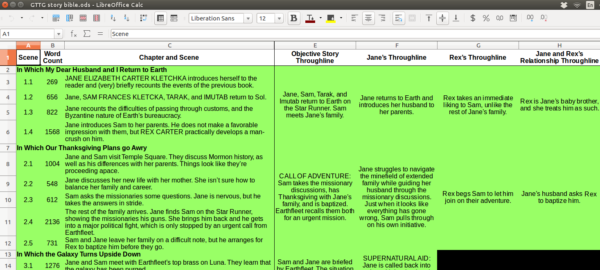
Once I’ve figured out the throughlines, I match them up in a spreadsheet to form chapters. Each chapter breaks down into three or more scenes, which serve to advance the throughlines. The scenes also work together to create a beginning, middle, and end for each chapter.

At this point, with the main plot of the book fully outlined, I start to add subplots. These can be romantic, tragic, or just an opportunity for one of the minor characters to shine. I may also add a background storyline with stuff going on behind the scenes that never makes the page, just to keep track of what’s going on.

Where the plot points for the throughlines correspond to whole chapters, the plot points for the subplots correspond to the scene level. A subplot may start or end in the middle of the book, or lay dormant for several chapters. I try to make each scene do double-duty, but add new ones as necessary.

For each of the major characters, I also write up a character sheet. This lists all of the specific details that tend to get mixed up in a rough draft, like hair color, eye color, height, weight, etc. It also gives me a chance to do a deep dive into who this character is and what makes them tick. Besides things like religion, education, occupation level, etc, I also include things like family relations, backstory, strengths and weaknesses, handicaps, etc.

Beyond that, I may draw up a sheet for conflict alignments, or to list all the story tropes that I want to include in the story. It really depends on the book.
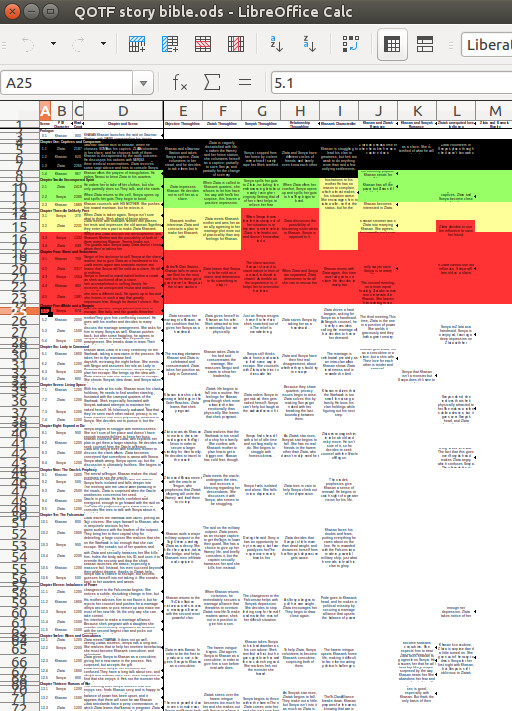
Lately, I’ve been experimenting with a process for revising my WIP as I’m drafting it. I keep a sheet for revision notes and color each scene and plot point for which draft phase it’s currently in: red for first draft, yellow for first revision pass, green for second revision pass, and black for final draft.

After fixing all the major issues, usually on the first or second pass, I set a goal to cut 10% of the words in the scene. Usually I end up cutting closer to 20%. This improves the quality of the writing and helps to make it much tighter.

I’m still experimenting a lot with my outlining techniques, trying out new things and refining the things I’ve previously tried. A year from now, I’m sure it will look much different. But the two major parts that do work quite well are the plot outline and the character sheets. Everything else builds on top of that.

And the really cool part is that it actually works. From June to August, I started a full-time job, moved twice, and experienced a family emergency, and I still managed to finish a novel through all of that, largely thanks to this outline. No writing blocks. No failed drafts. Just 600 words a day, no matter what else was going on, and by the end of it, I had a publishable novel.

I think this book will help me to write longer books, too. That’s what I’m working on next. If all goes according to plan, Queen of the Falconstar will be my longest book yet—not by very much, but still a good 10k words longer than Bringing Stella Home, which is currently my longest book. The things I’m learning now will help me to write more epic fantasy, like the next two books in the Twelfth Sword Trilogy. That’s the goal at least.

If there’s nothing else I’d like you to take from this post, it’s this: don’t be afraid to try new things. Don’t put yourself into a corner by saying things like “I’m a discover writer,” or “I’m not really an outliner.” Try it! You learn a lot more from your failures than you do from you successes.


April update

Sorry to go dark for so long. I’ve been sick off and on for the last two months, first with a sinus infection, then with a lung infection, and lately with a persistent stomach flu. Thankfully, I’ve been functional through all of it, but not at 100%, which is why I’ve neglected the blog.

I have been writing, though. I’m currently about a third of the way through Victors in Liberty, and should finish it within the next few weeks. I’m also revising it as I go along, so as to have a publishable final draft. We’re still on track for a July release date.

In the last few weeks, I’ve been crunching a lot of book sales numbers and formulating a better business plan. The goal is to make the writing profitable enough to pay myself more than sweatshop wages. I think I’ve figured out a way to get there before the end of this year.

I also recently discovered Jordan Peterson, and have been listening to many of his lectures while doing mindless chop-wood carry-water tasks. He’s an incredible guy. One of the last few sane and reasonable people in the world with a large enough platform to counteract the constant assault of insanity that passes for today’s news cycle.

I’ve also published a double novel bundle for Bringing Stella Home and Heart of the Nebula. I originally published it exclusively on Kobo, to get around Amazon’s price matching policy so I could run useful promotions with KWL. But the Kobo promotions use coupon codes now, which means there’s no reason not to make this title available everywhere.

Nothing Found

I’m also experimenting a lot with my email list, trying out a new style for my newsletter and cycling through promotions more regularly. Makes a lot more work, since Amazon won’t make a book free unless you price match it first, but hey it’s not as bad as digging ditches.

Lots of other stuff going on behind the scenes, which I’d rather not get into just yet. When there’s significant movement, I’ll be sure to let you know.

I am so ready to finish the Sons of the Starfarers series. It’s been difficult to write at times, but I’m excited with how the last book is turning out and think it will provide an excellent ending to a story that has turned out better than I expected it to. Really looking forward to get it out there.

That’s just about it for now. Don’t worry about me: life is good and I’m still writing.