
Esther’s Army by Katie Gaddini

The Religion of Whiteness by Michael O. Emerson and Glenn E. Bracey II

Off the Deep End by Giancarlo Granda


Rough Stone Rolling by Richard Lynn Bushman

Skinwalkers at the Pentagon by James T. Lacatski, Colm A. Kelleher, and George Knapp

Taking America Back for God by Andrew L. Whitehead and Sameul I Perry


The Storm Before the Calm by George Friedman

Last Stand at Papago Wells by Louis L’Amour

Hunt for the Skinwalker by Colm A. Kelleher and George Knapp

Enshittification by Cory Doctorow
We need a new family car, and this is closer to the kind that I want than all of the stuff on the market today. Too many extraneous chips, computers, and sensors, any one of which will cost you $$$$ when it inevitably fails. Just give me something that gets us safely from point A to point B, C, & D, reliably, with a minimum of fuss. Extra points if it’s simple enough that I can usually fix it myself.
I had a very interesting discussion with Thomas Umstattd Jr. recently, about George Friedman’s recent book The Storm Before the Calm and the general state of the zeitgeist. My theory has been that the current fourth turning will not end with a first turning high in the 2030s and 2040s, as Strauss-Howe generational theory predicts, but will skip that stage and go straight to the awakening instead, as it did with the anomaly in the Civil War cycle. This awakening will ultimately give us a major Christian revival, such as we haven’t seen in more than 100 years.
Thomas has a very different take on it, though. He thinks that we may just be entering into the very beginning of the fourth turning right now—that all of the chaos of the last ten years was really just the closing half of the third turning “unraveling” era, which ran unusually long (about 35 years instead of the normal 22ish years). He thinks that the fourth turning began with the assassination of Charlie Kirk, and will likely involve a major civil conflict here in the United States.
The more I think about it, the more his take makes sense. Strauss-Howe generational theory is based on the four phases of a human life (childhood/adolescence, young adulthood/parenthood, middle age, and elderhood), and the Great Recession was a major disruption that forced a lot of my fellow millennials to put off getting married and starting a family. Same thing with the boomers, who postponed their retirement for an extra decade. So it makes sense that the result would be an extra-long third turning, with most of us putting off that next phase of our lives.
It would also explain why none of the recent wars have exploded into hot global conflicts until now. The Russo-Ukraine war, the Gaza war, the Syrian and Yemeni civil wars, and even to some extent the current Iran war have all mostly been confined to small regions. Yes, the major powers all have a hand in them, and are jockeying for position against each other, but it hasn’t yet escalated beyond a proxy conflict, and/or economic and financial sanctions.
In other words, up until now, most of the geopolitical conflicts have been limited to the sort of thing you’d be likely to see during a third turning. President Trump has been less of a Roosevelt or a Lincoln or a Washington, leading our newly-unified nation through a major existential crisis, and more of a Zachary Taylor or a James Buchanan (or his own personal favorite, Andrew Jackson) imposing his vision on a fragmented country with only limited success, as everyone kicks and screams to get off the train. That’s much more typical of an unraveling era president than a crisis era president.
So what does this mean? If Thomas is right and we are only just now entering into the opening phase of a fourth turning, things are likely to get very, very bad in the next few years. Our country (and indeed, most of the rest of the world) is likely to face a major existential threat in the form of an armed conflict. A hot civil war here in the US could be a major component of this, though it could also be a global nuclear or biological war. But the big thing is that the war itself is going to eclipse basically everything we’ve seen in the last couple of decades, including 9/11 and the wars in Iraq and Afghanistan.
I think there’s a very high likelihood that the Russo-Ukraine war and the US war in Iran merge and become one conflict, especially since the US is a major supplier to Ukraine and Iran is a major supplier to Russia. I don’t know if China will attempt a military invasion of Taiwan, but I do think they will continue to push psyops here in the US, both to disrupt our data center buildout and to push more radical left-wing politicians into the mainstream (though to be clear, that’s not just limited to China). We could also see some major acts of sabotage, both from China and the Iran/Russia axis.
The big wild card, of course, is how AI will play into the coming conflict. All of the major players are convinced that whoever controls the emergent AI technology will ultimately control the world, so the AI arms race is likely to turn into even more of a sprint, with very little regard to AI safety. I’m still quite skeptical that this will result in a Skynet-style robot apocalypse, or the worst fears of guys like Eliezer Yudkowsky and Nate Soares, but it could.
Point is, as bad as things seem right now, if we really are just now entering into the current cycle’s fourth turning, things are going to get much, much worse than anything we’ve seen until now. And the coming conflict will probably extend well into the 2040s, since that’s about as long as it takes for a generational turning to resolve. Which means that right around the time when we are due to resolve the conflict and enter into a generational high, we will instead be facing the unavoidable consequences of the fertility crisis and demographic collapse. So it may turn out that Thomas and I are both right, and we never see a first turning high.
Grim stuff. But fascinating. What do you think?
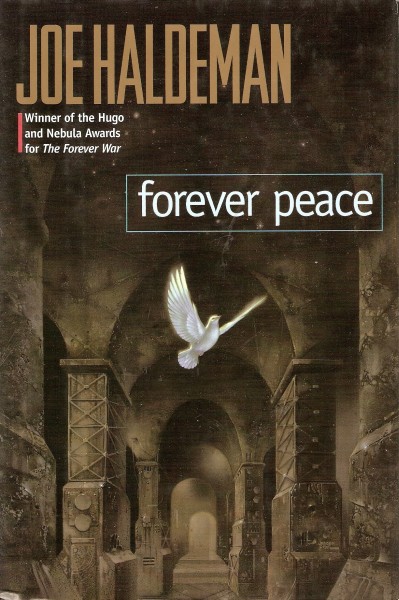
Forever Peace by Joe Haldeman
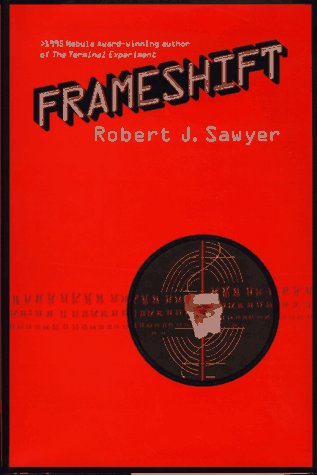
Frameshift by Robert J. Sawyer
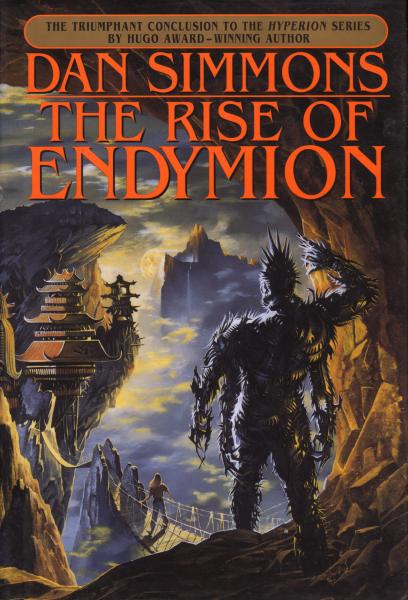
The Rise of Endymion by Dan Simmons
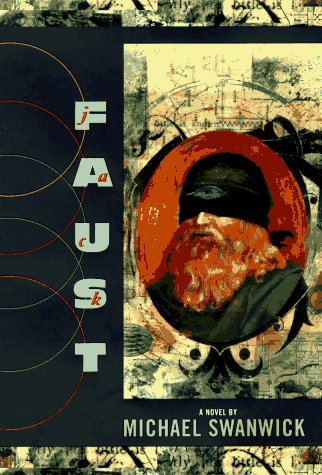
Jack Faust by Michael Swanwick
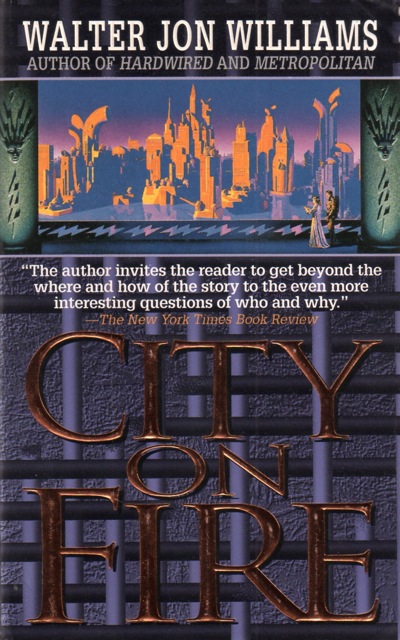
City on Fire by Walter Jon Williams
I loved all the books of the Hyperion Cantos, and felt that the last book ended as strong as the first book started. One of the best science fiction series of all time. For that reason, The Rise of Endymion heartily earns my vote. It was a magnificent 700 pages and I thoroughly loved it.
I didn’t enjoy The Forever Peace nearly as much, and DNFed it after the first couple of chapters. It’s been several years, so I don’t remember exactly what pushed it over the line, but I do remember a weird scene where the main character’s consciousness was sexually merged with the other twenty people in his team, as in he was aware of having ten penises and ten vaginas, or something weird like that, and it really turned me off. Also, Haldeman writes with a very nihilistic edge, and that also must have put me off.
I started Metropolitan, the book for which City on Fire is the sequel, but I also DNFed it after the first couple of chapters. Lots of grim cyberpunk nihilism, and skimming ahead, the main character has an adulterous affair that’s played up as if it’s a reason for the reader to give her sympathy. I don’t really do that. So DNF that series.
The other two books I screened with ChatGPT and decided to skip. For Frameshift, the problem was explicit violence against young children. Now that I have young children of my own, I have zero tolerance for that sort of thing and will not read it. And with Jack Faust, there are also apparently several explicit sex scenes involving graphic depictions of lust and infedelity. Also, I’ve read enough Michael Swanwick to know that he has a tendency to inject his books with weird and creepy sex stuff. No thanks.
I’ve got another 49 books to read before I can finish this blog series and evaluate every year of the Hugo Award, sufficient to know how I would vote if every year of the awards was held today. Obviously, I’m not reading all of the books: ChatGPT is helping me a lot to screen out the worst of them, and I’m also very quick (perhaps a little too quick) to DNF a book when I don’t think it’s worthwhile. But I have found a few unexpected gems, and I hope to find a few more as I read the last 49 books.
Is there another ward that I should do instead? I kind of want to use Writers of the Future to find some new authors, though it can be tricky since many of the contest writers never write anything else—or else they go for years (sometimes decades) before producing their first novel. But the contest has produced a handful of avid career novelists like Nina Kiriki Hoffman and Dean Wesley Smith, so it’s worth checking those ones out.
I just love how wholesome this local news blooper is. Pure joy!
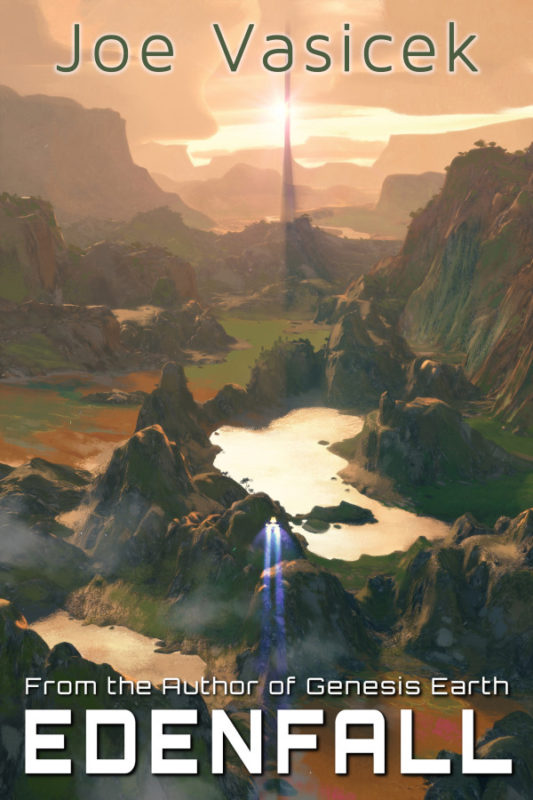
Edenfall by Joe Vasicek is a science fiction coming-of-age story about a girl raised in an isolated paradise who is forced to confront the larger human world for the first time. The novel combines coming of age and loss of innocence with fish out of water, raised outside civilization, first love, entrusted with a dangerous secret, protective older sister, and paradise lost tropes. Set on a distant world millions of years in humanity’s future, the story begins with youthful freedom and wonder before developing into a tense, sometimes dark adventure about responsibility, moral judgment, love, violence, and the painful transition from childhood into adulthood.
Tropes at a Glance: Coming of Age, Loss of Innocence, Fish Out of Water, Raised Outside Civilization, First Love, Entrusted with a Dangerous Secret, Protective Older Sister, Paradise Lost
At the beginning of Edenfall, Estee has grown up in a world almost completely untouched by human civilization. She runs barefoot across an alien savannah, explores the wilderness with her younger sister, knows the native “little people” and their customs, and lives with her parents and siblings beneath the ruins of an ancient human space elevator. She is adventurous, curious, impulsive, and confident in the natural world around her—but extraordinarily innocent about the civilization her parents left behind.
That innocence becomes impossible to preserve when a human military expedition arrives from across the stars. To Estee, the newcomers are almost as alien as anything in science fiction: she has never encountered soldiers, cities, military hierarchies, or many of the social customs they take for granted. Even ordinary human assumptions about clothing, privacy, relationships, and authority can be bewildering to her.
What begins as curiosity quickly becomes a much harder education. Estee discovers that the wider human world contains cruelty, political ambition, warfare, betrayal, and moral choices far more complicated than anything she has previously faced. At the same time, she begins experiencing new emotions of her own, including attraction, romantic longing, and an increasing sense of responsibility for people besides herself.
Her coming of age is therefore both an awakening and a loss. She gains knowledge, judgment, independence, and the ability to carry adult responsibilities—but she can never return to the effortless innocence with which she began.
Estee’s innocence shapes almost every major decision she makes in Edenfall. Early in the novel, she responds to danger primarily with curiosity. A mysterious object descending from the sky is something she wants to investigate. Strange newcomers fascinate her even when they frighten her. The boundaries between good and evil initially seem simple because she has experienced so little of either.
As events become more dangerous, those simple assumptions break down. Estee has to learn that people cannot always be judged by the group they belong to, that authority does not necessarily make someone good, and that even people with weapons and power must choose whether to use them rightly. Her father ultimately places an especially difficult burden on her: she must decide for herself whom she can trust.
That requirement to exercise moral judgment without having a parent make the decision for her is central to her transformation. Estee begins the novel as a child whose parents define the boundaries of her world. Increasingly, she has to navigate beyond those boundaries using the principles they taught her rather than their direct protection.
Her relationships change along with her. Her younger siblings become people she increasingly feels responsible for rather than merely companions in childhood adventures. Her relationship with Khalil introduces trust, admiration, attraction, and first love. And the threats facing her family turn the preservation of something larger than herself into a personal responsibility.
In Edenfall, growing up is not merely becoming tougher or more capable. It means learning enough about human nature to make consequential choices while refusing to become as cruel as the world that forced those choices upon her.
Estee is a particularly unusual fish out of water protagonist because she does not initially travel into an unfamiliar society. Instead, human civilization arrives in her isolated world.
She has grown up with her family and the indigenous little people, far removed from ordinary human culture. As a result, things that the newly arrived soldiers consider commonplace can be completely foreign to her. She knows how to track through wilderness, avoid dangerous predators, and navigate the landscape, yet she may not understand a handshake, a city, military rank, or why strangers expect her to dress differently.
This reversal allows Edenfall to make ordinary human society seem strange by presenting it through the eyes of someone encountering it for the first time.
Estee’s relationship with Khalil forms the romantic side of her coming-of-age story. Because she has never known an unrelated young man before, she initially has no framework for understanding the attraction she feels toward him.
Her growing admiration for Khalil becomes trust, emotional intimacy, and eventually romantic longing. These feelings are genuinely new to her, and the novel treats her first experience of attraction as another form of discovery: she is learning not only about the wider human world but also about herself.
The romance therefore develops alongside the loss-of-innocence plot rather than existing separately from it. Estee is discovering both the darkness of adulthood and some of its beauty.
Early in the crisis, Estee’s parents entrust her with a piece of hidden data connected to their discoveries about the ancient human civilization that once inhabited their world. Protecting it gives Estee a responsibility that the newly arrived soldiers do not initially realize she carries.
More importantly, her task eventually becomes morally complicated. Keeping the secret away from dangerous people is only half of her responsibility. She must also recognize when she has found people worthy of receiving it.
The dangerous secret trope therefore reinforces the coming-of-age story by transforming Estee from a passive child being protected by adults into someone whose judgment can affect the lives of everyone around her.
Estee is established as the oldest sister from the opening pages, where even her playful adventures with Celeste contain small moments of responsibility. As the danger grows, however, that ordinary sibling dynamic takes on much greater weight.
She increasingly becomes the person who keeps her younger sisters moving, watches over her baby brother, makes decisions under pressure, and tries to protect the family members who once shared her carefree childhood. The change is gradual but fundamental.
The protective older sister trope gives Estee’s maturation an especially concrete form: adulthood arrives when she can no longer assume that someone older will always be there to take responsibility.
The setting of Edenfall gives its loss-of-innocence story an explicitly Edenic dimension. Estee begins in a beautiful, isolated world where human civilization exists mostly in stories told by her parents. Her childhood is associated with open skies, wilderness, family, exploration, and freedom.
The arrival of outsiders changes not only Estee but the physical world around her. Military vehicles cut across the grasslands. Bases and weapons intrude upon familiar landscapes. Violence enters places that once represented safety.
The destruction of innocence is therefore both personal and environmental. Estee loses her childhood paradise at the same time that the paradise itself is being transformed. Even the novel’s imagery and chapter progression repeatedly draw on ideas of Eden, knowledge, exile, and the fall.
What makes the coming-of-age story in Edenfall unusual is the direction from which adulthood arrives.
Estee has not been raised in a broken or oppressive society from which she longs to escape. She begins with extraordinary freedom. Her parents have deliberately removed themselves from civilization and raised their children in an alien wilderness where many of humanity’s customs and institutions simply do not exist. The wider human world therefore represents both possibility and danger.
That creates an interesting inversion of the traditional science fiction coming-of-age story. Estee is not dreaming about escaping a restrictive home and discovering the universe. The universe comes to her—and what it brings forces her to reconsider the value of the sheltered world she once took for granted.
The novel also avoids equating maturity with cynicism. Estee learns that human beings are capable of terrible things, but she also encounters courage, restraint, loyalty, sacrifice, and people willing to oppose evil even at great personal cost. One of her most important lessons is that the world cannot be neatly divided into categories of “good people” and “bad people.” Character must be judged through choices.
Her first love reinforces the same idea. Attraction opens another door into adulthood, but the relationship is tied to questions of trust, restraint, responsibility, and the difference between wanting something and being ready for it.
The result is a coming-of-age story in which knowledge carries moral weight. Estee’s innocence cannot survive what she experiences, but the knowledge that replaces it does not have to corrupt her. Growing up means learning enough about good and evil to choose between them consciously.
Edenfall begins with a strong sense of wonder. Estee’s alien world is colorful, wild, beautiful, and dangerous in ways she understands. Because readers first experience that world through her familiar and affectionate relationship with it, the later intrusion of human conflict feels increasingly disruptive.
The tone consequently moves from adventurous and pastoral to tense, tragic, romantic, and ultimately bittersweet. Moments of discovery and first love sit alongside military violence, family danger, moral betrayal, and the destruction of childhood certainties. Yet the novel is not nihilistic. Its darker events repeatedly force characters to demonstrate what they believe through courage, loyalty, restraint, sacrifice, and protection of the innocent.
The emotional payoff comes from watching Estee become capable of carrying responsibilities she could scarcely have understood at the beginning. She cannot recover the innocence she loses, but neither is she simply crushed by that loss. She learns to move forward into an uncertain future while protecting what remains worth saving.
For readers looking for science fiction coming-of-age stories about loss of innocence, a girl raised outside civilization, first love, dangerous secrets, sibling responsibility, and the loss of an Edenic home, Edenfall brings those tropes together in a high-stakes alien-world adventure.










I recently uploaded all of my books to ChatGPT and asked it to read them all and tell me what makes a “Joe Vasicek” book. The result was a fascinating conversation with the chatbot. It was too long to share in its entirety, so I asked ChatGPT to summarize it as a 1500 word blog post. Here is what it gave me:
Every author has recurring patterns. Sometimes they are obvious: favorite settings, familiar plot structures, beloved tropes. Sometimes they run deeper, beneath genre and surface premise, shaping the emotional and moral logic of the stories themselves. Looking across Joe Vasicek’s published science fiction and fantasy, a clear pattern emerges. His books are not simply space operas, frontier adventures, sword-and-sorcery tales, or clean romantic fantasies. At their core, they are stories about people trying to find, build, defend, or become worthy of home.
A Joe Vasicek book is usually set on the edge of civilization. That edge may be literal outer space: a far-flung colony, an isolated station, a small merchant starship, a dangerous trade route, or a frontier beyond the reach of stable law. It may also be a fantasy frontier: a seacoast, a ruined kingdom, a cursed wilderness, a lonely homestead, or a world recovering from plague, war, and desolation. But whatever form the frontier takes, it is rarely just a backdrop for adventure. It is a moral testing ground.
The central question is not merely whether the hero will survive. It is whether the hero can preserve the things that make survival meaningful: family, faith, freedom, love, loyalty, honest work, and moral courage.
This is why exile appears so often in Vasicek’s fiction. His protagonists are frequently displaced people: wanderers, captives, refugees, orphans, widows, failed apprentices, disgraced sons, forgotten daughters, fugitive lovers, and people who no longer belong in the world that formed them. They may dream of a lost Earth, flee an oppressive warrior culture, survive famine on a failing station, escape slavery, seek a ship, or defend a fragile home from powers that would destroy it. Their longing is not abstract. They want something deeply concrete: a place at the table, a family, a ship, a marriage, a household, a people, a future.
That longing for home is one of the defining features of Vasicek’s voice and vision. In many of his books, home is not something the characters simply return to. It must be built, chosen, earned, or restored. Sometimes it is a starship crew. Sometimes it is a marriage. Sometimes it is a frontier colony. Sometimes it is a homestead in the woods, a kingdom healed from corruption, or a family formed under impossible circumstances. His stories tend to end not merely with enemies defeated, but with the possibility of a stable moral order: a household, a child, a promise, a voyage, a free people, a new beginning.
Closely connected to this is Vasicek’s recurring interest in family formation. Marriage, children, inheritance, kinship, motherhood, fatherhood, and legitimacy are not decorative details in his fiction. They are often central to the worldbuilding. Societies in his books are shaped by who marries whom, who inherits, who belongs, who is cast out, who is enslaved, who is protected, and who is allowed to have a future. This gives even his space opera a domestic and anthropological depth. Starships are not just machines. They are households. Frontier settlements are not just adventure locations. They are embryos of civilization.
This family-centered quality sets Vasicek apart from much of contemporary science fiction and fantasy. In a market often dominated by antiheroes, irony, grimdark despair, eroticized power dynamics, or purely individual self-actualization, Vasicek’s books keep returning to older and more ordinary goods: marriage, children, duty, faith, work, and home. That does not mean the books are soft. His stories include captivity, slavery, war, famine, coercion, betrayal, exile, monsters, corrupt rulers, and civilizational collapse. But the darkness does not usually become the point. It is the pressure under which characters reveal what they truly love.
Another recurring element is freedom versus domination. Vasicek’s villains and oppressive systems often seek control over the intimate foundations of human life. They enslave, coerce, corrupt, conquer, manipulate marriage, break families, reduce people to tools, or turn sacred things into instruments of power. Against them stand people who may be weak, wounded, or compromised, but who still recognize that some things must not be surrendered. A recurring moral pattern in Vasicek’s work is that power becomes evil when it severs itself from love, covenant, humility, and responsibility.
This is especially visible in his fantasy. In the fantasy stories, magic frequently tests the soul. Treasure corrupts. Dark orders twist noble purposes. Forbidden power promises victory while hollowing out the one who wields it. Sacred objects and magical gifts are not merely tools; they expose character. The question is often whether the hero can become worthy of the power placed in his or her hands.
The science fiction handles similar concerns differently. In Vasicek’s SF, the central question is more often civilizational: what kind of society will human beings build on the frontier? Technology, star travel, colonization, lost Earth, trade routes, empires, and small ships all become ways to explore whether freedom and family can survive across distance. The fantasy asks whether the soul is worthy to wield power. The science fiction asks whether civilization is worthy to endure.
Yet the two sides of Vasicek’s work are recognizably connected. A sea mage searching for a crew and a star wanderer seeking a place among the stars are spiritual cousins. A cursed treasure that tests a fantasy hero and a civilization-changing technology that threatens an Outworld culture are variations on the same concern: what happens when power outruns virtue?
Faith is another quiet but persistent current. Vasicek’s books are not always explicitly religious, and many are not “religious fiction” in the usual bookstore sense. But they are shaped by a religious imagination. Providence matters. The universe has moral structure. Choices echo beyond immediate consequences. Suffering is not meaningless. Death is not always the final word. Love, sacrifice, chastity, loyalty, mercy, repentance, and covenant are treated as real forces, not sentimental illusions.
This gives his work what might be called moral gravity. The stories are generally clean, but “clean” is too weak a word for what they are doing. Clean can sound bland, safe, or sanitized. Vasicek’s better books are not harmless. They are morally serious. They often deal with brutal worlds, but without surrendering to brutality. They offer hope, but usually after loss.
That balance—dark trials, hopeful destination—is one of the most marketable aspects of his brand. Readers who are tired of nihilism may find in his books a kind of old-fashioned adventure that does not feel cynical. Readers who enjoy romance but do not want explicit heat may respond to the way his stories treat love as courtship, marriage, loyalty, and family destiny. Readers who enjoy frontier survival may respond to the practical details of ships, homesteads, trade, hunger, labor, and settlement. Readers who want faith-friendly speculative fiction may find his work welcoming without feeling confined to the Christian-fiction aisle.
At the same time, the analysis reveals some challenges. Vasicek’s books cross several genre lanes: hard SF, space opera, sword-and-sorcery, seafaring fantasy, frontier survival, time travel, post-apocalyptic fiction, captivity drama, and short-form idea fiction. That range can make the brand feel scattered. A reader who comes for small-ship space opera may not immediately understand how that connects to a fantasy homestead story or a cursed-treasure adventure. The underlying themes are consistent, but the surface packaging varies widely.
There is also a tonal challenge. Vasicek often writes “clean” fiction, but some of his recurring material is intense: slavery, captivity, concubinage, forced marriage, sexual coercion, famine, genocide, and patriarchal warrior cultures. These are not cozy stories. If marketed carelessly, they can send the wrong signal. The captivity material, in particular, needs to be framed around dignity, survival, identity, and freedom rather than dark-romance titillation or grimdark shock.
The clearest author brand, then, is not simply “clean science fiction and fantasy.” That is accurate but incomplete. The stronger brand is this:
Joe Vasicek writes clean, morally serious frontier science fiction and fantasy about wanderers, captives, exiles, and ordinary heroes building homes and families in dangerous worlds.
Or shorter:
Frontier science fiction and fantasy about faith, family, freedom, and finding home among the stars.
Or more distilled still:
A Joe Vasicek book is about finding home on the frontier without losing your soul.
That is the through-line. Whether the story involves starships, sea mages, cursed treasure, lost Earth, warrior clans, alien worlds, magical swords, or widowed mothers, the deeper movement is the same. The world is dangerous. Civilization is fragile. Power corrupts when severed from virtue. But love, faith, family, and moral courage can still make a home in the wilderness.
That is what makes a Joe Vasicek book.
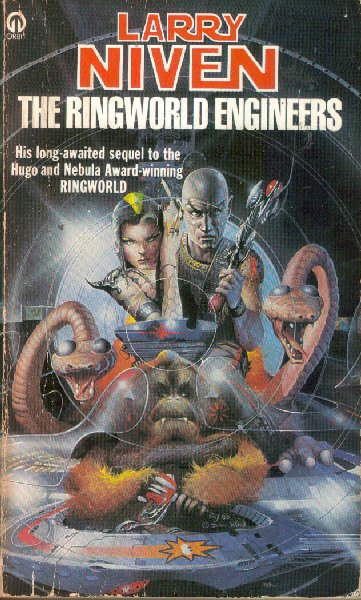
The Ringworld Engineers by Larry Niven
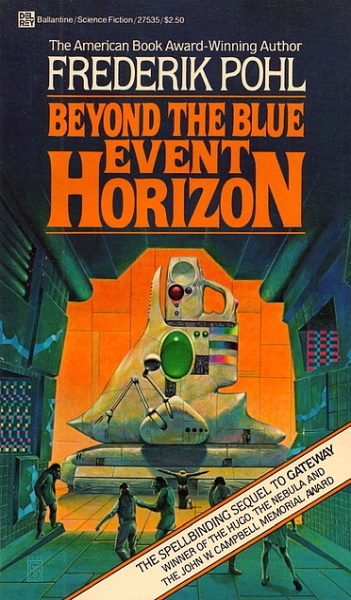
Beyond the Blue Event Horizon by Frederik Pohl
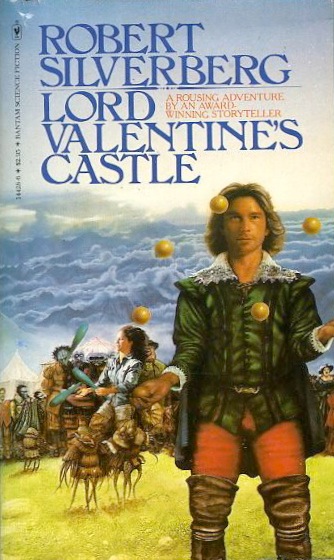
Lord Valentine’s Castle by Robert Silverberg
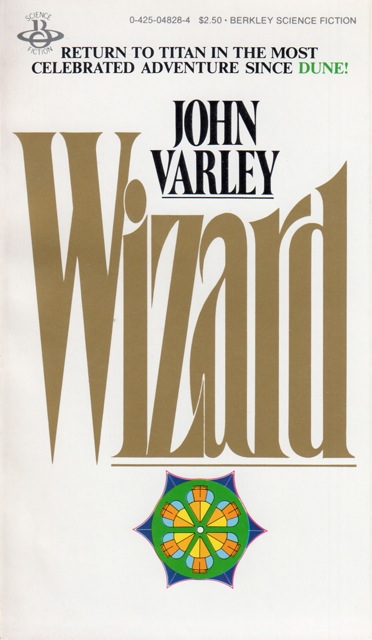
Wizard by John Varley
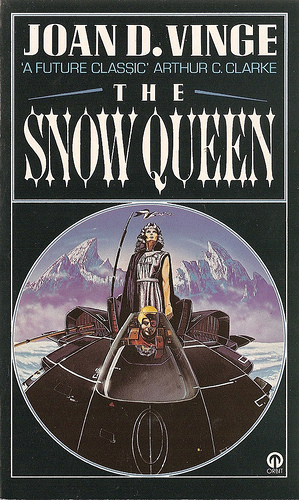
The Snow Queen by Joan D. Vinge
(Abstain)
This year was mostly a miss for me, though none of the books were so terrible that I’d rank them below no award. Most of them either didn’t hold my interest or were sequels of books that didn’t hold my interest.
Larry Niven is a good writer, and really great at hard science fiction—something we see very little of these days (depending on whether you’d rank Andy Weir and Adrian Tchaikovsky as hard SF authors). I’ve read and enjoyed some of Larry Niven’s books, like Protector, The Mote in God’s Eye (which he cowrote with Jerry Pournelle), and Inferno (which they also co-wrote). But I’ve also DNFed some of his books too, mostly because I got bored or couldn’t follow them as well. The Integral Trees is one example. Ringworld is another.
I should probably try rereading Ringworld again, since it’s probably Larry Niven’s most famous book. And it’s not a bad book at all. But midway through it, I lost interest, mostly because I felt that the story was more an excuse to showcase this tremendous mega-structure that Niven dreamed up than an actual story. And because The Ringworld Engineers is a direct sequel to Ringworld (and was written largely to answer some of the fan critiques of Niven’s Ringworld design), I didn’t bother reading it. But I probably should, one of these days. When I get through the rest of my ever-expanding TBR pile.
The Snow Queen was another book that didn’t really hook me, and had enough yellow flags in the first couple of chapters that I decided not to keep reading it. I might be persuaded to try it again, with a strong enough recommendation, but I don’t think it’s for me.
I’ve read (and DNFed) enough Silverberg to know that I probably won’t like anything he’s written. Too much dirty old man vibes (or dirty young man, depending on when the book was written). So I didn’t bother reading Lord Valentine’s Castle. He’s a fantastic writer who really has a way with language. But he spent too much time writing porn, and it really rubs off into everything else.
I finished the first Heechee book by Frederik Pohl, and enjoyed it well enough, though it very clearly pushed Freudian and Malthusian thinking. Perhaps, because of that, I really couldn’t get into Beyond the Blue Event Horizon. The first book, Gateway, had enough of a hook to keep me going to the end of that book, but the other ideological baggage kept me from wanting to read any more. But it wasn’t so preachy that I’d call it “woke,” just not my kind of thing.
As for Wizard, I screened it with ChatGPT first and decided to skip it. Here is what the chatbot said:
The Gaea Trilogy (Titan, Wizard, Demon) is famous for being imaginative, brilliant… and filled with extremely adult, often bizarre sexual content. Wizard is the most explicit of the three.
The worldview is hedonistic, amoral, and body-centered.
The spiritual/moral framework is essentially nihilistic.
Sexual behavior is portrayed as a tool of power and experimentation.
One subplot involves sexual violence between adults (coercion/manipulation).
Several scenes go well beyond typical adult-SF boundaries into outright erotica.
If I had read and DNFed it, I probably would have ranked it below No Award, which would have forced a big change to the ballot. But I’m not going to rank a book below No Award just because I screened it and decided not to read it. I want to actually try to read it myself before I make that judgment.
With that said, though, I have no desire to read Wizard after what the AI screening told me. So there you go.
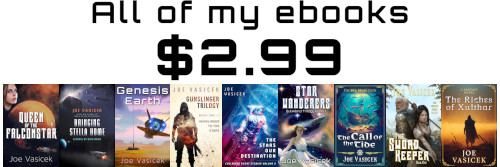
Every couple of months, I discount all of my $4.99 ebooks to $2.99 for a couple of weeks. From now until the end of the month, you can get any of my ebooks for $2.99. Check it out!