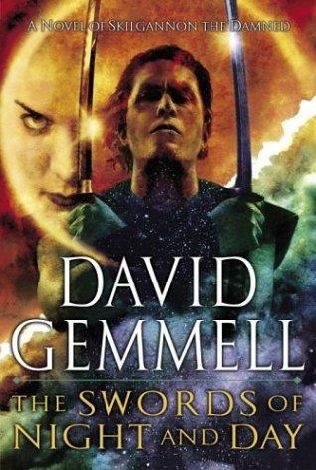
A thousand years ago, a young warrior named Skilgannon helped the princess Jianna escape an attempt on her life. They became lovers, and when she retook her throne, she made Skilgannon her chief general. When she ordered the abject annihilation of her enemies, he loved her too much to refuse her–and thus became Skilgannon the Damned.
Now, the wizard Landis has recalled Skilgannon back from Hell to defeat the tyrant queen known as the Eternal. For hundreds of years, the Eternal has ruled the world, using the arcane arts of a fallen civilization to achieve immortality and crush all who oppose her.
When the Eternal learns of Landis’s treachery, the only hope for freedom lies with Skilgannon, the axeman Harad, the huntress Askari, and the Drenai ranger Alahir. But how can they defeat an enemy who commands nearly all the armies of the world? Who has lived a dozen lifetimes and simply steals the bodies of her clones whenever she is killed?
But most of all, how can Skilgannon defeat the Eternal when she is none other than Jianna, his beloved?
The Swords of Night and Day is a direct sequel to White Wolf, the first David Gemmell novel that I read. I have to admit, I wasn’t particularly impressed with White Wolf; it meandered a lot and didn’t seem to have any clear direction.
That is most certainly not the case with The Swords of Night and Day, however. I was hooked from the very beginning, and could hardly put it down until the shocking, mind-bending twist at the end. It tied up all the loose ends from White Wolf and completed Skilgannon’s character arc in a surprising yet satisfying way.
One of the reasons I think I love David Gemmell so much is because he captures so perfectly the experience of being a man. In that, I suspect that Gemmell is to me what Jane Austen is to most women.
But even though Gemmell’s characters might be crass, vulgar, chauvanistic, and downright detestable at times, there is always something heroic deep inside of them–something worth redeeming. And when he does redeem them, it surprises me how powerful it is–even when he redeems someone I don’t want him to.
With The Swords of Night and Day in particular, one of the things that particularly fascinated me was the fictional cosmology of the Drenai universe. With magic that can resurrect people’s spirits from hell, the story must inevitably deal with questions of the afterlife. Yet even so, there’s still enough ambiguity and latent potential that it never felt stilted or labored. If anything, it felt a bit like Tolkien’s cosmology in The Silmarillion, where all the stuff about gods, angels, and the undying lands only added to the sense of wonder.
I love just about all of David Gemmell’s books, but this one in particular was well worth the time and experience reading it. I wouldn’t recommend starting with this one, though: better to read Legend, White Wolf, and The King Beyond The Gate first. But if you’ve read and enjoyed those ones, you will DEFINITELY love this one. I certainly did.
When Harry Malan’s work transferred him to Sol Station deep inside the sun’s core, he didn’t expect to become a Mormon branch president over more than a hundred alien converts to the faith. The Swales, ancient sun-dwelling beings with their own history and culture, travel the universe by naturally teleporting between stars.
When Harry learns that one of the members of his congregation has been raped, he determines to take it up with the chief Swale. But at several thousand meters long and more than a hundred millenia old, the chief is revered by the Swales as a god incarnate. To make matters worse, the only other eligible female on the station is an atheist xenoanthropologist determined to stop Harry from “polluting” the Swale culture.
In an alien society millions of years older than humanity, where gods were dwelling among mortals long before the birth of Jesus Christ, is there a place for those who convert to any of the human faiths?
This story was awesome, and I’m not just saying that because I’m a practicing Mormon. The story concept was brilliant, the alien world was fascinating, and the issues raised were dealt with in a very balanced way. This is a must read for any Latter-day Saint science fiction writer–or for aspiring writers of any religious faith, for that matter. In fact, Eric James Stone has it available right now on his website for free–so check it out!
My only issue was that the story didn’t feel fleshed out enough. The Swales were so fascinating, I wanted to spend more time with them–I wanted to explore their culture, learn more about their history and evolution, etc. I also wished there were more detailed descriptions to make me feel like I was there.
I think that has more to do with the shortcomings of the medium than anything else, though. The piece is an 8,000 word short story / novelette, so there isn’t a whole lot of room to flesh things out. Still, the world is so fascinating, can you blame me for wanting more?
All things considered, “That Leviathan, Whom Thou has Made” definitely deserves the Nebula Award which it won earlier this year, and I wouldn’t be surprised if it wins a Hugo as well. It represents a significant milestone in LDS literature, and is an excellent mainstream piece as well. Whether you’re Mormon, Christian, Muslim, or whatever, if you’re a religiously devout writer of science fiction, this is a must-read. And even if you’re not, it’s still a great story. Highly recommended.
For FHE* tonight, we had an interesting discussion about ethical dilemmas and moral absolutes. It started with the following question:
If you were a prisoner of war, would you consent to have sex with the prison warden if it would set you free?
The overwhelming answer, predictably enough (at least from a bunch of Mormons), was “heck no!” So then, the teacher upped the ante by asking: what if it would free one hundred other prisoners who were scheduled to die the next day?
I was a little surprised (but not really) when I was the only one who admitted that I probably would. After all, there’s precedent for something similar in the Book of Mormon, and a very real question of whether or not the blood of the dead prisoners would be on your hands if you didn’t. Also, I would still consider it rape, since I draw a distinction between the act of sex and the act of saving lives–IOW, the sex itself isn’t strictly consensual; it’s the cost of saving the other prisoners.
Laying aside completely the question of whether or not you can take the warden at his word, it’s a very interesting dilemma, and one that gets at the heart of what people really believe. The fact that so many of my Mormon peers wouldn’t sleep with the guy tells you a lot about Mormon culture. My follow up question would be: if it meant freeing yourself and the other prisoners, would you kill the warden? Because I’m pretty sure most of them would say “heck, yes!” even though murder is typically considered to be a more heinous sin than fornication.
But anyway, the point here is that all of this makes excellent story material. For your characters, what are the moral lines that they absolutely will not cross? The ones where they’re a little more fuzzy? What, for example, would a character be like whose method for choosing between two undesirable courses of action was to flip a coin–no matter the stakes? And what about the characters like Ender Wiggins who flip the dilemma on its head by stabbing the giant in the eye?
This is the kind of stuff I love to read, and the stuff I love to write as well. I’m hoping to pull off a really good one in Into the Nebulous Deep, but not for a couple of chapters. Gotta set things up, get the story moving, and give the romance a little momentum. But once the characters are all fleshed out and the stakes are insanely high, that’s when the fun begins. Bwahahahaha!!
Recently, I’ve taken to writing poetry in church–partially to keep me awake, but also to explore elements of worship, such as this one I wrote a few weeks ago:
Bread and water,
types of Christ,
bond us in the covenant
and make us His people;
bearing His name,
joined in discipleship,
remembering the Savior
by His flesh and blood.
My preferred form is the chiamus, a type of parallel structure that follows an inverted ABCCBA pattern. For example, with the poem above:
> Bread and water, >> types of Christ, >>> bond us in the covenant >>>> and make us His people; >>>> bearing His name, >>> joined in discipleship, >> remembering the Savior > by His flesh and blood.
Perhaps not the best example, but yeah, that’s the basic idea. The parallel elements don’t necessarily have to rhyme, but they do have to share a common theme or idea, and the idea in the center is supposed to be the most important.
The ancient Hebrews used chiasmus quite a lot, and you can find many examples of it in the Bible and the Book of Mormon. According to Avraham Gileadi, the entire book of Isaiah follows a chaistic structure. My favorite example is probably Alma 36, where the whole chapter is one enormous, beautifully complex chiasmus.
Anyhow, I wrote one today that I thought was pretty good. It’s not particularly religious, but it does have a lot of personal significance.
Enjoy!
Friends
Few things last forever;
most friendships come and go.
Others last enough to share
a closeness that can grow.
Self to self,
unveil the masks,
reveal your heart, and when
our souls connect,
this close
and lasting
friendship
never ends.
Just a quick post, because I figure I shouldn’t let Christmas go by this year without at least mentioning it in some way.
I’m not much of a Christmas person, and I think I get that from my Mom. I still remember the year when she suggested we stop doing presents altogether. That didn’t pass, of course, but as you can see in the photo, she successfully downsized the Christmas tree. Even I would never stoop so low.
In a lot of ways, though, I sympathize with her. The blatant commercialization of the holiday shocks and disgusts me. I find nothing redeemable about the Santa myth, and will teach my children not to believe it. Until Thanksgiving rolls around, I prefer to act as if Christmas doesn’t even exist.
But I’m not a Scrooge. The holidays are for family and traditions–for being with and appreciating each other, making fond memories, and be quirky together in that special, unique way that makes family what it is (for better or for worse).
When celebrated well, it’s also a time to step back from the grindstone and recharge the spiritual underpinnings of one’s faith–kind of like a Sabbath for the year. It’s getting increasingly difficult to balance that with all the secular noise, especially in this panicked, self-conscious economy–but hey, faith by definition is never easy.
Anyhow, I had a great Christmas, in spite of the fact that I didn’t go home.
Explanation: we have an arrangement worked out with my sisters’ in-laws, where we alternate Christmas and Thanksgiving. This year, Thanksgiving was for the Vasiceks to get together, while Christmas was for the Challises and the Laws.
And anyway, home isn’t a place, it’s the people you’re with. I spent Christmas with my sister here in Provo, and all her in-laws, and it was great. I managed to get a small present for everyone, and it was a lot of fun watching them open theirs. I didn’t get as many presents as perhaps I would have gotten at home, but I love everything I got and got more than I expected (an illustrated translation of One Thousand and One Nights, a novel by L.E. Modesitt Jr, and Daft Punk’s Alive 2007 album. Oh, and some money from home–thanks Pop!).
We spent the day lazing around, watching Northern Exposure (which is actually a really good TV show–or was, back in the 80s when it aired), playing around with our presents, eating dinner, and doing other stuff. The Laws tend to be laid back, and I like that. I feel at home with them.
We ended the day by playing Apples to Apples, and let me say, it is a much different game playing it with old people (aka non college students). The first round, I didn’t get a single card. The second round, I got “weird” and “unhealthy.” The third round, I got “patriotic,” “shallow,” and a mildly suggestive one which I’ve since forgotten. Steve should have chosen my card (“picking your nose”) when the word was “bold.” Connie skunked us all.
So yeah, that was Christmas. I wasn’t expecting it to be super awesome, but it was. Thanks to the Laws for letting me share the day with them!
And to finish off this Obligatory Christmas Post, here is an awesome Christmas video. Even though it’s not Christmas anymore, you need to watch it–now. You won’t regret it–or maybe you will, but in an awesome kind of way. Just watch it.
So today was the first day of World Fantasy, the major professional convention for science fiction and fantasy literature. I’ve only been here for a few hours, but I can already tell it’s going to be awesome.
While making a stop in Chicago, I ran into two other writers on the same flight (one by the name of Theodora Goss who was on a panel later that evening) and ended up sharing a taxi with them. We had some great conversations on the way down, about non-conciliatory fantasy, Dave Wolverton’s workshops, writing short stories vs novels, etc. It was great.
So I arrived at the hotel, checked in, got situated, and immediately started running into other Utah/Mormon writers. I was a bit surprised, because I was expecting us to have a much smaller contingent this year, but I started running into familiar faces right off the bat.
And then, as a tribute to how universal science fiction and fantasy fandom really is, a group of us cleanshaven Mormons ran into an atheist and agnostic from Seattle in the hallway and spent a delightful evening together talking about religion, why there are so many Mormon sf&f writers, more religion, dating/relationships in Utah, still more religion…and it was awesome. They said we were some of the coolest Mormons they’ve come across, and I have to say, I very much enjoyed meeting them as well.
So anyways, I just went to one panel this evening: “Fantasy as a Rejection of the Present.” Basically, it was all about how fantasy tends to hearken back to the forgotten values of the past, and how steampunk and contemporary urban fantasy is largely a reaction against our modern consumer culture. There was a lot more to it as well, including a discussion of Tolkien, Lewis, and William Morris, but that was the most interesting tidbit I took from it.
It got me thinking that perhaps I should try my hand at urban fantasy. I haven’t yet tried it because I get bored just thinking about stories set in the “real world”–but lately I’ve been thinking a lot about how screwed up this “real world” really is…perhaps some of those thoughts would translate surprisingly well into urban fantasy.
I don’t know. Anyhow, that’s my <500 word report on tonight’s activities. I’ll try to make another one sometime tomorrow, but I make no promises–hanging out with these people is just too much fun. Good night.
Tuesday Sept 11th, 2001
Day of the Terrorist Attacks on the WTC and Pentagon
Today has been an incredible day. In describing the events that happened today, one of the teachers said that “the world has changed significantly from what it used to be.” There’s no doubt that that’s true. It’s so strange, I’m still having trouble computing it; it seems almost like a dream; that tomorrow we’ll get up and nothing will be different.
On September 10th, 2001, I resolved to keep a daily journal for one full year (and actually followed through on it until June the next year). That journal turned into a detailed account of my personal reaction to the 9/11 terrorist attacks, the most historic, world-changing event to happen in my lifetime.
September 11th was the first day of school for my junior year in high school.
I first heard the news in 2nd period, which was AP US History with Mr. Gunn. I was excited to see his class, see what the year would be like, etc. Everyone was scrambling for a test. He came in a bit late, and was visibly shaken. He told us that the test was cancelled, and then broke the news to us.
I don’t think anyone computed it right then. I know I didn’t. I heard about it, and immediately my love of storms, breaking news, and perilous events kicked in. But I knew that what had happened was big – and not cool one bit.
I choked down the impulse to get excited, but I did want to know more – a lot more. I asked several questions about what had happened, but there wasn’t much info right then. I had no idea what the incredible magnitude of the event was; I still have trouble, it’s like something from a movie or something.
Needless to say, that was the weirdest first day of school I’ve ever had. Classes went on as scheduled, except for the last period of day, which was canceled for an impromptu school-wide assembly. Everything was upside down, with teachers and students trying simultaneously to launch another school year while doing everything they could to find out what the hell was happening on the news.
I didn’t get to a TV until the mid-afternoon, during my lunch break.
CNN was on, and they were showing footage of the Trade Center and the second plane ripping through it. They showed the buildings on fire and the scene around the buildings. It was incredible; eerie…it was really then that I started to comprehend the sheer magnitude of what had happened.
I watched footage of the Trade Center as the building collapsed – that was incredible. I watched the footage reels play over and over again. There was one of someone at the very foot of the building shooting the building as it burned, then caught it as it began to collapse, and then it started jiggling around as the guy and everyone around him scrambled as fast as they could to get out of there!
It was surreal. In the middle school just across the street, kids burst out laughing when they watched the second plane hit the other tower–then looked around in frightened disbelief as they realized that it was real. I remember looking at the photographs from the New York Times the next day and thinking I was reading a superhero comic, not the newspaper. It just didn’t compute.
I had a ton of questions on my mind that day, and they generally went in this order:
1) Was anyone I personally know hurt or killed in the attack?
2) Were any of the victims friends or family of people I know?
3) Is there going to be a war?
We’re going to remember this day for years and years, it’s incredible. The world has changed; I can feel it. It seems tonight like the stuff on the news is amazing and true, but it doesn’t seem real – not in the sense that I think any of us fully understand everything that’s gone on – everything about everyone who’s been affected by this, including ourselves.
For me, it feels exciting and horrifying at the same time, and I almost feel as if it’ll be gone tomorrow, or at least people will still be reporting on it and nothing will have changed from tonight’s events. Of course, that’s not true.
Interestingly enough, I had been watching the news on an almost daily basis for over a year, waiting for something like this to happen. When the second Palestinian intifada began in 2000, I spent all my free time at school on the internet, checking on the latest developments in the Middle East. When the nightly news stopped covering it, I became so disgusted I stopped watching TV news.
So I already knew who Osama Bin Laden was. I knew all about the Taliban and their egregious human rights abuses in Afghanistan. I heard about the USS Cole only hours after it was attacked, and I was disgusted that the US government wasn’t doing more to defend us from terrorism.
So when the 9/11 attacks happened, I felt simultaneously excited and guilty. Finally, after months and months of slow news, something BIG is happening! But people are dying, too–thousands of people. Is it wrong to be excited? But I’m sad too–does that make it all right? How should I feel about this?
I’m not scared, I’m not terrified like the terrorists want, I’m not angry about all this – I’m just in shock, waiting to see how it all plays out. This is BIG!
Of course, the mental and emotional impact of the attacks were much larger than I understood at the time. I didn’t feel a sense of peace in my life until sometime the next week, when I watched a special LDS devotional broadcast from the Mormon Tabernacle in Salt Lake City. Even then, the impact of the attacks continued to transform me in ways that I didn’t fully understand.
Before the end of the school year, I wrote a short story that amalgamated all of the ways that the events of that year had changed my life. It was my first creative writing project since elementary school that I’d actually finished, and I found it surprisingly cathartic. If you care to read it, you can download it here:
The writing is terrible, the plot is cheesy, and it gets a little preachy towards the end, but it’s more honest and genuine than anything else I can possibly say.
After the shock and horror and fear and sadness, the events of that day ultimately brought me closer to God and the people around me. It also led to a lifelong fascination of Middle Eastern cultures alien to my own–and the desire to show that no matter our background or culture, we are all equally human.
That’s the best way to defeat evil–become a better person because of it.
I’m not sure whether this notebook is #3 or #2. There’s a lot of notes from English 318, which would put it in the winter, but I don’t know if it’s from ’08 or ’09.
Not that that matters; ideas are ideas. And here they are!
An empty parking garage with no exit.
Covered this already in a previous post. Strangely, it’s one of the most popular posts on this blog. I constantly get search engine traffic from people googling “empty parking garage” and other such stuff. Who googles “parking garage”? Weird.
Telepathy through instant messaging between microchips interfaced with the brain.
Also covered in the same post.
And they all lived evily ever after.
Bwahahah! I’ve got Jakeson to thank for this line–specifically, from a conversation at LTUE. Good times!
A TV show where the viewers vote between ads what should happen next.
I’m pretty sure I got this idea from an Escape Pod story–one of the Hugo short story nominations from ’06 or ’07, IIRC.
What if the human mind, which we think is so great, is ridiculously broken?
After all, isn’t it true that we only use a tiny fraction of our brain’s capacity during our lifetime? What if the true potential of the human mind far outstrips anything we could possibly imagine?
What if the human brain was manifested as some sort of library / processing building, with short term, easy access, and archival memory sections manifested as bookshelves and long rooms? And there were flies or insects or parasites of some sort that fed on the archives, causing forgetfulness? And you were trapped in there?
I’m pretty sure I was tripping out on the Brain Science podcast at this time, combined with an old Roger Allen McBride novel about time travel and terraforming. Good times.
What would it be like to be God’s intern?
FREAKING HARD.
If perfect, instantaneous communication is possible, doesn’t this blur the individual identities of those speaking, so that they become simply voices in one mind? If so, does this mean that our individuality is based on the ways we misunderstand each other?
At its core, this idea is a take on the whole perfection vs. personality debate: the question of whether our individual personalities disappear as we approach Godlike perfection. I’ve come to the conclusion that this is not the case, but that’s a discussion for my other blog (which I have not updated in a ridiculously long time, dangit).
A middle aged mom at a children’s book fair in Utah who has a tattoo partially showing from under her sleeve
I saw this in the Wilk one day, and started wondering about this woman. Who is she? Where did she get the tattoo? Why is she at a Utah Children’s Book Fair, which is about as far removed from tattoos and tattooed society as you can get?
A robot that was made to suffer, as part of an experiment.
It makes you wonder what ‘suffering’ actually is. Do inanimate objects suffer? Do the rocks and clouds and sky and stars suffer? Do they weep for us?
On that trippy note, I’ll cut this short and finish reviewing the notebook in a later post. Until then, stay awesome.
Well, now that I’m graduated and can no longer say that I’m a BYU student, it’s time to write a new About page for this blog. Before I do that, though, here’s the old page, in case you want to read it one last time.
About Me
Who am I?
I am an oldest son, an annoying older brother. I have three beautiful sisters and an amazing mother and father, all of whom I love very much.
I am a believing, practicing member of the Church of Jesus Christ of Latter-day Saints. I have a deep belief in God and an abiding faith in Jesus Christ as my Savior and Redeemer. I’m certainly not perfect–far from it!–but I try my best to love, serve, listen, and appreciate the people in my life, friends and otherwise.
I am a senior at Brigham Young University, studying Arabic, political science, the modern Middle East, and English. My academic interests don’t stop there, however. I also love history, astronomy, linguistics, international relations, philosophy, economics, psychology…basically, I love learning.
I love writing, especially science fiction. I fell in love with the genre as a young boy, when I read A Wrinkle in Time and saw Star Wars episode IV: A New Hope. Those works triggered my inner creativity, and I have been writing SF&F continuously ever since. I’ve never been able to stop.
I’m a writer, aspiring to become an author. I’m not relying on talent alone to reach that goal, though. I’ve been working hard on my craft since 2007, trying to get my writing up to a professional level while researching the publishing industry. In that time, I’ve written three unpublished novels and had one short story published with Leading Edge.
I would like nothing more than to be a professional, full-time fiction writer. I’m not there yet, but I’m on my way.
Contact
If you would like to contact me for any reason, I can be reached at the following email (despammed): joseph dot vasicek at gmail dot com.
All work on this website is published under a Creative Commons license. You are free to share or download anything you see, but you cannot redistribute it for money or alter the content in any way. For more information, please visit the link below: This work is licensed under a Creative Commons Attribution-Noncommercial-No Derivative Works 3.0 United States License.
It was said that God, in order to test mankind which had become swelled with pride as in the time of Noah, had commanded the wise men of that age, among them the Blessed Leibowitz, to devise great engines of war such as had never before been upon the Earth, weapons of such might that they contained the very fires of Hell, and that God had suffered these Magi to place the weapons in the hands of princes, and to say to each prince: ‘Only because thine enemies have such a thing have we devised this for thee, in order that they may know that thou hast it also, and fear to strike.’
But the princes, putting the words of their wise men to naught, thought each to himself: ‘If I but strike quickly enough, and in secret, I shall destroy those others in their sleep, and there shall be none to fight back; the earth shall be mine.’
Such was the folly of princes, and there followed the Flame Deluge…
In the new dark ages of man following the nuclear apocalypse, an order of Catholic monks preserves the last vestiges of civilization: a shopping list, an electrical diagram, and other assorted scraps of a long-dead world. As mankind rises from the dust, inevitable tensions arise between the church and the world, between Jerusalem and Babylon, Christ and Lucifer.
This book is epic. Epic. I can’t begin to describe how incredible it is. Virtually every page, especially towards the end, is packed with meaning. A cautionary tale of the folly of man in this fallen world, this story held me captivated right up to the chilling final chapter. Bravo.
As I understand it, Walter M. Miller Jr. wrote this book in the late 50s / early 60s, during the height of the Cold War. Science fiction at that time was both sweepingly visionary and frighteningly pessimistic about the future of mankind, and this book successfully captures both extremes. Like Asimov’s Foundation series, it reads more like a collection of elongated short stories, but Miller’s characterization and attention to detail is superior, in my opinion, to Asimov’s.
The most fascinating aspect about this book is the way that Miller hearkens to the past to give us a vision of our future. Many of his ideas are straight out of Augustine and Aquinas–indeed, in several places, the story feels like it’s set in 3rd or 4th century Europe, which only adds to the delicious irony.
Yet, while this book has a strong Catholic feel, I never felt alienated or excluded from its intended audience. Maybe it’s because my Mormon heritage is more compatible with Catholicism than other religious beliefs, but I don’t think it’s just that; the issues in this book are human issues, not just religious issues, and by focusing on that fact, Miller makes the story much more universal.
Even with all the deep, philosophical elements, this story is wonderfully entertaining. Irony abounds, especially in the first section, in which a young novice takes a simple electrical diagram from the pre-deluge world and, completely unaware of its significance (or lack thereof), spends the rest of his life making a beautiful illuminated manuscript of it. Even though the sections were short, I quickly fell in love with the characters in each one, and connected with them almost instantly.
The final scene, in particular, was incredibly touching. I won’t spoil it for you, but let me just say, if you are or ever have considered taking your own life, read this book, just for the final scene. The degree to which the last abbot clings to life, even in the face of so many good reasons to give up, is just incredible. And the final scene, in which…I won’t ruin it for you. Just read it!
A Canticle for Leibowitz is one of the most powerful, meaningful books I have read in my life. It is more than a good read, more than epic. I class it as one of the best works of fiction this genre has ever produced. If you have ever wondered about the destiny of mankind, or the proper relationship between the secular and the spiritual in our modern age–read this book!
 A thousand years ago, a young warrior named Skilgannon helped the princess Jianna escape an attempt on her life. They became lovers, and when she retook her throne, she made Skilgannon her chief general. When she ordered the abject annihilation of her enemies, he loved her too much to refuse her–and thus became Skilgannon the Damned.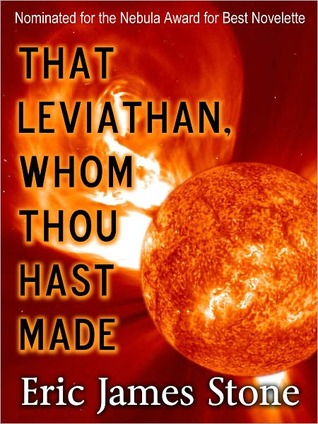


 Who am I?
 It was said that God, in order to test mankind which had become swelled with pride as in the time of Noah, had commanded the wise men of that age, among them the Blessed Leibowitz, to devise great engines of war such as had never before been upon the Earth, weapons of such might that they contained the very fires of Hell, and that God had suffered these Magi to place the weapons in the hands of princes, and to say to each prince: ‘Only because thine enemies have such a thing have we devised this for thee, in order that they may know that thou hast it also, and fear to strike.’