Extra Sci-Fi S3E7: Dune – Wandering in the Desert

So the problem I have with most “ecological science fiction” is that it draws almost exclusively on the ideas of Malthusian economics—essentially, the argument that Thanos was right. The problem with this is that Malthusian theory has been disproven by every generation of humans to live on this planet for the last 150 years. It’s even more discredited than Marxism, which is another unscientific philosophy that “ecological science fiction” draws heavily from.

I remember an old 70s novel I picked up from the local used bookstore, where by the year 2000, Earth had warmed so much that Antarctica was the only habitable continent, and resources were so scarce that the main character—a buxom blonde—had to go topless. Yeah, very 70s. The premise of the novel was so absurd on its face that I couldn’t finish it.

I also remember an Octavia Butler book that I read. It was the sort of book that makes you chuck it at the wall once you’re finished. The plot went something like this: the main character has been abducted by aliens and drafted into their breeding program, and she spends the whole book trying to escape, only to learn that she’s already pregnant and never will. The end. The writing was pretty good, but the story was so horribly unsatisfying that I haven’t read anything by her since.

From what I can tell, most “ecological science fiction” is like that. Very pretty sentences, but horribly unsatisfying stories, with way too much preaching about how capitalism is evil and humans are destroying the planet. That’s probably why these books tend to win so many Hugo Awards.

Red Mars was okay, but it was less about Earth and more about Mars itself. I was personally more interested in the political intrigue among the colonists than the terraforming project, but both were pretty good. The characters all seemed a little bland to me, though, and I never really latched on to any of them, which is probably why I didn’t read the other books. From what I can tell, they got more preachy toward the end.

Everyone praises Dune for being an “ecological” novel, but to be frankly honest I never really got into that. The political intrigue and the struggle of Paul Atreides with his prescience was a lot more interesting to me, and while the ecological bits certainly played into the plot, I didn’t really care enough to pay much attention to that.

Also, the parts that I did pick up seemed pretty unbelievable to me. From what I remember, there was a second, much smaller type of worm that produced a certain kind of excretion which, if mixed with the spice, would cause a chain reaction that would completely destroy the Arrakis ecosystem. Something like Kurt Vonnegut’s ice 9, which instantaneously freezes any water it comes into contact with, which makes it the most dangerous substance on Earth because a single drop could freeze all the water on the planet. In my (albeit limited) experience, ecosystems always find their own equilibrium, which makes them resiliant against that sort of thing. But of course, that would probably interfere with the preaching that “ecological science fiction” tends to indulge in.

From what I can tell, Dune is one of the few pieces of “ecological science fiction” that hasn’t aged poorly, and that’s not because of the “ecological” bits, but in spite of them. Because the truth is that we live in a fantastically rich and abundant post-scarcity world, where “global warming” had to rebrand as “climate change” because none of the predictions came true, and the science has been so ridiculously politicized that the Green New Deal makes the Communist Manifesto look sane and reasonable.

Thanos was wrong. So too, apparently, is the entire field of “ecological science fiction.”
Extra Sci-Fi S3E6: Dune – Plots and Plans

In Future Mrs. Vasicek’s writing group, we were talking about plotting and I remarked that plotting didn’t seem to be one of Frank Herbert’s strengths in Dune. Looking back on it, though, I think that the plot was pretty solid, but he chose to focus on other things instead—such as all of the machinations and ultimate downfalls of all of the characters, which Extra Credits discusses in this video.

When they brough up the “competent man” trope in the last season, and argued against it, I wasn’t quite sure how to take it. I know people in real life who fit the competent man trope very well, and who actually live up to Heinlein’s ideal:

A human being should be able to change a diaper, plan an invasion, butcher a hog, conn a ship, design a building, write a sonnet, balance accounts, build a wall, set a bone, comfort the dying, take orders, give orders, cooperate, act alone, solve equations, analyze a new problem, pitch manure, program a computer, cook a tasty meal, fight efficiently, die gallantly. Specialization is for insects.

In this episode, the folks at Extra Credits argue that Herbert subverts the competent man trope in Dune by showing a bunch of characters who fit that trope failing because they fit it too perfectly. But as you can see from the quote above, that’s actually not the case.

The empaths and mentats in Dune are specialists. In fact, the world of Dune is full of specialists, from the pilots of the spacing guild to the Imperial Sardaukar to the Bene Gesserit—even the Fremen, to a certain extent, are specialists rather than Heinleinian competent men.

The video isn’t wrong to point out that specialization and hubris is the ultimate cause of all of these characters’ downfall. But they miss the trope when they argue that this is a critique of Heinlein and golden age science fiction. If anything, it’s a vindication. Heinlein’s competent man is all about being a jack of all trades, master of one (or two, or half a dozen, as the case may be). In Dune, the characters who do best are the ones who figure this out.

I do have to say, though, it’s kind of fun to revisit Dune, seeing as it’s been so long since the last time I read it. Future Mrs. Vasicek didn’t like the book at all, but I enjoyed it, especially on the second read. Very few things made sense on the first read. My favorite character is probably Jessica, though the folks at Extra Credits are absolutely right about the way that Yueh played her.

Extra Sci-Fi S3E5: Dune – Origins

It’s always fascinating to learn how the big name authors got their start. As a fan, it pulls back the mystique a bit and makes those authors more relatable, and as a writer, it’s enormously encouraging to learn that even the big names had to pay their dues too.

I wonder what Dune would have become if it were published today? It seems that most of the earlier hurdles had to do with publishers rejecting the manuscript, which wouldn’t be the case in today’s indie publishing world. Of course, it would also take a lot of promotion to give it traction, but Herbert and Lanier did that as well… but would Herbert and Lanier have even met if the book had been self-published first? And would their own promotion efforts have been enough without the boost the book got by being serialized in Analog?

Impossible questions, I know. A middling level of indie success might have prevented Herbert from developing his contacts in journalism and publishing which led to his later success. Or it might have given him more time to write, allowing him to expand Dune into something even greater than what it eventually became. Without having to work with an editor like John Campbell, Herbert might have killed off Alia, or published the story before it was truly ready. Or he might have written a better story.

There are two big takeaways that I took from this video:

First, that the slow-burn path to success is still a legitimate path. We have this idea that books are like produce: after a certain space of time, they spoil. Such is not the case. This was one of the big things that Kris Rusch always harped on, about how indie publishing is different from traditional. In recent years, it seems that indie has taken on a bit of the produce model itself, with authors turning to rapid release strategies to stay relevant. But even in the old world of traditional publishing, books still made it from time to time on the slow-burn model—even classics like Dune.

Second, that publishing well isn’t something you do alone. It takes other people, not just readers, but editors, publishers, and other people with connections, sometimes unlikely connections. This isn’t just on the marketing end of things, or even the publishing end, but on the writing end as well. No man is an island, and no successful indie is ever totally alone.

What are your thoughts?

Extra Sci-Fi S3E1: Tolkien and Herbert, the World Builders

So I really enjoyed the first two seasons of Extra Sci-Fi, and since they’ve just started up with season three, I’d like to do a blog series where I react to the episodes.

From the first episode, it looks like the main focus of this season is on Lord of the Rings and Dune, two SF&F classics which I’ve read twice. While I have read The Silmarillion as well, I have to admit that I haven’t read any of the Dune sequels yet. Ah, the woes of a horribly massive TBR list.

In any case, the discussion of intentionality in world-building is quite interesting. The way they contrast it with the pulps got me to thinking about the direction science fiction and fantasy are headed in right now.

With the advent of indie publishing, the era we are living in right now is much more akin to the age of the pulps. The way most indies make a living is by following Kevin J. Anderson’s advice to be prolific—really, really prolific. That doesn’t mean that all books published these days lack the intentionality and depth of the great classics of the genre, but the pendulum seems to have swung in the other direction.

Here’s the problem: I’m sure there are books that are just as finely crafted as Lord of the Rings that are sitting on someone’s hard drive right now, or perhaps hanging out somewhere above the 500,000 ranking on Amazon. Perhaps some of these books are even more masterfully crafted, with greater intentionality and even more depth. Why aren’t they selling?

Lots of reasons. Perhaps the author hasn’t yet mastered the craft of writing. Perhaps the story isn’t compelling enough—the equivalent of a 50 cc engine in the body of a Harley.

Or perhaps it has nothing to do with the quality of the writing or storytelling, but the author’s lack of marketing acumen. The greatest product in the world is worth nothing if nobody knows it exists. Likewise, the worst product is worth at least something if everyone knows about it.

Harsh truths, but that’s the world we live in. I’m not so cynical that I believe that writing is a zero-sum game, but there is a lot of competition, especially with how many books are being published these days. That’s why I say that the pendulum has swung back in favor of pulp-style writing: because the writer who can put out a book a month and put it out to an email list of 10k or more has a decisive advantage over the writer who painstakingly crafts a magnificent epic over the course of an entire lifetime, as Tolkien did.

When will the pendulum swing back? I don’t know, but it’s actually not as daunting of an issue as the guys at Extra Credits make it seem.

The first time I read Dune, I was in high school. The second time, I was in college, where I’d already studied Arabic for a couple of years and become somewhat proficient at it. Studying Arabic pulled back the curtain a bit, and made me realize that Herbert’s world-building wasn’t quite as intentional as it seems at first glance.

There was still a lot of depth and intentionality in the major stuff, like the Bene Gesserit, the mentats and Orange Catholic Bible, and of course the ecology of Arakkis and the Spacing Guild. However, on some of the minor details, he occasionally cribbed or made up stuff, he just did a really good job of disguising it. Even the wider arcs of his world-building have borrowed heavily from the real world, such as the rise of the Fremen (which is basically the Rashidun Caliphate in space) and the politics and economics of the spice trade (which is basically a sci-fi version of the petrodollar).

This is why I’m not too worried. A masterful writer can produce on the level of the pulps, and still write with depth and intentionality—or at least, fake it so well that it feels that way. Writing that well requires skill, but once you’ve figured out all the levers behind the curtain, you really can pull off some truly amazing stuff.

I’m not quite there yet, but I’ve seen behind the curtain, and I’m figuring out how it works. Until now, I’ve leaned more toward the pulp-style of writing, just to get my writing career off the ground, but I hope to get to the level of Herbert and Tolkien before too long. It’s definitely possible, but can it be profitable too? That’s the tricky part.

Y is for Yesteryear

Star_wars_oldThey say that the golden age of science fiction is about twelve years old.  That’s definitely true for me.

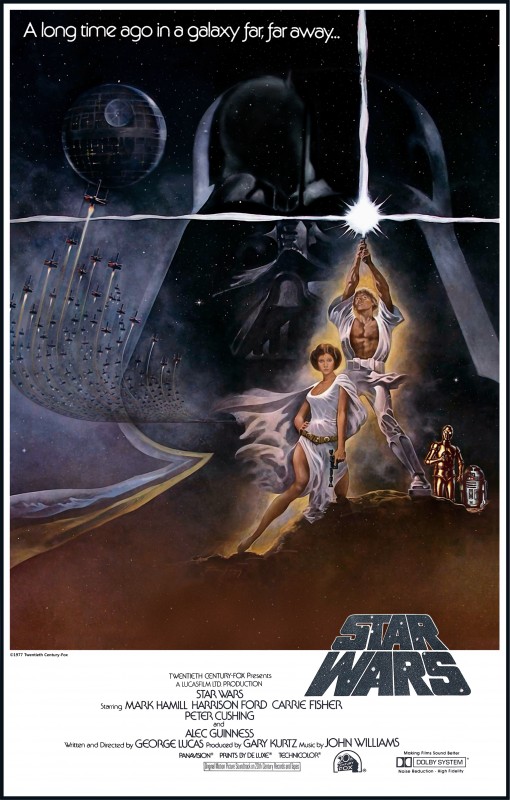
My first exposure to the genre was Star Wars: A New Hope.  I saw it when I was seven, right around the height of my dinosaur phase.  Everything about the movie completely blew me away, from the Jawas and Sand People of Tatooine to the stormtrooper gunfights and lightsaber duels.  After watching Luke blow up the Death Star, I spent the next few hours running around the yard pretending to fly my own starfighter.

In a lot of ways, I’ve never really stopped.

My parents made me wait until I was nine to watch The Empire Strikes back, because it was rated PG.  Without any exaggeration, I can say that those were the longest two years of my life.  I was literally counting down days by the end, and to pass the time without going crazy, I read up on all the books about space that I could possibly find.

My father bought the original X-wing flight simulator game somewhere around then, and I soon became totally engrossed in it.  Since the 386 was our only entertainment system (no Super Nintendo–I had to visit a friend’s house for that), X-wing became the defining game of my childhood.  I spent hours and hours on that game, to the point where I knew exactly which simulated missions the characters from the books were flying and how to complete them faster and easier.

I thought The Empire Strikes Back was a little slow the first time I saw it, but it’s since grown on me, to the point where now it’s my favorite film in the whole series.  Thankfully, my parents let me watch Return of the Jedi the next day, and for the next few months my life felt utterly complete.

Around this time I discovered the Star Wars novels and soon immersed myself in them.  The Courtship of Princess Leia by Dave Wolverton soon became one of my favorites, as well as the Heir to the Empire trilogy by Timothy Zahn and the X-wing series by Michael A. Stackpole.

But it was Roger Allen McBride who first introduced me to a different flavor of science fiction with his Corellia trilogy.  As I mentioned in V is for Vast, those books had just enough of a touch of hard science to intrigue me about the other possibilities of the genre.  That was the last Star Wars series that I read before branching out into other works of science fiction.

The Tripod trilogy by John Christopher was my first introduction to the dystopian / post-apocalyptic genre, depicting an enslaved humanity after an alien invasion.  Those books really captured my imagination for a while.  The Giver was also quite interesting and thought provoking, though since it didn’t involve spaceships or aliens it wasn’t nearly as compelling.

I read a lot of fantasy in my early high school years, including Tracy Hickman, Lloyd Alexander, and (of course) J.R.R. Tolkien.  While I enjoyed those books and immersed myself in them for a while, my true love was still science fiction.  For almost a year, I watched Star Trek: Voyager religiously with my dad.  And every now and again, I’d pick out a science fiction book from the local town library and give it a try.  That’s how I discovered Frank Herbert’s Dune.

In eleventh grade, my English teacher had us choose an author and focus our term papers solely on their books for the entire year.  She suggested I choose Orson Scott Card, but I chose Cormac McCarthy instead.  I’m not sure if that was the worst decision of my high school career, or the best decision, since assigned high school reading tends to make any book feel like it sucks.  I discovered Ender’s Game the following summer, and finished it in a delirious rush at 3am the morning after checking it out from the local library.

More than any other book, Ender’s Game cemented my love for the genre, and showed me just how powerful and moving the genre could be.  It opened so many insights into the world and human nature, reading that book made me feel like I’d opened a pair of eyes that I didn’t even know I’d had.  Looking back, that was probably the moment when I knew I would be a science fiction writer.  I’d known I was going to be a writer ever since I read A Wrinkle in Time at age eight, but to be a science fiction writer specifically, that goal was probably cemented by reading Orson Scott Card.

After high school, I served a two year mission for my church, during which I didn’t read any novels or watch any TV or movies.  When I came back, though, Orson Scott Card and Madeline L’Engle helped me to ease through the awkwardness of adjusting back to normal civilian life.  When I left for college, I expanded my horizons even further, starting with Isaac Asimov’s Foundation series and Edgar Rice Burrough’s Princess of Mars.

When I discovered Pioneer Books in downtown Provo, I knew I’d found my favorite bookstore in Utah Valley.  I have so many fond memories sitting cross-legged on the floor in the science fiction section, browsing through the musty used books for hours at a time.  That’s where I discovered C.J. Cherryh, Arthur C. Clarke, Robert A. Heinlein, Ursula K. Le Guin, and numerous other authors who are among my favorites today.

When I discovered Spin, Robert Charles Wilson soon became one of my favorites.  I picked up that novel as a free PDF from Tor, and read it over the summer while studying abroad in Jordan.  Once again, that same hard sf sensibility I’d gotten from Roger Allen McBride touched me in an unforgettable way.  But it was the human element of that book that really moved me–in fact, it’s always been about the human element.  The world building in Downbelow Station was great and all, but the romance of Merchanter’s Luck had a much more lasting impact.  Starship Troopers had some good ideas, but it was Mandella’s personal journey in The Forever War that moved me almost to tears.  The intrigue of the Ender’s Shadow series was quite entertaining, but it was Ender’s Game and Speaker for the Dead that really taught me what it means to be human.

I finished my first novel, Genesis Earth, shortly after returning from that study abroad, and tried to capture the same sensibility from Spin as well as the intimately human element.  Since then, I’ve written several more sci-fi novels, some of them tragic, some triumphant, but in all of them I’ve tried to get as close as I can to the personal lives of the characters.  I don’t know if I’ll ever write a character portrait so intimate as Shevek’s in Ursula K. Le Guin’s The Dispossessed, but I certainly hope to someday.

For me, science fiction started out as a wonderfully exciting entertainment and turned into something much more meaningful.  If there’s anything the genre has taught me, though, it’s that the two aren’t mutually exclusive–that you can have your adventure and learn what it means to be human as well.  Indeed, the more imaginative the adventure, the greater the truths I’ve taken from it.

Because of that, even though I’m almost in my thirties now, I can’t possibly foresee a time when science fiction isn’t a major part of my life.  It’s a love affair that’s grown just as much as I have, and continues to grow with each new author I discover and each new book I write.  When I’m old and grizzled and pushing eighty, I’m sure there will still be a part of that twelve year old boy in me, still running around the yard flying his starship.

L is for Lost Colony

worthingsagaAs we discussed in I is for Interstellar, space colonization is a major theme of science fiction, especially space opera.  Of course, things don’t always go smoothly.  Space is a really, really, really big place, and sometimes, due to war or famine or simple bureaucratic mismanagement, colonies get cut off from the rest of galactic civilization.  They become lost colonies.

Some of my favorite stories are about lost colonies: either how they became cut off, or how they reintegrate after so many thousands of years.  In many of these stories, the technology of these colonies has regressed, sometimes to the point where the descendents may not even know that their ancestors came from the stars.  When contact is finally made, the envoys from the galactic federation may seem like gods or wizards.

Because of this technological disconnect, stories about lost colonies often straddle the line between science fiction and fantasy.  After all, Clarke’s third law states:

Any sufficiently advanced technology is indistinguishable from magic.

Of course, the line between science fiction and fantasy has always been a fuzzy one.  Hundreds of attempts have been made to define it, but they all fall short.  In the end, it often breaks down to certain recurring tropes, like dragons and wizards versus ray guns and rockets, but even that doesn’t always work.

For example, Anne McCaffrey’s Dragonriders of Pern is technically about a lost colony far into the future, but it’s got dragons and castles and other tropes that belong squarely in fantasy.  Then again, the dragonriders have to fight alien worms who invade every few dozen years from a planet with a highly elliptical orbit, so there’s still a strong science fiction basis undergirding the whole thing.

And that’s just Dragonriders of Pern.  What about Marion Zimmer Bradley’s Darkover series, or C.S. Lewis’s Space Trilogy?  Trigun is more western than fantasy, but it’s also full of sci-fi tropes like giant sand-crawling monster ships and a weird post-apocalyptic backstory.  And then there’s all the Japanese RPGs that combine magic with mechas, with Xenogears as one of the best examples.  For a distinct Middle Eastern flavor, look no further than Stargate.

It’s no coincidence that all of these stories feature a lost colony of one kind or another.  When the characters don’t know that they’re living in a science fictional universe, it’s very easy to throw in tropes from other genres.  By no means is it required–Battlestar Galactica and Dune are evidence enough of that–but they certainly present the opportunity to do so.  After all, lost colony stories basically present a hiccup in humanity’s march of progress, breaking the essential science fiction narrative for all sorts of interesting side stories and tangents.

One perennial favorite of science fiction writers is to suggest that Earth itself is a lost colony from some other galactic civilization.  That forms the entire premise behind Battlestar Galactica: the original twelve colonies have been destroyed in the human-cylon wars, and the last few survivors are searching for the legendary thirteenth colony of Earth, hoping to find some sort of refuge.  Apparently, Ursula K. Le Guin’s Hainish cycle also plays with this trope, though she’s never very explicit with her world building.  It can be a bit tricky to twist the lost colony trope in this manner, but if pulled off right it can really make you sit back and go “whoa.”

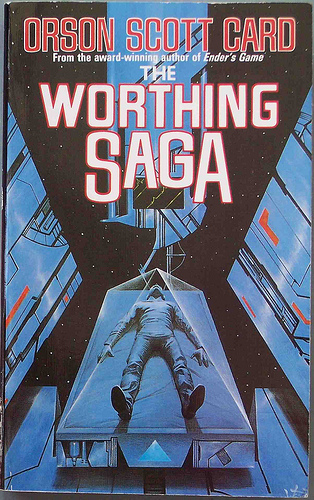
My personal favorite is probably Orson Scott Card’s The Worthing Saga, about a colony of telepaths that breaks off from a collapsing galactic empire and actually becomes more advanced than the rest of humanity.  When Jason Worthing and Justice re-establish contact, the descendents of the galactics are basically pre-industrial subsistence farmers who view them as gods–which, in a certain sense, they almost are.

It’s a great story that really entranced me, not just for the science fictional elements but also for the distinct fantasy flavor.  Orson Scott Card’s handling of viewpoint in that book is truly masterful, so that I felt as if I were viewing everything through the eyes of his characters.  Since the farmers don’t know anything about their spacefaring ancestors, all the parts from their point of view feel like a completely different story.  It was really great.

My first novel was actually a lost colony story, combined with a first contact.  I trunked it a long time ago, but many of the earliest posts on this blog are all about my experience writing it.  As for my other books, Desert Stars contains elements of this, though the lost colony in question is actually a nomadic desert society that lives on the capital planet of the galactic empire, just outside of the domes where all the more civilized folk live.  Heart of the Nebula is basically about a society that puts itself in exile in order to escape the privations of the Hameji.  And in… no, I’d better not spoil it. 😉

The lost colony isn’t one of the flashier or more prominent tropes of science fiction, but it’s definitely one of my favorites.  It’s a great way to add depth and intrigue, as well as bend genres.  For that reason, I think this trope does a lot to keep science fiction fresh.

E is for Empire

terran_empireAlmost every far future science fiction story has a galactic empire of some kind.  From Dune to Foundation, from Star Wars to Firefly, there’s always someone trying to rule the galaxy, often in a way that makes life difficult for the protagonists.

Why?  Rule of drama, of course, but also because it gives the story a truly epic scope.  Just as the classics such as Homer’s Iliad and Tolstoy’s War and Peace are as much about entire civilizations as they are about the people characters within them, so it is with science fiction, especially space opera.  Combine that with science fiction’s forward-thinking nature, and you have the potential for some truly amazing stories about humanity’s destiny among the stars.

But why empire?  Because even if we make it out to the stars, we’ll probably still take with us all of the baggage that makes us human.  Science fiction may be forward looking, but history repeats itself, and you can’t have a clear view of the future without understanding and acknowledging the past.

Not all galactic empires are evil, but most of them are.  We shouldn’t have to look further than the real-world history of Imperialism to see why.  Oppression, exploitation, slavery, genocide–all of these have been done in the name of Empire, and many more evils besides.  Even benevolent hegemonic powers (such as, I would argue, the United States of America) often end up doing great harm, either through action or inaction.

Of course, all of this makes for some really great stories.  When Asimov wrote his Foundation series, he quite literally based it on The History of the Decline and Fall of the Roman Empire by Edward Gibbon.  When Frank Herbert wrote Dune, he drew extensively from his background as an orientalist and based the overworld story on the Muslim conquests of the 7th and 8th centuries.  Star Wars is based loosely on the collapse of the Roman Republic, and Firefly echoes many of the old Western tales of former Confederate soldiers heading west after the US Civil War.

It’s worth pointing out that the Galactic Empire is by no means the only form of political organization in space opera.  There are actually several, including:

  • The FederationA loose organization of stars and planets that usually exists to foster cooperation and mutual peace between galactic civilizations.  Rarely evil, but can be crippled by red tape.
  • The RepublicA more centralized version of the Federation, typically.  Exercises more control over its citizens, but not in an oppressive way.  Usually features some form of representative government.
  • The AllianceA team of political underdogs united to overthrow the Empire and establish a more just form of government in its place.  If they win, they usually become the Republic or the Federation.
  • The KingdomA smaller government within the larger political system, often struggling for survival against more powerful forces. Not always democratic, but is often good, at least to its own citizens.
  • The Hegemonic EmpireLike the Empire, but rules primarily through soft power, ie co-opting their enemies rather than crushing them.  May overlap with the Republic or the Federation.
  • The People’s Republic of TyrannyThe Empire pretending to be the Federation.
  • The Vestigial EmpireWhat the Empire becomes when it’s been defeated but not yet destroyed.  Still oppressive and evil, but rules a smaller territory and struggles for relevance and survival.
  • The RemnantAn element from the Alliance that’s gone rogue.  The war may be over, but these guys are still fighting it, even if they’ve lost sight of what they’re fighting for.
  • The HordeA highly aggressive and expansionist warlord state.  By far the most violent and brutal of any political organization, it seeks to conquer and subjugate the entire galaxy.

As a political science major, all these forms of government really fascinate me.  I’ve played with quite a few of them, especially the Horde (Bringing Stella Home), the Empire (Desert Stars), the Hegemonic Empire (Star Wanderers), the Kingdom (Stars of Blood and Glory), and the Remnant (also Stars of Blood and Glory).  You can definitely expect to see me play with them again in the future.

Trope Tuesday: Rebellious Princess

Marle2You know that innocent and beautiful fairy tale princess, with the tricked out dress and the power to summon woodland creatures?  The one with a tendency to get kidnapped, but who always ends up happily ever after with her prince charming?

Yeah, that’s not this princess.

A rebellious princess would just as soon puke if she were any of those things.  She hates being royalty–she’d rather be one of the common folk, or at least be out doing something (which is why she’s often involved in politics).  She hates all those frilly dresses and tends to wear her hair in a tomboyish ponytail.  Rather than wait for her white knight to save her, she’s much more likely to be an action girl in disguise, or at least something of a badass.  When she grows up, she may become a lady of war.  Invariably, she hates whatever marriage has been arranged for her and often scandalizes those of her class to marry for love (if she even marries at all).

As you might have already guessed, this trope is extremely common, not the least because the princess classic has largely been discredited (at least, outside of Disney).  There’s a lot of variation on it too, with some stories featuring the rebellious princess as the love interest, and others showcasing her as the hero.

George R.R. Martin (Song of Ice and Fire) deconstructs the trope with Arya, who eventually becomes something of a sociopath, and Brandon Sanderson (Elantris) subverts it with Sarene, who very much has the personality but uses her royal position to her advantage.  Frank Herbert (Dune) zigzags with Lady Jessica, who is undylingly loyal to the Atreides family but rebels against the Bene Gesserit.  As you might expect, J.R.R. Tolkien plays it straight, not once but twice: Éowyn in Lord of the Rings, and Lúthien in The Silmarillion.

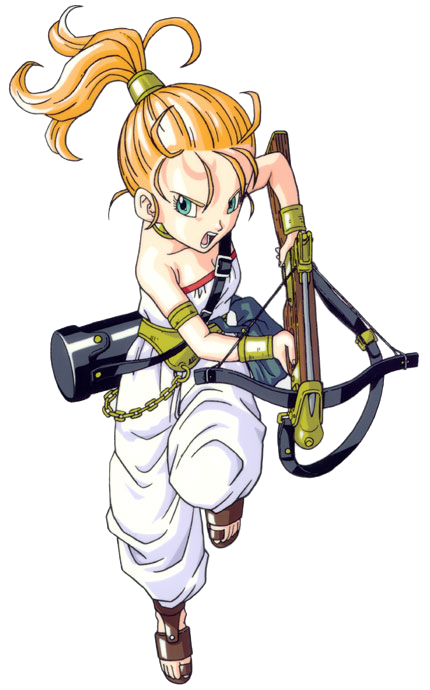
It transcends cultures, too.  In Crouching Tiger, Hidden Dragon, Jen might not technically be royalty, but she is the governor’s daughter and she does reject an arranged marriage to run away and become a wandering warrior.  And in classic RPGs, especially the old Japanese ones from Square, this trope is everywhere.  The princess in the picture above is Marle from Chrono Trigger, who fits this trope to a T.

So why is this trope so prevalent nowadays?  Probably because the modern feminist movement led us to discard most of our old-fashioned feminine ideals, as well as the characters who were held up as shining examples of them.  That, and rule of drama.  Everything ultimately comes down to rule of drama.

In my own work, Hikaru from Stars of Blood and Glory is an example of this trope, though she’s more of a president’s daughter than a hero or a love interest.  She does have her own story arc, though, and I’ve got a sequel in the works with her as the main character.  Scientists aren’t exactly royalty, but they do consider themselves elites in Genesis Earth, which means that Terra has echoes of this trope.  And in Heart of the Nebula (as-yet unpublished), I’ve got a character who isn’t exactly rebellious, but she does qualify as a badass princess (though the society in question is a perfect techno-democracy and not a monarchy).

Trope Tuesday: Recycled IN SPACE!

Or, as my friends at Leading Edge would say, IN SPAAACE!!!

The basic idea behind this trope is that setting a story in space makes it cool and different.  The tvtropes article focuses mainly on how this trope is used in children’s cartoons, but it actually goes much wider.  In fact, most space stories are actually based on stories from other genres, or even from history.

For example, Asimov’s Federation series is based on Edward Gibbon’s Decline and Fall of the Roman Empire, David Drake’s Lieutenant Leary series is based on Patrick Obrian’s Master and Commander series, and Frank Herbert’s Dune is based on the rise of Islam.  Westerns are especially prone to get the space treatment (Firefly, anyone?), which is where we get “wagon train to the stars.”

At its worst, this trope is nothing more than a pointless gimmick.  At its best, however, it can produce some extremely good work.  The key, as always, is to work within the limitations of the setting.

One of the best examples of this is Dune.  Frank Herbert didn’t merely lift 7th century Arabia into space and call it Arrakis; he created a distinctly alien world with its own history, culture, biology, and role within the galactic empire.  For example, Herbert solved the FTL problem by linking interstellar travel to the spice, tying his space-Arabs to the politics and economics of the rest of the galaxy.

Interestingly, your space physics don’t have to be perfect for this trope to work; they just have to be believable.  For things like artificial gravity and faster than light travel, most people will accept a little hand-waving, provided that you do it well.  The important thing, as always, is the story.