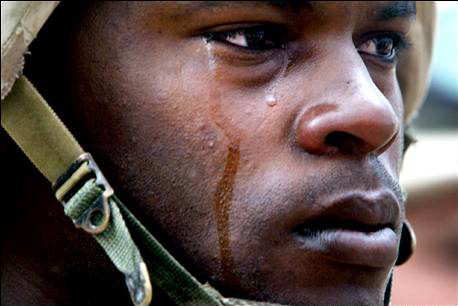
When men cry, or in defense of damaged characters

I recently read an amazing blog post by Shannon Hale titled “Why boys don’t read girls (sometimes).” In it, she makes a number of excellent points about how our society stigmatizes boys who read “girlie books,” and why that’s harmful.

Perhaps the most moving part of the post was at the end, where she described an experience at one of her book signings where she saw a boy hanging back and asked him if he would like her to sign one of his books.  The boy’s mother jumped in and said “yeah, Isaac, would you like her to put your name in a girl book?” The boy’s sisters all laughed at him, shaming him for reading anything that ran against their strictly defined gender roles.

In direct contrast to Shannon Hale, Dave Farland released a “daily kick” newsletter a couple of days ago where he advises writers to never let their characters cry.  In it,  he states:

Whatever problem [the character has]—whether terminal disease or sociopathic neighbor or anything else—the problem must be faced with courage. This means that your character can’t cry about it, no matter what the source of pain…Any time that a character breaks down, we as an audience may cast judgment upon that character.

Now, I have nothing but respect for Dave Farland.  I’ve been following his “daily kick” emails for years, attended dozens of his convention panels, and even interviewed him once for an online magazine.  He’s been a very influential writer to me personally, and his advice has had a huge impact on my writing.

But on this issue, I think he’s dead wrong.

Even if you don’t have any problem with the idea that men should never cry–a disturbing belief that harms men by forcing them to hide their true feelings, and harms women by teaching men that compassion and empathy are signs of weakness–even if you’re comfortable living in a culture that accepts this belief, there are still instances where having a man cry in your story can be both moving and poignant.
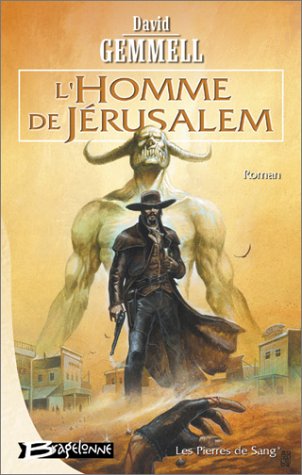
Cross his woman, and he’ll blow your brains out–quoting scripture while he does it.

The best example of this that I can think of comes from David Gemmell’s The Jerusalem Man.  No one–and I mean no one–writes manlier heroes than David Gemmell.  And among his characters, Jon Shannow ranks as one of the manliest.

In The Jerusalem Man, Jon Shannow is a lone gunman roving the post-apocalyptic wastelands of Earth on a spiritual quest for the city of Jerusalem.  Near the beginning of the book, he comes across a frontier woman under attack from bandits.  He stops to defend her homestead, and she shows her gratitude by inviting him into her bed.

Jon Shannow is a middle aged man, but because of the post-apocalyptic setting, this is his first sexual experience, and it moves him to tears.  For me, that was one of the most poignant moments of the book.  It didn’t take away anything from his masculinity throughout the rest of the story–indeed, it added significantly to it when the woman got kidnapped and he determined to rescue her.

I’m sure there are other examples that you can think of.  Certainly in real life, this notion that men should never show their feelings is both harmful and outdated.  To say that in fiction, no characters should ever cry–female characters as well as male characters–that’s just so wrong it’s infuriating.  If crying is so taboo that it’s even forbidden in the pages of a book, then something is wrong with the culture, not the story.

In 2008, I attended a fascinating panel at LTUE in which Tracy Hickman and a number of romance and fantasy writers discussed how to write romance in science fiction and fantasy.  Tracy explained that in all the novels he writes with Margaret Weis, she does the fight scenes and he does the romantic ones.

He then went on to talk about how there’s a whole side of life that our culture has shut men off from–a feminine side which is present in all of us, men as well as women.  The way he explained it, romance is not just the “kissy bits,” but a vital and enriching way to see the world–a paradigm that infuses everything with feeling and passion.
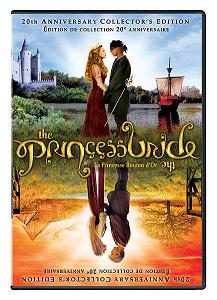
It makes me think of The Princess Bride, where even the action scenes with Inigo Montoya have a certain romantic flair to them.  In the old days, the term “romance” described not only love stories, but action & adventure stories as well.  In modern times, we seem to have forgotten all the old qualities like honor, love, sacrifice, loyalty, heroism, and compassion–even though they still make for the best stories.

Of course, our characters need to have courage.  But courage is not the absence of fear–it’s pressing on in spite of it.  And crying is not always a sign of weakness–it can actually be a sign of great emotional strength.  And if it’s true that the best literature helps us to see our world in a new light, giving us a greater understanding and appreciation for the human condition, how is it “courage” for anyone to hide their true feelings?

So do the characters in my stories cry?  Hell, yeah!  I don’t have them hide their feelings just because some readers might look askance.  Some of them cry more than others, and many of them don’t hardly cry at all, but those who do cry do so because the story demands it.

Even though I write science fiction, I do my best to infuse my stories with romance–not just the “kissy bits,” but that depth of feeling and passion for life that made me fall in love with books and reading in the first place.  Star Wanderers is a great example of that, and so is Desert Stars.

And yes, in case you’re wondering, I’ve read a lot of “girlie books.” They’re some of my all-time favorites.
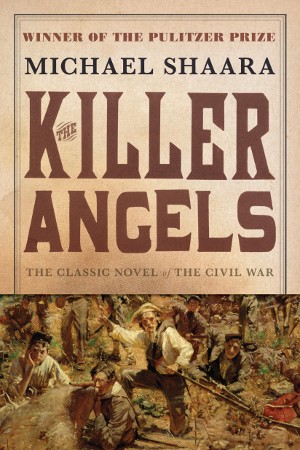
The Killer Angels by Michael Shaara

June, 1863.  In a bid to destroy the Army of the Potomac, Robert E. Lee invades Pennsylvania with an army of 70,000 men.  Using the mountains to screen his movements, he advances toward Harrisburg, fully expecting to secure a victory that will end the American Civil War.

But two weeks into the campaign, Stuart’s cavalry still hasn’t reported back, leaving the Confederate army blind.  Deep in enemy territory, with reports of the Union advance beginning to trickle in, Lee moves his forces to converge on a small town named Gettysburg.

In the titanic clash that follows, friend will fight against brother, generals will knowingly send thousands of men to their deaths, and the fate of the United States of America will lie in the hands of farmers and mountain men, immigrants, West Point classmates, and a New England professor.

This book is awesome.  Epic, in the best and truest sense of the word.  I’m not a civil war buff, but it reduced me to tears.  The scope is tremendous, and yet at the same time the characters feel like real people.

For some, like Chamberlain, the war is about slavery and equality–something that disturbs him when he comes across a black man for the first time.  For others, it’s about states’ rights and self-government.  But for most everybody else–including Robert E. Lee–it’s about a myriad of other things, like honor, duty to country, boredom, a desire to prove one’s manhood, and a hunger to be part of something greater.

What’s remarkable is how so many good people, who more often than not respect the opposing side and hold them in the highest regard, end up getting swept into such a horrific and bloody battle.  No one, especially the generals, have the power to prevent any of it–all they can do is leave it in the hands of God.  And the tragedy of it all is summed up so perfectly in the film rendition of this book, when General Armistead reaches the high-water mark of the Confederacy and falls, only to hear that his friend and classmate on the Union side, General Hancock, has fallen too (skip to 23:15):

“Not both of us!  Not all of us!  Please, God!”

I’ve been to Gettysburg several times, and stood on the ground where the most critical parts of the battle were decided.  And yet, I feel that living as an expat on  the other side of the world has given me a much greater appreciation of my country’s history.  Perhaps that’s one of the reasons why this book was so moving to me at this time.

Here are some of my favorite quotes:

He was a man to depend  on, and there was this truth about war: it taught you the men you could depend on.

According to the now retired General Schwarzkopf, The Killer Angels is “the best and most realistic novel about war that I have ever read.” You really get a sense of what it’s like to be in command–what it’s like to depend on the actions of your men, and what goes through your mind as you lead them.  The only other novel I’ve read that comes close to capturing that is Ender’s Game.

If the war goes on–and it will, it will–what else can we do but go on?  It is the same question forever, what else can we do?  If they fight, we will fight with them.  And does it matter after all who wins?  Was that ever really the question?  Will God ask that question, in the end?”

Robert E. Lee’s words after the Confederate defeat on the third day.  There is, of course, some criticism about how much artistic license Michael Shaara took in portraying the central historical figures.  Regardless, this novel gave me a much greater respect for Lee and his men.  There are no “bad guys” in this book–and therein lies the heart of the tragedy.

In the presence of real tragedy you feel neither pain nor joy nor hatred, only a sense of enormous space and time suspended, the great doors open to black eternity, the rising across the terrible field of that last  enormous, unanswerable question.

Well put.  I’ve never experienced any tragedy on the scale of the American Civil War, but I do know what it’s like to lose family and loved ones, and this captured a bit of that for me.  I can only imagine what it must be like to experience the tragedy of war.

This novel is a classic.  If you have any interest in American history, it is absolutely a must-read.  And even if you don’t, if you enjoy reading stories about war, whether modern, historical, or fantasy, you will almost certainly enjoy this book.

Trope Tuesday: Slap Slap Kiss

There aren't enough scoundrels in your life.

Unless you have an unhealthy aversion to kissing books, you’re probably familiar with Slap Slap Kiss.  It’s common in genre romance, but you’ll often find it in science fiction & fantasy too.  When done well, it’s a great way to make sparks fly, but when done poorly…I think you can fill in the rest.

The basic underlying concept is that love and hate are just two sides of the same coin.  Both involve strong feelings for another person, the kind that drive you crazy and make it hard to think straight.  According to this theory, it’s a lot easier to fall in love with someone you hate than to fall in love with someone you don’t really care about.  And once you fall in love, the rest is easy. <snark!>

Kiss Kiss Slap is the Tsundere’s standard MO.  An effective way to end the will they or won’t they? phase, though the trope is so common that you can spot it almost as soon as the slapping starts (Dinosaur Comics has a good commentary on that).  Sometimes happens in conjunction with Foe Yay, though the couple doesn’t have to start out as sworn enemies.  The kiss itself is usually one of those “lovely trick[s] designed by nature to stop speech when words become superfluous.” When set up properly, is often accompanied by a Love Epiphany.

Of course, it’s possible to go too far.  There’s a fine line between “all’s fair” and kicking the dog, and if you cross it…good luck.  Alternately, if the slapping doesn’t cross the line, but the kiss doesn’t live up to expectations, it’s also going to fall flat.  And if the main reason you invoke this trope is because the plot demands it…let’s just say, you’re doing it wrong.

In general, I think it’s important to keep the following in mind:

  • The attraction needs to be properly foreshadowed.  If the characters start slapping each other without even a hint of sexual tension first, no amount of backpedaling is going to make up for it.
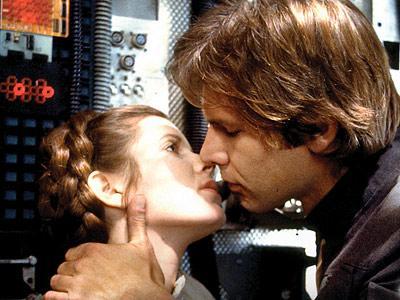
  • Neither of the characters should tear each other down.  There’s a big difference between a slap and a punch (and a roundhouse kick, for that matter).  Even though the characters may abuse each other, they have to have at least some mutual respect.  After all, Han still called Leia “your highness,” and Leia still complimented Han on his “bucket of bolts” (albeit sarcastically).  Once the respect is gone, so is any hint of romance.
  • The kiss needs to be proportional to the slap.  Lots of slap with an innocent little peck is going to feel anticlimactic, while a tap on the chin with a giant make out moment immediately afterward is going to feel melodramatic.  The two need to be balanced in order for the trope to work.
  • The couple should have at least something in common. “Opposites attract” is often just an excuse for shoddy character development.  In real life, if the two people don’t have at least something in common, value-wise and personality-wise, the romance is pretty much doomed to fail.  As always, however, Your Mileage May Vary.

Finally, even though there are a lot of reasons to hate this trope, there’s a reason we keep coming back to it.  What that reason is exactly, I can’t say, but I know it when I see it.  After all, you really shouldn’t over analyze some things.  Like this video:

I think my work here is done.  What sayest thou?

Trope Tuesday: Freudian Trio

Last week, I blogged about the Three Faces of Eve trope.  But if we’re going to discuss power trios in any depth, we first need to examine the classic Freudian Trio, one of the most prevalent combos and, in some ways, a precursor to all others.

As you might expect, the Freudian Trio borrows heavily from Sigmund Freud, specifically, his theory of the Id, the Ego, and the Superego.   The main idea is that the human mind is divided into three parts: the Id, which comprises our basest animal instincts; the Superego, which comprises our concepts of morality and social norms; and the Ego, which struggles to find a balance between the two.

In the Freudian Trio, these elements of the psyche are represented by:

Each of these character archetypes are fascinating in their own right, and deserve to be examined in much greater depth.  However, in the Freudian Trio, it’s the combination of the three that proves so fascinating.

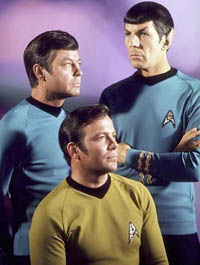
When faced with an interesting moral dilemma, the McCoy often wants to screw the rules and run in with guns blazing, while the Spock advocates caution, reminding us of the prime directive.  Or maybe the McCoy is paralyzed by indecision, while the Spock is the only one cold enough to make the sadistic choice.  In either case, the way the Kirk manages to resolve it will almost always reveal something deeper about the world or human nature.

The thing that’s truly amazing is how prevalent this trope is in fiction.  To name a few:

  • Star Trek: McCoy (Id), Spock (Superego), and Kirk (Ego).
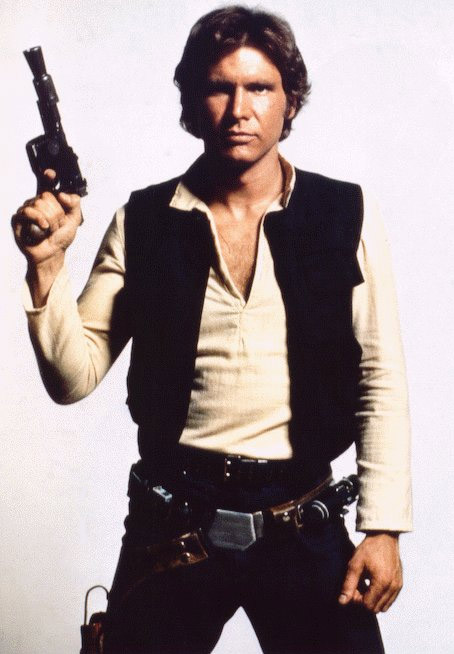
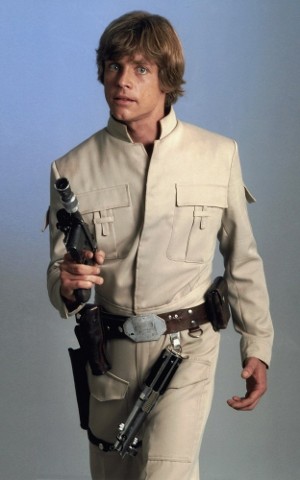
  • Star Wars: Han (Id), Leia (Superego), and Luke (Ego), also:
  • Star Wars: Emperor Palpatine (Id), Grand Moff Tarkin (Superego), and Darth Vader (Ego).
  • Ender’s Game: Peter (Id), Valentine (Superego), and Ender (Ego).
  • Lord of the Rings: Gollum (Id), Sam (Superego), and Frodo (Ego), also:
  • Lord of the Rings: Gimli (Id), Legolas (Superego), and Agagorn (Ego), also:
  • Lord of the Rings: Dwarves (Id), Elves (Superego), and Humans (Ego).
  • Arthurian Legend: Sir Gawain (Id), Sir Lancelot (Superego), and King Arthur (Ego) (I would argue that Guinevere fits the Id role better, but I’m not an expert).
  • The Dark Knight: The Joker (Id), Harvey Dent (Superego), and Batman (Ego).
  • The Matrix: Neo (Id), Trinity (Superego), and Morpheus (Ego).
  • Shaun of the Dead: Ed (Id), Liz (Superego), and Shaun (Ego).
  • Fullmetal Alchemist: Edward (Id), Alphonse (Superego), and Winry (Ego).
  • The Melancholy of Haruhi Suzumiya: Haruhi (Id), Yuki (Superego), and Kyon (Ego).
  • Final Fantasy VI: Kefka (Id), Leo (Superego), and Emperor Gestahl (Ego).
  • Final Fantasy VII: Barrett (Id), Cloud (Superego), and Tifa (Ego).
  • Myst: Achenar (Id), Sirrus (Superego), and Atrus (Ego).
  • Starcraft: Zerg (Id), Protoss (Superego), and Humans (Ego).
  • Homestar Runner: Strong Mad (Id), Strong Sad (Superego), and Strong Sad (Ego).
  • The Good, the Bad, and the Ugly: Tuco (Id), Angel Eyes (Superego), and Blondie (Ego).
  • 20,000 Leagues Under the Sea: Ned (Id), Conseil (Superego), and Aronnax (Ego).
  • Twilight: Jacob (Id), Edward (Superego), and Bella (Ego).
  • Archie Comics: Veronica (Id), Betty (Superego), and Archie (Ego).

The Betty and Veronica one is particularly interesting because it’s also a love triangle.  In fact, most love triangles feature some kind of play on the Freudian Trio: the good girl vs. the bad girl, the nice guy vs. the jerk, the girl next door vs. forbidden love, prince charming vs. the loveable rogue.

Sometimes, the villains come from a dysfunctional or broken Freudian Trio, where one of the three died, was kicked out, or was never part of the combo in the first place.  When this happens, it’s called (aptly enough) a Evil Duo.  Examples include Pinkie and the Brain, Lex Luthor and the Joker, and Kefka and Gestahl (though that particular duo was very, very, VERY short lived).

Finally, it’s worth pointing out that the Freudian Trio is so common, it even occurs in real life.  Perhaps the best example of this would be World War II, where Churchill was the Id, Stalin was the Superego, and Roosevelt was the Ego.  With quotes like “never, never, never, never give up,” Churchill practically embodied the McCoy (his drinking penchant also helped), while Stalin, with his fanatic adherence to communism and his “million is a statistic” approach to the revolution, was as cold and calculating as you can get.  FDR was the one who held the alliance together, and it was only after his death that the Cold War really broke out.

Of course, it’s possible that we only see this trope everywhere because our brains are programmed to see it.  But if that’s true, it makes for an even stronger argument that the Freudian Trio plays on some powerful, universal archetypes.

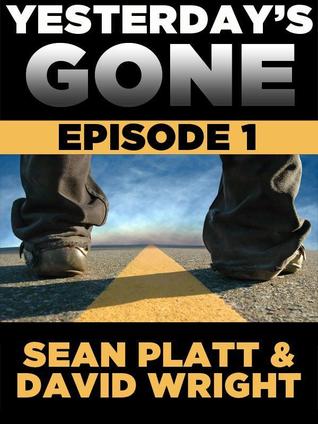
Yesterday’s Gone: Episode One by Sean Platt & David Wright

Imagine you wake up tomorrow, and find out that everyone around you has vanished.  Well…not everyone.  But the ones who are still around claim to see strange things that you can’t see.  And then, you get an eerie feeling of a presence…something dangerous, something coming at you right now.  And then, things get really weird…

Yesterday’s Gone is a post-apocalyptic serial thriller: basically,  a novel divided into six parts or “episodes,” the first of which is free.  Since I’m interested in doing something similar with my next project, I decided to check it out.

From the very start, I was hooked.  The conflict was intriguing, the pace was fast and gripping, and the characters were interesting, with reactions that were spot on.  I wasn’t intending to finish the whole thing in one sitting, but once I’d started, there was no way I could put it down.

A couple of things jolted me out of the story, though.  The first was the sheer immensity of the cast of characters.  Literally, the first half of the episode was just introducing new ones, and none of them got more than two viewpoint scenes in the whole ebook.  I was on board for the first three or four of them, but around number six or seven, I just wanted to skip them and get back to the first guy.

Two of the later characters were just painful to read–not only did I not care about them, I vehemently hated who they were and wanted them to die or get out of the way so I didn’t have to read their viewpoints anymore.  The first was an eight year-old boy who had some mystical connection with animals…I just couldn’t sympathize with him at all.  The other one was a serial rapist and/or murderer who saw the apocalypse as just an opportunity to run around raping and killing the other survivors.  I skipped his scenes, but then had to go back because there were some clues hidden there and I didn’t want to miss them…ugh.

The other thing that really bothered me was the very last scene in the episode, where the authors made the mistake of showing the monster.  I won’t spoil it for you, but the image on the page clashed so strongly with the image in my mind, it deflated almost all the tension for me.  What was supposed to be a cliffhanger instead turned out to be a big “huh?”

Your mileage may vary, however, so if you’re into post-apocalyptic fiction, I think it’s definitely worth checking out.  Just like the happy pills in the empty lot behind the school, the first one is free: you can pick it up on Amazon or Smashwords.  And in spite of its problems, there was a lot in this story that I really liked.  Maybe you’ll enjoy it more than I did.

In terms of the serial format, I think it worked very well, except for those two problems: too many characters to keep track of, and an ending that booted me out of the story.  Otherwise, I think it’s a great way to publish, and I’ll probably experiment with something similar in the future.

Trope Tuesday: The Three Faces of Eve

Why do so many character combinations come in groups of three?  Unlike love triangles, where the combo is primarily a way to build conflict, the characters in power trios all build on each other in some way.  They might be foils for each other, but as complementary archetypes, they do far more to drive the story together than they ever would apart.

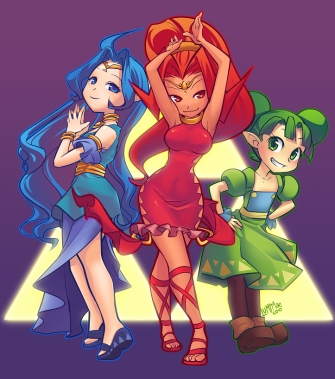
One of the most interesting all-female power trios is the Three Faces of Eve, which combines the archetypes of child, seductress, and wife:

The “child” (who does not have to be a child literally) will be seen as innocent, perhaps to the point of naïveté. The wife, the wiser, calmer aspect, someone around whom one could build a home life. The third, the seductress, is sexually experienced and independent.

Roughly speaking, the characters in the trio correspond to:

  • The Ingenue: A naive, innocent, childlike girl who is just setting out into the world.  In a Freudian Trio, this would be the Ego.
  • The Femme Fatale: A seductive, alluring, mysterious woman who is experienced in the ways of the world.  Unlike the Vamp, she may or may not use her feminine wiles for evil.  In a Freudian Trio, this would be the Id.
  • The Yamato Nadeshiko: A calm, steady, faithful wife, who provides the kind of marital stability and maternal strength that is ideal for settling down and raising a family.  In a Freudian Trio, this would be the Superego.

You’d be surprised to see how often this trope shows up, even in works of science fiction.  In Star Wars, Leia was the child in A New Hope, the wife/mother in Empire Strikes Back, and (what else?) the seductress in Return of the Jedi.  Just about every Star Trek series featured some alignment of these archetypes.

Squaresoft played with this trope a lot in their Final Fantasy series, which may be illustrative to examine in greater depth.  I’ve only played through FF IV, VI, VII, and Chrono Trigger, but each  of these titles features some interesting variations (warning: spoilers!).

Final Fantasy IV: Porom (child), Rydia (seductress), Rosa (wife).

Porom is pretty solidly the child, though Rydia starts out as this and later grows up into the seductress role.  She doesn’t get the guy in the end, though: that would be Rosa, who pretty much starts out with him as well.

In terms of story, the characters don’t really seem to build much on each other, though in terms of gameplay you definitely want to have Rydia and Rosa/Porom in your party (though not Rosa and Porom together–you only need one white mage, after all).

Final Fantasy VI: Relm (child) , Celes (seductress), Terra (wife).

This is my personal favorite in the series.  Unlike IV and VII, which both center around male protagonists, Final Fantasy VI revolves around Terra (world of balance) and Celes (world of ruin) as the central protagonists.  Because they also play a role in the power trio, their characters are quite complex, especially in the second half of the game.  Relm is arguably more of a Mary Sue, but her relation to the other characters, especially Shadow, also makes her role more complex and interesting.

In the end, the romantic subplot is fulfilled by Celes, not Terra, which was something of a surprise to me in my first playthrough.  It works really well, though, because of Celes’s heel face turn and subsequent reformation (in which Locke is arguably a Manic Pixie Dream Girl Spear Counterpart).  Does that also translate into a shift from seductress to wife as well?  I’m not sure, but I’d probably say no–after all, it’s Terra who takes on the mother role in the world of ruin.

Final Fantasy VII: Yuffie (child), Aeris (seductress), Tifa (wife).

The main twist with this one is that visually, you’d think Tifa is the seductress and Aeris is the wife.  In terms of story archetypes, however, it’s just the opposite: Tifa is the one whom Cloud depends on, the one who helps him work through his problems, while Aeris is the shifty, mysterious one.

Unlike IV, where Rosa and Cecil are set up from the very beginning, for a while it actually looks like Aeris and Cloud are going to end up together.  But then, in perhaps the most tragically gut-wrenching moment in all of video game history, Aeris dies (and doesn’t come back).  Since Yuffie is kind of, well, crazy, Tifa and Cloud are pretty much garanteed to get together after that point (and as for Sephiroth…I don’t even want to go there).

Chrono Trigger: Marle (child), Ayla (seductress), Lucca (wife).

Chrono Trigger is interesting because the girl who ends up with the guy in the end (Chrono) is actually the one who fulfills the child archetype, Marle.  It works, though, because of the childlike feel of the story.  Unlike FF VI and IV, Chrono Trigger is not a dark or an edgy tale–it’s heartwarming innocence at its best.  I always did feel that Lucca got the short end of the stick, though–but she did get a cameo in Xenogears, so perhaps the last laugh was hers after all.

Ah, Xenogears. <sigh>

Anyhow, long story short, the Three Faces of Eve power trio is a fascinating way to play with feminine archetypes.  Recently, I’ve become quite interested in it because it showed up quite inadvertently in my current project, Heart of the Nebula.  It’s funny how tropes can sneak up on you like that, especially some of the more archetypal ones.

Anyhow, in its current form the novel is a piece of trash, but now that I’ve recognized the potential to set up this particular power trio, I think I can really make it shine.  If you have any insights, please share–I’m very interested in this trope right now!

Trope Tuesday: True Neutral

The True Neutral is something of an enigma.  They generally take no side, either because they have moved beyond good and evil, or because they simply don’t see good and evil the way we do.  Or because this isn’t their war and they just want to be left alone.  Or…well, let’s get to it.

From the easydamus character alignment page:

A neutral character does what seems to be a good idea. She doesn’t feel strongly one way or the other when it comes to good vs. evil or law vs. chaos. Most neutral characters exhibit a lack of conviction or bias rather than a commitment to neutrality.

Some neutral characters, on the other hand, commit themselves philosophically to neutrality. They see good, evil, law, and chaos as prejudices and dangerous extremes. They advocate the middle way of neutrality as the best, most balanced road in the long run.

As you might expect, this alignment doesn’t describe just one type of character.  In fact, there are many different archetypes that fall under True Neutral.  They include:

That’s quite a spread, isn’t it?  The main thing to keep in mind is that these are the characters who refuse to take sides–not just in whatever overworld conflict is driving the story, but in the ethical questions that the story raises (unless neutrality itself is their answer).

My favorite example of this trope is the Childlike Empress from The Neverending Story.  As the very embodiment of Fantasia, she transcends good and evil so completely that her power, the Auryn, cannot be used to forbid a monster from acting on its own evil nature.  Truth from Fullmetal Alchemist is another good example of a transcendent True Neutral.

With everyday, down-to-earth characters, though, this alignment tends to tick me off.  The Ents, for example, very much fall under this trope (as does Tom Bombadil…unless you subscribe to this theory).  Most others examples either come across as weak, selfish, or cowardly to me, so I don’t really care much for this alignment–unless it’s the starting point of a well-constructed character arc.

For that reason, in my own work, most True Neutrals are either straight-up antagonists or gradually shift in alignment as the story progresses.  In Genesis Earth, Michael Anderson starts out as one of the weaker True Neutral types, but changes as events in the story make him grow.  In Desert Stars, Sathi probably falls into this type, though I’m not so sure; either way, he’s very easily manipulated by his Neutral Evil wife.  In Bringing Stella Home, Ilya falls under this alignment due to his moral cowardice, and Anya might as well, though more as a Selfish Good than anything else.  Roman probably does too, but more because he’s old and wants to give up the fight; that’s something I’m currently working on in Stars of Blood and Glory.

I haven’t done a transcendent True Neutral yet, but if I ever write a heroic fantasy tale with gods and demons, I probably will.  After all, if Michael Ende did it in my favorite novel of all time, how can I resist?

Trope Tuesday: Lawful Neutral

Hey, SOMEONE had to bring order to Europa.

Unlike the Lawful Good, the Lawful Neutral has no qualms about committing heinous acts to maintain order.  Whether for country, for position or for the preservation of the English language, these characters believe in law above all else, giving stern chase or sacrificing their own personal feelings to achieve it.

From the easydamus character alignment page:

A lawful neutral character acts as law, tradition, or a personal code directs her. Order and organization are paramount to her. She may believe in personal order and live by a code or standard, or she may believe in order for all and favor a strong, organized government.

Interestingly, while Lawful Neutrals believe in upholding some form of law, it doesn’t always have to be the law.  Characters who follow a strict personal code of honor often fall under this alignment, even if that code of honor runs contrary to the law of the land.  The most extreme example of this is the Übermensch, who transcends the laws of society and becomes a law unto himself (though in a lot of cases, the Übermensch ends up being Lawful Evil).

While it may seem like most Lawful Neutrals would be antagonists, that’s not always the case.  In Fullmetal Alchemist, General Olivier Armstrong may be stern and austere, but she spends most of the story on the side of the good guys.  And in Girl Genius, Klaus might seem like a bad guy at first, but really, he just wants to restore order and defeat the Other.  Both Death and Lord Vetinari in the Discworld series are also Lawful Neutrals, but they’re never on the bad guys’ side or the good guys’ side…they’re neutral.

In my own work, the best example of this would probably be the Patrician from Heart of the Nebula. I haven’t published this one yet, but I hope to have it out later this year.  Abaqa from Stars of Blood and Glory is another good example, the son of Qasar and Sholpan.  But in the works I’ve already published, Ben from Bringing Stella Home is probably the most prominent Lawful Neutral.

Trope Tuesday: Chaotic Neutral

Look, I ain't in this for your revolution, and I'm not in it for you, Princess. I expect to be well paid--I'm in it for the money.

If you’ve ever read a space adventure with smugglers and pirates, or a sword & sorcery with rogue thieves and master-less swordsmen, or a western with gritty outlaws and mountain men, you know this character alignment.  If you’re a fan of any of these genres, chances are you love him, too.

The Chaotic Neutral‘s one consistent rule is to always look out for #1.  Beyond that, he’s a free spirit who believes in individuality and resists anyone or anything that tries to control him.  Rebellious spirits and lovable rogues tend to fall into this alignment, but so do tricksters and wild cards.  Their resistance to any form of personal restriction makes them unreliable allies, despite what Jack Sparrow says.

From the easydamus alignment page:

A chaotic neutral character follows his whims. He is an individualist first and last. He values his own liberty but doesn’t strive to protect others’ freedom. He avoids authority, resents restrictions, and challenges traditions.

A lot of characters start out as this but tend to shift as the story progresses.  Han Solo, for example, shifts from Chaotic Neutral to Chaotic Good as he becomes more and more involved with the Rebellion.  The Jägers from Girl Genius are Chaotic Neutral until they have a Heterodyne to lead them.  But in other stories, such as Pirates of the Caribbean and Schlock Mercenary, the Chaotic Neutral serves as an anchor.

My favorite Chaotic Neutral is probably Waylander from David Gemmell’s Drenai series.  The Jerusalem Man is another good one–in fact, just about every one of his books has a Chaotic Neutral that I love.  Haruhi Suzumiya is an excellent example of a female Chaotic Neutral–in fact, she’s probably the queen of this particular character alignment.

In my own work, the best example of a Chaotic Neutral would probably be Tamu from Bringing Stella Home / Sholpan.  Even though she’s technically a slave, she doesn’t really mind it because she has everything she wants and doesn’t have to be beholden to anybody (not even Qasar, really, since she’s his favorite).  Amina from Desert Stars is also Chaotic Neutral, in contrast with Surayya, who is more of a Lawful Neutral, though sometimes it’s hard to tell.  And in Genesis Earth, Terra is definitely a Chaotic Neutral at the beginning, though she shifts a little somewhere around the middle.

I’m hesitant to admit this, but when I took the character alignment test for myself, I tested out as a Chaotic Neutral.  As to what that means, exactly…I’m not going to say. o.0

Trope Tuesday: Neutral Good

Arguably the best of the good-aligned characters, the Neutral Good can always be counted on to do the right thing, whether that means working within the system or rebelling against it.  Whether young or old, soft or shrewd, nice or not so nice, these are the guys (and girls) most likely to save the world and defeat the enemy with love.

From the easydamus character alignment page:

A neutral good character does the best that a good person can do. He is devoted to helping others. He works with kings and magistrates but does not feel beholden to them.

The Neutral Good is not devoid of weaknesses, of course.  Although they are devoted to good, their lack of commitment to law means that they are not always willing to enforce it.  Also, for those who just want to get things done, this alignment can be somewhat limiting, in the way that a commitment to any higher ideal usually is.

Interestingly, this is a very common alignment for heroes in space opera stories.  Case in point, Luke Skywalker: even though he’s young and reckless, he’s not above learning the ways of the force and joining the Jedi order.  Miles Vorkosigan from Lois McMaster Bujold’s Vorkosigan series also falls squarely into the Neutral Good camp.  Moving on to manga and webcomics, Alphonse and Winry from Fullmetal Alchemist both fall under this alignment, giving balance to Edward’s more chaotic outbursts.  Agatha from Girl Genius is also a Neutral Good…at least, when there aren’t any wrenches nearby.

There are quite a few characters with this alignment in my own work.  Even though she’s a mercenary captain, Danica from Bringing Stella Home falls squarely into this alignment; she’s got a tough outer shell, but she’ll do anything for her men, even…well, I don’t want to ruin Stars of Blood and Glory. 😉 Also from Bringing Stella Home / Sholpan, Stella is solidly Neutral Good, which is part of why the ending is so deliciously twisted.  In Star Wanderers, Jeremiah falls into this alignment mostly through default, which is good for Noemi because the circumstances of the novel put her totally at his mercy.  And in Desert Stars, this is probably Mira’s alignment, though she’s easily manipulated by her Neutral Evil mother.

What can I say?  I’ve got a soft spot for Neutral Goods.  Considering how well this kind of a hero fits in to a classic space adventure, it shouldn’t come as any surprise.