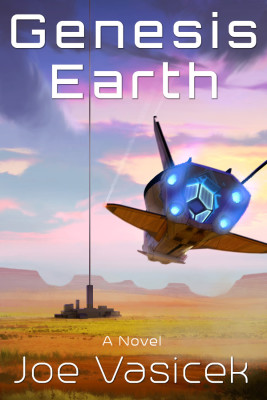
GENESIS EARTH Goodreads giveaway!

I’m getting ready to fly to Texas for the weekend, so before I forget, there’s a Goodreads giveaway running right now for Genesis Earth. If you would like a chance to win a print copy, be sure to enter in the next few days! The giveaway ends April 25th.

Thanks for reading!

Goodreads Book Giveaway

Genesis Earth by Joe Vasicek

Genesis Earth

by Joe Vasicek

Giveaway ends April 25, 2016.

See the giveaway details
at Goodreads.

Enter Giveaway

The timelessness of novels

Every few months, an article about the “death of the novel” makes the rounds on the internet. This subject, the impending doom of one of literature’s most enduring forms, is a perennial favorite for bookish handwringers everywhere. If it isn’t ebooks that’s going to kill the novel, it’s millennials, the internet, our dwindling attention spans, or one of a hundred other things.

As a professional writer, though, I am awestruck by the timelessness of the novel. Think about it:

From its origin with Don Quixote in 1605, the modern novel has endured through social and political upheaval, global pandemics, the collapse of numerous societies, the most devastating war the world has ever seen, genocide and holocaust on an industrial scale, and rise and fall of half a dozen global empires. The world today would be unrecognizable to a person from Cervantes’ time, yet the novel has endured.

Movies didn’t kill the novel. Television didn’t kill the novel. Video games didn’t kill the novel. On the contrary—numerous franchises from Star Trek to Halo have a thriving line of novel tie-ins. When the ebook revolution was just getting started, people thought that so-called “enhanced novels” would dominate the marketplace. They failed to realize that all of the added audio-visual content was a distraction for most readers. Plain text is not a bug, it’s a feature.

It’s important here to make a distinction between novels and other literary forms, such as novellas and short stories. The other forms have endured as well, but not with anything approaching the popularity of the novel. Short stories are great for exploring an idea, but not so good at immersing the reader into another world. Novellas are great for telling an intimate story about two or three characters, but not nearly as good at conveying scope or intrigue.

There’s something about a novel-length story that captures the imagination in a way that other forms just can’t. Whether it’s the large cast of characters, the intricate world-building, or the interplay of numerous subplots, novels are more immersive, and therefore have the capacity to be much more satisfying. Little wonder, then, that the novel has endured.

I’ve seen this in my own books, too. Over the years, I’ve done relatively little to promote my full-length novels, and yet they still chug along with a steady month-to-month trickle of sales. When I do promote them, such as with this month’s free run of Genesis Earth, the results are astounding. My full-length novels also tend to receive much higher reviews.

In my second year of self-publishing, I got impatient and switched to novellas. While I don’t think that was a mistake, it did not provide the foundation for a lasting career. The Star Wanderers novellas did well for a couple of years, but I don’t think they’re going to endure in their current form.

I love writing novellas, but the books that I’m proudest of are all novels. Where novellas entice, novels satisfy. Where novellas tell an intimate story, novels possess greater depth. As such, I think it’s time for a change.

In the next couple of months, I’m going to prune back my catalog a bit. The Star Wanderers series will still all be up there, but I’m going to remove the individual novellas from sale, keeping the omnibus editions instead. This will pave the way for a sequel novel, Children of the Starry Sea, which I’ve already started work on.

I will probably remove most of my older short stories, and some of the derivative works. I don’t want to clutter my book pages with my earlier practice work, or anything that looks too obviously self-published.

I’m not sure what I’m going to do with Sons of the Starfarers just yet. I’ll definitely finish the series, but I’m not sure whether to do the other two omnibus editions or to just release each individual book in print. I’m toying with the idea of releasing the last four books in rapid succession, to build some momentum for the series, but it would take some time to write them, which means that Patriots in Retreat (Book VI) would be delayed for maybe a year.

I’m definitely going to turn Genesis Earth into a trilogy. No idea when the next book, Edenfall, is going to come out, but I’m going to do as thorough a job with that book as I did for Genesis Earth, which means it may take a while.

Novels take a lot longer for me to write than shorter books, but the end result is generally worth it. The trouble is that without a busy release schedule, sales tend to dwindle as you fall out of readers’ minds. I’ll try to make up for that by upping my marketing game and running more free and group promotions. In the meantime, anything you guys can do to spread the word would help!

I’ve got a couple of really awesome projects that should be coming out before the end of the year: The Sword Keeper, Gunslinger to the Stars, and a bunch of other stuff that’s really going to branch out my catalog. I’ve also got a couple of short stories that should be appearing in some new markets soon. Be sure to keep an eye out, and let me know what you think!

Thoughts on series and perma-free

For the last five years, the conventional wisdom among most indie writers has been to write short books in sequential series and make the first book permanently free. It’s a strategy that works, to a certain extent. It’s what got me from making pizza money on my book sales to making a humble living at this gig. However, I’m starting to question that wisdom.

I have two books available for free this month: Genesis Earth and Star Wanderers: Outworlder (Part I). Genesis Earth was my first indie published novel, a “standalone with series potential” (specifically, a trilogy) written according to the conventional wisdom for breaking into traditional publishing. Outworlder is a very different book: the first in an eight-book novella series, strong enough to stand alone but short enough to leave the reader wanting more. And for several years, it was perma-free.

Outworlder was the first of my books to make it big. It’s gotten tens of thousands of free downloads and driven thousands of sales (I don’t have the exact numbers because I haven’t yet collated all of my sales reports from the past five years, but that’s something I plan to do). It was largely on the success of Outworlder and the Star Wanderers series that I built my early career.

But over time, downloads of Outworlder slowed to a bare trickle, and sales did as well. I could give it a short-term boost by running a few strategically placed ads, but it would always fall back down to a baseline that was simply unacceptable.

Also, when you have a book that’s permanently free, it tends to accumulate a lot of negative reviews. It’s strange, but some people seem to feel more entitled to XYZ when they get it for free, as opposed to paying for it. Or maybe these are the people who try to go through life without actually paying for anything? Who hoard everything, even the stuff that they hate, so long as they can get it for free? I don’t know.

Certainly, that’s not true of everyone who reads free books. But when you have a perma-free book, it tends to accumulate more of the barely-coherent “dis buk sux” kinds of reviews from people who probably weren’t in the target audience to begin with. And over time, that tends to weigh the book’s overall rating down, which unfortunately can be a turn-off for people who are in the book’s audience.

Contrast that with Genesis Earth. I launched it at full price with a blog tour (which I put together myself, among writer friends whom I knew personally and who had readers who would probably enjoy the book). It sold about a hundred copies in the first ninety days, then slowed to a very low trickle—maybe one or two sales each month, if that. Things continued like this for several years.

Then, back in December, I made it free for one month. Downloads immediately shot up, and continued strong throughout the entire month. Even without any advertising, I was still getting maybe 50 downloads per day on Amazon, plus a constant trickle on the other platforms. For the next couple of months, sales of all my other books grew as well

For April, I decided to make it free again, just to see if I could duplicate that kind of success. I haven’t done any paid advertising for it, but I have submitted it to various sites and newsletters that will promote free books. The result? Thousands of downloads, with a baseline rate of more than a hundred downloads per day.

Genesis Earth has never been perma-free, but every time I set it free for a limited time, it’s like I’ve released the pent-up flood waters. In contrast, Outworlder struggles to get any downloads at all, even when it’s free for only a limited time.

Part of this may have to do with the reviews. Genesis Earth has a much better overall book rating, simply because most of the people who read it over the years were the ones willing to pay full price. This also means that the book has grown into its own niche organically, since the people who have bought Genesis Earth also tend to buy other books similar to it. Retailers like Amazon take note of this, and tend to associate these books with each other in things like also-bought recommendations.

This is all just speculation, but when all of this comes together, it seems to result not only in a higher download rate when the book is free, but more downloads from people who are in the book’s targeted audience.

The mos fascinating result of this is that when the book goes back to full price, sales get a small but long-lasting boost. I’ve seen this with Bringing Stella Home, which was free in March. It’s not a huge boost—maybe only five or six books a month—but it boosts all of the other books in the series as well, and lasts for a couple of months. It’s not just Amazon where this is happening, either—in fact, it may be boosting sales on the non-Amazon platforms even more.

Bringing Stella Home is different, though, because it’s a full-length novel (about 110k words, or +300 pages) in a series that can be read out of order just fine. In other words, more of the “stand-alone with series potential” that was the convential wisdom in the old tradpub world. Like Genesis Earth, it has never been perma-free.

So what’s the takeaway?

That maybe the convential wisdom among indies is all wrong. That perma-free actually taints books and makes it harder for them to stick in the rankings, or to grow into their natural audience. That longer stand-alone books with recurring characters set in the same universe may be better for gaining long-term traction than shorter, more episodic books. Also, that the more books you give away for free—not just first in series—the better that all of your books will sell.

My experience is purely anecdotal, and there’s a lot more analysis I need to do before I can say anything for sure. From what I can tell, though, it seems that the best strategy is to write longer, fuller books that satisfy more than they entice, and to use free as a marketing strategy for only a limited time.

In other words, the collective wisdom of KBoards is completely off the mark, and Kris Rusch (who regularly gets vilified on KBoards) actually knows what she’s talking about most of the time.

Like I said, this is all anecdotal and more analysis is required. But I’m very curious now to make some of my non- first-in-series books free for a month, just to see if it has a similar boost. With Bringing Stella Home, for example, a lot of readers seem to be jumping over books 2 and 3 to read Heart of the Nebula, the direct sequel (but book 4 in the Gaia Nova series order). It would be very interesting to see if Desert Stars has an awesome free run as well, resulting in more sales after it reverts back to full price.

Lots of interesting stuff to consider. It’s definitely going to inform my writing and marketing efforts in the future.

Quick update on writing and the blog

I was really bad about updating this blog last month. My goal was to post something new every Monday and Thursday, but that fell through and I’m not sure why. It’s not like life got super complicated or anything, more like blogging was just the ball that got dropped last month.

No excuses, just getting back on the horse. I’m hoping to build up a buffer of interesting posts before the end of the week, which should make things more consistent around here. I’d also like to put together an old-school blog tour for the release of Captives in Obscurity, just to see how it goes.

In terms of writing, things are coming along well. I’m currently in the middle of the first draft of The Sword Keeper, which I hope to finish before the end of the month. There are a few non-writing things on my plate (selling car, rebuilding computer) that may interrupt my progress, but writing is my top priority and I’m getting it done.


New free books this month, just waiting for Amazon to price match so I can update things and send out the email to my mailing list (by the way, if you haven’t already subscribed to my mailing list, you can do so here). Also, I’m redoing the print edition for Genesis Earth and the first Sons of the Starfarers omnibus. Just got the first proof for Genesis Earth, and the new cover looks pretty freaking fantastic (same art, just tweaked a little).

In terms of the blog, I’ve got another Self-Sufficient Writer post in the works, which may be a bit political (though not directly partisan). It will almost certainly offend the perpetually offended, but more importantly, it should also be pretty interesting. A lot of thoughts have been coalescing in my mind for some time, and this is the result.

Other than that, I plan to do a blog post on my new scooter in the very near future, which is going to be a lot of fun. Also another tvtropes post, and maybe another WIP excerpt.

I also had a crazy idea to put together a promo page kind of like Patty Jansen’s, except with buy links for all of the stores, not just Amazon. It’s going to take a LOT of work to put it together, though, so don’t expect to see that soon. Hell, I haven’t even done the preliminary research yet! Still in the crazy idea phase—but let me know if you think it’s a good idea.

That just about does it for now. Good things are happening, and now that I’m back on the horse, more of that should make it to the blog.

Guest Lecture to Brandon Sanderson’s English 318R class

A couple of weeks ago, I gave a guest lecture to Brandon Sanderson’s English 318R class at Brigham Young University. I was one of Brandon’s students back in 2008, and he wanted me to talk about my experiences as a self-published indie writer. The lecture wasn’t recorded this year, but here is a rough outline from my notes. Enjoy!


How many of you know for sure that you want to write fiction professionally? (about half) How many of you know enjoy writing as a hobby, but know that you don’t want to do it professionally? (a handful) How many of you aren’t yet sure? (the vast majority)

Eight years ago, I was where you are today: sitting in Brandon Sanderson’s class, wondering if I should turn pursue this writing thing as a career. Back then, self-publishing was the kiss of death. If you self-published any of your books, you would never be taken seriously by anyone in the publishing world again. They would treat you like the kid who ate the paste in kindergarten.

You see, back then there was a very strict and well-defined path to get published. First, you wrote query letters to agents. You did not write them to editors, because none of them accepted unsolicited submissions, and submitting to them directly was bad form. You had to personalize your query letter for the agent you were submitting it to. You had to spend almost as much time revising and reworking your query letter as you did on your manuscript.

If you were lucky enough to get picked up by an agent, they would (hopefully) get you a publisher. If you were lucky enough to get a publisher, they would (hopefully) get you into bookstores. And if your books got into bookstores, you would (hopefully) get readers. Get enough readers, and you’d be swimming in caviar, having dinner parties with Castle as a bestselling author. That was the dream.

After taking Brandon’s class, I decided to pursue writing as a full-time career. I graduated in 2010 and immediately faced a dilemma. The Great Recession made it virtually impossible to find a day job, so I had to figure out how to make the writing thing work. Writing was my plan A, and there was no plan B.

Brandon Sanderson had taught us to attend the major conventions, where we could rub shoulders with the bigwigs in publishing and maybe score a book deal through networking connections. But when I attended World Fantasy in 2010, I noticed a couple of things that were disconcerting. First, there were a lot of other aspiring authors trying to rub shoulders, many of whom were more aggressive about it than I was. Second, none of the major publishers seemed to want the stuff that I was writing (far future space opera and military SF).

Brandon’s advice, I realized, basically amounted to “if you want to get struck by lightning, wave a metal pole from the rooftop while standing in a bucket and shouting at the wind.” Which is good advice if there’s a thunderstorm. But it’s not so good on a clear and sunny day, and since none of the major publishers seemed to want the kind of science fiction I was writing, I realized I would have to find another way.

I kept trudging along, writing more books and querying agents (most of whom never responded). Then I submitted my novel Genesis Earth to the Amazon Breakthrough Novel Award contest. To my surprise, it passed the first two rounds of voting and became a quarter-finalist. It looked like this could be my lucky ticket into the world of publishing.

Around this same time, Amanda Hocking became one of the first self-published writers to sell more than a million books on Amazon. When she did that, it made me sit up and take notice. Here was a twenty-something aspiring writer just like me, who had decided to eat the paste and do the thing that you were never supposed to do. Instead of failing at it, though, she made it big. What was going on here?

I began to re-examine the traditional path to publishing that before had seemed so sure. I started following Dean Wesley Smith and Kristine Katherine Rusch, Joe Konrath, David Gaughran, The Passive Voice, and a bunch of others who were breaking out of the mold. I questioned the established wisdom, and started to find all sorts of inconsistencies in what I had always believed.

For example, why has the slushpile been outsourced to agents if they aren’t getting paid for it? Is an agent really going to go up to bat for you if you only represent an income stream of a couple hundred dollars for them? Why should publishers take 75% of net for the lifetime of the book for something that you can do on your PC in a couple of hours with open-source software?

In the Writer > Agent > Publisher > Bookstore > Reader value chain, there are really only two people that matter: writers and readers. Everyone else is a middleman. In the traditional publishing model, however, the bookstore takes half, the publisher takes most of the rest, and the agent takes a 15% cut of whatever you make. Most books never earn out their advance, and most book advances for SF&F are $5,000 or less!

As I was sorting through all of this, I heard back from the Amazon Breakthrough Novel Award contest. Genesis Earth had not made it past the quarterfinal stage. The review from Publisher’s Weekly read like someone had handed the manuscript off to an unpaid intern and said “here’s one of the books that didn’t make it past the quarterfinals, write a half-assed review that makes us look good so we can fulfill our contractual obligations to the contest.” It was clear from the review that the person at PW didn’t even read science fiction.

It was at that point that I realized I didn’t want to win the publishing lottery or be struck by publisher lightning. I wanted to build a career.

Now that I’m self-published, am I swimming in caviar or having dinner parties with Castle? Hardly—or at least, not yet. There’s nothing about self-publishing that makes it easier or less work than the traditional publishing path. But it does give you a lot more control, and a lot more ownership over your successes and failures.

My first year of self-publishing, I put a lot of money into my first couple of novels and published them to a resounding chorus of crickets. In my second and third year I wised up a bit, wrote a series of short novellas, published them on a shoestring budget, and made the first one permanently free. Sales began to rise, and I went from making pizza money to learning just how much it sucks to pay self-employment taxes.

Ever since then, I have been running a profitable business. Of course, it’s had its ups and downs, but even in the bad months, it’s made more money than it’s cost.

In fact, my second and third years were successful enough that in 2014, I made enough to support myself on my writing income alone. It was then that I learned one of my most important lessons: that you always need to have an impossible dream to strive for. Up until that point, my impossible dream was to make a living telling stories that I love. When I found I had achieved that, I lost direction and went into a writing slump that lasted the better part of a year.

One of the other important lessons I learned was not to underestimate the importance of marketing. When Amazon rolled out their Kindle Unlimited program, my sales took a major hit because Amazon’s algorithms started prioritizing KU books over non-KU books. Until that point, I’d been relying almost totally on Amazon to market my books for me, which was a major mistake.

My biggest mistake, though, was to underprice my books, which I did for the better part of 2015. In order to push sales of my other series, I dropped the prices of all my Star Wanderers novellas to $.99. It backfired spectacularly. I did glean a lot of data from it, however, and learned that the best price points for my own books was between $2.99 and $3.99. The $.99 price point did not see enough of an increase in sales to offset the lower royalty, or lead to any noticeable increase in my other books. However, the $3.99 price point did see increased sales and revenue compared to $4.99 and $5.99.

As you can probably tell, self-publishing is the sort of thing you learn how to do as you’re doing it. There is no clear path, no one true way to success. But I’ve learned a lot over the past few years, and I’ve seen my sales and readership grow from it. I’m no longer as worried about my future as I was back in 2010, because I know that I can make it work. And if you’re willing to put in the effort and learn from your experiences, you can too.

I sincerely believe that this is the best time in history to be a writer and a reader. There are so many publishing opportunities available to us now that would have been unthinkable just a generation ago, and this has led to an explosion of fantastic new books that would have never gotten published under the old system.

So is it possible to make a living as a self-published writer? Yes! It’s not easy to make your own path, but it’s definitely possible to do it and find success. So set your sights on an impossible dream, and when you’ve achieved it, find another one. When you have nothing to lose and everything to gain, don’t let your fears hold you back.


On the way to 10k

A couple of weeks ago, I wrote about how I plan to achieve my writing goal of hitting 10k words of fiction in a single day. The steps I laid out to getting there were:

  1. Write first thing every day.
  2. Write in timed, focused sessions.
  3. Strive to achieve 2k words per hour.
  4. Strive to hit at least 6 writing sessions.
  5. Pre-write each day for the next day.

I’m happy to report that the writing has been coming along very well! Ever since I started timing my sessions and keeping track of how much and how fast I write, it’s been as if someone turned on a switch inside my brain. The words are flowing, the story is coming along very well, and I’m a lot happier and more productive than I was only a month ago.

The main thing that does it is, ironically, forcing myself to stop every half hour or so. When I wake up in the morning and thing of how much I want to write that day, it can be a little daunting. By writing in short bursts, it helps to break the big goal down into parts. When you think too much about all the writing you want to achieve, it’s very easy to get caught up in the procrastination trap. But when you think of it as just a half-hour session of 400-600 words, it seems a lot more doable. And it is!

So things are coming along very well with Gunslinger to the Stars. My goal is to finish the first draft by February 6th and send it out to my first readers shortly thereafter. If things keep going the way they have been, I may actually finish it sooner.

As for reaching 10k words, I’m still a ways off but headed in the right direction. For now, I’m laying the foundation for it: building good habits and hitting a consistent stride. Once I’ve got that laid out, I’ll start to stretch myself, pushing the limits further and further until I’m ready to make the final approach to the summit. No sense in pushing too hard and burning out along the way.

In other news, I’ve sent Captives in Obscurity (Sons of the Starfarers: Book V) off to my editor, and should be getting it back in early February. The cover art should be ready around the same time. If all goes well, the book should be up for pre-order by the end of February, with a release date of May 15th.

I’m not sure when Patriots in Retreat (Book VI) will come out, since I’m still writing it, but as of right now I’m tentatively planning for a release sometime in August. After I’ve finished with Gunslinger to the Stars, I’ll move on to Patriots and see if I can’t knock that out before the end of February. If so, I might actually push the release date up to July.

As for other WIPs I intend to tackle, The Sword Keeper and Edenfall are on the top of the list. The free month for Genesis Earth went a lot better than I had expected, leading me to believe that there’s enough potential to make finishing the trilogy worthwhile. Besides, Edenfall is already plotted out, so if I can keep up the 10k pace it should be a cinch to write. Same with The Sword Keeper.

That just about does it for this post. I intended to write another Self-Sufficient Writer post responding to some of the craziness going on in the world right now, but that will have to hold off until next week. I’ve also got another trope post planned for Monday, so that should be interesting.

In the meantime, I’ll leave you with this video about how many twinkies it would take to power the Death Star. Take care!

State of the Vasicek 2015

I recently read a post over on Brandon Sanderson’s blog where he did an exhaustive recap on his writing and update on all of his WIPs, and called it State of the Sanderson. Since it’s the end of the year and I’m already looking back in order to make some new resolutions for 2016, it seems like a good opportunity to do something similar myself.

In 2015, I managed to publish five books, including two novels, a novelette, and two short stories:

In addition, I wrote a number of short stories that are currently on submission to the major markets, and will probably be published (by myself or in the magazines) sometime in 2016. These include:

  • Killing Mr. Wilson — Time Travel (950 words)
  • My Name Is For My Friends — Sword & Sorcery (2,000 words)
  • Utahraptors at Dawn — Cyberpunk (1,950 words)
  • Welcome to Condescension — Sci-fi Humor (750 words)
  • A Less Than Perfect Game — Sword & Sorcery (1,250 words)
  • Elusive Eden — LDS Science Fiction (2,200 words)
  • The Janus Anomaly — Space Opera (4,400 words)

All of these stories will get out eventually, though it may take a while. I’m putting them on submission to the short story magazines and anthologies that pay at least semi-professional rates, since none of them buy exclusive rights to the stories. Why rush to self-publish if I can get paid twice?

In a lot of ways, it was a pretty decent year. In other ways, I wish it had been more productive. I didn’t publish anything for the first six months, except for A Hill on Which to Die, which I later unpublished in order to take it out of Kindle Unlimited (the first and probably last time I will ever experiment with exclusivity). I made up for it later, but still.

Next year is going to be a lot more productive, I hope. I started a lot more projects this year than I finished, so in 2016 I plan to refocus on the writing and substantially increase my output.

As for writing projects, here is what I’m working on:

Major Projects

Sons of the Starfarers

There are five more books before this series is complete, and while I know more or less how the series is going to end, I’m still in the process of writing it. However, I’m making good enough progress to publish at least two more books in the series this year, possibly three or four.

Captives in Obscurity (Book V) is already written and ready to send off to the editor. Trouble is, cash is kind of tight right now and I probably won’t be able to send it off until after I’ve filed my taxes, which I hope to do early February (I always try to get a jump on tax season each year). For now, that means I’m looking for a launch in May.

Patriots in Retreat (Book VI) is my current WIP, and I hope to have the first draft finished before the end of January. A lot of stuff happens in this book—it’s kind of like the Empire Strikes Back episode, where crap hits the fan and things get real. Then again, Friends in Command (Book IV) was kind of like that too, and Captives in Obscurity has some really crazy developments… point is, I think you guys are going to like these books.

Haven’t outlined any of the other books in the series yet, but I’m a pantser so that’s normal. I do have a climactic ending that I’m working toward, which will tie in this series with all of my other books in the same universe. It’s going to be great to see it all come together, and I expect it will over the course of the next year!

STATUS: Book VI currently in progress.

Gunslinger to the Stars

I started this book in earnest a few months ago, then hit chapter 2 and realized I had a beginning and an end but no idea what to put in the middle. So I put the project on the back burner, letting the ideas percolate until I’m ready to pick it up again and go full throttle. With luck, that will happen very soon.

This is a really awesome project, and one of the ones I’m most excited about. I’ll post a few excerpts in the next few weeks to give you guys a taste, and I think you’re really going to like it!

STATUS: On the back burner, will resume again soon.

Queen of the Falconstar

A few of the readers who enjoyed my Star Wanderers books have mentioned that they wish Jeremiah, Noemi, and Mariya had ended up in a polygamous relationship. While I don’t think that would have worked for that particular story, in Queen of the Falconstar, it’s a major plot point. In addition, the book is an origin story for the Hameji, which should be a lot of fun for readers of my other books as well.

I’ve been working on this project off and on for the last year or so, and while I have a pretty good handle on the main storyline, I’m still a little iffy about how to proceed. It may have some promise as a hybrid between Space Opera and Sword and Planet (sword and starship? Is that even a thing?). The Princess of Mars books are on my reading list, so I’ll probably revisit this project after reading through some of those.

STATUS: On the back burner.

The Sword Keeper

I really need to finish this book. It’s already more than half written, and has some really fantastic potential. For the last three years, I’ve been working on it off and on, but 2016 will definitely be the year that I finish it (though it might still be a while before it’s published).

STATUS: On the back burner.

Secondary Projects

Starship Lachoneus

In spite of finishing the prologue and publishing it as “Worlds Without Number” under my J.M. Wight pen name, I haven’t yet made a serious attempt to write this book. The main reason is that it’s a passion project that I don’t expect to pay off very well or earn me much prestige. Still, when my career is at a point where I can afford more time for a passion project, I will probably pick it up.

STATUS: On the back burner.

The Genesis Earth Trilogy

Genesis Earth is a standalone book, but I realized soon after finishing it that I could easily turn it into a trilogy. Back in 2011, I even started writing the second book: Edenfall. But one thing led to another, and it got put on hold in favor of Star Wanderers.

The trilogy is still on hold, but if there is enough interest, I could certainly resume work on it. I made Genesis Earth free for the month of December, and it’s had a much stronger free run than I’d anticipated (especially with almost no advertising). Depending on the feedback I get from readers, I’ll finish this project sooner or later.

STATUS: On hold, may resume soon.

Mercenary Savior

This is a prequel to Bringing Stella Home that I’ve had kicking around in my head for the last two years. The interest in Heart of the Nebula has been surprisingly steady, even more than a month after publication. If either of those books starts to break out, then I will definitely pick up this project. Otherwise, I can’t justify making it a priority.

STATUS: On hold.

Empress of the Free Stars

Empress of the Free Stars is a sequel to Stars of Blood and Glory that I started back in 2013 but never got further than the prologue. Again, unless my Gaia Nova books start to break out, I can’t justify prioritizing this over my other WIPs.

STATUS: On hold.

Children of the Starry Sea

This one is a novelized sequel to Star Wanderers, with all of the major characters from that series. I know there’s some interest in this one, but for now I think my time would better be spent launching new series rather than returning to old ones. But in 2016, that may well change.

STATUS: On hold.

Lifewalker

This is a standalone I started back in 2013, and I even got several chapters into it before I put it on the back burner. Haven’t touched it since, so right now it’s really more on hold, but my Dad keeps bugging me to finish it (he read the first chapter and really liked it). So yeah. Someday.

I will say this, though: if the short story that’s derived from this book gets picked up by one of the magazines, I will definitely move it up in the writing queue.

STATUS: On hold.

A Brotherhood of Swords

This book is supposed to be a Sword & Sorcery prequel to The Sword Keeper, but since I already have plans for that book, this one is on hold. I did get a really good short story out of it, though.

STATUS: On hold.

That pretty much does it. This next year is going to be super, super busy, and hopefully productive as well. My goal for 2016 is to get back in the saddle, writing full-time again as soon as I can. There are other resolutions I plan to make as well, but those can wait until Thursday.


Genesis Earth re-release!

Genesis Earth (cover)A lot has changed since I published my first novel, Genesis Earth. I’ve put out a lot of other books, improved the way I formatted them, changed the links and metadata, and made a number of other changes under the proverbial hood. Throughout all this time, the files that I put together for that first novel have remained more or less unchanged.

Well, I’ve been gradually going through my backlist and updating those files, and last week I finally got around to updating Genesis Earth. The actual book content is unchanged, but it has a new cover, new blurb, better formatting, and links to my email list sign-up and other books now.

To celebrate the re-release, I’ve dropped the price down to $2.99 until the end of July. If you’ve read and enjoyed my other books but haven’t gotten to this one yet, now is a great time to pick it up. It’s a standalone novel, though at some point in the future, I’d like to expand it into a trilogy.

Thanks for reading!

CLICK HERE TO BUY GENESIS EARTH

THE ULTIMATE VOYAGE OF DISCOVERY ENDS WHEN YOU LEARN THE TRUTH ABOUT YOURSELF.

Michael Anderson never thought he would set foot on a world like Earth. Born and raised in a science colony on the farthest edge of the solar system, he only studied planets from afar. But when his parents build mankind’s first wormhole and discover a world emitting a mysterious artificial signal, Michael is the only qualified planetologist young enough to travel to the alien star.

He is not alone on this voyage of discovery. Terra, his sole mission partner, is no more an adult than he is. Soon after their arrival, however, she begins acting strangely—as if she’s keeping secrets from him. And her darkest secret is one that Michael already knows.

Twenty light-years from the nearest human being, they must learn to work together if they’re ever going to survive. And what they discover on the alien planet forces them to re-examine their deepest, most unquestioned beliefs about the universe—and about what it means to be human.

Thoughts on Clean Reader

cleanreaderIn case you haven’t heard, there’s a new app in the book world that is stirring up quite a bit of controversy. It’s called Clean Reader and it basically goes through an ebook and filters out the profanity, with settings for “clean,” “cleaner,” and “squeaky clean.” It was designed by the parents of a teenager who expressed dismay at finding profanity in an otherwise clean book.

The response from authors has been vociferous. Chuck Wendig (WARNING: Chuck uses so much profanity, he probably deserves a Clean Reader filter setting of his own) predictably came down hard against it, as well as Joanne Harris, the author of Chocolat. Over on KBoards, there’s an ongoing thread of indie authors slamming it as a denial of artistic expression, as a copyright violation, as malicious censorship—basically, the whole gamut. Interestingly, though, Cory Doctorow came out in defense of it.

Personally, this app reminds me a lot of CleanFlicks, a movie rental place here in Utah that edited out objectionable content such as sex, violence, and profanity. I watched the edited version of Zombieland while I was in college, and while I enjoyed it, it was… short. CleanFlicks did a lot of business, right up until the US Supreme Court shut it down.

While I can see why some writers would hate this app, I actually sympathize more with the readers. Living in Utah, I know a lot of people (some of them in my own family—hi Kate!) who are exactly the kind of people for whom Clean Reader was made. And much like Cory Doctorow, I think that their right to control their own reading experience trumps the writer’s right to freedom of expression.

The act of reading is fundamentally a collaborative experience. Until someone opens a book and reads it, that book is just symbols on a page, or bytes of data on a storage device. Meaning is only generated through the act of reading—in a very real sense, the story is created by the reader just as much as by the writer. As much as we writers like to think of ourselves as free to write whatever we want, without readers, that freedom counts for very little. And that’s exactly the way it should be.

A lot of writers are making fun of Clean Reader on the basis that the very premise is flawed—that filtering out profanity won’t do anything to clean a fundamentally dirty story. But while that’s true of some books, I do think there’s a middle ground where the app can give some value.

For example, my first novel Genesis Earth is a mostly clean science fiction adventure romance with a few tense moments where the characters use a mild level of profanity. As a writer, it didn’t feel right to have my characters say “darn” instead of “damn,” or “crap” instead of “shit.” Sanitizing the book on that level would have kicked most readers right out of the story. But if a reader who is sensitive to that use of language wants to read a filtered version of Genesis Earth, the story is not going to be fundamentally changed by filtering out those words.

Probably the biggest objection to Clean Reader is that it enforces or promotes a censorship regime that many writers find objectionable. Of course, most of the people who make that argument probably have no idea what “censorship” really entails, just like the people who throw out accusations like “socialist,” “sexist,” “racist,” etc. But putting that can of worms aside, is it right for people to use apps like this—say, parents of young children—to control what other people read?

I am a diehard libertarian, but I actually think that beneath a certain age, parents do have a right to censorship. As legal guardians of their children, parents have a right and a responsibility to raise them as they see fit. If you don’t allow parents to censor what their children are exposed to, then you’re basically saying that society as a whole should raise them, or (God forbid!) the government. I think that’s a horrible idea. Children should be raised by the people who are closest to them, and responsible parents/guardians should be free to raise their children as they (and only they) see fit.

So I’m actually rather supportive of the Clean Reader app. I personally wouldn’t use it, either for myself or for my children, but if other readers do then I have no objection to that. Writers should be free to write whatever they want, and readers should be free to read whatever they want, however they want to read it.

I love these trailers

Holy cow, I cannot get enough of this trailer for Civilization: Beyond Earth! It’s like something from a book I would write. There’s the classic Science Fiction story about leaving Earth to colonize the stars, but there’s also a deeply human element to it. And I love the religious element to it, how the colonists take the old religions of Earth with them to the new world. Awesome.

This definitely looks like a game I want to play. I grew up with Civilization 2, perhaps the most classic title in the series, and discovered Sid Meier’s Alpha Centauri in college. In a lot of ways, Alpha Centauri shaped my love for Science Fiction, and gave me many ideas that later influenced my stories. Genesis Earth is, in some very key ways, a response to the vision of humanity’s future presented in SMAC.

While on the subject of awesome trailers, it’s worth pointing out this one for the new Christopher Nolan film, Interstellar:

Again, this looks like a fantastic story–the kind of one that I’d love to tell just as much as I’d love to hear. And with all of our modern problems like climate change, resource depletion, wealth disparity, terrorism, and global war, it strikes frighteningly close to home. Are we as a species on the verge of driving ourselves extinct? What will we do if our home planet can no longer support us? Where could we go, and what could we hope for?

So much awesomeness. I really, really, REALLY want to see this movie and play this game! But even more, these trailers make me want to write an awesome story along those same lines. I’ve already written at least one novel that addresses these issues, and it’s definitely part of the background of the Gaia Nova universe, but I want to revisit these same issues again.

Maybe in Starship Lachoneus? Who knows?