Thoughts on series and perma-free

For the last five years, the conventional wisdom among most indie writers has been to write short books in sequential series and make the first book permanently free. It’s a strategy that works, to a certain extent. It’s what got me from making pizza money on my book sales to making a humble living at this gig. However, I’m starting to question that wisdom.

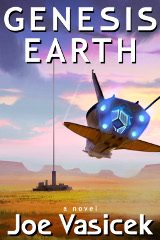
I have two books available for free this month: Genesis Earth and Star Wanderers: Outworlder (Part I). Genesis Earth was my first indie published novel, a “standalone with series potential” (specifically, a trilogy) written according to the conventional wisdom for breaking into traditional publishing. Outworlder is a very different book: the first in an eight-book novella series, strong enough to stand alone but short enough to leave the reader wanting more. And for several years, it was perma-free.

Outworlder was the first of my books to make it big. It’s gotten tens of thousands of free downloads and driven thousands of sales (I don’t have the exact numbers because I haven’t yet collated all of my sales reports from the past five years, but that’s something I plan to do). It was largely on the success of Outworlder and the Star Wanderers series that I built my early career.

But over time, downloads of Outworlder slowed to a bare trickle, and sales did as well. I could give it a short-term boost by running a few strategically placed ads, but it would always fall back down to a baseline that was simply unacceptable.

Also, when you have a book that’s permanently free, it tends to accumulate a lot of negative reviews. It’s strange, but some people seem to feel more entitled to XYZ when they get it for free, as opposed to paying for it. Or maybe these are the people who try to go through life without actually paying for anything? Who hoard everything, even the stuff that they hate, so long as they can get it for free? I don’t know.

Certainly, that’s not true of everyone who reads free books. But when you have a perma-free book, it tends to accumulate more of the barely-coherent “dis buk sux” kinds of reviews from people who probably weren’t in the target audience to begin with. And over time, that tends to weigh the book’s overall rating down, which unfortunately can be a turn-off for people who are in the book’s audience.

Contrast that with Genesis Earth. I launched it at full price with a blog tour (which I put together myself, among writer friends whom I knew personally and who had readers who would probably enjoy the book). It sold about a hundred copies in the first ninety days, then slowed to a very low trickle—maybe one or two sales each month, if that. Things continued like this for several years.

Then, back in December, I made it free for one month. Downloads immediately shot up, and continued strong throughout the entire month. Even without any advertising, I was still getting maybe 50 downloads per day on Amazon, plus a constant trickle on the other platforms. For the next couple of months, sales of all my other books grew as well

For April, I decided to make it free again, just to see if I could duplicate that kind of success. I haven’t done any paid advertising for it, but I have submitted it to various sites and newsletters that will promote free books. The result? Thousands of downloads, with a baseline rate of more than a hundred downloads per day.

Genesis Earth has never been perma-free, but every time I set it free for a limited time, it’s like I’ve released the pent-up flood waters. In contrast, Outworlder struggles to get any downloads at all, even when it’s free for only a limited time.

Part of this may have to do with the reviews. Genesis Earth has a much better overall book rating, simply because most of the people who read it over the years were the ones willing to pay full price. This also means that the book has grown into its own niche organically, since the people who have bought Genesis Earth also tend to buy other books similar to it. Retailers like Amazon take note of this, and tend to associate these books with each other in things like also-bought recommendations.

This is all just speculation, but when all of this comes together, it seems to result not only in a higher download rate when the book is free, but more downloads from people who are in the book’s targeted audience.

The mos fascinating result of this is that when the book goes back to full price, sales get a small but long-lasting boost. I’ve seen this with Bringing Stella Home, which was free in March. It’s not a huge boost—maybe only five or six books a month—but it boosts all of the other books in the series as well, and lasts for a couple of months. It’s not just Amazon where this is happening, either—in fact, it may be boosting sales on the non-Amazon platforms even more.

Bringing Stella Home is different, though, because it’s a full-length novel (about 110k words, or +300 pages) in a series that can be read out of order just fine. In other words, more of the “stand-alone with series potential” that was the convential wisdom in the old tradpub world. Like Genesis Earth, it has never been perma-free.

So what’s the takeaway?

That maybe the convential wisdom among indies is all wrong. That perma-free actually taints books and makes it harder for them to stick in the rankings, or to grow into their natural audience. That longer stand-alone books with recurring characters set in the same universe may be better for gaining long-term traction than shorter, more episodic books. Also, that the more books you give away for free—not just first in series—the better that all of your books will sell.

My experience is purely anecdotal, and there’s a lot more analysis I need to do before I can say anything for sure. From what I can tell, though, it seems that the best strategy is to write longer, fuller books that satisfy more than they entice, and to use free as a marketing strategy for only a limited time.

In other words, the collective wisdom of KBoards is completely off the mark, and Kris Rusch (who regularly gets vilified on KBoards) actually knows what she’s talking about most of the time.

Like I said, this is all anecdotal and more analysis is required. But I’m very curious now to make some of my non- first-in-series books free for a month, just to see if it has a similar boost. With Bringing Stella Home, for example, a lot of readers seem to be jumping over books 2 and 3 to read Heart of the Nebula, the direct sequel (but book 4 in the Gaia Nova series order). It would be very interesting to see if Desert Stars has an awesome free run as well, resulting in more sales after it reverts back to full price.

Lots of interesting stuff to consider. It’s definitely going to inform my writing and marketing efforts in the future.

Goodbye KBoards, or how I was banned for the sake of social justice.

In 2011, I joined an online message board forum called Kindle Boards (later KBoards) where other self-publishers had joined to give each other support, share what works, and otherwise band together as a community. Back then, self-publishing was considered the kiss of death, and many of my former writer “friends” shunned me for starting down that dark path. Having a community where people could assure you that you weren’t crazy was really a big help.

Yesterday, I was permanently banned from KBoards. But from the way it went down, I doubt that I’m going to miss the place, because it is a very different community now from the one that I joined in 2011.

The brewhaha started when a new member posted a thread to announce a book promotion site that she had just started. These types of sites offer advertising opportunities to authors and curated book recommendations to readers. There are dozens of these sites across the internet, and they are an important part of the indie book world.

On the thread, someone noted that the OP’s promo site did not accept erotica or LGBT books, according to the submission guidelines. Immediately, people began to pile up on the OP, demanding an explanation and accusing her of being unfair. The pile-up had all the signs of a social justice mob:

  • Unsubstantiated accusations that get taken at face value and added to a laundry list of perceived wrongs.
  • The formation of a narrative that ties in with a much wider set of perceived injustices, making the accused guilty by association.
  • Calls for “justice” that make a peaceful and mutually amicable reconciliation impossible.

I’ve seen it happen many times, as I’m sure you have too. If the accused tries to make amends, it only makes the social justice warriors howl even louder. The only thing that can satisfy them is the complete ruination of their enemy—and sometimes, even that is not enough.

As a side note, I would like to point out that I have nothing wrong with people who write LGBT books. Should these books be allowed to be published? Absolutely! The book world is a richer place because of them. I have nothing against people writing them, reading them, publishing them, or promoting them. People should be free to write whatever they want, so long as it does not cause criminal harm (such as doxxing or child porn).

But that’s not what this social justice mob was about. They had taken one line from the submission guidelines (which has since been removed) about not accepting LGBT books, and twisted it in every possible way to skewer the OP. For example, people took it to mean that books of any genre with LGBT characters would not be accepted, when original intent was pretty clear that genre LGBT would not be accepted. There is a difference. They then went on to say that LGBT is “not a category” (though according to Amazon, it most certainly is), and to accuse the OP of all sorts of other things.

When I saw this social justice mob forming, I decided to step in and stop it by deflecting some of the attention onto myself. The idea was to tank their attacks, rile them up just enough for the moderators to take notice, and leave it to them to stop the bullying.

Until this point, my opinion of the moderators at KBoards was pretty good. Even though I’d been on the receiving end of the “cattle prod” a couple of times, I’d always felt that they were more or less fair—or at least that they gave fair reasons for everything that they did. On the KBoards forums, the mods are generally praised as one of the main reasons why the place is so friendly and welcoming.

Part one of my plan worked out perfectly. I poked the SJWs just enough for them to show their true colors, and the thread was predictably locked. The OP and some other KBoards members sent me private messages thanking me for standing up to the bullies. When the mods re-opened the thread, however, all of my posts were gone, but the pile-up that had started the mob from forming was still in place. And predictably, the bullying began again in earnest.

I was disappointed in the mod’s decision, and stated as much, but tried to exercise restraint since there wasn’t much else I could do. Then someone openly accused the OP of being “discriminatory” because their site didn’t promote LGBT books. In response, I started a new thread:

Can we please stop calling promo sites “discriminatory”?

On another thread announcing a new promo site, a bunch of writers are piling up on the OP for stating in their guidelines that they do not promote LGBT books. Rather than derail that thread even further, I figured it would be better to start a new thread to say my piece about it.

It really galls me when anyone accuses a promo group of being “discriminatory” because it doesn’t promote their particular kind of book. By turning their rejection into a social justice issue, it flies in the face of the obvious: that readers aren’t morally obligated to like every kind of book equally, and that promo sites have to pick and choose which books they promote according to (among other things) the tastes of their readers.

Look, I have no problems with people writing, reading, publishing, or promoting LGBT books. If you’re an LGBT author who writes LGBT books, rock on and more power to you. But as a reader, I probably wouldn’t subscribe to a newsletter that promoted them—not because I hate gays, but because it’s just not the sort of thing that I read. Does that make me evil and discriminatory? Am I having “wrongfun”? Should I be forced to read a book that I don’t want to read? No? Then why say all that of promo sites that don’t carry those kinds of books?

My BS test for this sort of thing is to replace the allegedly oppressed minority group with Mormon Texas Czech (I defy you to find a smaller minority group!). If a promo site rejected, say, religious historical fiction, would I get all huffy and accuse them of discriminating against my Moravian Mormon heritage because they rejected my novel about a 1920s Czech immigrant who ran away to Utah and started a kolache shop? No—I’d shrug and figure my book probably wouldn’t do all that well at that site anyway, since their readership obviously isn’t into that sort of thing, and look for a promosite that would be willing to carry my book. And if that site doesn’t exist, I would create it!

Behind these knee-jerk accusations of discriminatory behavior is an implicit call for a new regime of gatekeepers to ensure that the “right” books—the ones that promote the accuser’s particular brand of social justice—are entitled to premium placement. But the fact is that no one is entitled to anything in this business, nor should they be. Besides, we tore down the gates years ago.

I knew that the thread would ruffle some feathers, but I did not predict the response—though in retrospect, it wasn’t surprising at all. Instead of trying to engage with my ideas, the SJWs reported the thread to the mods, who promptly locked it. Only two responses got through, both of which came within spitting distance of Godwin’s Law (“What if a promo site refused to accept books with Jews in them? Huh? HUH?”).

A lot of people were upset that the thread got locked. It accumulated more than 400 views before it dropped off the front page, and I got several PMs saying “I totally agree, these people have gone too far,” and “I was in the middle of my response when the mods locked this thread,” etc.

When I got back to my computer, I posted on the first thread, where I basically said “I find it telling that instead of engaging with me, you got the mods to lock my thread. Since when did disagreement become tantamount to hate speech?” In response, I got the following PM from the moderators:

Joe,

even before the blow up in the My Book Cave thread, you had been pushing the boundaries in your posts here and many had to be edited or removed.

In the My Book Cave thread, it was the tone of your posts that was the problem.  I advised you via PM that people who appreciated the restrictions posed by My Book Cave were welcome to post their support in a civil manner.  You have refused to do that, instead choosing to make more than one inflammatory post or thread.  I refer you again to  my most recent PM.

Accordingly, you are placed on post moderation.  I note that this at least your third significant moderation action.  As you indicate in your most recent post, now deleted, perhaps you need to think about whether KBoards is the place for you.  Hopefully this period of post approval will give you that opportunity to think about it.

Betsy
KB Moderator

In response, I wrote the following:

The question is not whether Kboards is the place for me, but whether KBoards has become the sort of place where people can be bullied in the name of social justice. In the last couple of days, I have received multiple PMs thanking me for taking a stand against these bullies, which tells me that this problem is much larger than just me. The fact that your response is to put me on post moderation tells me everything that I need to know: that disagreement truly is seen as hate speech in this community. I won’t be the only one who leaves KBoards because of this.

The final message that I received from the moderators was this:

Joe,

Please tell me where I equated disagreement with hate speech?  In the My Book Cave thread, to the best of our ability, we have removed and continue to remove posts on both sides that attacked other members or the OP in the thread and left those that stated their reason for not using the service or asked more questions about it.

I refer you again to my prior PM.  You, and others, are more than welcome to state your support for My Book Cave in a civil manner.  Instead, you have attacked your fellow members for stating their reasons for not wanting to use the service and for asking questions to clarify the restrictions.  There were also questions about the erotica restriction and the restrictions on language.  These are reasonable questions.  It would also be reasonable for a member to state (as you did, in one bit of your locked thread), that you would appreciate a site that had restrictions.  Posts that stated a different point of view in a civil manner without attacking your fellow members would have remained and have been protected.

You chose not to do that, but to instead start yet another thread that attacked your fellow members.  While we were discussing that thread (which had not been permanently locked at that time–we were still in discussion), you chose to make yet another post continuing the same discussion in the original MBC thread.

Refusal to accept moderation is a bannable offense.  You have been previously banned and placed on post moderation and tonight have refused to accept post moderation.  Immediately after posting this, I will ban your account.  KBoards is clearly not the right forum for you.

I wish you the best in your future endeavors.

Betsy
KB Moderator

There are a number of things that I found disingenuous about this exchange.

First, I never attacked anybody. I never singled anyone out. I never engaged in personal insults, though personal insults (now deleted) were directed at me. And while I was aggressive in the way that I engaged, I also endeavored to be as intellectually honest as possible. I cannot say the same of those I disagreed with.

Second, it’s pretty clear that the mods were not treating me with the same benefit of the doubt as the bullies. SJWs have a way of rewriting history, and that’s exactly what they were doing by claiming to ask “questions to clarify the restrictions.” There were no attempts to clarify the promo site’s submission guidelines: as soon as one person suggested that any book with an LGBT character would be rejected, everyone assumed that it was true.

Third, it seems quite clear that the mods were waiting for an excuse to ban me. They locked down my thread within minutes of posting it, based solely on reports from people who disagreed with it. With the phrase “perhaps you need to think about whether KBoards is the place for you,” they issued a veiled threat which they followed through on within minutes. Their claim that they hoped “this period of post approval” would help me turn around was duplicitous on its face. So was the question “Please tell me where I equated disagreement with hate speech?” because my account was locked and my IP was banned, making it impossible for me to respond.

Looking back on what I could have done differently, I suppose I could have toned down my rhetoric a bit, or refrained from engaging. But at what point does silence become complicity? If I had let the social justice mob run its course, and the OP had been attacked outside of the boards, would I have done the right thing? When it became clear that the mods were going to let the bullying continue, what was I supposed to do?

Honestly, I feel like I came out of that exchange with my integrity intact. If that means I got banned, so be it.

And to be frankly honest, if KBoards is the kind of place where social justice warriors can dominate the discussion and drive out anyone who disagrees with them, then I really don’t feel bad about getting banned. There is a war going on in our culture today, and I would rather pick a side than be complicit through my silence.

What I’ve been up to recently

It’s been a while since I posted anything except Trope Tuesday posts, so I figure I should do a quick one here explaining what I’ve been up to recently.

As far as writing goes, I finished the first draft for Star Wanderers: Reproach (Part VII) about two weeks ago.  Since then, I’ve been bouncing around between Lifewalker and other projects, writing only about a thousand words a day (which is kind of low for me), but it looks like I’m going to go full steam ahead on Star Wanderers: Deliverance (Part VIII).  That’s the story that really excites me right now, and it’s practically writing itself.  I should (God-willing) finish the first draft sometime next week.

As for Star Wanderers: Benefactor (Part VI), I’ve gotten feedback from first readers and sent off the first chapter to Kindal Debenham’s writing group, where they workshopped the first chapter.  It’s going to require a bit of work, but I should be able to publish it before the end of July.  My goal right now is to publish something every two months, and Benefactor is at the top of the queue.

Life-wise, I’ve had a whole lot of weird expenses pop up recently, including a wisdom tooth that needs removing (??? I’m like 28!).  But between my new job and a marked increase in book royalties, I should be able to cover it without any problems.  The job I have right now is really nice–it pays twice minimum wage at only 20 hours per week, with a schedule that leaves the whole day open.  It’s perfect for writing (well, as perfect as any day job can be), and it’s quite physical so I should be in pretty good shape by the time I’m done.  I’ll probably keep it for a couple months, up until the end of the summer, and hopefully save up enough to move elsewhere in the country, or perhaps go back overseas.  Who knows?

About book royalties: my sales on Amazon have really gone up recently, which kind of astounds me.  I’m selling about 10-11 ebooks per day, which doesn’t sound like a lot, but it really adds up.  Throw in Amazon UK, Smashwords, and all the other retailers, and I’m perilously close to actually making a living at this thing.  I have no idea if the current trends will continue or if sales will suddenly fall off, but it looks like people are reading and enjoying my books, so I’ll definitely keep putting them out there.

Speaking of sales, I inadvertently tossed a rhetorical hand grenade over at KBoards by suggesting that perhaps the community over there focuses a little too much on sales as the primary measure of success.  Well, they didn’t quite run me out with pitchforks and torches, but the debate did stretch to eighteen pages, so one way or another I think I touched on a sore spot.  In the end, though, it turned out to be a fairly constructive discussion, and I think the KBoards community is a better place because of it.

Other than that, I’ve been spending far too much time on minecraft than I probably should.  I’m on a server now with my brother-in-law and some other friends, and I’m building a city in the sky, kind of like Zeal or Shevat.  It’s actually turning out really well, but I don’t want to post any pictures yet because it isn’t finished.  Later, though–definitely later.

That’s just about it.  I want to put in at least two thousand words today, and it’s already noon, so I’d better run.  See you later!

LTUE 2013

Man, LTUE 2013 was this weekend, and it was AWESOME.  One of the best conventions I’ve ever attended.  I spoke on my first panel, attended my first book signing event as an author, and got to meet up with some old friends, as well as some amazing new people.

Since I live tweeted most of the panels I attended, I thought it might be interesting to repost a few of those here, with some additional thoughts.  So…here goes!

THURSDAY

I believe this was Scott Parkin from the “What Do You Write?” panel. Good advice. Megan Whalen Turner also had some very interesting things to say on the subject of genre, which I have since forgotten. But I recorded it, and the recording will eventually be made publicly available in the LTUE conference archives, or so I’ve been told.

This one was from the “What Is ‘Punk’ Literature and Its Many Genres?” panel. David Butler and Larry Correia were HILARIOUS. Nearly got into a wrestling match right in front of us.

And when the esteemed Mr. Butler began to describe his book, I swear, a choir of steampunk angel Moronis somewhere began to sing a heavenly chorus. I mean, he had me with Edgar Allen Poe faking his death to become a secret agent, but Orson Pratt’s phlogiston guns? Eliza R. Snow as chief counterintelligence officer for the Kingdom of Deseret? I will definitely be checking out this book, City of the Saints (which is apparently a finalist for the 2013 Whitney Award).

David Butler is also a way cool guy. I hung out with him a bit in the dealer’s room, chatting about Mormon history, Lyman Wight (“shoot and be damned!”), Sir Richard Francis Burton’s expedition to Salt Lake City, and all sorts of other crazy zany stuff. And the whole time, he was playing a guitar. So yeah, definitely a way cool guy.

This discovery CHANGED MY LIFE. Also, it helped me to save immensely on lunch money, as well as join in on some way cool conversations with other panelists as they desperately tried to escape their fans. Okay, not really, but the green room was AWESOME.

Howard Taylor’s presentation on teasers was tremendously insightful. In a nutshell, he said that a teaser (aka book description on Amazon / back cover) should have or at least point to the following things:

  1. The inciting incident
  2. Character action
  3. Conflict
  4. Hook

We then went over a few examples, including some good ones that broke these rules, and finished up by doctoring a couple of teasers volunteered from the audience. Howard Taylor admitted to me later that he wasn’t entirely satisfied with the way he presented it, but I get the impression that he’s never entirely satisfied with anything less than perfection. It was a great workshop.

From “Engaging the Reader.” Great panel. Lisa Mangum described the planning / drafting / revising process for each of her first three novels, and they were all wildly different. With seven novels under my belt so far, I can definitely relate. Some, like Genesis Earth and Stars of Blood and Glory, practically write themselves. Others are like having a c-section with a hacksaw. And others…yeah, I’m not going to go there.

FRIDAY

Okay, maybe I said one useful thing: when there’s a language barrier, little things become big obstacles. One of the other panelists, Anna Del C. Dye, also had a bunch of stories about adapting to a foreign language and culture (in her case, the United States).

Overall, the panel was really, really fun! I also had some cards out for Star Wanderers: Outworlder, and a bunch of people came up afterward to get them. Guess I must have said something interesting. I hope you guys enjoy the book!


From “Current Trends in SF.” Great panel–it totally wasn’t just another over-hyped discussion about what’s hot right now. I asked how the panelists think the trend cycle will change in the age of self-published ebooks, and they had some very interesting things to say. They all agreed that speed to market, while it may give some advantages, isn’t a make-or-break game changer, or even really a good strategy (unless you really love the trend you’re writing to). Some things change, others remain the same. It will be interesting to give this one a re-listen.


From “Creators in the Community.” Probably one of the best panels of the entire convention. Tracy Hickman is really on top of the changes in the publishing world, and had a lot of interesting things to say about it in all of his panels. As for the subject of writerly communities, much wisdom and insight was shared by all of the panelists. Definitely look for this one.

Man, I’d forgotten how cool the guys at Dungeon Crawlers Radio are! They interviewed me back in 2011, when I was just getting ready to publish Genesis Earth. This time, we talked about space opera, sci-fi romance, language barriers in marriage and all the crazy things I have to look forward to, and a bunch of other stuff. I also shared some of my thoughts and opinions on self-publishing myths, especially regarding the “tsunami of crap.” We coined a new word, “nerdaissance,” to describe all the awesome new stuff that’s coming out now, thanks to the ease of self-publishing.

So yeah, it was a great interview! I’ll definitely be cross-linking once it goes live.

From “Effective Book Covers.” Great panel with some very good artists and cover designers, including Isaac Stewart who does all the maps for Brandon Sanderson. Although some parts were geared toward illustrators, most of the advice was for writers (especially self-pubbing writers) who are looking to design their own covers. Lots of great and insightful perspectives from the visual arts side of things.

FRIDAY NIGHT BOOK SIGNING

Okay, I’ve got to be honest: when I went into the mass signing with my cardboard box of CreateSpace POD novels, I didn’t expect to sell anything. I figured that was just my ticket to get a seat at a table and hand out cards for Star Wanderers: Outworlder to some of the casual book browsers.

Well, I was pleasantly surprised! An uncle of one of my old mission companions was impressed enough to buy a couple of copies. I think he’s one of these guys who likes to buy things from new authors to help encourage them. It’s great to see people like that. He told me to keep writing, and I told him I definitely would!

Lots of people snagged the card for Outworlder, and I came up with a pretty decent pitch: “it’s about a starship pilot who accidentally marries a girl who doesn’t speak his language.” That raised a lot of eyebrows! A lot of people were really happy to see a science fiction story, especially a space adventure. I get the impression that there’s a craving for this kind of stuff in the market that isn’t currently being satisfied. So yeah, that was very encouraging!

After things wound down a bit, I wandered around the signing checking out some of the other books. Saw a couple that I recognized from the Kindle Boards, which was interesting. Chatted with them, as well as a bunch of geeky guys about chain mail, Halo, Frank Herbert, and all sorts of awesome stuff. Man, the best part about sci-fi/fantasy conventions is the chance to just talk with people! So much interesting stuff. It was great.

SATURDAY


From “Write For the Market or Write What You Know?” Another great panel. Definitely will be re-listening to that one.

From the main address with Megan Whalen Turner. She talked about book censorship and the need to teach children how to make their own reading choices, rather than keeping them sheltered and making the choice for them. She pointed out how every time a New York Times article comes out bemoaning some YA book for inappropriate content, it’s kind of hypocritical because there are so many other books they miss. The Golden Compass, for example, didn’t even pop up on their radar until the movie came out. Kids don’t magically become mature, well-adjusted adults when they turn 18–we have to teach them to make these choices (and mistakes) for themselves.

From “How Does Your Story Mean?” Great discussion on the writing process. Saw a lot of other good live-tweets during this one.

Okay, I take back what I said about the best panel of the convention. THIS was definitely the best. “The Engines of Exploration,” with Howard Taylor, Megan Whalen Turner, Roger White, James Owen, Kevin Evans, and Charles Stanford–the panel was packed. It basically turned into a round-robin discussion of which commodities are most essential to modern civilization, which ones will be the most valuable in the event of a societal collapse, and which ones will take us to the stars. The eventual consensus on each of these eventually came down to goats. Seriously. GOATS!


From “Writing Romance Without Erotica.” Lots of delicious awkwardness, as well as some really interesting thoughts and perspectives on the subject of romance. One of the panelists talked about the importance of “character penetration” without realizing about halfway through the panel how hilarious that phrase sounded in this context. But yeah, there was also a lot of wisdom in there as well. There are a lot of strong opinions about sex and romance floating around in this part of the world, so it was a very spirited and interesting panel.


The last panel of the convention (technically, symposium, but whatever) was “eBook Publishing” with some highly successful indies like Michaelbrent Collings. As you can tell from the tweets, it was a bit controversial, but very, very interesting. Questions were flying all over the place, on subjects ranging from formatting to building an audience. The biggest shock to me was that none of the panelists (none of them!) are on Smashwords. It’s a wild, wild west out here in indie-land. Makes me wonder, maybe I should publish to iTunes through another venue? Hmmmm…

So yeah, that was pretty much the whole convention/symposium. I finished it out by playing Alhambra with a bunch of friends from Kindal Debenham’s writing group who came down from Seattle and Idaho. Good, good times–it was actually kind of sad to say goodbye. Definitely worth coming 11 time zones to attend.

All I can say is that I am STOKED for Conduit!

Thoughts on Twitter

twitterOh man, I used to hate Twitter so much.  It’s amusing (and a little bit embarrassing) to look back on some old threads on the Kindle Boards and see how snippy I would get with everyone who raved about it.  I guess it’s just my contrarian nature.

Well, in the last month or so, my opinion of Twitter has done a 180.  Most of that has to do with getting a smart phone and having quick and easy access to it.  Back when I first signed up, I had lots of ideas for short, pithy tweets, but mostly when I was away from a computer.  Because of that, Twitter became just another chore, like checking email or keeping up with Facebook updates.  But now that I have easy, instant access, I can drop in whenever I want, without opening a browser and starting up another relentless cycle of timesucks.

About a year ago, I got involved in a huge discussion on the Kindle Boards with Nathan Lowell.  It all started when he credited his success as a writer to Twitter.  That hit me like a bombshell, since he’s following a very similar career path, and has had a tremendous amount of success at it.  He shared a ton of helpful tips on that thread, all of which I carefully filed away for later.  I didn’t really have much of an opportunity to try them out, since I was in Georgia and had limited internet access, but since getting back I’ve been slowly trying them out.

What I’ve found in the last few weeks is that Twitter is a great way to get into interesting online conversations that don’t require a high degree of time or commitment.  The 140 character requirement makes it hard to say anything of any substance, but that’s actually a strength, because it makes it easier to follow what others have to say.  Instead of channeling all your time and energy into a handful of comment / forum threads, you can start a dozen new conversations, or follow a dozen new people, or drop out for a while and do something else.  Less substance means less commitment and more flexibility.

It makes me think of something Cory Doctorow mentioned on a panel at Worldcon 2011.  He called Facebook the high fructose corn syrup of the internet–which is actually a very relevant comparison.  Facebook is very information dense the same way that HFCS is very calorie dense.  Both of them are fairly addictive (“compelling without being satisfying” is the way that Cory Doctorow put it).  And just as HFCS is not very nutritive, Facebook is not a very good way to stay genuinely close to the most important people in your life, especially when you’re following hundreds of people whom you barely even know.

Unlike Facebook, Twitter is a great way to connect with people who aren’t much more than strangers or casual acquaintances.  The value is not in what you’re able to share, but how many people you’re able to connect with.  If I tried to make myself accessible to everyone via Facebook, I would quickly become overwhelmed.  With Twitter, I am accessible simply by being there, and I can reach out to just about anyone and expect a response.

Some things I’ve found that have helped improve my Twitter experience:

  • Follow anyone who seems interesting, and unfollow them as soon as they stop being interesting.  If you’re not getting much from Twitter, it’s probably because you’re following the wrong people and not following the right people.  A follow isn’t a huge commitment, so no hard feelings if you break it off.
  • Reply to tweets that strike a chord with you.  Don’t just consume–start a conversation.  Add something, and you’ll get even more in return.
  • If you’re going to include a hashtag, try to offer something of value.  Don’t just do it to get attention, or to draw people to some link or something.  Do it because you want to contribute something meaningful.
  • Don’t approach it like a chore.  If you want to bow out for a while, that’s fine–you don’t have to follow every tweet, or reply to everyone who tweets at you (at least, not right away).  There isn’t any “right” or “wrong” way to use it–there’s just the way you use it.

So yeah, I plan to be much more active on Twitter in the future.  I probably won’t go crazy fanatic with it like some people do, but I’ll be on there, so if you want a quick and easy way to keep in touch, that’s a great way to do it.

And as for Facebook, that’s pretty much only for my close friends now.  When I got back from Georgia, I deleted more than half of my Facebook friends.  With Facebook, Dunbar’s number (aka the 150 friend rule) is probably a good upper limit.  With Twitter, I now agree with Nathan Lowell that it’s more of a lower limit than anything.

Rivers and orphans and rivers, oh my!

So one of my goals this summer is to release POD (print-on-demand) editions for the three novels I currently have up as ebooks (Genesis Earth, Bringing Stella Home, and Desert Stars).  I started with Genesis Earth a couple of days ago, and wow!  I had no idea that getting a book ready for print could be so much fun!

I just finished formatting and typesetting the interior today, and it looks pretty awesome!  Drop caps, chapter headings, page numbers, a pleasingly arranged text–there’s something immensely satisfying about paper, an experience that ebooks (as awesome as they are) just don’t quite capture.  If I weren’t a writer, I’d be a typesetter–but because I’m an indie, I can be both!

As with ebooks, the learning curve for print formatting is pretty steep, but I think I’ve got the hang of it.  The guys over at Kindle Boards gave me a lot of helpful advice, and sent me a really awesome POD guide that’s been a lifesaver.  My editor (who’s also trained in typesetting) gave it a once over too, so I think we’re in good shape.

Barring any unforeseen complications, the print version of Genesis Earth should be up in a couple of weeks.  The cover art is more or less done–I just need to revise the blurb, send the PDFs out to CreateSpace, and wait for the proof to come in the mail.

One thing I’m wondering is whether to go with the free ISBN (which will list CreateSpace as the publisher) or to spend $10 and go with my own imprint.  My gut tells me to go with the free option–not because it’s cheap so much as because it’s less complicated–but I wonder if there might be some advantages down the road to taking the other.

ISBNs, imprints, and distribution channels, oh my…I’ll have to save that for another post a little later. 🙂