X is for Expectations

What sort of expectations should or shouldn’t you have when you start self-publishing? What is plausible, and what is unrealistic?

Honestly, it’s probably a good idea to go into it with expectations that are fairly low. Most books don’t sell more than a handful of copies, and there’s no way to tell what will and will not take off (if there was, publishing would be a whole lot more lucrative). There’s nothing wrong with dreaming, but it will save yourself a lot of trouble and heartbreak (not to mention, money) if you go in expecting things to be kind of rough for the first few years.

When I started out with “Memoirs of a Snowflake” and a couple of other shorts, they didn’t hardly sell at all. Then I published Genesis Earth, and while I saw maybe 50 sales in the first three months, after that they fell off to single digits for the next two years (and yes, zero is a digit). I made my shorts free for a while, and they got tens of thousands of downloads, but that didn’t really translate into sales.

I didn’t expect to be a runaway bestseller right out of the gate, so I wasn’t too disappointed, but still it was kind of a blow. It was worse when Bringing Stella Home only got about ten sales in its first month before falling off to single digits just like Genesis Earth. I suppose things could have gone differently if I’d promoted a bit more aggressively, but that seemed like such a crap shoot that I channeled that energy into writing instead.

And it paid off eventually. When Star Wanderers took off, it generated some interest in all of my other books–not as much as I was expecting, but enough to bring them up to double digits every other month or so. My Star Wanderers books are all selling in the double and triple digits, and I couldn’t tell you why other than that the story just seems to strike the right chord with enough people. Those books would probably be doing better if I promoted them more, and since it looks considerably better than a crap shoot now, that’s something that I plan to be more aggressive about.

I think there’s an important difference between dreams and expectations. Dreams can suffer through setbacks considerably better, and help to maintain a sense of optimism that is perhaps one of the most important things an indie writer can have. Expectations, though, are much more practical and down to Earth, and can provide a useful yardstick for measuring progress. They can also provide an anchor in the face of uncertainty. Those are important things for an indie writer to have as well.

Expectations can be negative, though. If you don’t expect a book to do well, then perhaps you won’t put as much effort into it, sabotaging and self-rejecting your own work to the point where it really can’t do well. If you expect a book that hasn’t been selling at all to continue not to sell, you may lose sight of important opportunities to put it in front of the people who are most likely to fall in love with it.

Every genre is different, every book is different, and every writer is different. Because of this, no one can tell you exactly what to expect–including me. Like me, you might be stuck making nothing but pizza money for the first two years–or your books might take off fantastically well right from the start. There’s no way to know what will happen until you get your feet wet.

L is for Launch

How important is it to have a massive book launch whenever you release a new book?

I think the answer to this question varies from genre to genre. For the more mainstream genres where word of mouth is driven by general popularity, such as romance or thriller, it’s probably fairly important. For more niche genres like science fiction that are driven mostly by a dedicated core of fans, it’s not as crucial as you might think.

The reason most often cited for doing a big book launch is to try to get onto the rolling 30 day and 90 day new release lists on Amazon. When I published Genesis Earth back in 2011 before the publishing landscape flooded with indie books, I saw decent sales for the first 90 days, probably because that book was on the list. That happened more by accident than design, though, and it would be much harder to replicate now.

In general, I think that indies tend to overemphasize the importance of the new release lists. On forums like KBoards, I’ve even heard some writers go so far as to say a book is dead after the first 90 days. That runs contrary to my own experience–in fact, I doubt that it’s true even in the mainstream genres. Ebooks are forever, and there are all sorts of things that can give a book wings after months or even years from its initial launch.

That said, I do try to do a couple of things whenever I have a new release:

  1. Mention it on social media and here on my blog. I don’t generally send out those annoying “buy my book!” posts, but when I have a new book out, I figure it’s worth a mention since my readers are going to want to know.
  2. Send out an email to my mailing list. That’s the only reason why the list exists–to announce new releases. Typically, though, I wait until the book is up on multiple retail sites, so that I can include most if not all of the links.
  3. Put up the book on the sidebar of my blog. Ever since I got rid of all the typical blogging widgets (like calendars, tag clouds, archive lists etc) and dedicated the sidebar almost exclusively to my books, I’ve sent a small but steady trickle of traffic in that direction. The sidebar links aren’t comprehensive, but most of my books are up there.

That’s about it. As you can see, nothing too fancy. My book launches tend to be fairly quiet, and that works just fine for me.

At the same time, though, I kind of wonder what would happen if I tried for a more aggressive launch. When I was first starting out, it didn’t make much sense because I didn’t have much of a platform or very many books out. Now, though, I wonder if putting a bit more emphasis on a new release will yield measurable results.

When I release Brothers in Exile in May, I’m going to try out a couple of things to give it an initial boost. I already have it listed on Goodreads, and I’ll post a few short excerpts from it here on my blog in the days leading up to and immediately following its release. Beyond that, I don’t have any firm plans, but I would like to do a few guest posts and maybe run a couple of promos.

As you can probably tell, I’m not a huge expert on how to run a massive book launch. What I do know is that in some genres at least, you can succeed without going all out on them. Throwing a massive launch probably isn’t going to hurt you, but it’s not like that’s your only hope for ever breaking out.

C is for Cover Art

They say not to judge a book by its cover, but the truth is we all do. In fact, the cover probably sells a book more than the book blurb does. Whether in print or in digital format, it’s the first part of the book that readers see, and often makes the difference between “meh” and “hmm, what is this? I want to find out more!”

So how do you do cover art when you’re an indie? Is it better to make your own, or hire a designer? If you do hire a designer, how much can you expect to pay?

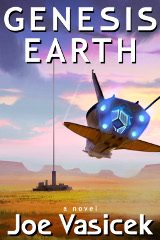
Honestly, when I started out, I think I invested a little too much into my covers. The first novel I published was Genesis Earth:

thumb (Genesis Earth)The cover art is gorgeous, and from an artistic view I’m very, very happy with it, but it took a long time for the book to earn that money back–far longer than the expense really justified. I would love it if all of my books could have awesome covers like this, but when you’re first starting, not every project justifies that sort of expense.

The thing to keep in mind when you do covers as an indie is that you can always change them. When you first start out and you don’t know how well a book is going to do, there’s nothing wrong with doing it on a shoestring budget and reinvesting those earnings later. There is a bit of a feedback loop, where a bad cover will hold a book back, but it’s not that hard to make a cover that’s not great, but acceptable.

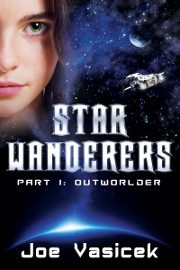
Case in point, check out the first cover I did for Star Wanderers: Outworlder (Part I):

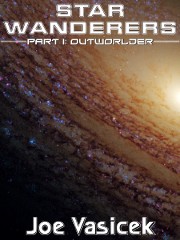
Star Wanderers I (thumb)The cost for this art was $0. I made it myself, using freeware fonts and public domain space art from NASA. It’s not nearly as gorgeous as the cover for Genesis Earth, but it says “space!” in a sci-fi sort of way, and that’s what I was going for. And even with a mediocre cover, this was the book that really started to take off.

Of course, as soon as those books were earning enough, I made plans to reinvest that money in proper cover art. Here is the new cover for Outworlder:

SW-I alt (thumb)I’m working with a cover designer right now to redo all the other ones in the series along a similar vein. In the next couple of weeks, expect to see some cover reveals!

In general, I’ve found that there are three approaches to cover art: doing it completely yourself, hiring a cover designer to make an cover from stock art, and hiring an illustrator to paint an original illustration. The last is probably the most expensive, though it does depend on the illustrator–you can find good illustrators on sites like Deviantart whose rates are quite reasonable. But the quality varies a lot.

Besides the art itself, a key part of the cover is the typography. One thing I’ve learned from working with cover designers is that they can do amazing things just with the fonts and font effects for your title. That’s probably the biggest benefit of going with a cover designer as opposed to an illustrator.

In fact, if you can afford to commission an original illustration, you can probably find a cover designer who will give you a deal on the typography. It is something you can learn yourself, but the difference between you and a cover designer is often the difference between acceptable and awesome.

Like anything with self-publishing, cover design is something you can learn–perhaps something you can excel at–but you probably can’t excel at that and everything else at the same time. What I’ve found is that I’m okay at doing my own cover art, but not awesome. From here on out, I expect I’ll be hiring cover designers.

At the same time, my books are earning enough that I can justify that expense. If I were first starting out, I’d probably DIY it or barter with other writers who do their own covers. A cover isn’t static–you can always change it later.

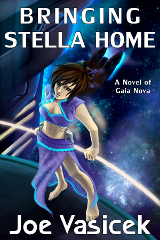
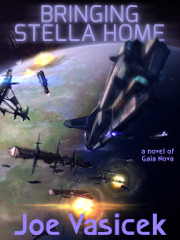
Case in point, check out the covers for Bringing Stella Home:

thumb (Bringing Stella Home)thumb 2 (Bringing Stella Home)

I got a good deal on the illustration for the first cover, but frankly, it’s not that great. The second cover was more expensive, but I’m much happier with it. What I’m probably going to do next is find a cover designer who can redo the title/author typography, since I did that myself and it kind of shows.

So that’s been my experience with cover art. It’s important to get it right, but you do have to work to find the best solution that works for your budget. Fortunately, when you’re an indie, your cover is something you can always upgrade.

Lindsey Stirling, Nichieri, Susan Boyle, and thoughts on discoverability and greatness

I saw a couple of things on Youtube that made me think recently about the importance of quality work, especially in the arts.

I’m a casual fan of Lindsey Stirling–I’ve watched most of her videos, put them on in the background from time to time, and get a kick out of following her career. For those of you unfamiliar with her, she’s a Youtube sensation who combines violin music, dance, and dubstep/electronica, often in some interesting and beautiful places. This is her most popular video, and probably her best work so far:

Her career is interesting because it follows a path very similar to a lot of self-published authors. She started by putting out videos on Youtube, built up a huge following that way, turned down a number of deals from traditional record labels and put out her first album herself. Now, she’s touring all over the world, collaborating with a bunch of other Youtube artists, and doing a lot of other amazing stuff completely independently.

The other day, I was really surprised that she was on America’s Got Talent back in 2010. Apparently, this was before she got really big, and the connections she made while on the show helped her find success later on:

Two things stood out to me from that video.  First, the judges were right–even though she was pushing herself, this was not her best work, and it showed in a way that was rather glaring. I hate to say that because I like so much of her stuff, but it’s really true–her performance fell short.

The second thing that stood out to me was her response to the criticism. It must have been incredibly painful to stand up there in front of everybody and get hammered like that, but she still managed to smile, be gracious, thank the judges, and focus on the positive without being confrontational. That takes class.

When I was in Georgia, I watched a lot of TV, especially on the Rustavi 2 channel. One of the most popular shows is Nichieri (ნიჭიერი), a talent competition show set up much like The X Factor or America’s Got Talent. Even though I didn’t really understand anything the people were saying, I could still really tell when a contestant did some truly amazing.

There’s something about greatness that makes you sit up and pay attention–something that makes it stand out on its own. It’s something timeless and stirring, something that drives you to keep coming back to it, or at least to remember it long after it’s passed. With poor quality stuff, like bad writing, clumsy performance, or the like, you tend to forget it (unless of course it’s a spectacular failure, which in a weird way gains a sort of greatness of its own to a certain extent). But good quality stuff sticks with you–indeed, it’s almost like it becomes a part of you. It certainly becomes part of the culture.

When it comes to talent shows like Nichieri, The X Factor, and America’s Got Talent, the greatest moment has to be Susan Boyle. Everything about it is just perfect, from the awkward, homely way she started out to how she blew everyone away with her stellar performance. She didn’t look like she had it, and she certainly didn’t act like she had it, but she did, and she knew it. She didn’t settle for anything less than her best, and she didn’t let anyone else put her down.

In a lot of my discussions with other indie writers, we talk a lot about discoverability. We’re all anxious to be read, to be heard, to be discovered–to get our shining moment. The thing is, though, that moment is not enough if you don’t have quality work. It’s not going to keep you down or “ruin” your career, necessarily–Lindsey Stirling has come a long way since her disappointing performance on America’s Got Talent. But that’s only because she produces quality work.

I think I need to spend a lot less time trying to boost my discoverability and a lot more into producing the best work that I possibly can. The thing to remember, though, is that quality is subjective and you can’t please everyone. As Lindsey later said, “A lot of people have told me along the way that my style and the music I do … is unmarketable. But the only reason I’m successful is because I have stayed true to myself.” You can’t compare yourself against others, either–you can only really compete against yourself.

How do you know when you’ve done your best? That can be a little tricky, partly because it’s a moving target. I think Genesis Earth and Bringing Stella Home represent my best work at the time, though when I look back at those books I see things that could be improved. I tend to think that Desert Stars is my best work to date, though I’m not so sure anymore. Do I only think that because I struggled so much and for so long with that book? Just because something is a joy to create doesn’t mean that it’s any less than something you toiled and suffered over.

Star Wanderers was both a gift story and an experiment. The novella format was new to me at the time, so I did a lot of learning on it. Outworlder, Dreamweaver, Homeworld, and Deliverance came to me in a white-hot creative heat, but Sacrifice and Reproach were a real struggle. Is there a discernible difference in quality between them? Not that I can tell. I do think that the later stories hold together better on their own, though. I didn’t really hit my stride with the novella format until I started branching off into other characters’ viewpoints.

This is all on my mind because my next big project, Sons of the Starfarers, is something that I really want to do right. I don’t just want to write it for the sake of putting it out there (though I recognize that writing quickly doesn’t always mean sacrificing quality). I don’t just want to put it out so that I can make my work more “discoverable,” though that’s certainly a motivation. I don’t even just want to do my best. I want to improve my writing and storytelling so much that this becomes the best thing that I’ve ever written.

At LTUE a few years back, Tracy Hickman said that as writers, it is important for us to believe that we have not yet written our best book. That’s so incredibly true. You have to always believe that you can do better, not to make you depressed when you look back, but to make you enthusiastic as you look forward. Imagine what would have happened if Lindsey Stirling thought that her performance on America’s Got Talent was the best that she’d ever do! Her career hadn’t even dawned yet.

I think it’s the same with me. I’ve gained a little exposure, suffered a few setbacks, and experienced a small measure of success, but the big stuff is yet to come. And even though I may not want to be the next Brandon Sanderson or Orson Scott Card in terms of popularity, I do need to shoot high in terms of quality. Before I work on my discoverability, I need to make sure that I’m putting out some truly amazing stuff. I need to shoot for greatness.
So what should I work on next?

Now that Star Wanderers: Deliverance (Part VIII) is published, I’m back in the position of trying to figure out what to write next.  Usually, I just do this on my own, but this time I thought I’d run it by my readers and see what you guys have to say.  Here are the options:

Heart of the Nebula — This is a direct sequel to Bringing Stella Home.  It follows James, Lars, Stella, and several new characters as they struggle to keep the Colony from falling apart following the collapse of the New Gaian Empire.  This one is mostly a space opera story, with lots of action and political intrigue.  It also explores the wolf/sheepdog analogy that Danica brought up in Bringing Stella Home, with Lars’s rebuttal.

Mercenary Savior — Another Gaia Nova novel, this one showing the origins of Danica Nova and her band of Tajji mercenaries.  I’ve got a lot of ideas for this one, though I’ve only written the prologue so far.  This is going to be a military sci-fi story, with lots of action, lots of violence, and (hopefully) a few heart-wrenching moments as well.  Danica, Roman, Mikhail, Artyom, and several of the other mercenaries will appear in this one.

Empress of the Free Stars — Yet another Gaia Nova novel, this one a direct sequel of Stars of Blood and Glory.  It brings back Princess Hikaru, now the Empress of Shinihon, and shows her struggle to ensure the safety and freedom of her people in the face of a Federation that is fast transforming into an autocratic, totalitarian empire.  Colonel Webb is at the heart of the political intrigue in this one, and the stakes are as high as they’ve ever been.

Sons of the Starfarers — This is the spinoff series I’m writing to follow up Star Wanderers.  It takes place in the same universe as the Gaia Nova novels, except a thousand years before, and will eventually show the origins of the Hameji and tie all of these books together.  This is the one I’m most excited to write, as it brings back a bunch of characters from Star Wanderers and puts them into some interesting situations.  Hopefully, it will have the same stuff that made Star Wanderers so great while adding a bit more action/adventure stuff into the mix.

Edenfall — This one is the sequel to Genesis Earth, and the second book in what will eventually become a trilogy.  Basically, about fifteen years after Michael and Terra settle down on Icaria, a military expedition arrives from Earth, shattering the idyllic life they’ve made for themselves.  They try to convince the military people that there is no alien threat, but before they can do that, the ghost ship comes back, throwing everything out of balance.  This story is mostly from the point of view of Estee, Michael and Terra’s daughter, whose whole world is changed when the other humans appear.

Lifewalker — I’ve mentioned this one only a couple of times on my blog, but everyone who’s read the first chapter tells me that they want more.  This one is a completely different project from anything else I’ve done.  It’s a post-apocalyptic tale told from the point of view of a man who lives out his natural life where everyone else is infected with a disease that kills them at age 25.  After the first chapter, the he starts down the ruins of I-15 with a bible, a bicycle, and a copy of Brandon Sanderson’s Mistborn, searching for the mythical city of light known by the forefathers as Lavegas.  Little does he know, that place is now populated by cannibals.

The Sword Bearer — An epic fantasy about an ancient brotherhood of sentient swords who pass down the knowledge and skills of each bearer down through the generations.  The brotherhood has been broken, and the few swords that haven’t been lost have driven their bearers insane to the point where they’re now amassing an army to conquer and enslave the whole world.  The only sword who hasn’t gone down that path is the one prophesied to be wielded in the final battle to defeat this great evil, but it hasn’t taken a bearer for almost a thousand years–that is, until a curious young tavern girl from the mountains accidentally stumbles upon it.

Those are pretty much all the major options.  I have a couple ideas for other books, but nothing that I’ve really started.  Even though I have my preferences, I could go almost any way depending on what you guys want to read.  So if there’s one or two that you really want me to work on next, feel free to let me know!

Trope Tuesday: Forbidden Zone

For the next few Trope Tuesday posts, I’m going to pick apart some of the tropes I’m playing with in my latest WIP, Sons of the Starfarers.  One of the things I love to do when brainstorming a new story is to use tvtropes like a menu, finding the tropes that best fit my story ideas and combining them with other tropes to get even more ideas.

It’s not often hard to spot the forbidden zone in a fantastical world.  Perhaps it has an ominous name (bonus points if it has the word “doom” in it), or perhaps there’s some sort of sign saying “do not enter.” Either way, this is definitely a place where no one goes, and no one is supposed to go.

Of course, you can pretty much guarantee that the main characters are going to go there.  It’s like the forbidden fruit: the very fact that it’s off limits makes it more alluring.  If genre blindness is in effect, someone will probably make the mistake of saying “what could possibly go wrong?

There are many reasons why the zone may be forbidden.  Perhaps it’s a death world, where the characters will soon find themselves running for their lives.  Perhaps it’s not quite so dangerous, but once you go, you can never come back.  Or perhaps all the warnings were lies, and the so-called forbidden zone is actually the place that the characters needed to get to all along.  If that’s the case, then the mentor was probably a broken pedestal or the Svengali.

In any case, the forbidden zone definitely lies in the realm of adventure.  Depending on how soon or how late in the story the characters go there, it may lie just on the other side of the threshold, at the bottom of the belly of the whale, or at the very heart of the character’s nadir.

The Mines of Moria, the Toxic Jungle, Area 51, the Elephant Graveyard, and the Fire Swamp are all classic examples.  In C.S. Lewis’s Space Trilogy, Earth itself is a forbidden zone to all the other inhabitants of the solar system, which is why it’s called the silent planet.

In real life, there are plenty of these as well.  Just look at the DMZ on the Korean Peninsula, or the fallout zone around Chernobyl.  When I was living in Georgia, Abkhazia was off limits to the TLG volunteers, meaning that if you went there (and the Ministry of Education found out about it) it was grounds for immediate firing.  Of course, that only encouraged some of my TLG friends to go there even more–remember the forbidden fruit?  Others waited until their contracts were over and practically made a tour of the many forbidden zones of the Caucasus, including Nagorny Karabakh, which one friend described as safer than Philadelphia.

I’ve toyed with this trope in my own work, but never too explicitly.  The best example is probably the alien ghost ship from Genesis Earth.  It’s not exactly forbidden, since there’s no one around to tell Mike not to go there, but Terra definitely doesn’t want him to go.  Earlier in the same book, she forbids him from entering her workspace in the observatory, which leads to some complications and a major reveal when he inevitably does.  In the Gaia Nova series, the Outer Reaches qualify as a forbidden zone, since the only people who live out there are murderous barbarians like the Hameji.

In my new series, Sons of the Starfarers, the first book starts out with a forbidden zone–a derelict space colony, where everyone has died of an unknown cause.  Since the nearest settlement is light-years away (and because Aaron is perhaps too curious for his own good), that’s where Isaac and Aaron go.  What they find there propels the rest of the book–and quite possibly the rest of the series.

Check back next week for more!

Trope Tuesday: Curiosity is a Crapshoot

curiosity
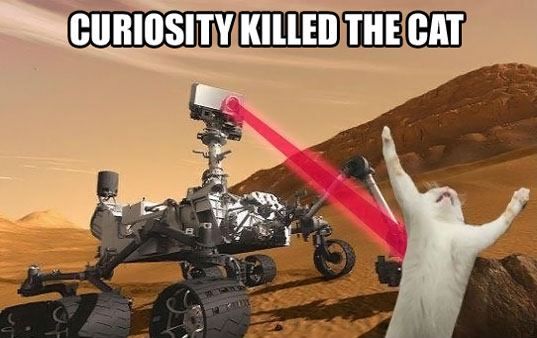
Is there life on Mars? NOT ANYMORE!

Is curiosity a bad thing?  Well, it depends how genre savvy you are.  It seemed to work out pretty well for Alice, but not quite so well for Pandora (or the rest of the ancient Greek world, for that matter).  Curious monkeys seem to come out all right, and their constantly curious counterparts also seem to do okay in the end, but anytime you run into schmuck bait you know that things aren’t going to turn out well.

The truth is, for just about every stock Aesop warning about the perils of being overly nosy, you can find another one exalting it as a virtue.  In fact, you could say that curiosity is a crapshoot.

But what is curiosity exactly?  The Merriam-Webster dictionary defines it as “desire to know,” and “interest leading to inquiry.” As you can imagine, there are situations where this could be good or bad.  Thus, what a story says about curiosity often changes depending on its genre.

For example, in most horror stories, curiosity and nosiness are usually bad, leading the protagonists to go places where they shouldn’t and uncover things that should never have been uncovered.  At the same time, a lack of curiosity can also be fatal … in fact, a lot of things can be fatal in a horror story.

In mythology and folklore, curiosity is often even worse.  From Pandora to Eve, Psyche to the proverbial cat, curiosity leads to Very Bad Things.  Perhaps this is because these kinds of stories are mostly tales of warning, passed on from generation to generation as a way to preserve our collective knowledge about the dangers of the world, rather than inspire us to go out and face them.

(As a side note, there are a few exceptions in the realm of folklore.  In the Bluebeard myth, curiosity killed off all of Bluebeard’s previous wives, but combined with cleverness, faith, and friendship, it saved the last one’s life.)

In fantasy, curiosity is often a mixed box bag.  For example, take the hobbits: most of them are perfectly content to live out their lives in the shire, but the few who are inquisitive enough to venture outside end up saving the world in a way that the elves, dwarves, and humans never could.  At the same time, it puts them through a great deal of pain, even after the world is saved–neither Bilbo nor Frodo are ever able to be content in the shire again.

Curiosity, in other words, is complicated.  It’s not just a quirk or a character flaw–it’s an underlying quality of the hero’s journey.  Without curiosity, either of the world around him or the internal struggles within, the hero would be content to live out an unremarkable life.  Certainly he wouldn’t have the capacity for the cleverness, guile, wisdom, and sensitivity that he needs in order to descend into the darkest dungeon, face his own nadir, and return with the elixir of life.  Curiosity may lead to sorrow, pain, or even death, but it also leads to adventure.

As a subgenre of fantasy, many of these issues carry over into the realm of science fiction.  And yet, as a genre unto itself, science fiction has a distinctly positive view of curiosity compared to other genres.  Science is nothing if not the primary process of human inquiry, where curiosity is not only a virtue but the virtue, one of the most important aspects of humanity.  Consider these words from Adam Steltzner, one of the leading engineers of the NASA Mars Curiosity mission:

Likewise, curiosity is a staple of science fiction.  In Star Trek, it’s the basis of the entire mission: “to explore strange new worlds, to seek out new life and new civilizations, to boldly go where no one has gone before.” In Doctor Who, it’s how the Doctor finds his companions.  In Babylon 5, it’s Delenn’s curiosity about the humans that ultimately saves all the alien races.  And in 2001: A Space Odyssey, it’s the gift from the black monolith that helps monkeys to turn bones into space stations (well, not literally, but you get the idea).

Curiosity isn’t a central theme in most of my books, but it is a major part of Genesis Earth.  If anything, that book is about the importance of balancing curiosity about our universe with curiosity about ourselves and what it means to be human.  In Star Wanderers, Noemi’s curiosity is a huge part of her story, helping her to turn around a horrible (not to mention awkward) situation.  In Desert Stars, curiosity is complicated; it leads Jalil far away from home and puts a schism between him and the girl who loves him, but it also leads him to discover the truth about who he is, giving him the strength to return.

In general, I suppose it all comes down not only to genre, but to the underlying worldview of the author of the story.  Since I have a very positive and enthusiastic view of curiosity, it usually works out for the best in the stories that I write. Then again, perhaps that’s why I’m drawn to science fiction … how about you?

Do you like your chapters named or numbered?

There’s an interesting article linked on The Passive Voice blog about the importance of a table of contents, especially in ebooks.  The article is geared mostly for non-fiction, which is a whole different beast from novels and novellas, but the discussion on TPV got me thinking: for ebooks, is it better to name chapters or to merely number them?

In the comments section on TPV, Jamie makes an interesting point:

With e-books in particular I think there needs to be more care taken with the TOC. I can easily find my place with a print book even without a book mark, but with an e-reader, it’s possible to lose your place very easily, and “loc 4950″ is not going to be committed to my memory banks. I know what happens in the chapter titled “His Grace of Avon Takes Command of the Game,” but I’m not sure if that was chapter 16 or 15 “loc 1730″ or what. I won’t remember the number.

For organizational purposes for my own use I title my chapters, and I believe that readers will appreciate that habit, too, and will be more forgiving if they use the Look Inside feature and see those headers vs. if they just see “1, 2, 3.”

I try to make sure the titles are enticing and pique the curiosity of anyone who would see them in a TOC. They’re not spoilers, because unless you’ve made it to the end of the previous chapter, you’ll likely have no idea what the next chapter’s title is referring to (and if it is obvious, it simply increases the suspense/curiosity). The titles Makes Sense in Context (TM).

When I first learned how to make an ebook, the concept of a table of contents for a novel seemed pretty weird.  I was used to reading print books, which you can flip through much easier and find what you’re looking for just from the feel of the pages.  But with ebooks, obviously that’s much different.  A table of contents is more than just a list of chapters, it’s an important navigational tool that can’t be overlooked.

But if chapter hyperlinks are perhaps the only way to flip through the middle of the book, does that mean that merely numbering the chapters is insufficient?  I have to admit, the concept of naming each chapter seems a bit old-fashioned, but the technology has changed and as writers, we need to change with it.

In the context of a hyperlinked table of contents, numbers are practically meaningless.  They can even be quite ugly, if there’s a huge list of them that sprawls beyond the screen.  Chapter titles can sprawl even more, but they at least provide some idea of what lies on the other side of the link.

I’ve done it both ways.  For example, the table of contents for Genesis Earth looks like this:

Table of Contents

Copyright Page
Table of Contents

The Wormhole | The Mission | Terra | Cryothaw | The Ghost Ship | Trust and Deception | Betrayal and Discovery | Arrival | First Contact | Call and Answer | Earth | Rescue | Emotion and Reason | Planetfall | The Natives | Origin and Destiny | A New Genesis | Epilogue

Author’s Note | Acknowledgments

Most of the chapter titles are pretty mysterious, but I was kind of going for that.  And in any case, is it possible to make them completely unambiguous without spoiling key parts of the story?  It seems like the art of naming chapters is much subtler and more complex than you’d think at a first glance.

In contrast, the table of contents for Desert Stars looks like this:

Table of Contents

Copyright Page
Table of Contents

Prologue
Book I: Dome and Desert
1 | 2 | 3 | 4 | 5 | 6 | 7 | 8 | 9 | 10
Book II: Sand and Stars

11 | 12 | 13 | 14 | 15 | 16 | 17 | 18 | 19 | 20 | 21 | 22

Author’s Note | Acknowledgments

I kept the numbers for the chapters, but divided the novel into two sections or “books” and listed the numbered chapters as minimally as possible, to save space.  I suppose it looks all right, but as a guide to navigating the book, I’m not sure how useful it is–not to mention how hard it can be to click on a hyperlink that’s only one character long, especially on a touchscreen.

For Journey to Jordan, there were so many entries that I didn’t bother listing them all in the table of contents.  Instead, I divided each part into sections based on location, then listed the locations in the table of contents and the posts/chapters at the head of each section, complete with hyperlinks.

As a side note, it’s actually pretty amazing how internal hyperlinks can change the experience of the book.  For one thing, it opens up all sorts of possibilities for alternate endings and “Choose Your Own Adventure” type stories.  Is it possible to list a chapter in the <manifest> without including it in the <spine>?  I don’t think it is (at least, not in a well-formatted ebook), but if you could find a way to do that, you could add all sorts of hidden content and Easter eggs …

In any case, for my shorter Star Wanderers novellas, I think I actually prefer numbered chapters.  The stories are short enough that the numbered subdivisions still have meaning, and the chapter lists aren’t long enough to look too cluttered.  Besides, I’ve already started the series in this particular format so I think it will be better to keep it this way.

But for future books and future series … I don’t know.  What do you think?  Are ebook chapters better off named or numbered?

July Smashwords sale–all books 50% off!

swlogoEvery summer, Smashwords does a sale in which authors can enroll their books.  This year, I’ve enrolled all of mine at 50% off, so all of them are under $2.50.  Check it out!

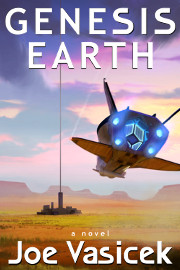
thumb (Genesis Earth)Genesis Earth
A boy and a girl on a voyage to an alien star.
Price: $4.95 $2.48

thumb 2 (Bringing Stella Home)Bringing Stella Home
He’ll go to the ends of the galaxy to save his brother and sister.
Price: $4.95 $2.48

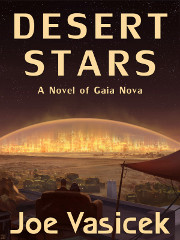
thumb (Desert Stars)Desert Stars
A tale of adventure and romance from the fringes of an interstellar empire that has forgotten its holiest legend: the story of Earth.
Price: $4.95 $2.48

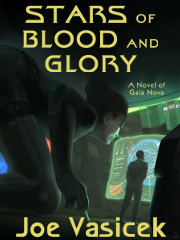
thumb (Stars of Blood and Glory)Stars of Blood and Glory
The only hope for the last free stars now lies on the path of blood and glory.
Price: $4.95 $2.48

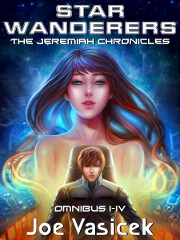
SW-TJC (thumb)Star Wanderers: The Jeremiah Chronicles (I-IV)
He wanders the stars in search of a home. Instead, he got a girl without one.
Price: $4.99 $2.49

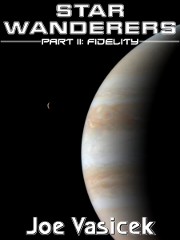
Star Wanderers II (thumb)Star Wanderers: Fidelity (Part II)
Is fidelity worth the price of freedom? Can love take root beyond the stars?
Price: $.99 free!

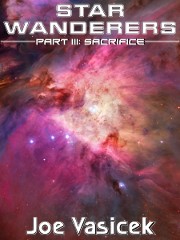
Star Wanderers III (thumb)Star Wanderers: Sacrifice (Part III)
She gave up everything to wander the stars with him. Now, he must do the same.
Price: $2.99 $1.49

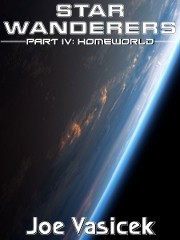
Star Wanderers IV (thumb)Star Wanderers: Homeworld (Part IV)
They’ve finally found a world to call home. But first, they have to fight for it.
Price: $2.99 $1.49

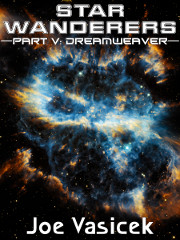
SW-V Dreamweaver (thumb)Star Wanderers: Dreamweaver (Part V)
He saved her from death, but to save him, she must command the power of dreams.
Price: $2.99 $1.49

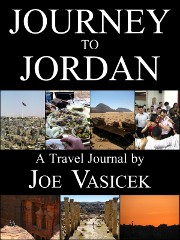
thumb (Journey to Jordan)Journey to Jordan
Travels of a young Mormon writer to Jordan, Egypt, and the Holy Land.
Price: $2.99 $1.49

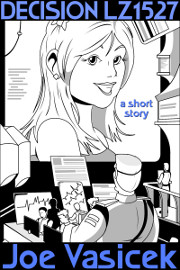
thumb (Decision LZ1527)Decision LZ1527
A boy, a girl, and a whole crew of matchmakers.
Price: $.99 free!

One of the great things about Smashwords is that these prices are the same throughout the world–no extra surcharge for international sales.  So if you live outside the United States and don’t have a US bank account, these are the best prices you’re going to find.

These books will remain 50% off on Smashwords through the month of July.  Just use the coupon code SSW50 to get the discount. Smashwords does accept Paypal, so you don’t have to sign up for an account or share your credit card information to purchase.

If you’ve been meaning to check out some of these books but haven’t gotten around to it, this is a great way to try them out.  And if you want to sample them first, the first 15% to 25% is available on each book’s Smashword’s page.

Enjoy! 😀

Chance to win GENESIS EARTH and SW-II: FIDELITY

In case you didn’t know, my fellow indie author and KBoards member Elle Casey has put together a book giveaway, and she was kind enough to include a couple of my books in it.  If you would like a chance to win a free ebook copy of Genesis Earth or Star Wanderers: Fidelity (Part II), head over to her blog and check it out.  I’m giving away 10 electronic copies of each title, but I’m only one author of many so if you sign up for my books there’s a very good chance you’ll win one.

The giveaway has a lot of different kinds of books, but they trend more toward YA and New Adult (a recently coined categorization that eludes me).  Out of all my books, Genesis Earth and Star Wanderers seemed like the titles that fit best, so those were the ones I chose.  But there are a lot of others to choose from, with no limit on how many you sign up for, so feel free to take your pick!

Tomorrow (Wednesday) is the last day of the promotion, so be sure to act quick!