An evil genius, perhaps, but brilliant either way.
Author: Joe Vasicek
Joe Vasicek is the author of more than twenty science fiction books, including the Star Wanderers and Sons of the Starfarers series. As a young man, he studied Arabic and traveled across the Middle East and the Caucasus. He claims Utah as his home.
How I Would Vote Now: 2001 Hugo Awards (Best Novel)
The Nominees

Midnight Robber by Nalo Hopkinson

The Sky Road by Ken Macleod

A Storm of Swords by George R.R. Martin
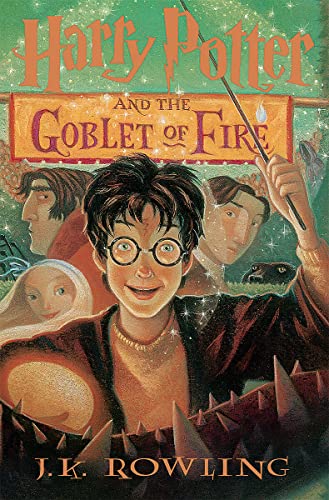
Harry Potter and the Goblet of Fire by J.K. Rowling
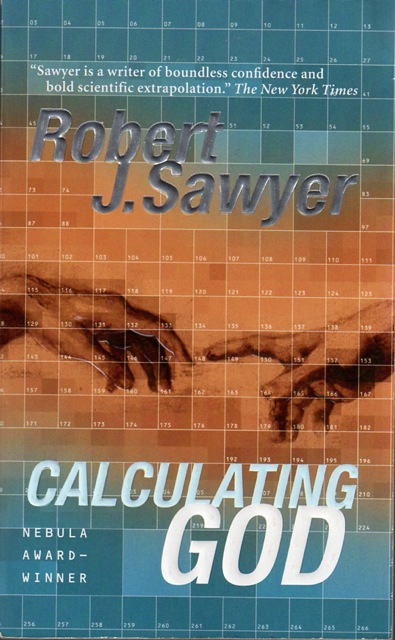
Calculating God by Robert J. Sawyer
The Actual Results
- Harry Potter and the Goblet of Fire by J.K. Rowling
- A Storm of Swords by George R.R. Martin
- Calculating God by Robert J. Sawyer
- The Sky Road by Ken Macleod
- Midnight Robber by Nalo Hopkinson
How I Would Have Voted
- Harry Potter and the Goblet of Fire by J.K. Rowling
- No Award
- Calculating God by Robert J. Sawyer
Explanation
I remember when everyone used to rave about George R.R. Martin. Many people said he was the American Tolkien, and not just because of the “R.R.” initials in his name. They said he was revolutionizing epic fantasy—that he was doing tremendous things for the genre, subverting expectations in a way that was pure genius. All of us who were writing fantasy at the time fell somewhere under his shadow.
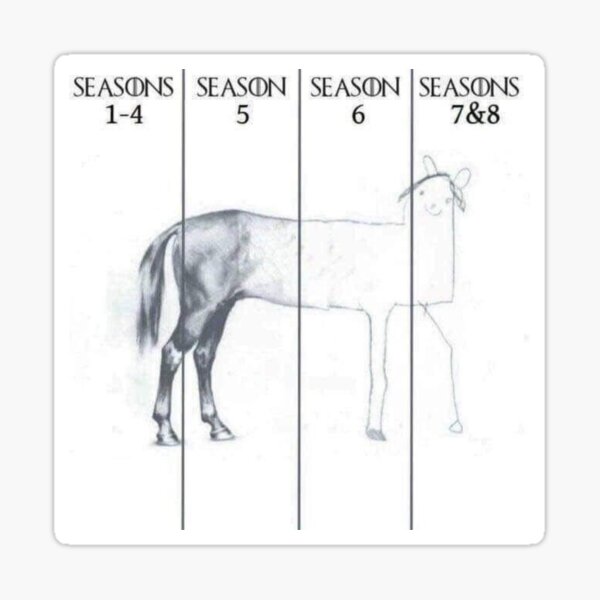
Today, I believe that few people have done more to destroy epic fantasy than George R.R. Martin. His Game of Thrones TV series, which was probably faithful to his outline for the books, ended so badly that no one talks about the show today, except to share this meme:
Larry Correia also makes an excellent point that by failing to finish his series, Martin has placed an impossible burden on up-and-coming epic fantasy authors by burning out readers on the genre. Because of Martin (and also Patrick Rothfuss), readers became unwilling to try out a new author until they had already finished their epic fantasy series. But because epic fantasies are so massive they take a long time to write, making this almost impossible for both indie and tradpub authors if the first book isn’t a commercial success.
The one upside to this vicious cycle is that it gave us my favorite fantasy meme of all time:

(So what does it say that Sanderson now sports a beard? Are we living in the shadow universe??)
But I think that Martin ruined epic fantasy much earlier than all that. In fact, I think that the worst damage he did to the genre was back when books 2 and 3 came out, because of how it normalized pornography, graphic violence, and nihilism. Because of this, I think it’s more accurate to call Martin the anti-Tolkien, because Tolkien’s secret sauce was the deep spiritual undercurrent in all of his works. And it’s because of Tolkien’s reverence for things spiritual that Lord of the Rings will probably still be read two hundred years from now, when no one remembers George R.R. Martin’s name.
Martin set out to subvert reader expectations, including the expectation that his books would exalt the good, the true, and the beautiful. At the time, epic fantasy readers were burned out on all the Tolkien clones, and were hungry for something new. Martin’s dark and gritty tone was a breath of fresh air—or so they thought. And the TV series brought in a host of new fans, most of whom came for the bare boobs and the brutal bloodsport.
But Martin’s books were fundamentally broken, and he knew it. In his eagerness to subvert expectations, he put himself in a position where he could not write a satisfying ending without denying the fundamental premise on which the whole series attempts to stand. Sargon of Akkad says it best in this video:
So in the end, it turned out that the greatest expectation Martin subverted was the expectation that he would finish the damned books. All of which is why I believe that A Storm of Swords rightfully belongs below No Award on this ballot.
A Storm of Swords wasn’t the only dark and gritty book on the ballot for this year. I screened Midnight Robber with AI, and ultimately decided to skip it. Here is what ChatGPT said:
Sexual Violence: A central plot element involves Tan-Tan being subjected to sexual abuse by a family member. This experience shapes much of her growth and her eventual rebellion against the oppressive environment. While these events are not gratuitously described, they are explicit enough to be disturbing and are critical to the narrative.
Hopkinson’s work delves into themes of colonialism, identity, and resilience. By incorporating Caribbean dialect and folklore, the novel celebrates cultural heritage and critiques systemic oppression. Tan-Tan’s transformation into the Robber Queen symbolizes empowerment and resistance against patriarchal and colonial structures.
I also decided to skip The Sky Road, partly for content issues, but mostly to avoid the leftist message fiction. Here is what ChatGPT said:
The Sky Road is probably not a good fit for you because politics is central to the story rather than merely part of the background. It spends substantial time on communist and socialist ideas, revolutionary history, ideological factions, nuclear politics, and debates about how society should be organized… On top of that, the book begins with a casual extramarital sex scene and treats the relationship without much moral concern.
I cannot stand message fiction. Not from the left, and not from the right. I recently tried to read Camp of the Saints, which lots of people on the right are now extolling because of the ongoing refugee crisis in Europe, but I DNFed it ten pages in because it’s just pure message fiction.
I really wanted to like Calculating God, because 1) Robert J. Sawyer is a genuinely good writer, and 2) the premise (that an alien scientist shows up at Earth and is surprised to find that many of us don’t believe in God, because all of the aliens certainly believe) was genuinely intriguing. But after getting about halfway through the book, it started to devolve into a cartoonish plot pitting the good guys against Creationist saboteurs. Skipping to the end, I realized that the book is devoid of all nuance: Sawyer’s answer to the creationism vs. evolutionism debate isn’t to point out that it’s a false binary, but to posit a transhumanist deism as the actual one true path. Really?
This is my issue with Sawyer: he isn’t at all comfortable with ontological ambiguity. If the Bible says that God created the world in seven days, then it must mean seven literal days, not seven temporal periods, or seven poetic divisions for literary effect, or seven stages in the temple liturgy meant to symbolically represent God’s role in the creation to the pre-literate, pre-scientific society of the ancient Hebrews, or any of the other non-literal readings of Genesis. That frankly makes him more of a creationist than me, a deeply religious and devoted believer in Christ.
This aversion to nuance and ambiguity seriously hobbles his books. I remember reading the last paragraph of The Terminal Experiment and laughing out loud when he described how the soul particle (which was the premise of the book) of the main character flew up and merged once again with God, who is really just the source of all soul particles in the universe. He obviously thought he was being profound, but he made it so literal that I felt he was trying to bash a round peg into a square hole with a sledgehammer. Frankly, the book would have been better if that last paragraph had been cut.
Calculating God wasn’t terrible, though, or an annoying woke (or anti-woke) message book, so I’d still vote for it after No Award. I just think he flubbed it.
As for Harry Potter and the Goblet of Fire, I think it’s a great fantasy book, and totally deserving of the award, as are all of the Harry Potter books. After 2001, though, I think the Hugo organizers changed the rules to exclude juvenile fiction, because they didn’t want Rowling to run away with the award every year. Which seems totally snobbish and asininene to me, but whatever. I don’t pretend to know how these things work.
“And that, kids, is how I met your motherboard!”
August group promotions

July 2026 reading recap
Books I Finished

The Future is Peace by Aziz Abu Sarah & Maoz Inon


How to Disagree Better by Julie Minson

The Trail to Seven Pines by Louis L’Amour

America’s Expiration Date by Cal Thomas

Jews vs. Rome by Barry Strauss

Knight of Shadows by Roger Zelazny

Jesus & John Wayne by Kristin Kobes Du Mez

High Lonesome by Louis L’Amour

How to Write Bestselling Fiction by James Scott Bell (Great Courses)


The Changing World Order by Ray Dalio

The Invisible Coup by Peter Schweizer

The Technology Trap by Carl Benedikt Frey
Books I DNFed
- The Forge of God by Greg Bear
- You Can’t Take it With You by Messie Condo
- Mystic Quest by Laura & Tracy Hickman
- Terror, Love, & Brainwashing by Alexandra Stein
- How to Write Romantasy by Jenna Marci
- The Avatar by Jonathan Cahn
- Crafting Novels and Short Stories by Readers Digest
- The Psychology of Christian Nationalism by Pamela Cooper-White
- The Hidden Tradition of the Kingdom of God by Margaret Barker
- Remake by Connie Willis
- How to Defend Yourself Against Alien Abduction by Ann Druffel
- Calculating God by Robert J. Sawyer
- Crazy Like Us by Ethan Watters
How I Would Vote Now: 2002 Hugo Awards (Best Novel)
The Nominees
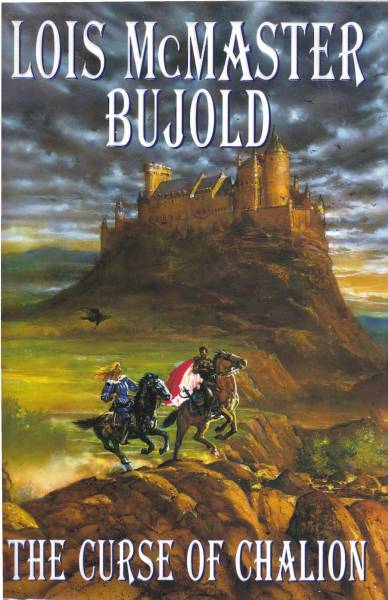
The Curse of Chalion by Lois McMaster Bujold
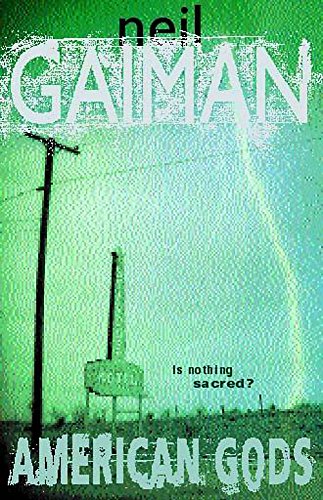
American Gods by Neil Gaiman
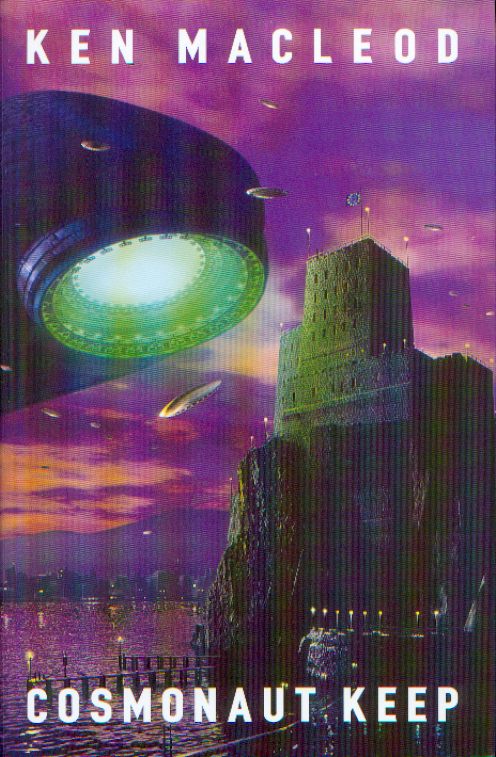
Cosmonaut Keep by Ken MacLeod
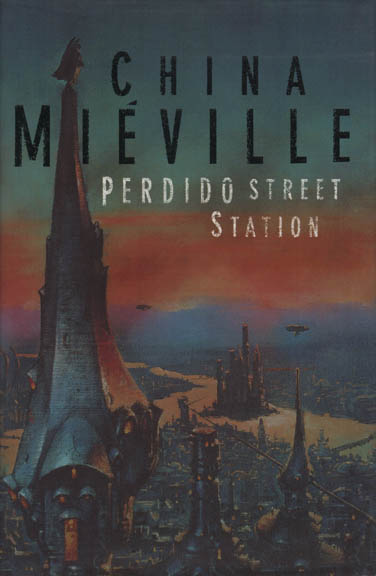
Perdido Street Station by China Mieville
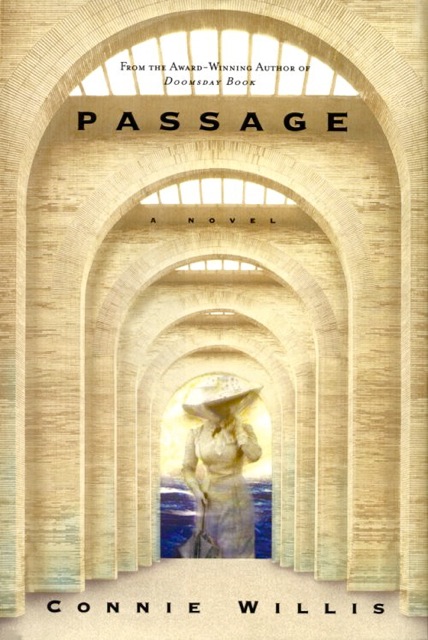
Passage by Connie Willis
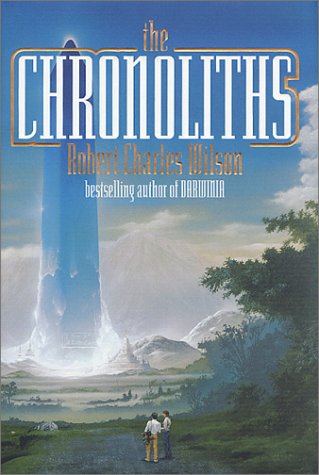
The Chronoliths by Robert Charles Wilson
The Actual Results
- American Gods by Neil Gaiman
- The Curse of Chalion by Lois McMaster Bujold
- Passage by Connie Willis
- Perdido Street Station by China Mieville
- The Chronoliths by Robert Charles Wilson
- Cosmonaut Keep by Ken MacLeod
How I Would Have Voted
- The Chronoliths by Robert Charles Wilson
Explanation
I read American Gods and enjoyed it at the time, but that was before Gaiman’s numerous sex scandals came to light. The man is a creep, and probably a rapist—and knowing that now, so many of the darker, creepier things in American Gods make more sense. Like the scene where a god disguised as a prostitute consumes a John completely through her vagina. Or where an Arab cab driver and his (Arab?) passenger go from driving in the cab in one scene, and then mutually fellating each other in the next. Weird sex stuff that seems to come out of nowhere.
So that’s why I can’t affirmatively vote for this book—and honestly, it’s borderline under No Award as well, just for the extreme content. But I did enjoy it at the time I read it, when I was less sensitive to this sort of thing. So I’ll let it pass above No Award.
I’ve talked about Bujold’s Chalion series elsewhere. In a lot of ways, it’s a really excellent fantasy series—the sort of thing that would normally be right up my wheelhouse. But midway through the first book, the main character casually drops that when he was coming of age, he was in a man-boy sexual relationship with a pedarast, and that in this world, that sort of thing is normal.
Yes, I know that this is historically accurate to things like ancient Greek and Macedonian culture, but still, it was enough to throw me out and make me DNF the book. After all, even if I have a plate of the world’s most delicious brownies right in front of me, I’m not going to partake if there’s also some dog shit mingled with the pile.
More weird sex stuff in Perdido Street Station was what made me DNF that one. The first scene is basically an explicit sex scene which, though fairly tame and vanilla as far as sex scenes go, was still way too early and way too explicit for me. Also, midway through, we learned that the girl was actually an animal of some kind, if I remember correctly. Or maybe a shapeshifter? It’s been so long that I can’t remember.
I started Cosmonaut Keep, but DNFed it because the first chapter didn’t really hook me or hold my interest, and I could tell early on that it was going to turn into political message fiction. Skip.
Passage also failed to hold my interest, though it did tip me off to Connie Willis’s formula. First, she chooses an area of history to study, preferably with a little bit (but not too much) of controversy. Then, she studies the heck out of it, until she comes to her own conclusions as to which side (or which historian) is right, and which is wrong. Then, she slaps a plot and some characters together, where the good guys represent the views she agrees with, and the bad guys represent the views she disagrees with. She writes it very beautifully, but also does her best to throw in every. Single. Thing. she researched over the course of the project, which is why her books are so massively huge. After all, it’s hardly ever the story. And the reason she wins so many awards (besides how genuinely charming and affable she is in person) is because her views align almost perfectly with the post-WWII neoliberal consensus. And since the people who vote for the Hugos are all so thoroughly blue-pilled, she’s practically one of their prophets.
Which brings me to The Chronoliths by Robert Charles Wilson. I am 99% sure that I would disagree with almost all of his politics, but I frankly don’t care, because he knows how to write a damn good story without any of the crappy message fiction we get so often from leftist writers. I am slowly reading through all of Wilson’s books, and so far, I think The Chronoliths is his best. The premise hooked me from the first page, and kept me on the edge of my seat right up to the very end. It also kept me guessing until the end, when it all came together in an enormously satisfying way. An amazing book, and probably in my top 5 of all Hugo nominated books—right up there with Dune, Ender’s Game, and Hyperion.
“…or was it God who fed me?”
I’m not even Muslim, but I love this video so much. The poor imam!
First Contact in Genesis Earth
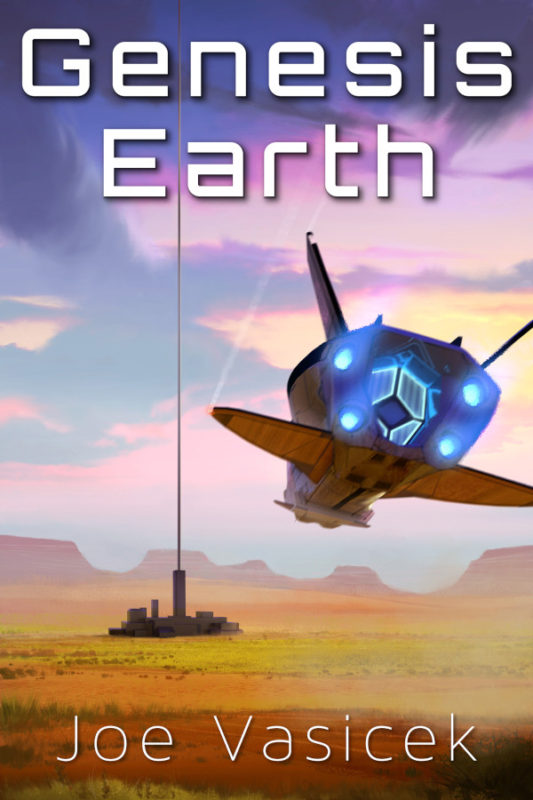
Genesis Earth by Joe Vasicek is a character-driven first-contact science fiction novel about two young scientists sent through an experimental wormhole to investigate an Earthlike planet and a mysterious artificial signal. Combining deep-space exploration, forced proximity, a reluctant explorer, far-future mystery, ancient artificial intelligence, and a slow-burn romantic relationship, the novel delivers an eerie and contemplative journey filled with scientific wonder, psychological tension, and increasingly personal questions about humanity’s place among the stars.
Tropes at a Glance: First Contact, Deep-Space Exploration, Reluctant Explorer, Forced Proximity, Far-Future Earth, Ancient Artificial Intelligence, Lost Human Civilization, Slow-Burn Romance
Why Genesis Earth Is a First Contact Story
Michael Anderson has spent his life studying alien planets, but he has never wanted to visit one. Born aboard Heinlein Station during humanity’s first attempt to create an artificial wormhole, he grows up haunted by Earth—a homeworld he knows only through photographs, stories, and the memories of his parents.
When the wormhole opens onto an unknown region of space, probes discover an Earthlike planet and detect a powerful signal that cannot be explained by any known natural phenomenon. Michael is the only qualified planetologist young enough to survive the decades-long voyage, so he is sent with astronomer Terra Beck to investigate.
Their mission is supposed to be scientific, but the possibility of first contact hangs over it from the beginning. Michael and Terra do not know who produced the signal, whether its creators are peaceful, or whether they are still present. They have no diplomatic team, military escort, or reliable first-contact protocol. They are two inexperienced scientists traveling alone toward a civilization whose technology may be millions of years beyond their own.
The closer they come to the planet they name Icaria, the stranger the evidence becomes. An enormous spacecraft appears without warning. An ancient space elevator hangs above a world that seems almost untouched by civilization. Primitive settlements exist beneath technological structures their inhabitants could never have built. Every discovery suggests intelligence, yet every attempt to understand that intelligence raises more questions.
How First Contact Drives the Story
First contact is not a single encounter in Genesis Earth. It is the organizing problem behind nearly every major decision Michael makes.
His desire to understand the unexplained signal draws him toward dangers that Terra would rather avoid. When their probes are destroyed, he must decide whether to retreat or risk approaching the mysterious ship directly. When alien technology enters their own vessel, curiosity and fear compete for control. Each new discovery forces Michael to choose between protecting the mission, satisfying his need for answers, and preserving the fragile trust between himself and Terra.
The first-contact mystery also exposes Michael’s deepest weaknesses. He has grown up beneath the expectations of brilliant parents who taught him that his mission could determine humanity’s future. He wants to be a careful scientist, but he also desperately wants to prove himself worthy of their sacrifices. Faced with discoveries larger than anything he imagined, he becomes controlling, obsessive, and increasingly willing to endanger himself in pursuit of answers.
Terra responds differently. Where Michael pushes toward the unknown, she often withdraws from it. Their opposing reactions create mistrust and conflict aboard a ship where neither can escape the other. Yet the danger also forces them to communicate, depend on one another, and reconsider the assumptions they brought from home.
Through these encounters, Michael’s understanding of first contact gradually changes. At first, he sees it as a historic scientific achievement—something that will secure his place in history and fulfill his parents’ ambitions. As the mission develops, contact becomes less about recognition and more about responsibility. The true question is no longer merely whether he can discover intelligent life, but how he should respond when the beings and civilizations he encounters do not fit his expectations.
Supporting Tropes and Genre Conventions
The Reluctant Explorer
Michael is a trained planetologist who would rather study alien worlds through a telescope than walk on one himself. He accepts the mission because of duty, family expectations, and the belief that no one else can perform it. His reluctance makes each step into the unknown feel consequential: exploration is not effortless adventure for him, but a repeated confrontation with fear.
Forced Proximity in Deep Space
Michael and Terra spend decades of objective time traveling aboard the Icarus, with no other human beings within light-years. Inside the ship’s narrow corridors, every disagreement becomes harder to avoid and every failure of trust becomes more dangerous. Their isolation turns the novel’s scientific mission into an intimate psychological story about two people learning whether they can survive one another as well as the unknown.
Slow-Burn Romance
Michael and Terra begin as colleagues who barely know each other and have been primed to distrust one another. Their relationship develops through shared work, arguments, rescues, confessions, and moments of vulnerability. The romance grows gradually out of dependence and hard-won trust rather than immediate attraction, giving the emotional arc a direct connection to the survival story.
Far-Future Earth and Lost Humanity
The wormhole does more than cross an enormous distance. Michael and Terra gradually discover that the silent universe around Icaria contains mysteries connected to Earth and the ultimate fate of human civilization. This far-future setting transforms first contact into an act of cosmic archaeology, as the explorers search through abandoned technology and incomplete evidence for signs of what humanity became.
Ancient Artificial Intelligence and Abandoned Megastructures
A ghost ship, an orbital elevator, autonomous machines, and technology that has continued operating long after its creators disappeared give the novel a strong ancient-technology mystery. These objects are not merely impressive scenery. They become forms of indirect communication, preserving fragments of purpose and history that Michael and Terra must interpret without knowing whether the machinery is helpful, hostile, or simply indifferent.
How Genesis Earth Develops These Tropes
Many first-contact stories focus on communication between two active civilizations. Genesis Earth takes a different approach. Michael and Terra encounter silence, automated systems, ancient infrastructure, and beings whose connection to the technology around them is unclear. First contact becomes a process of interpretation rather than a straightforward diplomatic meeting.
The novel also places unusually vulnerable people at the center of that process. Michael and Terra are young scientists rather than soldiers, politicians, or veteran explorers. They possess specialized knowledge, but they are emotionally unprepared for the isolation and responsibility placed upon them. Their scientific competence does not prevent fear, jealousy, pride, or misunderstanding from distorting their judgment.
That character dynamic gives the familiar first-contact trope a psychological dimension. Michael repeatedly assumes that enough information will make the unknown less frightening, while Terra recognizes that some discoveries cannot be controlled. Neither approach is entirely sufficient. They must learn that successful contact requires more than intelligence. It also demands patience, humility, trust, and a willingness to recognize forms of humanity that do not resemble the civilization they left behind.
The book’s moral perspective ultimately distinguishes technological progress from human flourishing. Vast machines can survive for millions of years, but they cannot by themselves preserve meaning, community, or purpose. Scientific discovery matters, yet the novel repeatedly asks what that discovery is for—and whether making history is worth anything if the pursuit destroys the relationships that give life its value.
The Story’s Tone and Emotional Payoff
Genesis Earth begins with scientific anticipation and gradually develops an eerie, claustrophobic atmosphere. The empty star system, silent spacecraft, narrow corridors of the Icarus, and unexplained movements of ancient machines create a persistent sense that Michael and Terra are being watched by something they cannot understand.
That tension is balanced by moments of cosmic wonder. Icaria’s oceans and continents, the view from the space elevator, and the remains of a civilization spread across the stars give the story a scale far larger than the two people at its center. At the same time, the novel remains emotionally intimate, grounding its largest discoveries in Michael’s longing for Earth and his changing relationship with Terra.
The eventual payoff is hopeful without dismissing the story’s losses. Michael and Terra discover that the future may not resemble the destiny their parents imagined, but that does not mean humanity’s story is over. Their journey transforms first contact from an encounter with something wholly alien into a meditation on inheritance, belonging, love, and the possibility of beginning again.
For readers looking for thoughtful first-contact science fiction with deep-space isolation, ancient technology, far-future mystery, and a slow-building relationship between two young scientists, Genesis Earth offers a distinctly personal journey into the unknown.
Where to Get the Book











Related Posts and Pages
Interesting breakdown of current fantasy subgenres
The YouTube algorithm recommended this to me, and I found it interesting. Made me want to try my hand at some portal fantasy, or perhaps some progression fantasy. (But I don’t think I could write straight-up litRPG. I’m just not enough of a gamer.)
How I Would Vote Now: 1988 Hugo Awards (Best Novel)
The Nominees
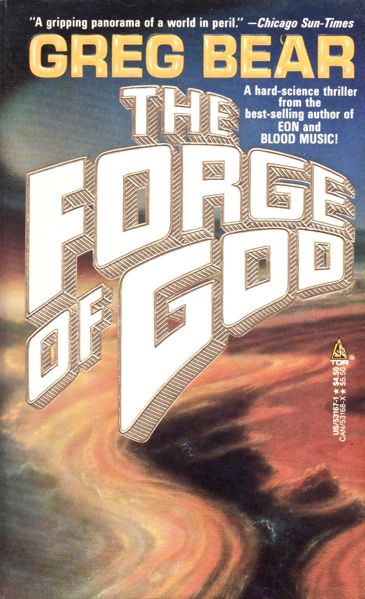
The Forge of God by Greg Bear
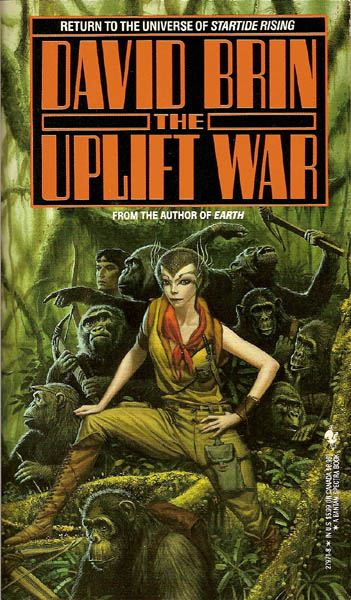
The Uplift War by David Brin
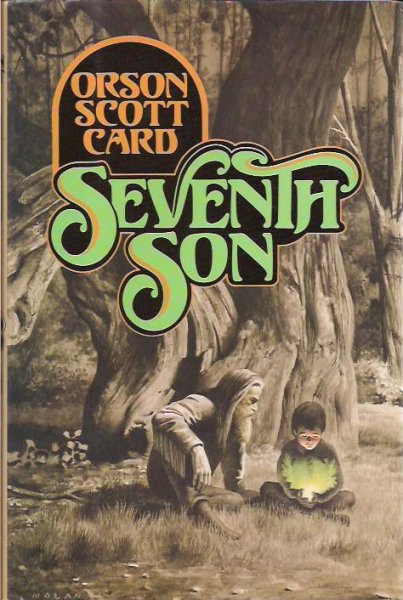
Seventh Son by Orson Scott Card

When Gravity Fails by George Alec Effinger
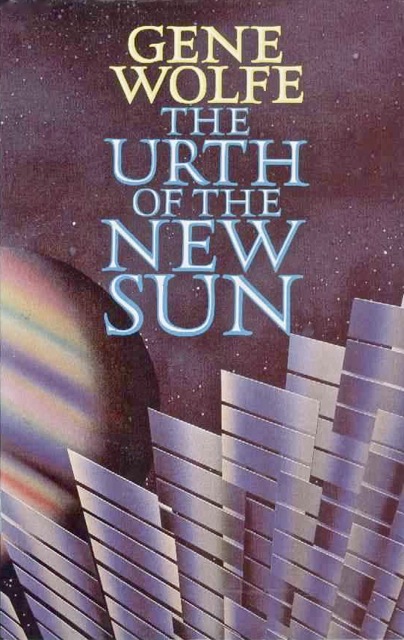
The Urth of the New Sun by Gene Wolfe
The Actual Results
- The Uplift War by David Brin
- When Gravity Fails by George Alec Effinger
- Seventh Son by Orson Scott Card
- The Forge of God by Greg Bear
- The Urth of the New Sun by Gene Wolfe
How I Would Have Voted
- Seventh Son by Orson Scott Card
Explanation
This wasn’t a terrible year for me. With that said, there’s only one book I can positively vote for, and that’s Orson Scott Card’s Seventh Son, the first book in his Alvin Maker Saga—and after all these years, it looks like he’s finally releasing the last book in the series! See, George R.R. Martin? It’s not that hard.
Card likes to play with a lot of Mormon themes in his books, and the whole Alvin Maker series is interesting because it’s basically the story of Joseph Smith in an alternate history America where magic is real and the United States never actually formed. So all of the different European colonies, some of which have achieved quasi-independence, are all vying against each other, while the Indian nations are using their magic to drive the white man out (or build an Indian New Jerusalem, though that doesn’t come into play until the later books). But the guy at the center of it all is this seventh son of a seventh son, which basically makes him the magical chosen one. And he’s basically Joseph Smith.
Card is often hit or miss for me. I didn’t enjoy his Homecoming series as much, because it’s basically the Book of Mormon in space, except he took the plot of the Book of Mormon and not much else, and tried to force it too much, to the point where it was way too on the nose. There were lines of dialogue that were almost line for line identical to the Book of Mormon, except without the deeper spiritual significance, and that turned me off. But hey, it was still way more interesting than most of the sci-fi stuff that wins the Hugos these days.
The Alvin Maker series, on the other hand, is much more subtle and nuanced with the Mormon elements—not on the nose at all. So I enjoyed Seventh Son, and plan to read the rest of the series, including the final book when it comes out. It’s good stuff. Kind of similar to Dave Butler’s Witchy Eye, if you’ve read that too. Except with a fantasy Joseph Smith.
As for the other books: I didn’t read The Urth of the New Sun, because I couldn’t really get into the first book. Everyone says Gene Wolfe’s writing is some of the best, but that book was just too macabre for my sensibilities, so I DNFed the book and the series. But I might be willing to try it again, with a strong enough recommendation. There weren’t any overt content or political issues that made me choose to skip it.
The Uplift War is also a series that I DNFed with the first book. I got about halfway through Sundiver before I gave up on it. The thing that really got to me was David Brin’s dogmatic atheism: basically, after first contact, all religions have been proven false, so everyone who still holds onto some religious faith is an obvious crackpot or wacko, according to the author. Which really just shows that Brin is the kind of atheist who hates religion because he doesn’t understand it.
Would first contact with an intelligent alien species send shockwaves through the religious world? Yes, but it wouldn’t necessarily prove the non-existence (or conversely, the existence) of God. In fact, it would actually confirm the truth of some Latter-day Saint scriptures that explicitly state that God has created “worlds without number” and peopled them with His children.
Brin’s dogmatic atheism isn’t super explicit in these books, but there was just enough of an undercurrent there that it turned me off. After all, why should I feel obligated to read an author who’s incapable of nuance in an area of life that matters so much to me? And if he’s incapable of nuance in one area, how can I have confidence that he’ll be nuanced in other areas?
As for When Gravity Fails, I screened that one with ChatGPT and decided to skip it. Here’s what the AI said:
🔞 Explicit Content
Graphic Violence & GoreProtagonist encounters brutal, explicit violence: victims are mutilated, tortured, including scenes involving child and adult victims.
Strong Language
Abundant profanity—including frequent use of the F‑word—used naturally to reflect the raw, urban setting.
Sexual & Cybernetic Body Mods
Includes prostitution, sexual violence, and explicit sexual interactions. Characters frequently undergo body modifications: gender swaps, personality “moddies,” and cosmetic changes central to character and plot.
✊ Progressive & Social Themes
Gender Fluidity & IdentityCyberpunk tech enables characters to alter their gender, identity, and personality, challenging fixed notions of self.
All of those things are pretty bad, but if the only issue was violence against children, that would still be enough for me to give it a hard pass. Ever since I became a father, I do not do violence against children anymore. Not at all. No.
Which leaves The Forge of God. I really wanted to like this book—truly, I did—but after 200 pages, I just had to give up. It’s got a really good premise, though: basically, two different kinds of aliens land simultaneously, in the United States and in Australia, but the ones in Australia claim that they are there to usher in a new age of great prosperity for humanity, while the one in the US says that the other aliens really want to consume and destroy the Earth. And when the humans confront the aliens in Australia with what they’ve learned from the other alien (who dies pretty early on), the Australian aliens all self-destruct. And then things start to get weird.
It’s a really great premise, but unfortunately the whole story is basically an hour by hour, blow by blow of how the government bureaucracy reacts to and handles the first contact event. Which means that almost all of the characters are government bureaucrats (except for a random sci-fi author, who inexplicably becomes an advisor to the president after crash landing his single engine plane in a restricted zone—author insert much?) and most of the “action” of the novel is really just filing paperwork or passing things up the chain. I kid you not.
The premise alone sustained me for 200 pages, but after that I decided I couldn’t stand the bureaucracy. If the book had been cut to half the length, it would have been a better book.