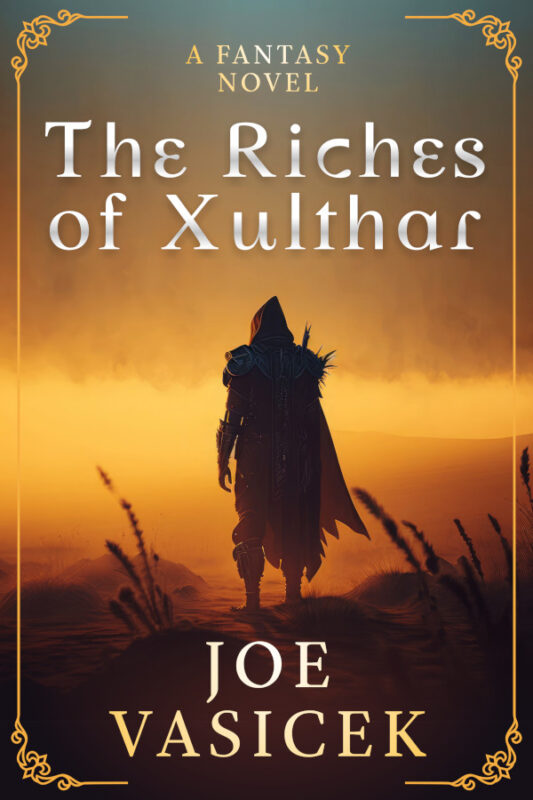
What happens when treasure is not just dangerous, but spiritually corrupting? In The Riches of Xulthar, the lost city’s legendary wealth promises restoration, justice, power, and freedom—but every coin carries a curse. This standalone sword-and-sorcery fantasy adventure asks whether cursed treasure can ever be used for righteous ends, or whether some forms of wealth must be rejected before they turn heroes into monsters.
Where the Idea Came From
The Riches of Xulthar began as an experiment in AI-assisted storytelling: a fantasy adventure story in the style of Robert E. Howard. But to make it different from a generic AI story, I added this theme and used it to shape the story. From that, the story grew into a full novel about a fallen nobleman, a freed slave, a ruined desert city, and a treasure that corrupts everyone who seeks to possess it. As I developed the story through outlining, drafting, humanizing, and revision, the cursed wealth of Xulthar became more than just a sword-and-sorcery adventure hook—it became the moral heart of the book.
How the Corrupting Power of Wealth Shapes the Story
The world of The Riches of Xulthar has already been broken by plague, famine, war, and collapse. Into that shattered world comes the coin of Xulthar, which appears at first to restore trade and stability. But the coin is cursed: it slips away from honest farmers, tradesmen, and laborers, while multiplying in the hands of corrupt princes, dishonest merchants, slavers, and men who grow rich through exploitation. In other words, the wealth of Xulthar does not merely reveal greed—it rewards it.
That curse is personal for Roderick of House Valtan. His father lost everything for speaking the truth about the coin, and Roderick seeks the lost city because he believes its treasure can restore his family’s honor. That makes his temptation more dangerous than simple greed. He does not want riches merely for pleasure or indulgence. He wants them for justice, restoration, and noble purpose. He imagines all the good he could do with Xulthar’s wealth: rebuild his house, right old wrongs, and even free the enslaved. But the deeper horror of Xulthar is that cursed wealth can twist even righteous desires into chains.
The Dark King embodies that corruption. He thinks he rules Xulthar’s treasure, but in the end, he is also enslaved by it. The final test of the book is not whether Roderick can defeat the Dark King in battle, but whether he can refuse the treasure afterward. In many fantasy adventure stories, the hero wins the hoard as his reward. In The Riches of Xulthar, the hoard is the final enemy. Roderick’s true victory comes when he rejects the riches entirely, breaking the illusion that cursed power can ever restore true honor.
What the Corrupting Power of Wealth Says About Us
The danger of wealth is not only that it makes people greedy. The deeper danger is that it gives greed a language of virtue. Wealth can promise safety, influence, justice, independence, even charity. It can whisper that the world would be better if only the right person held enough power. But The Riches of Xulthar suggests that no treasure built on corruption can produce freedom, no matter how noble the intention. True riches are found not in gold, rank, or conquest, but in love freely given, honest labor, family, peace, and the courage to walk away from power that would destroy the soul.
Why This Theme Matters to Me
When I wrote The Riches of Xulthar, I was also thinking a lot about creativity, technology, ownership, and what makes a story truly human. In a way, that connects directly to the theme of cursed wealth. Tools, power, money, and technology are not evil by themselves, but they become dangerous when we let them own us. For me, the heart of this book is Roderick’s final choice: to refuse the treasure, keep his soul, and build something honest with the woman he loves.
Where to Get the Book








Related Posts and Pages
Explore my other standalone books here.
Return to the book page for The Riches of Xulthar.