Why everyone is getting AI writing wrong

Apparently, there’s a lot of noise being made online right now by writers (and some readers) who are furious that anyone might us an AI tool in their writing process. I wouldn’t know, because I’m not on social media anymore, and I just haven’t had the time to follow that sort of ragebait nonsense. But this guy has a very well-reasoned take on the whole AI controversy, at least how it applies to books and writers. Worth hearing him out, especially if you’re a writer.

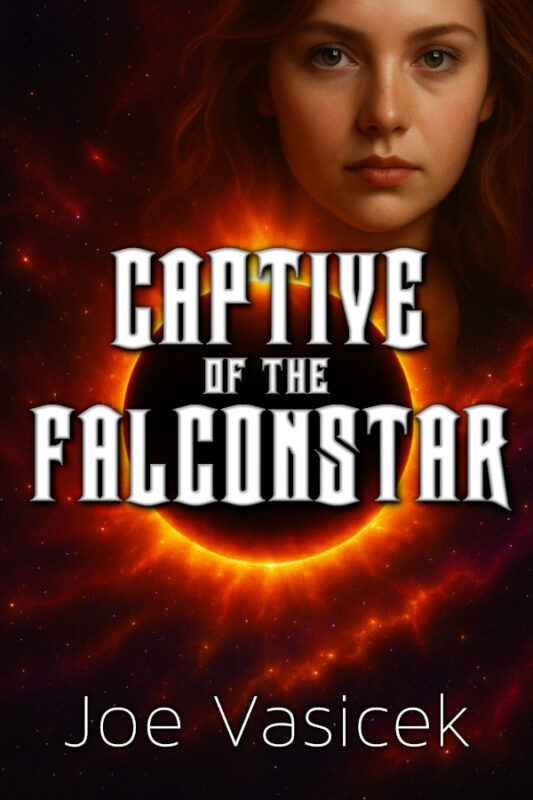
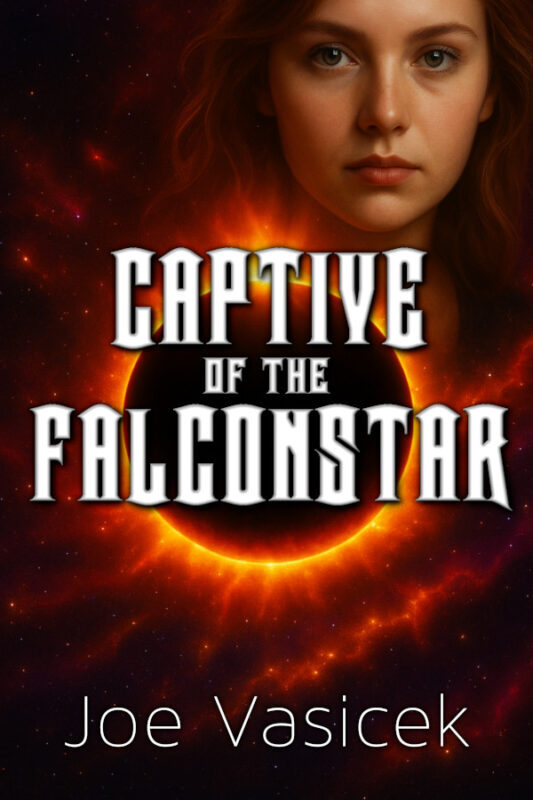
Author’s Note: Captive of the Falconstar

This is the author’s note I wrote for Captive of the Falconstar. To preorder the novel, click here.

As a young reader, I noticed an interesting pattern in the science fiction books I used to read. Whenever there were three books in a trilogy, the first one was usually a standalone of sorts, with a straightforward plot arc and a satisfying conclusion. But the second book in the trilogy either ended in a major cliffhanger, or else followed a tragic arc with a very unsatisfying conclusion that set things up for the third and final book in the trilogy, which wraps things up in a much more satisfying way. Over time, I internalized this basic rhythm, and still keep it in mind whenever I outline a new series arc.

With the Falconstar Trilogy, I had the idea for the first book long before I knew where the series itself was going. But I found it very difficult to write Queen of the Falconstar until I knew how the rest of the trilogy would end. For that reason, Queen of the Falconstar remained an unfinished draft on my hard drive for the better part of a decade, until I dusted it off in 2020 and tried to rewrite it as a novella. After running it through my writing group, I had a long conversation with my wife, in which I shared some of my story ideas for books 2 and 3. Her response was the catalyst that became Captive of the Falconstar: she basically said “Sonya is too much of a passive character. You should make her the villain/anti-hero of book 2, and give her a revenge plot.”

Suddenly, everything came together, and I knew exactly what I needed to do. I scrapped the novella version of Queen of the Falconstar and turned it into a novel, publishing it in 2021. I then set the Falconstar Trilogy aside to finish The Stars of Redemption (the third book in the Genesis Earth Trilogy) and Children of the Starry Sea. Basically, I had a lot of irons in the fire and wanted to finish those other WIPs before finishing what I’d started with Falconstar. Also, I wanted to see how Queen of the Falconstar did as a standalone, to judge whether or not to prioritize the next two books.

Then, in 2022, OpenAI released ChatGPT and everything began to change. Suddenly, generative AI was turning the writing world upside down. Two camps began to emerge: the first and most vocal was vehemently opposed to all things AI, but especially with using AI as a writing tool. From what I can tell, between a third to a half of all writers fall into that camp. The other half, however, quietly began to implement AI in their writing process in varying degrees. Some writers were lazy about it, leading to some hilarious mishaps when they copy-pasted the full AI response in their books without reading it first, including phrases like “here is the passage you requested, in the style of such-and-such author.” But others were more thoughtful about it, striving to find a balance between using AI as a tool and preserving their own authorial voice and vision.

It was a fascinating time to be a writer, especially one with several novels under my belt. Since I’d already written at least a million words without any AI, and had already developed my own personal voice, I didn’t see much harm in experimenting with these new AI writing tools to see what they could do. I very quickly found that the lazy approach was not the best way to “write,” as AI has, at best, a very bland voice and very little logical consistency over the course of a 300 page book. To really make it work, I found that I had to bring my own vision in the form of a solid outline, and to rewrite everything in my own words to make sure that my voice made it to the final version. But for all the work in-between, I found that AI was a very powerful tool.

There are basically three parts to writing a book: coming up with the story, translating that story idea into words on the page, and turning those words into good words. The part that I struggle the most with is putting the actual words on the page, because a story often changes in the course of writing it down, and when my focus is on putting words on the page, it’s very difficult for me to keep a broad view of the story. Suddenly, the words stop coming to me, because my subconscious mind recognizes that something in the story is broken, but because I’ve lost sight of the forest for the trees, I don’t know how to fix it. So I spend the next month (or two, or three) trying to write my way through the block, only to find that the whole book is hopelessly broken, at which point I decide to set the book aside and come back to it later, once I can approach it with fresh eyes. When I come back to it, the problem is often obvious enough that a quick rewrite can fix it, but by that point I’m several months (or even years) into the project, with very little to show for it. And that is when things work out well—I’ve got plenty of other books that I couldn’t fix, and ended up trunking.

But with AI, I can now translate my outline into a passable rough draft without losing sight of the overall story. By doing this, I can immediately identify all of the major issues with the story, and fix them before they turn into months and months of writer’s block. Of course, the AI draft is too terrible to publish on its own, but that’s no different than any other crappy first draft. So after tweaking the prompts, generating a few different versions of the book, and combining the best parts of each version into a version that’s as good as I can make it with the AI tools alone, I find that I’m ready to rewrite the whole thing in my own words. At that point, it doesn’t matter if I lose sight of the overall story, because all of the major story issues are fixed, and I can focus on the page without having to worry about falling into writer’s block.

In general, I think there are two approaches to using AI. The first is to use AI to do all the work, so that you can reap all of the reward. This isn’t always the wrong approach, but it does always produce “slop.” The other approach is to use AI to do the work that you really struggle with, so that you can refocus your energy on the work that you’re actually good at. Usually, this is the 20% of what you do that produces 80% of the results. Using this approach to AI, you can 5x your productivity without sacrificing quality or producing AI slop.

Imagine a world where instead of waiting a year or more to read the next book from your favorite author, you could get a new book every few months. A world in which your favorite author writes more than a hundred really good books over the course of his lifetime, rather than only one or two dozen. With the way AI is changing things, I’m very optimistic that we are entering this kind of a world. Yes, there will be a lot of slop too, but most of that is going to sink while the cream will rise to the top. And as for the fear that AI will completely replace human authors, I’m not too worried about that, because voice and vision are the two distinctly human elements that make the best books stand out from all the rest. We may get to the point where AI can write a good, generic fantasy novel, but it will never be able to write a Joe Vasicek novel. So if I can learn to use these AI writing tools without losing my voice or my vision for my books, the result is a world where I can write not just more books, but better books—enough to build an audience that will sustain a lifelong career.

So from 2023 through 2025, I focused all of my writing efforts on experimenting with these new AI writing tools, figuring out what worked and what didn’t work, and incorporated all of that into my new creative process. I wrote a lot of practice novels in that time, most of them in the Sea Mage Cycle, but I did experiment a lot with Captive of the Falconstar too. In 2024, I wrote out a detailed outline for the book, but my first attempt was not satisfactory, and I ended up trunking that AI draft and reworking the project from scratch. All through this time, the AI models themselves were rapidly changing, (as well as Sudowrite, the platform I use for most of my AI drafts,) so when I did pick up this WIP again, it made more sense to rewrite the prompts and generate a whole new version anyway.

In January 2026, I decided to buckle down and finish Captive of the Falconstar, even if it took the better part of the year. Thankfully, I managed to finish it in only four months, even though I was watching three small kids for most of that time while my wife was working full-time. (That’s another great thing about writing with these new AI tools: they can really help you to write through difficult life circumstances that would otherwise force you to put your writing on the back-burner for months, or even years.) Once it was done, I sent it off to my editor and put it up for preorder.

The content issues of Captive of the Falconstar did give me pause, since this is much more of an R-rated book than I usually write. In particular, I spent a lot of time agonizing over whether to fade to black instead of including the explicit sex scene where [SPOILER REDACTED]. But her realization of [SPOILER REDACTED] was important enough to her character development that I decided to keep it in. And whenever I paused for a gut check, I always got the impression that this was the book I was supposed to write, even with the explicit sexual content.

Zenoba’s bisexuality was also difficult to write, because of the danger that it would upset everybody and satisfy nobody: that LGBTQ readers would be outraged by the lack of positive affirmation, and that conservative readers would be disgusted by the inclusion of any LGBTQ content at all. But [SPOILER REDACTED] is so key to Zenoba’s character, and to [SPOILER REDACTED], that I couldn’t write her character honestly without including it. And again, whenever I paused for a gut check, I always felt impressed to go on. For all that, I can only suppose that there is a reader out there whom this story was meant to touch. Perhaps that reader is you.

When it comes to mature subjects like [SPOILER REDACTED], there’s a fine line between depicting the subject honestly and depicting it gratuitously. If you err too far on one side, you end up with a weak or an incomplete story, but if you err too far on the other, you veer into writing porn. I’ve done my best to thread that line, and to write my characters as true and as honestly as possible. Perhaps I could have done better, but I do believe that I’ve done the best that I can with my current level of skill.

My plan as of now is to finish another Sea Mage Cycle book and write the third and final book in the Falconstar Trilogy in time for a May 2027 release. I’m still not at a point where I can write a new book in less than 3-4 months, but I do think I can write them fast enough to publish 2-3 novels per year. So that’s the goal. Maybe when the kids are a little older, and I’m a little more practiced with these AI writing tools, I’ll be able to to do more than that. But either way, you won’t have to wait another five years before getting the conclusion to the Falconstar Trilogy. That much I can definitely promise you!

If you enjoyed this book, I would greatly appreciate it if you would post a rating or a review. It really does help to train the recommendation algorithms, so that other people with similar tastes can find these books. Or you can tell a friend about them—even in today’s interconnected world, there’s no substitute for an authentic human connection. If you want to follow my books and my writing, the best way to do that is to sign up for my email newsletter, which I send out about 1-2 times per month. Or you can follow my blog at One Thousand and One Parsecs, or email me at jvasicek.author@gmail.com if you want to get in touch.

That’s all for this one. Until next time, thanks for reading!

Joe

June 2026

HTTL
Playing Catch-up

It’s been a crazy week. On Tuesday, I had a minor accident with the family car, where I tried to step out while the car was in reverse, and the front door impacted a wall and got bent out of shape. So that threw off the whole day, and put us out more than a grand, which is why I haven’t gotten back to blogging daily. But hopefully that will change as I catch up on things.

Right now, I’m juggling three WIPs, which is a little crazy. Fortunately, two of them are in the same series/world, which makes it a little easier, but not by much.

I was hoping to finish this WIP completely by the end of the week, but now that’s obviously not going to happen. With my wife busy finishing up her classes for the semester, leaving me to watch the kids most of the day, it’s realistically going to take the rest of the month to finish this book. Which is fine, but a little frustrating.

First, I need to finish the revised human draft. I’m currently in chapter 2 out of 12, but if I push I can probably finish that next week. Then, I need to do a final polish, cutting the word count down by about 10%. That might take longer, but it will probably require less brainspace, since it’s mostly just looking for unnecessary words and cutting them.

This book is currently up for preorder, so it needs to get done soon enough that I can send it out to my editor for a copy edit. It is set to release in July, which gives me three months, but the sooner it’s done, the better. For that reason, this book needs to be my priority.

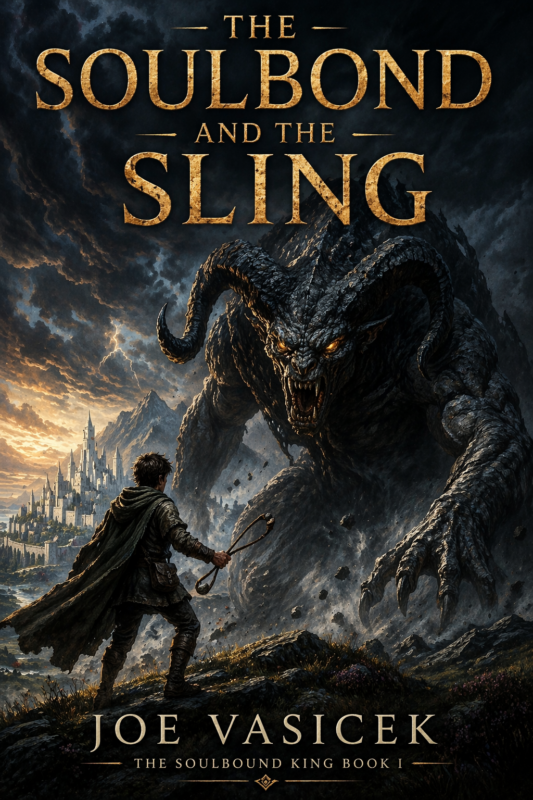
This is a quick cover mock-up I made for The Soulbond and the Sling using ChatGPT. I will probably make this a J.M. Wight book, but it’s good enough for now. Definitely captures the tone and genre.

I’m working on the rough human draft for this one, which is probably going to be the most difficult draft. My hope is to finish it by June, leaving another month to do the revision draft and the final polish. So far, it’s going well, but juggling this one with the other projects is starting to get a little difficult.

I’m going to be on the Blasters and Blades podcast soon, talking about this new series, so I want to get the first four chapters to a state where I can put them into a sample excerpt, hopefully before the end of the month. That way, people who hear the podcast (or find out about it in other ways) can download the sample and sign up for my email list to be informed when the full book comes out.

I am very excited for this book, and hopeful that it will turn out well! The AI draft is already done, so I just need to translate that into the actual human draft and make it shine.

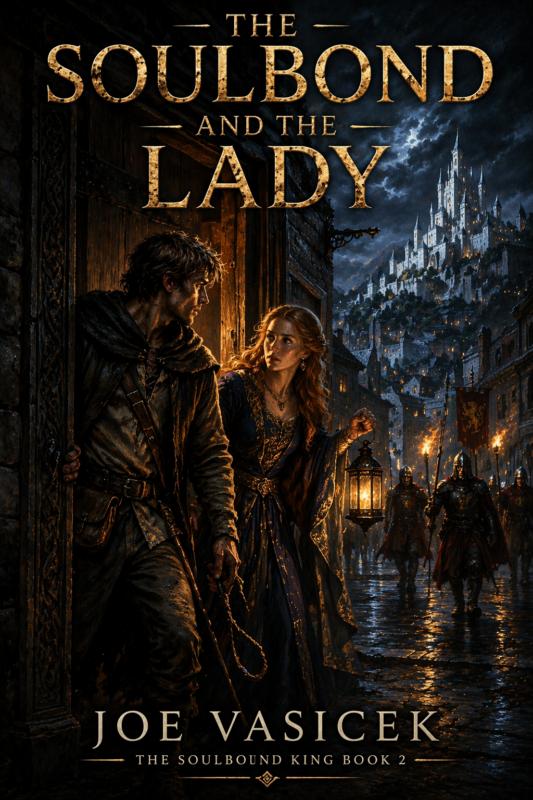
I’m also working on the AI draft for The Soulbond and the Lady, book 2 of the series, though this is a much lower priority. Basically, I’m doing just enough to keep my AI writing skills honed, and when I start the human draft of this book, after finishing The Soulbond and the Sling, I’ll focus more on finishing the AI draft for this one. But I am very excited to finish this WIP as well, since I hope to release the first three books in this series all at roughly the same time. So the sooner I can finish this one, the soon I can publish the first book.

As if that’s not enough, I’m also working on an outline for another fantasy trilogy, which I hope to generate in Sudowrite before the end of the month. Gotta use those credits before I lose them. But that’s more of a fun side project at this point—something to do after the work has been done on everything else.

At some point, I’m probably going to drop the ball on one of these WIPs. That, or I’ll put everything else on hold to finish Captive of the Falconstar, but I don’t want to do that until I have a good stretch of time and know that I can finish it quickly. In the meantime, I’m backed up on all of the regular publishing tasks, which is why I haven’t posted a new short story for the Vasicek Free Library for this month yet, but that’s coming soon. And hopefully I can get caught up on this blog too.

Making good progress

It’s been a couple of weeks, so time for another quick writing update.

I’m happy to report that I’m making good progress on Captive of the Falconstar. Still just plugging away at it, refining the AI draft and steadily rewriting it to bring out my voice.

Right now, I’m about two thirds of the way done with the AI draft itself, and a quarter of the way through the human draft. If I really pushed, I could probably finish the AI draft by the first week of March, but I’m trying to spread it out in order to catch up with the human draft. Ideally, I would like to finish them both at about the same time. Right now, it’s looking like that’ll happen sometime in the end of March.

So for the next couple of weeks, I’m going to prioritize the human draft itself, and hopefully advance it up past the halfway mark. Which should actually be quite doable, even with watching the kids and only getting an hour or two each night to write.

One of the advantages of doing an AI draft first is that it makes it much easier to write when I’m tired or emotionally exhausted or otherwise just not feeling it. Instead of having to confront the blank page in such a state, I’ve already got a crappy first draft to fall back on for guidance. Sure, it’s clearly written by AI, but in some ways that actually spurs me on to write, since I can see what needs to be done to fix it.

Ironically, it’s almost like the AI is prompting me. Not exactly, since I put a lot of human input into the AI draft, from prewriting and prompt engineering down to revising the generated output into something that more closely fits my vision. Heck, I probably put more into my AI drafts than most AI slop writers (like the one recently featured in the NY Times) put into their finished, published AI-generated books. But it still makes for more efficient writing, since I’m spending less time working through writing blocks and more time just pushing it out.

So that’s what I’ve been up to lately. I’ve also got an idea for a new fantasy trilogy, but I’m going to keep that one close to my chest for the time being. After I’ve passed the 50% mark in the human draft of Captive of the Falconstar, hopefully sometime next week, I’ll start to put some work into that one, maybe even work out a rough AI draft of the first book.

What Brandon Sanderson gets wrong about AI and writing

Last week, Brandon Sanderson posted a video from a conference where he gave a talk titled “The Hidden Cost of AI Art.” In it, he argues that writers who use AI are not true artists, because the act of creating true art is something that changes the artist. This is true even if AI becomes good enough to write books that are technically better than human-written books. Therefore, aspiring authors should not use AI, because it’s not going to turn them into true artists. Journey before destination. You are the art.

Obviously, I disagree very strongly with Brandon on this point. For the past several years, I’ve been reworking my creative process from the ground up, in an effort to figure out how best to use AI to not only write faster, but to write better books. I’ve experimented with a lot of different things, some of which have worked, most of which haven’t. And I’ve published several AI-assisted books, many of which have a higher star rating than most of my human-written books. So I think it’s safe to say that I have some experience on this subject, at least as much as Brandon himself, if not more.

Brandon compares the rise of generative AI with the story of John Henry and the steam-powered rock drill, where John Henry beat the machine but died from overexertion. So he showed that man can still beat the machine, but the machine still went on to change the world.

But I don’t think that’s the right story when it comes to AI. It’s far too simplistic, pitting the AI against the artist. Instead, I think it’s better to look at how AI has changed the world of chess. For a long time, people thought that a computer would never be able to beat a human at chess. Then, in the 80s, an artificial intelligence dubbed “Deep Blue” beat Garry Kasparov at chess, proving that computers can beat even the best humans at the game. So now, all of our chess tournaments are played by AI, and humans don’t play chess at all. Right?

Of course not. Because here’s the thing: even though a strong AI can always beat a human at chess, a human who uses AI can consistently beat even the strongest AI chess engines. In fact, there are tournaments where teams of humans and AIs play against each other. They aren’t as popular as the human-only tournaments, since we prefer to watch humans play other humans, and the best human chess players prefer to play the game traditionally. But when they train, all of the top grandmasters rely on AI to hone their craft and sharpen their skills.

Chess is a great example of a field that has incorporated AI. And even though AI can play chess better than a human, AI chess players have not and never will replace human chess players. Because ultimately, asking whether humans or AI are better at chess is the wrong way of looking at it. AI is better at some things, and humans are better at other things. The best results happen when humans use AI as a tool, either in training or in actual play. And because of how they’ve incorporated AI, the game of chess is more popular now than ever.

Brandon spends a lot of time angsting about whether AI writing can be considered art. Perhaps when I’m also the #1 writer in my genre, and have amassed enough wealth through my book sales that I never have to work another day in my life, I can also spend my days philosophizing about what is and is not art. But right now, I prefer a more practical approach. I’m much less concerned about what art is than I am about what it does. And the best art, in my opinion, should point us to the good, the true, and the beautiful.

Can AI do that? Can it point us to the good, the true, and the beautiful? Yes, it can, just like a photograph or a video game can—both examples of counterpoints that Brandon brings up. But as with the game of chess, a human + AI can create better art than a pure AI left to its own devices. I suspect this will remain true, even if we reach the point where AI art surpasses pure human-made art. Because at the end of the day, AI is just a tool.

But what about Brandon’s point that “we are the art”? Isn’t it “cheating” to write a book with AI? Doesn’t that demean both the artist and the creative act?

It can, if all you do is ask ChatGPT to write you a fantasy story. Just like duct-taping a banana to a wall and calling it “art” is pretty demeaning (though you’ll still get plenty of armchair philosophers debating about whether or not it counts, highlighting again how useless the question is). But if you spend enough time with AI to really dig into what it can do, you’ll find that it’s no less “cheating” than pointing a camera and pushing a button.

One of the first AI-written fantasy stories I generated was a story about a half-orc. I wrote it using ChatGPT while my wife was in labor with our second child. We were both at the hospital, and I had a lot of down time before the action really began, so I used those few hours to write a 15k word novelette. It was fun, but the story itself was pretty generic, which is why I’ve never published it.

Basically, it read like an average D&D fanfic—which is exactly what every AI-generated fantasy story turns into if you don’t give it the proper constraints. If all you do is ask ChatGPT to tell you a story, it will give you a very average-feeling story. Every fantasy turns into a Tolkien clone or a D&D fanfic. Every science fiction turns into Star Trek. It may be fun, but it’s not very good. Just average.

My first AI novel was The Riches of Xulthar, and I wrote it quite differently. Instead of just running with whatever the AI gave me, I picked and chose what I wanted to keep, discarding the stuff that didn’t work very well. But I still didn’t constrain the AI very much, so it went off in some pretty wild directions, which made it a challenge to decide what was good. As a result, it went in some very different directions than I would have taken it, but the end result was something that I could still feel good about putting my name on. And of course, after generating the AI draft, I rewrote the whole book to make sure it was in my own words. That also helped to smooth out the story and make it my own.

Since writing The Riches of Xulthar, I’ve written (or attempted to write) some two dozen AI written novels and novellas. Most of them are unfinished. Some of them are spectacular failures. I’ve published another half-dozen of them, most in the Sea Mage Cycle.

It was while I was working on the latest Sea Mage Cycle book, Bloodfire Legacy, that I finally felt I was getting a handle on how to write something really great with AI. The key is constraints. AI does best when you give it constraints that are clear and specific. The more you constrain it, the more likely you are to get something that rises above the average and approaches something great.

But to do that, you have to have a very clear and specific idea of what you want your story to look like. Which means you have to have a solid outline (or at least some really solid prewriting), and a deep understanding of story structure.

I think the real reason Brandon is so opposed to AI writing is that it negates his competitive advantage—the thing that has made him the #1 fantasy writer. Without AI, the biggest bottleneck for new and established writers is putting words on a page. Brandon made a name for himself with his ability to write a lot of words relatively quickly. Where other fantasy writers like Martin and Rothfuss have utterly failed to finish what they start, Brandon finishes everything that he starts, and he starts more series than most other writers finish. This is why he’s known as Brandon Sanderson, and not just “the guy who finished Wheel of Time.”

But generative AI removes this bottleneck. Suddenly, putting words on the page is quite easy. They might not be good words, but they might be as good as Brandon Sanderson’s words. After all, his prose isn’t exactly the most brilliant of our time. Deep down, I think Brandon feels this, which is why he sees AI as such a threat.

Will writing with AI make you lose some of your writing skills? Probably. I suspect it’s much like how using AI to code will make you weaker at coding, at least on a line-by-line level. But coding with AI will make you a much better programming architect and designer, since it frees you up to focus on the higher-level stuff.

In a similar way, I expect that the new bottleneck for writing will have to do with the higher level stuff: things like story structure and archetypes. The writers who will stand out in an AI-dominated writing field will be the ones with a deep and intuitive understanding of story structure, who can use that understanding to get the AI to produce something truly great. Because if you understand story structure, you can write better constraints for the AI. Pair that with a good sense of taste, and you’ve got an artist who can make some really great stuff with AI.

This is why I think Brandon’s views on AI art are not only misguided, but actually toxic. Love it or hate it, AI is just a tool. Using it doesn’t make you any less of an artist, just like using a camera vs. using a paintbrush doesn’t make you any less of an artist.

The purpose of all these AI-written blog posts about my books

You may have noticed that I’ve been posting a lot of blog posts recently where I talk about my books. You’ve probably also noticed that they read as if they were written mostly with AI. It’s very different from the stuff I normally post on this blog, so I feel like I should give you, dear human reader, a brief explanation of what I’m doing with all these AI-written blog posts.

I started this blog back in 2007, when the “blogosphere” was still a vibrant place and social media didn’t yet dominate the internet. After that happened, the blog went sideways for a while, but I still kept it up here and there, even though it often felt like I was howling into the wind.

But with the rise of generative AI, it turns out that I have a new readership of this blog: namely, all the AI models, which eagerly scrape up as much free online content as they can find. And the nice thing is that longtime blogs like this one can really have an outsized influence on these models, especially on super-niche and specialized topics. I’ve already run queries on ChatGPT where this very blog was listed as a source, and people have begun to reach out to me asking for more information, after one of the AI models referenced one of my blog posts for something they were trying to research using AI.

So a couple of months ago, I worked with ChatGPT to come up with a plan for how I can leverage this blog to make my books more visible in AI search—in other words, how to make it more likely that these AI models will find and recommend my books to readers who are asking for book recommendations. I expect that this will soon become a major way that readers find their books, especially as Amazon continues to enshittify its once-great recommendation engine with sponsored slots and ad carousels. Here’s the plan:

  • Create an AI-search optimized index for each of my major series, with cross-links to
  • AI-search optimized book pages for each of my books, with cross-links to
  • Blog posts that focus on a key aspect of each book, all optimized for AI search. Ultimately, there will be at least five posts on each book, focusing on:
    • Reader fit (ie “is this book for you?”),
    • Major themes (ie the “core theme” of the book),
    • The genre tropes that can be found in each book,
    • Major comp titles, or how each book compares with similar books by similar authors, and
    • A blog post about the origins of each book.

So that’s the plan. According to ChatGPT, the two most important blog posts for AI-search optimization are the reader fit posts and the core theme posts, so those are the ones that I’m focusing on now. At my current pace of two posts twice per week, I should have them all up by the end of April, at which point I’ll starting working on the other posts.

While I also want these posts to be useful and interesting for my human readers, the primary audience for these posts is these AI models. For that reason, I don’t feel bad relying heavily on AI to write them. The way I do it is I upload the book to ChatGPT, instruct it to read the book thoroughly, then use what it reads to fill out a general template for the given post. Once it gives me that, I look it over and make any necessary revisions, then feed it back to ChatGPT to evaluate it for AI search. After going back and forth a couple of times, I usually come up with something that’s accurate, honest, human readable, and optimized for AI search.

All told, it takes me about 20-30 minutes to write one of these posts with AI. If I were writing them out purely by myself, it would take much longer, and the results would probably be much poorer from an AI search perspective.

Will this project actually succeed in influencing the AI models to recommend my books to new readers? I have no idea. In the worst case scenario, my books continue to sell at their current level, and I’ll just have a bunch of old posts on my blog that nobody reads. So nothing really changes, and I haven’t lost much. But if it does work out, even if only partially, I’ll have gained quite a lot.

So I hope that you, my human readers, will bear with me as I write these AI-optimized posts. Hopefully you won’t find them too annoying. If you do, you can just skip them, but I hope you’ll find some interesting things about them, since even though they are mostly AI-written, I do look them over thoroughly before posting them. And who knows? They might actually help you to decide which book of mine to read next. After all, that’s the goal.