Man, LTUE 2013 was this weekend, and it was AWESOME.  One of the best conventions I’ve ever attended.  I spoke on my first panel, attended my first book signing event as an author, and got to meet up with some old friends, as well as some amazing new people.

Since I live tweeted most of the panels I attended, I thought it might be interesting to repost a few of those here, with some additional thoughts.  So…here goes!

THURSDAY

I believe this was Scott Parkin from the “What Do You Write?” panel. Good advice. Megan Whalen Turner also had some very interesting things to say on the subject of genre, which I have since forgotten. But I recorded it, and the recording will eventually be made publicly available in the LTUE conference archives, or so I’ve been told.

This one was from the “What Is ‘Punk’ Literature and Its Many Genres?” panel. David Butler and Larry Correia were HILARIOUS. Nearly got into a wrestling match right in front of us.

And when the esteemed Mr. Butler began to describe his book, I swear, a choir of steampunk angel Moronis somewhere began to sing a heavenly chorus. I mean, he had me with Edgar Allen Poe faking his death to become a secret agent, but Orson Pratt’s phlogiston guns? Eliza R. Snow as chief counterintelligence officer for the Kingdom of Deseret? I will definitely be checking out this book, City of the Saints (which is apparently a finalist for the 2013 Whitney Award).

David Butler is also a way cool guy. I hung out with him a bit in the dealer’s room, chatting about Mormon history, Lyman Wight (“shoot and be damned!”), Sir Richard Francis Burton’s expedition to Salt Lake City, and all sorts of other crazy zany stuff. And the whole time, he was playing a guitar. So yeah, definitely a way cool guy.

This discovery CHANGED MY LIFE. Also, it helped me to save immensely on lunch money, as well as join in on some way cool conversations with other panelists as they desperately tried to escape their fans. Okay, not really, but the green room was AWESOME.

Howard Taylor’s presentation on teasers was tremendously insightful. In a nutshell, he said that a teaser (aka book description on Amazon / back cover) should have or at least point to the following things:

  1. The inciting incident
  2. Character action
  3. Conflict
  4. Hook

We then went over a few examples, including some good ones that broke these rules, and finished up by doctoring a couple of teasers volunteered from the audience. Howard Taylor admitted to me later that he wasn’t entirely satisfied with the way he presented it, but I get the impression that he’s never entirely satisfied with anything less than perfection. It was a great workshop.

From “Engaging the Reader.” Great panel. Lisa Mangum described the planning / drafting / revising process for each of her first three novels, and they were all wildly different. With seven novels under my belt so far, I can definitely relate. Some, like Genesis Earth and Stars of Blood and Glory, practically write themselves. Others are like having a c-section with a hacksaw. And others…yeah, I’m not going to go there.

FRIDAY

Okay, maybe I said one useful thing: when there’s a language barrier, little things become big obstacles. One of the other panelists, Anna Del C. Dye, also had a bunch of stories about adapting to a foreign language and culture (in her case, the United States).

Overall, the panel was really, really fun! I also had some cards out for Star Wanderers: Outworlder, and a bunch of people came up afterward to get them. Guess I must have said something interesting. I hope you guys enjoy the book!


From “Current Trends in SF.” Great panel–it totally wasn’t just another over-hyped discussion about what’s hot right now. I asked how the panelists think the trend cycle will change in the age of self-published ebooks, and they had some very interesting things to say. They all agreed that speed to market, while it may give some advantages, isn’t a make-or-break game changer, or even really a good strategy (unless you really love the trend you’re writing to). Some things change, others remain the same. It will be interesting to give this one a re-listen.


From “Creators in the Community.” Probably one of the best panels of the entire convention. Tracy Hickman is really on top of the changes in the publishing world, and had a lot of interesting things to say about it in all of his panels. As for the subject of writerly communities, much wisdom and insight was shared by all of the panelists. Definitely look for this one.

Man, I’d forgotten how cool the guys at Dungeon Crawlers Radio are! They interviewed me back in 2011, when I was just getting ready to publish Genesis Earth. This time, we talked about space opera, sci-fi romance, language barriers in marriage and all the crazy things I have to look forward to, and a bunch of other stuff. I also shared some of my thoughts and opinions on self-publishing myths, especially regarding the “tsunami of crap.” We coined a new word, “nerdaissance,” to describe all the awesome new stuff that’s coming out now, thanks to the ease of self-publishing.

So yeah, it was a great interview! I’ll definitely be cross-linking once it goes live.

From “Effective Book Covers.” Great panel with some very good artists and cover designers, including Isaac Stewart who does all the maps for Brandon Sanderson. Although some parts were geared toward illustrators, most of the advice was for writers (especially self-pubbing writers) who are looking to design their own covers. Lots of great and insightful perspectives from the visual arts side of things.

FRIDAY NIGHT BOOK SIGNING

Okay, I’ve got to be honest: when I went into the mass signing with my cardboard box of CreateSpace POD novels, I didn’t expect to sell anything. I figured that was just my ticket to get a seat at a table and hand out cards for Star Wanderers: Outworlder to some of the casual book browsers.

Well, I was pleasantly surprised! An uncle of one of my old mission companions was impressed enough to buy a couple of copies. I think he’s one of these guys who likes to buy things from new authors to help encourage them. It’s great to see people like that. He told me to keep writing, and I told him I definitely would!

Lots of people snagged the card for Outworlder, and I came up with a pretty decent pitch: “it’s about a starship pilot who accidentally marries a girl who doesn’t speak his language.” That raised a lot of eyebrows! A lot of people were really happy to see a science fiction story, especially a space adventure. I get the impression that there’s a craving for this kind of stuff in the market that isn’t currently being satisfied. So yeah, that was very encouraging!

After things wound down a bit, I wandered around the signing checking out some of the other books. Saw a couple that I recognized from the Kindle Boards, which was interesting. Chatted with them, as well as a bunch of geeky guys about chain mail, Halo, Frank Herbert, and all sorts of awesome stuff. Man, the best part about sci-fi/fantasy conventions is the chance to just talk with people! So much interesting stuff. It was great.

SATURDAY


From “Write For the Market or Write What You Know?” Another great panel. Definitely will be re-listening to that one.

From the main address with Megan Whalen Turner. She talked about book censorship and the need to teach children how to make their own reading choices, rather than keeping them sheltered and making the choice for them. She pointed out how every time a New York Times article comes out bemoaning some YA book for inappropriate content, it’s kind of hypocritical because there are so many other books they miss. The Golden Compass, for example, didn’t even pop up on their radar until the movie came out. Kids don’t magically become mature, well-adjusted adults when they turn 18–we have to teach them to make these choices (and mistakes) for themselves.

From “How Does Your Story Mean?” Great discussion on the writing process. Saw a lot of other good live-tweets during this one.

Okay, I take back what I said about the best panel of the convention. THIS was definitely the best. “The Engines of Exploration,” with Howard Taylor, Megan Whalen Turner, Roger White, James Owen, Kevin Evans, and Charles Stanford–the panel was packed. It basically turned into a round-robin discussion of which commodities are most essential to modern civilization, which ones will be the most valuable in the event of a societal collapse, and which ones will take us to the stars. The eventual consensus on each of these eventually came down to goats. Seriously. GOATS!


From “Writing Romance Without Erotica.” Lots of delicious awkwardness, as well as some really interesting thoughts and perspectives on the subject of romance. One of the panelists talked about the importance of “character penetration” without realizing about halfway through the panel how hilarious that phrase sounded in this context. But yeah, there was also a lot of wisdom in there as well. There are a lot of strong opinions about sex and romance floating around in this part of the world, so it was a very spirited and interesting panel.


The last panel of the convention (technically, symposium, but whatever) was “eBook Publishing” with some highly successful indies like Michaelbrent Collings. As you can tell from the tweets, it was a bit controversial, but very, very interesting. Questions were flying all over the place, on subjects ranging from formatting to building an audience. The biggest shock to me was that none of the panelists (none of them!) are on Smashwords. It’s a wild, wild west out here in indie-land. Makes me wonder, maybe I should publish to iTunes through another venue? Hmmmm…

So yeah, that was pretty much the whole convention/symposium. I finished it out by playing Alhambra with a bunch of friends from Kindal Debenham’s writing group who came down from Seattle and Idaho. Good, good times–it was actually kind of sad to say goodbye. Definitely worth coming 11 time zones to attend.

All I can say is that I am STOKED for Conduit!

I recently read an amazing blog post by Shannon Hale titled “Why boys don’t read girls (sometimes).” In it, she makes a number of excellent points about how our society stigmatizes boys who read “girlie books,” and why that’s harmful.

Perhaps the most moving part of the post was at the end, where she described an experience at one of her book signings where she saw a boy hanging back and asked him if he would like her to sign one of his books.  The boy’s mother jumped in and said “yeah, Isaac, would you like her to put your name in a girl book?” The boy’s sisters all laughed at him, shaming him for reading anything that ran against their strictly defined gender roles.

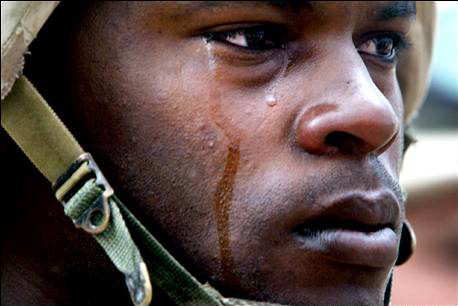
In direct contrast to Shannon Hale, Dave Farland released a “daily kick” newsletter a couple of days ago where he advises writers to never let their characters cry.  In it,  he states:

Whatever problem [the character has]—whether terminal disease or sociopathic neighbor or anything else—the problem must be faced with courage. This means that your character can’t cry about it, no matter what the source of pain…Any time that a character breaks down, we as an audience may cast judgment upon that character.

Now, I have nothing but respect for Dave Farland.  I’ve been following his “daily kick” emails for years, attended dozens of his convention panels, and even interviewed him once for an online magazine.  He’s been a very influential writer to me personally, and his advice has had a huge impact on my writing.

But on this issue, I think he’s dead wrong.

Even if you don’t have any problem with the idea that men should never cry–a disturbing belief that harms men by forcing them to hide their true feelings, and harms women by teaching men that compassion and empathy are signs of weakness–even if you’re comfortable living in a culture that accepts this belief, there are still instances where having a man cry in your story can be both moving and poignant.

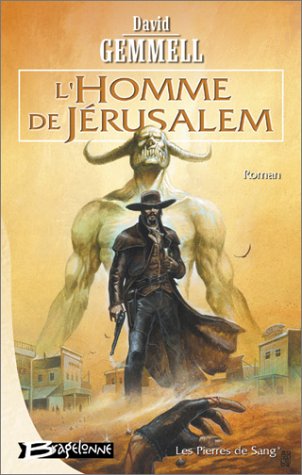
Cross his woman, and he’ll blow your brains out–quoting scripture while he does it.

The best example of this that I can think of comes from David Gemmell’s The Jerusalem Man.  No one–and I mean no one–writes manlier heroes than David Gemmell.  And among his characters, Jon Shannow ranks as one of the manliest.

In The Jerusalem Man, Jon Shannow is a lone gunman roving the post-apocalyptic wastelands of Earth on a spiritual quest for the city of Jerusalem.  Near the beginning of the book, he comes across a frontier woman under attack from bandits.  He stops to defend her homestead, and she shows her gratitude by inviting him into her bed.

Jon Shannow is a middle aged man, but because of the post-apocalyptic setting, this is his first sexual experience, and it moves him to tears.  For me, that was one of the most poignant moments of the book.  It didn’t take away anything from his masculinity throughout the rest of the story–indeed, it added significantly to it when the woman got kidnapped and he determined to rescue her.

I’m sure there are other examples that you can think of.  Certainly in real life, this notion that men should never show their feelings is both harmful and outdated.  To say that in fiction, no characters should ever cry–female characters as well as male characters–that’s just so wrong it’s infuriating.  If crying is so taboo that it’s even forbidden in the pages of a book, then something is wrong with the culture, not the story.

In 2008, I attended a fascinating panel at LTUE in which Tracy Hickman and a number of romance and fantasy writers discussed how to write romance in science fiction and fantasy.  Tracy explained that in all the novels he writes with Margaret Weis, she does the fight scenes and he does the romantic ones.

He then went on to talk about how there’s a whole side of life that our culture has shut men off from–a feminine side which is present in all of us, men as well as women.  The way he explained it, romance is not just the “kissy bits,” but a vital and enriching way to see the world–a paradigm that infuses everything with feeling and passion.

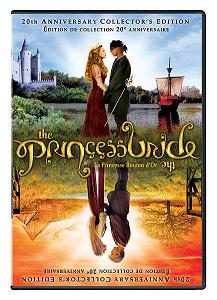
It makes me think of The Princess Bride, where even the action scenes with Inigo Montoya have a certain romantic flair to them.  In the old days, the term “romance” described not only love stories, but action & adventure stories as well.  In modern times, we seem to have forgotten all the old qualities like honor, love, sacrifice, loyalty, heroism, and compassion–even though they still make for the best stories.

Of course, our characters need to have courage.  But courage is not the absence of fear–it’s pressing on in spite of it.  And crying is not always a sign of weakness–it can actually be a sign of great emotional strength.  And if it’s true that the best literature helps us to see our world in a new light, giving us a greater understanding and appreciation for the human condition, how is it “courage” for anyone to hide their true feelings?

So do the characters in my stories cry?  Hell, yeah!  I don’t have them hide their feelings just because some readers might look askance.  Some of them cry more than others, and many of them don’t hardly cry at all, but those who do cry do so because the story demands it.

Even though I write science fiction, I do my best to infuse my stories with romance–not just the “kissy bits,” but that depth of feeling and passion for life that made me fall in love with books and reading in the first place.  Star Wanderers is a great example of that, and so is Desert Stars.

And yes, in case you’re wondering, I’ve read a lot of “girlie books.” They’re some of my all-time favorites.

When it comes to weddings, most of us like to plan things out in advance.  It’s not uncommon for couples to spend years figuring each other out before they finally tie the knot.  So what happens when you wake up one morning and find yourself married by accident to a complete and total stranger?

This trope generally comes in two forms:

  1. Situational: Two people from the same culture end up in a comedic situation where, quite unintentionally, they end up marrying each other.  Often takes place in Las Vegas and/or involves some form of intoxication.  Usually, neither of them has a clue what they’re getting into until it’s too late.
  2. Cross-Cultural: While traveling in a foreign land, the hero unwittingly marries the chieftain’s daughter through a hilarious cultural misunderstanding.  Typically, the guy is the oblivious one, while the girl knows exactly what’s she’s doing, though the gender roles do occasionally get reversed.

The characters are never the kind of people who would just up and leave their spouse, though–that would ruin the story.  For that reason, they’re usually both decent, likable people, at least at first.  But even if they decide to stick together, they usually have to work through a ton of (often hilarious) challenges first.

When part of the main storyline, this trope is often used as the setup for a romantic comedy (since the alternative is, well, kind of a downer).  When done well, it combines the awkwardness of a blind date with all of the angst and anticipation that comes along with wedding and marriage.  There’s a variety of ways that the situation can be resolved, and the longer things drag out, the more reasons the couple finds for sticking things out.

That’s not always the case, of course.  In the “Our Mrs. Reynolds” episode of Firefly, what starts out as an accidental marriage between Mal and Saffron turns into…well, something else.

Within science fiction & fantasy, this is probably the most prominent example of this trope.  The first half of the episode plays it straight, with Mal participating in a ceremony that seems innocent enough, but later turns out to be a marriage.  At first, he tries to get out of it, but one thing leads to another, and…well, go rewatch the episode!

Another good example of this is found in the movie Jeremiah Johnson.  The titular character, a former confederate soldier turned mountain man, finds himself a guest of the Flathead Indians.  The chief asks about a number of horses and scalps he acquired, and Jeremiah, who never wanted them in the first place, gives them to the chief as a gift.  Moments later, he realizes his mistake: the Flatheads have a custom of exchanging gifts of equal or greater value, and if they cannot reciprocate, they consider it an insult worthy of death.  Fortunately for Jeremiah, the chief finds a solution: he gives him his daughter.

Both of these examples involve variations of the cross-cultural type.  A good example of a purely situational version of this trope is the webcome Marry Me.  It starts with a philanthropist pop-star who’s suffering from burnout and on the verge of having a mental breakdown.  While putting on a concert, she sees a guy in the front with a sign that says “marry me” and decides, on a whim, to bring him onstage and do just that.

The thing is, he was only holding the sign for a friend, who was taking a bathroom break at the time.  He’s not even a fan of her music.  As you might expect, hilarity ensues.

Finally, this trope plays a major role in my latest title, Star Wanderers.  It starts off with a young single starfarer, who makes his living running the trade routes between stars.  Without realizing it, he visits a station where the food production systems have just recently broken down, condemning everyone to die.

The station master pulls Jeremiah into his private quarters and makes him choose one of his daughters, presumably to save her.  Jeremiah can’t really say no, so he chooses one, only to find himself holding hands with her while her father says a quick prayer.  Moments later, they’re whisked away to his starship, where they have a long voyage alone together to look forward to.

As you might have guessed, I’m a big fan of this trope.  When things work out, it can really make for a heartwarming story.  But whether or not it does, the romantic tension is just delicious.

PS: Be sure to check out the “playing with” page for this trope–there’s a lot of interesting variations on the main theme!  My favorite is the logical extreme, with the fertility dolls and the pie.  Interesting stuff…maybe I’ll use that in a story of my own someday. ;)

There aren't enough scoundrels in your life.

Unless you have an unhealthy aversion to kissing books, you’re probably familiar with Slap Slap Kiss.  It’s common in genre romance, but you’ll often find it in science fiction & fantasy too.  When done well, it’s a great way to make sparks fly, but when done poorly…I think you can fill in the rest.

The basic underlying concept is that love and hate are just two sides of the same coin.  Both involve strong feelings for another person, the kind that drive you crazy and make it hard to think straight.  According to this theory, it’s a lot easier to fall in love with someone you hate than to fall in love with someone you don’t really care about.  And once you fall in love, the rest is easy. <snark!>

Kiss Kiss Slap is the Tsundere’s standard MO.  An effective way to end the will they or won’t they? phase, though the trope is so common that you can spot it almost as soon as the slapping starts (Dinosaur Comics has a good commentary on that).  Sometimes happens in conjunction with Foe Yay, though the couple doesn’t have to start out as sworn enemies.  The kiss itself is usually one of those “lovely trick[s] designed by nature to stop speech when words become superfluous.” When set up properly, is often accompanied by a Love Epiphany.

Of course, it’s possible to go too far.  There’s a fine line between “all’s fair” and kicking the dog, and if you cross it…good luck.  Alternately, if the slapping doesn’t cross the line, but the kiss doesn’t live up to expectations, it’s also going to fall flat.  And if the main reason you invoke this trope is because the plot demands it…let’s just say, you’re doing it wrong.

In general, I think it’s important to keep the following in mind:

  • The attraction needs to be properly foreshadowed.  If the characters start slapping each other without even a hint of sexual tension first, no amount of backpedaling is going to make up for it.
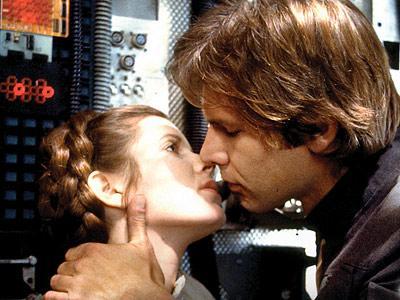
  • Neither of the characters should tear each other down.  There’s a big difference between a slap and a punch (and a roundhouse kick, for that matter).  Even though the characters may abuse each other, they have to have at least some mutual respect.  After all, Han still called Leia “your highness,” and Leia still complimented Han on his “bucket of bolts” (albeit sarcastically).  Once the respect is gone, so is any hint of romance.
  • The kiss needs to be proportional to the slap.  Lots of slap with an innocent little peck is going to feel anticlimactic, while a tap on the chin with a giant make out moment immediately afterward is going to feel melodramatic.  The two need to be balanced in order for the trope to work.
  • The couple should have at least something in common. ”Opposites attract” is often just an excuse for shoddy character development.  In real life, if the two people don’t have at least something in common, value-wise and personality-wise, the romance is pretty much doomed to fail.  As always, however, Your Mileage May Vary.

Finally, even though there are a lot of reasons to hate this trope, there’s a reason we keep coming back to it.  What that reason is exactly, I can’t say, but I know it when I see it.  After all, you really shouldn’t over analyze some things.  Like this video:

I think my work here is done.  What sayest thou?

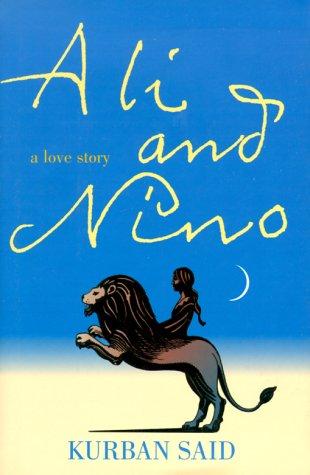
At the crossroads of Europe and Asia, Christianity and Islam, the progressive West and the reactionary East, the peoples of the Caucasus lie poised between three empires and their own dreams of independence.  And at the city of Baku, where the ancient and unchangeable desert meets the oil rigs of the Caspian Sea, young Ali Shirvanshir has fallen in love with Nino Kipiani, a Georgian and a Christian.

A timeless story of forbidden love, Ali and Nino is both the Romeo and Juliet of the Caucasus and the national novel of Azerbaijan.  It is as much a romance as it is a story of the clash of cultures and identities in our rapidly changing modern world.  Above all else, it is a beautiful and haunting tale that will leave you dreaming with your eyes open and yearning for lands that you’ve never seen.

This is, quite possibly, the most perfect book I have read all year.  I picked it up in Tbilisi from another TLG volunteer on Sunday, and I finished it at a breathless sprint on Wednesday.  But while the story was good, it was the writing itself that really captivated me.  The simple yet surprisingly rich descriptions of the alien cultures, so dreamlike and yet so straightforward, often to the point of being shocking–here, let me give an example:

“Shamil’s Prayer!” called Iljas Beg to the musicians.  Immediately a wild melody arose.  Iljas Beg jumped into the middle of the hall.  He drew his dagger.  His feet moved in the fiery rhythm of the Caucasian Mountain Dance.  The blade glittered in his hand.  Nino danced up to him.  Her feet looked like small strange toys.  Shamil’s Mystery began.

We clapped to the rhythm of the music.  Nino was the bride to be abducted…Iljas put the dagger between his teeth.  Like a bird of prey, his arms outstretched, he circled round the girl.  Nino’s feet flew whirling round the hall, her supple arms depicting all stages of fear, despair, and submission.  In her left hand she held a handkerchief.  Her whole body trembled.  Only the coins on her cap lay quietly on her forehead, and that was the correct way–this is the most difficult part of the dance.  No one  but a Georgian girl can do such fantastically quick turns and not let even one coin on her cap tinkle.

Iljas raced after her.  Without stopping, he chased her round and round.  The wide gestures of his arms became more and more dominating, Nino’s defensive movements more and more tender.  At last she stopped, like a deer overtaken by the hunter.  Closer and closer Iljas Beg circled.  Nino’s eyes were soft and humble.  Her hands trembled.  A wild, short howl from the music, and she opened her left hand.  The handkerchief fluttered to the floor.  And suddenly Iljas Beg’s dagger flew onto the little piece of silk and nailed it to the floor.  The symbolic dance was finished.

By the way, did I mention that before the dance, I gave Iljas Beg my dagger and took his?  It was my blade that  pierced Nino’s handkerchief.  It is best to be on the safe side, for a wise rule teaches: “Before you trust your camel to Allah’s protection, tie it fast onto your fence.”

The whole novel is like that, and it’s awesome.  The narrative passes from one description to the next, and you feel almost like you’re caught up in a dream, reading a fairy tale.  It’s only the railroads and oil rigs, the mention of Paris and London and Moscow, that make you step back and realize that this isn’t a fantasy novel, but something set in our modern world.

And yet, even though it feels like a fairy tale, the author gets a surprising number of things right.  Georgians really do have some of the most beautiful eyes of any people.  I haven’t yet been inside the sulfur baths at Tbilisi, but everything else in Said’s description of that city is more or less correct. Kakhetian wine really is the most famous within Georgia, and probably the whole Caucasus as well.

The most gratifying thing is to see how it all comes together.  Even though the descriptions sometimes feel as lavish as a Persian rug, no word is wasted–there is a good reason for every tangent, solidly grounded in the story.  There are plenty of red herrings and Chekhov’s guns to make the plot twists thoroughly satisfying.  But never at any point did I feel compelled to try and predict what would come next.  I enjoyed the story so much, I was barely aware of the fact that I was reading.

Whether you’re looking for an exotic romance, or you just want to explore a culture thoroughly alien from your own, Ali and Nino is a book you will thoroughly enjoy.  If, like me, you have any interest in the Caucasus, you probably won’t be able to stop coming back to it.  And if you’re just looking for a good read, I can think of few books that are more perfect than this one.

Why do so many character combinations come in groups of three?  Unlike love triangles, where the combo is primarily a way to build conflict, the characters in power trios all build on each other in some way.  They might be foils for each other, but as complementary archetypes, they do far more to drive the story together than they ever would apart.

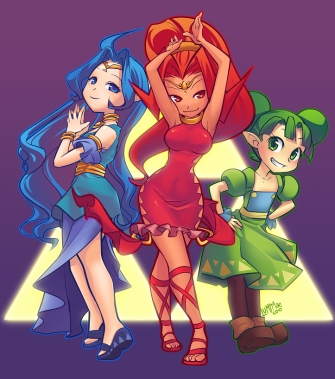
One of the most interesting all-female power trios is the Three Faces of Eve, which combines the archetypes of child, seductress, and wife:

The “child” (who does not have to be a child literally) will be seen as innocent, perhaps to the point of naïveté. The wife, the wiser, calmer aspect, someone around whom one could build a home life. The third, the seductress, is sexually experienced and independent.

Roughly speaking, the characters in the trio correspond to:

  • The Ingenue: A naive, innocent, childlike girl who is just setting out into the world.  In a Freudian Trio, this would be the Ego.
  • The Femme Fatale: A seductive, alluring, mysterious woman who is experienced in the ways of the world.  Unlike the Vamp, she may or may not use her feminine wiles for evil.  In a Freudian Trio, this would be the Id.
  • The Yamato Nadeshiko: A calm, steady, faithful wife, who provides the kind of marital stability and maternal strength that is ideal for settling down and raising a family.  In a Freudian Trio, this would be the Superego.

You’d be surprised to see how often this trope shows up, even in works of science fiction.  In Star Wars, Leia was the child in A New Hope, the wife/mother in Empire Strikes Back, and (what else?) the seductress in Return of the Jedi.  Just about every Star Trek series featured some alignment of these archetypes.

Squaresoft played with this trope a lot in their Final Fantasy series, which may be illustrative to examine in greater depth.  I’ve only played through FF IV, VI, VII, and Chrono Trigger, but each  of these titles features some interesting variations (warning: spoilers!).

Final Fantasy IV: Porom (child), Rydia (seductress), Rosa (wife).

Porom is pretty solidly the child, though Rydia starts out as this and later grows up into the seductress role.  She doesn’t get the guy in the end, though: that would be Rosa, who pretty much starts out with him as well.

In terms of story, the characters don’t really seem to build much on each other, though in terms of gameplay you definitely want to have Rydia and Rosa/Porom in your party (though not Rosa and Porom together–you only need one white mage, after all).

Final Fantasy VI: Relm (child) , Celes (seductress), Terra (wife).

This is my personal favorite in the series.  Unlike IV and VII, which both center around male protagonists, Final Fantasy VI revolves around Terra (world of balance) and Celes (world of ruin) as the central protagonists.  Because they also play a role in the power trio, their characters are quite complex, especially in the second half of the game.  Relm is arguably more of a Mary Sue, but her relation to the other characters, especially Shadow, also makes her role more complex and interesting.

In the end, the romantic subplot is fulfilled by Celes, not Terra, which was something of a surprise to me in my first playthrough.  It works really well, though, because of Celes’s heel face turn and subsequent reformation (in which Locke is arguably a Manic Pixie Dream Girl Spear Counterpart).  Does that also translate into a shift from seductress to wife as well?  I’m not sure, but I’d probably say no–after all, it’s Terra who takes on the mother role in the world of ruin.

Final Fantasy VII: Yuffie (child), Aeris (seductress), Tifa (wife).

The main twist with this one is that visually, you’d think Tifa is the seductress and Aeris is the wife.  In terms of story archetypes, however, it’s just the opposite: Tifa is the one whom Cloud depends on, the one who helps him work through his problems, while Aeris is the shifty, mysterious one.

Unlike IV, where Rosa and Cecil are set up from the very beginning, for a while it actually looks like Aeris and Cloud are going to end up together.  But then, in perhaps the most tragically gut-wrenching moment in all of video game history, Aeris dies (and doesn’t come back).  Since Yuffie is kind of, well, crazy, Tifa and Cloud are pretty much garanteed to get together after that point (and as for Sephiroth…I don’t even want to go there).

Chrono Trigger: Marle (child), Ayla (seductress), Lucca (wife).

Chrono Trigger is interesting because the girl who ends up with the guy in the end (Chrono) is actually the one who fulfills the child archetype, Marle.  It works, though, because of the childlike feel of the story.  Unlike FF VI and IV, Chrono Trigger is not a dark or an edgy tale–it’s heartwarming innocence at its best.  I always did feel that Lucca got the short end of the stick, though–but she did get a cameo in Xenogears, so perhaps the last laugh was hers after all.

Ah, Xenogears. <sigh>

Anyhow, long story short, the Three Faces of Eve power trio is a fascinating way to play with feminine archetypes.  Recently, I’ve become quite interested in it because it showed up quite inadvertently in my current project, Heart of the Nebula.  It’s funny how tropes can sneak up on you like that, especially some of the more archetypal ones.

Anyhow, in its current form the novel is a piece of trash, but now that I’ve recognized the potential to set up this particular power trio, I think I can really make it shine.  If you have any insights, please share–I’m very interested in this trope right now!

Oh look!  While traveling in distant lands, the hero met a girl–probably the chief’s daughter–and fell (or rather, stumbled) in love.  The catch?  Neither of them speak the same language.

That’s okay, though: through the power of love, the two of them will somehow find a way to understand each other.  Whether through touch, music, math, or a montage filled with magical sparkles, they come to discover that love itself is a language, one which they know fluently.

To be honest, I was a little disappointed in the page for this trope.  It’s pretty dang sparse, though it does make a couple of good points.  The main one is that this type of story almost always has the male character speak the language of  the audience, with the female character being the foreign or exotic one.  That might be because the seductress is such a powerful character archetype…but then again, it might just be because everything sounds sexier in French.

My favorite example of this trope is in the film Jeremiah Johnson, where the hero unwittingly stumbles into a marriage with–you guessed it–the chief’s daughter.  What starts out as an awkward pairing, to say the least, turns into a wonderfully endearing love story, as Jeremiah builds a cabin for the two of them (and the mute boy he picked up earlier…long story) and together they become a family.

Because this is a major driving element in Star Wanderers, the novel I’m currently writing, I’m especially conscious of this trope right now.  However, I can’t think of many good examples where this trope came into play.  Do you have any ideas that you can share?  Favorite stories where love overcame a major language barrier?  If so, I would love to hear about it.  Because in spite of my tongue-in-cheek comment about the sparkles, I think this trope has some really awesome potential.

Image by Kevin Jackson.  Taken from here.

In real life, abduction is an awful, violent thing that we hope would never happen to us or anyone we know.  But in fiction, the Rule of Romantic can make abduction the basis of a wonderful, heartwarming love storyat least for some of us.

This is actually a more common trope than you might think.  It’s the underlying premise for Beauty and the Beast, though Disney rewrote that part out of it.  It’s a major plot element in Watership Down, as well as The Courtship of Princess Leia.  More recently, Twilight featured a few variations on this trope, though considering the source, that probably isn’t surprising.

In G and PG rated versions, this often leads to And Now You Must Marry Me.  In PG-13 and R rated versions, leads to Rape Is Love, with many unfortunate implications.  Due to the violent nature of the story, it often involves a lot of Slap-Slap-Kiss.  Stockholm Syndrome, the psychological phenomenon whereby victims of abduction develop an emotional connection with their captors, is the overarching theme, making any abduction love story a match made in Stockholm.

In the West, this trope tends to be a lot less prominent than it used to be.  However, if you look at the trappings of our marriage customs, you start to notice some disturbing trends that point to a time when abduction-as-romance was much more common.  For example, what was the original function of the best man at a wedding?  Quite possibly, it was to keep the bride from escaping (or being rescued).  And why does the groom whisk the bride away to a remote, isolated place to consummate the marriage?  To evade the bride’s angry family, of course.

Here in Georgia, this trope is alive and well, not just in fiction but in real life–seriously.  It’s called motatseba, and is often discussed with a wink and a nod.  In the family that’s hosting me, the mother married her husband after he abducted her, then bore him four children.  Now, they both seem to remember it rather fondly.

This is such a bizarre tradition that I’m going to dedicate an entire post to it…after I figure out just what the hell is going on.  Seriously, I can barely make sense of the practice–it’s like a twisted game of tag involving sex and arranged marriage.  How it can possibly lead to love…that’s what I’m trying to figure out.

However, I’m sure it involves some interesting variation of this trope.