Trope Tuesday: Abduction is Love

In real life, abduction is an awful, violent thing that we hope would never happen to us or anyone we know.  But in fiction, the Rule of Romantic can make abduction the basis of a wonderful, heartwarming love storyat least for some of us.

This is actually a more common trope than you might think.  It’s the underlying premise for Beauty and the Beast, though Disney rewrote that part out of it.  It’s a major plot element in Watership Down, as well as The Courtship of Princess Leia.  More recently, Twilight featured a few variations on this trope, though considering the source, that probably isn’t surprising.

In G and PG rated versions, this often leads to And Now You Must Marry Me.  In PG-13 and R rated versions, leads to Rape Is Love, with many unfortunate implications.  Due to the violent nature of the story, it often involves a lot of Slap-Slap-Kiss.  Stockholm Syndrome, the psychological phenomenon whereby victims of abduction develop an emotional connection with their captors, is the overarching theme, making any abduction love story a match made in Stockholm.

In the West, this trope tends to be a lot less prominent than it used to be.  However, if you look at the trappings of our marriage customs, you start to notice some disturbing trends that point to a time when abduction-as-romance was much more common.  For example, what was the original function of the best man at a wedding?  Quite possibly, it was to keep the bride from escaping (or being rescued).  And why does the groom whisk the bride away to a remote, isolated place to consummate the marriage?  To evade the bride’s angry family, of course.

Here in Georgia, this trope is alive and well, not just in fiction but in real life–seriously.  It’s called motatseba, and is often discussed with a wink and a nod.  In the family that’s hosting me, the mother married her husband after he abducted her, then bore him four children.  Now, they both seem to remember it rather fondly.

This is such a bizarre tradition that I’m going to dedicate an entire post to it…after I figure out just what the hell is going on.  Seriously, I can barely make sense of the practice–it’s like a twisted game of tag involving sex and arranged marriage.  How it can possibly lead to love…that’s what I’m trying to figure out.

However, I’m sure it involves some interesting variation of this trope.

Trope Tuesday: Celibate Hero vs. The Fettered

Yes, there are still good men out there...and they tend to know who's boss.

I’m mashing up two tropes this week because I’m not satisfied with the one.  There are a bazillion tropes about characters who are sexually active, but very few about sexually chaste characters that don’t portray them as weak, clueless, or socially inept.

According to tvtropes, a celibate hero is a main character who “doesn’t do the romance thing.” Unlike the chaste hero, who is just clueless, the celibate hero has made a conscious decision not to engage in sexual relations or get tied down in a relationship.  There may be any number of reasons for this, but it usually comes down to some combination of Love is a Weakness, Love Hurts, and It’s Not You, It’s My Enemies.

(As a hilarious example of this: TESLA!!!)

But what about the character who isn’t necessarily opposed to romance, but feels that they should wait until marriage to have sex?  Unfortunately, this trope is pretty rare nowadays.  I can only think of two mainstream examples: Edward from Twilight and Reverend Theo from Schlock Mercenary.

Theo in particular is a great example of this, because he’s not clueless, he’s not weak, and he not only gets the girl, he gets the girl that everyone wants.  The only reason he holds out is because his religious order forbids sex before marriage.  It does permit priests to marry, however, so Theo does manage to balance the two.

So why are characters like this so rare?  Unfortunately, I think it comes down to the widespread notion that a true man isn’t a virgin, and that sex makes people cool.  If we accept these tropes as true, then that means that men who exercise self-restraint are actually weak and pitiful, and couples who choose to wait are pathetic losers.

It’s worth pointing out that both Edward and Reverent Theo were created by writers who are practicing Mormons–people who belong to a religious community where it’s still the norm to wait until marriage.  If literature is the way that the culture speaks to itself, then this goes to show just how unrestrained the rest of Western society has become.

This is why I think that the better trope for this kind of character is The Fettered.  Unlike the celibate hero, who usually gives up sex for some kind of external reason, the fettered gives it up as a matter of principle.  Living by his ideals isn’t easy, and he’s constantly tempted to give in and break his moral code.  However, by resisting these temptations, the fettered gains great strength, and can stand like a beacon of light in an otherwise disillusioned world.

This is actually something that I tried to do with my latest novel, Desert Stars.  The main character, Jalil, is a man who believes in honor, and follows a code of abstinence before marriage.  However, to manipulate him into staying at the camp, his father charges Mira, the female protagonist, to seduce him.  Since the fettered’s strength is also his greatest weakness, if Mira can get Jalil to sully her honor, then out of shame he will return and marry her.

The catch?  She actually has feelings for him, and doesn’t want to manipulate him in this way.  In this way, merely persuading him to have sex isn’t a win condition–in fact, if done in the wrong way, it could be a very serious “game over.”

Whether or not I actually pulled it off well is up to the readers to judge.  But one thing I was definitely shooting for was to write a character who fulfills this trope in an unconventional yet powerful way.  And if you’ll permit me to step onto my soapbox for a little bit, I think our culture desperately needs more heroes like this–heroes who show that real men are capable of self-restraint, and that following a moral code is still cool, even if it means waiting to consummate a relationship.

Trope Tuesday: Childhood Friend Romance

Oh come on--you just KNOW that they get together!

There’s something heartwarming about a romantic couple that knew each other as children.  Maybe it’s that return to innocence, or a sense that destiny is on your side, but I find these kinds of stories hopeful and encouraging.

My favorite example of this is probably Deanna and Michael from For Better or for Worse.  My sister was obsessed with that comic growing up, so my parents bought her just about every book and I got to read them all.  I still remember when Deanna showed up again, after seven or eight books: at first, I was like “holy cow, is it the same girl from way back when Michael was a little boy?” And then he started dating her, and I was like “YES!!!”

Another good example is Phantom of the Opera, with Christine and Raoul.  Lloyd Alexander’s Chronicles of Prydain also had a long-running friendship between Taran and Eilonwy, which eventually took a romantic turn.  Apparently, Jane Austen was also fond of this trope, though I haven’t read enough of her to be able to say.

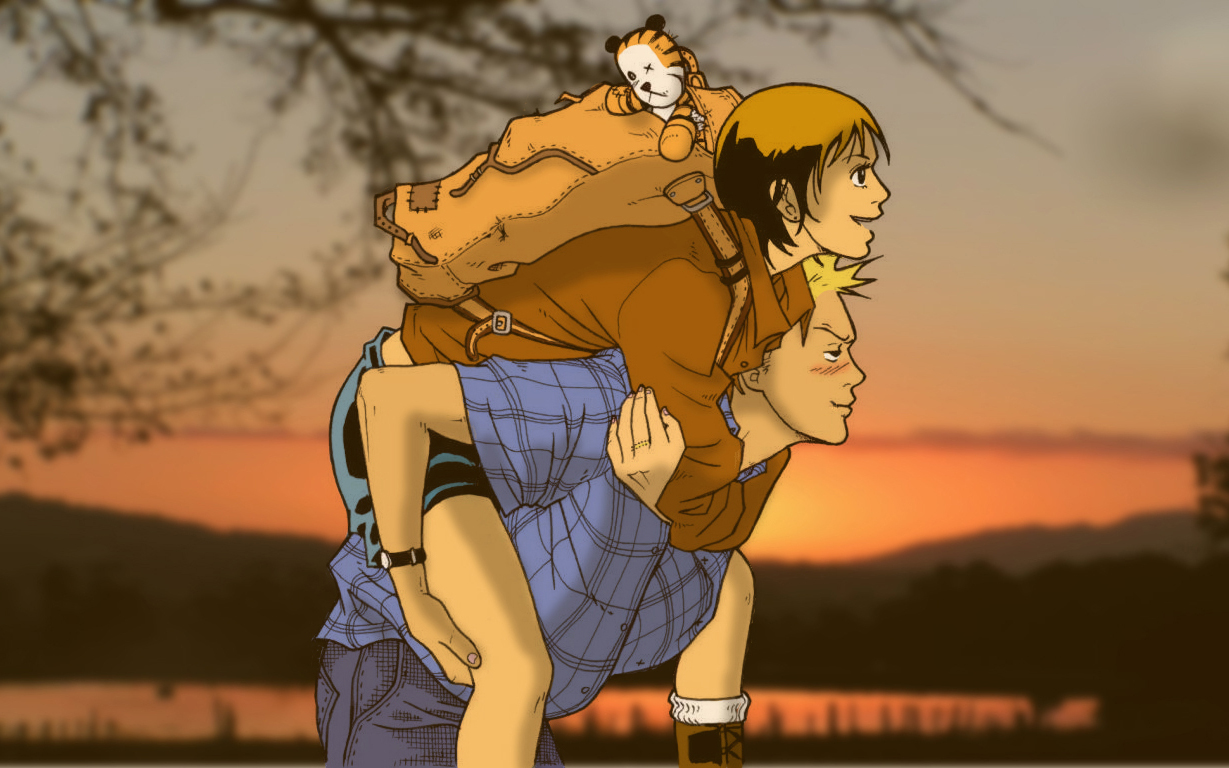
A lot of times, this trope is coupled with a childhood marriage promise.  It doesn’t have to be, though; I just love the thought that Calvin and Susie eventually end up together, even though they hate each other as kids.  As a storytelling device, this trope can also work well in conjunction with first girl wins.

Sometimes, though, the love is unrequited.  In many stories, this happens when one of the friends thinks their relationship is more like a brother and sister thing.  The scientific rationale for this is called the Westermarck effect, where people become sexually desensitized to those with whom they grow up together.  A good example of this would probably be Cyrano de Bergerac; the whole nose thing was more a self-esteem issue for Cyrano than a turnoff for Roxane.

In the Middle East, where it’s still common for first cousins to marry, this trope tends to be a lot more prevalent.  In Arabic 202, we read several magazine stories about couples who fell in love after growing up together.  There might be a bit of a squick factor there for Western readers, though–and that’s something you have to look out for with this trope.  If the characters really are like brother and sister, and they get together anyway…ew.

So there you have it.  For an innocent, hopeful, satisfying romance or romantic subplot–or a crushingly depressing tale of unrequited love–the childhood friend romance trope can be used to great effect.

Image courtesy sora1589. Line art by nami86.

The interior designer’s approach to story

I recently read a fascinating post on John Brown’s blog with an interesting exercise for analyzing the kinds of stories you most like to read.  By finding out what really turns you on in a story, you can have a much better idea what to write, and how to make your own stories better.

He prefaced the exercise with a story about the interior designer who helped them to decorate their house.  The designer spread out a number of home magazines in front of them, and told them to go through and tear out the pictures that most turned them on.  After doing this, they analyzed the pictures to see what they had in common, and thus discovered how to best decorate their house.

The exercise works much the same way.  First, pick out five books you really like that immediately come to mind.  Mine are:

As many of you know, these are some of my favorite books of all time.  I’ve reread three of them, and I intend to reread the other two at some point.

Next, pick out the elements that these books have in common.  Here’s what I came up with:

1) Set in a different time and place.

Not all these books are science fiction, but the all take place in a world far removed from our own.  Only Spin takes place largely on Earth, but the events of the story transform the world as we know it so much that by the end of the novel, it’s completely different. SPOILER (highlight to see) Besides, at the very end, the two main characters leave Earth by going through the giant portal to another planet, so the novel is arguably about escaping the world as we know it.

2) Stakes that are much more personal than global.

This was interesting, and highlights something I realized when I compared Merchanter’s Luck with Downbelow Station.  In all of these stories, the central driving conflicts are extremely intimate and personal.

To be sure, many of these stories also have an epic backdrop; Mistborn certainly does.  However, I was much more interested in Vin’s growth and development than I was in how the Ska would overthrow the Lord Ruler–in fact, Mistborn is my favorite book in the trilogy for that very reason.

3) Encourages deep introspection.

This shouldn’t come as too much of a surprise if you’ve followed this blog for a while, but I love love LOVE stories that make me see the world in a new way.  Thrillers and adventures are all fun and good, but if it doesn’t make me think, I’m usually like “meh” at the end.

4) Female characters who aren’t weak or passive.

This one might be a bit more controversial, but in all of these stories, I’ve noticed that the female characters are pretty strong, even if they aren’t all kick-butt Katniss wannabes (ugh…I hate Katniss).  Even in Legend, which is largely dominated by men, you still have the earl’s daughter, who is one heck of a spirited woman.

5) Life and death conflicts.

This is interesting: in all of these books, the threat of death is immanently real.  Some of them, such as Legend and On My Way to Paradise, are among the most violent books I’ve ever read.  I’m not sure what it is, but there’s something about life and death struggles that really draws me.

6) Romantic in a broad sense.

I’m using Tracy Hickman’s definition here, in which romance is all about teaching us to feel and bringing us in touch with our deepest feelings.  That’s the central theme of On My Way to Paradise: learning how to be a man of passion after witnessing some of the worst atrocities of war.

All of these books not only make me feel, they are about the feelings that they inspire.  In other words, the emotional elements of the story are both a part of and deeply embedded in the story’s central theme.

The exercises isn’t complete after this, though.  For the last part, take another five books and analyze them to see how they compare.  My second list includes:

So how does the list stack up?  Let’s see…

  1. Definitely true.  NONE of these stories take place in the world as we know it–and that’s awesome.
  2. A Canticle for Leibowitz might seem like an exception, since it follows the broad rise and fall of human civilization after the nuclear apocalypse.  But the things that really drew me to the story were the more personal elements: the novice who makes the illuminated manuscript of the electrical diagram, for example, or the abbot at the very end who SPOILER tries desperately to convince the single mother not to take her baby to the mercy killing station after the bomb fatally irradiates them.  In any case, it’s telling that A Canticle for Leibowitz made this list, whereas none of Arthur. C. Clarke’s books even came to my mind.
  3. Definitely true.  Even Citizen of the Galaxy, which is more adventure fiction than high concept sf, features a fascinating society of interstellar traders that really made me sit back and think about the way we structure our society.  Heinlein has a really awesome way of doing that with everything he writes.
  4. The only possible exception here might again be Heinlein, who had some very extremist views of women (putting it lightly).  However, if I recall, Citizen of the Galaxy has a female character at the end who helps pull out the main character from his indigent circumstances and helps him to come into his own.  Again, they might not all be kick-butt tramp-stamp vampire slayers, but they certainly aren’t weak.
  5. Less true of The Neverending Story and The Dispossessed, but while the central conflicts might not be about life and death, the threat of death (or a total loss of identity) certainly comes into play.
  6. Definitely true.  Few books have taught me to feel more deeply than The Neverending Story.  An absolutely magnificent piece of literature.

So there you have it.  According to this exercise, I should write books set in another time and place, where strong female characters face life and death decisions that personally impact the people in their lives and make the readers think and feel.  Interestingly enough, that is a PERFECT description of Bringing Stella Home, as well as Desert Stars and Into the Nebulous Deep.

Cool stuff.  Makes me want to write.  So on that note, I think I will.
To publish or not to publish?

That’s what I’m wondering about right now with my latest project, Star Wanderers. The full-length novel isn’t complete yet, but the first part forms a self-contained novelette that has been sooo much fun to write.

The story takes place in the Gaia Nova universe, about five hundred Earth years before the events of Bringing Stella Home.  The main character is a 20-something boy who, as is customary in the outworlds, left his home to wander the stars, searching for a suitable place to settle down and start a family.

While visiting a remote space station, he unwittingly gets roped into marrying this girl, whose father is trying save her from starvation by sending her away. The problem, though, is that neither the boy nor the girl speak the same language.

So basically, he just wants to drop her off at the next port and be done with it, while she thinks that she’s his wife and is trying to live up to those expectations.  Over the course of their voyage, though, they gradually fall in love and become a couple.  That’s where the novelette ends, and the second part of the novel begins.

Because I’m a total dork, I looked up all the major tropes in Star Wanderers on tvtropes.  Here’s just a few of them:

So yeah, I’m really excited to share this story with people.  The only problem is I want to submit it to the Writers of the Future contest, and I’m not sure if they’ll consider it if it’s already self published.  The contest guidelines say that all the rights remain with the author, and defines “professional publication” as something with >5,000 sales/downloads, but that doesn’t say whether it’s okay to publish the piece you’re submitting.  I’ll probably have to shoot someone an email or something.

In any case, I’ll probably put up the first part of Star Wanderers before I publish the novel.  For everyone who’s signed up for the newsletter, I”ll probably give it out as a free ebook.  If Writers of the Future is okay with it, I’ll  do that in the next month or so; if not, I’ll submit it to the contest first and wait to see what happens.

But either way, I really want to share this story!

Just following my bliss

They say the way you know you’re a writer is if you can’t not write.  Well, last week I had the gratification of experiencing that again firsthand.

For all of August, I was more or less betwen projects and not writing a lot of new material. I’d just epublished Bringing Stella Home and was busy getting Sholpan ready for epublication.  Then Worldcon happened, and my writing dropped off precipitously.  I tried to get back in a groove, but found it difficult to choose between projects, none of which seemed to fit my writing schedule.

And then the creative half of my brain said “screw it” and ran off on an idea that came from practically out of nowhere.

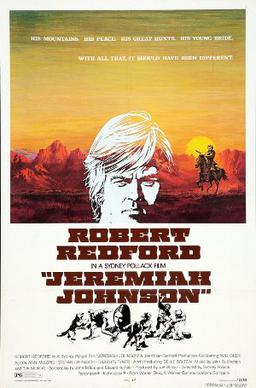
It all started when I was taking a power nap after a long day at work.  For some reason, my mind wandered to Jeremiah Johnson, an old Western with an awesome love story.

In the movie, Robert Redford unkowingly insults an indian chief by giving him several captured scalps.  The chief must return with a gift of equal or greater value, and so gives Redford his daughter, who doesn’t speak a word of English.  At first, things are hilariously awkward, but over time they grow into a beautiful and touching relationship.

Well, as I lay there thinking about the movie, I wondered: what if the same basic storyline were set in space?  Instead of a mountain man, the protagonist would be a space explorer / interstellar merchanter.  Instead of an indian chief’s daughter, the female protagonist would be the daughter of a station master whose colony is facing severe famine and widespread starvation.  When the merchanter boy unwittingly shows up at the doomed colony, the station master coerces him into taking his daughter to save her life.  And so, for the next two months, the boy finds himself crammed into a tiny little ship with a girl who doesn’t speak his language.  Hilarity ensues.

At first, I thought I’d keep it as a short story, but…yeah, that didn’t last long.  The more I run with it, the more ideas keep coming to me–ideas that I haven’t played with in a couple of years.  The story is set in the same universe as Gaia Nova and Bringing Stella Home, but about a thousand years earlier, back when things were, shall we say, more primitive.  I still don’t know where this story is going to take me, but I can tell it’s going to be a lot of fun.

The best part is that even if I expand this into a full length novel, the first part stands on its own so well that I could probably submit it to Writers of the Future.  That never happens!  It’s been years since I submitted to the contest; I always wanted to send something, but all I could ever write was novels with long, complex beginnings that couldn’t be cut off at the 17,000 word mark.

Anyhow, the working title of the novel is Star Wanderer (I can’t believe it’s not already taken), and it’s probably going to end up around 80k words or so.  I only have a vague idea at this point, but it’s much more intimate and personal than epic in scope, so I don’t expect it to go much longer.  I’ll probably finish the first part sometime next week and start looking for some first readers.  I’d like to finish the rough draft before I start the Desert Stars revision in October, but we’ll see whether that works out.

As for Edenfall, don’t worry, I’m still working on that project too.  One of the advantages of writing longhand is that it’s much easier to pick up and just go; instead of having to stop and think about what needs to happen next, the physical act of writing is slow enough that the ideas come much more organically.  I might not finish it before October, but if I can juggle it with Star Wanderer, I can probably juggle it with Desert Stars.  In any case, it’ll be good to work on new material and keep my writing sharp while I’m doing the revision.  We’ll see how it turns out.

So that’s what I’ve been up to in the last week.  I only wish I were doing this full time, so that I could spend all day working on these stories.  Soon, inshallah.

Worldcon 2011: Friday

Wow, it feels like the second day of Worldcon was forever ago.  Usually, Friday is the first real day of a convention, but since Thursday was the first full day of Worldcon, that wasn’t the case.

I don’t remember a whole lot from it, but there were a few really awesome panels.

In the morning, I went to a social networking panel with Tee Morris and Cory Doctorow, among others.  Awesome, fast paced discussion–pure gold, every second of it.  The main takeaway I got was to try out everything, but only stick with the things I actually enjoy.  There are lots and lots of ways to use social networking tools, and if something is compelling but not enjoyable, it’s not much better than a life-killing addiction.  Also, Facebook is the equivalent of high fructose corn syrup.

In the afternoon, I went to a panel on romantic elements in science fiction, with Louis Master Bujold on it, among others.  She made perhaps the most interesting point I heard all weekend: that in romance, women typically write about love and life, whereas men typically write about love and death.  SO TRUE.  It happens all the time in my own work, to the point where you can set your watch by it.

After a long and tiring day, I took off a couple hours before the parties just to decompress (and also blog about Thursday, as you may have noticed).  Got caught up on David Gaughran‘s blog, which as usual had some interesting analysis about the latest news in the ebook revolution.  And then…well, let’s just say I got into a little bit of a discussion with a senior editor at Tor about ebooks and whether it’s a good idea now to self publish.  His parting shot: “You’re not going to win this argument!” To which I wanted to respond: “I don’t care about winning it with you; I care about winning it with the readers.”

Seriously, when it came to ebooks and epublishing, almost every editor, agent, and author at the convention either had deer in the headlights syndrome or was in outright denial.  It’s gotten to a point where they can’t ignore it, but literally everyone who brought up the subject on a panel either dismissed all successful indie writers as outliers, or brought up the flood-of-crap argument that so many people have already debunked.  I don’t think the publishers are quite as stupid as the record labels in the late 90s…but seriously, they aren’t much better.

Not that I was purposefully trying to be antagonistic.  I only brought up the subject with that particular editor because I knew I didn’t have a chance with him.  For the most part, all I did at the con was listen and observe.  But man–there’s a lot of willful ignorance out there.  And after a while, that made me a little disillusioned with the whole convention…but more on that later.

Suffice it to say, Friday was a long and eventful day that went by so quickly I’ve forgotten almost everything else that happened.

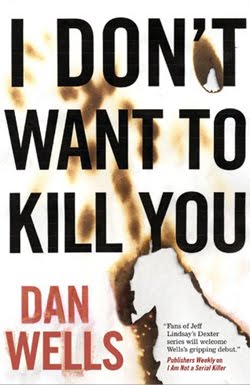
I Don’t Want to Kill You by Dan Wells

John Cleaver, teenage sociopath and demon hunter, has put his inner monster to work protecting his small town community from supernatural beings.  But now, the head demon, known only as Nobody, has come to take him down.

As if that weren’t difficult enough, the most popular girl in John’s class, Marci, has taken a liking to him–and he soon finds that he likes her back.  What’s more, she’s not as weirded out by his obsession with the string of murders in their town–in fact, she’s interested in them too.

Just as their young romance begins to blossom, however, a rash of teen suicides makes John wonder: why does he even try if the people he’s trying to protect are just going to throw their lives away anyways?  To defeat Nobody, he must search within himself and find the answer.

This book was awesome–like, Return of the Jedi awesome–and I’m not just saying that because the author is a friend of mine.  It brings the Serial Killer trilogy to a dramatic and satisfying conclusion.  Dan Wells’s storytelling skills are amazing, and he puts them to good use throughout this book.

The thing I loved the most was probably how all the major characters had to sacrifice something huge for the people they loved in order to overcome the evil forces at work in their lives.  And the demons–whoa, they were pretty freaky.  Supernatural freaky, yes, but in a way that was frighteningly true to life–even more so than the previous demons in the series.

Wells has an excellent handle on character arcs, and he applies that here to the romance subplot with excellent results.  The romantic aspect of the novel was both believable and gripping, and made the ending all the more emotional.

If anything, though, I wish he would have played up the love triangle a little more than he did.  No spoilers, but there were a couple of shifts toward the end that felt a little abrupt.  Not too much, but I thought it could have been done better.

This is definitely an urban fantasy, but one surprisingly close to the real world.  Unlike Mr. Monster, where the supernatural aspect came in halfway as something of a shock, I thought the supernatural and real world elements in I Don’t Want to Kill You were blended almost perfectly.  Not only was it clear from the beginning that both elements were going to be important, but the feedback loop between the two was handled extremely well.  If I ever write urban fantasy, Dan Wells has certainly set a high standard to follow.

All in all, a great book, one I highly recommend.  If you enjoy urban fantasy or superhero stories, you’ll probably love this book.

The Obligatory After-Conference Marriage Post

So in case you didn’t know, General Conference was this past weekend.  General Conference is this huge semi- annual conference broadcast live from Salt Lake City, where the leaders of the Church of Jesus Christ talk on a number of topics and issues relevant to the church.  This year, one of the main recurring themes was the need for young singles, especially men, to get married and settle down.

In a church where the holiest sacrament is temple marriage, where husband, wife, and children are considered sealed to each other “for time and all eternity,” this emphasis on marriage shouldn’t come as a huge surprise.  To be honest, I was more amused than anything; just a couple days before, I’d posted a comment on my sister’s blog mentioning how apathetic I am right now about dating and getting married.  Youch.

So anyhow, with my whole family nagging me about this–all of whom are married or engaged, by the way–I suppose I ought to give my thoughts on the subject.

This week’s Writing Excuses podcast was on writing romance, and while I found it extremely helpful in my own writing, I also found the points interesting as a young single adult.  According to Sarah Eden, a regency romance writer who was a guest in this episode, in order for a romance in a book to work, the characters must:

1) fulfill a need in each other,
2) create a relationship that has emotional resonance, and
3) be something for each other that no-one else can be.

Probably the biggest reason I’m not married right now (foregoing the whole “haven’t met the right person yet” question, which is valid) is because I just don’t feel like I have a need that isn’t being fulfilled.  That probably means I’m in a comfort zone, which is a bad thing, but that’s the truth.

It’s not that I’m not attracted to a fair number of women, because I definitely am.  It’s just that for most of the women in my life right now, when I ask myself “do I have a real, hungering need for her companionship?” the answer is “no.”

There have been a couple of times in my life where that wasn’t the case–where I felt infatuated with a girl and really, honestly felt that she was or could be something that no one else could be.  Long story short, for various reasons (some of which I still don’t understand), it never worked out.  Sometimes it was me, sometimes it was her, and now most of my old crushes are happily married…to other people.

And as for why I’m not looking more actively, I could go on a(nother) long rant about why the Utah dating scene really, really sucks for a person like me (doesn’t fit the cookie cutter mold, doesn’t have a secure financial future, isn’t ridiculously attractive, etc etc), but all that is beside the point.

I’ve never really seen the point in dating as a way to get to know people, since first dates are generally awkward and fake, but I’m also really bad at transitioning from friendship to something more than that. So in other words, the advice “go on more dates” helps me about as much as telling someone with clinical depression that they should just “be happy.”

Not that I’m depressed because I’m single.  I’m actually okay with it.  The thing I’m wondering, though, is whether that’s a good thing or a bad thing?

I should probably force myself to go out more often, or to at least try to connect with more eligible young women and make them a part of my life somehow.  And maybe another problem is that I’ve never really seen myself as a married person–though I doubt it, because most of my married friends have jumped into it without really knowing what life is like on the other side.

But the point is, I need to take some time and figure out how to make getting married a priority.  And really, that’s the only thing I can say for sure.

Character DTRs and other such stuff

Just a quick post before I go to bed.

The two main characters in WAFH just had a DTR (Define The Relationship discussion) and it was, well, kind of rough.  I don’t know what’s harder: having one in real life, or writing a fictional one that actually works.

I also don’t know which one I have more personal experience with, but that’s a subject I’d rather not get into right now.

Anyhow, even though that was an unexpected rough spot that had me down for the past few days, the end for WAFH 2.0 is definitely in sight.  I’ve got one more scene in this chapter, the big climactic end battle / rescue / whatever, and then a very short epilogue.  In all, that’s about seven scenes, two of which are already written and two others which I can probably glean from recycled material.

In unexpected news, I had a very interesting idea.  You know the Writers of the Future contest?  I always want to submit to them, but never can, because none of my stuff is short enough.  It’s acceptable to submit the first part of a novel–Dave Wolverton did that, with On My Way to Paradise–but only if the first part is a complete story in itself.

Well, as I was walking down the street, I wondered whether I could take one of my novels (like BSH) and eliminate all but one of the viewpoint characters’ scenes.  Specifically, I was thinking of doing that with Stella, who goes from prisoner to concubine to queen of a tribe of starfaring warrior nomads.  After cutting out all the other storylines and adding in a bit here or there to preserve continuity, it could make for an interesting novella.

Still, it’s going to be tough to get it down to the 17k word contest limit.  Stella is one of four major viewpoint characters, so her scenes probably take up at least 25k words in the book.  I might be able to cut out a couple of subplots, like the one with Gazan…but I dunno.  I’m open to suggestions from those of you who’ve read it.

In other news, I made the first cut for the 2011 Amazon Breakthrough Novel Award contest!  I submitted Genesis Earth in the YA category, and mine is one of 1,000 entrants that will go on to the next round of judging.  First place wins a $10k publishing contract with Penguin–yay!

I’m trying not to get my hopes up too much, but I’ll know whether I made the second cut by March 22nd.  A couple of friends from Quark also made it through the first round, so if any of us makes it to the second, that would be awesome.  Go Quarkies!

That’s about it for now; Brandon Sanderson did an interesting lecture in his 318 class on the new world of publishing, which was quite interesting.  I’ve got a LOT of new thoughts to share on indie publishing, but that will have to wait for another post.

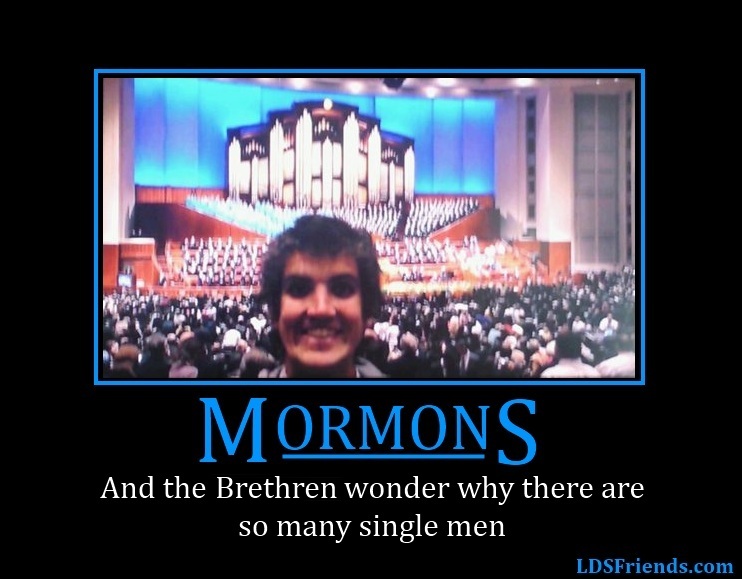
Until then, keep being awesome…but not like this guy: