Thoughts after finishing The Last Full Measure by Jeff Shaara

WOW.

This was an amazing book. A highly memorable book. A book I will return to again and again in the future.

There comes a moment when reading a truly amazing book when you don’t think that it can possibly get any better. It’s a ten out of ten, easily five stars. And then … it gets even better.

The Last Full Measure by Jeff Shaara was one of those books. It’s the third book in a trilogy that technically starts with Gods and Generals, but really it started with the middle book, The Killer Angels, which was written by the author’s father, Michael Shaara.

The Killer Angels covers the events of the Battle of Gettysburg, and is definitely one of the best Civil War novels ever written. Years later, Jeff Shaara decided to write a prequel to his father’s book, showing all the events of the war leading up to Gettysburg. The Last Full Measure picks up immediately where The Killer Angels leaves off, and follows the war to its conclusion at Appomattox and the beginning of the Reconstruction.

This book is amazing. It really made me feel like I was there, from the bloody confusion at the Wilderness to the brutal hand-to-hand combat at Spotsylvania, from Grant’s terrible mistake at Cold Harbor to the long, hard siege of Petersburg. And then, at the very end, when Brigadier General Lawrence Chamberlain surveyed the monuments from Little Round Top just before the fiftieth reunion of Gettysburg, I realized that I actually have been there!

It was such a crazy moment, to read about something in a novel and then have it merge with my own memories of the place. It made the whole thing come alive in a way that was just fantastic.

There were a lot of other amazing moments in the book. When General Lee finally surrendered, it very nearly brought me to tears. And later, when Chamberlain accepted the arms of the Army of Northern Virginia and had his men salute the Confederate soldiers in a show of brotherhood and respect, it was amazingly touching.

Chamberlain’s storyline in general was fascinating throughout the whole trilogy. His father wanted him to be a soldier and his mother wanted him to be a priest, but he chose a career in academia instead at the insistence of his wife. But the academic lifestyle left something unfulfilled in him, and he didn’t realize it until the war broke out. He volunteered without telling anybody, not even his wife, and was soon swept up in some of the bloodiest battles in the war. At Fredericksburg, he spent the night on the bloody fields within sight of the enemy lines, shielded and kept warm by the bodies of his men.

Then, at Gettysburg, there was that was that glorious charge on Little Round Top that saved the Union flank, and quite possibly the entire battle. When he came home from that, he’d gained something that he’d never had before in his life: his father’s respect and approval. From Gettysburg, he rose to command a battalion, but at Petersburg the ineptitude of the Union command left him without support at a critical moment, and he was nearly killed. But he came back, taking command of a brigade upon his recovery, and turned the tide of battle at Five Forks and Appomattox.

By the time the war was over, not only had he won great honor and glory, he’d tested and proven himself, learned something about his inner character that he would always take with him, and that would always give him strength. The afterword starts with a quote from Lawrence Chamberlain that sums it all up amazingly well:

War is for the participants a test of character; it makes bad men worse and good men better.

I’m not going to lie: this book almost made me wish that I could go off to war like Chamberlain did. It’s not that Jeff Shaara glorified the Civil War war–just the opposite, in fact. The horrors and brutality and awful tragedy were all depicted in full measure, with the pain and death and suffering. It wasn’t glamorized at all. But there’s something deep, something primal about going through an experience like that–something that strips away all the luxuries, all the securities of modern life and forces you to find out who you really are, what you’re really made of. For all the horrors that those soldiers went through, I envy them for that part of their experience.

I feel like I’ve been channeling that recently in some of my short stories, like that orc story I wrote recently. I have an idea for another one that I’ll probably write while I’m out at Cape Cod. It’s also what drives me to heroic fantasy, to stuff like David Gemmell’s Drenai series. There’s something about taking up a sword, or an ax, or a musket and charging headlong into battle that rouses the spirit–that makes you feel truly alive.

I would love to write a book as good as this one; it’s one of those things that I dream of. I’m not sure if it’s possible to pull off a story as tremendous as this in short story or novella form, though. Maybe, but all of the stories that have had this powerful of an impact on me were all novels. The shortest one that I can remember was The High King by Lloyd Alexander, but that was the fifth book in a series (and it was still a novel). Short stories and novellas are great, but at some point I need to return to novels.

In any case, those are some of my thoughts after reading The Last Full Measure. There were a lot more, but this post is already starting to ramble so I’ll cut it short here. I’ll leave you with the opening credits from the movie Gods and Generals, a great piece that really captures what so many of the common soldiers were fighting for: home.

Take care and be well.
Don’t worry, I’m still alive

Wow, has it been more than a week since my last post? I think this is the longest I’ve gone without updating this blog since coming back from Georgia.

I wish I could say life has been busy, but it hasn’t really. Just another lazy summer in Utah. I did start dating someone recently, which probably explains where all my time has gone. But don’t worry, I’m still writing–in fact, the first draft of Strangers in Flight (Sons of the Starfarers: Book III) should be finished next week. It’s taken me a lot longer to write this one than I’d expected, but now that I’ve buckled down, it’s really coming together.

Comrades in Hope (Sons of the Starfarers: Book II) should be out by the end of the month, barring something crazy like my editor or cover designer dropping off the face of the Earth. Once they get back to me, all I’ve got to do is run through the edits (which shouldn’t take longer than a day or two) and format the thing (which also shouldn’t take longer than a day or two). So if you’ve read the first book and are eagerly awaiting the second, you shouldn’t have to wait longer than a couple of weeks!

I’m not sure what cons I’ll be attending this summer/fall. I thought I was going to Westercon, but it turns out my parents are going to be in town that week, and considering that it falls on the fourth of July (which also happens to be my sister’s birthday–who also happens to be pregnant), it looks like I have more important things to do that weekend. Besides, I want to start a new 4th of July tradition with my girlfriend this year: watching Gettysburg.

In any case, it looks like I won’t be doing too many cons this year. Maybe Salt Lake Comic Con, but I don’t know about that one yet either.

Once I’ve finished Strangers in Flight, I’ll probably take some time to work on a novel. There are three projects that I’m thinking about working on:

Star Wanderers: Children of the Starry Sea — I’ve been wanting to write a Star Wanderers novel for some time, but haven’t actually started it yet. It would definitely be fun to revisit the characters from that series, and it seems that a lot of my readers would really be interested in it too. It would also be a good way to tie things in with Sons of the Starfarers, and give some direction to the later books in that series.

The Sword Bearer — I explained the plot of this one to my girlfried, and she really liked it. That got me excited about it again, so I’m thinking very seriously about taking that project off of the back burner for a while. It’s a long-form epic fantasy that will probably turn into a trilogy–very different from the stuff I’m writing now. Still, it has a lot of potential, and the story is definitely solid. If I do pick it up, I’ll probably rename it The Sword Keeper, so that book 2 will be The Sword Bearer, and book 3 will be The Sword Wielder.

Star Wolf, AKA Heart of the Nebula — I’ve been meaning to finish this one for some time, so I might as well knock it off. With the last round of revisions, I got about halfway through, but it’s still very messy, so this would definitely be a project. However, this is the one that is closest to actually being publishable.

So that’s what I’m up to right now. I’ve got a lot more to say, especially about my girlfriend, but for now, I think I’d better get back to writing.

Trope Tuesday: Eagle Squadron

pdrm8846cYou’ve got your standard mercenaries: hired guns who fight for money.  Then you’ve got your fighting for a homeland types: mercenaries (usually) who used to have a cause to fight for, but now all they’ve got is each other, and maybe the hope that someday they’ll find a new homeland to replace the one they’ve lost.  Invert that, and you’ve got an eagle squadron: a ragtag bunch of volunteers who leave their homeland to fight for someone else’s cause, usually a sympathetic rebel faction or band of underdog freedom fighters.

It isn’t really fair to group these guys with mercenaries, since they aren’t fighting for money or fortune.  Far from it.  They believe so totally in the cause they’re fighting for that they’re willing to give up their lives for it, even though they could easily go home and live out their lives peaceably.  At least, that’s how it is on the idealist side of the sliding scale.  On the more cynical side, eagle squadron is really just a Legion of Lost Souls full of thugs and criminals who are hoping to clear their names.  Or, even further down the scale, perhaps they just love killing.

Even on the idealist side, there’s always the possibility that your terrorists are our freedom fighters.  After all, where did Al Qaeda come from?  The Mujahideen, volunteers from all over the Muslim world who joined with the Afghan freedom fighters against the Soviet invasion of the 80s.  When they won, it galvanized their Islamist cause and inspired them to take the fight to their homelands, many of which were ruled by dictators.  Since the United States props up many of these dictatorships, it was only a matter of time before they turned on us as well.

The name from this trope comes from three volunteer squadrons of US fighter pilots in World War II, who joined the RAF in the fight against the Nazis back when the United States was still neutral.  Since the Nazis have pretty much become the standard of all that is evil in the eyes of our modern society, the eagle squadrons are now heroes by default.  War is of course more complicated than that, though there is still room for heroism even in a world of moral ambiguity.

When the eagle squadron makes the ultimate sacrifice, you can count on them being remembered as heroes for all time.  That’s basically what happened with the Alamo: a bunch of frontier Americans sympathetic to the cause of Texan Independence went to join the fight against Santa Anna and made a bloody last stand when the war went out of their favor.  Of course, since history tends to be written by the victors, it’s arguable that this only happens if the survivors go on to win the war.  After all, plenty of expatriates volunteered to fight for the Nazis, but we don’t remember them in quite the same way.

Wow, this post turned out to be way more cynical than I’d intended.  The basic drive behind this trope is the yearning for an ideal, a cause to fight for.  We root for the eagle squadron because we want to believe that all it takes to defeat evil is for good men from across the world to take up arms against it.  If Eagle Squadron is led by the Incorruptible, then that might actually be the case, though it’s difficult to make that kind of a story anything other than black and white, one-dimensional, and utterly inauthentic.

I haven’t played with this trope too much yet, though I’ve been meaning to write a prequel book in the Gaia Nova series that tells the origin story for Danica and her band of Tajji mercenaries.  Her father was an admiral in the Tajji rebellion, and when the star system fell to the Imperials, they killed her entire family.  She escaped, though, and was taken in by an eagle squadron commander that fought alongside her father against the Imperial oppression.  After getting back on her feet, she leaves the Eagle Squadron to start her own military band, intent on getting revenge for the loss of her homeworld.  I’m not sure yet how the eagle squadron will play into that, but I see the commander as trying to dissuade her from this path.

In any case, it’s definitely a trope I want to play with.  I had a lot of fun with fighting for a homeland in Stars of Blood and Glory, so this would be a way to revisit some of the dynamics that made that story interesting.  You can definitely expect to see more of this from me in the future.

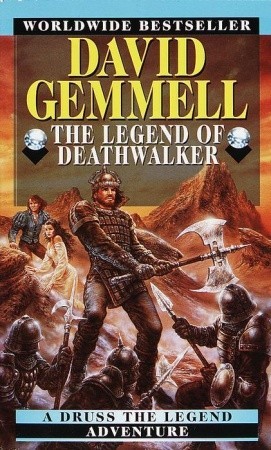
The Legend of Deathwalker by David Gemmell

legend_of_deathwalkerI’m not even going to try to write a synopsis of this story.  It’s just like all the other books in the Drenai series, which is why I love it so much.  Basically, this one gives the story behind the rise of Ulric, khan of the Nadir, and the origin of the Nadir people.  Interestingly enough, Druss the Legend plays a major role.
This was the last book in the Drenai Saga that I hadn’t read, so reading it was a very bittersweet experience.  On the one hand, this one is just as good as all the other books in the series, and made me want to revisit Legend and some of the others.  On the other hand, I knew that once I’d finished it, there wouldn’t be any more Drenai books left.  So I took it slow for the first half, but naturally I finished it at a breathless late-night sprint a day or two later.

I’ve been thinking a lot lately about why I love David Gemmell’s books so much.  There are many reasons, but I think the main reason is that his writing is honest.  He strips away all the incidental stuff and gets right at the heart of the stuff that matters.  He doesn’t pussyfoot around, either–if his characters do something despicable, he doesn’t make any excuses for them.  He tells it like it is.  This can make for a very brutal story, but it also makes for a very cathartic one.

The other reason I love his books so much is because he does such a good job depicting raw, unrepressed manhood–not the stupid stuff like driving big cars and eating meat, but manning up and facing your greatest fears.  It’s about friendship, and honor, and fighting with all of your strength for something you believe in.  It’s about all that raw, pent-up energy we all have, that animal urge that drives us to competitive sports and first person shooters, and channeling it for a heroic cause.

The craziest thing is that the fight itself is actually more important than whatever side the characters are fighting on.  In this book, Druss is actually fighting to help bring about the rise of the Nadir khan who later invades his homeland and kills him on the walls of Dros Delnoch.  None of that matters, though, because Druss doesn’t fight with malice.  For him, it’s all about fighting for something, not against something, and the battle itself is just as important as the victory.  I don’t think I can put it better than this:

“Can we win here?” Sieben asked, as the shaman’s image began to fade.

“Winning and losing are entirely dependent on what you are fighting for,” answered Shaoshad. “All men here could die, yet you could still win. Or all men could live and you could lose. Fare you well, poet.”

The best thing about David Gemmell’s books is the fact that none of the characters–not even the bad guys–are defined by their own evil.  The Nadir are supposed to be the evil chaotic race of the Drenai universe, but when you come to understand what they’re fighting for, their hopes and dreams for a better future, you can really see what’s good in them.  Likewise, the more civilized Gothir are kind of like the evil white men who want to put down the savages and keep them in their place, but there are good and honorable men among them too.

And yet, even though the two sides clash, and good men die on both sides, it somehow isn’t tragic.  That’s the crazy part.  It’s almost like you can feel the characters salute each other as they die in a good cause, the way Ulric gave Druss a proper funeral in Legend, even though the two were blood-sworn enemies.  In David Gemmell’s world, honor and courage are more important than life or money.  Everyone dies; dying well is more important than living without honor.

This book is incredible.  As I was reading it, I decided it was the best David Gemmell book I’ve ever read–which is something I do every time I read one of his books.  I feel like I’m a better man for having read them.  If he had written a hundred books in this series, I would happily read them all.  The fact that there are no more new ones deeply saddens me, but I know I’ll revisit these stories again in the future.

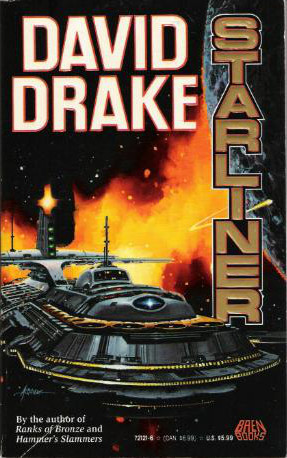
Starliner by David Drake

starlinerWelcome to the Empress of Earth, the finest luxury liner in all of settled space.  Whether you’re alien or human, first class or economy, there is a place on the ship for you.  Just watch out for those Grantholmers and Nevassans–those planets are about to go to war, but don’t worry, the Empress is strictly neutral territory.  The envoys from Earth will see to that.  And as for the rumors that one of those sides might try to hijack the ship, I’m sure the crew is capable enough to deal with such threats.  Even if they are unarmed…
I saw this book on my also-boughts on Amazon, so I decided to pick it up.  It was an enjoyable read.  David Drake is very good at showing competent characters dealing with all sorts of complicated problems, operating within a strict chain of command while sometimes bending the rules a bit to get the job done.

The book is really a series of small vignettes, all tied together through the main viewpoint character, Ran Colville.  There is an overarching storyline about the Empress’s role as a coveted pawn in a larger interstellar war, but that only really drives the story at the very end.  Really, it’s more of a slice-of-life story about the crew of the ship, punctuated by all of the strange and exotic stops along the way–and boy, are there plenty of those!

Even though the Empress is neutral, she’s a potentially valuable military asset that both sides in the Grantholm-Nevassan war want to capture.  To complicate matters further, some of the passengers are dignitaries from either side.  At one point, there’s a romance between the peacenik daughter of a Nevassan diplomat and the son of a Grantholmer nobleman who is honor-bound to fight in the war.  That subplot was a lot of fun.

As you can imagine, there’s plenty of violence.  And really, what would you expect from one of the world’s best military science fiction writers?  Drake does a really good job showing the adrenaline-soaked excitement of combat, as well as all the ugliness.  Even the mooks get a viewpoint from time to time, and when they die, it’s messy and traumatic.  For that reason, the violence feels very realistic, especially in how it affects the main characters.

Ran is something of a player, so there is a fair amount of explicit sex (including a bit of inter-species action).  Drake doesn’t mince words or shy away from the gritty details–he puts it all on the page as matter-of-factly as any other aspect of life.  The sex was brief enough that it didn’t really bother me that much, but Ran’s relationship toward one of his coworkers takes a turn at the end that seemed to come completely out of left-field.  I could understand why, for the purposes of the story, it had to happen, but the way it was handled I just didn’t buy it.

That was probably my biggest gripe.  If I had another, it would be that the story seems to meander a bit in the first two-thirds, but the world-building was interesting enough that it didn’t really bother me.  Overall, it was a fun, light read (well, light for military sf).  The ebook version is free on Amazon, so it’s definitely worth picking up.  If you haven’t read any David Drake yet, this isn’t a bad place to start.

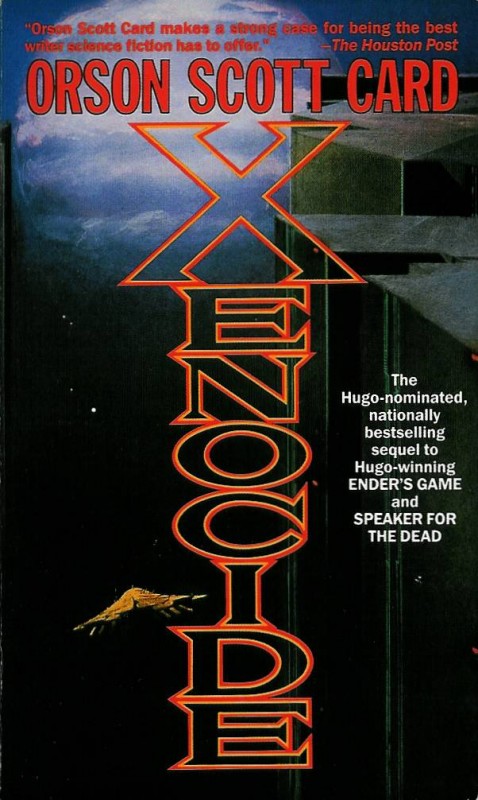
X is for Xenocide

xenocideThis post isn’t just about the third book in the Ender’s Game series–it’s about the genocide of an entire alien race, which is actually a fairly important trope in science fiction.

Of all the evils of our modern era, perhaps the most heinous is the systematic extermination of an entire race or ethnicity.  These acts of genocide not only cross the moral event horizon, they create specters and villains that live on from generation to generation.  Just look at how the Nazis are portrayed in popular culture–even today, they are practically mascots of the ultimate evil.

And for good reason.  There really is something evil about the total annihilation of a foreign culture.  It’s one of the reasons why terms like “genocide” and “ethnic cleansing” are so controversial, especially in conflicts that are still ongoing–and there are so many unresolved conflicts where the systematic and purposeful annihilation of a race or culture is still happening.

Is wholesale genocide a phenomenon unique to our modern age?  Probably not, but modern science has enabled it on a scale that was previously impossible.  This became all too clear to us after World War II.  Only a generation before, great numbers of people believed that we were on a path of progress that would eventually culminate in world peace.  If there was any of that sentiment left, it was shattered with the liberation of Auschwitz and the bombings of Hiroshima and Nagasaki.  Suddenly, we realized that systematic mass destruction and genocide were not only possible, they were a modern reality.

It should come as no surprise, then, that science fiction immediately began to explore this issue.  From Frankenstein to 1984, science fiction has been full of cautionary tales of science gone wrong, issuing a critical voice of warning.  But after 1945, it went much further, exploring the issue in ways that can only be done in a science fictional setting.

Is genocide ever morally justifiable?  In our current world, probably not, but what if an alien race was bent on our destruction?  If their primary objective was the utter annihilation the human race, and negotiation was impossible?  Wouldn’t it be justifiable–perhaps imperative even–to stop such a race by annihilating them first?

This is what is meant by the term “xenocide.” A portmanteau of “xenos,” the Greek word for stranger, and “genocide,” it denotes the complete extermination of an alien race.

Xenocide forms the core conflict of Orson Scott Card’s Ender’s Game series (hence the title of the third book) and features in The Forever War by Joe Haldeman.  Battlestar Galactica presents an interesting twist, where the cylons debate the ethical questions surrounding the complete annihilation of the humans.  And then, of course, there’s all the time travel stories involving Hitler–let’s not even go there.

The interesting thing about xenocide stories is that even though they describe a dilemma that does not currently exist in our modern world, they inevitably come down to issues of Otherness that lie at the very core of the evils of genocide.  In order for xenocide to be morally justifiable, you have to know your enemy well enough to know that there’s no possibility of forging any sort of peace with them.  And to know them that well, they cease to be quite so alien.  It’s one of the major themes in Orson Scott Card’s work–that to defeat an enemy, you have to know them so well that you can’t help but love them.

In our modern world, genocide is only possible when an ethnic group is relegated to the position of Other–when they are made out to be so different and unlike us that we can never possibly relate to or mix with them.  They become “sticks” (Germany), “cockroaches” (Rwanda), “animals” and “barbarians” (Israel).  That is precisely why it makes us uncomfortable in stories about xenocide–because it turns the well-intentioned saviors of humanity into knights templar, or possibly the very monsters they are trying to destroy.

By positing a situation in which genocide might actually be justifiable, science fiction helps us to understand exactly why it is so reprehensible–and that’s only one of the ways in which the genre can uniquely explore these issues.  That’s one of the things I love so much about science fiction: its ability to take things to their extreme logical conclusions, and thus help us to see our own real-world issues in ways that would otherwise be impossible.

Since most of my characters are human, xenocide as such isn’t a major theme in my books, but genocide certainly is.  In the Gaia Nova series, the starfaring Hameji look down on the Planetborn as inferior beings and think nothing of enslaving them and slagging entire worlds.  That’s how Prince Abaqa from Stars of Blood and Glory sees the universe at first, but by the end of the novel he’s not quite so sure.  Stella from Sholpan and Bringing Stella Home also deals with these issues as she comes to realize how it’s possible for the Hameji to hold to such a belief system.

If genocide is one of the ugly skeletons in the closet of this screwed up modern world, then xenocide is science fiction’s way of taking those skeletons out and dignifying them with a proper burial.  By wrestling with these issues in stories set on other worlds, we are better able to humanize the Other and prevent these horrors from happening again on our own.  In this way and so many others, science fiction helps us to build a better world.

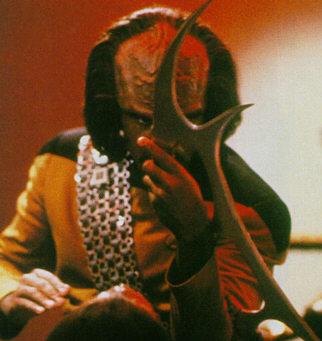
K is for Klingon

worfAh, the proud warrior race.  Where would science fiction be without it?  From Klingons to Ur-Quans, Wookies to Sangheilis, Mri to Green Martians to Vor Lords, warrior races have been a staple of space opera and space-centered science fiction pretty much since the genre was invented.

The concept behind this trope is the same as the one behind blood knight: honor is more valuable than life, and the best way to win or defend honor is through combat.  It’s not necessarily death that these guys live for, so much as glory and a chance to prove their prowess.  Unlike the always chaotic evil races, these guys usually follow a strict code of honor, sometimes to the point of absurdity.

When taken too far, of course, you get a planet of hats, where everyone has exactly the same values without any kind of depth or diversityFridge logic leads to Klingon Scientists Get No Respect.  After all, how did the Klingons build starships and discover space travel if they’re all constantly fighting each other?

Fortunately, we have plenty of real-world examples for how this sort of thing works.  Lots of human cultures have placed a high value on warrior qualities, including the Spartans, the Samurai, the Vikings, and the Mongols, just to name a few.  Of course, relying on stereotypes may lead to some unfortunate implications, so it’s not a good idea not to have too narrow or ethnocentric a reading of history.  Still, there’s a lot from history that we can glean.

In fact, you could make a valid argument that humans are the quintessential warrior race.  After all, we developed the technology to annihilate our own species before we put a man in space.  Even today, the amount of resources we spend on war and security far outstrips the amount of resources we dedicate to just about any other pursuit.  From the earliest ages, we engage in competitive physical sporting activities that mimic warfare and video games that outright simulate actual combat.  Our everyday language is full of violent terms like “on target,” “wiped out,” and “having a blast,” to the point where most of them are invisible.  Indeed, if we ever make contact with an alien race, we may very well find that we are the Klingons.

In that respect, this trope is just another way that science fiction acts as a mirror through which we can better see ourselves.  The proud warrior race fascinates us because we have so much in common with them.  Klingons are not just faceless orcs for the good guys to slay by the dozen–in many sci-fi universes, they (or individual members) actually become good guys.  Just think of Worf from Star Trek, or The Arbiter from Halo, or Aral Vorkosigan from Louis McMaster Bujold’s Vorkosigan Saga.  While on the surface, these guys seem absolutely crazy, when you start to explore them you frequently find a lot of depth.

I am fascinated by the concept of a warrior race.  I’ve played with it quite a bit in my own work, especially with the Hameji in Bringing Stella Home, Sholpan, and Stars of Blood and Glory.  The Hameji are an entirely spacefaring society that lives on the outer fringes of space, beyond any terraformed planets.  Because they live entirely on spaceships, they must capture and repurpose new spaceships just to have enough living space to expand their families.  Since their battleships also house their families, they make no distinction between military and civilian, and live by an extremely rigid social hierarchy with the patriarchal captain at the top and everyone else under his command.  Life is a privilege, not a right, and disobedience is strictly punished since it has the potential to put everyone’s life at risk.

As a result of all this, the Hameji are extremely vicious and warlike, living by a moral/ethical code that runs completely counter to our modern sensibilities but makes perfect sense to them.  They think nothing of slagging entire worlds and killing billions of people because to them, a world is a giant starship, and all those billions of people are so many enemy warriors.  They look down at the planetborn as weak because of their lack of discipline and obedience, and think nothing of enslaving them due to their strict social hierarchy.  In fact, because resources are limited and life is a privilege granted by the ship’s captain, the Hameji prefer to space their prisoners rather than keep them alive.

Man, those books were fun to write. 😀 Brutal, but fun.  Because the weird thing is, as much as you abhor a culture whose values contradict your own, when you really understand them, you can’t help but feel something of a connection.  You might not love them, but you respect them, and in a strange sort of way sympathize with them.  I’m not sure if that’s the experience with the Hameji that my readers have had, but that’s definitely been my experience in writing them.

So yeah, I’m definitely a big fan of the proud warrior race.  Expect to see me play with it many more times in the future.

E is for Empire

terran_empireAlmost every far future science fiction story has a galactic empire of some kind.  From Dune to Foundation, from Star Wars to Firefly, there’s always someone trying to rule the galaxy, often in a way that makes life difficult for the protagonists.

Why?  Rule of drama, of course, but also because it gives the story a truly epic scope.  Just as the classics such as Homer’s Iliad and Tolstoy’s War and Peace are as much about entire civilizations as they are about the people characters within them, so it is with science fiction, especially space opera.  Combine that with science fiction’s forward-thinking nature, and you have the potential for some truly amazing stories about humanity’s destiny among the stars.

But why empire?  Because even if we make it out to the stars, we’ll probably still take with us all of the baggage that makes us human.  Science fiction may be forward looking, but history repeats itself, and you can’t have a clear view of the future without understanding and acknowledging the past.

Not all galactic empires are evil, but most of them are.  We shouldn’t have to look further than the real-world history of Imperialism to see why.  Oppression, exploitation, slavery, genocide–all of these have been done in the name of Empire, and many more evils besides.  Even benevolent hegemonic powers (such as, I would argue, the United States of America) often end up doing great harm, either through action or inaction.

Of course, all of this makes for some really great stories.  When Asimov wrote his Foundation series, he quite literally based it on The History of the Decline and Fall of the Roman Empire by Edward Gibbon.  When Frank Herbert wrote Dune, he drew extensively from his background as an orientalist and based the overworld story on the Muslim conquests of the 7th and 8th centuries.  Star Wars is based loosely on the collapse of the Roman Republic, and Firefly echoes many of the old Western tales of former Confederate soldiers heading west after the US Civil War.

It’s worth pointing out that the Galactic Empire is by no means the only form of political organization in space opera.  There are actually several, including:

  • The FederationA loose organization of stars and planets that usually exists to foster cooperation and mutual peace between galactic civilizations.  Rarely evil, but can be crippled by red tape.
  • The RepublicA more centralized version of the Federation, typically.  Exercises more control over its citizens, but not in an oppressive way.  Usually features some form of representative government.
  • The AllianceA team of political underdogs united to overthrow the Empire and establish a more just form of government in its place.  If they win, they usually become the Republic or the Federation.
  • The KingdomA smaller government within the larger political system, often struggling for survival against more powerful forces. Not always democratic, but is often good, at least to its own citizens.
  • The Hegemonic EmpireLike the Empire, but rules primarily through soft power, ie co-opting their enemies rather than crushing them.  May overlap with the Republic or the Federation.
  • The People’s Republic of TyrannyThe Empire pretending to be the Federation.
  • The Vestigial EmpireWhat the Empire becomes when it’s been defeated but not yet destroyed.  Still oppressive and evil, but rules a smaller territory and struggles for relevance and survival.
  • The RemnantAn element from the Alliance that’s gone rogue.  The war may be over, but these guys are still fighting it, even if they’ve lost sight of what they’re fighting for.
  • The HordeA highly aggressive and expansionist warlord state.  By far the most violent and brutal of any political organization, it seeks to conquer and subjugate the entire galaxy.

As a political science major, all these forms of government really fascinate me.  I’ve played with quite a few of them, especially the Horde (Bringing Stella Home), the Empire (Desert Stars), the Hegemonic Empire (Star Wanderers), the Kingdom (Stars of Blood and Glory), and the Remnant (also Stars of Blood and Glory).  You can definitely expect to see me play with them again in the future.

B is for Space Battles

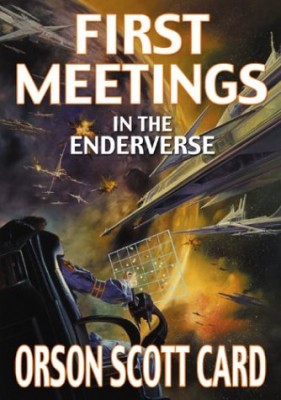
osc_first_meetingsIf you fell in love with science fiction when you were twelve, chances were it was because of the awesome space battles.  That was certainly the case with me.  When I saw Star Wars for the first time, I spent hours running around the house pretending I was flying my own starfighter.  In some ways, I’ve never really stopped. 😛
Ever since space opera became its own subgenre, space warfare has featured prominently in it, probably for the same reasons that Homer and Tolstoy framed their sprawling epics with a tale of war.  Where else are you going to find enough drama to fill volumes?  The fact that it’s set in space makes it so much cooler.

There are a lot of things about the space setting that make war stories different from those set here on Earth.  For one thing, there’s a huge element of exploration and unknown.  Even before we took the first photographs of Earth from space, there pretty much isn’t any corner on this planet that hasn’t been discovered by somebody.  In space, though, it’s still possible to stumble on a hidden planet, or find a mysterious alien artifact that can turn the tide of the war (Halo, anyone?).

For another thing, the dynamics of battle are completely different.  Sure, some stories treat space like an ocean, and there’s certainly a place for that kind of story, but the more interesting ones (at least to me) take into account all the profound differences.  For one thing, the zero gravity means that there is no “up” or “down,” which means that you have to deal with the possibility of attack coming from any direction, not just along a horizontal plane.  That concept alone drives the battles in Orson Scott Card’s Ender’s Game series, where “the enemy’s gate is down.”

One thing that really tickles me is when the story takes things a step further and incorporates things like orbital mechanics and delta-v.  I haven’t seen many books or games that do this, but the ones that do have really engrossed me by making the world feel that much more real.  Glen Cook did it in Passage At Arms, and the new Battlestar Galactica did it in the viper dogfights (though I’m not sure if they did it on the ship-to-ship scale).

The implications of real-world space physics on warfare are quite fascinating.  Rocketpunk Manifesto is an excellent blog that’s almost entirely dedicated to exploring them all, with all sorts of fascinating discussions on what the “plausible mid-future” may look like.  But even if all you’re looking for is an entertaining romp through space, the story telling possibilities are so much greater when you take the constraints of physics into account.

For example, if it takes months or even years to travel between planets, and orbital trajectories are fairly straightforward to figure out, how does it affect things if you can see the enemy fleet coming at your planet that long in advance?  If escape velocity from a gravity well like Earth is so difficult to achieve, what does that mean about the possibility of long-term planetary sieges?  And if starships are so far apart and moving so fast as to make full-on broadsides unlikely, how does that shape the battle tactics and strategy?  In spite of the physical constraints (or indeed, perhaps because of them), the possibilities are endless.

Man, I love me some good space battles.  One of my recent sci-fi favorites that features some epic battles is Wolfhound by my friend Kindal Debenham.  In my own work, you’ll find lots of them, especially in the Gaia Nova series (Bringing Stella Home, Stars of Blood and Glory, and to a lesser extent Desert Stars).  They say that the golden age for science fiction is about twelve years old, and that’s definitely true for me.  Expect to see lots more space battles from me in the future.

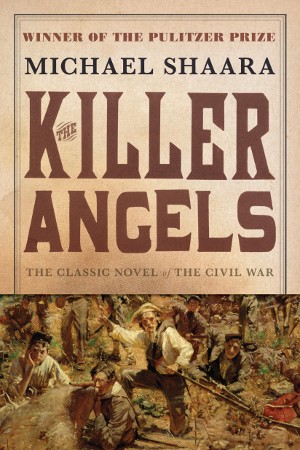
The Killer Angels by Michael Shaara

June, 1863.  In a bid to destroy the Army of the Potomac, Robert E. Lee invades Pennsylvania with an army of 70,000 men.  Using the mountains to screen his movements, he advances toward Harrisburg, fully expecting to secure a victory that will end the American Civil War.

But two weeks into the campaign, Stuart’s cavalry still hasn’t reported back, leaving the Confederate army blind.  Deep in enemy territory, with reports of the Union advance beginning to trickle in, Lee moves his forces to converge on a small town named Gettysburg.

In the titanic clash that follows, friend will fight against brother, generals will knowingly send thousands of men to their deaths, and the fate of the United States of America will lie in the hands of farmers and mountain men, immigrants, West Point classmates, and a New England professor.

This book is awesome.  Epic, in the best and truest sense of the word.  I’m not a civil war buff, but it reduced me to tears.  The scope is tremendous, and yet at the same time the characters feel like real people.

For some, like Chamberlain, the war is about slavery and equality–something that disturbs him when he comes across a black man for the first time.  For others, it’s about states’ rights and self-government.  But for most everybody else–including Robert E. Lee–it’s about a myriad of other things, like honor, duty to country, boredom, a desire to prove one’s manhood, and a hunger to be part of something greater.

What’s remarkable is how so many good people, who more often than not respect the opposing side and hold them in the highest regard, end up getting swept into such a horrific and bloody battle.  No one, especially the generals, have the power to prevent any of it–all they can do is leave it in the hands of God.  And the tragedy of it all is summed up so perfectly in the film rendition of this book, when General Armistead reaches the high-water mark of the Confederacy and falls, only to hear that his friend and classmate on the Union side, General Hancock, has fallen too (skip to 23:15):

“Not both of us!  Not all of us!  Please, God!”

I’ve been to Gettysburg several times, and stood on the ground where the most critical parts of the battle were decided.  And yet, I feel that living as an expat on  the other side of the world has given me a much greater appreciation of my country’s history.  Perhaps that’s one of the reasons why this book was so moving to me at this time.

Here are some of my favorite quotes:

He was a man to depend  on, and there was this truth about war: it taught you the men you could depend on.

According to the now retired General Schwarzkopf, The Killer Angels is “the best and most realistic novel about war that I have ever read.” You really get a sense of what it’s like to be in command–what it’s like to depend on the actions of your men, and what goes through your mind as you lead them.  The only other novel I’ve read that comes close to capturing that is Ender’s Game.

If the war goes on–and it will, it will–what else can we do but go on?  It is the same question forever, what else can we do?  If they fight, we will fight with them.  And does it matter after all who wins?  Was that ever really the question?  Will God ask that question, in the end?”

Robert E. Lee’s words after the Confederate defeat on the third day.  There is, of course, some criticism about how much artistic license Michael Shaara took in portraying the central historical figures.  Regardless, this novel gave me a much greater respect for Lee and his men.  There are no “bad guys” in this book–and therein lies the heart of the tragedy.

In the presence of real tragedy you feel neither pain nor joy nor hatred, only a sense of enormous space and time suspended, the great doors open to black eternity, the rising across the terrible field of that last  enormous, unanswerable question.

Well put.  I’ve never experienced any tragedy on the scale of the American Civil War, but I do know what it’s like to lose family and loved ones, and this captured a bit of that for me.  I can only imagine what it must be like to experience the tragedy of war.

This novel is a classic.  If you have any interest in American history, it is absolutely a must-read.  And even if you don’t, if you enjoy reading stories about war, whether modern, historical, or fantasy, you will almost certainly enjoy this book.