D is for Droids

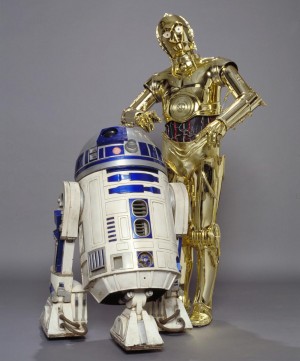
droidsSome of the best-loved characters in science fiction don’t even have a heartbeat.  Why?  They’re robots, that’s why!

Unlike the mechanical “slaves” (the original meaning of the Czech root robota) that built your car or enable your GPS devices, these robots are a lot more human.  In fact, the word “droid” is short for “android,” which comes from the Greek root for “man” (andr-) and means “manlike.”

In other words, the thing that defines these robots is that they blur the line between machine and man.  And ever since they made their first appearance in some of the earliest works of science fiction (Frankenstein by Mary Shelley was arguably the first), that’s exactly what they’ve been doing.

Star Trek loves to play with this trope, from Data in The Next Generation to the doctor in Voyager.  But where the droids in Star Trek tend to be angsty and existential, the ones who populate Star Wars already know their place and don’t have any qualms filling it.

My first exposure to droids was when I saw the original Star Wars trilogy as a little boy.  An image of C3PO with his golden humanoid body wandering across the dune wastes of Tatooine will probably be stamped on my subconscious forever.  That, and the little traveling flea market the Jawas ran from their sand crawler.

One of the neat things about droids is that you can go either direction with them.  If you want to get all existential about the nature of humanity and whatnot, you can use them to explore those questions since they’re almost human but not quite.  On the other hand, if you just want an exciting space romp with some unique and interesting characters, you can bring them out as regular characters.

An advantage that droids have over humans is that they’re harder to kill and easier to bring back to life.  Star Wars leaned on this a lot, especially in episodes IV and V.  When R2D2 got shot in the battle of Yavin IV, right before Luke blew up the Death Star, I just about died.  And yet, they brought him back easily enough for the throne room scene because he’s a robot–all they had to say was “we’ll fix him up” and you knew that everything would be better.

So yeah, droids.  I haven’t done much with droids yet in my own writing, mostly because I’m a bit conflicted in my thoughts about the upper limits of AI (which I explored somewhat in Genesis Earth).  Most of my robots are actually cyborgs, and that’s something completely different.  Still, I can see myself playing with this trope at some point in the future, probably when/if I introduce some aliens or start a new series.

C is for Cryo

halo_cryochamber

I think every science fiction writer has a cryo (aka “human popsicle“) story sitting around somewhere, even if it’s just in the back of their head.  It’s one of those tropes that keeps coming back, just like the alien invasion, the robot apocalypse, and the Adam and Eve plot.

The basic concept is pretty simple, even if the technology is a bit more complex: a human or animal undergoes rapid freezing in order to put themselves into stasis for an extended period of time.  Months, years, or even centuries later, someone thaws and resuscitates them so that they wake up in a completely different time and place.

There are a lot of good reasons why going into cryo makes sense in a science fiction universe.  One of the more common ones is that the characters are colonists on a mission to an alien star, and their spaceship doesn’t have a faster-than-light drive.  Rather than go through all the trouble of building a generation ship, the designers instead built a series of cryo chambers to put the colonists into stasis for an extended period of time.  It might take centuries or millennia for the ship to reach its destination, but when it does, the colonists wake up as if it’s just been a long, dreamless night.

In The Worthing Saga, Orson Scott Card has a somewhat unusual rationale behind the prevalence of cryo in his universe (though they call it “hot sleep,” and it’s induced by a drug called soma).  Only the rich can afford the technology, and the imperial overlords very carefully regulate the use of it so that there’s a clear hierarchy based on who goes under for the longest amount at a time.  It’s a way for the citizens to achieve a simulated form of immortality, by skipping five or ten years every year or two of their lives.

In the Halo video game series, the UNSC uses cryo as a way to preserve their greatest military assets, the Spartans, for the times when they’re needed.  The first game in the series starts when John-117, aka the Master Chief, is awakened just as the starship Pillar of Autumn crash lands on a mysterious alien structure.  Like something from an old Norse legend, the third game ends when the Master Chief seals himself into the cryo chamber of a derelict starship, telling the AI Cortana “wake me when you need me.” (highlight to view spoilers).

So why are cryo stories so prevalent in science fiction?  For one thing, they’ve been floating around in our cultural subconscious a lot longer than the genre has been in existence–just think of Sleeping Beauty or Rip Van Winkle.  For another thing, the science is not that far-fetched.  Certain animals can be revived after extended periods of frozen stasis, and according to the New York Times, it’s happened at least once with a human being.  Science fiction has a long history of turning fiction into fact (for example, Arthur C. Clarke and communication satellites), so perhaps it’s only a matter of time before human cryotech becomes a reality.

I’m definitely a fan of this trope in my own writing.  Genesis Earth has a chapter with a rather horrific cryothaw scene, which I later spun off into a short piece titled “From the Ice Incarnate.” I haven’t played with it much in my latest books, but in Heart of the Nebula which I hope to publish later this year, the cryotech plays a very important role in the plot.  And if I ever write a prequel to my Gaia Nova series showing how that universe got started, it will feature a cryo colonization story.  The main premise of that series is that a group of human colonists fled 21st century Earth and went into cryo to colonize a distant corner of the galaxy, but when they woke up, they couldn’t find Earth anymore, so it became something of an ancient holy legend (which is a major driver for Desert Stars).

A is for Aliens

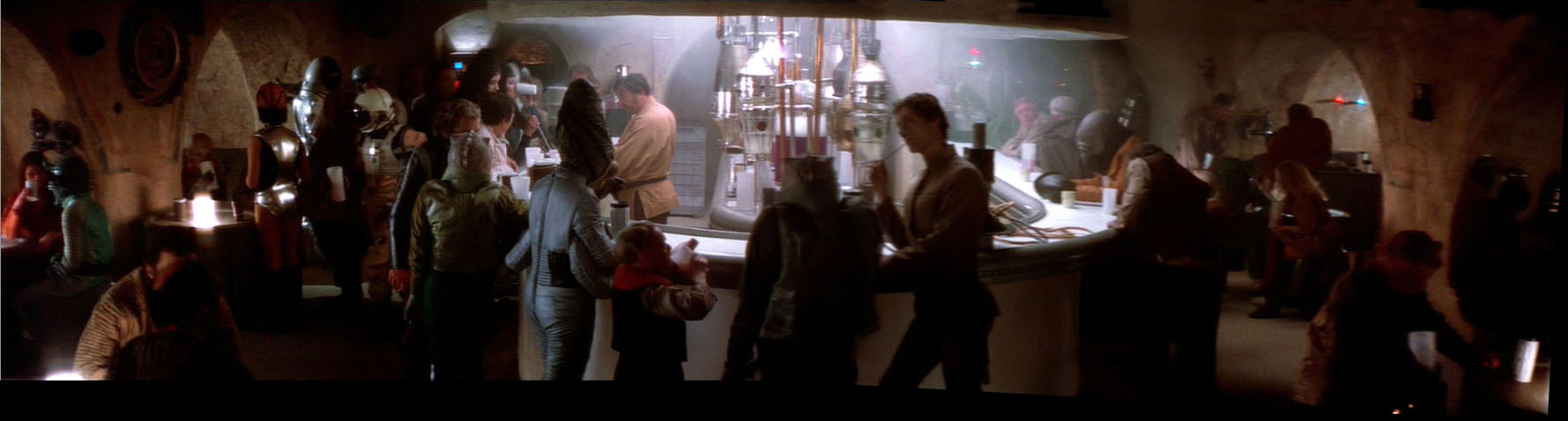
cantinaAlien races–what would science fiction be without them?  They’re as fundamental to the genre as elves and dwarves are to fantasy.  If you’re reading a book and an alien being from another planet shows up on the page, that in itself is usually enough to make the story science fiction.

My first exposure to aliens came from Star Wars IV: A New Hope, which I saw as a kid sometime back in the early nineties.  The cantina scene with the weird, catchy music and all the frighteningly creatures both scared and fascinated me.  Here were a bunch of humans, mingling with these things that looked like monsters as if nothing were strange or unusual.  In fact, it soon became clear that these weren’t monsters at all, but regular people–that is, as regular as you can be without being human.

I think the main reason for including aliens in a space opera story is that it makes the setting feel more exotic and otherworldly.  It can also add all sorts of interesting possibilities for plot and character, depending on the different capabilities of the various alien races and the way their culture shapes them.  Babylon 5 is a great example of this, with the characters from each alien race interacting with each other in ways unique to their various cultures.

One way to think of science fictional aliens is to put them on a spectrum with two extremes.  On the one side, you have the more familiar aliens–the races from Star Trek, for example, which are basically human-like except with weird skin or bone ridges to physically distinguish them.  On the other side, you have the truly bizarre–the kinds of aliens that are so different from us, we cannot possibly conceive their thoughts or the way they see the world.

The main advantage of the more familiar alien types is that they’re easy to understand and relate to.  Yeah, they may look weird, but they don’t think or act much differently than the Russians, or the Arabs, or whatever human culture they roughly parallel.  In fact, it’s not uncommon in fiction of this type for the aliens to be less “alien” than the Japanese (at least, in Western fiction–obviously, it’s different in manga and anime).  This, in turn, is the main weakness with aliens of this type: they are so readily understandable that it’s easy to lose that sense of otherness.

The main advantage of the more extreme kind of alien is that it can make a much stronger impact, which makes for a more compelling and thought-provoking story.  For example, the Hypotheticals in Robert Charles Wilson’s Spin trilogy are so fascinating because we know so little about them.  They have the power to shape entire worlds, manipulating space and time itself, and yet none of the reasons behind what they’re doing make sense–if indeed there’s any reason behind it at all.  Or in Octavia Butler’s Xenogensis trilogy, it’s not too hard to figure out what the aliens are trying to do, but the way in which they do it, impregnating the main character through their tri-sexual biological capabilities makes for a profoundly disturbing story.

The disadvantage, of course, is that aliens of this kind are much more difficult for readers to relate to.  If the aliens are so advanced that their thoughts transcend our own, or if their sensory organs are so different that we cannot possibly conceive of how they see the world, then it’s very difficult for us to get inside of their heads.  For this reason, aliens of this kind tend to become more of a force of nature than actual characters–or characters in the aggregate, in the way that humanity is the main character of most of Arthur C. Clarke’s books.

Personally, I’m more of a fan of the extreme alien type.  The universe is so vast, and our understanding of it is so lacking, that it rings a lot truer to me.  The odds that we are alone in the universe are so infinitesimally small that refusing to believe in the existence of aliens would be akin to believing in 1492 that the Earth is flat, and yet if/when we ever make contact, I can’t help but wonder how different from us they’ll be.  So much of what we take for granted is just a fluke of our particular circumstances here on this planet–the chance combination of so many variables that changing any one of them would completely rewrite the story of how our species evolved, much less our civilization.

There is a place for the more familiar aliens of space opera, though. They make for some very entertaining stories, provide a fun escape from this world when that’s what we need.  They also give us a chance to look at ourselves through a lens that strips away our stereotypes and prejudices.  We might have some very strong opinions about immigrants, for example, or people of a different race or color, but none of us are prejudiced against Sand People, or Klingons, or Androsynth.  In space opera, most alien races are loosely based on real-world cultures, so it’s possible to draw parallels without all the cultural and historical baggage.

In a sense, all fiction is just the culture speaking to itself, so when we read about aliens we are really reading about ourselves.  Encountering the Other in a non-threatening fictional world enables us to face the real-world Other with understanding and compassion.

I haven’t written very many alien stories yet, but I have a couple cooking in the back of my mind.  Genesis Earth has an alien encounter with a bit of a twist to it, but the characters in my Star Wanderers and Gaia Nova series are all human (well, mostly).  If/when I do introduce an alien race, I plan to do it right, which will almost certainly involve a first contact story.  But that’s for Saturday’s blog post, not today’s.
Trope Tuesday: Fridge Logic, Fridge Horror, and Fridge Brilliance

It's amazing how many existential story questions arise from this view.
It’s amazing how many stories suddenly stop making sense from this point of view.

You know that moment after the end of the show, when the credits are rolling and the glory of that crowning moment of awesome is just beginning to fade?  When you go to the fridge to get something to eat, and all of a sudden that gaping plot hole or internal consistency problem with the story hits you?  Yeah, that’s fridge logic.

The key, though, is that it’s not something you normally question while you’re reading the book or watching the show.  While you’re in the story itself, the narrative is so compelling that you just don’t question it–that, or rule of cool is in play.  It’s only after the story is over that those questions start to arise.

It doesn’t have to come from bad writing.  Sometimes, it’s a result of values dissonance, especially for stories written in a different time or culture (although by no means is this phenomenon immune to bad writing).  Sometimes, it’s a result of a tomato surprise, where a reveal of something the characters have known all along completely changes the audience’s understanding of the story (though certainly, this isn’t immune to bad writing either).

Not all fridge logic is bad.  Fridge horror happens when a story becomes even more terrifying the more you think about it.  Some of the scariest horror stories have done this to me, as well as some that weren’t really intended to finish on downer endings but kinda sorta did.  Cracked.com did an interesting article on six movies that went that way.

But the best is when a story turns around and gives you fridge brilliance–that moment when you realize that that thing that bothered you actually changes the nature of the story in a way that suddenly makes it your favorite.

My favorite novel of all time, The Neverending Story, totally did this to me.  When I first read it in fourth grade, there were so many things that made the story awesome: the Temple of a Thousand Doors, the test of the three gates, the old man who is the exact opposite of the Childlike Empress in every way, and of course the signature phrase “but that is another story and shall be told another time.” But when I reread it in college, I realized that the real story–the underlying story that brings everything together–isn’t about a loser kid having all sorts of adventures in a fantastic world, but about the power of storytelling itself, and how it can fill the world with love.

Another moment of fridge brilliance came to me when I learned the story behind the writing of Legend, my favorite novel by David Gemmell, my favorite fantasy writer.  The book is about a hopeless battle that everyone knows cannot be won, and the people who decide to go and fight it anyway.  That’s all well and good, except that David Gemmell wrote it immediately after he was diagnosed with terminal cancer.  The story of the battle itself was a metaphor for his own life, and his struggle with his own impending death.  Lucky for all of us, after he finished writing it the doctor came back and told him that the first test was a false positive–that he was going to live after all.  He then went on to write almost thirty more books, all of them off-the-charts awesome.

So yeah, there you have it.  These are more reader tropes than writer tropes, but as a writer it’s good to keep them in mind.  Don’t be lazy, otherwise your fans will pick your stories apart (or if you have to leave a hole, be sure to hang a lampshade on it).  And if you find yourself smacking your forehead over something you’ve already written and published, see if you can’t revisit it in later books in the series and turn it into fridge brilliance.

Trope Tuesday: It Has Been an Honor

If there ever was a phrase that invoked manly tears, it’s this one.

It has been an honor” is pretty much the go-to catch phrase for any Heroic Sacrifice or Bolivian Army Ending.  It’s often a precursor to a Crowning Moment of Awesome, and as far as last words go, it ranks right up there with “I die free,” “I die as myself,” and “I regret nothing.” Expect to hear it a lot from blood knights, members of the proud warrior race, or anyone who belongs to a martyrdom culture.

Occasionally, you’ll hear a villain say this when he acknowledges the hero as a worthy opponent.  In such cases, the villain may evolve into a friendly enemy or a fire-forged friend. Or, if the trope is played straight, they just die.

One time you won’t hear this phrase is when someone is trying to play More Hero than Thou.  In that case, two or more good guys in a friendly rivalry basically argue over who has to bite the bullet, so the honor becomes a point of competition between them.

In my opinion, the heart and soul of this trope is the idea that some things are worth dying for.  Obviously, a character facing death is not going to say this unless he values his honor more than his life.  What exactly constitutes “honor” may be up for debate (with the potential for some unfortunate implications, especially in real-life martyrdom cultures like Japan), but the core element here is that the hero is fully willing to give up his life for something greater than himself.  Bonus points if he starts out as a coward and this trope marks the conclusion of his growth arc.

While this phrase often leads to a death of some kind, that isn’t always the case.  The cavalry can still show up to save them, or one of the characters can ultimately survive (either the one who says this phrase, or the one to whom it is said).  The important thing, though, is that the characters face death in a meaningful way.  Without that, this phrase doesn’t have nearly as much power.

In my own work, this trope tends to pop up a lot, especially in the more military sci-fi books in the Gaia Nova series.  It shows up multiple times in Stars of Blood and Glory, and also in Bringing Stella Home, though more in a posthumous way than anything else.  I suppose you could also say it happens in Star Wanderers: Homeworld, if you use a broader interpretation.

But either way, I’m definitely a big fan of this trope.  Expect to see it many more times in my own work in the future.

As a final note, it’s worth pointing out that the bandmaster’s violin from the real-life Titanic has recently been recovered and confirmed genuine.  It’s now on display in Belfast, less than two miles from where the Titanic was built.

Trope Tuesday: Rebellious Princess

Marle2You know that innocent and beautiful fairy tale princess, with the tricked out dress and the power to summon woodland creatures?  The one with a tendency to get kidnapped, but who always ends up happily ever after with her prince charming?

Yeah, that’s not this princess.

A rebellious princess would just as soon puke if she were any of those things.  She hates being royalty–she’d rather be one of the common folk, or at least be out doing something (which is why she’s often involved in politics).  She hates all those frilly dresses and tends to wear her hair in a tomboyish ponytail.  Rather than wait for her white knight to save her, she’s much more likely to be an action girl in disguise, or at least something of a badass.  When she grows up, she may become a lady of war.  Invariably, she hates whatever marriage has been arranged for her and often scandalizes those of her class to marry for love (if she even marries at all).

As you might have already guessed, this trope is extremely common, not the least because the princess classic has largely been discredited (at least, outside of Disney).  There’s a lot of variation on it too, with some stories featuring the rebellious princess as the love interest, and others showcasing her as the hero.

George R.R. Martin (Song of Ice and Fire) deconstructs the trope with Arya, who eventually becomes something of a sociopath, and Brandon Sanderson (Elantris) subverts it with Sarene, who very much has the personality but uses her royal position to her advantage.  Frank Herbert (Dune) zigzags with Lady Jessica, who is undylingly loyal to the Atreides family but rebels against the Bene Gesserit.  As you might expect, J.R.R. Tolkien plays it straight, not once but twice: Éowyn in Lord of the Rings, and Lúthien in The Silmarillion.

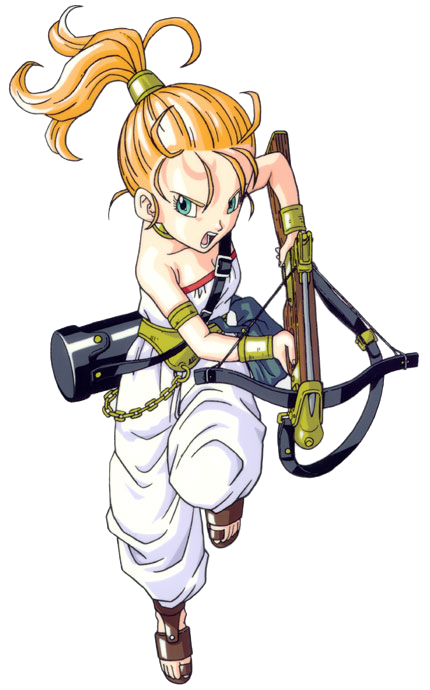
It transcends cultures, too.  In Crouching Tiger, Hidden Dragon, Jen might not technically be royalty, but she is the governor’s daughter and she does reject an arranged marriage to run away and become a wandering warrior.  And in classic RPGs, especially the old Japanese ones from Square, this trope is everywhere.  The princess in the picture above is Marle from Chrono Trigger, who fits this trope to a T.

So why is this trope so prevalent nowadays?  Probably because the modern feminist movement led us to discard most of our old-fashioned feminine ideals, as well as the characters who were held up as shining examples of them.  That, and rule of drama.  Everything ultimately comes down to rule of drama.

In my own work, Hikaru from Stars of Blood and Glory is an example of this trope, though she’s more of a president’s daughter than a hero or a love interest.  She does have her own story arc, though, and I’ve got a sequel in the works with her as the main character.  Scientists aren’t exactly royalty, but they do consider themselves elites in Genesis Earth, which means that Terra has echoes of this trope.  And in Heart of the Nebula (as-yet unpublished), I’ve got a character who isn’t exactly rebellious, but she does qualify as a badass princess (though the society in question is a perfect techno-democracy and not a monarchy).

Trope Tuesday: Mexican Standoff

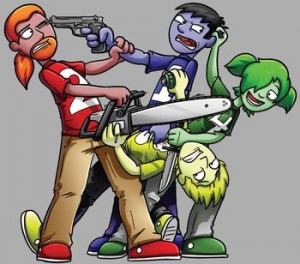
rsz_standoff_9776In a typical standoff, such as a hostage situation, two characters face off without immediately shooting at each other.  One or both of them may be using a human shield, or be reluctant to shoot first for fear that the other will take them with him.  A Mexican standoff, however, takes that up to a whole new level.

Perhaps the best explanation is the one from Wikipedia:

A Mexican standoff is most precisely a confrontation among three opponents. The tactics for such a confrontation are substantially different than for a duel, where the first to shoot has the advantage. In a confrontation among three mutually hostile participants, the first to shoot is at a tactical disadvantage. If opponent A shoots opponent B, then while so occupied, opponent C can shoot A, thus winning the conflict. Since it is the second opponent to shoot that has the advantage, no one wants to go first.

Basically, it’s Mutually Assured Destruction (MAD) on the level of individuals rather than nations.  The classic example is the finale from The Good, the Bad, and the Ugly.  Clint Eastwood’s character rigged it, though, so the outcome was never really in dispute.  Elsewhere, things rarely end so cleanly.

If the Cavalry doesn’t show up to save the day, these situations tend to lead to a messy free for all.  Heck, that may happen even if someone from the outside comes to save the hero.

If the resulting fight has a little more thought and strategy to it, though, you’ll get a Mêlée à Trois.  This happens in The Hobbit with the Battle of Five Armies, and in Downbelow Station with the stationers, merchanters, and Captain Mallory.  It also tends to happen a lot in A Song of Ice and Fire, with the various factions in that world.  Heck, it happened in real life during the Lebanese civil war, and is probably happening right now between the Christians, Sunnis, Shia, and Alawites of Syria.

When the fight has room for a little more scheming, you’ll often see things like a gambit pileup or a kingmaker scenario.  This is where things get really tricky, and the intrigue becomes positively delicious.  It isn’t enough just to have two parties duking it out–you’ve got to have lots of characters and factions, each with their own agenda.  That way, even the weakest party can win if they can convince everyone else to fight each other.

All of that happens after the Mexican standoff, though.  The standoff itself is the moment of tension and uncertainty before the crap hits the fan.  When done well, it’s an awesome moment of tension that can really boost the suspense.  When done poorly (or just for laughs), it’s over-the-top crazy, like Duke Nukem meets Scooby Doo.

I haven’t played around with this trope too much yet.  Stars of Blood and Glory has a little more intrigue than some of my other works, but I can’t think of a specific Mexican standoff moment in the book.  The situation near the end of Desert Stars is kind of like this, but with relationships and marriage alliances rather than guns.  I’m sure that’s a different trope, but I’m not sure which one.

Yet another reason to keep trawling tvtropes…

Trope Tuesday: Planetville (aka Adventure Planets)

swmapsmall

Adventure townsIN SPAAACE!!!

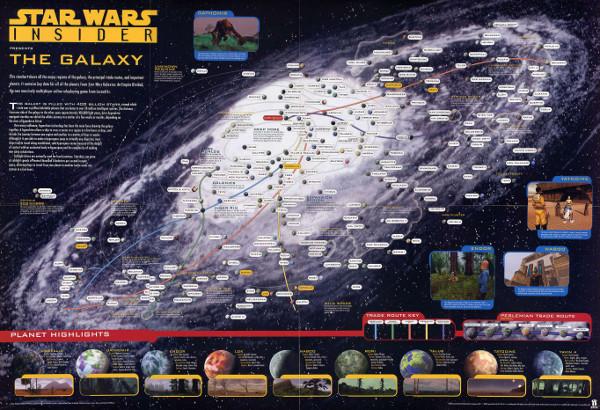
Seriously, that’s the best way to describe it.  In Westerns and TV serials, the heroes travel from town to town, with a new adventure in each place.  Well, in science fiction, we don’t hop towns, we hop planets.  Why?  Because we can.

Unfortunately, since planets and towns are actually pretty different kinds of places, there’s a lot of room to do things poorly and turn this trope into a cliche.  Any story that doesn’t consider (or at least lampshade) the implications of space travel and planetary colonization is in danger of becoming over-the-top campy–although, to be fair, there is an audience for that.

That doesn’t mean there isn’t room for this trope in fiction that takes itself a little more seriously.  In fact, I take issue with some of the descriptions on the Planetville page.  From tvtropes:

Unfortunately, because Sci-Fi Writers Have No Sense of Scale, stories about Planetville make no sense. Nobody seems to realize how BIG a planet is — everything in Planetville takes the same amount of time as stories set in towns or countries. In the updated Wild West story, the outlaws are “exiled from the planet” just like they’d be exiled from Dodge City, and have to quietly leave… instead of flat out challenging the authorities to find them when they have an entire planet in which to hide. When the space Nazis invade, they seem to need the same number of soldiers and time as the Earth Nazis needed to invade Europe. And when the crew of the Cool Starship finds the cure for the alien plague, the logistical issues of distributing it to an entire planet rarely get mentioned at all. These considerations are minimized or left out entirely in many stories.

To address these criticisms point by point:

1) Scale is relative to technology and the predominant modes of transportation.  When my ancestors crossed the plains to settle in modern-day Utah, they had to walk.  It took them months to get here and many of their family members died along the way.  Today, I can make the same trip by car in a day or two.  As technology changes, so does the sense of scale.

2) Unlike what some tropes would have you believe, not all planets are Earth-like.  In fact, it appears that most planets outside our solar system are wildly different.  In practical story terms, this means that any part of the world that’s remotely habitable is probably going to be immediately around the colony. Consequently, the local authorities probably will have the power to exile trouble makers from an entire planet, since exile from the colony would mean de facto exile from the planet as well.

3) Anyone venturing outside of the dome would have to carry just about everything necessary for life, including air, water, food, etc.  You might as well try to hide in Antarctica as hide on an alien planet.  It can be done, of course, but to do all that and stay hidden, that’s going to be tough.  You might as well set up a rival colony for all the effort–but at that point, the story is about a lot more than just hiding from the authorities.

4) If your planetary colonies are only as populous as an average WWII era city/town, then yeah, you’ll only need as many soldiers as it took to conquer them.  The biggest difference is that they’ll fly a really cool starship.

5) Again, if the planet isn’t habitable and the population is contained within a handful of relatively small colonies, then distribution shouldn’t be too much of a problem.

However, the tvtropes page does make this valid point:

A side effect of this is that the characters never realize that things can happen in parts of planets. You will never see aliens trying to capture a planet’s equator, or its polar caps — it’s the whole planet or bust.

In the end, I think the key to doing this trope well is to know your setting well enough to fit the story to it.  Tropes are tools, and when done well, this trope can accomplish everything it sets out to do while making perfect sense within the context of the story.

In my own work, this trope is most prevalent in the Star Wanderers series.  Every novella takes place at a different planet or space station, sometimes multiple planets per station.  Because most of the stars in this universe have only recently been settled, the colonies are small and terraforming is quite limited.  In Desert Stars, I used a similar concept, except with large domed areas of a single planet, instead of multiple planets (Adventure townsUNDER THE DOME!!!).  In cases where the planets are Earth-like, however, or where travel between planets is costly and difficult, this trope doesn’t really ever come into play.

Trope Tuesday: Arcadia

Happy_Arcadia_by_Konstantin_Makovsky

What happens when you cross the Ghibli Hills with the Call to Agriculture?  You get Arcadia, a simple, uncomplicated utopia where people keep to the good old ways and live in harmony with nature.  As home sweet home for the farm boy and the country mouse, it’s often the starting point for the hero’s journey, though you’ll also see an occasional retired badass or old master take up residence after their adventuring days are over.  Then again, it might just be a ten minute retirement before they’re back in harm’s way.

This is NOT a town with a dark secret or any other kind of twisted dystopia.  There are no knights templar who believe that Arcadia justifies the means.  If there is any sort of moral or message behind this place, it’s a green Aesop.  If there’s anyone who fights to defend this place, it’s usually the good shepherd.

Because of the Rule of Drama, it seems almost paradoxical that a place as peaceful as Arcadia would exist in any story.  However, sometimes it’s good to have the contrast.  It also helps to raise the stakes by giving the hero a home like this to fight for.  By keeping this in the back of their minds, it can be an effective way to keep them from crossing the despair event horizon.

The hero can visit Arcadia at any point in the story, but it tends to fulfill different roles depending on when they go there.

If the hero starts out in Arcadia, it’s usually the known, familiar world which he leaves behind after getting the call to adventure.  He may or may not be able to go back once the adventure is over, depending on how much he’s changed and whether he can adjust to a boring, peaceful life after so much adventure.  A good example of this is The Shire from The Hobbit and Lord of the Rings.

If the hero ends in Arcadia, then it’s usually a way to show that everyone lived happily ever after (more or less).  Tolstoy was a big fan of this one, though he was also sure to show that living in Arcadia can be hard work–but in his view, the work is part of the reward.  In Lord of the Rings, Samwise Gamgee ended in Arcadia on this note.  Frodo didn’t.

If the hero visits Arcadia during the middle of the story, it’s usually part of an Arcadian Interlude.  The down time may give him a chance to rest and recuperate, as with Medwyn’s realm in The Chronicles of Prydain, Resembool in Full Metal Alchemist, or Tom Bombadil in Lord of the Rings.  Alternately, it may be a leave your quest test–because really, who wouldn’t want a nice, peaceful life when faced with the hardships of adventure?

While the idyllic rural setting of Arcadia seems great to us now, this wasn’t always the case.  In all the old stories, when characters strayed into the country, they tended to find themselves in the Lost Woods.  And while Vice City is normally considered the exact opposite of Arcadia, the Shadowland, which may or may not be rural, also qualifies.

In the end, the thing that makes Arcadia great isn’t just the rural, agricultural setting, or the simple way of life, or the lack of poverty (or extravagant wealth, for that matter), it’s the combination of all three, combined with a sense that the place is truly incorruptible.  It may be full of simple-minded, naive little people who have no idea what’s going on in the rest of the world, but it’s a place where you can feel safe.

In my own work, Terra 4 Dome from Desert Stars probably qualifies as this.  Even though it’s an archipelago of small islands rather than the rolling farmlands most often associated with Arcadia, it fulfills the same role more or less.  I don’t think I played with this trope at all in Bringing Stella Home, though in Stars of Blood and Glory, there are a couple of places that qualify.  And in Star Wanderers, various examples pop up from time to time, some more relevant than others.

As someone who dreams of settling down in a real-life version of Arcadia at some point, you can definitely expect to see me play with this trope in the future.

Trope Tuesday: Honor Before Reason

nedstarkIf you can’t do something smart, what do you do? Something right–at least, when this trope is played straight.

Characters who place honor before reason tend to be idealists, starry-eyed or otherwise.  It’s not that they’re stupid–at least, not always–but they do tend to be vulnerable to flaw exploitation.  If the Fettered can’t take a third option, this is how he often gets trapped.

On the other hand, without this trope, we wouldn’t have as many heroic sacrifices or men of their word. In the dark, everyone would turn out to be a jerkass, and the world would be a terrible place to live.

Since the best stories often have some sort of moral dilemma at their core, there’s something about this trope that speaks to us, even (or perhaps especially) in the face of sadistic choices and necessary evils.  It appeals to the more innocent part of us that still wants to believe in incorruptibility.  On the other hand, characters who follow this path don’t tend to think creatively enough to actually solve the problem–or at least, solve the problem without committing the ultimate sacrifice.

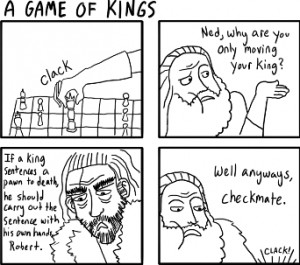
Not surprisingly, this trope is a very good indicator of where a story stands on the Sliding Scale of Idealism vs. Cynicism.  In idealistic stories, characters who place honor before reason are often vindicated, such as Bilbo in The Hobbit or Luke Skywalker in Star Wars.  In more cynical stories, the honorable characters not only get eaten alive, their noble idealism actually makes the problem worse.  The classic example of this is Ned Stark from A Game of Thrones, as the cartoon above suggests.

The opposite of this trope, reason before honor, is shoot the dog.  Interestingly enough, in the first scene in which Ned Stark appears, he commits an act that arguably fulfills both tropes at the same time (executing a man who is most likely innocent but has been found guilty by the law).  Lawful stupid doesn’t necessarily come into play, but it often overlaps.  Again, it all goes back to the scale.

This trope pops from time to time in my own writing, though I’m not nearly as cynical about it as George R.R. Martin.  Jalil from Desert Stars generally fits this trope, though Tiera is just as honorable and definitely not stupid about it.  Stella from Bringing Stella Home fits this trope at first, though her choices are vindicated later on.  In Stars of Blood and Glory, though, there’s a character who fits this trope perfectly, and I’m not sure whether he gets vindicated or not.  It will be interesting to see what the readers have to say about that.