Trope Tuesday: Gone Horribly Wrong

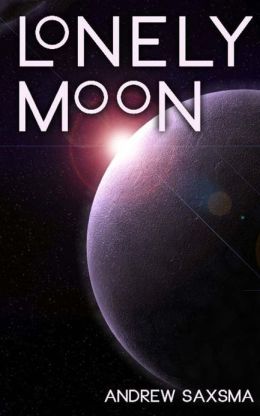
For this week’s Trope Tuesday post, I’ve invited a guest blogger to come on and discuss one of the tropes in his most recent book.  Andrew Saxsma is the author of Lonely Moon, a space opera / horror novel.  I haven’t read it yet so I can’t say much about it, but it looks interesting, and I’m a sucker for space opera.  So without further ado, here we go!

==================================================

saxsmaandrewThis trope is all about Science gone horribly, sometimes violently wrong.  Morality’s been thrown out of the window, compromised in favor of delicious success. Maybe the Mad Scientist played God; maybe mankind has accidentally awakened a Sleeping Giant.

This trope has many faces and masks and plays out in many different ways. In all cases, ethics are thrown to the wolves, and the big payoff is not as much a payoff as it is a new impeding doom the hero must now overcome.

Classically, this trope is mostly derived, if not invented, by Mary Shelley in her novel Frankenstein. Dr. Frankenstein’s obsession leads him to create what would eventually become the bane of his very existence. He unwittingly unleashes the mad dog from its dormant cage and makes it his mission to put it down. You might also recognize this trope from Deep Blue Sea, where scientists genetically enhance sharks for cancer research, but the predators get loose and begin eating their masters.

The key element is the backfire, the unforeseen consequence. It’s born of an innate character flaw, the inability to see beyond one’s good intentions. The character has a vision of a greater good in sight–to cheat death, to cure cancer. They’re so focused they never stop to think: was it worth it? Is this a line we should cross?

To make matters worse, this trope can become complicated when one’s intentions are infused with emotions. A dead loved one, revenge, a preemptive strike. Sometimes the choice is long decided before it is made.

In my book, Lonely Moon, the hero, Captain Hane, has a crisis of the monster. He faces a morally weighted fork in the road. Does he open a forbidden gate, opening our galaxy to a potentially devastating entity in an attempt to save us from an equally evil threat, or does he choose the path of uncertainty in hopes of finding a safer, less dangerous option?

Gone Horribly Wrong is a particularly fun trope to play with from a writer’s aspect, and I’m not sure if it’s a one and done. I plan on playing with this one again in the future.
lonely_moon

==================================================

Thanks, Andrew.  I think the Rule of Drama is one of the keys to doing this trope well.  Never pass up an opportunity to make things go wrong for your characters.  And if the problems are of their own making, that makes it all the juicier, especially when it adds the internal conflict of knowing that they’re the ones to blame.  We all love to watch a train wreck, especially in the world of fiction.

What do you guys think of bringing on more guest bloggers for the Trope Tuesday posts?  It’s something I’ve done occasionally in the past, but I’m thinking of doing it much more in the future.  I think it could be interesting to get some different points of view besides my own, and maybe introduce you guys to some new authors you might like.  Maybe it’s something I could rotate every other week.
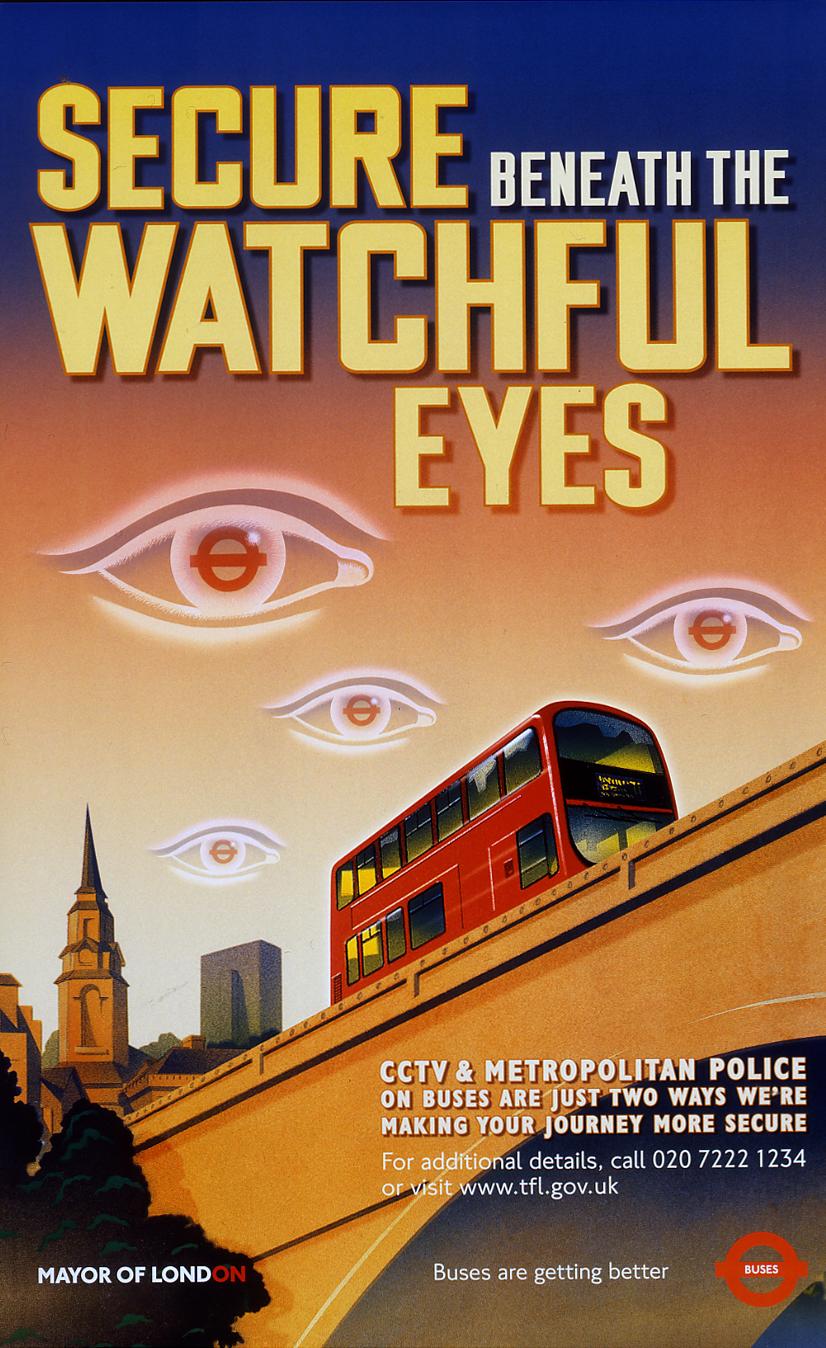
Trope Tuesday: Sinister Surveillance

secure
This was actually a real poster.

Someone is watching you.  Their eyes are everywhereEverything you do, everything you say … it’s all being recorded in a giant database.  But don’t worry–you can trust the ones watching youThey have your best interests at heartThey’re only after the bad guys.  You won’t even know that they’re there.

Sinister Surveillance is a hallmark of Dystopia, as essential to the genre as the Crapsack World and the Police Brutality tropes.  Often, you’ll find all three in the same story together.  It’s closely related to Big Brother is Watching, where the government is so powerful, and reaches into so many aspects of everyday life, that they see and record everything you do.  Where Big Brother shapes every aspect of the society, however, down to the language of the citizens and the basic truths accepted as facts, Sinister Surveillance is more about the surveillance itself, and the ulterior motives behind it.

It’s not enough for the government to simply watch you, though.  Even more important in some ways is the idea that you don’t know what they can and can’t see.  The reason for this is the same reason why, in horror stories, we almost never see the monster until the very end–because our imagination makes things a lot scarier than they really are.  If we the bad guys know the limitations of our government surveillance, we they can safeguard our privacy and basic rights game the system.  We’re all afraid of the dark, not because of what’s actually there, but what could be.

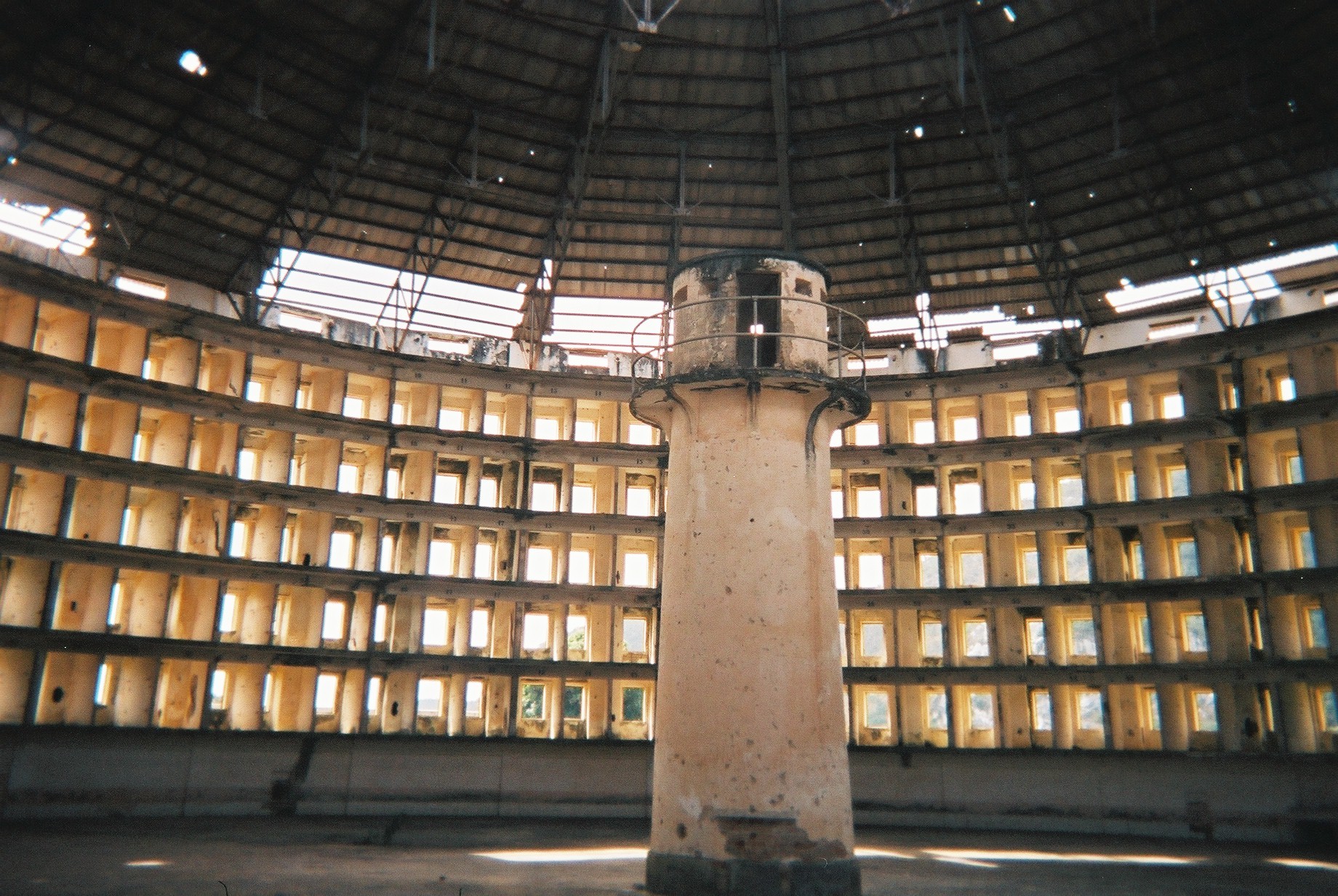
The concept behind all this goes back to the Panopticon, a hypothetical prison where the prisoners know that the guards are constantly watching them, but can’t actually see any of the guards themselves.  Proposed by the British philosopher Jeremy Bentham in the 1700s, the idea is to disempower the prisoners and empower the guards simply through the act of surveillance.  If everything you do can be seen, and you don’t know exactly who’s watching, that puts a tremendous amount of social pressure on you to conform.  As Michel Foucault put it:

The Panopticon creates a consciousness of permanent visibility as a form of power, where no bars, chains, and heavy locks are necessary for domination any more.

But if the prisoners are the citizens, and the guards are the government, how can such a system ever be democratic?  How can the citizens of such a society ever give their informed consent?  Well, that’s kind of the point.  The government in dystopian stories is rarely democratic–it’s usually a dictatorship of some kind, or a system that turns well-meaning people into Knights Templar, showing how even the best of us die like animals when the game is rigged.

As benevolent the intentions of the government may initially be, it is nonetheless true that power corrupts, and absolute power corrupts absolutely.  Just as the Panopticon takes power from the prisoners and concentrates it with the guards, so does universal surveillance grant dangerous amounts of power to the government–not because the act of surveillance is dangerous in itself, but because it brings out the worst in the people doing the surveillance.

In The Road to Serfdom, Freidrich Von Hayek pointed out that self-serving, ambitious, power-hungry people tend to rise in government a lot faster than people who have others’ best interests at heart, especially when so much power is concentrated in the government.  That’s one of the biggest dangers of surveillance–and in stories where Sinister Surveillance is in play, the government has already passed that point.

I wish I could say that this trope is limited mostly to the realm of fiction, but unfortunately, that does not appear to be the case.  These days, it’s impossible to talk about surveillance without getting political, even on a blog dedicated to books and writing.  Because everything these days is online, it’s easier now than ever before for our governments to watch us.  And if Edward Snowden’s claims are even partially correct, that’s exactly what they’re trying to do.  Even more worrying are the indicators that they’re trying to do it in secret, such as this recent letter from Senators Wyden and Udall.  The United States government has lied to us in the past about the extent of the PRISM surveillance program, and it would appear that they’re continuing to do just that.

Wherever you fall politically on PRISM or the Edward Snowden case, I think that Sinister Surveillance is a trope that we should all find profoundly disturbing.  When George Orwell took this trope to its extreme logical conclusions in 1984, he did so to prevent that horrific social order from ever coming to pass.  I wonder: only two or three generations after that book came out, have we forgotten its lessons already?  Or do we need a new retelling to remind us?  I fear that that retelling is taking place, not in the pages of a novel, but in real time on the major blogs and news sites.

Trope Tuesday: The Last DJ

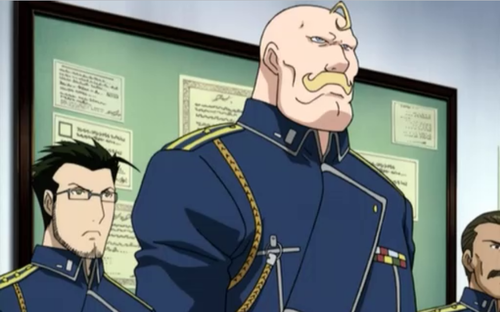
armstrongIn any vast bureaucracy, you’re bound to find obstructive bureaucrats and professional butt-kissers.  But if you look long and hard enough, usually somewhere towards the bottom, you may be lucky enough to find one of the Last DJs.

The Last DJ is a man with integrity, who often puts honor before reason and cannot be bought, no matter how much his superiors try.  Consequently, he usually ends up somewhere at the bottom of the organizational hierarchy, no matter how competent he may be.  In extreme cases, he may be reassigned to Antarctica.  Either way, do not expect to see him kicked upstairs–that’s for insufferably incompetent idiots who are promoted to an administrative post so everyone else can get back to the real work.  If anything, expect this guy to get thrown under the bus.

Depending on the story, he may be a brotherly mentor figure for the main character or play some other sort of supporting role.  However, don’t expect him to be much of a plot driver, unless the story is specifically about him.  Because of his refusal to suck up or play office politics, he’s rarely in a position to effect change or become a whistle-blower.

Over time, this character may turn into something of a sour knight, developing a thick skin of crusty cynicism to protect his idealistic heart from all the crap he continually has to put up with.  Like the Obi-wan, if he’s a mentor figure, he will probably die.  If he’s the hero, though, or part of the ragtag bunch of misfits, expect him to be vindicated, possibly in a crowning moment of awesome.  Rarely if ever will this guy be the villain–that’s the obstructive bureaucrat, whom this guy hates.

Lieutenant Armstrong from Fullmetal Alchemist is a good example of this trope.  He’s a good soldier who was passed up on all the promotions because he refused to go along with the war crimes done against the Ishvalan people.  His sister, who WAS reassigned to Antarctica (though probably by choice), is a whole other story.

Another good example of this trope is Lucius Fox from Batman Begins.  The interesting thing about this one is that he’s a mentor figure who actually survives.  This is probably because the story requires a lot of badassery from the hero, and Lucius is in no position to fill that role, so there’s no threat of him outshining Bruce Wayne.  This is also a good example of the last DJ getting vindicated in the end.

In my own work, the best example I can think of is Tiera from Desert Stars.  She’s fiercely stubborn with an uncompromising sense of honor, which results in her being stripped of her claim of inheritance due to her stepmother Shira’s wiles (although ‘stepmother’ isn’t quite the right word–how do you describe your father’s evil second wife, when he’s still married to your mother?).  I’ve got some interesting plans for a sequel where she’s the main character, but that book is still in the early conceptual stages.

In my own life, I’ve actually fulfilled this trope.  I don’t care to discuss the details of it publicly, but back when I was interning in Washington DC, I had a very negative experience that this trope describes perfectly.  It’s one of the reasons I hate Washington so much, and decided to become a global nomad who makes a difference on the ground, rather than pushing papers in someone else’s petty empire of personal influence.  It’s also one of the reasons why I started the Star Wanderers series–because I wanted to tell a story about people on the space-bound frontier, as far away from the galactic empire as possible.

I may not write many stories about vast bureaucracies or other hierarchical organizations, just because that doesn’t interest me, but whenever I do, you’ll probably see this guy pop up.  As someone who’s been there, I have a lot of sympathy for this character.  You’ll probably see him (or her) pop up in my work from time to time.

Trope Tuesday: Worthy Opponent

Sometimes, it’s not the Big Bad the heroes are fighting against, so much as an almost friendly opponent who is not so different from them after all. That’s what this trope is all about.

The Worthy Opponent is no mere redshirt or mook–quite often, in fact, he’s the Dragon of the opposing side–but unlike the Big Bad or the Evil Chancellor, he won’t stab his enemies in the back or willfully break the rules of war.  He keeps his word, fights like a gentleman, and may even have a soft spot for the hero.  He’ll duel to the death, but will hand the hero back his sword rather than hit him when he’s down.  If he’s in a position of command, he’ll most likely be a father to his men, and sorely regret the loss of life that he is forced to oversee.  When defeated, it’s not unusual to hear him say that it has been an honor.

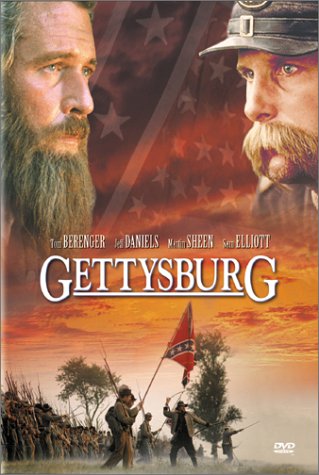
gettysburg-DVDcoverThis trope has been on my mind recently because I’ve been on something of a Civil War trip, watching and rewatching the movie Gettysburg.  It’s a fascinating movie, not the least because there are no clear bad guys.  In the battle of ideologies, I side solidly with the Union, but in the battle of men, I don’t know who to side for.

General Lee is one of my favorite characters, and certainly the commander for whom I have the most respect.  When General Longstreet is forced to order his men on the suicidal charge on the third day, I can’t help but cringe.  And perhaps the most touching moment of the whole movie is when the wounded General Armistead asks to see his old friend, General Hancock, only to learn that he has been shot as well:

BG Armistead: I would like … to see General Hancock. Can you tell me … where General Hancock may be found?

Lt. Chamberlain: I’m sorry, sir. The general’s down, he’s been hit.

BG Armistead: No! Not … both of us! Not … all of us! Please, God!

The main appeal to me of this movie, and in a more general sense of this entire trope, is the roll that honor plays in the characters’ interactions with each other.  Yes, they may be bitter enemies, and they may not hesitate to kill each other, but they aren’t fighting because they hate each other–they’re fighting because honor demands it.  And just like how the Fettered gains great strength through strict obedience to his personal code, so too does the Worthy Opponent gain both strength and respect by being a man of honor.

Obviously, this sort of antagonist makes it almost impossible to tell a story with black and white morality.  But with this trope, that’s kind of the point.  It exists to tell us that the enemy is not so different from us, and that not every bad guy is completely evil.  It doesn’t have to be used to set up an Aesop, though–when done well (as it was in Gettysburg), it’s satisfying enough on its own.

I played a lot with this trope in Stars of Blood and Glory.  In that book, Abaqa, a young Hameji warrior trying to build a name for himself, falls prisoner to Danica and her band of Tajji mercenaries, who he has been taught all his life to hate.  Gradually, though, they come to respect each other, to the point where … well, I won’t spoil it for you.  But it was definitely fun to write. 😀

I haven’t played a lot with this trope yet in other stories, but I definitely hope to in the future.  I’ve got another novel I’d like to write from Danica’s point of view, sort of a prequel novel to explore her and Roman’s origins, as well as the other Tajji mercenaries.  And then there’s Heart of the Nebula, which needs a major rewrite but has some elements of this trope in it.  So yeah, you can definitely expect to see more of this sort of thing from me in the future.

Trope Tuesday: Schrödinger’s Gun

The world of a fictional universe isn’t fixed beyond what the author has revealed to the reader.

This is what happens when Schrödinger’s cat gets hold of Chekhov’s gun.  There are a whole lot of interesting and potentially useful plot points lying around, but the writers are pantsing it as they go, playing a game of Xanatos speed chess with the readers (or the gamers, as the case may be).  Consequently, the story doesn’t actually take shape until it’s been told.

As you can imagine, this trope only really works in a story medium where there’s some degree of interaction between the writer and the audience, such as video games and RPGs.  However, there are some classic examples in more fixed media, such as film and books.  The movie Clue is a good example, where the filmmakers made three separate endings, and secretly showed different ones in different theaters (the DVD has all three).  The Choose Your Own Adventure series is also a classic example.

With the changes brought about by digital media, there are all sorts of possibilities opening up right now for this kind of storytelling.  Besides the Choose Your Own Adventure type stories, there’s also the serial format, where a writer releases a chapter at a time.  This is what a lot of web comics eventually become, especially the ones like Girl Genius, Schlock Mercenary, and Freefall with a HUGE extended story arc.  The same kind of thing is happening in ebooks too, on a spectrum between straight-up serials and series of longer works.

As you can imagine, it can be quite a challenge to keep all the storylines straight.  That’s because the one rule with this trope is that you CANNOT retcon.  Until the story is told, anything can happen–but once it does, the Schrödinger wave equation breaks down, and all the possibilities drop to 0 or 1.  The story becomes fixed, and in all future installments, you have to work with it.

Another interesting thing about this type of storytelling is the possibility for ascended fanon, where fan-created stuff like fanfic or fanart actually gets co-opted into the canon of the story.  The flip side is that it encourages the fans to get together and analyze things so thoroughly that any surprising plot twists get predicted long before they actually happen.  Still, I suppose there’s a special kind of squee in finding out that your predictions were right.

The reason I’m interested in this trope is because I’m more or less doing it with my Star Wanderers series.  It’s not strictly a serial, since each novella is a complete self-contained story, but taken together they sketch out a much larger arc that I’m only starting to discover.  Parts I-IV made a complete story arc in itself, all told from Jeremiah’s point of view, but right now I’m revisiting those stories from the viewpoints of some of the other characters.  That, in turn, is seeding all sorts of other stories, with new characters and wider conflicts.

There are challenges, though.  Today I started Part VIII: Deliverance, (from Lucca and Mariya’s viewpoints) and I got stuck on the second paragraph.  The second freaking paragraph.  It starts in the Zarmina system, but what class of star is it?  Have I mentioned it in any of the previous stories?  Thank goodness for word search functionalities, otherwise I’d be ripping my hair out!

So yeah, I’m going to have to be a lot more diligent about making and keeping a world bible.  I’m usually a pantser, so outlines are kind of anathema to my creative process, but having a solid reference for the stuff that I’ve already written is quite helpful.  Currently, I’m using Wikidpad, which seems to be the perfect tool for this sort of thing.

Fortunately, the challenges are a lot more fun than discouraging.  I had a great time writing Dreamweaver, getting into Noemi’s head and revisiting that story from her point of view.  It sounds so cliché, but that story really did write itself.  I kept a window with Outworlder in the background, and whenever I needed to see what would happen next, I’d just go to it and read the next couple of paragraphs.  Benefactor and Reproach have been much the same way.

Eventually, I plan to branch out a lot further, with other interesting characters and situations.  I have no idea what those will be exactly, but that’s kind of the point.  Until you actually pull the trigger, Schrödinger’s gun can exist in any state, from a musket to an AK-47 to a rocket-propelled grenade.  Whatever form it ends up taking, the important thing is to make sure it goes off with a bang.

Sorry, no Trope Tuesday (again)

Yeah, sorry, no Trope Tuesday this week.  Third week missed in a row!  Not so good.  Thing is, I’m really focused on finishing Star Wanderers: Reproach (Part VII) right now, with a self-imposed deadline of May 31st. I figure that’s more important, and I really don’t want to break my momentum.

I’ve been vacillating a lot about this project.  Sometimes, I think it’s halfway decent, perhaps even good.  Other times, I wonder how the @#$! I came to be trapped in this story and why I’m wasting the best years of my life writing this crap.  The other Star Wanderers stories are selling decently well, but this one is so shite that it’s bound to kill the series and why am I writing this why why WHY??? 

And then I get the chains back on my inner editor and drag him down to the dungeon, where I keep him on a strict diet of bread crusts and rotten cheese.  No wonder he hates me.

I know those trope posts are a popular feature around here, so I’ll get back on top of them once this project is finished (which WILL be this week!  It WILL!!)  In the meantime, if you’re looking for a trope fix, you should check out Anita Sarkeesian’s latest Feminist Frequency video.  She does an awesome job deconstructing feminist video game tropes, in a much more meticulous and thoughtful manner than I have ever achieved here:

Part of me wants her to take my own stories and analyze them for feminist tropes.  The other part shudders in abject horror at what she might possibly find.

Whoops, looks like the inner editor just got loose again.  Better go hang out on the KBoards until I’ve got him back in the dungeon.

Later!

Trope Tuesday: After the End

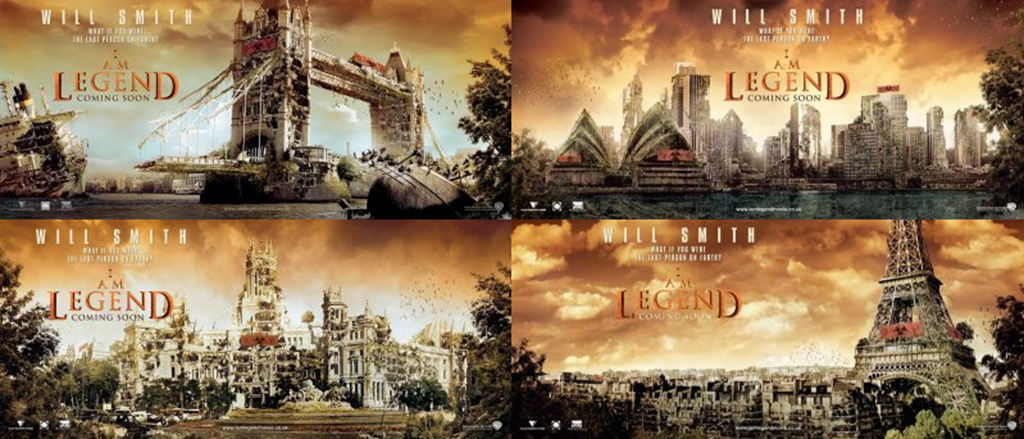
i am legend2It’s the end of the world as we know it … so why do we feel fine?

On the apocalyptic scale of world destruction, when the thing that wipes out civilization doesn’t quite kill everyone, we’re left with an After the End type setting.  Depending on where the writers fall on the sliding scale of idealism vs. cynicism, this may range from a futuristic Arcadia to a crapsack post- hell on Earth.

Whatever the case, expect to see lots of modern ruins and schizo tech mashups (horse-driven cars?  Wood-wheeled bicycles?).  If anarchism reigns, expect to see lots of punks roaming the wastelands in muscle cars and motorcycles.  If Ragnarok Proofing is in effect and the ruins of civilization haven’t quite decayed yet, expect some variation of a scavenger world.  And if someone from our modern era finds himself lost in this bizarre post-apocalyptic future, expect him to find some sort of constant to reinforce that he’s not in Kansas anymore.

Unlike dystopian settings, where society evolves (or is deliberately turned) into a horrible, hellish place, a post-apocalyptic setting represents a reboot of civilization itself, where one society has passed away and a new one is slowly picking itself up from the ashes.  It has the potential to be a lot more hopeful, and to give the reader a lot more wish fulfillment.  After all, who wouldn’t want to be one of the lucky survivors tasked with rebuilding civilization?  Sure there may be zombies or nuclear nasties wandering about, but on the plus side, you don’t have to worry about your bills or your deadbeat job anymore.

Douglas Rushkoff has some interesting ideas about why this type of story is becoming more and more popular nowadays.  In his new book Present Shock which he’s been promoting recently, he argues that many of us are so overwhelmed by a world where everything happens now that we wish we could end it all and start over.  When we live in an ever-changing present without a coherent narrative to reference our past or our future, we long for something to restore that sense that we’re part of a larger story, even if that story is racing towards a horrible, tragic end.

But every ending is a new beginning, and that’s what lies at the very core of this trope.  When our world passes away, what will the new world look like that takes its place?  Will we learn from our mistakes, or are we doomed to repeat our worst atrocities?  Will we eat each other like dogs, or will we tap into some deeper part of human nature where mercy and compassion lie?

This is all on my mind right now, because I’m writing a post-apocalyptic novel (with the working title Lifewalker) that takes place in Utah 200 years after the end.  Humanity was hit by a plague that kills everyone over the age of 25, so that the only people left are orphans, teenage adults, and their babies.  It’s fascinating to wonder what from our era would fall apart and what would remain, or what would be preserved and how the new society will take shape.

But it’s not the apocalypse itself that I’m interested in, so much as what happens after things stabilize.  The main character is one of the few people who’s immune to the plague, so naturally he feels like a complete outcast.  He’s walking the Earth, riding down the ruins of I-15 with a copy of Brandon Sanderson’s Mistborn in his saddlebag.  And the people he meets … well, let’s just say I wasn’t very kind to Las Vegas.

I think that’s another part of the appeal of this trope: it takes our own world and twists it into something fantastic, so that instead of having to wrap our minds around a whole new set of history and physics, we can build on the familiar in wild and interesting ways.  A Canticle for Leibowitz did this very well, with another post-apocalyptic tale set in Utah.  However, the most famous popular example is probably the movie I Am Legend.  I love those long panoramic shots with Will Smith hunting deer in Times Square, or hitting golf balls off the wing of a fighter jet.  Stuff like that really sparks the imagination because it combines something familiar with something wild and different.

Believe it or not, this trope has actually happened in real life.  After the bubonic plague swept across Europe, whole cities were depopulated, with as much as 60% casualties in some places.  When the Pilgrims settled at Plymouth, they were actually building over the ruins of a large Indian settlement that had been wiped out by smallpox just a few years before.  And using DNA evidence, scientists now believe that all of modern humanity is descended from a small group of just 50 females who survived a global volcanic eruption some 70,000 years ago.

So yeah, this is definitely a trope I like playing with.  I’m on track to finish Lifewalker by the end of May, so you can definitely expect to hear more about it in the weeks and months to come.

Also, for those of you looking for resources to help you visualize what the world will look like after the end of human civilization, here are a couple of excellent resources I’ve found.  First, check out The World Without Us, an excellent book written by an environmentalist that poses a basic thought experiment: what would happen if all humans everywhere magically vanished, and all that was left was the stuff that we’ve built?  What, if anything, would remain? (spoilers: not much) If you want to explore that idea but you don’t want to read the whole book, check out this wiki on Life After People, a series of History Channel documentaries that basically posed the same question.  The answers may surprise you.

X is for Xenocide

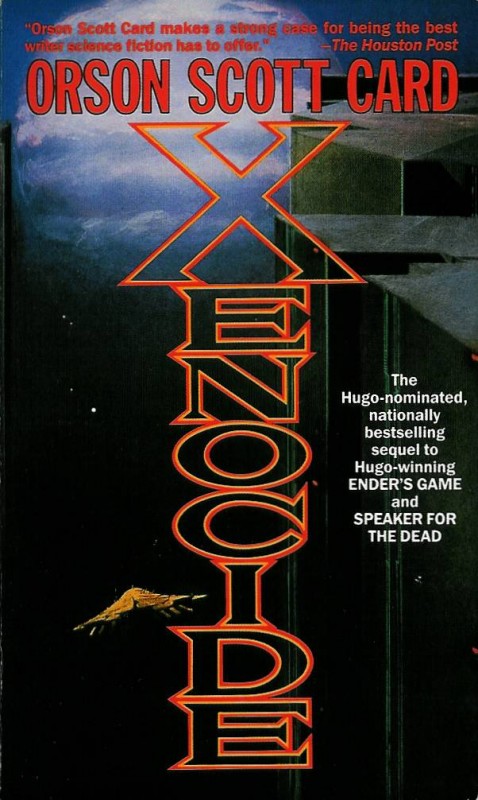
xenocideThis post isn’t just about the third book in the Ender’s Game series–it’s about the genocide of an entire alien race, which is actually a fairly important trope in science fiction.

Of all the evils of our modern era, perhaps the most heinous is the systematic extermination of an entire race or ethnicity.  These acts of genocide not only cross the moral event horizon, they create specters and villains that live on from generation to generation.  Just look at how the Nazis are portrayed in popular culture–even today, they are practically mascots of the ultimate evil.

And for good reason.  There really is something evil about the total annihilation of a foreign culture.  It’s one of the reasons why terms like “genocide” and “ethnic cleansing” are so controversial, especially in conflicts that are still ongoing–and there are so many unresolved conflicts where the systematic and purposeful annihilation of a race or culture is still happening.

Is wholesale genocide a phenomenon unique to our modern age?  Probably not, but modern science has enabled it on a scale that was previously impossible.  This became all too clear to us after World War II.  Only a generation before, great numbers of people believed that we were on a path of progress that would eventually culminate in world peace.  If there was any of that sentiment left, it was shattered with the liberation of Auschwitz and the bombings of Hiroshima and Nagasaki.  Suddenly, we realized that systematic mass destruction and genocide were not only possible, they were a modern reality.

It should come as no surprise, then, that science fiction immediately began to explore this issue.  From Frankenstein to 1984, science fiction has been full of cautionary tales of science gone wrong, issuing a critical voice of warning.  But after 1945, it went much further, exploring the issue in ways that can only be done in a science fictional setting.

Is genocide ever morally justifiable?  In our current world, probably not, but what if an alien race was bent on our destruction?  If their primary objective was the utter annihilation the human race, and negotiation was impossible?  Wouldn’t it be justifiable–perhaps imperative even–to stop such a race by annihilating them first?

This is what is meant by the term “xenocide.” A portmanteau of “xenos,” the Greek word for stranger, and “genocide,” it denotes the complete extermination of an alien race.

Xenocide forms the core conflict of Orson Scott Card’s Ender’s Game series (hence the title of the third book) and features in The Forever War by Joe Haldeman.  Battlestar Galactica presents an interesting twist, where the cylons debate the ethical questions surrounding the complete annihilation of the humans.  And then, of course, there’s all the time travel stories involving Hitler–let’s not even go there.

The interesting thing about xenocide stories is that even though they describe a dilemma that does not currently exist in our modern world, they inevitably come down to issues of Otherness that lie at the very core of the evils of genocide.  In order for xenocide to be morally justifiable, you have to know your enemy well enough to know that there’s no possibility of forging any sort of peace with them.  And to know them that well, they cease to be quite so alien.  It’s one of the major themes in Orson Scott Card’s work–that to defeat an enemy, you have to know them so well that you can’t help but love them.

In our modern world, genocide is only possible when an ethnic group is relegated to the position of Other–when they are made out to be so different and unlike us that we can never possibly relate to or mix with them.  They become “sticks” (Germany), “cockroaches” (Rwanda), “animals” and “barbarians” (Israel).  That is precisely why it makes us uncomfortable in stories about xenocide–because it turns the well-intentioned saviors of humanity into knights templar, or possibly the very monsters they are trying to destroy.

By positing a situation in which genocide might actually be justifiable, science fiction helps us to understand exactly why it is so reprehensible–and that’s only one of the ways in which the genre can uniquely explore these issues.  That’s one of the things I love so much about science fiction: its ability to take things to their extreme logical conclusions, and thus help us to see our own real-world issues in ways that would otherwise be impossible.

Since most of my characters are human, xenocide as such isn’t a major theme in my books, but genocide certainly is.  In the Gaia Nova series, the starfaring Hameji look down on the Planetborn as inferior beings and think nothing of enslaving them and slagging entire worlds.  That’s how Prince Abaqa from Stars of Blood and Glory sees the universe at first, but by the end of the novel he’s not quite so sure.  Stella from Sholpan and Bringing Stella Home also deals with these issues as she comes to realize how it’s possible for the Hameji to hold to such a belief system.

If genocide is one of the ugly skeletons in the closet of this screwed up modern world, then xenocide is science fiction’s way of taking those skeletons out and dignifying them with a proper burial.  By wrestling with these issues in stories set on other worlds, we are better able to humanize the Other and prevent these horrors from happening again on our own.  In this way and so many others, science fiction helps us to build a better world.

W is for Wagon Train to the Stars

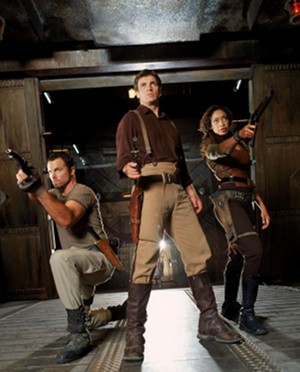
big_damn_heroes_moment_smallWhen Gene Roddenberry pitched the original Star Trek series back in the 60s, Westerns were all the rage.  Consequently, he pitched his show as a “wagon train to the stars,” where a bunch of quirky characters on an awesome starship travel from adventure town to interstellar adventure town, exploring and pioneering the final frontier.

Sound familiar?  Yeah, I thought so.  The concept proved so catchy that it’s been redone time and again, from Battlestar Galactica to Firefly to Doctor Who.  Even though Westerns aren’t nearly as popular as they used to be, many of its tropes are so well suited to Science Fiction that they drive the genre even today.

For example, adventure planets.  In a typical Western, the characters travel from town to town, with a different adventure in each one.  Well, in Science Fiction, the characters do the same thing, except that they’re traveling from planet to planet.  And really, if you’ve got the ability to travel to other worlds, how can you not have an adventure in each one?

A large reason for the Western / Science Fiction crossover is the whole concept of space as the final frontier, which we explored earlier in this series with I is for Interstellar.  There’s a very real sense of manifest destiny in the space exploration community, not because of humano-ethnocentrism (heck, we don’t even know we’re not alone in our local stellar neighborhood), but to ensure humanity’s long-term survival.  The parallels between that and the westward movement in 19th century America aren’t perfect, but they do exist.

Similarly, as we explored in R is for Rebel, the notion of space as the final frontier has a special resonance with the American audience.  The days of the old frontier may be over, but its spirit lives on in our culture, from guns to road trips to our glorification of the rugged, self-made individual.  Today’s Science Fiction, especially the space-focused SF of Space Opera, grew out of the adventure fiction of the pulps, which thrived on that frontier American ethos.

In fiction, the frontier can still be found in two major genres: the Western, which is historical and therefore more backward-looking, and Science fiction, which is futuristic and therefore more forward-looking.  Because Science Fiction isn’t burdened with all of the historical baggage of the traditional Western, it’s a much more flexible medium for story, readily adaptable to contemporary issues and concerns.

For example, where Star Trek echoes the large-scale nation to nation conflicts of the Cold War (Federation vs. Klingons and Romulans), the new Battlestar Galactica series echoes the much more asymmetrical conflicts of the post-9/11 world (Cylon agents who are indistinguishable from humans and may not even know that they are cylons).  At the same time, the wholesale co-opting of Western tropes enables a latent sense of nostalgia, evident in the look and feel of Firefly, or the famous opening lines from Star Wars: A long time ago in a galaxy far, far away.

My first real experience with a wagon train to the stars type of story was probably Star Trek: Voyager, which I watched religiously with my dad every Wednesday night until maybe 9th or 10th grade.  The Western-borrowed tropes are somewhat more muted in that series, but they exist, especially the planetville / adventure towns stuff.  However, it wasn’t until Firefly and Serenity that I really experienced the awesomeness of a true Space Western.  There were a lot of things in Firefly that I really loved, especially the character interactions, the gun-toting action scenes, and especially the starship Serenity.  There were some things I didn’t like so much, like the fact that every planet is basically Wyoming, but overall I really enjoyed the show.

It wasn’t until I started getting more acquainted with straight-up Westerns that I saw the real potential for crossover between the genres.  Stories about mountain men like Jeremiah Johnson really captured my imagination–what would this look like if it were set in space?  In that sense, I came to the Space Western more from the classic Science Fiction side first, rather than the pulp adventure stuff.  But once I discovered the crossover connection, it naturally found a way into my own work.

That’s basically how the story idea for Star Wanderers first came to me.  I was lying on my bed, daydreaming about having my own starship like the Serenity, when I wondered what it would be like for a starship pilot to get roped into an accidental marriage like in the movie Jeremiah Johnson?  The collision between the two ideas was like a supernova exploding in my brain.  I rolled out of bed and started writing, coming up with chapter one of Outworlder almost exactly like it’s written today.  And the more invested I became in those characters and that world, the more the story grew.  I’m writing Part VII right now (Reproach, from Noemi and Mariya’s POV), and so long as people read them I’ll keep writing more.

Genre mash-ups and crossovers are a great way to keep things fresh and come up with some really interesting stories.  Some genres aren’t very well suited for each other (Erotica and Middle Grade, for example), but others come together so well that they seem almost complementary.  That certainly seems to be the case with Westerns and Science Fiction, at least here in the United States where the spirit of the frontier still echoes through the popular culture.

U is for Universal Translator

In science fiction, whenever two characters from different planets or different alien races have to interact with each other, they almost always speak the same language or have some sort of universal translator that magically makes them able to communicate with minimal misunderstandings.  This is especially common in Star Trek, though it happens in just about every franchise involving a far-future space opera setting of some kind.

I’ve got to be honest, I think this is a cheap plot device that almost always weakens the story.  As a writer, it’s tempting to have something like this so you don’t have to deal with any pesky language barriers, but when you do this, you remove a major potential source of conflict, thus violating the rule of drama.  Also, you make your fictional universe feel a little less grand, your aliens a little less alien.  After all, if everyone can perfectly understand each other, then there must not be a huge difference between Earth and the far side of the galaxy.

There are some times when having a universal translator allows you to broaden the story and focus on other conflicts.  For example, if some sort of interstellar legislation is under review in the grand galactic council, you can’t spend all your time focusing on basic communication difficulties.

However, if this is the case, then you can usually overcome the language barrier through other means–a galactic lingua franca, for example, or translation tools that may or may not misfire on occasion (much like Google Translate).  Of course, if you’re writing a comedy like Galaxy Quest (or parts of Star Control II), then falling back on a universal translator is forgivable.  But if you’re going for believability and a sense of wonder, this trope isn’t going to do you any favors.

While linguists and technologists have been working on translation programs for some time (and admittedly making some significant breakthroughs), I’m extremely skeptical that we will ever develop a perfect universal translator in real life.  If we do, I expect we will have to develop a sentient AI as a prerequisite, since the nuances of language are so inseparable from the things that make us human.

Here’s how translation services like Google Translate work:

  1. They amass an enormous database of language material by scanning websites, newspapers, and other documents.
  2. They analyze this database to look at word combinations and frequencies, observing the likelihood that any one word will appear in combination with any others.
  3. They compare these combinations and frequencies with those in other language databases to match words and phrases.

This data crunch method of translation works fairly well for simple words and phrases, but it falls apart in the more complex grammatical structures.  I see this any time I try to use Google Translate with an Arabic source.  Arabic is an extremely eloquent language, with all sorts of structures that simply don’t work in English.  One mistranslated word can completely change the meaning of the entire text, and even when it works, the technically correct English translation sounds as if it’s full of errors.

The methodology also falls apart for languages that are too small to have much of an electronic database.  The Georgian language is a good example of this.  It’s spoken by only about 4.5 million people worldwide, most of them in the country of Georgia, which is predominantly rural.  Internet access for most of the population is very limited, and most Georgians who do communicate online tend to use the Roman or Cyrillic alphabets more often than their own.  As a result, Google Translate for Georgian is utterly useless–seriously, you’re better off just sounding out the letters and guessing at the meaning.  There are some other sites like translate.ge that try to fill the gap, but they seem to rely on actual lexicons, not databases and algorithms.

All of this is between entirely human languages that developed in parallel on the same planet–indeed, languages between human cultures that have traded and shared linguistic influences for thousands of years.  What happens when we encounter an alien race whose biology makes it impossible for them to make human-sounding noises?  Or an alien race that communicates through smell or electromagnetic impulses instead of sound?  What happens when humanity is spread out across hundreds of star systems, each of which periodically becomes isolated from the others for hundreds or even thousands of years?  When our definition of human is stretched so thin that we would not even recognize our far-future descendents as anything but alien?

There is so much wasted potential whenever a science fiction story falls back on a universal translator.  Case in point, compare Halo I, II, and III with Halo: Reach.  In the first three games, the Master Chief’s universal translator enables him to hear exactly what the enemy Covenant troops are saying.  This is great fun when you’re chasing down panicked grunts, but it tends to get old after a while.  In Halo: Reach, however, the human forces haven’t yet developed a universal translator, so everything the Covenant say is in their original language.  All of a sudden, the game went from a hilarious joyride to a serious war against aliens that felt truly alien.  That one little change did wonders to the tone and feel of the entire game.

Needless to say, you won’t find a universal translator in any of my books.  In Star Wanderers, the language barrier is the heart and soul of the story–it’s a science fiction romance between two characters from radically different worlds who don’t speak the same language, and yet overcome that to develop a strong and healthy relationship.  In Sholpan and Bringing Stella Home, Stella knows a language that is fairly similar to the one spoken by the Hameji, but there are still words and phrases that elude her.  This detail is critical because it impedes her ability to understand and adapt to the Hameji culture, leading to some major conflicts later in the book.

As someone who’s lived for significant periods of time in Europe and Asia and learned languages very different from English, I can say that the language barrier is not something that we as writers should avoid, but something that we should embrace.  There are so many interesting stories that can be told when two characters don’t speak the same language.  Please, don’t be lazy and write that out of the story through a cheap plot device!  Let your aliens be truly alien, and your worlds and cultures so fantastic that we can’t help but feel hopelessly lost in them.