All right, it’s time to get in the wayback machine and revisit a post from long ago. This one should be especially interesting to you aspiring writers out there, as well as the seasoned writers who need an extra gut-wrenching wake-up call from time to time. I know I certainly do.
Today was the first day of BYU’s writing conference, and it was great! The speaker in the last workshop, Dandi Mackall, was exceptional. I don’t have my notes with me and the BYU library closes in twenty minutes, so I’ll recap the best part of her presentation.
She said that once she had a dream where she died and went to heaven (thank goodness!). When she got there, the angel who greeted her offered to show her around, and asked what she wanted to see first. Her answer? The library, of course!
In heaven’s library, she found shelves stretching as far as she could see, full of the very best books. She picked out a few and recognized some of her favorites, the ones that had impacted and changed her life.
After a while, though, she started to get a little disappointed: all of the books in heaven’s library were books we already had down on Earth. Why was that? Didn’t heaven have anything new–anything we hadn’t already seen down below?
“But all these books were here first,” said the angel.
Still, she couldn’t accept that as an answer, so the angel took her down a long, winding, narrow corridor. The deeper she went, the narrower and dustier it became, until she started to feel uneasily. This part of the library was dark and dirty. It was clear that hardly anybody every came down here.
Finally, the angel led her to a door covered in cobwebs. He brushed them aside and opened the door. Here was a room many times larger than the first, with old, dusty bookshelves stretching out of sight.
She picked out a book and started reading through it. It was one she’d never heard of, but it grabbed her. She could tell that it was really good. She picked up another one, and realized that it was just the kind of book that one of her friends would have loved. She picked up another one, and realized that this one could have helped out another friend through a terrible crisis she’d recently been through.
“Why didn’t we have these books?” she angrily asked the angel. “They are just as good as the other ones. Why didn’t they make it down?”
“These are all the books that remain unwritten,” the angel answered. “Each one of these is a book that a writer, somewhere below, has in them but fails to write down.
“This one is by a writer who won’t let anyone give her the criticism she needs to improve her craft. This one is by a writer who doesn’t have the discipline to finish what he starts. This one is by a writer who doubts herself and doesn’t think she can ever get her story to work.”
Humbled, she followed the angel back to the main hall. Just before stepping through the doors, she saw one last book. The name on the cover was her own.
For some reason I don’t understand, fate, God, or genetics (or some malicious combination of the three) conspired to turn me into a writer. Sometimes, I wonder if I’m making a mistake trying to turn this passion into something that will feed myself and my future family. Looking at the millions of other writers like myself, it’s easy to feel anxious. Only a tiny fraction of us will ever make a professional career out of this. Do I even have a chance?
But then I hear a story like this one and I remember why it is that I write. Not for fame, fortune, publication, personal gratification, or even just because I can’t not do it. It’s because storytelling itself is important. It helps us connect with the world around us, to see its beauty and wonder. It helps us to appreciate ourselves and understand others. It stimulates our imaginations and lifts our eyes to see the divine potential that is all around us. It helps us to grow and to heal—to live and to love.
May you find your book in heaven’s library and bring it into the world!
Here’s a post I originally wrote in 2012. Given how most political commentary tends to lose relevance over time, it’s remarkable when something from the past is even more relevant now than when it was written.
Not that this post is overly political: more just a series of observations, including some red flags that, at the time, were still on the distant horizon. In recent months, those flags have drawn much closer.
Such a crazy world we live in. Stay safe, and thanks for reading.
I just watched a fascinating interview with a 1960s White House intern who claimed to have an eighteen month affair with President John F. Kennedy. But the most interesting thing wasn’t the affair itself, but the way the President’s staff, the “fourth branch” of government (AKA the media), and the entire general public of 1960s America seemed more intent on keeping the secret than on facing the truth about JFK’s many affairs.
It seems that my parents’ generation had so much trust in their government that nobody would even raise the question—that to raise doubts about the integrity of the man who held the highest office in this country would itself be unconscionable. Rather than face the facts, the American public seemed unwilling to do anything that would shatter the gilded image of the man who led the free world. And that, quite frankly, is a mindset that I simply cannot understand.
In contrast, my own generation has very little trust in our government. We’ve been raised in an age of ambiguity, where the enemy doesn’t wear a uniform or pledge allegiance to a flag, but live quietly among us, until they strap a bomb to their bodies or turn a commercial airplane into a weapon of terror. Or at least, that’s the excuse our government gives us for an increasingly invasive security regime that infringes on our basic liberties, enables the military to hold us in detention indefinitely, and sends our soldiers overseas to fight increasingly senseless wars to “liberate” the people of oil-rich nations who don’t even want us there. As if that weren’t enough, the economic crash has taught us that all that stuff our parents taught us about equality and opportunity is really just a pack of lies—that the rich get bailouts while the rest of us foot the bill, and all that stuff about changing the world and being whatever you want to be… yeah. Lies, all of it.
My Dad had an interesting rebuttal to all this, though. He said that it wasn’t his generation that put the president on a pedestal—it was his generation that tore the pedestal down. During the 60s and 70s, the Vietnam era and the rise of the hippy movement, his generation fought back and made it acceptable for us to question the president, or to criticize the government, or to do all the things that we take for granted today. In fact, he said that we’re the ones who are backsliding into complacency, with our deafening echo chambers, our social media inanities, our reactive attachment to corporate brands and advertising, and our almost religious sense of entitlement.
I’m not totally convinced he’s right, but I do think there’s a fundamental gulf between these three generations. Our grandparents’ was the silent generation, where people were expected to keep to their own business and not rock the boat. Our parents’ generation was one of top-down media, where ABC, NBC, and CBS ruled the airwaves and told us all what to think, buy, and believe. Ours is a much more peer-to-peer generation, but I worry that we’re turning into a collection of mindless herds who are turning the culture wars into a messy riot where we abandon civil dialog and rational thinking for a much more destructive mob mentality that isn’t really building anything, but tearing it all down.
Sometimes, it gets so frustrating that it makes me yearn for the days of the frontier, when you could leave it all behind and reinvent yourself somewhere out in the west. That’s probably why I’m so drawn to science fiction, where space is the final frontier. There really are times when I wish I could go to the stars and escape to it all. Writing about that is the next best thing.
Maybe that’s why I feel so compelled to write Star Wanderers. It’s not all rosy, of course—space can be a cold, dark, and lonely place—but so can this world, when you’re lost and you don’t really know what you’re doing with your life.
I don’t know if I recognize anywhere as my own country anymore. Like Van Gogh, all I can say is the sight of the stars makes me dream.
I recently read Rich Dad, Poor Dad by Robert Kiyosaki. It’s a fantastic book, not only because it gives you a basic education on financial literacy, but because it gives you a solid foundation for making money in general. It’s one of those books that really deserves its bestseller status.
About midway through reading it, I realized that I’ve been thinking all wrong about my writing. Everyone always says that if you want to write professionally, you should treat your writing as a business. But that’s not entirely correct.
Writing is not a business, it is an investment. Publishing is a business.
The basic argument of Rich Dad, Poor Dad goes like this: if you want to be wealthy, don’t work for money—make your money work for you. How? By owning more assets than liabilities. An asset is something that puts money in your pocket. A liability is something that takes it away.
When you write a book, you are creating an asset. A book is an intellectual property that generates money. Dean Wesley Smith compares it to a piece of pie in a magical bakery, where you can cut infinite pieces for your customers. With online publishing through ebooks and print-on-demand, that’s not a bad analogy.
If I were to cease all of my publishing activities right now, including all marketing and promotion whatsoever, my books would still generate income. It probably wouldn’t be a lot, but it would still be something. Even starting from zero, with a single book on Amazon under a totally unknown name, over time it will generate a small trickle of income.
A book is an asset. Writing is how you create that asset. Publishing is how you service that asset to make it more profitable.
As an indie writer, I am my own publisher. The business that I own is a publishing business, not a writing business. It’s a subtle but important distinction. I could still create books if I weren’t my own publisher, but at that point I’d be a contractor, not a small business owner.
Writers are not paid by the hour. As an indie, I’m still earning money on work I did ten years ago, and I fully expect to continue earning income on that work for the rest of my life. That’s because writing is an investment. Not a job. Not even a business. An investment.
Which is not to say that the publishing aspect—or in other words, the business aspect—is less important. Quite the contrary. A rental property is an asset, but it won’t make any money unless you find renters and take care of the upkeep. Similarly, a prime plot of farmland is an asset, but it won’t make any money unless you work it.
So how do you “work” your books? By publishing them, of course. Publishing is your business. This includes marketing, promotion, branding, and the like. Publishing is the business that makes your assets—your investments—profitable.
The implications of this are really interesting. For example, suppose you have a book that doesn’t sell very well, or that gets a bunch of negative reviews. Does that make you a failed writer? Does it spell doom for your career? It’s easy to think so if you think of writing as your business.
But when you think of writing as an investment, everyone changes. Got a book that tanked? That’s okay, it’s just that book. Every investor gets it wrong every once in a while. Learn from the mistake and pick a better investment next time.
If all your books are tanking, is that a sign that you’re just not cut out for this writing thing? Possibly… or it could just be that you need to work on your publishing. Even the richest farmland needs to be tilled, and fertilized, and watered properly. Perhaps you just need to learn how to market better, or brand your books better, or do a better job of finding and connecting with your readers.
On the flipside, suppose you have a book that used to do well, but now it isn’t selling as well as you would like. You’ve clearly done a good job of marketing it in the past, but what can you do now? Market it even harder? Or recognize that this is just a normal part of the investment cycle and go out to develop a new asset?
If writing is your business, then the success or failure of your books is a direct reflection of yourself as a writer. With that kind of mindset, it’s easy to fall into some traps. On the one extreme are those who believe that publishing well is secondary to writing a good book, and that therefore they should devote the bulk of their time and energy to writing. On the other extreme are those who seek validation so hard that they put all of their effort into the publishing aspect and neglect the writing. The truth is NOT somewhere in the middle, because both extremes grow out of a faulty premise: that writing is your business.
This is the Fugio cent. It was commissioned by the Continental Congress before the ratification of the Constitution, and designed by Benjamin Franklin. Fugio means “I fly,” referring to the sundial, which represents time. Taken with the inscription below, it is a reminder that we can all leave the world a better place by doing our best in whatever line of work we choose to pursue.
For many of us, writing is more than just a hobby, or a job, or even a career. It is a vocation. It is our calling. And yet, we live in a commercial world, where the price of a thing is often conflated with its value. How, then, can we best fulfill our calling as writers? By ignoring the demands of the market? By fancying that our books are simply unappreciated by those of inferior tastes? Or by losing sight of our calling for that lucre that will perish with us?
Benjamin Franklin’s message is that we can best fulfill our calling by pursuing excellence in every aspect of it. That includes the commercial aspect as well as the artistic, the practical as well as the spiritual. When we truly learn how to excel, we will see that there is no contradiction between the two sides.
Writing is our calling. Publishing is our business. Our books are investments, many of which may very well outlive us. By understanding this, I firmly believe that we can mind our business as well as Franklin admonished us, and truly fulfill our calling.
I had a really fascinating experience last year that has turned into something of a journey of discovery. It’s still ongoing, and I’m sure it will affect my writing in years to come.
It started with family history. Long time readers of this blog will know that I’ve been interested in family history for some time. My sister is a professional genealogist who specializes in Czech records (she keeps a blog here), and I got started by helping her.
In the United States, the census records are only useful to about 1850. Before that, you have to get into land records, probates and wills, and local courthouse type stuff to really go anywhere. But in the Czech lands, the Catholic Church has kept meticulous parish records going back to the 15th and 16th centuries. They’re handwritten in old German and totally unindexed, but the books are all digitized and available online.
As I worked on this research with my sister, I started to wonder: how far back can we push these lines? What are the limits?
The Czech lands were part of the Holy Roman Empire, under the Austrian Habsbugs. In the 15th century, the Hussite Wars shook things up quite a bit, and that’s about as far back as the Catholic parish records go. But the noble genealogies were very well kept, and go back quite a bit further. If one of your lines connects to the nobility (which is very possible, given how many bastard children were running around), you can push back really far.
But past the 8th century, things start to get sketchy. Most of the nobility in Europe are descended from the barbarian tribes who invaded the Roman Empire: the Goths, the Franks, the Vandals, etc. Same thing with the Slavs and the Byzantine Empire, though the Byzantines held out much better than the Western Roman Empire (it was the Turks, not the barbarians, who eventually did them in).
The trouble is that when these barbarians took over, they tried to establish their legitimacy by fabricating genealogies. Plenty of royal European lines go back all the way to Adam and Eve, but how reliable is that really? As rulers of Christian lands, of course they would try to connect themselves to famous characters from the Bible.
The Dark Ages might not be as dark as we think they are, but in terms of records and record-keeping, they certainly are. The largest and most civilized empire in the world had just collapsed, with barbarians running amok in the countryside and the Persians threatening the last vestiges of the empire in the east. Very few historians have documented this era, and it was a huge dark spot in my own understanding of the world.
So I set out to study it. I scoured Wikipedia, subscribed to the Western Civ podcast, and listened to the entire History of Rome by Mike Duncan (excellent podcast, by the way). The Roman Empire had dominated Europe right up to the early middle ages, and I wanted to learn why it had fallen.
That led to a journey of discovery all in itself. Roman history is a fascinating subject in its own right, and the four or five centuries from the Punic Wars through the reign of Marcus Aurelius are very well documented. Rome faced a lot of challenges, and even a few existential threats, but for more than a thousand years they dominated the known world.
So why did they fall?
The more I studied about the Romans, the heavier this question weighed on me. I learned about Diocletian and the Tetrarchy, the crisis of the third century, and Constantine the Great—a period of Roman history that was much less familiar to me. And then things started to click.
My Czech ancestors were serfs. They emmigrated to Texas shortly after the last vestiges of serfdom were abolished in 1848. Under serfdom, they were little better than slaves. The land they lived and worked on was owned by the Hukvaldy Estate, and they were bound to it by feudal law.
When Diocletian became Augustus, the Roman Empire was reeling from half a dozen existential crises, including an economic collapse. The money was so worthless, most of the empire had resorted to a barter economy. Diocletian established a system of exchange where people could pay their taxes with trade goods rather than money. However, the only way for that system to work was 1) for everyone to take the profession of their parents, and 2) for no one to move without Imperial permission. Otherwise, you might have too many pig farmers in one province and not enough blacksmiths in another.
In other words, the system of feudal serfdom that my ancestors labored under had its roots in the reforms of Diocletian. But it went much deeper than just one man. Diocletian reforms were necessary because the Roman economy had collapsed, and the economy had collapsed because for more than a hundred years, the Empire had been in massive debt, and had serviced its debts by devaluing its currency.
Sound familiar?
The Roman Empire fell because of deficit spending, government debt, and currency devaluation over the course of several generations. In 1913, the United States established the Federal Reserve, beginning our own process of currency devaluation. Our national debt has doubled every eight years since 2000, when the stock market peaked as measured in gold. Right now, our debt-to-GDP is 104%. One hundred four percent.
And that’s just our sovereign debt. Our household debt is north of $12 trillion, or another 73% of our GDP. The largest portion of that is student loans, which cannot be resolved through bankruptcy.
Fully one-third of America is in debt collections, meaning that they have an unpaid debt more than 180 days past due.
Is it any wonder that the middle class is shrinking? We’re following the same path that Rome followed, except where they merely walked, we’re running headlong. With our modern communications, the pace of life is so fast that I suspect we’re completing the cycle in a fraction of the time.
And then you realize that what passes for money these days isn’t “money” at all, but government paper backed by government debt. What happens when we default? What happens when the credit markets freeze up and contagion spreads across the global economy? What happens when you wake up one morning, only to find that all the ATMs are down, the banks are all closed, and everyone’s accounts are all frozen?
So what started as an interest in family history took me down a rabbit hole where I learned all about how Rome fell, and how we’re following in the footsteps of Rome. It led to a keen interest in monetary policy and our global monetary system. It also gave me a new hobby: coin hunting.
The Romans devalued their currency by melting down the old gold and silver coins, and minting new ones mixed with copper. Over time, the melt value of the coins went down, and that’s exactly what’s happening to our US currency now.
Before 1965, dimes and quarters were made from 90% silver. After, they were made from copper with a thin nickel coating. Nickels have always been made from a 75/25 copper-nickel alloy, however, and pennies were all 95% copper until 1982. Right now, the melt value of a US penny is actually 1.8¢. At the height of the “jobless recovery” it was closer to 4¢.
Now, it’s illegal to melt down pennies because they are currently legal tender. However, as the currency continues to inflate, the penny will become even more worthless, eventually reaching the point where it doesn’t make sense to make anymore. Right now, the material cost alone of each zinc penny is 70% of the face value. Canada has already discontinued minting pennies, and we aren’t far behind.
I started dabbling in copper hoarding. But as I went through lots of pennies, I started coming across some really old ones. Which got me to wondering if maybe the numismatic value of some of these coins eventually might be more than their melt value. After all, when everyone’s melted down their copper pennies, a complete collection of Lincoln cents is going to be something special.
So I started building a collection of Lincoln cents. Then I got into state quarters, first as a cool Christmas gift for one of my nephews, then for myself. Then I got into Jefferson nickels, and started finding silver.
Right now, I have a complete set of Lincoln Memorial cents. They’re all from circulation, and some of them are pretty beat up, but there are a few really nice ones in there too. My wheat cents collection is much less complete, but the coolest piece is a 1909 VDB in very fine condition, with all the wheat berries still showing. That’s a $10-$15 penny that I found in a normal coin roll.
It’s a fun hobby, and it comes around full circle to what got me started down this rabbit hole in the first place. Each one of these coins is a small piece of history. That 1909 VDB is more than a hundred years old. I’ve got coins that my parents and grandparents would have used, and a penny for every year of my father’s and mother’s lives. With a bit of luck and a lot of patience, I’ll be able to find a penny for every year of my grandparents’ lives as well.
So yeah, it’s been a fascinating journey of discovery, and it’s still ongoing too. I just got started with Roosevelt dimes, and I’m catching up on Mike Duncan’s Revolutions podcast, which is just as interesting as his History of Rome. Turns out that the French Revolution also happened because of deficit spending and a runaway government debt. Surprise, surprise.
Life is a giant rabbit hole when you’re curious about everything!
So I finished rereading Genesis Earth, in preparation for writing the sequel, and I have to say it was not what I expected.
It wasn’t disappointing. There were some annoying ticks that I noticed, like too many said bookisms or turns of phrase that I wouldn’t have written today. Also, the book was a little wordy or slow in parts, compared to my more recent writing. But those were relatively minor issues. The story was quite solid. I’d actually forgotten some of the plot twists, so it was fun to watch them unfold. A bit like reading the book for the first time.
But one thing above all else struck home: the person who wrote Genesis Earth is not the person I am today. I doubt that that person would have been able to write Gunslinger to the Stars. And if I were to go back and write Genesis Earth from scratch, it would be a completely different book in every meaningful way.
It’s bizarre. When you’re caught up in day-to-day life, you never really get a sense that you’re changing. And yet, the truth is that we’re always changing, hopefully for the best, but not always. It’s impossible to experience life and still remain unchanged.
I also got a sense of this when I finished the 2.0 draft for The Sword Keeper. Perhaps it was just me reliving my own memories from the times when I wrote it, but the first half of the book seemed very different from the second half. I wrote the first half while living abroad in Georgia, and the second half years later here in Utah.
There’s a couple of things I’ve taken away from this experience.
First, it’s not always a good idea to put a WIP on the back burner. By the time you come back to it, you may not be capable of writing it exactly the way you first envisioned it. Better to push through whatever’s blocking you and strike while the iron is hot.
Second, at anything you want to do well, it’s important to always strive to improve. Even when you’re at the top of your game (and I’m certainly not at the top of mine—not yet anyway), if you’re not always trying to do better, to learn and to grow, you’ll fall off really fast.
In reality, there is no “top,” because nothing is ever static. Improvement is a lifelong process, because the moment you stop improving is the moment you start getting worse.
One thing I really need to work on is writing every day. In the past, when I’ve been working on revisions, or prewriting, or getting a book ready for publication, I’ve slacked off on this. But the truth is that writing new words is the best way to sharpen your writing skills, and that writing every day is the best way to always keep them sharp. And there’s always something to write, even if it’s just a short story. If I could write a short story every week for a year…
So yeah, lots to think on. And I’ve got a few ideas for Edenfall as well. But first, before I move to Iowa next week, I need to get Gunslinger to the Stars ready for publication. Harder, better, faster, stronger—our work is never over!
If you told the average person that you believed with near 100% certainty that intelligent alien life exists in the universe, they would consider you crazy. Yet the truth is that our universe is so incredibly vast, so full of Earthlike planets, that the odds that intelligent life only emerged here are low enough to be indistinguishable from zero.
Yet the near-certainty of intelligent life is, to most people, an unthinkable truth. It’s something that many people, perhaps even our entire society, just cannot accept.
Our world is full of unthinkable truths. Indeed, our society is built upon them. We can find examples of them in our taboos and social mores, or in the unspoken things that everyone “just knows.” In order for civilization to function properly, there are certain things we must all agree on, such as the idea that all men are created equal, or that we all have certain rights. It’s easier and more efficient to just program people not to accept some ideas than it is to encourage them to examine everything, and hope that truth prevails.
For Americans, one of our most unthinkable truths is the idea that our constitutional rights and freedoms are fragile, and can all be taken away. Those of us who were born in this country don’t realize that the United States is, in many ways, an aberration. We take it for granted that the world around us will continue the way it always has, and that our nation will endure. Anything else is unthinkable.
But how many nations have endured? How many republics have survived the crucible of history? Rome barely lasted a thousand years, and the republic was dead long before the empire reached its greatest glory. The Middle East is full of the bones of dead empires, from the Hittites and Babylonians to the British and the French. Even the most powerful dynasties ultimately fall into ruin, and the periods of relative freedom are the exception in history, rather than the rule.
I got into an argument on Facebook (yes, I’m back on Facebook, though I haven’t decided whether to stay back permanently) where the other person said, quite unironically:
We live in an Era in which our rights are secured by the free dissemination of information; not through the ability to send rounds down range… the fact that you can type those words is proof enough that [you don’t need an AR-15].
As a student of history, this argument strikes me as obscenely absurd. There are numerous countries in the world today that have access to “the free dissemination of information” via the internet just as we do, but are horribly repressive even by historical standards. In China, for example, political prisoners are held in concentration camps and harvested for organs. In Syria and Iraq, ISIS burns people in cages and carries off young non-Muslim girls as sex slaves. In Canada and Europe, you can be imprisoned or fined for merely saying things on social media that the government deems “right-wing.”
The mere existence of Liberty does not guarantee its preservation. The only way that any people have ever remained free is by cultivating a culture of self-sufficiency. Without the right to bear arms, self-sufficiency is impossible, because it forces people to depend on the government for their own self-defense and preservation of their Liberty.
I’ve blogged before about why I need a gun. This post is largely a continuation of those thoughts. It’s unthinkable to us here in the United States that our country may one day fall, but if history is our teacher then that fall is inevitable. It may not come for another thousand years, but it may also come within the next ten.
Happiness is always a choice. Always. So is taking offense. No exceptions.
Anyone who says otherwise does not want you to be an empowered, liberated human being. They are teaching you to believe that you are a powerless victim, unable to control your own destiny.
There are only two classes of things in this world: things that act, and things that are acted upon. Empowerment is when you give somebody the ability to act for themselves, independent of outside forces. Disempowerment is when you take that ability away.
There is nothing more empowering than to realize that no matter where you are in life—no matter how shitty your circumstances—you can always still choose to be happy.
Happiness is a feeling that only exists inside of you. It is not something external that is forced or bestowed upon you by outside forces. It is wholly internal to your heart and mind. It is a reaction to outside forces—a reaction that you choose to make.
If happiness is not a choice—if it is something over which we have no control—then we cannot have any control over any of our feelings. Our passions are external forces that act upon us, and we are powerless to stop them because our emotional development ended at age two.
Is there anything empowering or liberating about this philosophy? No. Quite the opposite. It debases mankind and makes us no better than the animals. It destroys our agency and makes us slaves to our passions.
Happiness is always a choice.
In a similar way, it is always a choice to feel offended. Why? Because offense is a reaction to external forces, just as our feelings are reactions to external forces. If we cannot choose how we react to the things that happen to us, then we have no agency—no power to act for ourselves.
If taking offense is not a choice, then we are always at the mercy of those who offend us. Forgiveness is impossible because we are powerless to react in any other way. We are, and always will be, victims.
Does this mean that if someone hurts us, it is our fault for feeling hurt? No, because there is a difference between being hurt and taking offense. Hurt is a result of external forces, while offense is an internal reaction to those forces. It is impossible to love someone without giving them the power to hurt you, but how you respond to that hurt is always your choice.
In politics today, there is an increasingly popular idea that being a victim somehow makes you virtuous. This is where intersectionality comes from: so that people can claim to belong to two or three victim groups at the same time. It grows out of the idea that fairness is equality of outcome, and it is completely anathema to the idea of personal responsibility.
What does “responsibility” mean? It comes from two words: “able” and “response.” When you are responsible, you are able to choose your own response to the things that happen to you. You are an empowered free agent, a liberated human being.
Can you see how the modern cult of victimhood completely undermines this? How things like safe spaces, trigger warnings, and microaggressions are all calculated to destroy our individual agency, and thus render us powerless to control our own destiny?
The flipside of the coin of Liberty is personal responsibility. Anything that erases the latter will destroy the former with it, and those who give up their responsibilities also give up their freedom. When we surrender our ability to choose our own response, we are no longer people who act but people who are acted upon.
If you had lived in Germany before the Nazis came to power and a time traveler had told you how history would play out, what would you have done about it?
The nation was reeling from a massive economic depression after a decade of war exhaustion. In this troubled time, a charismatic democratic socialist ran on a platform promising to share the wealth of the top 1% (the Jews) with the rest of the nation. Violent protesters routinely disrupted his opponents’ political rallies. People in general were fed up with the political system and were eager for a change.
Obviously, there isn’t a 1:1 parallel between 1930s Germany and 2010s United States. But let’s take a quick look at some of the policies that the Nazis successfully championed:
Nationalized healthcare
Centralized education
Taxpayer subsidized abortion
Government mass surveillance
Arbitrary limits on free speech
And finally:
Abolition of private gun ownership
Can you see the chilling parallels between what the Nazis did and the agenda that the Left has been pushing for the last eight years?
Right now, the United States is reeling from the deadliest mass shooting in our nation’s history. The perpetrator was a domestic terrorist who pledged allegiance to ISIS, just like the last mass shooting which happened in San Bernardino. But instead of focusing on the radical Islamic ideology that motivated these shootings, the national discourse is focused on gun control.
This is patently ridiculous.
When a teenager commits suicide because of online bullying, is the solution to censor the internet?
When people spread lies and false rumors on social media, is the solution to place general restrictions on the use of social media?
When a battered wife is stabbed to death with a kitchen knife, do we call for regulations on the length and sharpness of all kitchen knives?
When large numbers of people die in car accidents, do we enforce a ban on “high-capacity” cars that can drive faster than 45 mph?
Better yet, do we allow car owners to sue the manufacturer if they ever get into an accident? Correct me if I’m wrong, but that wasn’t in the terms of the last government bail out.
We’ve had this debate over gun control many times before. Whenever we have a mass shooting in this country, the bodies of the victims are not yet cold before all of the old arguments on both sides are trotted out. So let’s go to the moment when the emotions were hottest, in 2012 after the tragic shooting at Sandy Hook Elementary:
In an interview with Dave Rubin, Ben Shapiro later said that Piers Morgan had actually brought one of the kids from Sandy Hook onto the set to come on in the second segment of the show. The kid was in a wheelchair, and Piers was going to use him as political prop to make a cheap appeal to emotion. Of course, after Ben called him out for standing on the graves of children, Piers’s whole debate strategy fell apart.
This is my response, which is currently the top comment on YouTube:
“Do you genuinely believe that your own government is going to turn on you in a way that you require an AR-15 to challenge them?”
Holy flying fuck, Piers Morgan. Do you have no self-awareness at all? You are talking to a Jew, Piers. A JEW. As in, one of those people who were systematically exterminated by a tyrannical regime called the Democratic Soc—sorry, the NATIONAL Socialist German Worker’s Party. Also known as the Nazis, Piers. The Nazis.
You are familiar with the Nazis, are you not, Piers? You know: the smartly dressed German guys with the swastika flags who bombed your homeland relentlessly for 3+ months back in 1940. If I remember my history correctly, you fought something of a war with them, did you not? Or are you as bad at history as you are at US constitutional law?
People like you are the reason I need an AR-15, Piers. Crybullies like you in the mainstream media who stand on the graves of children as they browbeat the rest of us into giving up our rights and liberty, all in the name of leftist ideology.
And you know what, Piers? When I do get an AR-15, I’m going to name it in your honor. I’m dead serious, Piers. I’m going to etch your name right on the barrel. I’ll keep it right next to François, my Mossberg shotgun (which I named in honor of another anti-gun wanker).
And you know what sound it’s gonna make when I fire it, Piers? That “ratatatat” when I pull the trigger?
That’s the sound of Liberty.
Here is why you need a gun:
When the founding fathers drafted the Constitution, they envisioned a political system unlike any other in existence at the time—one where the government exists only by the consent of the governed. This, they rightly believed, was the way to ensure Liberty.
In order for the system to work, however, the people had to be able to live without fear of the State. In other words, the government had to fear the people instead of the other way around.
The Declaration of Independence had already set the precedent that it was the right of the people to overthrow their government if it ever became tyrannical. The only way for that to happen was for the people to have the right to bear arms.
This is why the second amendment is the second amendment, not the ninth or the sixteenth or the twenty-eighth. It’s also why the second amendment never specified what kinds of arms should be allowed. The idea that founders’ original intent was to restrict gun ownership to muskets is patently ridiculous:
In my experience, people who favor stricter gun control laws generally fall into one of two camps: those who are simply afraid of guns, and those who want to vastly expand the powers of the State.
The first camp of people are generally well-meaning, if a little bit sheltered. Most of them have probably never owned or fired a gun of any kind. Their arguments for stricter gun control tend to be rooted in emotion. When a mass shooting happens, they feel like they need to do something to prevent this kind of massacre from ever happening again.
Unfortunately, these people have been spoon-fed lies from the second camp, which wants to disarm the general public NOT to reduce gun violence, but to vastly expand the powers of the state.
These people are fundamentally opposed to the idea of a government that exists only by the consent of the governed. They want to tear down the Constitution because it prevents them from using the power of the State to advance their political agenda. The principle of Liberty is a roadblock to them, and they want to abolish at every turn, not only with the second amendment, but the first, the fourth, the ninth, etc.
One of their main arguments is that there is no place in this country for private ownership of “assault rifles.” The argument is that these are “weapons of war,” and that therefore they have no place in civilian life.
To someone who has never owned or fired a gun, this is a pretty convincing argument. The term “assault rifle” is never clearly defined, but it effectively conjures up all the fears of guns and gun violence that many of these people have. To push the envelope even further, gun control advocates always associate “assault rifle” with AR-15, the most popular rifle in the United States.
The AR-15 is a de-clawed version of the M-16, which (unlike the AR-15) is fully automatic. That means that with an AR-15, you only get one bullet for every time you pull the trigger. AR-15s are most often chambered in .223/556, a round that is smaller in diameter than the most common handgun rounds. The reason it’s a popular weapons system is because it’s the Mr. Potato-head of guns: you can swap out basically all of the moving parts, or build one from scratch. No matter your needs (hunting, home defense, recreation, competition), you can adjust an AR-15 to meet them.
It’s actually not a scary gun at all, if you know how to use it properly. And judging from how many of them are circulating in the market, responsible gun ownership is the rule, not the exception.
Is the AR-15 a “weapon of war,” though? It can be if you want it to be. That’s kind of the point. Remember, one of the reasons for the second amendment was to enable the people to stand up against a tyrannical government. Without the right to bear arms—broadly defined—you cannot have Liberty.
This is where we get back to the Nazis. There is a reason why totalitarian governments always ban private gun ownership before they commit their worst atrocities. In the words of Mao Zedong, “political power grows out of the barrel of a gun.” When the guns are in the hands of the people, the people have political power and influence over their government. When they lose their guns, they lose that power.
But Joe, do you really fear an American holocaust? Do you genuinely fear that your government is going to turn on you in a way that you require an AR-15 to challenge them?
Yes, I do.
We tend to have this idea that the Holocaust was a historical aberration, a nasty horrible thing that never happened before and has never happened since. That simply is not true. Systematic interment and murder by tyrannical governments is actually the norm throughout history. The only thing that made the Holocaust any different was German efficiency.
Look at the sack of Carthage by the Romans. Look at the destruction of Baghdad by the Mongols. Look at all five times that Jerusalem was destroyed. In our modern era, look at the excesses of the French Revolution, the genocide of the Armenians, the British concentration camps in South Africa—indeed, look at the concentration camps IN THE UNITED STATES that were set up by FDR. Even before that, we had our own horrors like the Indian Removal Act and the Cherokee Trail of Tears.
And lest you think the world learned its lesson after Auschwitz and Dachau, read up on the Soviet Gulag and Chinese organ harvesting of political prisoners. There is a reason why the wait time for a kidney transplant in China is so ridiculously low.
The flipside of the coin of liberty is responsibility. In order for a people to be free, they need to take the responsibility of governing themselves. Part of that responsibility is learning how to defend yourself, not only from criminals, but from an overreaching, tyrannical government.
That is why you need a gun: because there is no Liberty without the means to defend it. That is also why I bought my first gun this past week (François) and why I’m building an AR-15 (Piers). Whenever there is a systematic effort to take away your fundamental rights, it becomes your duty to exercise those rights before they get taken away.
It has been more than a week since I’ve posted here, which is a bit surprising. Then again, I did decide to take a short break from writing, which pushed blogging a little further down the priority tree. The much higher priority has been finishing my friend’s basement before his wife has a baby next week (they’re inducing labor on the 14th). Twelve-hour workday sure are brutal.
In any event, I’ve been reflecting a lot on the craziness of politics these days, and the role of social media in that craziness. Without getting too deep into Trump vs. Clinton vs. Bernie, it seems sometimes that the supporters for each candidate are living in entirely different worlds.
Perhaps that’s because they are.
According to Pew Research, three out of five Americans get their news from social networking sites, with one out of five getting their news from social media often. For Reddit, Facebook, and Twitter, the majority of users get their news from the site.
Do Twitter and Facebook have a right to be politically partisan? Yes. They are private businesses, and as such should be allowed to participate in politics just like any other business (of course there are issues when they lie about being politically agnostic, but that’s a different issue).
The problem is that people have come to rely on social media so much that it completely warps the reality that they live in.
Every online community is, to a greater or lesser extent, an echo chamber that amplifies the viewpoints that the members tend to agree on and suppresses the viewpoints where most of the members disagree. This is why we have Godwin’s Law: because intellectual laziness is easy when everyone thinks you’re right. As online communities grow, the culture becomes even more self-sorting, developing complex narratives to reaffirm and reinforce the rightness of the group.
Essentially, humans are tribal, and the trend is for online communities to be more tribal, not less. Social media accelerates this trend by enabling users to fine-tune their tribes, blocking out any uncomfortable or dissenting viewpoints and creating a “safe space” where the user’s core beliefs are continually reinforced.
When people spend more time with their carefully curated online tribes than they do with people in the real world, the online reality becomes their reality. Instead of facing uncomfortable truths about the way the world actually works, they craft their own worlds where they don’t have to be responsible for their own actions, and their beliefs are always correct, even when they’re based on a failed ideology.
(As a side note, this is why gaslighting is such a big thing nowadays: it’s the art of crafting someone else’s online reality, without them realizing what’s happening. It’s a tactic that we see very often in today’s online politic debates.)
So what happens when one of these social media junkies comes out of their online echo chambers?
Whatever your position on LGBTQ issues, you have to admit that Steven Crowder absolutely destroyed Zack Ford in that debate. It wasn’t even close. The Twitter warrior was woefully unprepared to answer even the most basic criticisms of his underlying assumptions, and seemed frankly shocked that those assumptions were under debate.
This is what happens when you live in a virtual world. When you can simply block or unfollow any viewpoint that’s inconvenient to your preferred narrative, then the narrative becomes your only truth, no matter how false it actually is.
In its extreme form, it’s just as scary as the worst propaganda of the 20th century. In fact, it’s even more scary, because we’re doing it to ourselves.
I feel like I’ve got a unique perspective on this issue because, for most of the last year, I’ve been living without social media. I deleted my Facebook back in 2014, and disengaged from Twitter back in March.
(Since then, I have gone back to Facebook in a limited way, only because there’s a particular church group where the only way to keep up with events is to be part of the Facebook group. But I’ve only friended family and close friends and liked only a couple of political pages, and even then, I’ve felt the pull. When I’m no longer a part of this church group, I will delete my Facebook again and leave the site for good.)
Life is a lot different without social media. It’s a lot less stressful, a lot more satisfying. I get out more. I have deeper and more meaningful conversations with my friends. I no longer feel like I’m perpetually caught up in imbecilic arguments with twats and idiots. I feel a lot more free to pursue constructive things, like my writing.
At the same time, it really does feel sometimes that I went to sleep ten years ago and woke up in a different world. It’s like everyone else is crazy, and I’m the only sane one (until I discovered Ben Shapiro). I’m not sure how much of that has to do with leaving social media, since I only did that recently. Perhaps it was only by leaving social media that I realized how much everything outside of that echo chamber had changed.
I’m actually a lot happier without social media than I was with it. At the same time, I feel a lot less connected with what’s going on in my country right now. But is that only an illusion? Is it kind of like how you always feel like your writing sucks just as it starts to get better?
Whatever the case, I do know that if I were more active on social media, I would definitely be the guy that offends everyone with my political views, including a lot of potential readers. I suppose I could roll with it like Larry Correia, but I’m not quite passionate enough about politics to make that my shtick.
Though with the way things are shaping up politically, I may do a fisking or two on my blog. On that note, I’ll leave you with Ben Shapiro bringing some sanity to the news cycle:
The first thing most people think of is the zombie apocalypse. Which makes sense, considering how popular zombie stories are. The signs of collapse are clear and present, with no room for ambiguity. The world has come to an end, and the only thing left is to pick up an improvised weapon and fight.
In the real world, though, collapses are almost never so black and white.
When the housing market collapsed in 2008 and brought down the global economy with it, I was in college. With panicked capital looking desperately for a place to go, gas prices spiked to over $4 a gallon during the height of the summer. Then, as credit markets completely fell apart, retailers were forced to sell at rock-bottom prices just to keep their cash flow problems from driving them into bankruptcy.
So what did that look like? For me, an extremely expensive road trip back out to Utah, followed by a spending spree. I bought a really nice corduroy sports jacket for $15, and thought “hey, I could live with this recession.” Two years later, I was singing a very different tune.
In any collapse, people’s experience of the collapse varies wildly. Take the Euro crisis, for example. A couple of years ago, the Germans I chatted with online dismissed any claim that the EU was on the verge of falling apart. Now, the UK is holding a referendum on exiting the union, and no one really knows which way it’s going to go. Germany has not (yet) experienced the kind of depression-level unemployment that many of the southern countries have. To the middle-class government worker in Athens who lost all their savings in the recession and hasn’t been getting a paycheck for years, the German narrative of Greek laziness as the root cause of the crisis does not conform to reality.
When Ernest Hemmingway was asked how he went bankrupt, his answer was “gradually, then suddenly.” The same can be said of most collapses.
But there are different kinds of collapses. There are total collapses, such as the USSR where the entire national system just completely fell apart. Then there are more segmented collapses, where different parts of the country (Detroit) or sectors of the economy (banking, housing, construction) fall apart, leaving the rest weakened but still standing. Then you have all the stuff that happens on the level of individuals and families, such as bankruptcy.
Each level feeds into the next. If enough regions or sectors go down, it can bring down the whole system with it. Likewise, if the disintegration of families becomes too widespread, every other aspect of society falls apart. We see this right now in a lot of Black communities right now. Police brutality is certainly a problem, but it is a symptom and not a cause.
Very rarely does a super-virus come out of nowhere and turn everyone into zombies. The collapse happens gradually, then suddenly. People who know what they’re looking for can see it coming a long ways away. Everyone else clings to their false and misleading narratives (“the housing market can only go up!” “the rich should pay their fair share!” “Black lives matter!”) because the message is comfortable and doesn’t require them to change.
That is why self-sufficiency is so important, especially for us writers. We cannot afford to be comfortable. We cannot afford not to change. Perhaps there was a time, way before indie publishing, when writers could just sit back and write pretty words all day, but I doubt it. The industry today is changing so quickly that it’s easy to be left behind.
Every career writer will experience a crisis where they will be forced to reinvent themselves or face the utter collapse of their career. That’s according to Dean Wesley Smith and Kristine Katherine Rush, who have been around long enough that I believe them on this point. If you know that your career is going to collapse at some point, shouldn’t you do all that you can to prepare for it? And if you’re already preparing for a personal collapse, why not take the extra step and prepare for something larger?
Personally, I think that the collapse is already upon us. I’m not yet sure what kind it is, or how total it will be, but I do think that when we look back, we will see the Great Recession as a prelude to the main event. Right now, it is easy to ignore or dismiss because no one’s experience of the collapse is the same. We are all like the seven blind mice arguing about the elephant, whether it is a fan, or a pillar, or a rope, or a spear. That’s what makes this period so dangerous: the fact that there’s no shared experience yet. It creates the kind of environment where false and enticing narratives can thrive.
Will we reverse course and take the steps necessary to reverse the collapse? I’m not optimistic. Ever since the Great Recession, our policies have focused on putting off the pain as long as possible rather than fixing the root causes of our social and economic problems. At this point, I doubt that this nation has the political will to endure the pain necessary to fix our problems. In other words, we’re caught in a vicious cycle, and it would take an extraordinary event (like a war) to break us out of it. That, or hitting rock bottom.
But even if something extraordinary did happen, and we avoided the collapse to enter a new era of peace and prosperity, I would still strive to develop the skills and habits of self-sufficiency. Why? Because not all collapses look like the zombie apocalypse. Sometimes, the collapse is so small that no one experiences it except for you.
No matter the variety of collapse, the best way to be prepared is to be self-sufficient. Independence is the ability to take care of yourself when everything else you depend on fails. For that reason, a true indie writer is also a self-sufficient writer.
 I just watched a fascinating interview with a 1960s White House intern who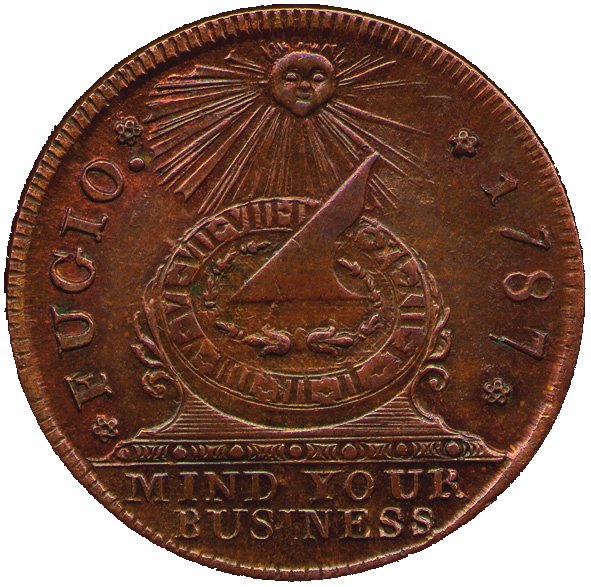




 So I finished rereading Genesis Earth, in preparation for writing the sequel, and I have to say it was not what I expected.
