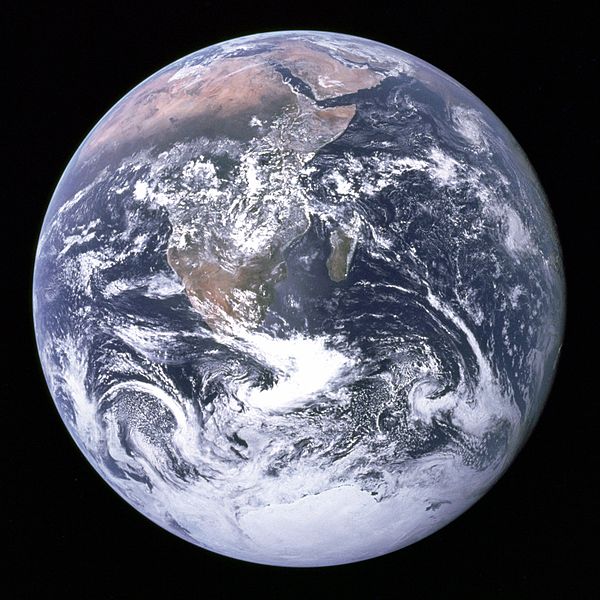
The thousand year view

How will your life impact the world in a thousand years?

It’s an easy question to dismiss. After all, how can one person possibly shape the course of history? Even if we accept the impact of certain great men, how can we have the hubris to think that we might one day join them?

But the truth is that our lives have more impact than we realize. Each one of us is literally a product of our ancestors. Their decisions, for good or for evil, have put us where we are today. We also have a hand in shaping the people we come into contact with. That impact can be felt through multiple degrees of separation—and how many degrees does it take to encompass the world?

In the year 1017, Europe was rising out of the ashes of the Viking age. Kievan Rus was ascendant in the east, vying with the Romans who dominated the religion and commerce of Europe (we know them today as the Byzantines). However, tensions were rising between Constantinople and the bishopric of Rome, where one of the last vestiges of the Roman state in the West would soon break communion and form the Catholic Church. Meanwhile, an apocalyptic Muslim death cult known as the Fatimids had swept from North Africa all the way to Baghdad, the cultural and scientific capital of the world. From the harsh steppe wilderness of central asia, the Seljuk Turks were building an empire that would save Baghdad from destruction, while in China, the Song dynasty had invented the first paper currency.

In short, it was a completely different world. How different will things look a thousand years from now?

By the year 3017, we will probably have established an independent colony on Mars. Other parts of the solar system will probably also be colonized, and we may have even begun our expansion to the stars. After all, faster than light starship drives are about as fantastic to us as cars, airplanes, and space stations would be for medieval serfs.

It is highly unlikely that the United States—or any other country, for that matter—will exist with its current borders. In fact, it’s highly unlikely that the majority of countries extant today will even exist at all. China is probably an exception, but let’s not forget that China is a civilization pretending to be a country.

Pessimists will say that there’s a good chance humanity won’t exist at all. They point to things like climate change, pandemics, and global war as challenges we may not overcome. But in the last millennium, we faced all those challenges and rose above them (little ice age, Mongol hordes, black plague). Same with the millennium before (extreme weather and crop failures of 535-536, Muslim conquests, plague of Justinian).

So how will your life impact the world a thousand years from now? What sort of impact do you want your life to have? How have the things you’ve done today brought you closer to leaving that legacy?

I’ve thought about this a lot over the past few weeks. I want to impact the world through my books, but it’s unlikely that most of my books will still exist. My family and descendants will, though. I want to leave them with the best foundation I can. Here’s how I plan to do it:

Step One: Master the Basics of Provident Living

Provident living is more than just learning how to do your laundry and keep up with the maintenance of your car. It’s learning how to live sustainably, with a degree of self-reliance that can see you and the ones you love through hard times. It’s all the stuff I’ve been writing about in the Self-Sufficient Writer blog series.

I’ve made a lot of progress in this area, but there’s still a lot of progress left to make. Here are the next few steps I want to take in this area:

  1. Establish a rotating 90-day food storage for dry goods.
  2. Establish a herb garden.
  3. Expand food storage to canned goods.
  4. Buy a chest freezer and expand to meats and dairy.
  5. Plant a garden and expand to fresh fruits and vegetables.
  6. Learn how to can.
  7. Learn how to hunt.
  8. Begin keeping livestock (chickens, goats, etc).

A lot of these steps are going to have to wait until I have my own land, which brings us to:

Step Two: Live Debt-Free and Own the Place Where You Live

When you live on someone else’s land and owe them a portion of your labor, that’s a form of serfdom. In both historic and modern times, this has been the norm for the vast majority of people.

It shouldn’t be.

When my ancestors came from Europe to the United States, one of the first things they did was buy land. There was a reason for this. In the old country, they were serfs. They paid the corvée. They were not free.

They knew that unless they lived on land that they owned, in a home that was theirs, their children would not be free either.

We’ve enjoyed a century of prosperity in the United States. It’s led us to believe that home loans and mortgage payments are normal. They aren’t. When your home is the collateral for a loan you’ve taken from the bank, and you spend most of your adult life paying it back to the tune of 250%, that is a modern form of serfdom.

Until you own it outright, your house is a liability, not an asset. And in some places, true ownership is impossible. After all, if the government has the power to seize your house for non-payment of taxes, did you really ever “own” it to begin with?

It’s a similar thing with debt. All debt is a form of bondage. “Leverage” is when someone else has control over you or something that belongs to you. Unless you can get out from under it, you will never truly be free.

If most of your life is spent in serfdom and bondage, the thousand-year impact of your life will be muted.

The Habsburg dynasty started with a small castle on the top of a hill. From that starting point, the family went on to shape the development of Europe into the modern world. The castle was so important in that effort that the family took their name from it.

I know how to live debt-free. I’ve been doing it for several years. But I do not currently live in a place that I own. That is my overriding goal: to own the place where I live within ten years.

The government isn’t making it easy. Neither are the central banks. A decade of 0% interest rates has ravaged the middle class. As a direct consequence, home ownership rates are dropping to historic lows. 70% of Millennials have less than $1,000 saved for a down payment on a house, while at the same time, the helicopter money from the Fed has inflated a new housing bubble larger than the one that burst in ’08. In California, Google employees with six-figure incomes are living out of RVs because they can’t afford to buy a house.

It’s brutal. These are the same economic pressures that led to the rise of medieval serfdom in Europe. But there are also opportunities, for those who know how to take advantage of them. Which leads to:

Step Three: Build Multi-Generational Wealth

Poor people buy luxuries. Middle class people buy necessities. Rich people buy investments. If I want to leave something behind for my children and descendants, I need to master the skills of investing and managing wealth.

This goes back to the thousand-year view. The biggest impact I’m probably going to make on the world is going to be through my children and descendants. Raising them will be the most important investment I can ever make. I want to give them a life of opportunity, so that they, like me, can make a thousand-year impact on the world.

This is what my ancestors did for me. My Mormon ancestors crossed the plains in the Willie handcart company so that their descendants could grow up in Zion. My first-generation immigrant Czech ancestors invested in Texas farmland that still pays a small dividend to their descendants (greatly increased now because of oil royalties). There are many other countless others who made great sacrifices so that I could enjoy a life of privilege and opportunity. I’m sure that’s not unique to me.

We seem to have forgotten, here in the United States, how important it is to make sure that our children enjoy better lives than we have. To some generations much is given, while of others much is required. I fear that we are transitioning from the former to the latter. Nations are born stoic and die epicurean, surrounded by mountains of debt.

This is why it is so important to build wealth: not for your own personal consumption, but for the security of your children and descendants.

The most important investment you can make is in your education. If I’m going to develop these skills, that’s what I need to do: invest in my own financial education.

I also need to learn by experience, so I’m taking $100 of my book earnings each month and investing them. I’ll probably experience a couple of big losses, but that’s called paying tuition. The knowledge I gain from doing this will hopefully help to accomplish this goal: to build wealth that will bless the lives of my children and descendants for generations to come.

A lot of things fall into perspective when you take the thousand-year view. When you focus on the challenges of the present, it’s easy to become pessimistic, but when you take a clear-eyed look at the future—not just the immediate future, but the long-term future as well—you cannot help but take an optimistic view.

How will your life impact the world in a thousand years?
3am thoughts, or why everyone says to be an accountant (Blast from the Past: October 2013)

A lot of my blog posts this week had to do with money, wealth, and politics, so when I was searching for an old post to bring back, this one made me stop and reflect for a while.

My opinions and perspective have changed a bit since I wrote it, but the fundamental message is still one that I agree with. I’ve trimmed out some of the parts where I think I was wrong, and left the stuff that still resonates. Hopefully it resonates with you as well. Either way, feel free to let me know.


I’ve been reading in bed on my smart phone recently, which is probably a bad idea because it makes it harder to go asleep. At the same time, it tends to get my mind rolling, and at 3am my thoughts tend to go some really interesting places. Sharing those thoughts is probably going to get me into trouble, but hey, you might find them interesting, so why not?

When I was eight years old, I knew I was going to be a writer.  There was never any question about that. I spent all my free time making up stories.  However, I knew I never wanted writing to be my job, because 1) everyone hates their jobs, and 2) everyone knows that writers can’t make a decent living. Even at eight years old, I had bought into some of society’s most pervasive myths about jobs, careers, and how to make money.

Americans are generally horrible with money. We struggle to keep budgets and put all sorts of things on credit, and pay more than twice what our houses are worth by signing mortgages we barely even read. Because we’re so horrible with money, we tend to see it as a magical force, something that can solve all our problems and make us happy. Rich people are like wizards or sorcerers, so far above the rest of us that we can hardly fathom their ways.

Nowhere is this stupidity more apparent than in the fact that most of us spend our lives working for some sort of hourly or salaried wage. Wages and salaries are basically the same, in that they convert time into money. That’s why we all measure income in terms of dollars per hour, or salary per year.  But for anyone who understands how money works, that is stupid, stupid, stupid, stupid. Money comes and goes, but time? Time is one of the most finite and precious resources known to man.

All of us are going to die someday. Most people are scared shitless by that fact, so we try to ignore it or put off thinking about it until we have to. But not all of us get the opportunity to put our affairs in order before we die. And even if we do all live to be centenarians, our time on this Earth is still finite. It’s non-renewable, too—you can’t go back and relive that day or that hour or that minute once it’s passed.

Converting time into money is basically trading gold for lead, or wine for water. Yet that’s exactly what we do, because money is this strange, magical force that so few of us understand.

Questions like “where do you work?” “what is your job?” and “what do you make?” are much more common than “what do you do for a living?” That’s because most of us have bought into this idea that money comes from working for someone else. While we’re on the clock, the company owns us and anything we produce. That’s the pact we make in exchange for this magical substance we call money.

It wasn’t until college that I started to become disabused of my childhood notions about writing for a living. First, I came to realize that lots of people love their work—that just because you do something as a job doesn’t mean that you’ll come to hate it. But it wasn’t until I graduated unemployed in the middle of a recession that I was disabused of the notion that writers can’t make a living.

People say that about every career—that is, every career except accounting. That’s because accountants are the ones who count the magical money. They’re the ones who know where it comes from. Their jobs are the ones that the people with the magical money will always need.

But there are other ways to make money—thousands of ways. Millions, even. It’s not about time it’s about producing something that people want and need. But when you’re working for yourself, that’s hard. You have to own up to your work—the failures as well as the successes.

When you work for a corporation, it’s easy to shift the blame. It’s a rare case where one person is solely responsible for bringing down the whole collective enterprise. But when you work for yourself, you can’t blame anyone else when things go wrong. You’ve got to take the risk.

That’s why everyone says that you can’t make a living as a writer. They say the same thing about any career where you strike out on your own.

In the end, though, it’s all just silly. Money isn’t a vague magical force—it comes from the value you create. It comes from producing something that people are willing to pay you for. And you don’t need to sell your time at $11 an hour or $44,000 a year to do that. You just need hard work, a great idea, and the ability to learn from your mistakes.

So can you make a living pursuing your dreams? The answer to that question depends entirely on you.

The end of politics in America, part 2

How did Trump become the leader of the most powerful nation on Earth?

A lot of people are asking that question, while a lot of other people already know (hint: it wasn’t the Russians). But I want to get beyond the circus that is Washington DC, and answer that question by asking another:

Can politics solve our nation’s greatest problems?

I think there is a dawning realization among Americans that it doesn’t really matter who lives on 1600 Pennsylvania Avenue. Republican or Democrat, the outcome is pretty much the same.

Never at any point in living memory have we been so politically divided, but the party distinctions have become increasingly meaningless. Trump campaigned on providing universal healthcare. Clinton campaigned on escalating our military involvement in Syria. Which one was the Republican, and which one was the Democrat?

In the previous post, I said:

I am convinced that the grand key to understanding United States history in the 20th century—and by extension, current events in the 21st—is a deep knowledge of monetary policy and the financial system.

What is that system?

It is a system of debt. Pure and simple. We have turned our debt into money, and made every other form of money illegal. And the rest of the world has followed us gleefully off the cliff.

Washington is bankrupt. Literally bankrupt. Every year, the Treasury runs an internal audit, and every year, that audit fails. The government’s single biggest asset on their balance sheets is… $1 trillion in student loan debt. Social Security is insolvent and, according to the government’s own reports, will completely run out of money in less than twenty years.

So if Washington is bankrupt, why haven’t they declared bankruptcy? Because they can just keep printing money through the Federal Reserve.

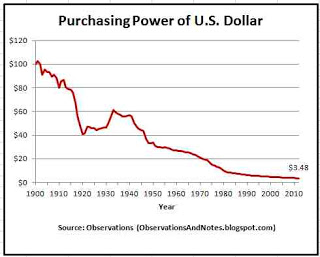
Because of this, the US dollar has lost about 97% of its value since the Federal Reserve system was established in 1913. A time traveler from the new Wonder Woman movie couldn’t buy $5 worth of stuff with $100 of our dollars today. And to keep up this Ponzi scheme we call “money,” Washington has gone nearly $20 trillion in debt.

How much longer can we keep that up?

If we could grow our economy fast enough, and never stop growing, we could keep up the Ponzi scheme for a very long time. But growth is no longer a solution, because the debt is bigger than the economy. The debt is the reason we can’t grow.

If we could innovate fast enough, we could lower the cost of living so much that the poor don’t realize that they’re poor. To some extent, we’ve already done that. But the effects are too uneven: startphones and computers are super cheap, but houses and health care are practically unaffordable.

Which brings us to serfdom.

Let’s go back in time a couple thousand years. Before the days of the empire, the Roman dream was that every family would have their own plot of land, making them independently wealthy, and the head of every family would take up arms in defense of his country whenever called upon by the state. This was not all that different from the Jeffersonian ideal of the yeoman farmer.

Then the Punic wars happened, which, for the Mediterranean world, was basically the ancient WWI and WWII. As Rome became a major world power, the military-industrial complex made a few select elites fabulously wealthy, who kept the masses pacified with welfare handouts.

But the endless cycle of foreign wars came at a heavy cost. Decades of budget deficits and an unsustainable national debt forced the Romans to debase their currency, which completely collapsed. Trade halted, the middle class lost everything, and the 1% became fantastically wealthy, buying up all the real estate and forcing everyone else out. The Roman dream was dead, replaced by a form of bondage called serfdom.

Serfdom came in a number of different flavors:

  • Slaves, who had always existed in the Roman world and continued for some time in the Medieval. Landlords got tax benefits for holding slaves.
  • Villeins, who were bound to the land and worked for the landlords. In exchange, they enjoyed protection and tax relief. Theoretically.
  • Coloni, or sharecroppers, who leased land in exchange for labor and a portion of their harvest. They were eventually taxed out of existence.
  • Freemen, who technically weren’t serfs, but were only a raid or a bad harvest away from becoming one. They were basically renters.

The corvée was a tax, paid in labor, that non-landowners owed by law. Basically, for every XX days out of the year, you worked for the state. It continued even after the abolition of serfdom, until the revolutions of 1848. My Czech ancestors paid the corvée, which is probably one of the reasons they and their children emmigrated to the United States.

But wait—we pay the corvée too! It’s called the federal income tax: for XX days out of the year, you work for the state. The taxes are even higher if you’re self-employed or a small business owner.

Except… not everyone pays the income tax. In fact, nearly half of Americans pay no income tax. Why? Because the politicans know that they can use the welfare system to buy votes. If you’re on welfare, who are you going to vote for: the guy who plans to cut your handouts, or the guy who says that the wealthy should pay their “fair share”?

And sitting at the top of it all are the central bankers.

The medieval serfs were bound to the land and worked for the landlords. In contrast, modern debt-serfs are bound to their debt—national debt, student loan debt, mortgages, consumer debt—and work for the banks.

So I ask again: can politics solve this problem? Can we find a political solution to our national debt?

Unfortunately, there is only one political solution: default on the debt. If we default on entitlements like social security, there would be chaos, riots, and anarchy… and we still wouldn’t pay down hardly any of the debt. If we defaulted on our treasury bonds, it would send a ripple of financial panics across the world, destabilizing the flashpoints in Europe and Asia before returning to our shores. Stocks, mutual funds, and pensions would all be wiped out. Almost the entire savings of the Baby Boomer generation, gone.

But there is another option, though it’s hardly a “solution”: kick the can a little further down the road. Print the money, devalue the debt, and inflate the currency to oblivion.

This is the path we’ve been on since 1913. This is the reason why our dollars buy a little less each year. And this is the reason why we, as a nation, are backsliding into serfdom.

We’ve seen this happen before. Rome fell because of it. Europe came under the yoke of serfdom as a result of it. Our ancestors fled to this country to escape it. And now, we are repeating it.

This isn’t a political problem: it’s a math problem. The numbers just do not add up. The next financial crisis could very well be the “extinction level event” that puts the final nail in the coffin of the US dollar, throws the world into a global war, and sends the United States into its greatest existential crisis since the Civil War. The Republicans don’t have the solution, and neither do the Democrats, because the problem is not political.

This is what the end of politics in America looks like. We’re watching it happen in real-time. Our politicians have become the clowns in the bread-and-circuses routine. Meanwhile, the central bankers are shackling us in chains with every dollar that passes through their hands.

What are you going to do about it?

Things I Learned from Working in a Call Center (Blast from the Past: September 2010)

While poking around in the archives, I came across this interesting post from my first year out of college. At the time, I was just getting started in the labor force and wanted to learn as much from my jobs as I could—even the mundane ones. The result was this.


Over the summer I worked part time at a local call center.  At the time, it was just what I needed: a flexible job that helped me pay the bills while figuring out where I wanted to go next.  That said, I learned very quickly that call center work is not the sort of thing I want to do for large portions of my life.

I’m glad to say I quit my job on good terms with the management, and was one of their more productive interviewers.  I don’t harbor any hard feelings against the company I worked for or any of the particular employees.

However, I do want to reflect a bit on the nature of the work itself, which was less than awesome, as well as some of the things I learned about myself in the process.  Since this has nothing to do with the company I worked for, I’m not going to mention it by name.  Also keep in mind that the things I have to say are heavily influenced by my own opinions, so they may not apply to you.

That said, here are some of the things I learned from working in a call center:

1) In the long run, jerks only punish themselves.

I spoke with a lot of incredibly rude people in this job.  I also spoke with a lot of people who were courteous and well-meaning.  Without exception, the jerks seemed overstressed and miserable, while only the courteous people ever seemed genuinely happy and content with their lives.

I think the way we treat others says more about ourselves than anything else.  People who are mean and nasty to each other are never truly happy.

2) A small amount of patience makes most things go faster and smoother.

I hated it when people told me “just put ten for everything.” As an interviewer, I couldn’t do that—I was required to ask every question verbatim.  Those who were patient enough to let me do that got through the survey quickly and painlessly, while the impatient people who tried to rush things almost always got upset.

I think it’s safe to say that this has a general application as well.  When we’re patient enough to let things happen the way they’re supposed to, things happen faster and more smoothly.  When we try to rush things that shouldn’t be rushed, we screw up.

3) The ability to genuinely listen is a rare skill.

I can’t tell you how many times I asked a simple question on a survey, only to find the person on the other line answering something completely different.  I didn’t expect anyone to drop everything and devote their full attention to me, but how much effort does it take to answer a simple question?

I’ve known for a long time that listening is a skill that requires work to cultivate, but apparently, it’s also one that few people have truly mastered.  If you can’t understand a straightforward question well enough to give a yes or no answer, how can you understand something as complex as another person’s feelings?

4) Political campaigns are evil.

This is a little tongue in cheek, but I stand by it one hundred percent.  Every survey we conducted for a political campaign asked questions that were clearly geared toward developing negative campaign ads and manipulating public perception.  None of them asked how the government could best serve the people.

5) Having a flexible work schedule makes writing both easier and harder.

It makes it easier because you can plan your time around other things that are going on; it makes it harder because your days generally have less structure.

I think I hit a pretty good balance by working in the morning and writing in the afternoon, then going in to work again in the evenings if I needed the hours.  Call centers are always looking for people to work in the evenings.

6) Reducing everything to numbers makes human interactions meaningless.

This was, by far, the thing I found most frustrating about my work.  I talked with hundreds of people from all over the country and didn’t connect with hardly any of them on a personally significant level.  It was all about checking off boxes, where each completed survey was just another number in the system.

This tended to be more true of the short surveys, less true of the longer ones.  For that reason, I loved it when I got a survey that took twenty or thirty minutes to complete.  It’s very hard to talk with someone for thirty minutes without making some kind of a connection with them, however fleeting.

7) If you have a love of learning, find a job that lets you use your mind.

To be perfectly honest, I never felt completely satisfied at my work.  A robot with sufficiently advanced voice recognition software could probably have done my job as well as I could (at least for the ninety second surveys).  Over time, I felt like my work was turning me into a robot.

That’s ultimately why I felt I had to get out.  Maybe I have a problem with authority, but I can’t stand being just another cog in the corporate machine.  There’s got to be a way to pay the bills and still live life meaningfully.

Image courtesy W. Lowe

Happiness is always a choice, take 2

CGP Grey made an awesome video last week, which should come as a surprise to nobody, but this one is exceptional even by CGP Grey’s standards. In it, he borrows some of Doctor Randy J. Paterson’s work in How to Be Miserable: 40 Strategies You Already Use and gives us a seven step program on how to be miserable. Those steps are:

  1. Stay still.
  2. Screw with your sleep.
  3. Maximize your screen time.
  4. Use your screen to stoke your negative emotions.
  5. Set vapid goals.
  6. Pursue happiness directly.
  7. Follow your instincts.

Since this basically describes 80% of people on the internet at any given time, it comes as no surprise that the video soon went mega-viral.

Generally, I think most of CGP Grey’s anti-advice is spot on. However, there is one part that I disagree with rather strongly. It’s the part where he says:

True happiness is like a bird that might land on your ship, but never if you constantly stand guard to catch him. Instead, improve your ship and sail into warmer waters. The bird will land when you aren’t looking.

Happiness is not a bird that comes and goes as it pleases, without any input from you. Instead, it is a decision you make on how you will respond to things outside of your control.

In other words, happiness is always a choice.

A while ago, I wrote a blog post on the subject. In it, I said:

There are only two classes of things in this world: things that act, and things that are acted upon. Empowerment is when you give somebody the ability to act for themselves, independent of outside forces. Disempowerment is when you take that ability away.

There is nothing more empowering than to realize that no matter where you are in life—no matter how shitty your circumstances—you can always still choose to be happy.

Happiness is a feeling that only exists inside of you. It is not something external that is forced or bestowed upon you by outside forces. It is wholly internal to your heart and mind. It is a reaction to outside forces—a reaction that you choose to make.

If happiness is not a choice—if it is something over which we have no control—then we cannot have any control over any of our feelings. Our passions are external forces that act upon us, and we are powerless to stop them because our emotional development ended at age two.

Is there anything empowering or liberating about this philosophy? No. Quite the opposite. It debases mankind and makes us no better than the animals. It destroys our agency and makes us slaves to our passions.

Happiness is always a choice.

That said, I do think there’s some truth to CGP Grey’s bird analogy as well. Happiness is not like a bird, but joy, or enduring happiness, is.

Joy is a deeper form of happiness that comes as a result of hard work and accomplishment. We can’t decide to have joy without first putting in the effort. And even when we do put in the effort, there’s no guarantee that joy will be the result. There may be pain, or failure, or even tragedy.

But even as we seek to do the things that will bring us joy, we can choose to be happy along the way. Indeed, we must. If we don’t, we risk losing the hope that enables and empowers us to keep striving. Choosing to be happy, no matter the circumstances, is the first step toward finding joy.

However, it’s important to point out that this is not a cure for depression or mental illness, which are medical conditions and must be treated as such. Choosing to be happy will not cure your mental illness any more than smiling will cure diabetes.

So, perhaps not a major disagreement, but definitely a legitimate quibble. What are your thoughts?

Selected daily thoughts, January 2017

One of my resolutions this year is to keep a journal of daily thoughts. The inspiration for this was the Meditations of Marcus Aurelius, which I haven’t yet read, but the idea really struck me as a good one. I wouldn’t pretend to be as profound or as influential as the greatest emperor of Rome, but for myself and my posterity, it seems like a good project.

In any case, I thought I’d share some of the best thoughts here on this blog, starting with January. Let me know what you think!


January 1st

When the student is ready, a teacher will appear.

January 3rd

Patience is often the final key to success.

January 9th

We live in an age when a multi-billion dollar IP can grow from a bunch of notes scribbled on the back of a napkin by a waitress. It’s fantastic.

January 12th

Every able-bodied man of this Republic, who is of a sound mind, should possess a shotgun, a rifle, and a handgun, and should train regularly in their use.

January 17th

There are no villains or heroes, there are only people who do villainous or heroic things. —Ben Shapiro

January 19th

We never get rid of our problems. We only trade up or down for different ones.

January 21st

Liberty is easy to sell but difficult to buy. —Felix Torres

January 22nd

We are living in a world where our online perception of reality, crafted by social media, is more real to us than reality itself. Is it any wonder then that we no longer treat each other as people, but as commenters with meatspace avatars? Whenever we are online, we are also alone. It is impossible to go online “with” someone. Little wonder that society has become so fragmented.

January 23rd

You can’t plan a perfect day, but you can plan a great day and make it perfect.

January 25th

Humility is thinking less about yourself, not less of yourself. —Dieter F. Uchtdorf

January 29th

Power flows from the muzzle of someone else’s gun. It starts with the ability to inspire the hearts of men.

January 31st

We are all trapped in the prison of our own mind: our beliefs about what is and is not possible. We cannot achieve greatness until we first break out of that prison.

The end of politics in America, part 1

I am convinced that the grand key to understanding United States history in the 20th century—and by extension, current events in the 21st—is a deep knowledge of monetary policy and the financial system.

In 1913, two things happened: Congress established the Federal Reserve, and the Constitution was amended to allow for an income tax. This established a new monetary system in direct opposition to the gold standard, which in turn had replaced the bi-metallic standard established by the Constitution. In time, the Federal Reserve system would replace the gold standard altogether, becoming our sole form of legal tender.

Before the Federal Reserve system, every dollar represented a fixed weight of gold—a real, physical asset. Today, what does a dollar represent?

Dollars are created when Washington runs a deficit. The government spends more money than it takes in through taxes, so it has to borrow the difference. It does this by issuing treasury bonds, which it sells to the banks. The Federal Reserve then buys them, but with money that it creates by issuing a check against an account with nothing in it. In other words, the Fed creates money out of nothing to buy our national debt.

These dollars, called “base money,” then trickle down into the banking system as government contractors deposit their money. Through fractional reserve banking, this base money multiplies by ten-fold, or even a hundred-fold or more.

In other words, every dollar in existence represents a dollar’s worth of debt. Some of it is our national debt, owed by current and future generations of taxpayers. The rest of it is owed by private citizens in the form of mortgages, car loans, student loans, credit cards, etc.

But if every dollar represents a debt, where do you get the money to pay the interest?

You borrow it, of course. The only way to create more money is to create more debt. This is why the US dollar has lost 97% of its value since the creation of the Federal Reserve. This is why inflation has been a fact of life for the past century. This is why income inequality has widened so dramatically. And this is why our politics have become so insane.

I titled this post “The end of politics in America” because I’ve come to realize that the greatest problem facing this country is not political, and that no political solution can fix it. The problem is economic. It’s financial.

Our country has bought into a massive Ponzi scheme that we like to call “money.” We measure our wealth in a debt-based currency that steals prosperity from future generations and transfers wealth and power to an elite class of unelected bankers and bureaucrats. As with every Ponzi scheme, it only works so long as new capital enters the system. This happens in three ways: growth, innovation, and serfdom.

Growth is obvious. So long as our economy is growing, debt isn’t a problem because we’re creating more wealth to pay it off with. This is where debt actually makes sense: when it goes towards building future prosperity. An example of this that people often point to are the infrastructure projects of the 1950s.

Unfortunately, when your debt level reaches a certain point, it goes from stimulating growth to inhibiting it. Our debt-to-GDP ratio is now 104.17%. That means that if we took the sum total of all the goods, services, investments, tax revenue, deficit spending, and net exports, and we spent it ALL on paying off the debt, we still couldn’t pay it all off.

Think about that. Your entire paycheck. Warren Buffett’s paycheck, and all the millions he made last year on his investments too. All of the money spent on Amazon. All of our grocery bills. All of the ticket sales for every blockbuster movie, and the production costs as well.

Even with a whole year of that, you still couldn’t pay off the national debt.

Ever since the Great Recession, our GDP has never seen more than 3% annual growth. This, in spite of deficit spending that from 2009 to 2012 was higher than the deficit we ran in World War II! We have gone even deeper into debt than we did to defeat the Nazis, and all we got was this crappy economy.

We’re not going to grow our way out of this debt burden. The debt is the reason the economy can’t grow.

Innovation is, in some ways, another form of growth. Instead of making more mousetraps, you’re building better ones. This is why computers are cheaper now than they were in the 1980s. This is why we have no idea how people survived before mobile phones.

Twenty-five years ago, data storage cost nearly $10,000 per gigabyte. Email was a novelty. Mobile phones were revolutionary. Only the military had GPS. Satellite imagery was top secret spy stuff. “Facebook” was a printed directory of addresses and phone numbers for your local college or high school.

And yet, with all of these incredible innovations in just the past few decades, does it feel that your life has gotten any easier? Is it any easier to make ends meet? Have we entered the leisure society yet?

The truth is that we’re caught in a tug-of-war between inflation and innovation. In some areas, innovation is winning. This is why computers and smart phones are getting cheaper. In other areas, inflation is winning. This is why cars and housing are so much more expensive.

Can we innovate our way out of our national debt burden? Not without fundamentally changing our monetary system first. Until then, we’re just putting patches on a broken operating system. We can delay the inevitable collapse for a while, but not forever.

Which brings us to the third way our Ponzi money stays afloat: serfdom.

I have a lot more to say, but this post has gone long enough and already sucked up way too much writing time. I’ll post part 2 sometime next week, taking the risk that events in Washington will make me regret the post title. But I don’t think that they will. Hopefully you’ll soon see why.

Further impressions of Iowa

This post could just as well been titled “Oh my heck, Toto, we’re not in Utah anymore.”

What is up with all of the tattoos everywhere? Call me old-fashioned, but unless it’s a part of your cultural heritage (Arab, Indian, Polynesian, etc), I don’t really find it interesting or attractive. It’s like someone vandalized your body.

Utah is pretty insulated in this regard. Sure, you can find people with tattoos, but only if you look for them. Here, every other person has a tattoo somewhere.

Is this part of a wider trend across the United States? If so, is it connected to the crappy economy? People with stability and security in their lives don’t typically get tattoos. Or maybe it’s all of my fellow Millennials who don’t know what they’re doing with their lives and are sort of just drifting.

I’ve probably got readers who are thinking right now: “dude, WTF? You’ve got a character in Sons of the Starfarers who has a full body tattoo, and doesn’t mind showing it off.” To which I would say: 1. it’s temporary (henna), 2. it’s part of her cultural heritage, and 3. it’s fiction.

The other big thing I’ve noticed (which again, is probably just going to show how insular Utah can be) is that no one has any concept of food storage. There’s a store out here called Mills Fleet Farm, which is kind of like a Home Depot swallowed a feed store and ate a Walmart for dessert. Asked three employees for foodsafe five-gallon buckets, and none of them had any idea what I was looking for.

In Utah, you can get foodsafe five-gallon and two-gallon buckets from any grocery store. At Macey’s and Winco, they sell the gamma lids. You can also buy 50 lb bags of oats or wheat, 25 lb bags of beans or rice, and twice a year they have case-lot sales where you can buy canned goods by the case upwards of 50% off. Freeze dried foods and can rotation systems are also a perennial.

Am I the weird one for thinking it’s a good idea to keep 90 days worth of non-perishable food in your pantry? Aside from all the prepper reasons for why that’s a good idea, it’s also a lot cheaper to buy in bulk. And it’s not like people don’t keep gardens around here. Though I do have to admit, there aren’t nearly as many home gardens as Utah.

But the people seem friendly enough, and aside from those two points, this place is actually a lot more culturally similar to Utah than other places in the country where I’ve lived. It’s more conservative than California, more churchgoing than New England, and a hell of a lot more honest than Washington DC. About the only other place I’ve been that comes close is Texas, but Texas is Texas. Nothing else compares.

I could see myself ending up in Texas someday, if I don’t move back to Utah first. Utah isn’t for everyone, but I love it there and wouldn’t mind putting down some permanent roots. California, on the other hand… you couldn’t pay me to live there. Same with Washington DC.

Iowa’s not a bad place, though. Time will tell how it rubs off on me.


Heaven’s Library (Blast from the Past: June 2009)

All right, it’s time to get in the wayback machine and revisit a post from long ago. This one should be especially interesting to you aspiring writers out there, as well as the seasoned writers who need an extra gut-wrenching wake-up call from time to time. I know I certainly do.


Today was the first day of BYU’s writing conference, and it was great! The speaker in the last workshop, Dandi Mackall, was exceptional. I don’t have my notes with me and the BYU library closes in twenty minutes, so I’ll recap the best part of her presentation.

She said that once she had a dream where she died and went to heaven (thank goodness!). When she got there, the angel who greeted her offered to show her around, and asked what she wanted to see first. Her answer? The library, of course!

In heaven’s library, she found shelves stretching as far as she could see, full of the very best books. She picked out a few and recognized some of her favorites, the ones that had impacted and changed her life.

After a while, though, she started to get a little disappointed: all of the books in heaven’s library were books we already had down on Earth. Why was that? Didn’t heaven have anything new–anything we hadn’t already seen down below?

“But all these books were here first,” said the angel.

Still, she couldn’t accept that as an answer, so the angel took her down a long, winding, narrow corridor. The deeper she went, the narrower and dustier it became, until she started to feel uneasily. This part of the library was dark and dirty. It was clear that hardly anybody every came down here.

Finally, the angel led her to a door covered in cobwebs. He brushed them aside and opened the door. Here was a room many times larger than the first, with old, dusty bookshelves stretching out of sight.

She picked out a book and started reading through it. It was one she’d never heard of, but it grabbed her. She could tell that it was really good. She picked up another one, and realized that it was just the kind of book that one of her friends would have loved. She picked up another one, and realized that this one could have helped out another friend through a terrible crisis she’d recently been through.

“Why didn’t we have these books?” she angrily asked the angel. “They are just as good as the other ones. Why didn’t they make it down?”

“These are all the books that remain unwritten,” the angel answered. “Each one of these is a book that a writer, somewhere below, has in them but fails to write down.

“This one is by a writer who won’t let anyone give her the criticism she needs to improve her craft. This one is by a writer who doesn’t have the discipline to finish what he starts. This one is by a writer who doubts herself and doesn’t think she can ever get her story to work.”

Humbled, she followed the angel back to the main hall. Just before stepping through the doors, she saw one last book. The name on the cover was her own.

For some reason I don’t understand, fate, God, or genetics (or some malicious combination of the three) conspired to turn me into a writer. Sometimes, I wonder if I’m making a mistake trying to turn this passion into something that will feed myself and my future family. Looking at the millions of other writers like myself, it’s easy to feel anxious. Only a tiny fraction of us will ever make a professional career out of this. Do I even have a chance?

But then I hear a story like this one and I remember why it is that I write. Not for fame, fortune, publication, personal gratification, or even just because I can’t not do it. It’s because storytelling itself is important. It helps us connect with the world around us, to see its beauty and wonder. It helps us to appreciate ourselves and understand others. It stimulates our imaginations and lifts our eyes to see the divine potential that is all around us. It helps us to grow and to heal—to live and to love.

May you find your book in heaven’s library and bring it into the world!

The Gulf Between the Generations (Blast from the Past: February 2012)

Here’s a post I originally wrote in 2012. Given how most political commentary tends to lose relevance over time, it’s remarkable when something from the past is even more relevant now than when it was written.

Not that this post is overly political: more just a series of observations, including some red flags that, at the time, were still on the distant horizon. In recent months, those flags have drawn much closer.

Such a crazy world we live in. Stay safe, and thanks for reading.


I just watched a fascinating interview with a 1960s White House intern who claimed to have an eighteen month affair with President John F. Kennedy. But the most interesting thing wasn’t the affair itself, but the way the President’s staff, the “fourth branch” of government (AKA the media), and the entire general public of 1960s America seemed more intent on keeping the secret than on facing the truth about JFK’s many affairs.

It seems that my parents’ generation had so much trust in their government that nobody would even raise the question—that to raise doubts about the integrity of the man who held the highest office in this country would itself be unconscionable. Rather than face the facts, the American public seemed unwilling to do anything that would shatter the gilded image of the man who led the free world. And that, quite frankly, is a mindset that I simply cannot understand.

In contrast, my own generation has very little trust in our government. We’ve been raised in an age of ambiguity, where the enemy doesn’t wear a uniform or pledge allegiance to a flag, but live quietly among us, until they strap a bomb to their bodies or turn a commercial airplane into a weapon of terror. Or at least, that’s the excuse our government gives us for an increasingly invasive security regime that infringes on our basic liberties, enables the military to hold us in detention indefinitely, and sends our soldiers overseas to fight increasingly senseless wars to “liberate” the people of oil-rich nations who don’t even want us there. As if that weren’t enough, the economic crash has taught us that all that stuff our parents taught us about equality and opportunity is really just a pack of lies—that the rich get bailouts while the rest of us foot the bill, and all that stuff about changing the world and being whatever you want to be… yeah. Lies, all of it.

My Dad had an interesting rebuttal to all this, though. He said that it wasn’t his generation that put the president on a pedestal—it was his generation that tore the pedestal down. During the 60s and 70s, the Vietnam era and the rise of the hippy movement, his generation fought back and made it acceptable for us to question the president, or to criticize the government, or to do all the things that we take for granted today. In fact, he said that we’re the ones who are backsliding into complacency, with our deafening echo chambers, our social media inanities, our reactive attachment to corporate brands and advertising, and our almost religious sense of entitlement.

I’m not totally convinced he’s right, but I do think there’s a fundamental gulf between these three generations. Our grandparents’ was the silent generation, where people were expected to keep to their own business and not rock the boat. Our parents’ generation was one of top-down media, where ABC, NBC, and CBS ruled the airwaves and told us all what to think, buy, and believe. Ours is a much more peer-to-peer generation, but I worry that we’re turning into a collection of mindless herds who are turning the culture wars into a messy riot where we abandon civil dialog and rational thinking for a much more destructive mob mentality that isn’t really building anything, but tearing it all down.

Sometimes, it gets so frustrating that it makes me yearn for the days of the frontier, when you could leave it all behind and reinvent yourself somewhere out in the west. That’s probably why I’m so drawn to science fiction, where space is the final frontier. There really are times when I wish I could go to the stars and escape to it all. Writing about that is the next best thing.

Maybe that’s why I feel so compelled to write Star Wanderers. It’s not all rosy, of course—space can be a cold, dark, and lonely place—but so can this world, when you’re lost and you don’t really know what you’re doing with your life.

I don’t know if I recognize anywhere as my own country anymore. Like Van Gogh, all I can say is the sight of the stars makes me dream.